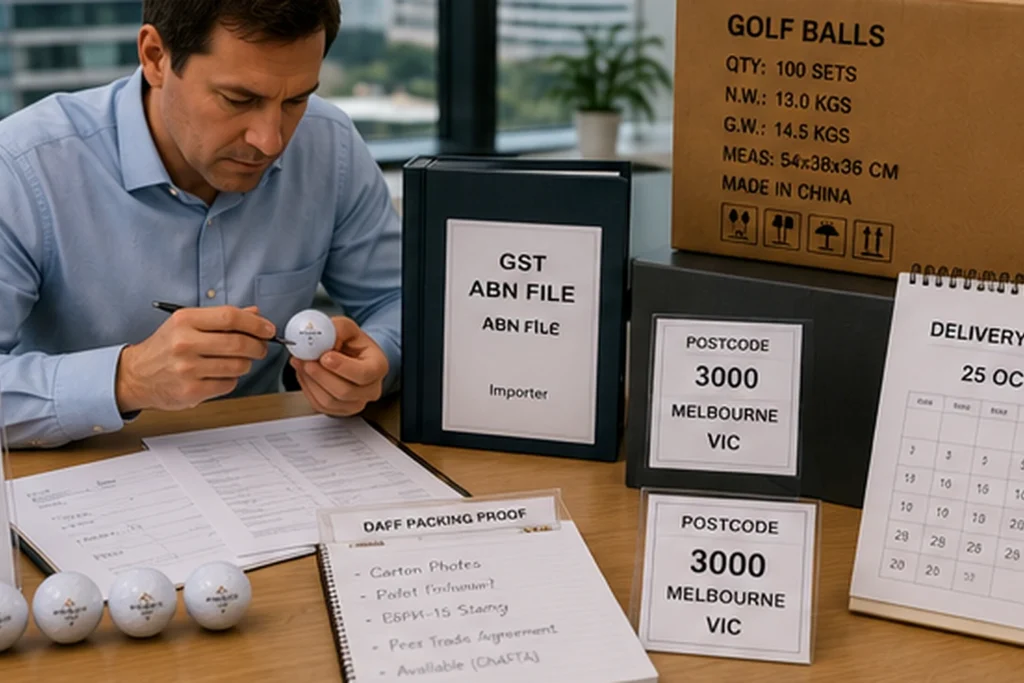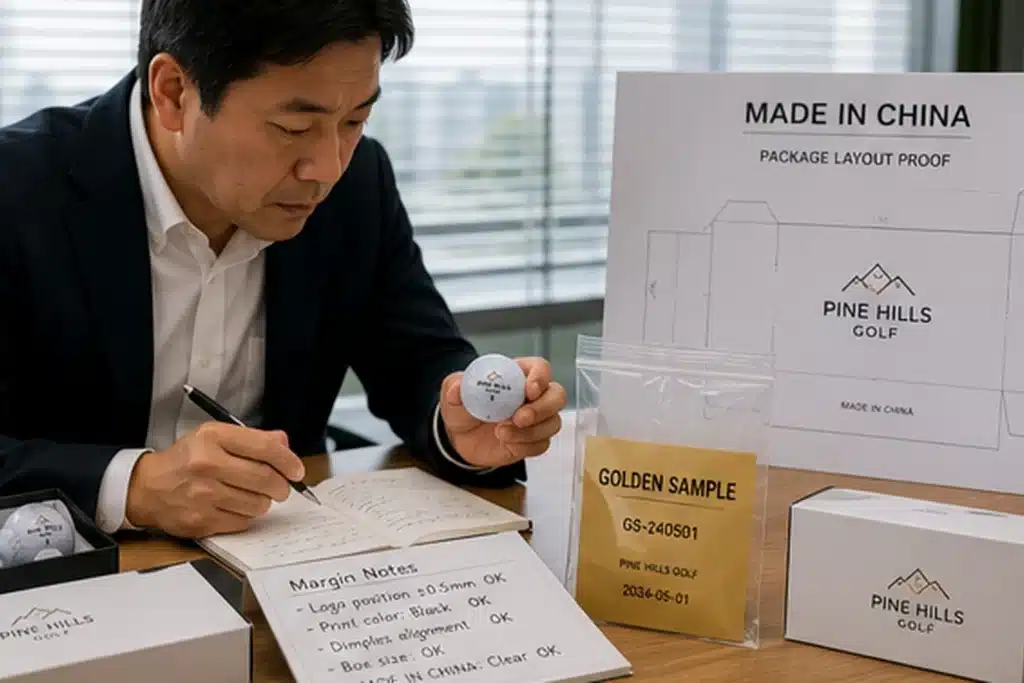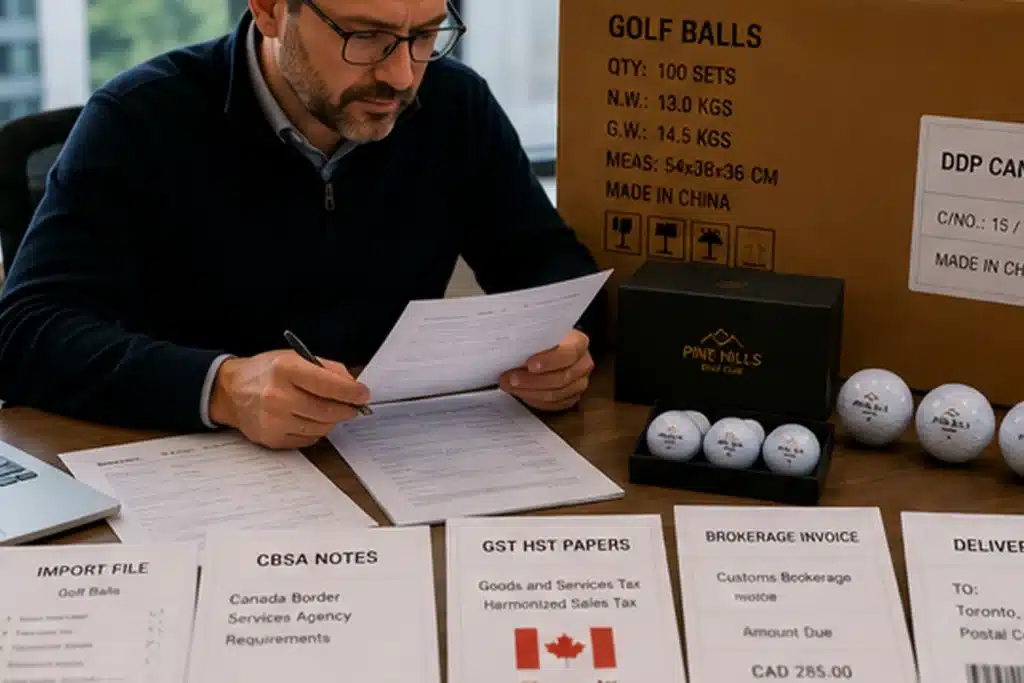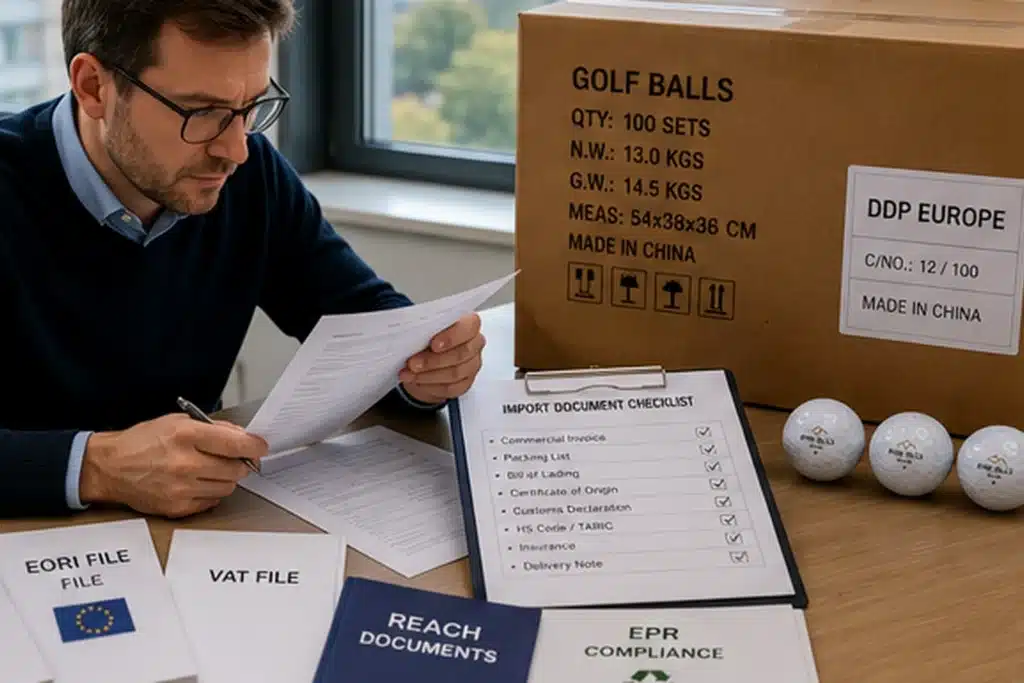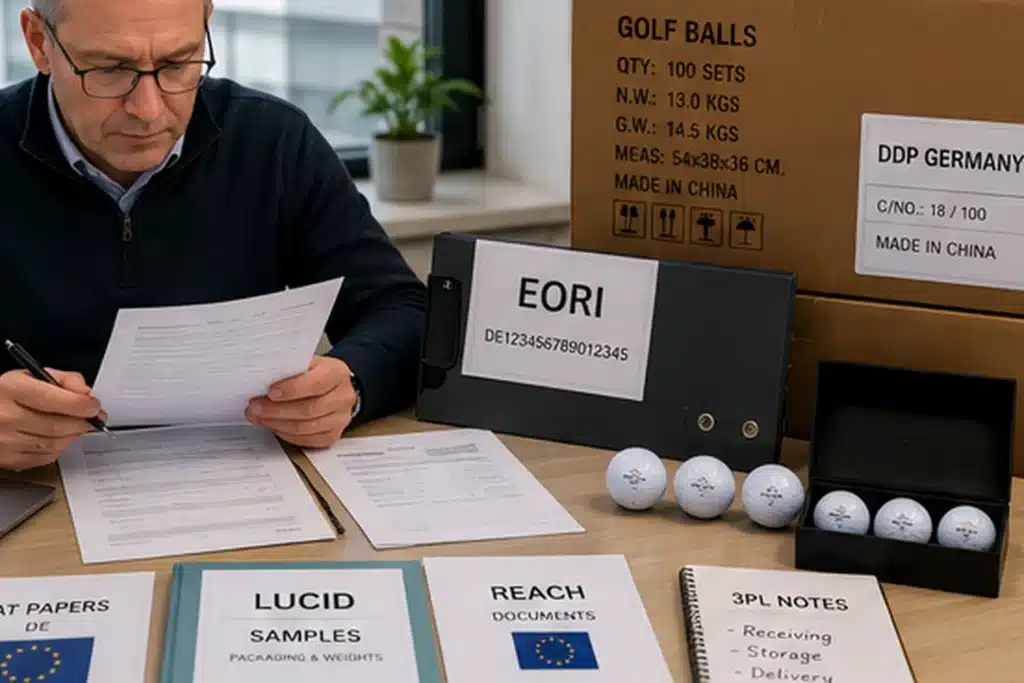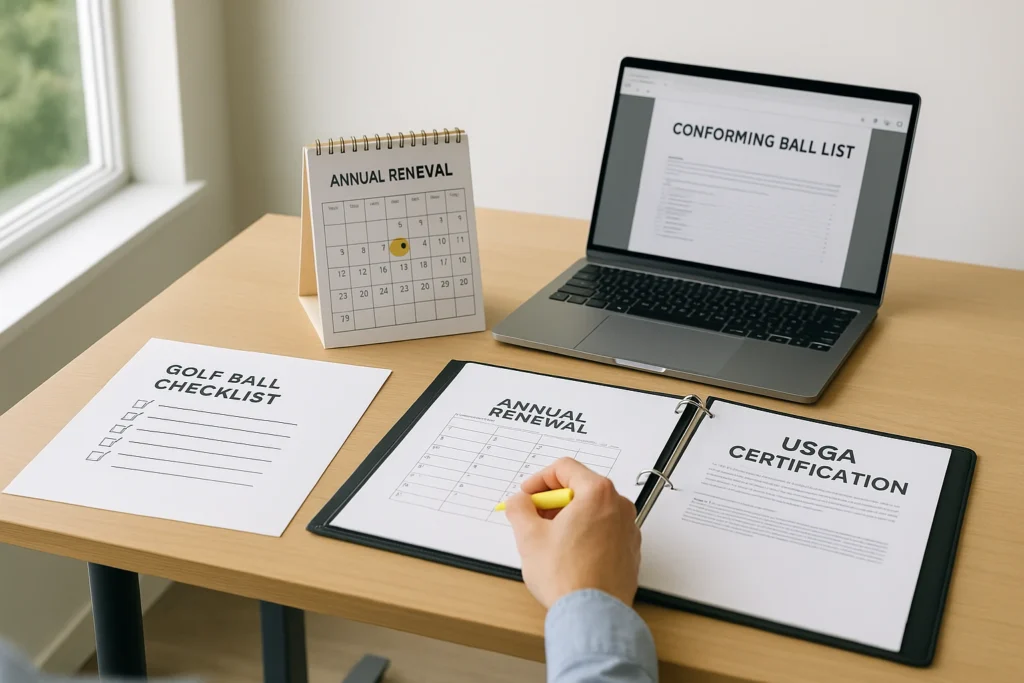
Yes—China-made golf balls can meet USGA/R&A conformity requirements. Country of origin does not determine conformity. If your program requires current List status, verify the exact ball type on the current List, then confirm that the production lot you are buying still matches that verified product identity.
A supplier saying “USGA standard” is not enough. A factory may produce one currently listed ball while quoting you a different private-label SKU, and an old List screenshot proves only past status.
Current List status is model-level evidence—not proof of your current production batch.
Your sourcing decision therefore needs two checks: Does this exact SKU have the conformity status your channel requires? And does today’s production still match the ball type behind that evidence?
Use this buyer-control sequence.
Need → Exact Model → Current Status → Change Control → Production Match → PO Evidence
The goal is a traceable evidence chain from the supplier’s claim to the exact OEM golf ball in your current purchase order.

Does Your SKU Need Current List Status?
It is easy to treat current List status as a premium badge and require it for every SKU. That can put compliance budget behind a requirement your actual sales channel does not have.
Current List status should follow your channel requirement, not prestige. If the ball may be used where Model Local Rule G-3 or a customer requirement makes the current List mandatory, verify it. For other programs, separate rules conformity from the durability, performance, print, and batch evidence your buyer actually needs.
The R&A’s Model Local Rule G-3 requires a ball to be on the current List when that Local Rule is adopted. The same guidance also makes an important distinction: even without G-3, a ball used under the Rules still has to conform to the Equipment Rules.
That creates a better first procurement question:
Does this exact program actually require current List status?
| Program Decision | Current List Need | Main Buyer Risk | Buyer Action |
|---|---|---|---|
| Competition using G-3 | Required | Ball not eligible | Verify current exact model |
| Tournament-facing retail | Confirm requirement | Late compliance surprise | Decide before launch |
| Recreational retail | Case-dependent | Unsupported claims | Define claim strategy |
| Range / practice | Often not G-3-driven | Paying for prestige | Prioritize use-case evidence |
| Corporate gift | Usually claim-driven | Confusing status with quality | Confirm actual need |
When Does Model Local Rule G-3 Matter?
Start with competition exposure, then consider the claim your brand intends to make. If G-3 applies, current List status becomes a hard use requirement. If it does not, you still need the evidence appropriate to that SKU.
This is also where a common buyer assumption breaks down:
Conforming is a rules status, not a universal quality score.
Some customers initially treat USGA status as shorthand for a “better ball.” In our OEM discussions, we separate that rules-status question from the broader product-quality decision.
Some of our long-term U.S. customers genuinely need conformity evidence for their programs, and they are currently submitting specific 3-piece and 4-piece models we manufacture for conformity evaluation. Those submissions are still pending, so we do not present them as current proof of listed status.
Those customers have also authorized us to share the resulting List evidence with other buyers if the submitted models are found to conform and appear on the current List. For another buyer, that evidence can be a useful reference when evaluating the same exact ball type, but it does not automatically prove that a different private-label configuration, marking version, color, finish, or construction has the same status.
For your sourcing decision, the practical rule is simple: use conformity evidence when your program needs it, and always verify that the evidence applies to the exact ball type you are buying.
If that decision is “yes, we need current status,” move the submission mechanics to how to submit a private-label golf ball for conformity.
✔ True — Current List status should solve a real channel or competition requirement
Tournament exposure, customer requirements, and intended conformity claims should determine whether current List maintenance belongs in your program.
✘ False — “A ball without current List status must be lower quality”
Rules status answers one question. Durability, feel, printing, consistency, and commercial fit still need separate evidence.
What Does Current List Status Actually Prove?
A current List entry is meaningful evidence. The sourcing mistake is turning it into proof of everything from feel and durability to process capability and current-batch consistency.
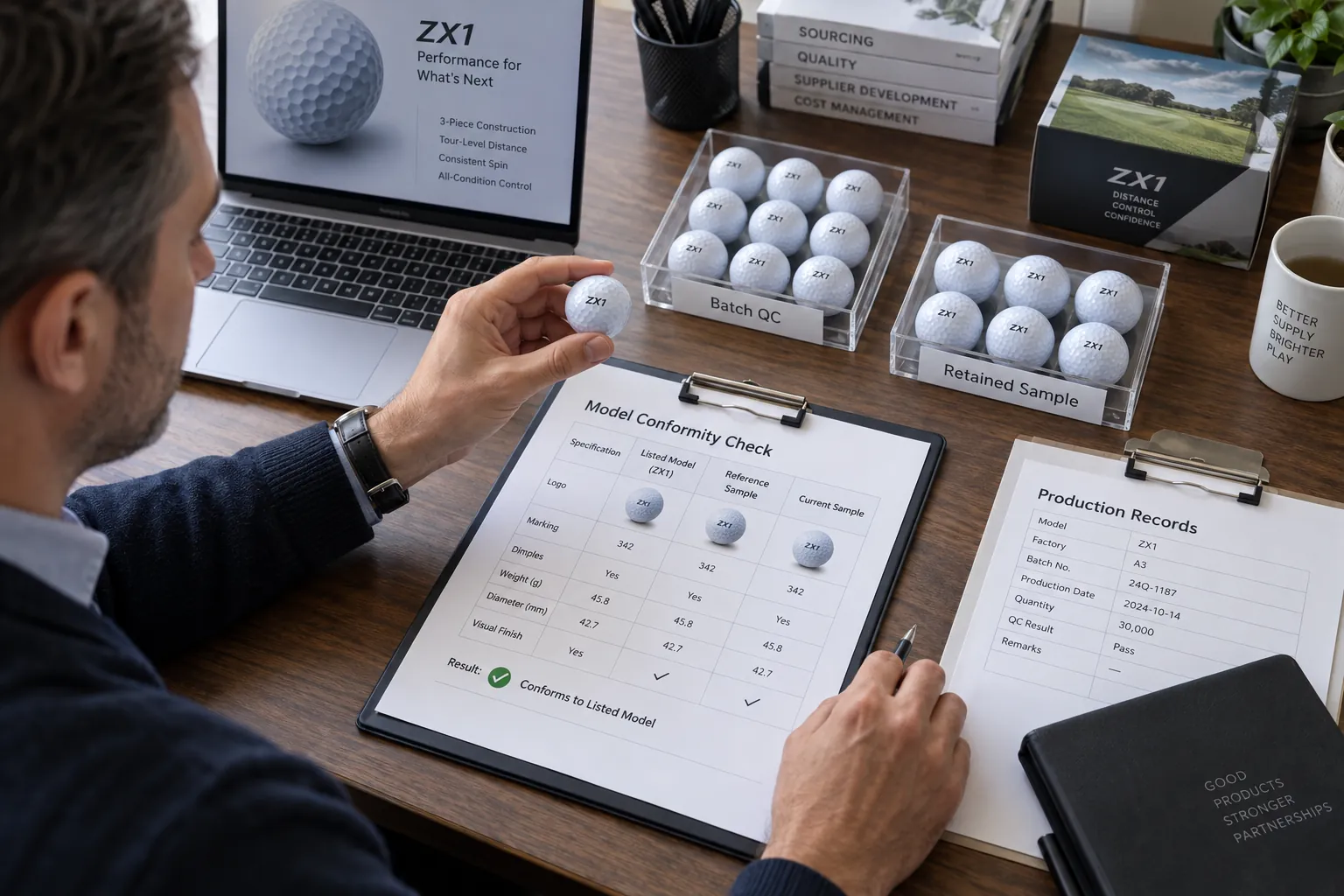
Current List status proves something important but narrow: the exact listed ball type has been evaluated and found to conform under the applicable framework. It does not automatically prove that your current production batch has better compression, durability, feel, print quality, or consistency than another golf ball.
The official USGA List of Conforming Golf Balls identifies ball types that have been tested and found to conform to the Rules of Golf.
For procurement, treat that as model-level evidence.
It supports current exact-model status and eligibility where the current List is required. It does not automatically establish current-lot consistency, cover durability, logo durability, feel preference, spin performance, defect rate, or value for money.
The distinction is:
List Evidence ≠ Batch Evidence
| Evidence | What It Supports | What It Does Not Establish | Buyer Action |
|---|---|---|---|
| Supplier claim | Supplier assertion | Official status | Verify independently |
| Past screenshot | Historical status | Current status | Recheck List |
| Current List entry | Current exact-model status | Current-lot consistency | Link to production |
| No-change record | Product-version continuity | Lot quality | Check batch evidence |
| Batch-linked QC | Current-lot evidence | List eligibility | Keep both if needed |
Is Conformity a Quality Score?
Give conformity evidence full weight for the problem it solves, but no more than that. “Good” depends on the program, so your sourcing scorecard should continue after the List check.
For a range operator, repeated-hit survival and operating life may matter most. For a premium retail brand, feel, flight, spin, durability, and competition exposure may dominate. For a gift program, print quality and presentation can decide whether the order succeeds.
That gives you an evidence ladder:
Supplier Claim → Past Evidence → Current Model Evidence → Version Control → Batch Evidence
A Current List check answers one layer. Your buyer file may need several.
Build a Conformity Evidence Ladder that states what decision each piece of evidence supports. This prevents a strong model-level record from being stretched into an unsupported conclusion about current production quality.
How Do You Verify the Exact Ball Type?
A factory may genuinely manufacture a listed ball while offering your brand a different construction, color, marking version, finish, or private-label SKU. Factory capability alone does not identify your product.
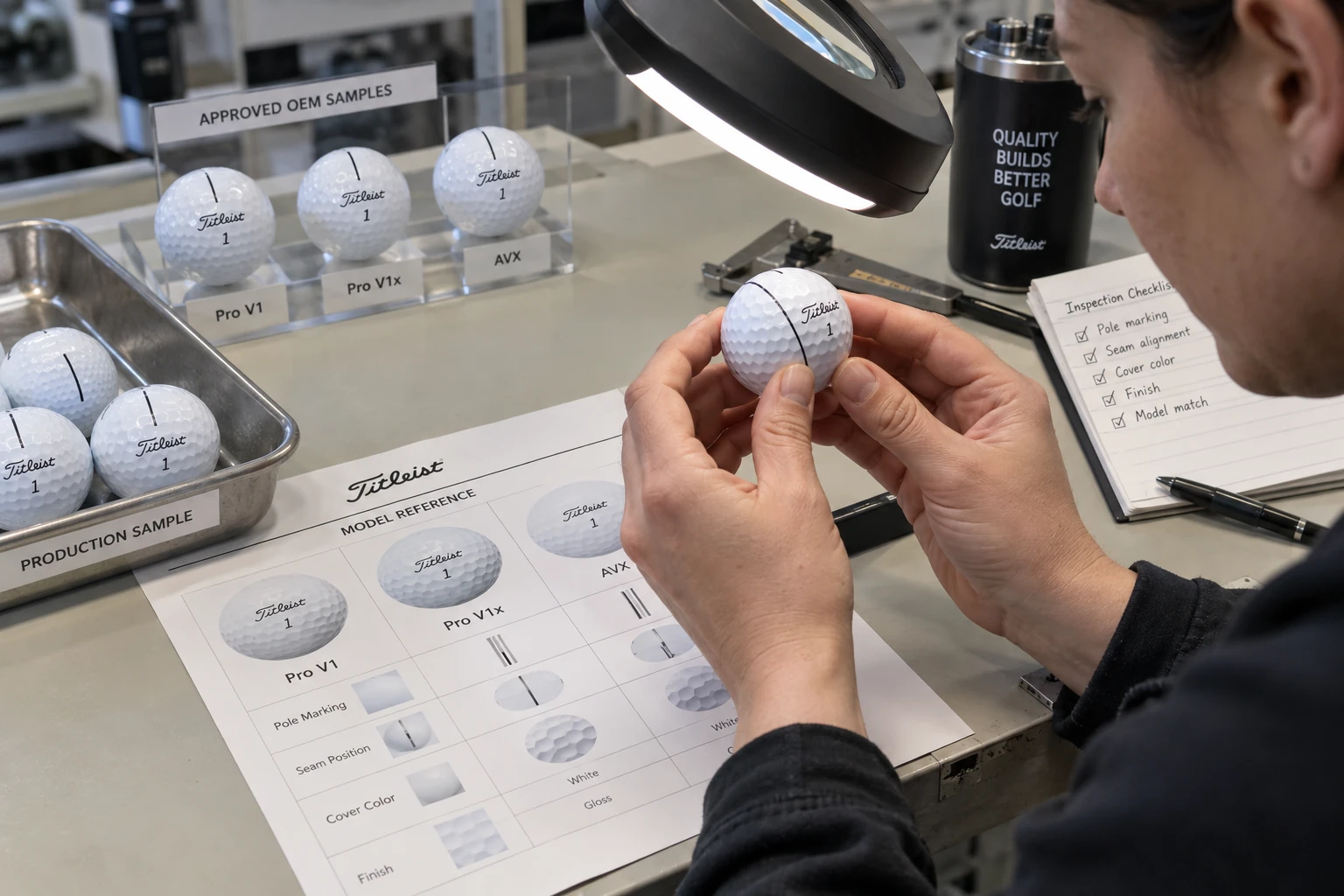
Verify the exact ball type, not the factory’s reputation. Match the current List result to the physical ball’s identity, especially its Pole and Seam markings, cover color, and current marking version. A factory may make a listed model and still quote you a different private-label SKU.
The R&A’s Conforming Ball List guidance specifically tells users to pay close attention to Pole and Seam markings because they identify the exact model in question.
This gives B2B sourcing a simple rule:
Factory-Level Claim ≠ Model-Level Evidence
“We have USGA conforming balls” does not answer which ball type, which current entry, which markings, or whether the SKU in your PO is the same identity.
| Match Layer | Check | Evidence | Buyer Action |
|---|---|---|---|
| Current status | Current entry | Official search | Save result + date |
| Brand / model | Exact identity | List + supplier record | Match SKU |
| Pole marking | Major marking | List + physical ball | Compare directly |
| Seam marking | Minor marking | List + physical ball | Compare directly |
| Cover / finish | Current appearance | Spec + production photo | Confirm version |
Do the Pole and Seam Markings Match?
Use three layers: current status, model identity, and physical production identity. Save the List result and date, compare the markings and relevant appearance, then check them against a current production ball.
Do not use an old marketing sample merely because it is convenient. Your current artwork or marking revision matters because a correct previous version can still be wrong for the SKU now entering production.
A clear failure signal is “USGA standard” with no exact-model match. The wording may sound reassuring, but it gives procurement no model-level evidence to approve.
Supplier shall identify the exact golf ball type offered, including model identity, visible markings, cover color or finish, current conformity-list status where required, and any change in construction, material, dimple tooling, finish, or identification since the referenced submission.
An Exact Model Match Checklist should therefore connect the official result, physical markings, current appearance, and OEM SKU. Do not close this decision at factory level.
✔ True — Conformity evidence belongs to an exact ball type
A factory can manufacture several constructions, markings, colors, finishes, and private-label models at the same time. Verify the one in your PO.
✘ False — “If this factory has one listed ball, every golf ball it makes is covered”
Factory capability is useful background. Exact-model identity is what closes your SKU decision.
What Does a Past Listing Actually Prove?
A dated supplier screenshot may be genuine. The problem begins when historical evidence is presented as the answer to a current-status question.
A past listing proves that the referenced ball type had that status at an earlier point; it does not prove current List status today. A model absent from the current List should not automatically be labeled lower quality or non-conforming—determine why it is absent and whether its identity changed.
The R&A explains that its current List contains balls submitted within the previous 12 months and found to conform. Additional samples are required to remain on the List beyond that cycle, and the List is updated on the first Wednesday of each month.
So:
Past Evidence Proves Past Status.
But:
Expired ≠ Failed.
The same R&A guidance explains that a ball absent from the current List may never have been submitted, may have been ruled non-conforming, or may have expired from the List.
Keep those states separate:
-
Current Listed — appears on the current List.
-
Past / No Longer Current — previously listed but absent from the current List; determine why.
-
Never Submitted / Unknown — current or historical conformity evidence has not been established.
-
Non-Conforming — evaluated and found not to conform.
An old screenshot presented as proof of today’s List status is a failure signal. Historical evidence can remain useful, but only for the period it actually documents.
What Changed Since the Listed Model?
Past evidence becomes more useful when it is paired with a current identity check. Ask what changed in markings, cover color or finish, construction, dimple identity, material composition, and the current product version.
Rules information needs version control too.
As of September 2026, the governing bodies state that the ODS testing approach will not change before January 2030 while alternative approaches are evaluated. Their June 17, 2026 joint statement supports a broader buyer principle:
Conformity requirements are version-controlled, not permanent spreadsheet constants.
Do not carry a years-old compliance worksheet forward indefinitely. Record the date of your current List check, current guidance, historical evidence, and current product identity in one Status History + Current Check Record.

Does the Current List Prove Your Shipment?
Even a correct current List result leaves one procurement question open. The List tells you about the ball type; it does not inspect the production lot you are purchasing.
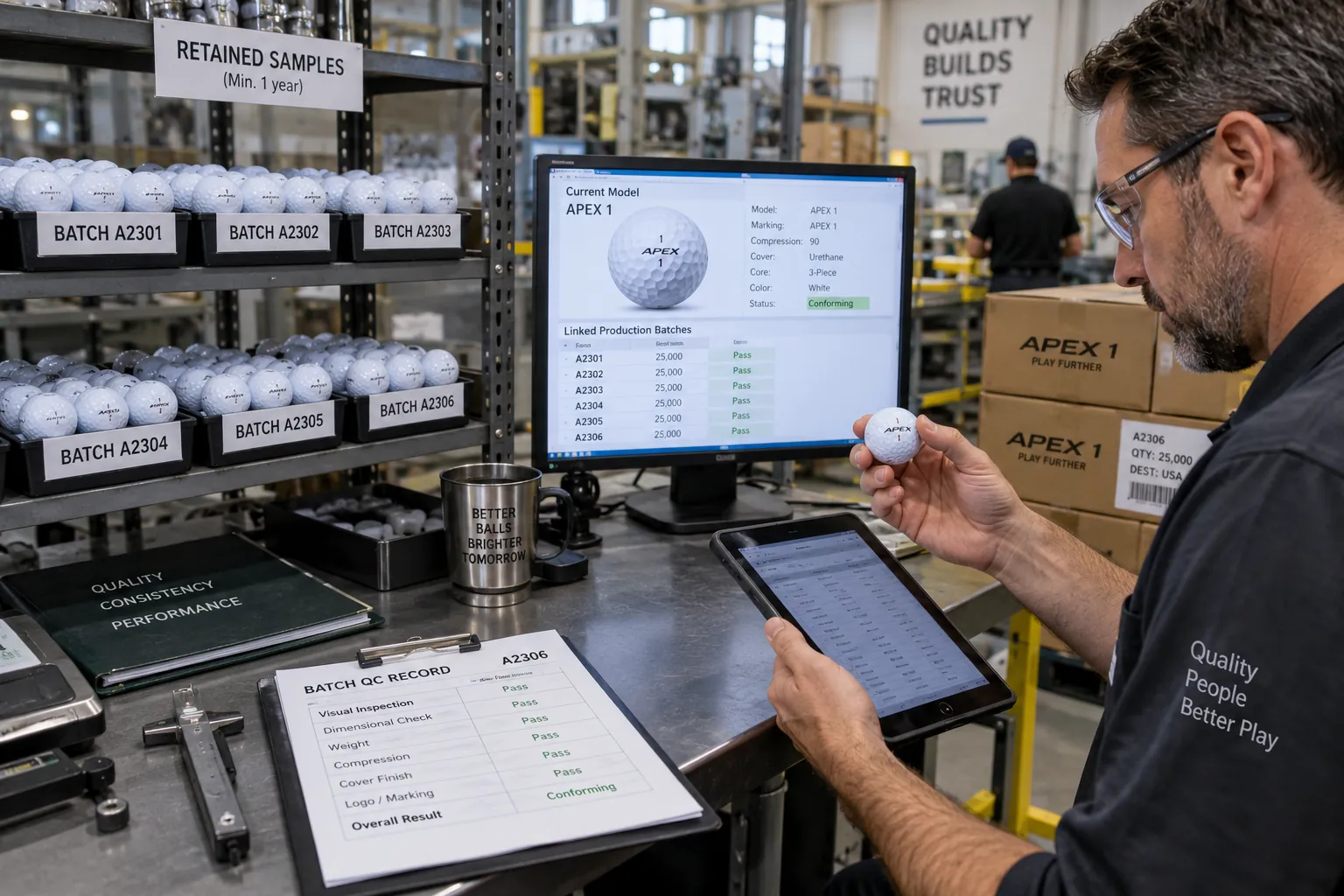
A current List entry proves current status for the exact ball type; it does not inspect your production lot. Before shipment approval, link the listed identity to the batch you are buying through current markings, product-version control, a named no-change declaration, production batch ID, and batch-linked QC evidence.
Keep two evidence layers distinct.
Model-level evidence includes the current entry, exact markings, cover identity, and model version.
Production-level evidence can include a named no-change declaration, production batch ID, current production photos, retained-sample reference, and QC-report reference.
The current 2026 USGA Golf Ball Conformance Submission Guidelines define ball type using characteristics including external appearance, markings, construction, dimple pattern, and material composition. The guidance also treats cover color and finish as potentially meaningful identity differences.
For procurement, the lesson is:
same product name ≠ automatically same controlled product identity
Which Changes Trigger Re-Verification?
Replace “same ball” with named variables. Ask whether markings, cover color, matte/gloss finish, construction, dimple pattern or tooling, material reference, or another relevant product-identity feature changed.
Golfara’s buyer-side controls can go one step further by linking that identity to a batch ID, current production photo, retained sample, and QC record. Those are procurement controls—not a claim that USGA requires your PO to contain those exact fields.
| Production Match Field | Supplier Evidence | Risk if Missing | Buyer Action |
|---|---|---|---|
| Exact listed identity | Current List result | Wrong model | Match exact entry |
| Pole / Seam markings | Current production photo | Identity drift | Compare markings |
| Cover color / finish | Current spec / photo | Different identity | Reconfirm status |
| Construction / material | Named no-change record | Uncontrolled change | Require declaration |
| Batch identity | Batch + retained sample | No lot linkage | Link production |
A current List entry without production linkage is another failure signal. The model may be current, but you still need evidence that the production lot you are buying corresponds to that controlled product identity.
This is where a buyer-side traceability rule becomes useful:
evidence must link to the thing being accepted
In testing, that means tying the method and sample to the production batch. In conformity purchasing, it means connecting:
official model evidence + product version + production batch reference
Create a Production Match Record with those links before shipment approval. If you need the detailed testing methods behind the batch report, move that decision to how to verify golf ball batch quality.
✔ True — Current status and production-lot evidence solve different risks
The official List verifies the ball type. Your buyer-side records connect the production lot you are approving to that controlled identity.
✘ False — “If the model is on today’s List, every future batch from that factory is automatically proven identical”
Current status should be paired with change control and lot linkage when production continuity matters to your purchase.
What Evidence Should Your PO Require?
“USGA conforming,” “USGA standard,” or “same as our listed ball” may start a supplier conversation. None of those phrases tells your procurement team what must exist before shipment release.
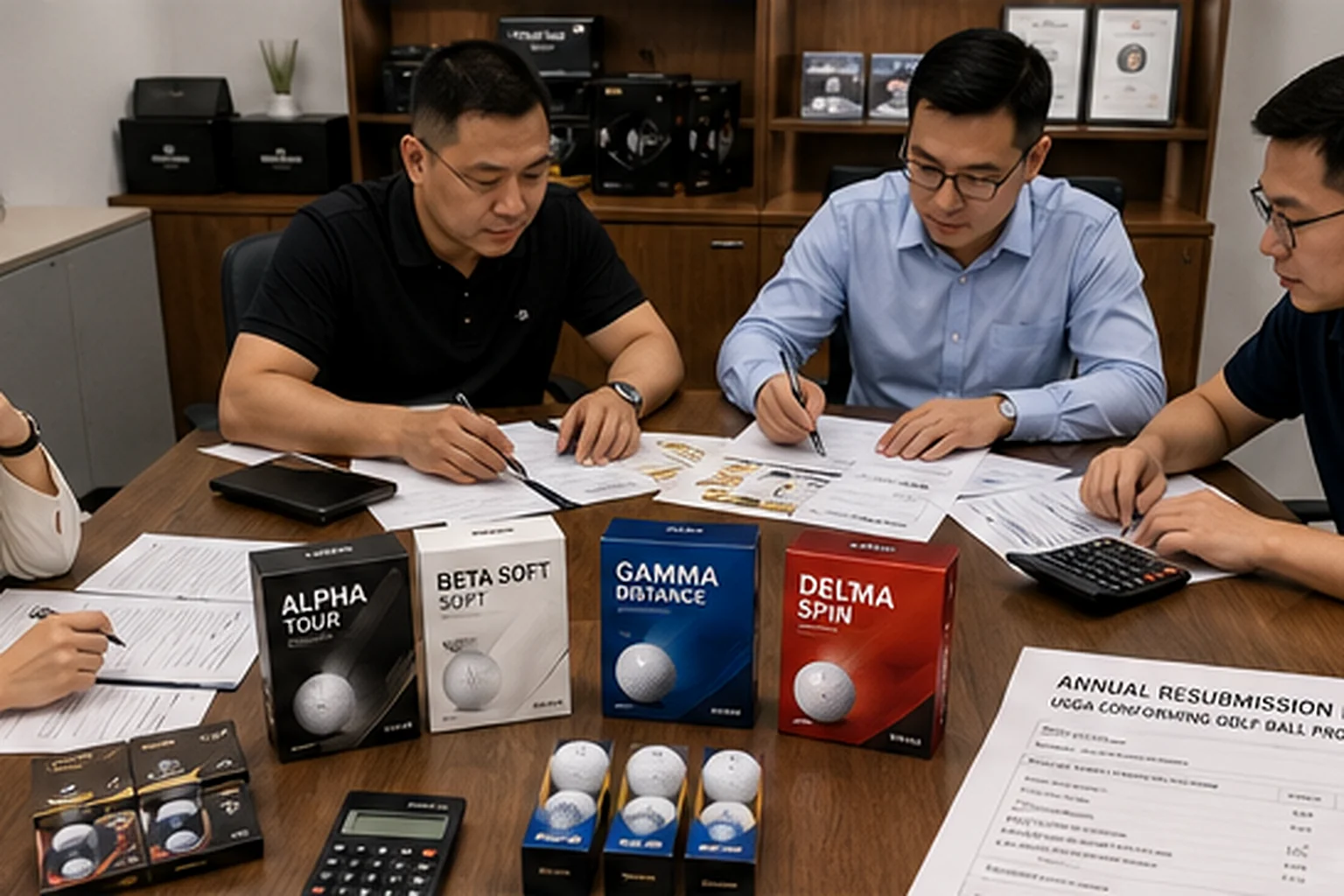
Your PO should convert a conformity claim into verifiable release evidence. Where current List status is required, ask for the current exact-model result, physical marking match, product-version and no-change record, production batch reference, retained-sample reference, and batch-QC link before approving the shipment.
Build a Current Conformity Evidence Pack, not a folder casually labeled “USGA certificates.”
The control sequence is:
Claim → Exact Model → Current Status → Change Control → Production Match → PO Evidence
What Belongs in the Evidence Pack?
Organize the pack around four decisions: channel, model, production, and claims. That structure makes it easier to see whether one strong document is being used to cover a question it cannot answer.
For channel, record intended use, customer/event requirement, and whether current List status is required.
For model, keep current official status where required, Pole and Seam markings, cover color or finish, model identity, and check date.
For production, retain the named no-change record, production batch ID, retained-sample reference, and QC-report reference.
For claims, approve the wording used on packaging, websites, catalogs, and sales materials without implying unsupported governing-body endorsement.
| Decision | Evidence | What It Closes | Buyer Action |
|---|---|---|---|
| Need current status? | Channel requirement | List decision | Confirm use |
| Exact model? | Current entry + markings | Identity risk | Match physical ball |
| Product unchanged? | Named no-change record | Version risk | Review changes |
| Shipment linked? | Batch + retained sample | Lot-traceability risk | Link production |
| Claim supported? | Approved wording | Marketing risk | Approve copy |
Where current List status is required, shipment approval shall include current exact-model evidence plus a batch-linked production record showing the approved model or version, production batch ID, retained-sample reference, and confirmation that no unapproved product-identity or construction change occurred.
The evidence level should follow the Channel Decision Gate. A tournament-facing SKU may require current exact-model evidence plus production linkage. A different program may use another evidence stack, but “USGA standard” should never be the complete acceptance criterion.
If your program now needs samples, fees, submission timing, marking preparation, or maintenance workflow, treat that as a separate submission decision rather than expanding the conformity-verification scope of this page.
The goal is not more paperwork. It is making sure:
Claim → Evidence → Current Transaction
all describe the same golf ball.
FAQ
Can I Use a Factory’s Listing for My Private Label?
Do not assume a factory’s listing automatically covers your private-label SKU. First verify whether your configuration matches the exact listed ball type and identifying markings.
A factory-level listing does not automatically extend to every OEM construction, marking version, color, finish, or private-label SKU produced at that facility.
Does Changing Ball Color Affect List Identity?
Yes—under current USGA submission guidance, different cover colors are treated as separate submissions, and matte versus gloss versions of otherwise identical construction can also be treated as separate ball types.
If you plan white, yellow, or another cover color, verify that the evidence you are using applies to that configuration. Keep the physical color and finish in your Exact Model Match file. This is especially important when procurement inherits a conformity screenshot from an earlier colorway and assumes the new retail version requires no further review.
Can a Custom Logo Change the Ball’s Identity?
A custom logo does not automatically mean the underlying ball becomes a different conforming model, but changes to identification markings can matter. Do not assume every artwork change is irrelevant when exact-model identity is part of the conformity evidence.
Separate promotional logo artwork from the Pole and Seam identification used to distinguish the ball type. If your branding changes or overlaps with identifying marks, compare the proposed version with current guidance and the evidence supplied for that model. Submission artwork rules belong in the dedicated submission workflow rather than being guessed at during PO approval.
What If the List and Production Markings Differ?
Treat a mismatch as an open verification issue, not a minor artwork discrepancy. If the physical production ball does not match the identifying markings in the evidence you are relying on, you have not yet demonstrated that the SKU is the exact ball type you verified.
Hold the conformity decision while the supplier explains the difference. Check whether the wrong production version, an obsolete artwork file, another SKU, or a legitimate product change is involved. Then update either the production identity or the evidence path before approving conformity-dependent claims or shipment release.
Should I Recheck List Status on Every Reorder?
If current List status matters to your channel or customer commitment, recheck it when approving a new reorder rather than treating the prior shipment’s screenshot as permanent proof. Current status and product identity are both time-sensitive sourcing inputs.
You do not need to rebuild the entire compliance file from zero. Start from the previous controlled record, then refresh the current List result, check date, physical markings, product version, and any declared changes. This is particularly important after a long reorder interval or a color, finish, marking, construction, material, or tooling change.
What Evidence Do I Need When G-3 Does Not Apply?
You may not need current List maintenance solely for G-3, but you still need evidence appropriate to the product claim and commercial risk. General conformity, production consistency, channel performance, and marketing claims remain separate sourcing decisions.
For a non-G-3 program, define what your buyer actually needs: rules-conformity evidence if you make that claim, batch-linked QC for production consistency, durability evidence for range use, or printing and presentation controls for a gift program. Avoid replacing one overbroad rule—“everything needs the current List”—with the opposite assumption that no evidence matters.
Conclusion
China-made golf balls can conform to USGA/R&A requirements, but your purchasing decision should not stop at a supplier claim, a List screenshot, or the fact that the factory has produced one conforming model.
Decide whether your channel needs current status. Verify the exact ball type. Separate current evidence from historical evidence. Identify changes that trigger re-verification. Then connect the model-level evidence to the production lot you are actually buying.
Need → Exact Model → Current Status → Change Control → Production Match → PO Evidence
Conformity is one important variable inside a broader sourcing scorecard. If your next question is whether the construction, durability, batch consistency, and supplier controls are strong enough for your program, please use the broader guide below.
You might also like — Are Chinese Golf Balls Any Good? What Buyers Should Verify