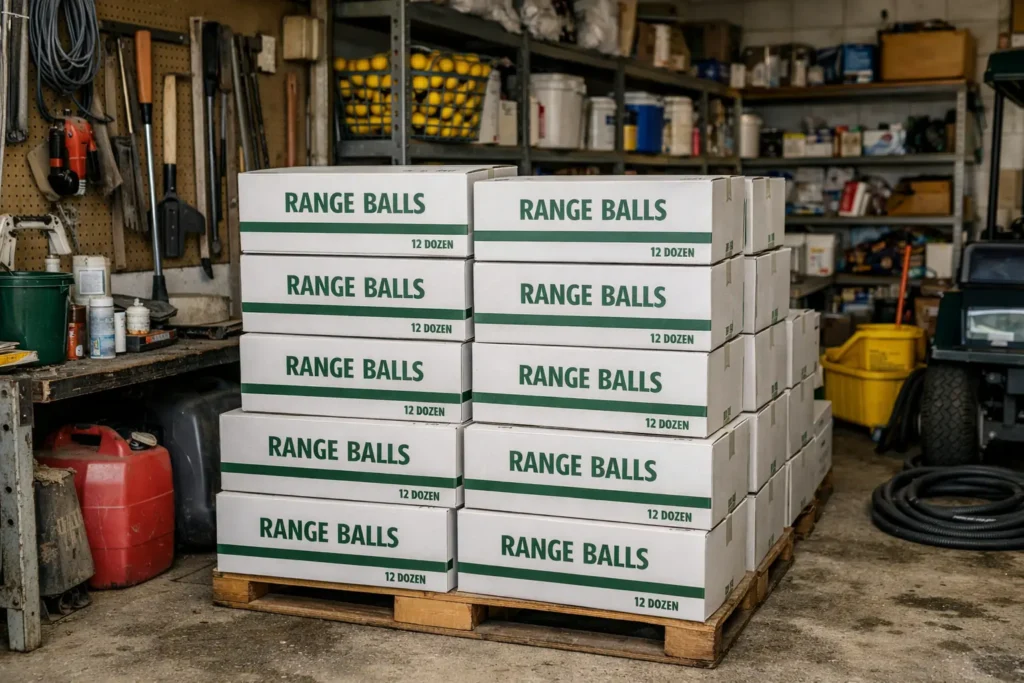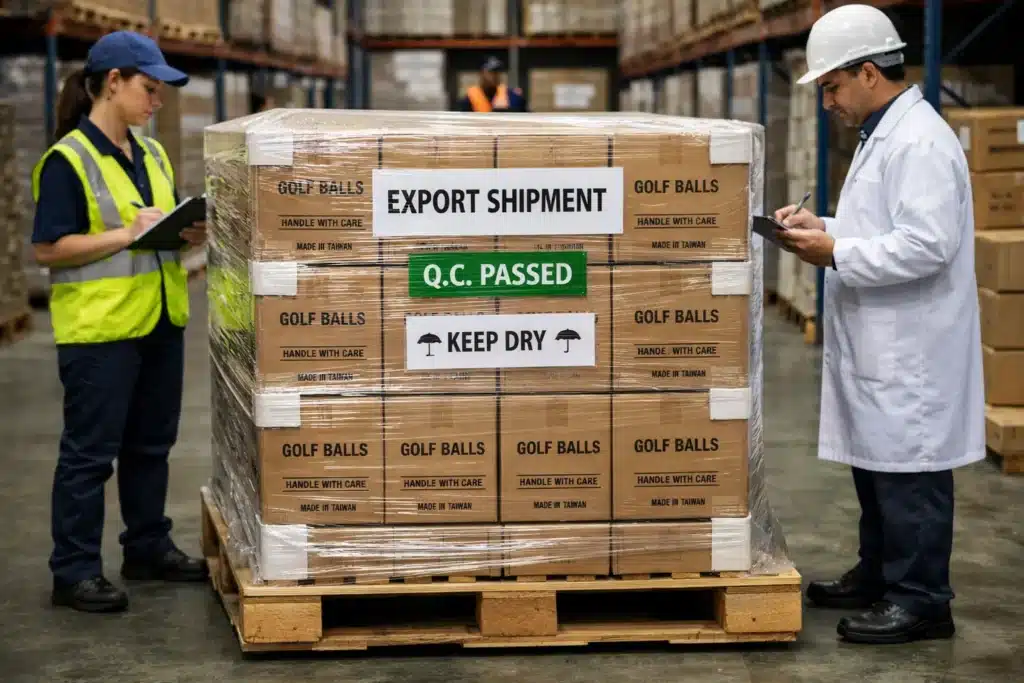
If you’re importing golf balls from China, plan lead time from “cargo-ready” to “in-hand”—not port-to-port. Door-to-door time = production lead time + export handling + main freight + customs clearance + last-mile delivery, plus a lane buffer you verify in the booking week. This guide compares air/sea/rail options for US/EU/AU and explains when auditable DDP can reduce customs workload for first-time importers.
The key is separating factory time from shipping time, then reverse-planning from your target in-hand date.
How long is door-to-door shipping from China?
Buyers often plan from a port-to-port estimate, then get surprised by what happens around it: inspection booking, export docs, cutoff misses, port dwell, customs holds, and last-mile appointment delays. That’s why “transit time” feels unpredictable—because the clock you’re using is incomplete.
For B2B buyers, the only useful answer is door-to-door: production lead time + export handling + main freight + clearance + last mile. Plan from “cargo-ready” (deposit + artwork approval locked) and add a lane buffer you verify in the booking week. US/EU/AU lanes differ by mode, but the planning method is the same.
Before you compare modes, align everyone on one clock and one finish line (delivered to your warehouse, or delivered to a specific Incoterm milestone). Treat any day-count as a benchmark—then add buffer for peak weeks, inspections, and handoff variability.
| Decision dimension | US (air/sea) | EU (rail/sea/air/truck) | AU (air/sea) | What to verify / acceptance |
|---|---|---|---|---|
| Timeline clock | Express courier is fastest door-to-door; ocean varies by coast and port pair (benchmark + buffer) | Rail can be a middle path for parts of Europe; ocean varies by route + inland leg | Express courier is fastest; ocean depends on port pair + transshipment | Ask your forwarder to quote using the same clock (cargo-ready → delivered) and provide the last 4–8 weeks’ lane variability plus cutoff days. |
| Where delays hide | Customs holds, port dwell, last mile appointments | Border crossings, inland trucking slots, transshipment dwell | Quarantine/inspection, last mile capacity | Request a milestone list with owner per step. |
| Buffer triggers | Peak demand, blank sailings, inspections | Border congestion, route changes | Peak air demand + weather | Define “latest ship date” + backup mode. |
✔ True — Plan from cargo-ready to delivered, not port-to-port
Port-to-port ignores the very steps that slip in peak weeks: export docs, inspection booking, port dwell, customs, and last-mile scheduling. If your launch matters, your clock must include those handoffs and a written buffer.
✘ False — “Transit time = port-to-port.”
Port-to-port can look “fast” while your cartons sit waiting for a cutoff, inspection slot, or delivery appointment. That’s how buyers miss season windows.
-
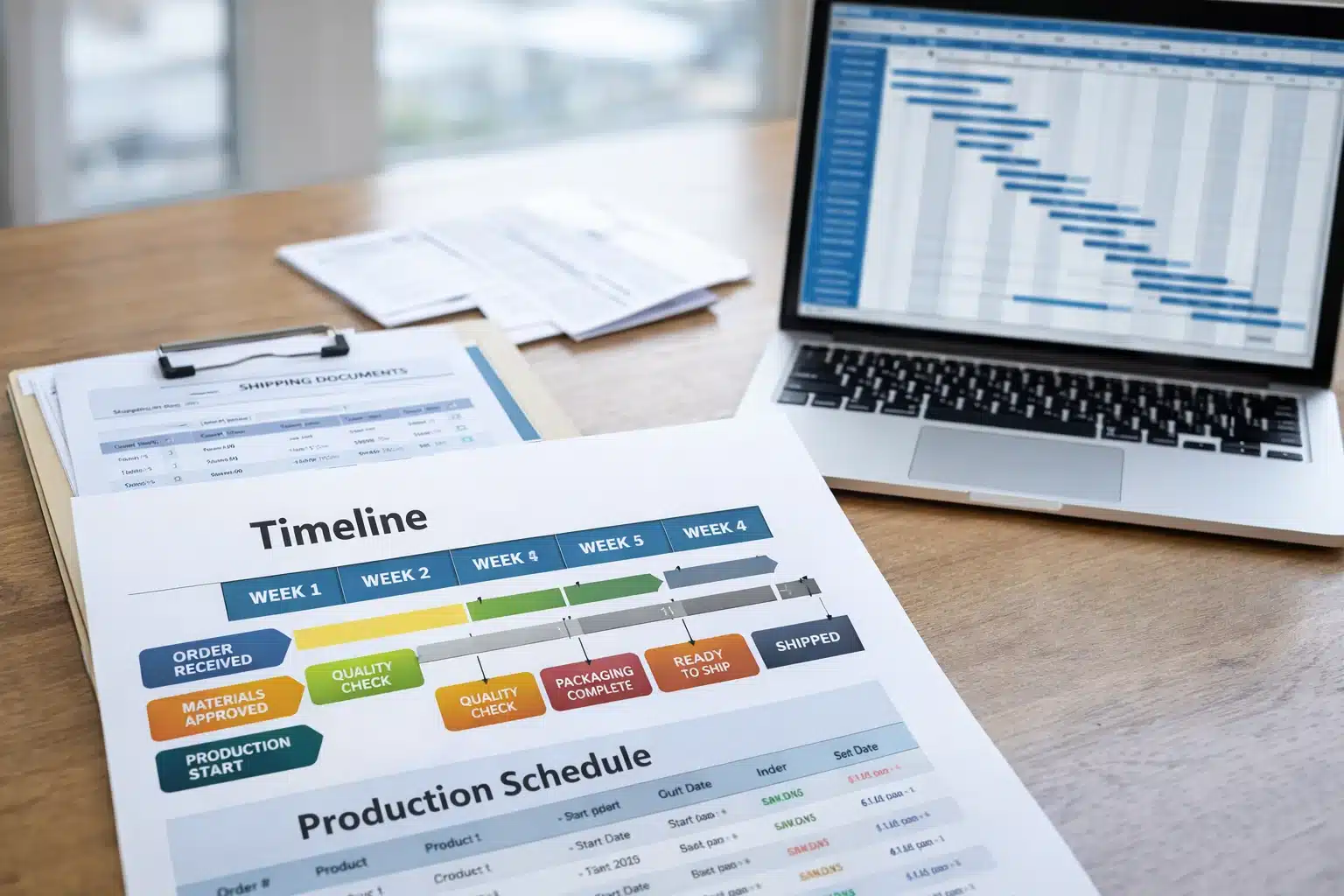
Day 0 definition (factory): deposit received + artwork approved.
-
Production lead time: depends on mold/formula choice, logo complexity, and packaging type.
-
PSI (pre-ship inspection) window: reserve it early; it’s a schedule item, not a last-minute add-on.
-
Export docs + pickup: confirm who prepares what and the cutoff schedule.
-
Main leg + clearance + last mile: choose a primary mode and pre-approve a rescue mode.
For many first-time B2B programs, the full chain from sample → mass production → freight → clearance often falls in 60–90 days planning window, and it can extend further when SKU complexity, packaging, peak season queues, or inspection/booking availability tighten. Confirm the milestone durations with your supplier and forwarder for your lane and the intended booking week.
Air, sea, or rail: which mode fits your order?
Golf balls are dense, and dense cartons behave differently in logistics. A “cheap per kg” quote can still be expensive if damage risk, variability, or rework labor shows up at the destination. Mode selection should match your urgency, cashflow model, and tolerance for variability.
Mode choice is a business decision, not a freight decision. Pick one primary mode for your program, then define a rescue mode you can trigger when peak congestion hits. Dense cartons also need stronger packaging on slower, multi-handling routes.
One common confusion: “air” can mean express courier (door-to-door) or airport-to-airport air freight (which still needs clearance and local trucking). Express courier is typically the fastest door-to-door option, while air freight timelines and responsibilities vary by lane, broker readiness, and delivery appointment constraints. When requesting air quotes, ask whether the offer is express courier (door-to-door) or airport-to-airport air freight, and which party covers clearance and last-mile delivery.
US (air / ocean)
-
Use express courier or air freight when lateness costs more than the premium (events, seasonal drops, retailer reset deadlines).
-
Use ocean for replenishment when margin matters and you can hold buffer stock.
-
Practical hybrid: plan ocean as default, but pre-approve a partial-air rescue batch if the lane tightens.
EU (truck / rail / ocean / air)
-
Rail can be attractive for parts of Europe as a middle ground on speed vs cost, but it adds border and routing variables.
-
Ocean works for planned replenishment when you manage packaging and last-mile appointments.
-
Inland trucking is not “automatic”—in peak distribution weeks it can become the bottleneck.
AU (air / ocean)
-
If your program is time-sensitive, express courier can protect promotions.
-
Ocean is efficient for planned replenishment, but validate inspection/quarantine expectations and moisture protection for long routes or palletized moves.
A simple decision test: write down your cost of lateness. If being late triggers markdowns, lost accounts, or missed events, paying for speed (or partial speed) is often cheaper than downstream damage.
What shipping cost levers matter most in 2026?
Buyers often ask “what’s the cheapest way,” but the real cost drivers are usually structural: how you build the shipment, how you protect cartons, and whether you’re shipping into peak-week volatility. Landed cost stability matters more than winning a single quote.
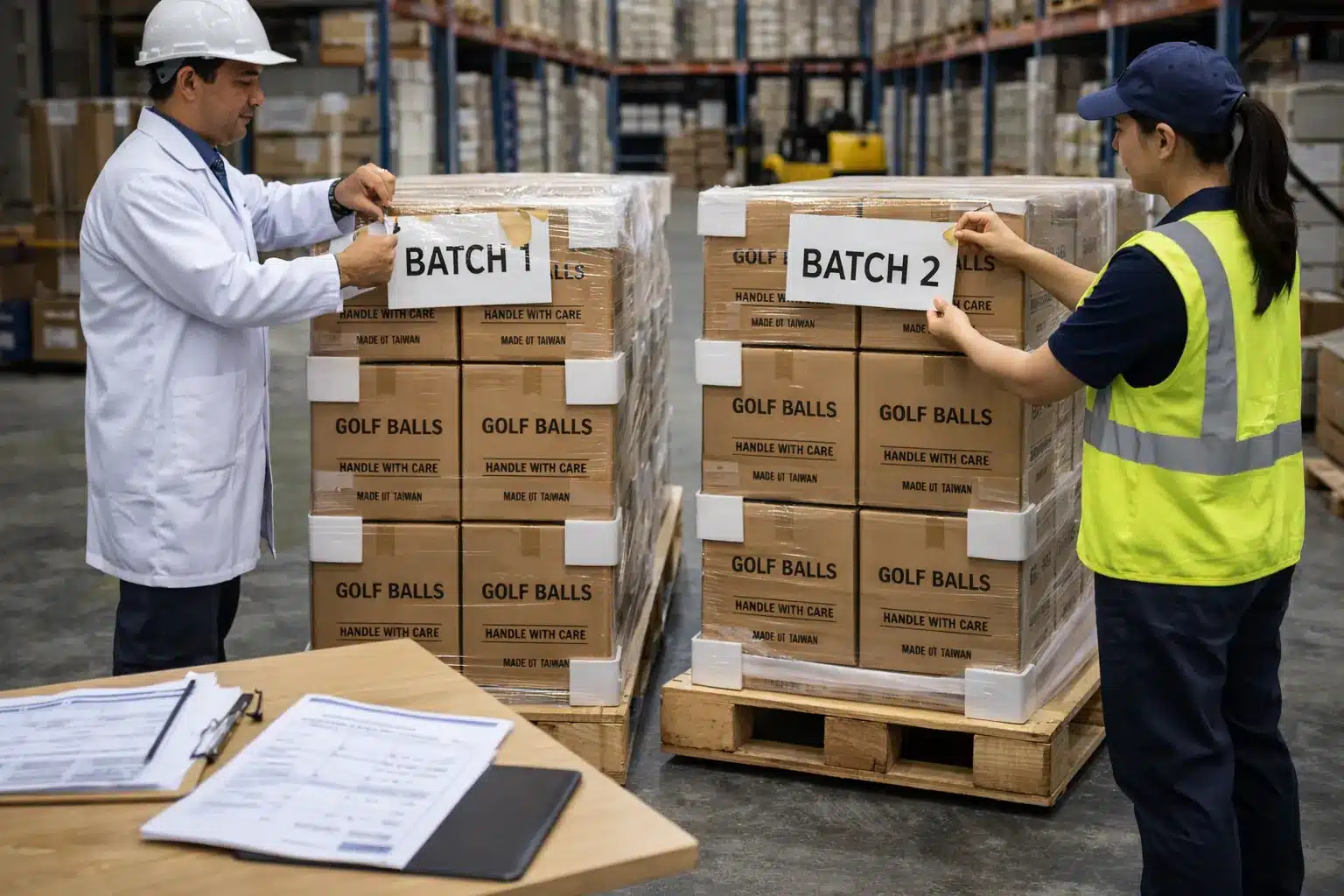
Instead of chasing the lowest quote, lock the few levers that move landed cost most. Treat peak season as a budget-variance event and pre-define what you’ll switch—mode, routing, or shipment split—before you need it.
Shipment structure: single vs split
Split shipments can protect deadlines and cashflow: produce once, ship part now, release the rest later. The operational constraint is storage. Some factories cap storage to 6 months and may charge storage fee—confirm the exact cap and fee basis in writing before you split shipments.
Acceptance criteria to put in your PI/PO:
- Storage cap (max months) and fee basis (if any).
- Release dates for each batch and who triggers release.
- What happens if release slips into peak weeks (mode change? reroute? partial air?).
LCL vs FCL for dense cargo
LCL can look cheaper for smaller orders until you model the extras: more handling, more touchpoints, and fee layers that can erase savings. For dense cartons, handling risk and damage exposure can dominate the “freight line item.” If you must use LCL, treat packaging and palletization as part of the freight strategy—not an afterthought.
✔ True — LCL can be cost-effective, but only when fees and handling risk are modeled
For dense cargo, the decision isn’t “LCL vs FCL” in isolation—it’s landed cost after handling, accessorials, and damage exposure. Compare like-for-like quotes and model touchpoints, not just the base freight line.
✘ False — “LCL is always cheaper for small orders.”
For dense cartons, extra handling and fee layers can erase savings. If you choose LCL, tighten packaging specs and require a transparent fee breakdown.
Peak-week volatility as a planning variable
Many ocean lanes experience tighter conditions in mid-to-late year peak windows (often discussed as July–Oct), but timing shifts. Don’t guess: request lane-specific variability and the cutoff weeks that historically spike. Then choose your buffer and rescue plan accordingly.
Quote transparency format (the underrated lever)
Ask for a quote template that separates:
-
Product price (FOB-style baseline)
-
Main freight
-
Clearance/brokerage
-
Last-mile delivery
-
Exceptions (holds, inspections, re-delivery)
You’re not trying to eliminate variability—you’re trying to prevent surprise fees from becoming a black box that undermines procurement decisions.
DDP vs FOB/CIF: which Incoterm reduces risk?
First-time importers fear customs complexity and hidden costs. Experienced importers fear losing control and paying an opaque DDP margin. Both concerns are valid—so the best Incoterm is the one you can manage and audit.
DDP is “stress-free” only when it’s auditable. If you’re new to importing, DDP can reduce customs workload—provided importer-of-record, proof templates, and exception SOPs are agreed upfront. If you already have a broker and stable SOPs, FOB/CIF may offer more control.
Put the timeline definition into your PI/PO so “lead time” and “delivery date” can’t be confused. The most common failure is simple: the supplier thinks lead time ends when goods are ready, while the buyer thinks lead time ends when goods arrive.
| Decision dimension | FOB | CIF | DDP | What to request / acceptance |
|---|---|---|---|---|
| Who controls customs | Buyer/broker | Buyer/broker | Seller/agent | Confirm importer of record + request a redacted entry template |
| Cost transparency | High (separate items) | Medium | Variable | Require a cost breakdown format + conditions for “no surprise fees” |
| Delivery certainty | Depends on buyer ops | Depends on buyer ops | Often higher for first-timers | Demand milestone tracking + named owners per step |
| Risk of delays | Broker readiness | Broker readiness | Agent/broker capacity | Ask for exception SOP: holds, inspections, doc errors—who fixes what |
✔ True — DDP reduces workload, not responsibility
DDP can simplify your first imports, but only when responsibilities, exception handling, and proof of clearance are written and shareable. You still must provide accurate consignee details and compliance-relevant information.
✘ False — “DDP means no paperwork is needed at all.”
You’ll still provide consignee data, delivery constraints, and product details. Missing or inconsistent information is a common cause of holds.

DDP is worth paying for when it removes unknown-unknowns—surprise brokerage steps, unclear duty responsibility, or last-mile confusion. The control strategy is simple: require evidence templates and exception handling steps before you sign.
Provide a lane-based DDP timeline plan (cargo-ready → delivery) with (1) customs entry sample (redacted), (2) duty/tax paid proof template, (3) last-mile POD fields, (4) exception handling steps (holds/inspections) and who pays what under DDP.
Also make this explicit in your PI/PO:
- Production lead time definition (Day 0 trigger and what counts as completion).
- Delivery date definition under your chosen Incoterm (what “delivered” means).
- Milestone list with responsible party per step (factory, forwarder, broker/agent, last mile).
When do China factories and freight hit peak season?
Many buyers plan around freight peak only, then get caught by compound risk: holiday shutdowns compress production, factories prioritize larger orders, packaging and inspection slots queue up, and freight capacity tightens. The result is not just slower delivery—it’s missed cutoffs and forced mode changes.
Peak risk is usually a stack: holiday slowdown → packed production queues → fewer vessel/air slots → longer clearance and delivery dwell. Plan your PO date around both factory peak months and freight peak windows, not just one. The safest play is a reverse timeline with a clear latest ship date and a backup mode.
Factory-side: in many categories, peak pressure tends to show up in spring-to-early-summer and again in late-summer-to-fall windows, but exact timing depends on your SKU mix, customer priority rules, and packaging complexity. Two common bottlenecks are easy to underestimate:
-
Packaging work (especially first-run color boxes) can add extra time.
-
PSI booking can slip if you don’t reserve a slot.
Holiday anchors (year-dependent):
-
Chinese New Year (late Jan–Feb; exact date varies) can compress schedules before and after.
-
National Day week (early Oct) can affect production and export rhythm.
Freight-side: many lanes face tighter conditions in mid-to-late year peak windows, but the “worst weeks” can shift. Your job is to keep it lane-specific: ask your forwarder for the lane’s recent variability, the weekly cutoffs, and the high-risk weeks that deserve extra buffer.
Even now, I still remember the peak season right before Christmas 2025: a U.S. buyer placed an order for 6,000 custom balls as gifts, and with the clock ticking, air freight was chosen to meet the deadline. Air capacity tightened and rates rose; the shipment was split (2,000 by fast air/express and the balance by ocean) to protect the deadline. Peak season risk isn’t only factories—air/space constraints can force last-minute mode changes. Buyer takeaway: keep a lane-specific latest acceptable ship date plus a backup mode plan written into the PO/PI timeline.
How do you prevent carton crushing and moisture?
Golf balls are dense. In many disputes, the balls themselves are fine—the packaging isn’t. Long transits, stacking pressure, humidity, and repeated handling can crush corners, deform retail boxes, or soften cartons, creating relabeling labor and return risk.
Damage prevention is mostly packaging discipline: stronger master cartons, corner protection, palletization, and moisture barriers—plus photos at each checkpoint. For dense products, packaging is cheap insurance compared to rework, returns, and retailer complaints.
In most cases, the balls themselves are typically stable in transit; problems usually come from packaging deformation and moisture exposure around boxes, labels, and adhesives. The control strategy is moisture barriers + carton strength + checkpoint photos, plus batch-level consistency records from PSI so sample-to-mass expectations stay aligned.
✔ True — Most issues are packaging and moisture, not ball “performance”
Even with long ocean transits, the core ball construction is typically stable. Disputes more often come from crushed cartons, softened boxes, and moisture-affected labels—so your controls should focus on barriers, carton strength, pallet discipline, and checkpoint evidence.
✘ False — “If the balls are hard, packaging doesn’t matter.”
Retail boxes and master cartons fail first—and that’s what your customer sees. Prevent it with carton spec, corner protection, pallet discipline, moisture control, and evidence checkpoints.
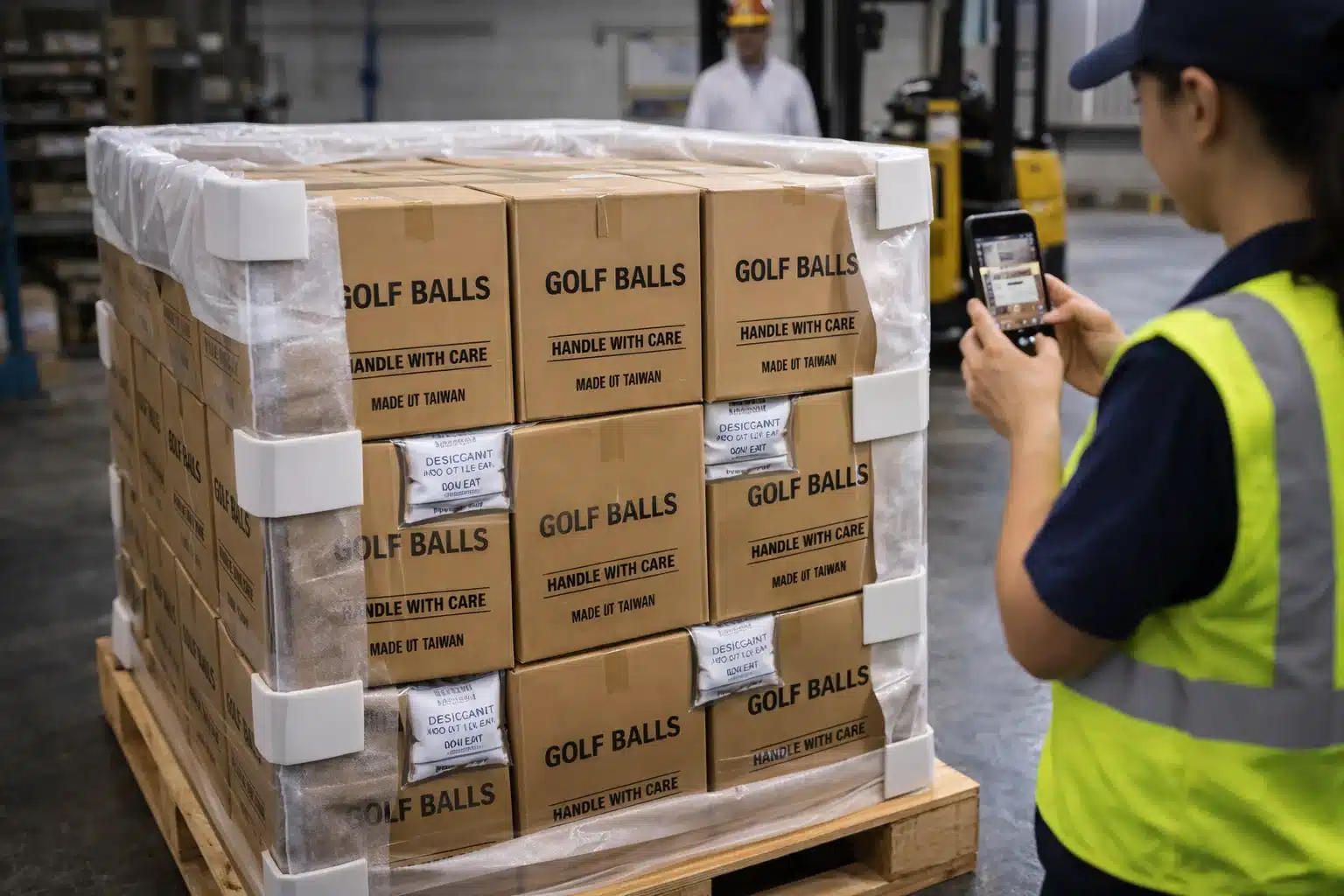
Master carton strength and structure
For dense cargo, prioritize double-wall cartons (or equivalent strength), controlled pack pattern, and consistent carton dimensions. Weak cartons fail under stacking even before humidity becomes a factor.
Corner protection + strapping + palletization
Corner guards reduce crush at the edges where damage concentrates. Strapping stabilizes loads; palletization reduces random handling. If you use wooden pallets (common in some lanes), ask for the required wood-packaging marks and supporting documents where applicable.
Moisture control for long routes
Use an inner liner or moisture barrier, add desiccants where appropriate, and avoid leaving packed cartons exposed before pickup. Humidity can soften outer packaging and increase crush risk.
Make QC evidence part of the shipment
Pre-ship inspection is not only “count and look.” For B2B consistency, request a batch-level summary aligned with your spec (dimensions/weight checks, compression-related checks where applicable, appearance consistency, and packaging photos). The goal is not perfection—it’s repeatability from sample to mass, documented by batch.
FAQ
What does ‘OTI transit time’ actually measure?
It’s designed to reflect buyer reality: cargo-ready at origin → a consistent destination milestone, not just port-to-port sailing days. Ask your forwarder which clock they use (cargo-ready vs gate-out vs port departure vs delivered-to-door), request recent variability for your lane, and keep the same clock across quotes so comparisons stay fair.
How early should I place a first-time custom order?
Plan from your launch date backwards with buffer. First-time projects need sampling, adjustments, and QC scheduling time, and avoidable slippage often comes from late artwork approvals and unreserved inspection slots. Map milestones (sampling → approvals → mass → PSI → freight → clearance → delivery).
Is DDP really ‘all inclusive’ for first-time importers?
It can be, but only if it’s auditable and responsibilities are written clearly in the PI/PO. Confirm importer of record, who pays duties/taxes, what proof you’ll receive, and what happens during customs holds or inspections. DDP reduces your workload, but it doesn’t remove the need for accurate consignee and product information.
What triggers the biggest shipping delays to the US/EU/AU?
Delays usually come from missed cutoffs, peak congestion, document errors, inspections, or last-mile appointment limits—not sailing time alone. Ask for the latest cargo-ready cutoff to hit your target delivery week, check holiday periods that compress schedules, and pre-approve a backup plan (partial air, split shipment, or alternate routing).
Why do small orders sometimes ship later than big orders?
In peak periods, factories may prioritize capacity for larger or long-term buyers, so smaller orders can slip unless you lock dates and simplify specs. Keep first runs simple (logo complexity and packaging), approve artwork quickly, and confirm queue position once deposit and approvals are in place.
Should I split shipments to reduce risk and cashflow pressure?
Splitting can protect deadlines and cashflow, but storage limits/fees and peak freight timing must be agreed up front. Define storage cap, fee basis, and release schedule in writing, set a latest ship date for each batch, and require batch-level packing photos and QC summaries before each release.
Conclusion
Predictable delivery starts with one consistent clock: cargo-ready (deposit + artwork approval locked) to delivered, plus a lane buffer you verify in the booking week. Choose a primary shipping mode based on urgency and margin, then define a rescue mode before peak congestion forces a rushed decision.
DDP can simplify first-time imports when you require auditable milestones and proof templates. Finally, protect the real ROI for dense goods with packaging discipline and QC checkpoints—because most “shipping problems” show up on cartons, not on the balls themselves.
You might also like — How to Order Custom Golf Balls in Bulk with Your Logo?