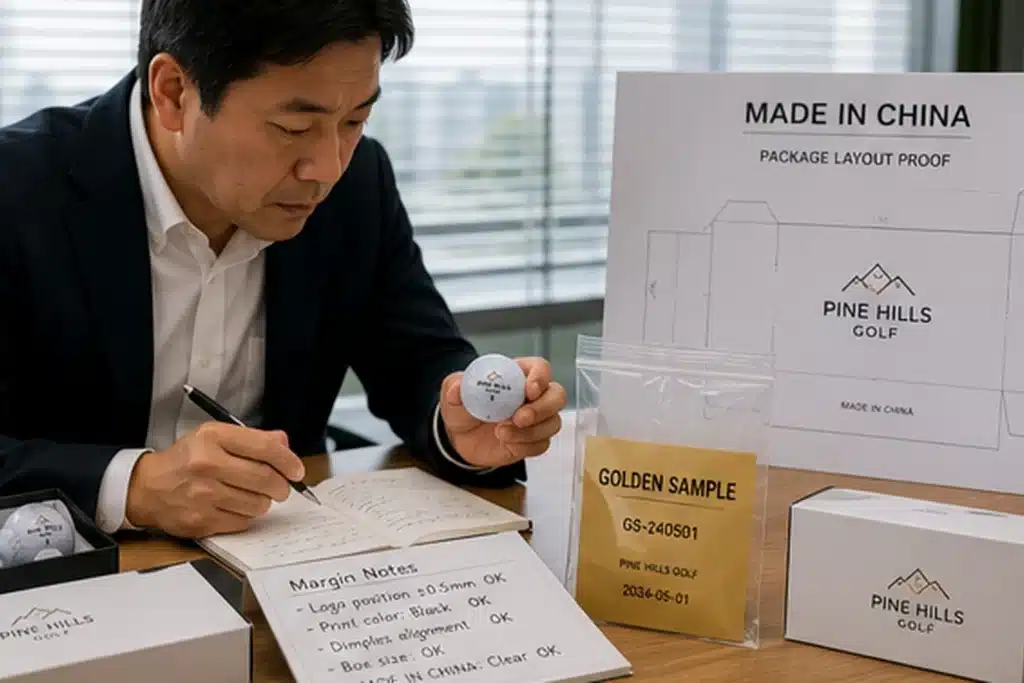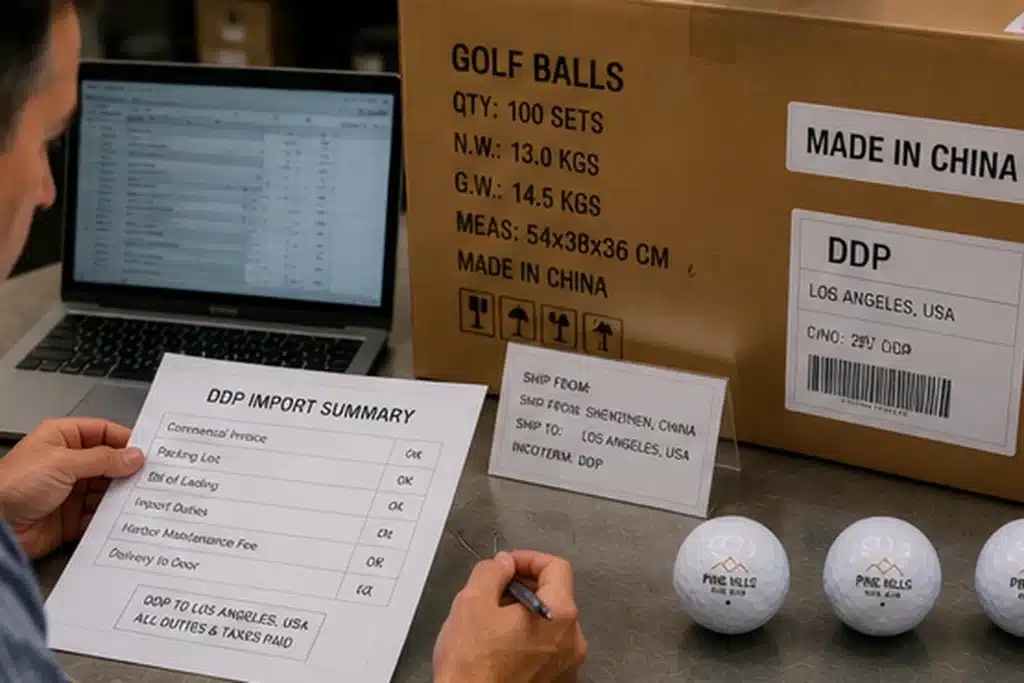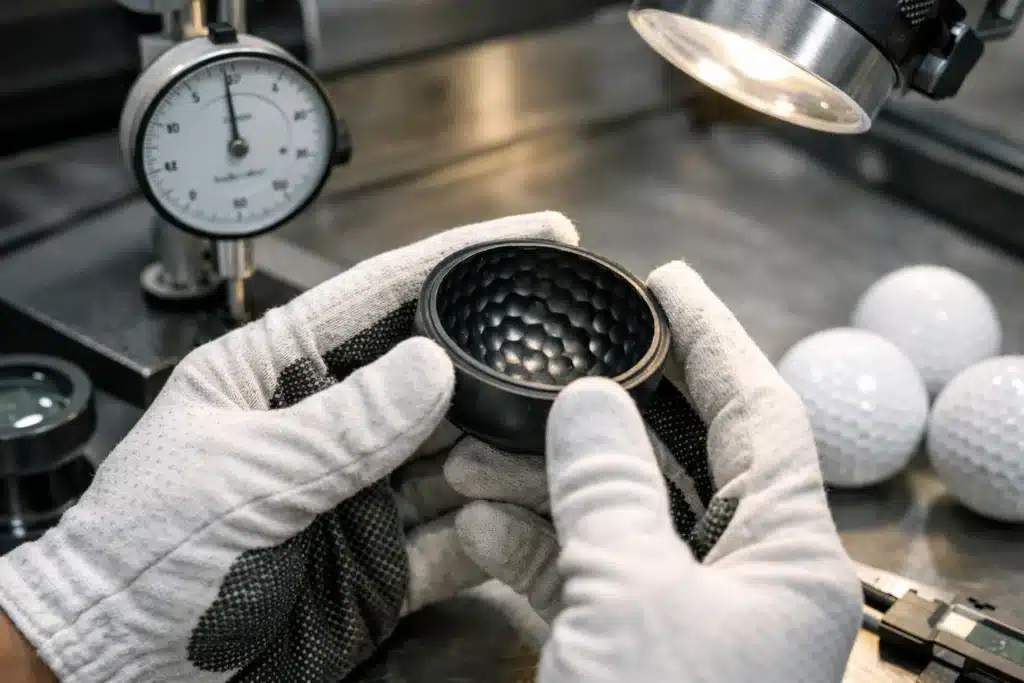
A precision US insert can still fail if China production is not engineered around its shrinkage, cooling, runner, and datum assumptions.
US and China can both produce excellent golf ball molds, but the strongest 2026 strategy is often hybrid OEM: control the critical dimple cavity inserts and reference measurements, then localize the mold base, runners, cooling, injection production, finishing, PM logs, and repair support in China. The winning mold is not the one with the better country label; it is the one that proves stable geometry after transfer, assembly, molding, maintenance, and scale-up.
| Engineering question | Direct answer | Proof to request |
|---|---|---|
| Are US golf ball molds better than China’s? | Not automatically | 3D dimple scan, CT/X-ray, PM log |
| When does hybrid OEM work best? | When inserts control geometry and China localizes production | Insert datum map + China first article |
| What breaks after mold transfer? | Shrinkage, cooling, runner fit, datum shift, seam drift | Cross-border DFM pack |
| What controls flight consistency? | Dimple depth, seam-line control, concentricity, cavity repeatability | Cavity-ID metrology report |
| What protects later batches? | Steel hardness, cleaning, spare parts, no unapproved buffing | H13 proof + back-to-reference record |
Before cutting steel, your team should lock five hybrid tooling gates:
-
Critical assets: dimple cavities, shut-off surfaces, datum references, insert faces, and seam-line geometry.
-
Localized assets: mold base, cooling channels, runner system, ejectors, fixtures, cleaning, and repair support.
-
Cross-border DFM: press model, clamp tonnage, injection pressure, holding pressure, mold-temperature window, runner type, material grade, and measured shrink multiplier.
-
First-article proof: 3D dimple profile, CT/X-ray concentricity, cavity ID, insert serial number, calibration proof, and buyer-defined tolerance.
-
Batch-life protection: H13 or equivalent hardness proof where required, PM logs, release-agent control, spare-parts BOM, and before/after back-to-reference checks after any tool touch.
The practical answer is not “US mold or China mold.” It is ship or control the precision inserts, localize the heavy production system in China, and verify every first article, repair, and scale-up event with auditable data instead of assumptions.
Why is hybrid OEM better than origin choice?
You may be tempted to decide by country label, but your real risk is whether the tooling surface that controls dimple geometry can stay measurable, maintainable, and repeatable at scale.
Hybrid OEM usually beats a pure origin debate because it separates what must never drift from what should be localized. You can control critical dimple inserts and reference measurements while using China for mold-base adaptation, production, finishing, packaging, maintenance, and faster repair support.
US and China can both produce excellent golf ball molds when stability is proven. The weak question is “Which country makes better molds?” The stronger question is which component controls performance variance. In a golf ball, that usually means dimple cavity geometry, alignment datums, shut-off surfaces, parting-line control, and the repeatability of first-article verification.
The USGA/R&A Overall Distance and Symmetry Test Protocol makes this an engineering issue, not a cosmetic debate. In symmetry testing, axis-dependent carry and flight-time differences can become a conformance issue, so seam-line control and insert alignment are not cosmetic details. If seam mismatch, insert shift, off-center assembly, or dimple-depth drift creates directional flight bias, a pretty sample cannot rescue unstable symmetry.
| Strategy | Best use | Main risk | Evidence to request | Buyer move |
|---|---|---|---|---|
| Full US mold | Maximum local control | High cost / repair lag | Full metrology pack | Use for limited local runs |
| Full China mold | Fast production and repair | Supplier-tier variance | 3D dimple + PM log | Use with strong QC |
| Hybrid inserts | Premium scale-up | Cross-border DFM mismatch | Insert report + China FAI | Use for flagship builds |
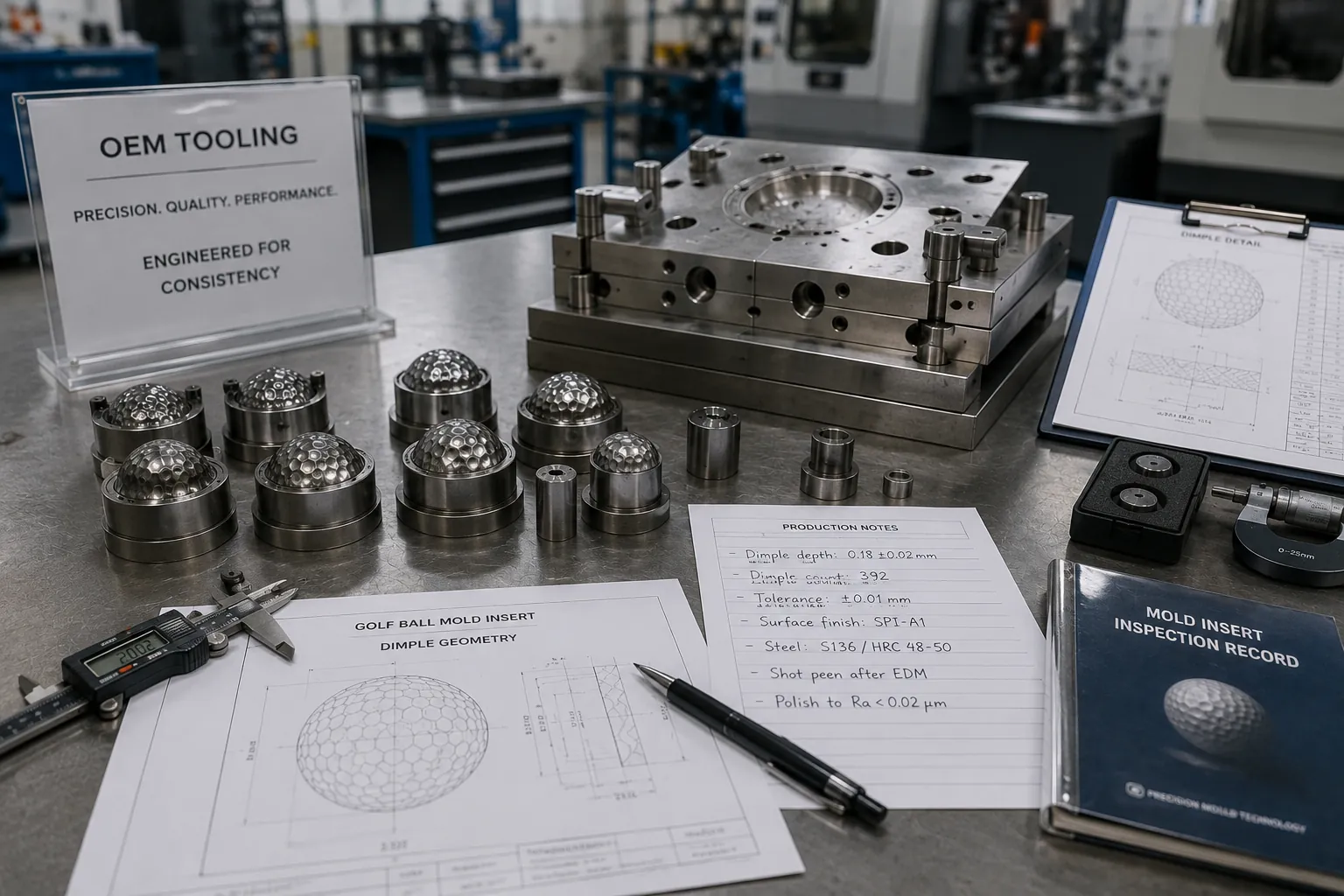
R&D buyers prefer measurable stability, not patriotic tooling slogans. A hybrid plan can be the mature route when your team wants US-controlled critical inserts, China-localized mold base, China production support, and a repair workflow that does not require shipping tons of steel across the ocean every time something wears.
Request a mold-strategy map that separates critical inserts, mold base, cooling, runners, fixtures, and repair location. Confirm which component controls variance and which deliverable proves stability. Do not approve tooling by origin; approve it by measurable stability and local repairability.
✔ True — “Better mold” means measurable stability.
A strong tooling decision proves dimple repeatability, concentricity, seam control, and repair recovery through reports, not country labels.
✘ False — “US-made molds automatically make better golf balls.”
Premium outcomes come from the mold, the process window, periodic re-checks, and documented maintenance after wear or repair.
Which mold assets must never drift?
You need to know where to spend money: not every mold component deserves the same engineering control.
The assets that must never drift are the dimple cavity, insert datum, shut-off surface, seam-line reference, and any geometry that controls aerodynamic symmetry. Mold base, runners, cooling, and fixtures can be localized in China if they preserve those references and pass first-article metrology.
A golf ball mold should be decoupled into critical assets and localizable assets. Critical assets define the ball’s aerodynamic and geometric identity: dimple cavities, insert faces, datum features, shut-off surfaces, cavity IDs, and alignment references. Localizable assets support production: mold base, ejector system, cooling channels, runner design, fixtures, spare hardware, and local preventive maintenance.
This is where hybrid OEM golf ball manufacturing becomes practical. Your team can machine or control the most sensitive inserts, then let a qualified China-side partner adapt the mold base, runners, cooling, and production support around them. That is a better use of budget than shipping a complete heavy mold base just to feel safe.
| Mold asset | Criticality | Can localize? | Proof needed | Buyer move |
|---|---|---|---|---|
| Dimple insert | High | Only with proof | 3D profile | Lock reference |
| Alignment datum | High | No casual change | Datum map | Tie to cavity ID |
| Shut-off / seam | High | With gauge control | Seam standard | Reject flash drift |
| Mold base | Medium | Yes | Fit report | Localize in China |
| Cooling channels | Medium-high | Yes with DFM | Cooling layout | Match shrinkage |
| Runner system | Medium-high | Yes with DFM | Flow / gate review | Verify fill stability |
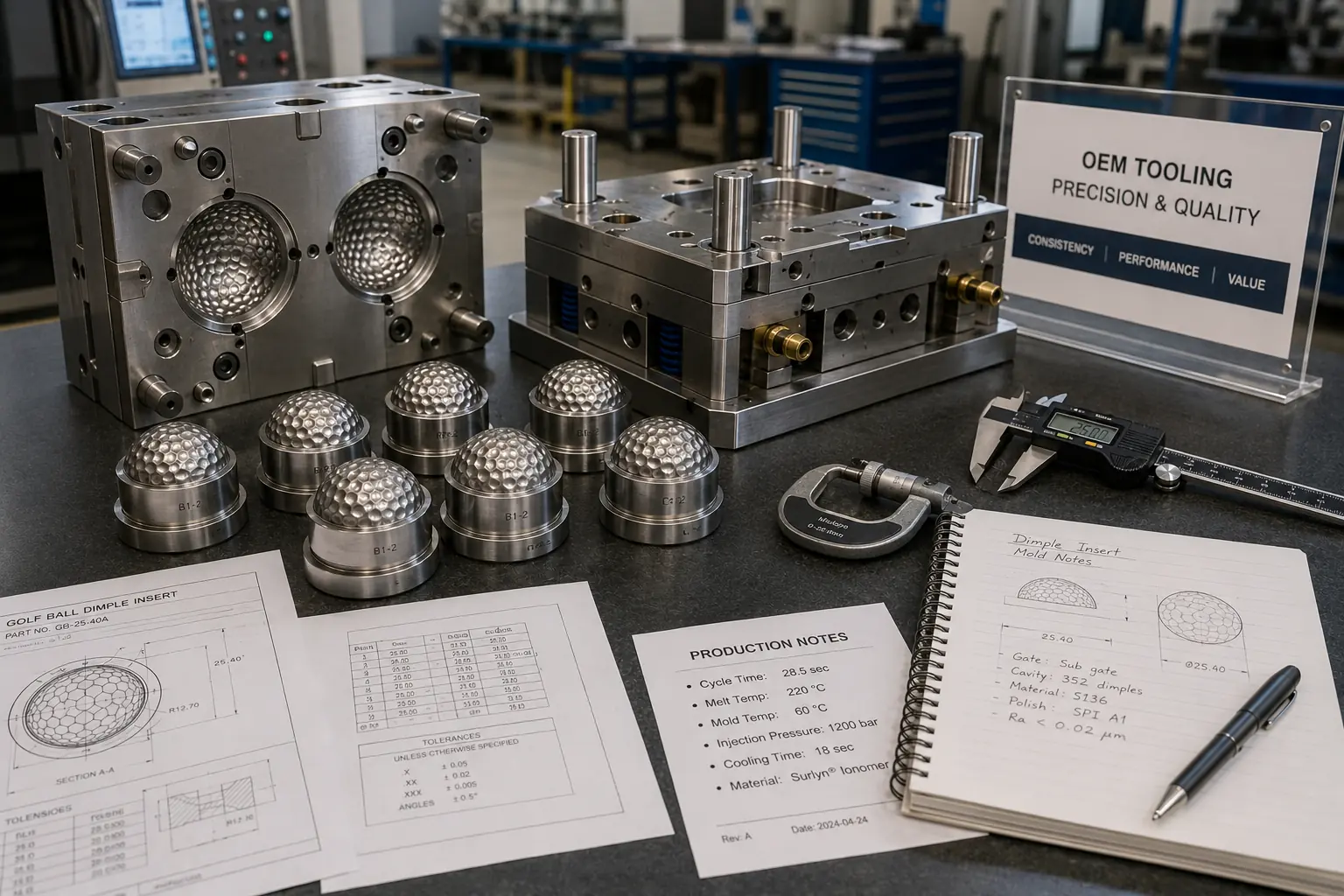
Which assets stay local or move?
Move or control the precision inserts when they define your dimple geometry. Localize the mold base when China-side assembly, cooling, maintenance, and repair can be verified.
Beryllium copper inserts can be justified where cooling and local hot spots matter, but they are not mandatory for every golf ball mold. H13 or equivalent hot-work tool steel can be a strong choice for high-wear precision surfaces. The key is not the material name alone; it is verified thermal behavior, hardness, wear resistance, insert fit, and repeatable measurement.
Request an exploded tooling map with critical-vs-localized asset classification. Match each critical asset to a measurement method and report format. No critical insert, datum, shut-off, or dimple surface should change without buyer approval and requalification.
The most expensive mistake is treating the insert as the whole mold. It is not. The insert may define the dimples, but the China mold base, cooling channels, runner system, ejector behavior, and shut-off pressure decide whether that insert produces the same ball for one sleeve or for a commercial lot.
How do shrinkage and runners break scale?
You may spend heavily on US CNC or EDM inserts, then discover the ball changes dimensions when those inserts run on China machines.
Cross-border shrinkage is where premium tooling fails quietly. Before cutting US inserts for China production, your team should lock China press data, clamp tonnage, injection and holding pressure, mold-temperature window, cooling-water layout, runner type, material grade, and measured shrink multiplier.
Shrinkage is not one universal Surlyn number. Ionomer, Surlyn-type materials, TPU, and other cover systems respond to grade, wall thickness, gate design, melt temperature, holding pressure, mold temperature, cooling efficiency, and machine setup. A US-machined insert can be beautiful and still wrong if it was designed around the wrong China production assumptions.
Hot runner and cold runner choices also matter. A sophisticated runner design can reduce waste or improve fill stability only if the China press and temperature-control system can run it. If the runner design, gate, pressure, and cooling are mismatched, you may see flow marks, flash, short shots, diameter drift, or unstable seam-line behavior.
| DFM variable | Why it matters | Risk if ignored | Evidence to request | Buyer move |
|---|---|---|---|---|
| Material grade | Sets shrink behavior | Wrong cavity compensation | Grade sheet | Freeze before machining |
| Press tonnage | Changes fill / clamp | Flash or short shot | Press model | Match tool design |
| Mold temperature | Controls cooling and size | Diameter drift | Temp window | Document setting |
| Cooling layout | Controls local shrink | Ovality / hot spots | Water layout | Review before cut |
| Runner type | Controls fill stability | Flow marks / gate issues | Runner review | Pilot before mass |
| Holding pressure | Controls pack-out | Weight / size drift | Pressure window | Lock in SOP |
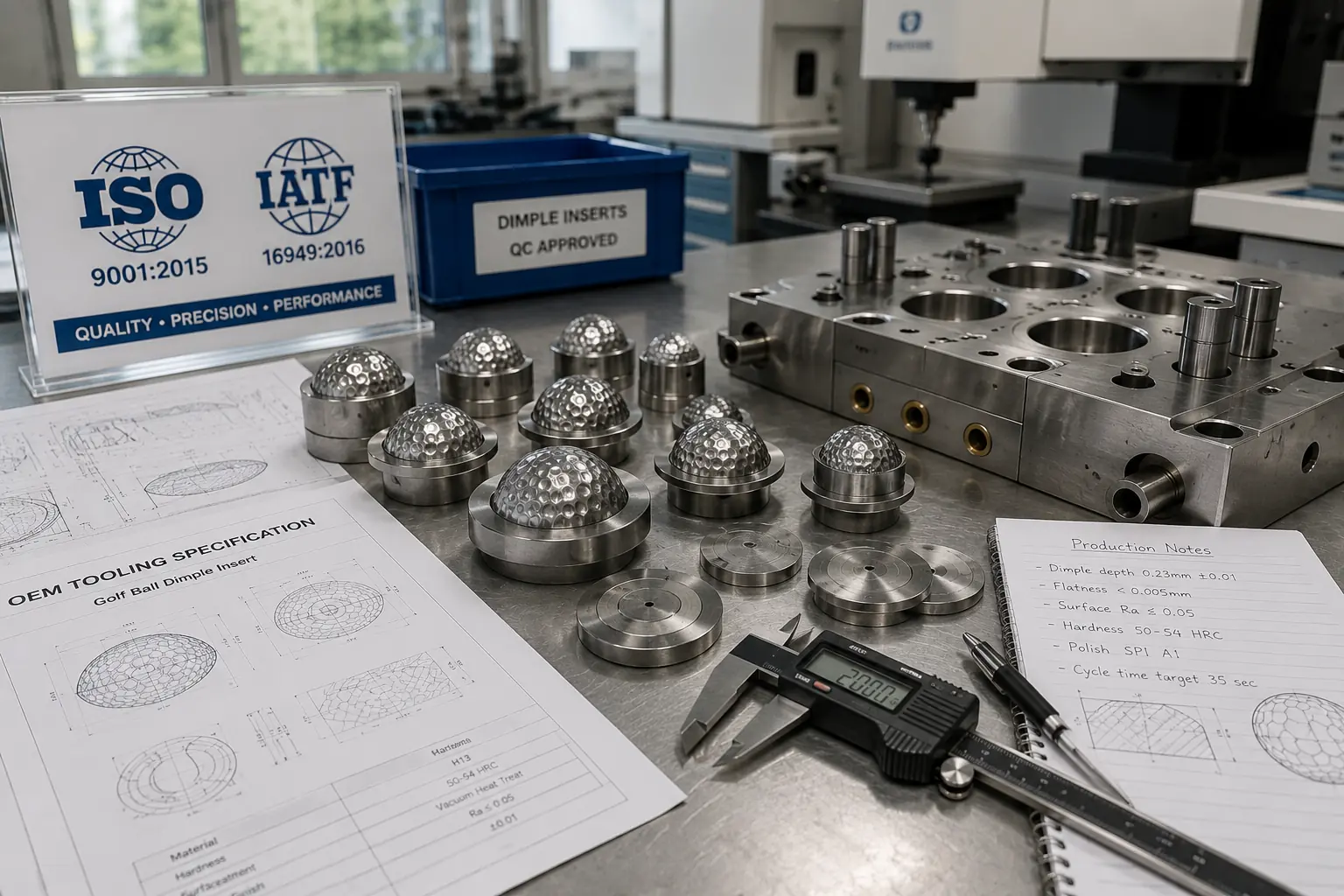
What must cross-border DFM lock?
Cross-border DFM must lock the China production reality before steel is cut. Press, material, cooling, runner, pressure, and shrinkage assumptions should be signed off before US insert machining begins.
A failure signal appears when the US insert is cut before China press, cooling, runner, and shrink data are confirmed. That is how expensive tooling becomes an expensive experiment. The insert may be precise, but not precise for the machine that will actually run production.
Ask the supplier to provide press model, clamp tonnage, injection pressure range, holding pressure window, mold-temperature window, cooling-water layout, runner type, material grade, measured shrink multiplier, insert location datum, cavity ID plan, and first-article CT/X-ray requirement before US insert machining begins.
Supplier shall assign each critical insert, cavity, mold base, datum feature, and first-article ball a unique ID. Supplier shall provide press model, clamp tonnage, injection pressure range, holding-pressure window, mold-temperature window, cooling-water layout, runner type, material grade, shrink multiplier, and document revision ID before insert machining begins.
✔ True — Shrinkage is process-specific.
The same insert can behave differently when material grade, press settings, cooling, runners, and holding pressure change.
✘ False — “A US-machined insert will run the same on any China press.”
Cross-border DFM must happen before machining, or your first article may become the first warning.
How do PM logs protect dimple life?
You may approve a perfect first batch, then watch later batches lose dimple depth, seam control, and paint adhesion because the mold was cleaned, polished, or buffed poorly.
A premium golf ball mold is only as good as its maintenance history. Your PO should require approved steel and hardness proof, controlled release-agent use, ultrasonic or dry-cleaning evidence, PM logs, no unapproved buffing, and before/after dimple scans after any tool touch.
Use high-volume mold standards as a benchmark, not as a slogan. SPI Class 101 mold-class references commonly describe million-cycle production tooling and hardened molding surfaces. That does not mean every golf ball project needs the same tooling budget. It does mean a premium dimple cavity should not be treated like a throwaway prototype tool.
For high-wear critical inserts, hardened H13 or equivalent hot-work tool steel can be a strong target. P20 can fit lower-volume or prototype tooling, but it is a weaker benchmark for long-life precision dimple surfaces. Ask for a Rockwell hardness report using the ASTM E18 Rockwell hardness test method, rather than accepting “H13” as a sales word.
| Maintenance risk | What changes | Evidence | Acceptance move |
|---|---|---|---|
| Soft / worn steel | Dimple loss | Hardness report | Verify before machining |
| Release residue | Adhesion / finish risk | Cleaning log | Update SOP |
| Seam flash | Parting-line defects | Photo + gauge standard | Stop before buffing |
| Over-buffing | Dimple-depth loss | Before/after dimple scan | Requalify tool |
| Repair / polish | Reference drift | Back-to-reference report | Approve before restart |
| Missing spare parts | Downtime | Spare-parts BOM | Stock before mass |
Release agent deserves special attention. Used correctly, it supports production. Used carelessly, residue can build in shallow dimple geometry or contaminate the surface before coating and printing. The result may show up later as poor adhesion, paint scuffing, or a finish that does not match the approved sample.
A failure signal appears when a factory removes seam flash through unapproved buffing without before/after dimple scans. Buffing can hide a parting-line problem while quietly reducing dimple depth near the equator. That is not cosmetic cleanup; it is a change to the aerodynamic surface.
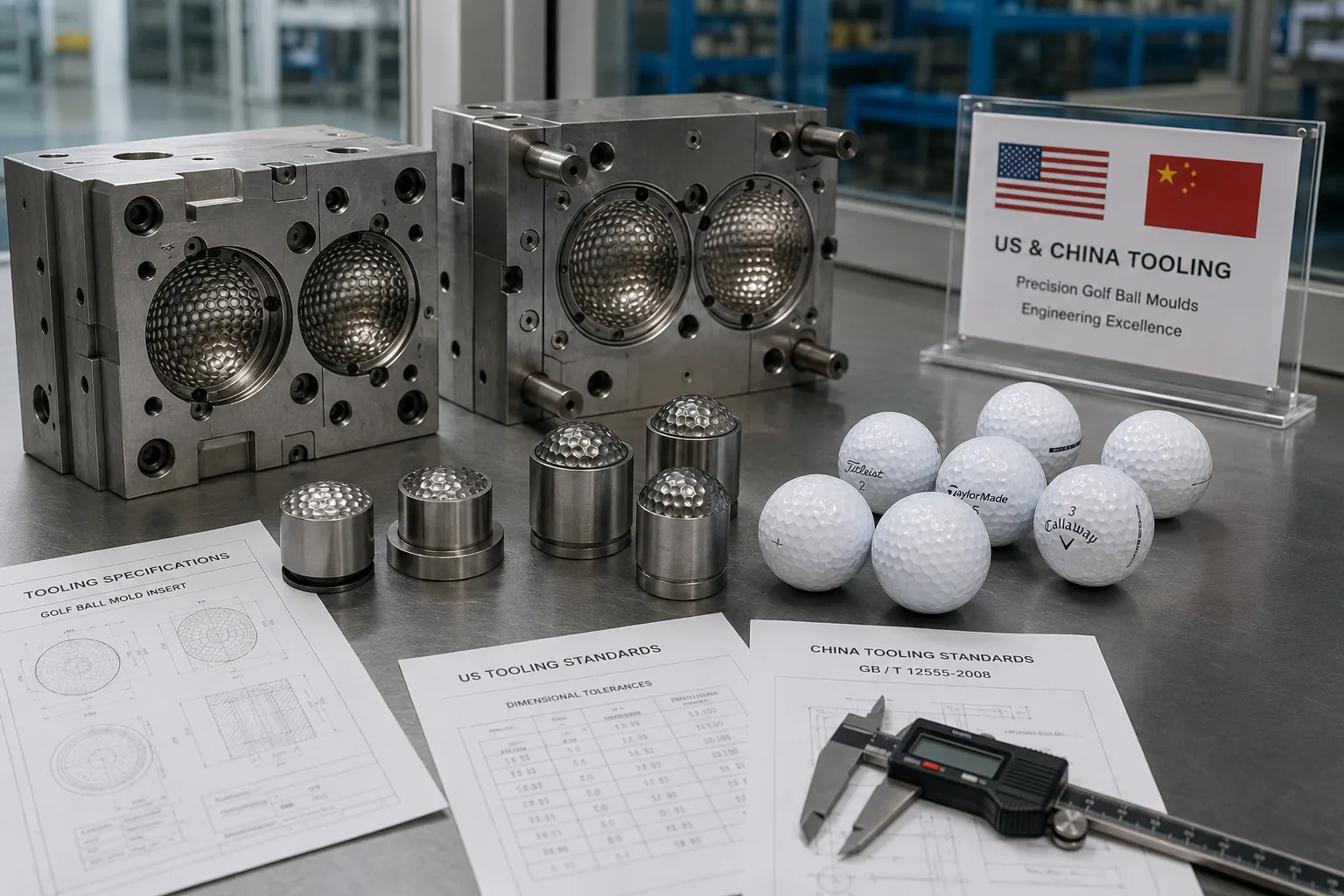
When does steel choice matter?
Steel choice matters most when the surface controls dimple depth, seam quality, and long-run repeatability. For premium inserts, verified hardness and PM discipline matter more than a cheap tooling headline.
Request tool steel report, PM log template, cleaning cadence, spare-parts BOM, and dimple-preservation rule. Review PM logs and before/after reports after cleaning, buffing, polishing, welding, or repair. No manual buffing, polishing, welding, or re-polish should occur on critical dimple surfaces without buyer approval and requalification.
No manual buffing, polishing, welding, laser repair, or re-polish is allowed on critical dimple surfaces without buyer approval. Any tool touch must trigger before/after 3D dimple scan and back-to-reference verification before production resumes.
The hidden danger is slow drift. Batch one may look clean. Batch two may show a slightly wider seam. Batch three may need more buffing. By the time golfers complain about inconsistent flight or rough equator finish, your mold reference has already moved. A PM log turns that drift into a visible event instead of a mystery.
How do you verify molds remotely?
You may not want to fly to China for every first article or repair event, but you still need evidence your tool is stable.
Remote mold verification works when you buy auditable outputs, not precision promises. Require 3D dimple profiles, CT/X-ray concentricity, cavity-ID traceability, calibration proof, PM logs, repair before/after reports, and document revision IDs before volume approval.
Remote verification should not be a folder of pretty photos. It should be a first-article and repair-requalification system. Each report should tie back to cavity ID, insert serial number, sample ID, document revision ID, measurement date, instrument model or serial, and calibration certificate. That gives your team a way to compare the same surface after shipment, assembly, cleaning, repair, and scale-up.
CT/X-ray can verify core, mantle, cover, seam-line, and insert assembly concentricity against buyer-defined tolerance. A 3D dimple profile can verify dimple depth and shape before and after repair. The goal is not impossible zero-error wording. The goal is stable geometry that stays inside your approved window.
| Risk | Deliverable | Must include | Pass/fail move |
|---|---|---|---|
| First article | 3D dimple + CT/X-ray | Cavity ID + insert serial | Approve or hold |
| Assembly offset | Concentricity report | Core/mantle/cover section | Re-seat insert |
| Cosmetics drift | Photo standard | Lighting + sample board | Rework or reject |
| Scale drift | Trend chart | Cavity-linked readings | Trigger PM |
| Repair drift | Before/after report | Same method + revision ID | Requalify |
| Tool custody | Baseline pack | Arrival photos + serial IDs | Lock access |
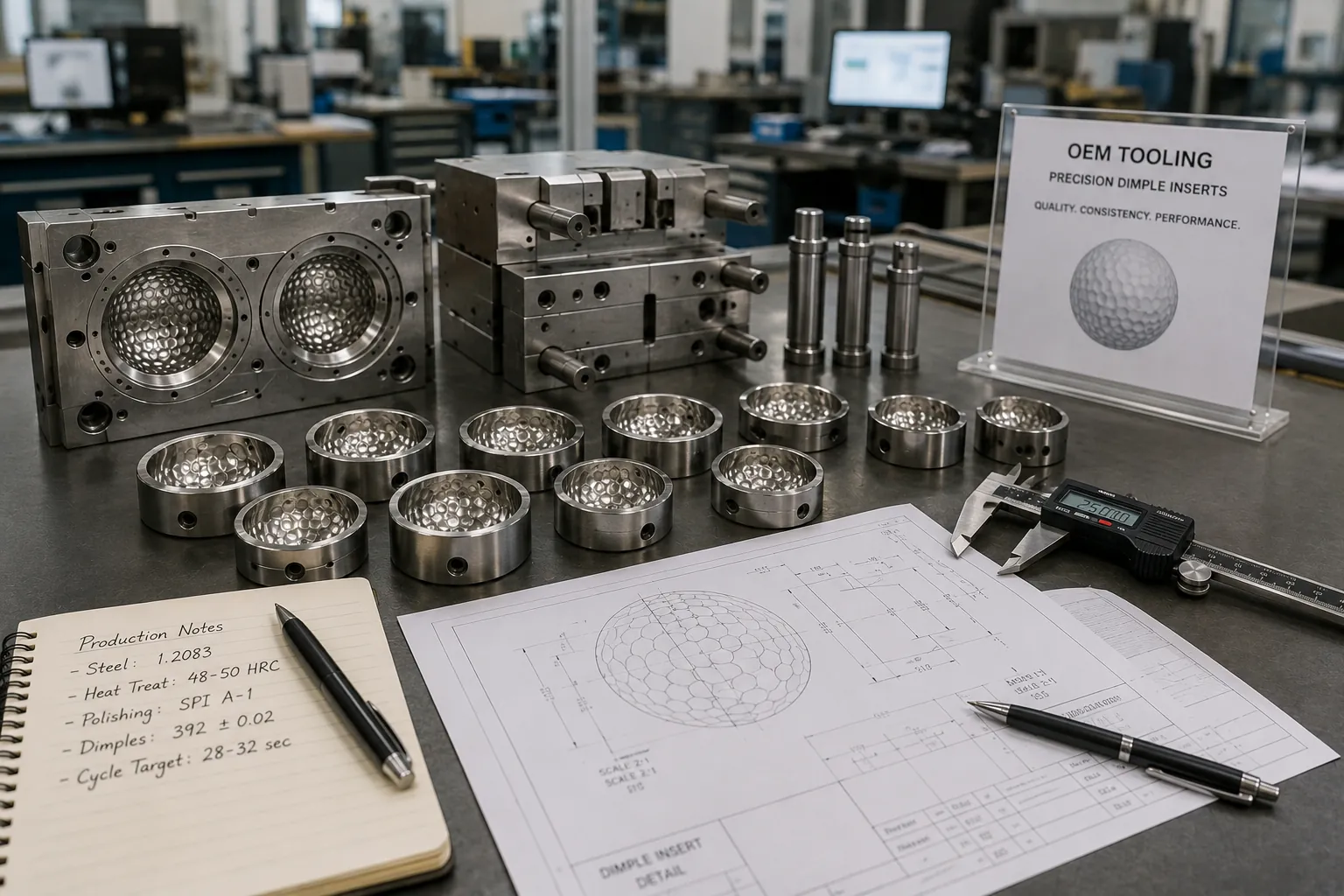
What proves first-article stability?
First-article stability is proven by repeatable reports tied to the exact cavity and insert, not by a sample sleeve on a desk. The report must make drift visible before volume approval.
A failure signal appears when a factory claims precision but cannot provide CT/X-ray or cavity-ID first-article reports. Another warning is a repair report with no before/after comparison, no measurement method, or no document revision ID. Without those details, your team cannot know whether the tool returned to reference or simply returned to production.
First-article release shall require 3D dimple profile report, CT/X-ray concentricity section tied to cavity ID, Rockwell hardness report for critical molding surfaces, calibration certificates for measurement tools, PM log template, spare-parts BOM, and before/after back-to-reference rule for any polish, buff, weld, cleaning, or repair.
Do not approve pilot or mass production until first articles and any repaired tool surfaces pass the agreed verification pack. Premium DTC founders prefer launch certainty: the first public reviews should judge your ball, not expose your tooling drift. Golfara can support the China-side engineering loop by aligning DFM assumptions, local mold-base adaptation, first-article inspection, PM logging, and remote evidence so your team can approve with data instead of air miles.
✔ True — Remote verification can work.
A strong supplier can provide repeatable reports with calibration proof, cavity IDs, insert serials, and pass/fail rules.
✘ False — “Precision can be guaranteed without data.”
Precision must be rechecked after assembly, wear, cleaning, repair, and production scale-up.
FAQ
Can I make my golf ball mold in the US and produce in China?
Yes. A hybrid OEM route can work well when you control the critical dimple inserts and reference measurements, then localize the mold base, runners, cooling, production, and maintenance in China.
Run cross-border DFM before machining. Tie inserts to cavity IDs and define the China press, cooling, runner, material grade, and shrinkage assumptions before steel is cut. Require CT/X-ray first articles and 3D dimple reports before pilot approval.
What is the best steel for a golf ball mold?
For high-wear precision inserts, hardened H13 or an equivalent hot-work tool steel is a strong target, but the key is verified hardness and wear resistance, not just the steel name.
Request Rockwell hardness testing under ASTM E18 methodology or another agreed test method. Use P20 carefully for lower-volume or prototype tools. Match steel choice to shot volume, material route, dimple tolerance, seam-line requirements, and maintenance plan.
Why do some golf balls have a visible seam?
A visible seam can come from shut-off wear, clamp mismatch, insert misalignment, flash, or aggressive buffing. It matters because seam and dimple geometry can affect symmetry and flight.
Check the parting-line photo standard and measure dimple depth near the equator. Do not allow over-buffing without re-check. A seam issue should trigger cause analysis, not just cosmetic cleanup.
How do you test a new golf ball mold?
Use first-article inspection, not visual judgment alone. Request 3D dimple profiling, CT/X-ray concentricity, dimensional checks, weight checks, seam-line standard, and calibration certificates.
Tie data to cavity ID and insert serial number. Save baseline reports. Re-check after any tool touch, including polishing, welding, buffing, cleaning changes, insert reseating, or repair.
What is mold shrinkage in golf ball tooling?
Shrinkage is the material and process-driven size change after molding. In hybrid tooling, the US insert must be designed around the China factory’s actual material grade, press, cooling, pressure, and mold-temperature window.
Do not use a generic Surlyn or TPU multiplier. Verify behavior by grade, wall thickness, runner, gate, holding pressure, and mold temperature. Lock shrink data before machining, not after the insert arrives.
Should I ship the full mold or only inserts?
For many hybrid programs, shipping only precision inserts is more practical. The heavy mold base, cooling, ejector, and support hardware can be built locally in China if datum location and first-article verification are locked.
Ship critical inserts when needed. Localize the mold base when safe. Verify assembly through CT/X-ray, 3D dimple reports, cavity IDs, and a documented fit report before pilot production.
How often should golf ball molds be maintained?
The cadence should be defined by shot count, material route, release-agent use, seam-line condition, dimple-profile trend, and factory SOP. The key is a dated PM log with photo evidence and triggers.
Use cavity-linked PM records. Record cleaning and repair events. Requalify after polish, repair, or any tool touch that may affect dimple depth, shut-off surfaces, or seam-line geometry.
Can remote verification replace a factory visit?
It can for many decisions when the supplier provides auditable reports, calibration proof, cavity IDs, and pass/fail rules. It should not replace engineering judgment, but it can reduce travel-dependent approvals.
Request 3D dimple scans, CT/X-ray sections, calibration certificates, PM logs, and before/after repair reports. A strong remote pack lets your team approve, hold, rework, or requalify with evidence.
Conclusion
The winning mold strategy is not country-based. It is a hybrid engineering system: lock the critical inserts and datum references, localize the heavy mold base and production support in China, verify first articles with 3D dimple scan and CT/X-ray, then protect every repair with PM logs and back-to-reference evidence.
US tooling can be excellent. China tooling can be excellent. The deciding factor is whether your system can prove dimple geometry, concentricity, seam control, shrinkage assumptions, maintenance discipline, and repair recovery at scale.
You might also like — 2026 Guide to Golf Ball OEM in China: Factory Audit Checklist & Sourcing Secrets