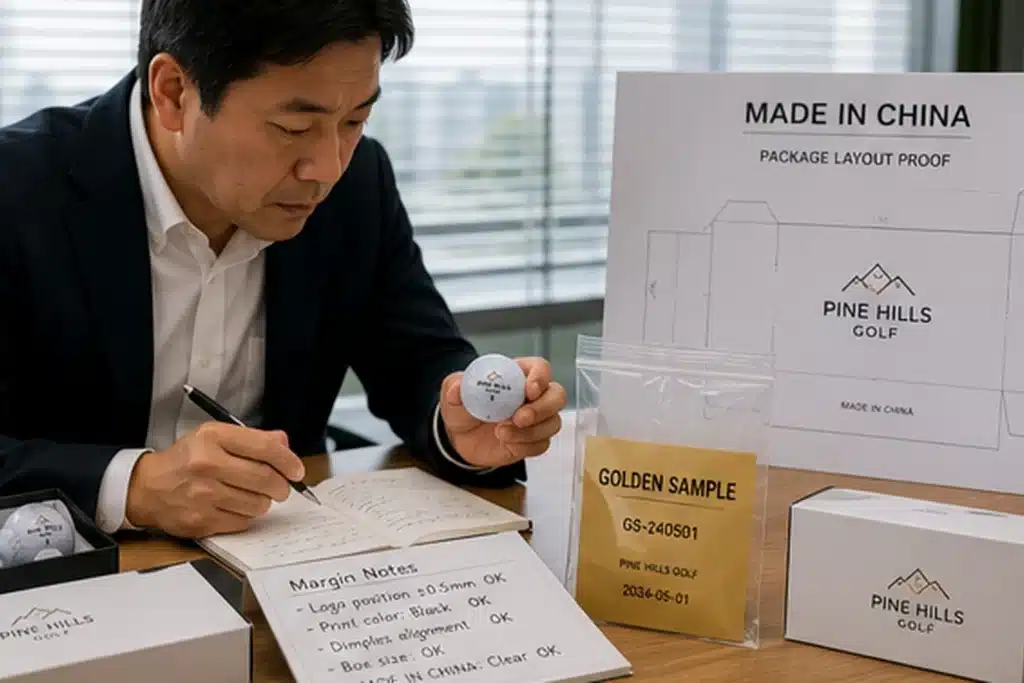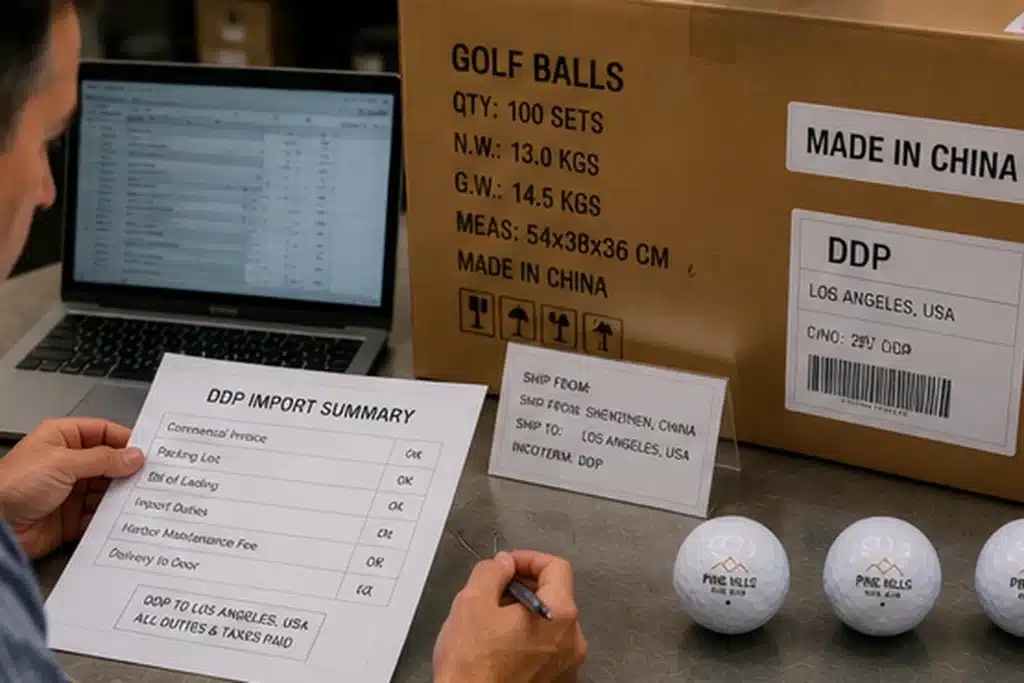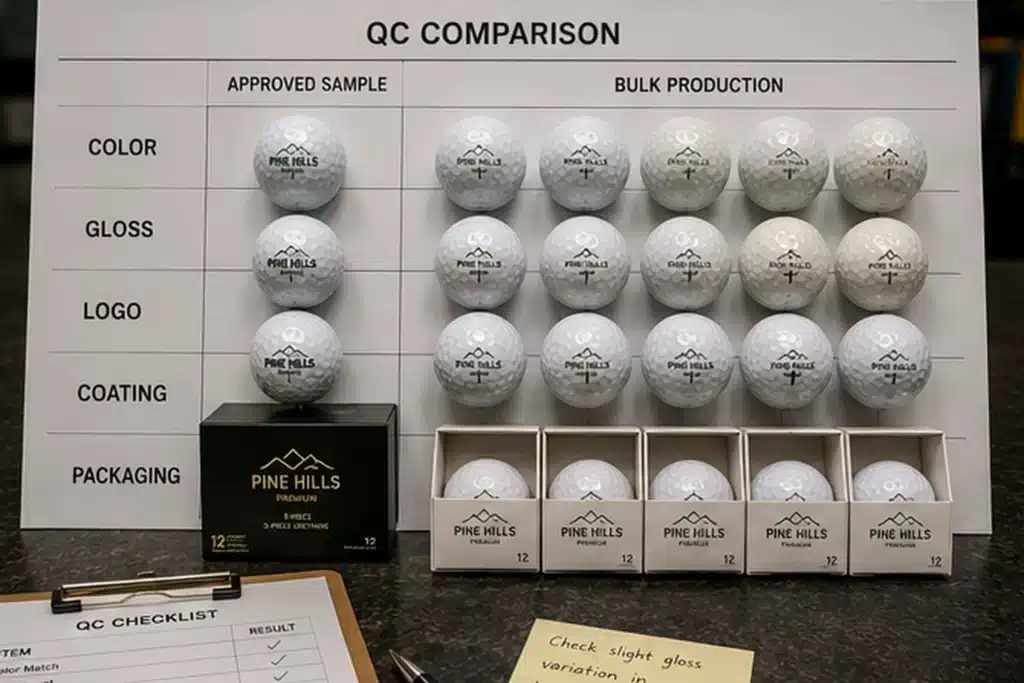
Your approved sample looked premium, but the bulk golf balls arrived with a different color, gloss, logo position, coating feel, or package quality.
Bulk golf balls often look different from samples because the sample was approved as a visual reference, not locked as a production standard. Common causes include hand-prepared samples, skipped PPS approval, coating or ink-batch drift, logo-position variation, packaging material swaps, missing retained samples, and weak PO change control.
| Drift area | What changes | Why it happens | Buyer control |
|---|---|---|---|
| Ball color | White or yellow tone shifts | Coating or pigment batch | Color standard |
| Gloss | Finish looks dull or shiny | Clear-coat route changes | Gloss reference sample |
| Logo position | Logo moves or rotates | Setup or jig difference | Position tolerance |
| Clear coat | Sticky or different feel | Cure or coating change | PPS approval |
| Packaging | Box color or stiffness changes | Paper stock substitution | Packaging sample ID |
| Bulk lot | No dispute reference | Missing retained sample | Triple retained sample |
Use this guide to control sample-to-bulk drift with Golden Sample ID, PPS approval, retained samples, packaging sample ID, no-change clauses, and receiving criteria.
Why Do Bulk Balls Look Different?
Your team approved the sample, but the bulk golf balls now look cheaper, yellower, shinier, duller, or less consistent than expected.
Bulk balls look different when the approved sample is treated as a visual promise instead of a locked production standard. Your team should compare color, gloss, logo placement, clear-coat feel, packaging, and material records against a Golden Sample, PPS, and retained sample before accepting shipment.
Sample-to-bulk drift can be accidental, process-driven, or cost-driven. The issue is not always supplier fraud. A sample-room ball may be polished, hand-selected, slowly cured, or packed with extra care. The bulk order may use full-line speed, different coating timing, a new ink batch, adjusted fixtures, or a packaging supplier change.
Brand buyers now judge supplier quality by sample-to-bulk consistency. For custom golf balls, “looks different” can damage event presentation, resale confidence, distributor trust, and repeat orders. Your receiving team needs a comparison system before the shipment arrives, not after the complaint starts.
| Visible issue | Possible drift point | Proof to request | Buyer action |
|---|---|---|---|
| Color shift | Ink or coating batch | Color report | Compare to sample |
| Gloss change | Clear-coat route | PPS photos | Lock finish |
| Logo movement | Fixture setup | Position check | Set tolerance |
| Sticky feel | Curing change | Curing note | Hold lot |
| Box mismatch | Paper or print swap | Packaging sample | Lock material |
Create a sample-to-bulk comparison checklist covering color, gloss, logo, coating feel, and packaging. Compare bulk random pulls against the approved sample, PPS, and retained sample under the same inspection setup. Bulk shipment acceptance should require sample-linked comparison, not supplier photos alone.
✔ True — Samples and bulk need production-linked control
A beautiful sample is useful only when it becomes a controlled standard tied to PPS approval, retained samples, and shipment inspection.
✘ False — “A beautiful prototype proves the mass run will look identical”
A prototype may show the target, but it does not prove the bulk process can repeat color, gloss, logo, coating, and packaging consistently.
Was the Sample Built Like Bulk?
Your approved sample may have been made carefully in a sample room, while your bulk order is produced under real-line speed, pressure, and batch conditions.
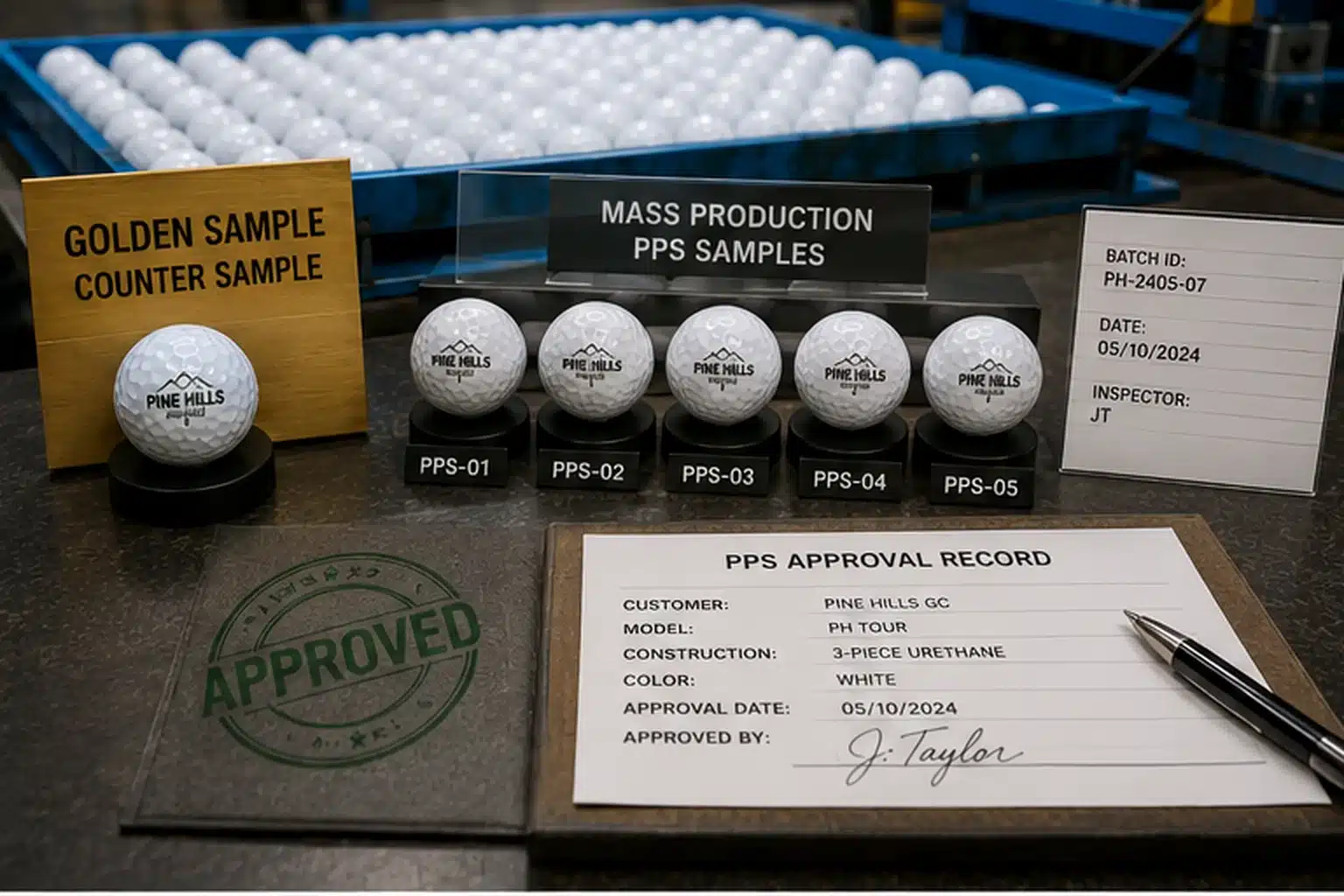
Your sample may prove design, but the PPS should prove production repeatability. Before your bulk run starts, ask whether the approved sample came from a sample room or the real production line, then require written PPS approval from the actual mass-production setup.
Counter sample or real-line PPS?
A counter sample can approve design direction, logo layout, color direction, and general finish. It should not automatically release mass production. A counter sample may be hand-finished, hand-inspected, or made in a slower workflow that does not reflect full production conditions.
A Golden Sample locks the target. A PPS should prove whether the actual production setup can reproduce that target before the full order starts. That distinction matters for custom golf balls because coating, curing, printing, logo placement, sleeve packing, and carton handling can all drift at scale.
| Sample type | What it proves | What it cannot prove | Buyer action |
|---|---|---|---|
| Counter sample | Design direction | Mass-line repeatability | Approve design only |
| Golden Sample | Target standard | Scale performance alone | Seal and label |
| PPS | Production-line setup | Whole shipment consistency | Approve before mass run |
| Bulk random pull | Lot condition | Original target alone | Compare to retained sample |
Request a PPS approval record before mass production begins. Check that the PPS came from the same production setup intended for the bulk order. Mass production should not begin until your team approves the PPS in writing.
Which Details Drift First?
Your buyer may say the bulk balls “look different,” but that complaint can hide several separate defects.
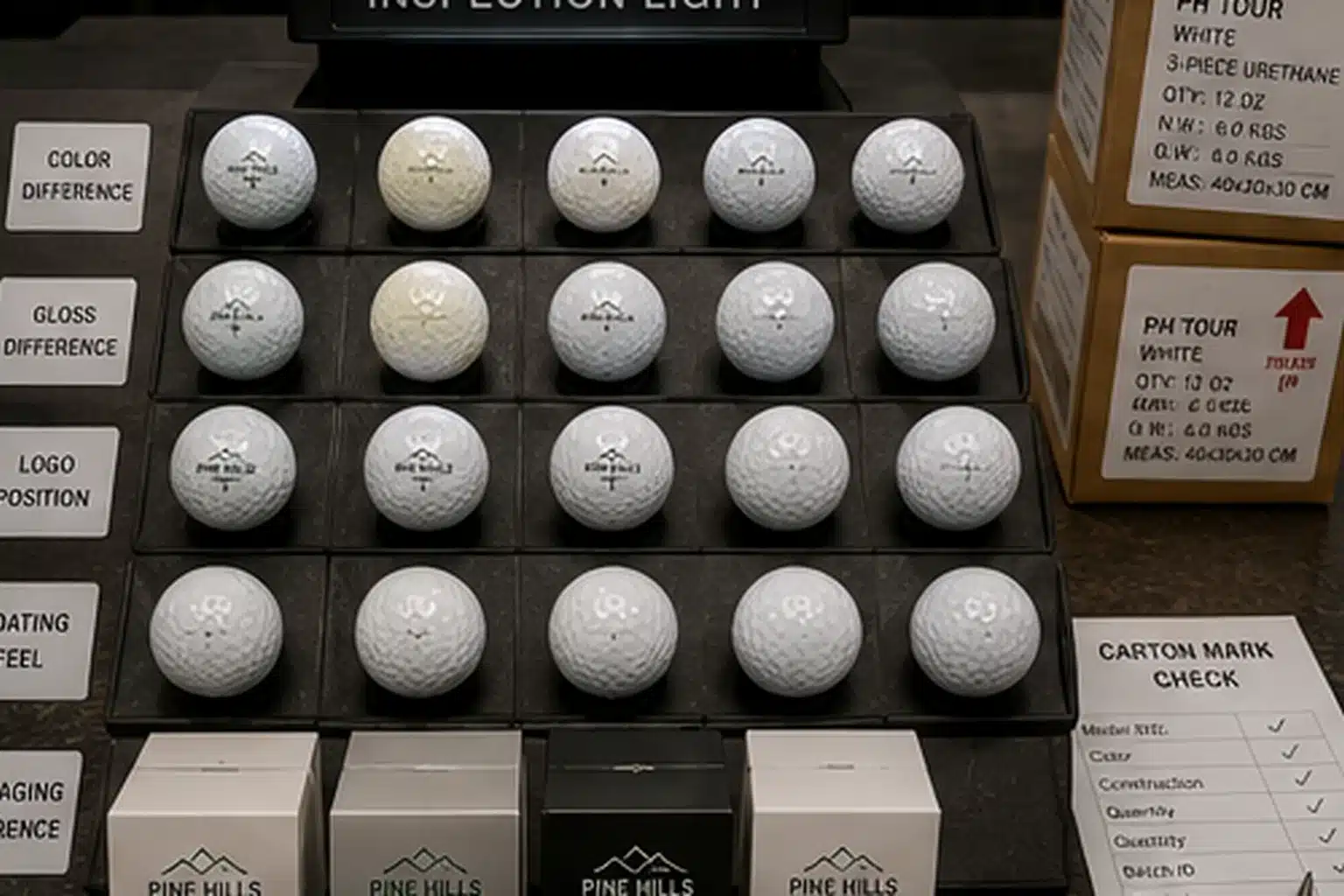
Most sample-to-bulk disputes start because “looks different” was never translated into inspection criteria. Your team should define color, gloss, logo position, coating feel, packaging paper, box color, carton marks, and photo conditions before bulk production starts.
Color, gloss, logo, or packaging?
Color drift often appears first. The bulk golf balls may look warmer, creamier, darker, or less clean than the approved sample. Logo color can shift because of ink batch, base color, clear coat, curing condition, or lighting. For sensitive brand work, a visual color appraisal reference can support controlled viewing conditions, while an ASTM color-difference calculation reference can support Lab* and Delta E language. The tolerance still needs buyer agreement by SKU, finish, and brand risk.
Gloss and coating feel are just as important. A slightly tacky surface, overly shiny finish, dull clear coat, or different hand feel can make the bulk order look less premium. Logo position and size also need written tolerance because a small setup difference can look obvious on branded balls.
| Drift detail | Buyer complaint | Control method | Acceptance evidence |
|---|---|---|---|
| Ball white tone | Bulk looks yellow | Color reference | Sample comparison |
| Logo color | Brand color shifted | Lab* / visual check | Color report |
| Gloss | Too shiny or dull | Finish reference | PPS photo |
| Logo position | Looks off-center | Position tolerance | Inspection record |
| Clear coat feel | Sticky or different | Touch and wipe check | PPS match |
| Packaging | Box feels cheaper | Material note | Packaging sample ID |
Packaging sample is approved visually but paper stock is not locked is a failure signal. Approve packaging separately and lock sleeve paper, finish, print color, insert, carton marks, and carton material where relevant. The bulk order should meet buyer-agreed visual, logo, coating, and packaging criteria, not a vague “close enough” standard.
✔ True — Vague appearance complaints need specific inspection points
“Looks different” should become color, gloss, logo position, coating feel, packaging paper, box color, and carton-mark checks.
✘ False — “Packaging can be ignored if the golf ball itself matches”
For gift, retail, event, and distributor orders, the sleeve, box, insert, carton, and paper feel can be part of the approved product experience.
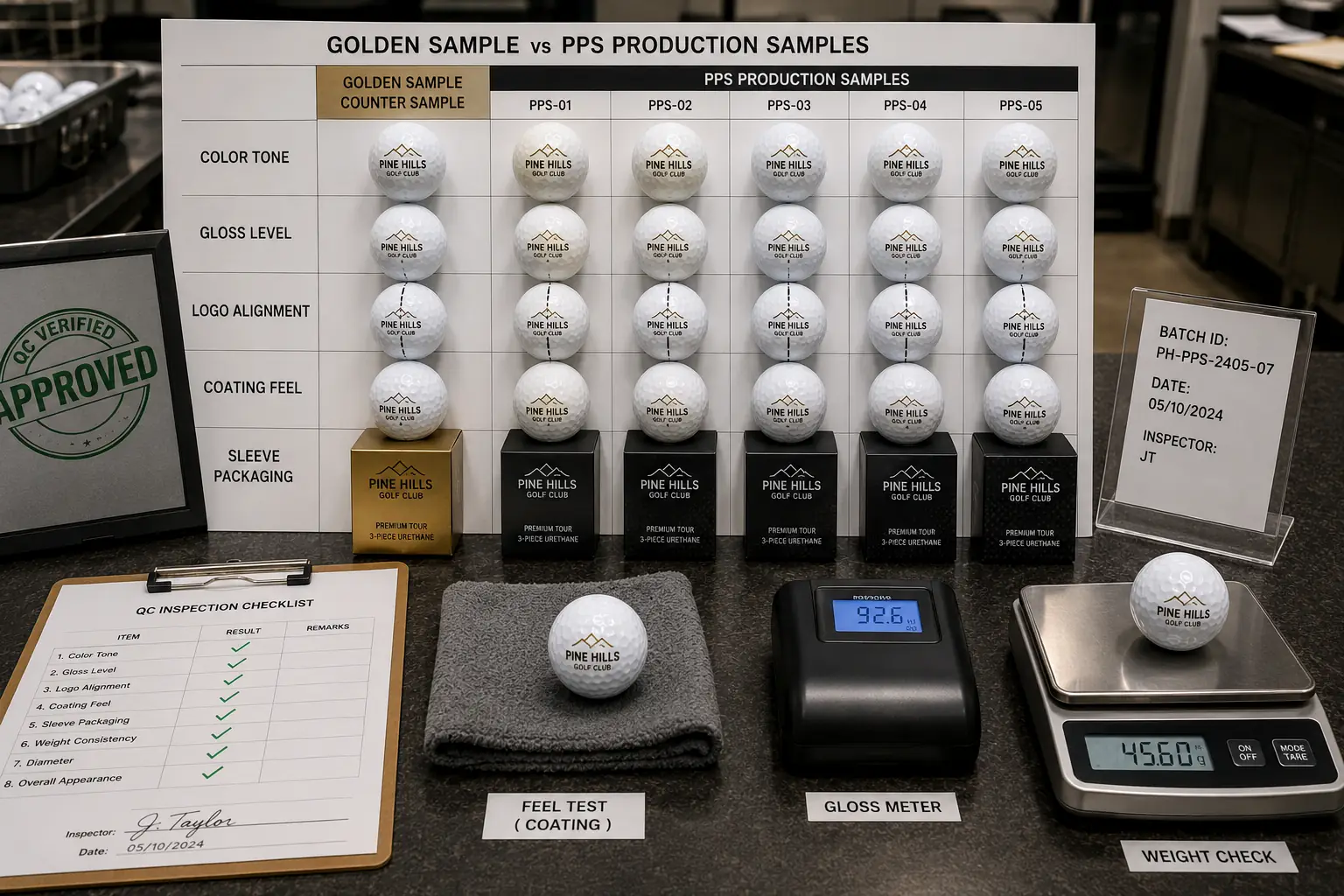
Did the PPS Match the Golden Sample?
Your Golden Sample may define the target, but your PPS shows whether the supplier can reproduce that target with the real production line.
The Golden Sample defines what the order should look like; the PPS proves whether the production line can reproduce it. Your team should compare the PPS against the Golden Sample before mass production, then approve or reject drift in writing.
Design reference or scale proof?
The Golden Sample and PPS should not be treated as the same approval object. The Golden Sample is the target reference for appearance, finish, material expectation, logo placement, and packaging. The PPS is the scale-up checkpoint. It tells you whether the production line, fixtures, curing route, coating process, print setup, and packaging flow can reproduce the target.
If the PPS already shows a different white tone, gloss level, logo location, sleeve color, carton mark, or coating feel, the bulk order will likely repeat that drift. PPS is skipped to save time before an event deadline is a failure signal. Protect the schedule with earlier sample approval, not weaker QC.
Your deliverable is a Golden Sample ID and PPS approval record. Compare PPS against Golden Sample for color, gloss, logo, coating feel, and packaging before full run. Full production release requires PPS match or written buyer approval for documented differences.
How Do Retained Samples Stop Disputes?
When the bulk order looks different, your supplier may say the difference is normal, while your team remembers the approved sample differently.
A retained sample turns a memory dispute into a physical comparison. Your buyer, supplier, and QC inspector should each keep sealed references when risk is high, with sample ID, approval date, batch link, photos, and packaging references recorded before production.
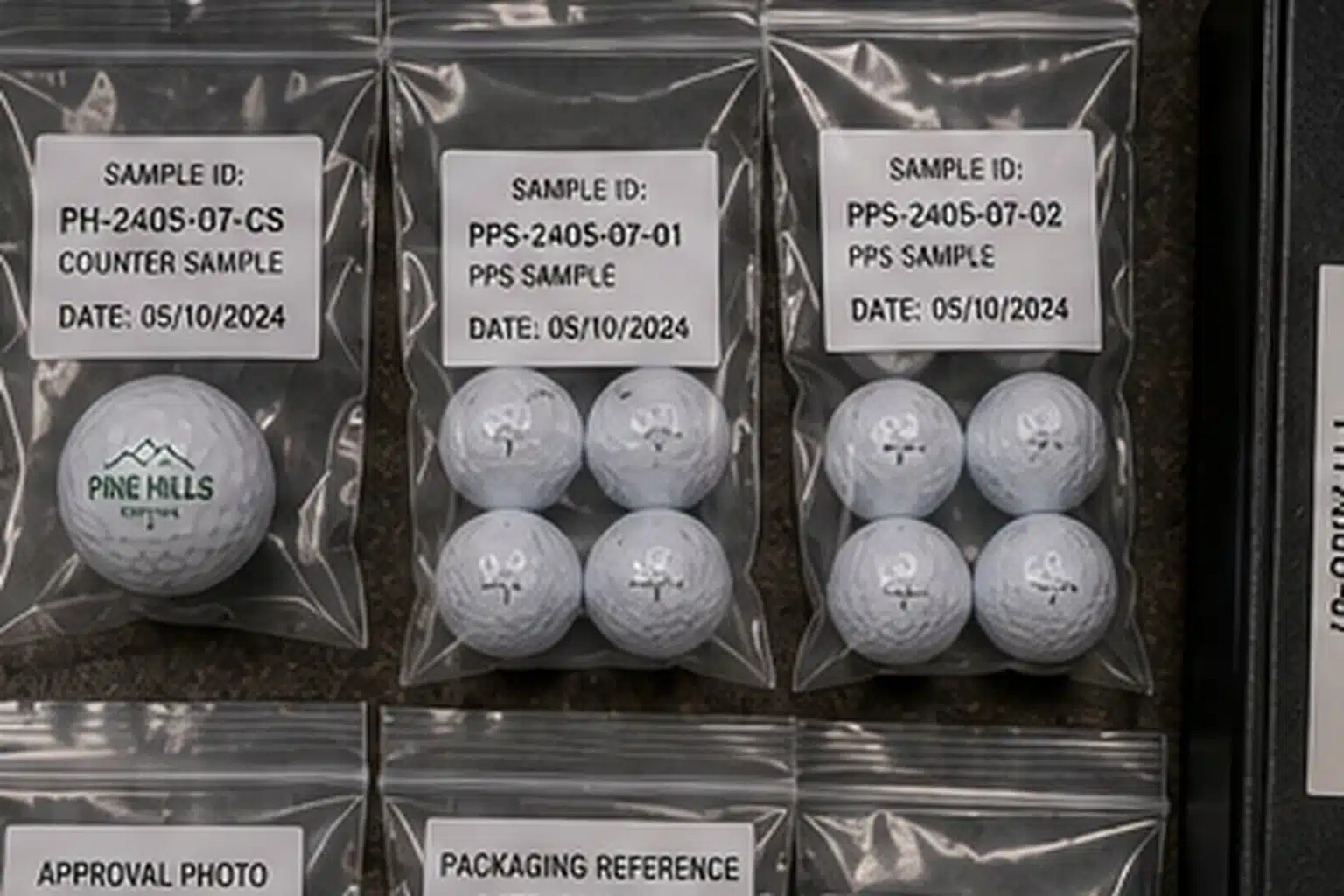
One sample or three sealed references?
Memory is not an acceptance standard. A retained sample is. For high-risk orders, keep a buyer sample, factory sample, and QC inspector sample. Each should be sealed, signed, dated, photographed, and linked to sample ID, PPS ID, batch ID, and PO reference.
| Retained item | Who holds it | Why it matters | Action |
|---|---|---|---|
| Golden Sample | Buyer | Acceptance target | Seal and label |
| Golden Sample copy | Factory | Production reference | Keep on floor |
| QC sample | Inspector | Dispute check | Use at inspection |
| Packaging sample | Buyer / QC | Box and material match | Store flat or sealed |
| PPS record | Buyer and supplier | Release proof | Attach approval |
Supplier says the bulk is close enough but no retained sample exists is a failure signal. Without sealed retained samples, both sides argue from memory, screenshots, chat photos, or warehouse lighting. That is a weak position when the complaint involves brand color, retail presentation, or event delivery.
Create a retained sample tracking file with signed samples, photos, sample ID, PPS ID, batch ID, and storage location. Confirm retained samples exist before full production and before shipment inspection.
✔ True — Retained samples prevent memory-based disputes
A sealed physical reference lets the buyer, supplier, and QC team compare the same object instead of arguing from screenshots or memory.
✘ False — “One supplier-held sample is enough for high-risk orders”
When brand color, packaging, or finish matters, buyer, factory, and QC retained samples give disputes a fair reference point.
What Should Your PO Lock Down?
Your PO may describe quantity and price but fail to lock the sample, PPS, materials, ink, coating, packaging, and change-control rules.
Your PO should lock the approved sample, PPS, retained samples, materials, ink, coating, packaging, and change-control rules. If the supplier changes any material, process, print file, clear coat, paper stock, or packaging route, written buyer approval should be required before production continues.
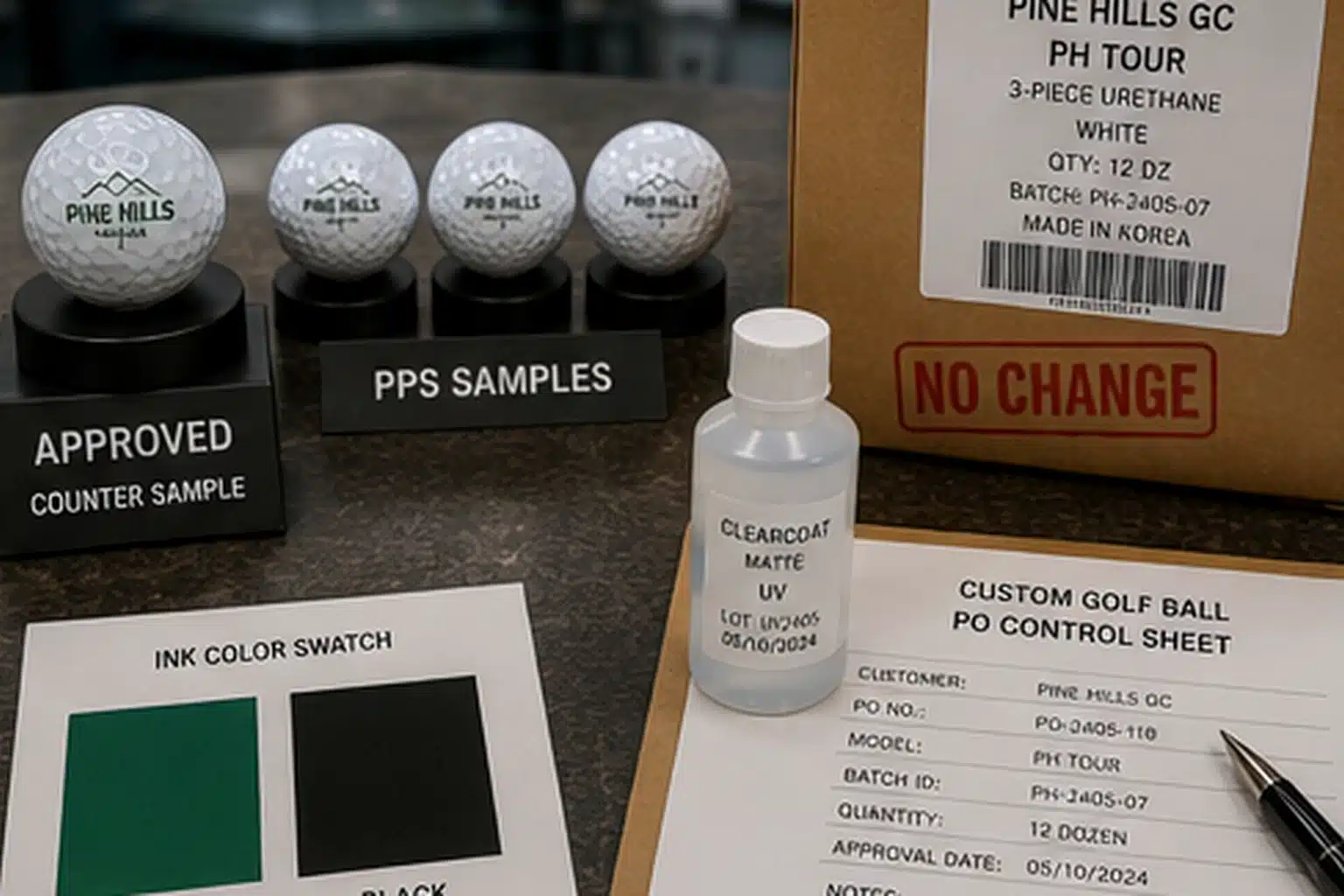
Sample ID, PPS, or no-change clause?
Your PO should stop “similar” from becoming the acceptance standard. Lock approved sample ID, PPS approval, buyer/factory/QC retained samples, material list, ink system, coating route, packaging paper stock, sleeve finish, carton material, logo color, logo position, batch ID, and receiving inspection criteria.
| PO item | Why it matters | What to specify | Acceptance evidence |
|---|---|---|---|
| Approved sample ID | Target lock | Sample number and photos | ID match |
| PPS gate | Scale proof | Written approval before run | PPS record |
| No-change clause | Material control | No unapproved substitution | Change log |
| Coating / ink | Appearance consistency | Declared system | PPS match |
| Packaging | Retail look and transit | Paper stock / finish | Packaging sample |
| Retained sample | Dispute reference | Buyer / factory / QC copies | Sealed samples |
| Receiving inspection | Shipment control | AQL or agreed plan | Inspection report |
Supplier shall link approved sample ID, Golden Sample photos, PPS approval record, retained samples, production batch ID, packaging sample ID, material declaration, coating declaration, and shipment lot under one proof version before mass production release.
No material, ink, coating, clear-coat route, print file, logo placement, packaging paper stock, sleeve finish, carton material, or supplier process may be changed after sample approval without written buyer authorization and updated PPS approval.
For receiving inspection, an ISO 2859-1:2026 receiving inspection reference can support lot-by-lot inspection language, but final pass/fail should follow buyer-agreed defect classification. Buyer acceptance requires sample ID match, PPS approval, retained sample match, no unapproved changes, packaging match, and inspection pass under agreed criteria.
FAQ
Why does mass production look different from the prototype?
Mass production can look different because the prototype may be made under sample-room conditions while bulk uses production-line speed, fixtures, material batches, curing routes, and packaging workflows.
Ask whether the prototype was handmade, hand-selected, sample-room made, or real-line produced. Then require PPS before the mass run. Compare bulk random pulls against the Golden Sample, PPS, and retained samples before shipment acceptance. A prototype proves direction; PPS proves repeatability.
What is a Golden Sample in manufacturing?
A Golden Sample is the approved physical reference for appearance, materials, and workmanship, but it should be paired with PPS approval to verify production-line repeatability.
Label it with sample ID, seal it, photograph it, and keep it available for shipment comparison. A Golden Sample defines the target. It does not automatically prove the bulk line can repeat that target at scale.
What is a pre-production sample?
A pre-production sample, or PPS, is a sample made from the intended production setup before mass production to verify that the factory can reproduce the approved target.
Check color, finish, logo, coating feel, packaging, and carton marks. Approve the PPS in writing before bulk production starts. If the PPS drifts from the Golden Sample, document the difference before approving or rejecting release.
Why did my custom golf ball color change in bulk?
Custom golf ball color can change in bulk because of ink batch, coating route, curing, lighting, pigment opacity, ball base color, or a missing color tolerance in the PO.
Use physical reference samples and buyer-agreed visual or instrument conditions. Do not rely on screen color or casual photos. For sensitive brand colors, request Lab* values, Delta E method, measurement conditions, instrument note, and approved sample reference.
Why does bulk packaging differ from the sample?
Bulk packaging can differ when paper stock, print batch, finish, sleeve supplier, insert, or carton material is not locked in writing before production.
Approve packaging separately from the ball. Record paper stock, finish, color, insert, carton marks, and packaging sample ID. Retain a packaging sample so your team can compare the delivered sleeve or box against physical evidence.
Can suppliers change materials after sample approval?
Suppliers should not change material, ink, coating, packaging, print file, or process route without written buyer approval if the PO locks those items.
Use a no-change clause, require change notice, and request updated PPS approval when a change is necessary. Unapproved substitution can make the bulk order look different even when the supplier believes the change is minor.
How do you compare bulk orders to samples?
Compare random bulk pulls against the Golden Sample, PPS, retained sample, packaging sample, and written acceptance criteria under consistent inspection conditions.
Check color, gloss, logo position, coating feel, packaging, carton marks, and mixed-lot risk. Record photos, inspection results, batch ID, and defect classification. Supplier photos should support inspection, not replace it.
How do retained samples help supplier disputes?
Retained samples give both sides a physical benchmark when the shipment is questioned. They reduce arguments based on memory, screenshots, informal emails, or supplier photos.
Keep a buyer copy, factory copy, and QC copy when the order is high risk. Seal, sign, date, photograph, and link each retained sample to sample ID, PPS ID, batch ID, and PO reference.
Conclusion
Bulk consistency must be engineered into the approval file before production starts. It is not protected by hope, friendly emails, supplier photos, or memory.
The safest buyer path is simple: approve the design sample, lock the Golden Sample, verify the PPS, retain sealed references, forbid unapproved material or packaging changes, and inspect the shipment against physical evidence.
When your bulk golf balls must match the sample, the sample cannot remain a pretty reference photo. It must become a controlled production standard.
You might also like — Custom Golf Ball Printing Methods: Pad vs UV & Adhesion Standards