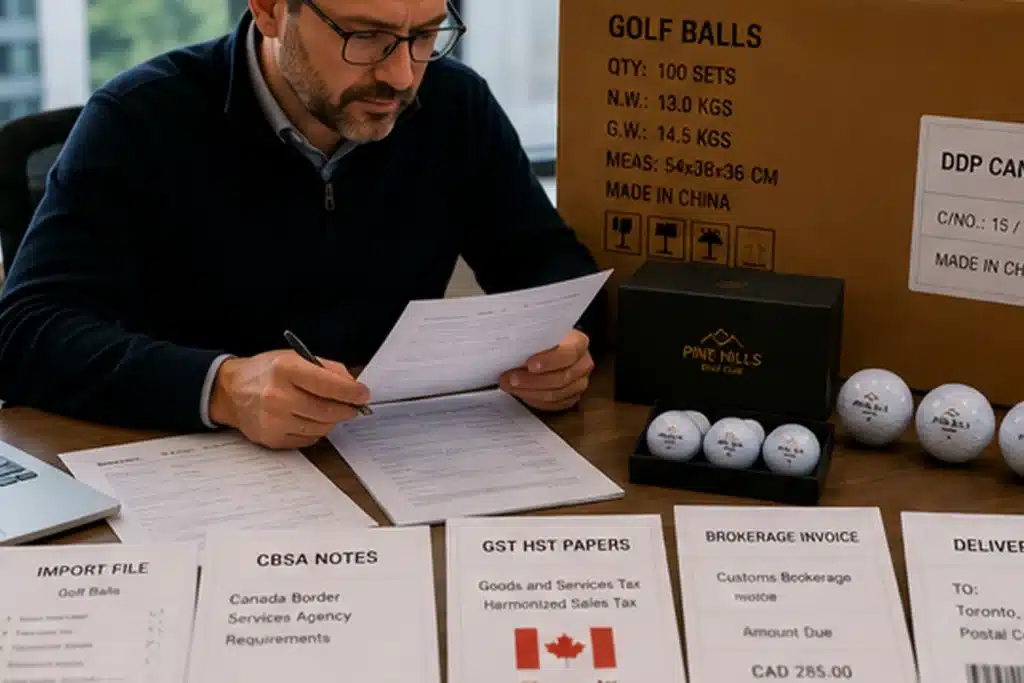
To import golf balls from China to Canada, verify the DDP quote before shipment—not after brokerage, tax, or delivery fees appear.
Your Canada import file should confirm CBSA classification, GST/HST handling, importer BN/RM route, CARM / CAD proof path, brokerage inclusion, courier disbursement policy, invoice split, exact postal-code delivery, and remote surcharge exclusions.
| Canada import check | Buyer risk | What to request | Buyer action |
|---|---|---|---|
| CBSA classification | Wrong duty basis | HS 9506.32 review | Broker check |
| GST/HST | Weak ITC path | Importer / tax file | Accountant review |
| CARM / CAD | Poor audit trail | Accounting proof path | Keep records |
| Brokerage | Surprise invoice | Fee inclusion | Add to RFQ |
| Disbursement | Courier add-on | Advancement fee policy | Confirm prepaid |
| Final mile | Delivery gap | Postal-code coverage | Verify route |
| Remote surcharge | Margin leak | Exclusion list | Confirm in writing |
Use this guide to check whether your China golf ball shipment is Canada-ready before cargo leaves China.
What Should Canadian Buyers Check First?
Your team may ask how to import golf balls from China to Canada and expect a shipping answer. The real first check is whether the quote explains the import file.
Your first Canada import check is not the cheapest DDP quote; it is whether the quote explains customs, tax, brokerage, and final-mile delivery. Before shipment, request CBSA classification, GST/HST handling, importer route, CARM / CAD proof path, fee inclusion, and postal-code coverage.
A Canada DDP quote can look clean because it says “tax included” or “door to door.” That wording does not tell your team whether customs brokerage is included, who acts as importer, how GST/HST is handled, whether CAD proof can be retained, or whether delivery to your exact postal code is covered.
| First check | Why it matters | What to request | Buyer action |
|---|---|---|---|
| CBSA class | Duty basis | HS review | Broker check |
| GST/HST | Tax file | Treatment note | Ask accountant |
| Importer route | ITC visibility | BN/RM path | Confirm role |
| Brokerage | Hidden fee | Inclusion statement | Add to PO |
| Disbursement | Courier add-on | Fee policy | Confirm prepaid |
| Final mile | Delivery success | Postal-code scope | Verify address |
As of 2026, verify again at shipment date. CBSA tariff treatment, CARM / CAD procedures, GST/HST or PST handling, brokerage practices, disbursement fees, and remote-area delivery rules can vary by shipment, buyer role, broker, carrier, province, and postal code.
Build a Canada Import Verification Pack before shipment approval. Match the supplier quote against CBSA classification, GST/HST/PST handling, importer route, brokerage inclusion, disbursement policy, invoice split, and final-mile postal code. Shipment approval requires a Canada-ready file, not only a DDP price.
✔ True — Canada imports need a customs, tax, brokerage, and delivery file
A useful Canada quote should explain classification, tax handling, importer route, brokerage inclusion, courier fee treatment, and postal-code delivery before shipment.
✘ False — “DDP Canada means your team has no brokerage, tax, or final-mile checks”
DDP can simplify execution, but the quote still needs auditable inclusions, exclusions, tax handling, accounting proof, and delivery scope.
Is Your Canada DDP Quote Truly Covered?
Your supplier may say “DDP Canada, tax included, door to door.” That sounds helpful, but the real question is what is included, excluded, or passed through later.
A Canada DDP quote is truly covered only when taxes, brokerage, disbursement, and final-mile delivery are defined in writing. Confirm customs brokerage, entry preparation, courier advancement fees, GST/HST treatment, delivery appointment, liftgate, postal-code scope, and remote surcharge exclusions before accepting the quote.
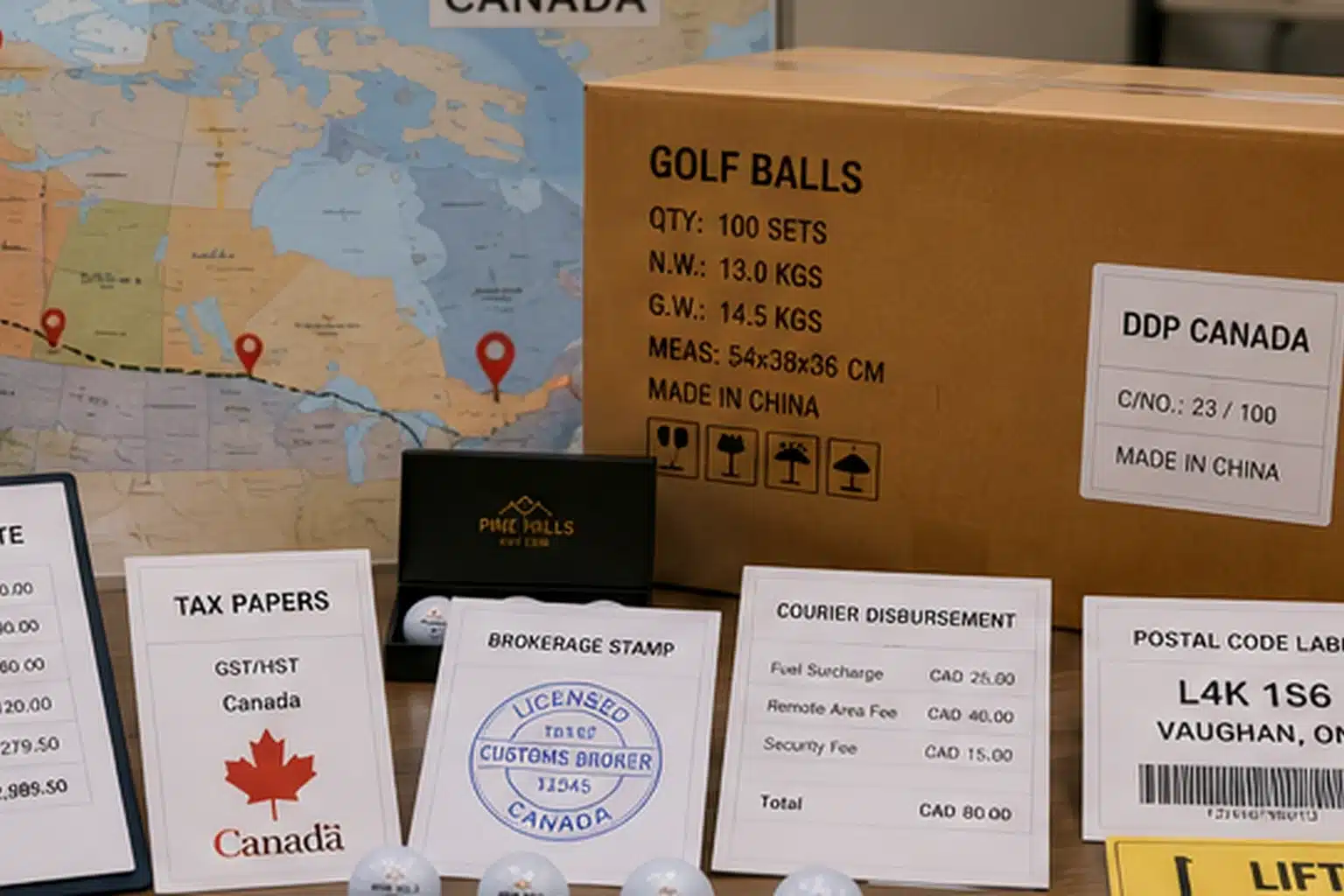
DDP can work when the inclusions are visible. The risk is brokerage-blind DDP or final-mile-blind DDP, where the supplier’s total covers the China-to-Canada movement but leaves your team exposed to customs brokerage, courier advancement fees, appointment charges, liftgate costs, redelivery, or remote-area surcharges.
| DDP item | Hidden risk | What to verify | Buyer action |
|---|---|---|---|
| Brokerage | Surprise invoice | Included / excluded | Write into RFQ |
| Disbursement | Courier add-on | Advancement policy | Confirm prepaid |
| GST/HST | Tax ambiguity | Handling route | Ask accountant |
| Liftgate | Delivery fee | Required or not | Confirm site |
| Appointment | Missed delivery | Booking scope | Ask 3PL |
| Remote zone | Margin leak | Exclusion list | Verify postal code |
Supplier says DDP Canada but cannot explain brokerage inclusion is a failure signal. A professional DDP quote should identify which party handles customs brokerage, entry preparation, GST/HST, courier disbursement or advancement, delivery appointment, liftgate, inside delivery, redelivery, and remote-zone charges.
Your deliverable is an Itemized Canada DDP Quote. DDP approval requires every tax, brokerage, courier-fee, and delivery category to be listed as included, excluded, or buyer-paid. If the destination postal code, carton count, pallet size, or packaging version changes, the quote should be revised before shipment booking.
How Do CBSA Duty and GST/HST Work?
Your team may hear that golf balls can start from a duty-free HS line and assume the Canada shipment is low-cost. That shortcut misses tax, brokerage, and delivery reality.
Duty-free does not mean tax-free, brokerage-free, or delivery-free. Your team should review HS 9506.32.00 00 as a CBSA starting point, then separately confirm GST/HST/PST treatment, product mix, brokerage, disbursement fees, and final-mile delivery before approving a Canada DDP quote.
Finished golf balls can start from HS 9506.32.00 00 for Canadian classification review, but mixed promotional kits need more attention. If the shipment includes tees, towels, divot tools, ball markers, gift boxes, packaging accessories, or mixed corporate gift items, ask your broker to review the item list separately. Finished golf balls can start from HS 9506.32.00 00 for Canadian classification review, but mixed promotional kits need more attention. If the shipment includes tees, towels, divot tools, ball markers, gift boxes, packaging accessories, or mixed corporate gift items, ask your broker to review the item list separately. Use the official CBSA Customs Tariff — Chapter 95 as the shipment-date starting point, then confirm the final treatment with your customs broker.
| Review item | Common mistake | What to request | Buyer action |
|---|---|---|---|
| Finished balls | Copy old HS | 9506.32 review | Broker check |
| Gift sets | Ignore accessories | Item list | Review separately |
| GST/HST | Assume included | Tax route note | Ask accountant |
| PST/HST | Ignore province | Destination province | Verify rate |
| Brokerage | Hidden fee | Inclusion statement | Add clause |
| Invoice split | One-line DDP | Value / freight split | Keep file |
Imported goods are generally subject to GST or the federal part of HST, and CRA guidance explains that a GST/HST registrant may be able to claim an input tax credit when the registrant is the importer and the relevant conditions are met. Use the official CRA GST/HST imports and exports guidance and your accountant to verify whether the importer route, tax payment path, and accounting proof support your file.
For province-specific GST/HST review, use the official CRA GST/HST rates and place-of-supply rules and confirm the treatment with your accountant before treating one Canada DDP quote as tax-complete.
Your deliverable is a CBSA Classification and Tax Handling Note. Shipment approval requires separate duty, tax, brokerage, and delivery review, not just a duty-rate screenshot.
✔ True — Duty, GST/HST, brokerage, and delivery are separate review items
A duty-free classification starting point can still leave GST/HST, PST/HST, brokerage, courier fees, and final-mile delivery to verify.
✘ False — “If CBSA duty is Free, your Canada import cost and file risk are finished”
Duty treatment does not replace GST/HST handling, importer records, brokerage inclusion, or postal-code delivery confirmation.
Who Should Be Importer in Canada?
Your DDP shipment may clear through a forwarder route, courier account, or seller-arranged process. If your finance team needs usable import records, the importer route matters.
The importer route determines whether your Canada file is useful after clearance. Confirm whether your BN/RM account, the supplier’s forwarder, or another party is used, then verify the CARM / CAD accounting proof path and GST/HST review process before accepting DDP terms.
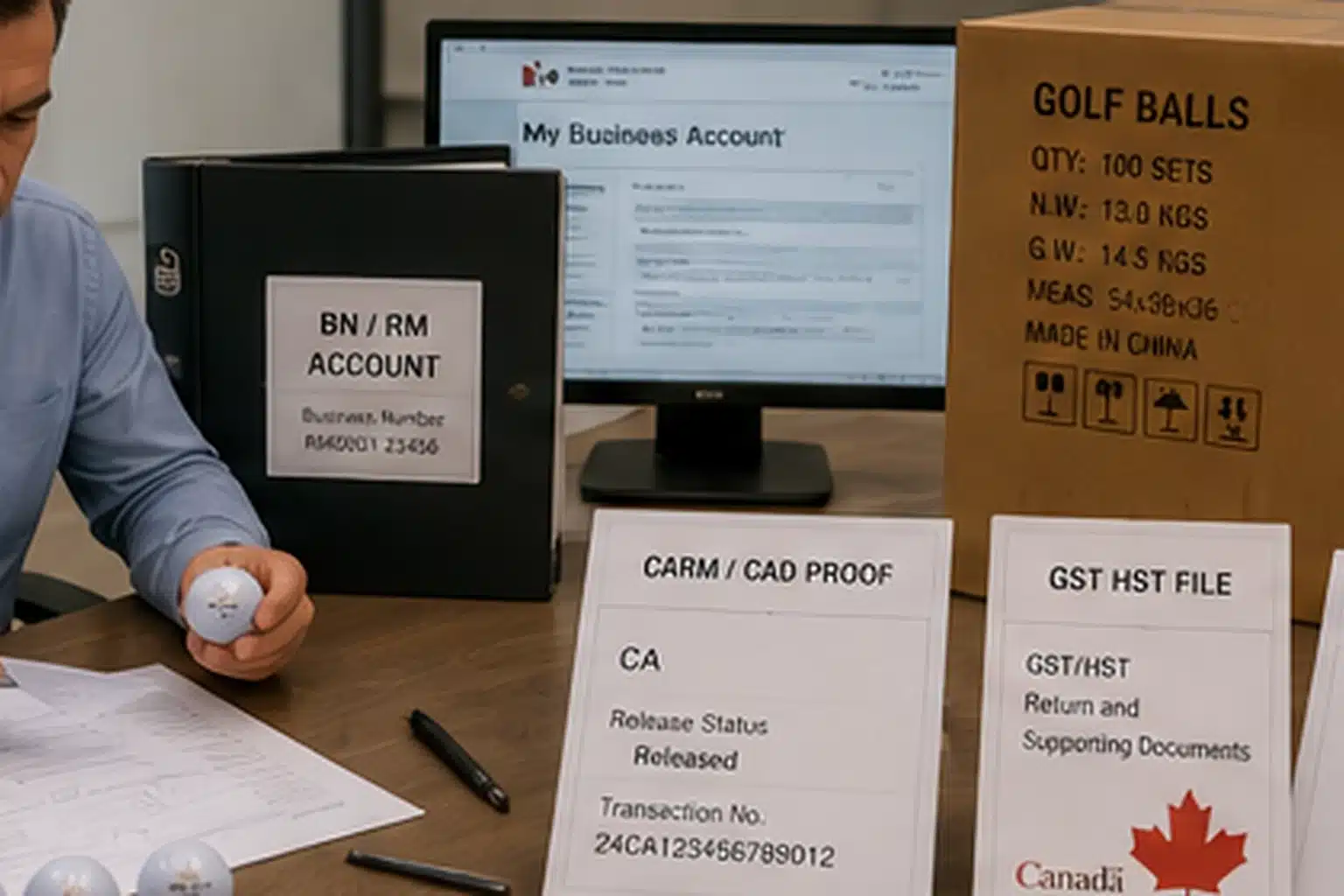
Commercial importers generally need a Business Number and an import-export RM program account before importing goods. The official CBSA commercial import guide explains the importer setup and commercial import process, while your broker can confirm how the BN/RM route should appear in your shipment file.
| Importer question | Why it matters | What to request | Buyer action |
|---|---|---|---|
| Whose BN/RM? | Import identity | Named account route | Confirm role |
| Who files CAD? | Accounting proof | CAD path | Keep record |
| Who pays tax? | GST/HST review | Tax handling note | Ask accountant |
| Who is broker? | Clearance control | Broker contact | Confirm support |
| Who keeps records? | Audit trail | File owner | Save proof |
Forwarder clears under an unclear importer route is a failure signal. Your team should know who is importer, who can provide post-clearance records, and whether the GST/HST file supports the accounting review your business needs. Do not treat supplier-prepaid GST/HST as automatically better; the file path matters.
CARM is CBSA’s system of record for commercial import accounting. For proof wording, use CBSA’s official D17-2-1 guidance on CARM and CAD, which explains that the Commercial Accounting Declaration replaces the previous Form B3 and Form B2 processes, or ask your broker to confirm the current CAD proof path before shipment.
Your deliverable is an Importer BN/RM and CARM/CAD Proof Path. DDP approval requires importer-role clarity, GST/HST handling visibility, broker responsibility, and post-clearance accounting proof access.
Courier DDP or LCL to Vancouver/Toronto?
Your sample order, corporate gift order, distributor pallet, and bulk replenishment order may need different Canada routes. One freight mode rarely fits every shipment.
Your Canada route should match order size, packaging volume, and final postal code. Compare courier DDP, air freight, LCL, Vancouver or Toronto routing, LTL delivery, pallet requirements, liftgate needs, appointment rules, and remote-area exposure before shipment booking.
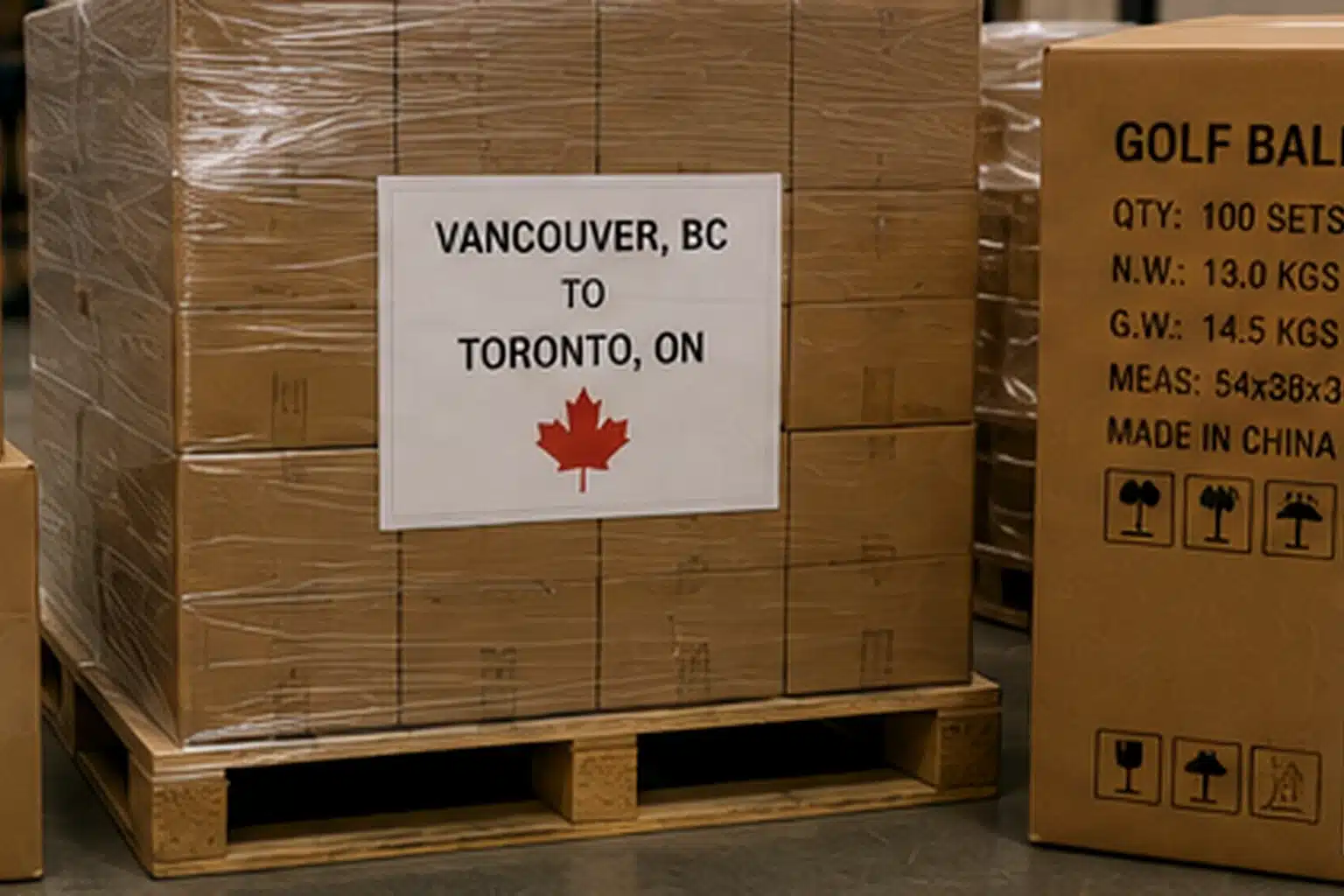
Courier DDP may suit samples, small cartons, or urgent DTC launch stock. LCL ocean, air freight plus broker, or palletized delivery may make more sense for distributor orders, golf course programs, or corporate gift campaigns. Vancouver, Toronto, Montreal, Calgary, or another routing point should be chosen by destination, not habit.
| Route option | Best fit | Hidden risk | Buyer action |
|---|---|---|---|
| Courier DDP | Samples / small cartons | Disbursement fees | Confirm prepaid |
| Air freight | Urgent cartons | Final-mile gap | Check delivery scope |
| LCL ocean | Pallets / bulk | Deconsolidation fees | Confirm brokerage |
| Vancouver route | West Canada | Inland delivery | Check postal code |
| Toronto route | Central / East | Warehouse appointment | Send SOP |
| Remote delivery | Courses / resorts | Surcharges | Get exclusion list |
Final postal code is confirmed after shipment booking is a failure signal. Canadian delivery cost can change sharply between a commercial dock in Toronto and a golf resort, rural course, pro shop, or remote address. Your supplier cannot confirm final-mile coverage from “Canada warehouse” alone.
Request a Canada Route and Delivery Scope Memo before booking. Confirm quantity, carton count, CBM, gross weight, route, delivery address type, commercial dock, liftgate, appointment, inside delivery, remote-zone status, and delivery proof. Route approval requires final-mile scope, not only international freight cost.
✔ True — Route choice should be based on postal code and receiving conditions
The China-to-Canada leg is only one part of the route. Final postal code, dock access, liftgate, and appointment rules can decide the real margin.
✘ False — “The international freight route automatically covers Canadian final-mile delivery”
A shipment can reach Canada and still trigger redelivery, remote-area, liftgate, or appointment charges if the delivery scope was not confirmed.
What Should Your Canada RFQ Require?
Your RFQ may ask for unit price, logo printing, packaging, and DDP Canada delivery, but miss the variables that protect your landed execution.
Your Canada RFQ should define tax, brokerage, and final-mile coverage before it accepts DDP. Require CBSA classification basis, GST/HST/PST treatment, importer BN/RM route, CARM / CAD proof path, brokerage inclusion, disbursement handling, postal-code delivery scope, and remote surcharge exclusions.
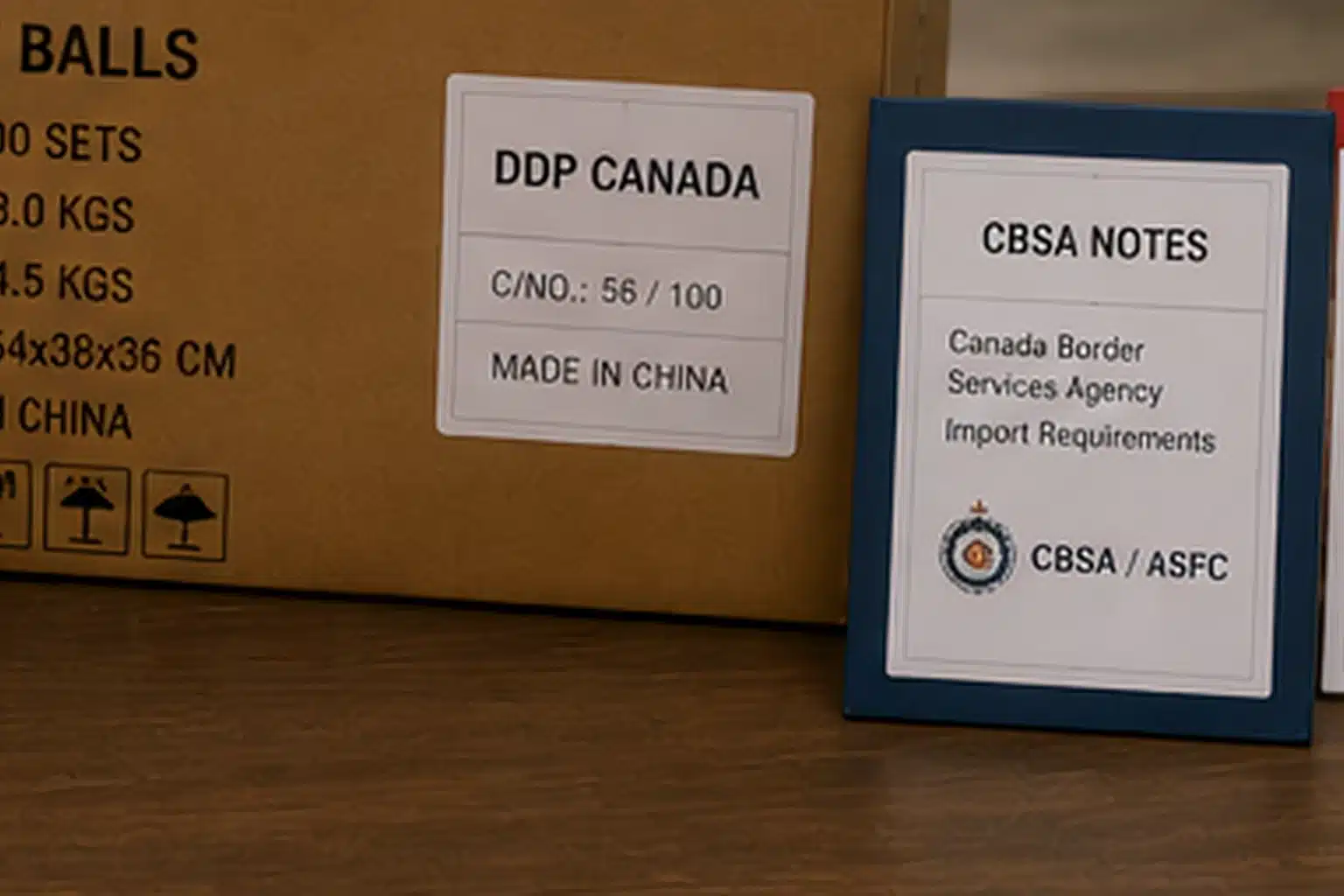
A Canada-ready RFQ should force the supplier or forwarder to show how the quote works. Product price is only one line. Your team needs the classification basis, importer route, tax handling, broker scope, delivery address, carrier limits, and proof path before shipment.
| RFQ item | Why it matters | What to request | Acceptance evidence |
|---|---|---|---|
| HS review | Duty basis | CBSA classification | Broker note |
| GST/HST | Tax file | Treatment route | Accountant check |
| BN/RM route | Import records | Importer role | Written proof |
| CARM/CAD | Accounting trail | Proof path | Record access |
| Brokerage | Hidden fee | Inclusion clause | Itemized quote |
| Disbursement | Courier add-on | Prepaid policy | Fee statement |
| Final mile | Delivery success | Postal-code scope | Route confirmation |
| Remote surcharge | Margin protection | Exclusion list | Written confirmation |
Supplier shall provide a shipment-level Canada import file before release, including CBSA classification basis, HS review, product and accessory breakdown, importer BN/RM route, CARM / CAD accounting proof path, GST/HST/PST handling statement, commercial invoice split, brokerage inclusion, courier disbursement treatment, route plan, packing list, carton labels, final postal code, and delivery proof.
Buyer approval of Canada-bound shipment requires written confirmation that the quote is based on the final product mix, shipment-date CBSA classification review, verified GST/HST/PST treatment, confirmed importer route, visible CARM / CAD proof path, prepaid or disclosed brokerage and courier fees, and postal-code-confirmed final-mile delivery scope.
Please quote DDP delivery to Canada based on our final postal code. Confirm the CBSA classification basis, HS 9506.32.00 00 review, product and accessory breakdown, GST/HST/PST treatment, importer BN/RM route, CARM / CAD accounting proof path, customs brokerage inclusion, courier disbursement or advancement fee handling, commercial invoice split, Vancouver / Toronto or courier routing, liftgate or appointment needs, final-mile coverage, delivery proof, and any remote-area surcharge exclusions before shipment approval.
FAQ
What is the import duty on golf balls in Canada?
Finished golf balls can start from HS 9506.32.00 00 for CBSA review, but your team should confirm the treatment at shipment date.
Ask for product and accessory breakdown, especially for gift sets with tees, towels, markers, tools, or mixed promotional items. Request broker review and keep the classification note in the import file. Do not treat one past tariff result as permanent for every future shipment.
Does duty Free mean I pay nothing on imports?
No. Duty, GST/HST/PST, brokerage, disbursement, and final-mile delivery are separate cost and file items.
Confirm tax handling, brokerage inclusion, courier advancement fees, and final postal-code delivery. A duty-free starting point can still leave a meaningful Canada import bill if GST/HST, brokerage, and delivery add-ons are not included in the quote.
Who pays GST/HST on Canada DDP shipments?
That depends on the agreed route, importer role, and DDP structure.
Ask who is importer, who pays or advances GST/HST, who receives the accounting proof, and whether the file supports your finance process. Have your accountant review the ITC path before you accept DDP terms that use a supplier or forwarder account.
Can a Canadian business claim ITCs on imports?
A GST/HST registrant may have an ITC path when importer role, documentation, and tax rules support it.
Confirm the BN/RM route, tax payment path, CARM / CAD proof path, and importer identity. Do not assume supplier-prepaid GST/HST is automatically best for your company. Ask your accountant before accepting any DDP structure that changes the documentation path.
What is CARM or CAD for Canadian imports?
CARM is the CBSA commercial import accounting environment, and CAD is the accounting document path for imported commercial goods.
Avoid outdated proof wording that treats B3-3 as the core current deliverable. Ask who files the CAD, who retains records, and what redacted proof can be provided after clearance. Build this into the RFQ before shipment.
What are customs brokerage fees in Canada?
Brokerage fees are charges for customs clearance and related services, often handled by brokers, couriers, or forwarders.
Ask whether brokerage is included, excluded, or separately billed. Confirm entry preparation, account handling, disbursement, advancement, and post-clearance support. A DDP quote without brokerage language can still create a surprise invoice.
Should I use courier DDP or LCL to Canada?
Courier DDP may fit samples and smaller cartons, while LCL or pallet freight may fit distributor or bulk orders.
Compare order size, carton count, packaging volume, gross weight, delivery postal code, and receiving rules. Courier can be fast, but disbursement and final-mile details still matter. LCL can work for pallets, but brokerage and domestic delivery must be confirmed.
Should I ship golf balls to Vancouver or Toronto?
Vancouver or Toronto routing should depend on destination postal code, freight mode, warehouse plan, and final-mile scope.
Do not choose a port or hub by habit. Western Canada, Central Canada, Eastern Canada, and remote delivery points can create very different domestic delivery needs. Ask your forwarder to quote by final postal code, carton count, pallet size, appointment rules, and remote-zone status.
Can I ship directly to a Canadian golf course or 3PL?
You can plan direct delivery when postal code, dock access, appointment, liftgate, pallet rules, and remote surcharges are confirmed first.
Send the receiving SOP to the supplier before packing. Request route confirmation, pallet or carton photos, delivery appointment proof, and remote surcharge exclusions in writing. A golf course, resort, or remote buyer location needs more detail than “door to door.”
What should a Canada DDP quote include?
A Canada DDP quote should include CBSA classification basis, GST/HST handling, importer route, CARM / CAD proof path, brokerage, disbursement, invoice split, and final-mile delivery scope.
Ask for goods value, freight, insurance, duty, GST/HST/PST handling, brokerage, courier disbursement, and delivery charges to be separated where applicable. The quote should also state the exact postal code, liftgate or appointment needs, remote surcharge treatment, and proof after delivery.
Conclusion
The safest Canada import is not the simplest DDP quote. It is the quote your team can verify across CBSA, GST/HST, brokerage, CARM / CAD, and final-mile delivery.
Before importing golf balls from China to Canada, confirm CBSA classification, GST/HST/PST treatment, importer BN/RM route, CARM / CAD proof path, brokerage inclusion, courier disbursement handling, invoice split, and final postal-code delivery.
If the supplier cannot show those details before shipment, your team does not yet have a Canada-ready import process. The golf balls may cross the border, but your margin can still get stuck somewhere between brokerage and the back nine.
You might also like — How Much Does It Cost to Import Golf Balls from China?