A low golf ball quote can become an expensive import when the SKU, packaging, quantity, freight, customs assumptions, destination, and quote validity are not aligned on the same commercial basis.
The cost to import golf balls from China is the delivered cost of your approved product and packaging basis, shipment-specific freight, border/customs inputs, and destination delivery. Manage that cost through five controls: Normalize → Optimize → Land → Accept → Refresh.
That means the lowest FOB quote is not automatically the lowest landed cost. Two suppliers may be pricing different quantities, printing scopes, packaging, Incoterms, shipment windows, or delivery endpoints—and freight or border inputs that were valid at quotation can change before shipment.
Your goal is not to find one permanent “China golf ball price.” Build a decision-ready delivered cost, identify which inputs are Fixed, Estimated, or Open, and—when rejects, damage, rework, or recoveries materially change usable quantity—calculate the cost per accepted ball.

Can you compare two supplier quotes fairly?
Supplier A quotes a lower FOB price. Supplier B looks more expensive. Before treating that gap as savings, check whether both suppliers actually priced the same product, packaging, quantity, customization, destination, and logistics scope.
You cannot compare two golf ball quotes fairly until both use the same product, customization, packaging, quantity, destination, Incoterm basis, and shipment window. A lower FOB number has no procurement value if the supplier removed packaging, decoration, delivery scope, or another cost the competing quote still includes.
This is the first control in a useful golf ball import-cost model.
A range program may need bulk cartons. A retail program may require sleeves and dozen boxes. An event order may add more logo colors or print positions. A private-label program may carry another artwork revision or product specification.
Those are not minor presentation differences. They can change the quote basis.
Printing can create the same distortion. “Custom logo included” does not tell you whether two suppliers priced the same side count, color count, setup work, artwork revision, or recurring decoration scope.
| Decision Basis | Supplier A | Supplier B | What Must Match | Buyer Action |
|---|---|---|---|---|
| Product | SKU / revision | SKU / revision | Same approved ball | Normalize |
| Decoration | Logo / sides / colors | Logo / sides / colors | Same print scope | Normalize |
| Packaging | Pack revision | Pack revision | Same pack-out | Normalize |
| Quantity | Order quantity | Order quantity | Same volume | Normalize |
| Incoterm | FOB / DDP | FOB / DDP | Comparable cost scope | Rebuild comparison |
| Destination | Named point | Named point | Same endpoint | Confirm |
| Timing | Quote window | Quote window | Same shipment period | Refresh |
Build a Quote Basis Sheet before comparing Supplier A with Supplier B. Record the exact SKU or revision, customization scope, quantity, packaging revision, destination, Incoterm, shipment window, delivery requirements, exclusions, and quote-validity date.
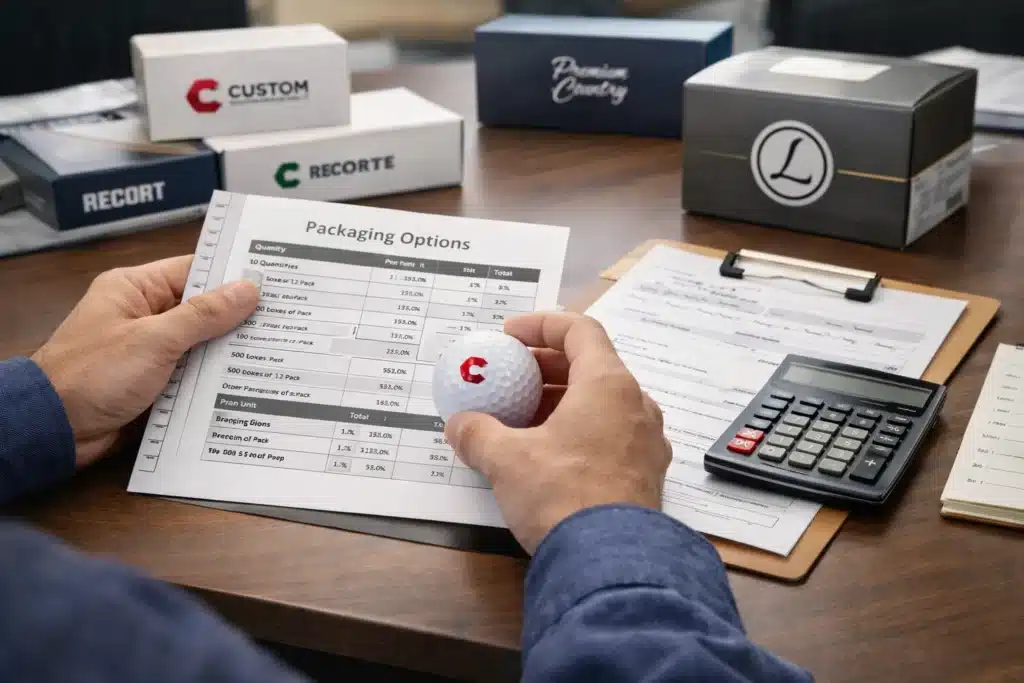
If packaging is still open, settle the OEM golf ball packaging options before treating two pack-outs as comparable prices.
If the golf ball itself is still changing, stop the price comparison until the specification is stable enough that both suppliers are quoting the same commercial requirement.
Supplier shall identify the quoted product specification, customization scope, packaging configuration, Incoterm, destination, shipment basis, and quote-validity period. Any change affecting product, packaging, logistics scope, or delivered-cost assumptions shall be disclosed before buyer approval.
Your team should be able to explain every material difference between the two offers without using the unit price itself.
Normalize first; compare second.
✔ True — A lower FOB can be the better quote after both offers are normalized
A genuine cost advantage becomes visible only after product, decoration, packaging, quantity, destination, timing, and delivery scope are aligned.
✘ False — “The supplier with the lower unit price is automatically cheaper”
A lower number may simply describe less product, less packaging, another volume, or a shorter logistics scope. Until those variables match, you do not yet know which order costs less.

Can timing and Incoterms lower your import cost?
Buyers often spend most of their negotiating effort on the factory price while treating production timing and logistics responsibility as fixed. Both can affect the total cost before the golf ball specification changes at all.
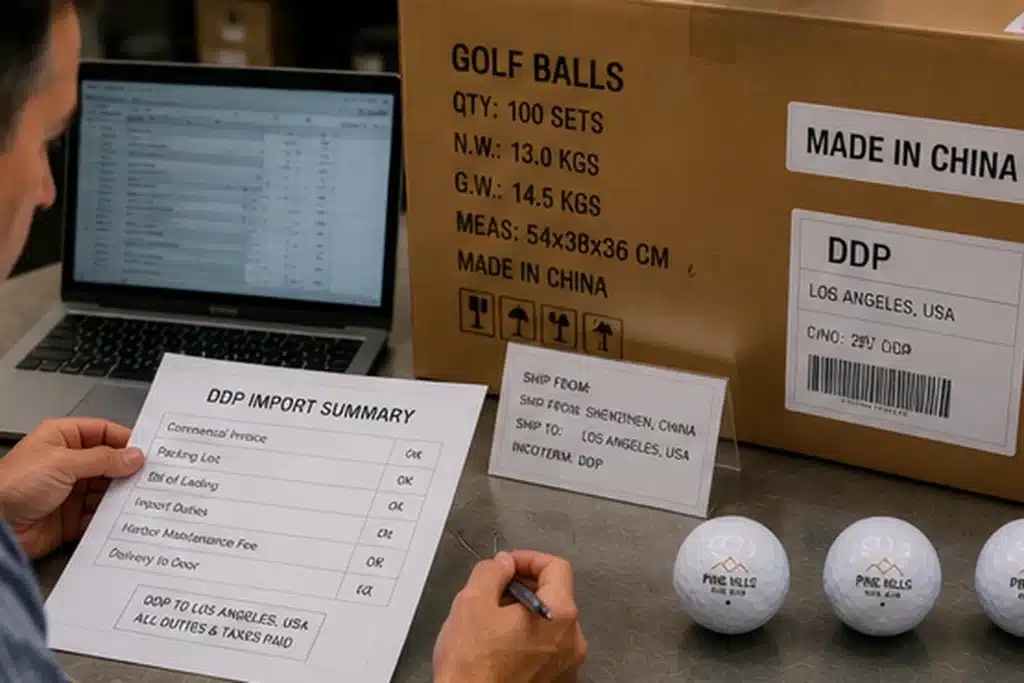
Timing and Incoterms can change your golf ball import cost before the product price changes; compare factory loading across realistic production windows and FOB vs DDP on the same door-delivered basis. For small pilots, fixed origin charges can make FOB less economical than its lower headline price suggests.
We commonly see production loading change around major export-demand and holiday-planning periods. In the weeks approaching Chinese New Year, we also see more pressure on domestic logistics as trucking availability tightens, warehouse activity becomes less predictable, and carrier cutoffs matter more.
That does not mean every Chinese golf ball factory follows the same peak-season calendar. For your program, timing should be treated as a variable to verify rather than an assumption.
Ask:
What is your current production loading?
What is your next lower-utilization production window?
Then compare the same SKU, quantity, printing, packaging, and delivery basis across realistic production windows.
Order size can change the logistics economics just as clearly.
In our recent small-order FOB shipments, the combined origin-side cost of moving goods from our factory to the nominated export warehouse, warehouse receiving, and forwarder FOB handling has typically been approximately US$200–300.
This is our own operating benchmark, not a China-wide FOB-fee standard. Depending on the quotation and nominated-forwarder arrangement, those origin-side costs may already be included in the FOB basis or shown separately. For your cost model, count them once—but make sure they are visible.
For 1,200 balls, that cost represents approximately:
-
US$200 ÷ 1,200 ≈ US$0.167 per ball
-
US$300 ÷ 1,200 = US$0.25 per ball
For 2,400 balls:
-
US$200 ÷ 2,400 ≈ US$0.083 per ball
-
US$300 ÷ 2,400 = US$0.125 per ball
The product did not change. The order size changed how heavily the fixed origin-side cost landed on each unit.
Order size changes Incoterm economics.

When is FOB not the cheaper option?
FOB is not a guarantee of lower door-delivered cost. It changes which parts of the transport chain remain under the buyer’s control.
The International Chamber of Commerce Incoterms® rules define trade terms by allocating tasks, costs, and risks between seller and buyer. They do not declare FOB or DDP universally cheaper.
| Buyer Decision | Variable to Compare | Evidence | Cost Risk | Buyer Action |
|---|---|---|---|---|
| Order now? | Factory loading | Supplier schedule | Rush / congestion | Compare windows |
| Order near holiday? | Domestic logistics | Supplier/carrier plan | Delay / surcharge | Confirm cutoff |
| Use FOB? | Origin + buyer logistics | Forwarder quote | Fixed-cost dilution | Calculate door cost |
| Use DDP? | Seller-controlled scope | Itemized DDP quote | Hidden exclusions | Verify scope |
| Pilot or reorder? | Order size | Same-SKU comparison | Incoterm economics change | Recalculate |
For a small pilot, compare the complete FOB-to-door path with DDP for the same SKU, quantity, packaging, destination, and quotation date.
FOB can win when your team has efficient logistics rates and controls the downstream route well. DDP can be competitive when the seller’s logistics network has better consolidation economics. Neither conclusion should be assumed before the cost scopes are rebuilt to the same endpoint.
There is also a technical detail worth confirming in containerized trade. ICC Academy’s FCA vs FOB guidance explains that FOB is intended for sea or inland-waterway transport and that, where containerized cargo is handed to a carrier at a terminal before loading aboard the vessel, FCA may better reflect the transaction.
The point is not to turn your golf ball purchase into an Incoterms seminar. It is to make the logistics scope match the transaction you are actually buying.
Request a Timing & Incoterm Comparison using the same commercial basis.
Can the supplier offer FOB? is an execution question.
Does FOB produce the lower door-delivered cost for this order? is the procurement question.
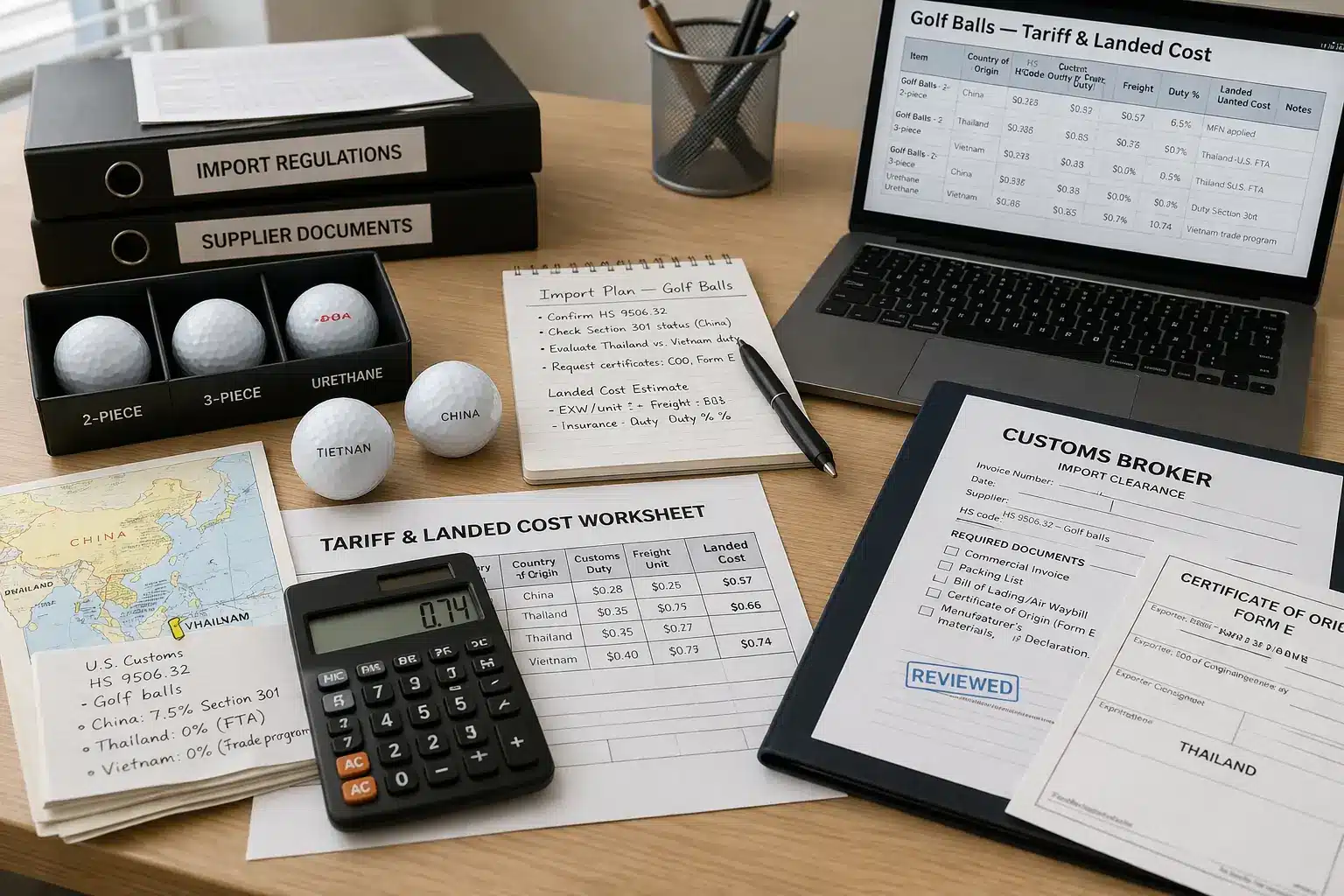
What belongs in your landed cost per ball?
Once supplier quotes are normalized and controllable variables have been reviewed, you can build the cost stack. The biggest mistake is compressing that stack into one clean total without showing which inputs remain estimates.
Your delivered landed cost per ball should combine the approved product basis, shipment-specific freight, border/customs inputs, and destination delivery, with each material line marked Fixed, Estimated, or Open. The total is decision-ready only when your team can see which assumptions can still move.
For procurement planning, keep the cost stack simple:
+ International Logistics Input
+ Border / Customs Input
+ Destination Delivery
= Delivered Landed Cost
If packaging is already included in the quoted product or FOB basis, do not add it again. The purpose is to make the scope visible—not to duplicate the cost.
Detailed freight and customs calculations should be verified in their own shipment-specific workflows after these cost categories are separated.
| Cost/Input | Basis | Status | Evidence / Valid Through | Refresh Trigger |
|---|---|---|---|---|
| Product | SKU / quantity / customization | Fixed | Supplier quote | Spec or quantity change |
| Packaging | Approved pack revision | Fixed | Pack specification | Pack change |
| Freight | Route / mode / date | Estimated | Forwarder quote / expiry | Booking or expiry |
| Border input | Current entry assumption | Open / Estimated | Broker evidence | Treatment / date change |
| Final delivery | Named destination | Estimated | Logistics quote | Destination change |
One unidentified all-in number should make approval harder, not easier. Your team needs to know whether the product line is firm while freight remains estimated, or whether a border assumption is still open until the actual shipment date.
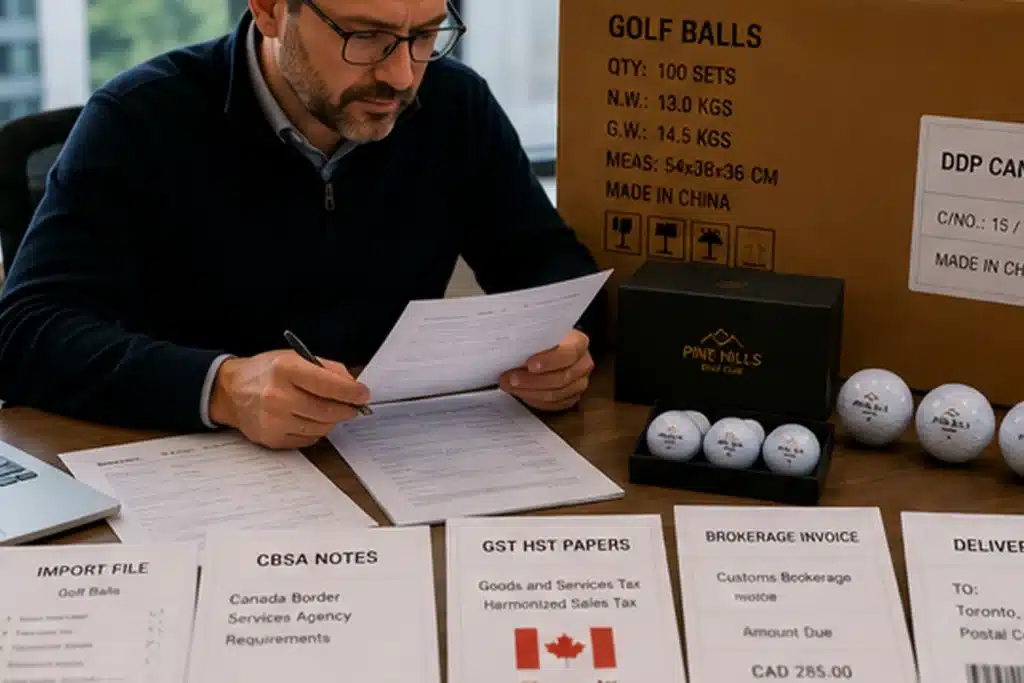
For U.S.-bound shipments, merchandise-processing rules are a separate border-cost input, and the applicable fee should be verified against the entry basis in force at shipment. 19 CFR 24.23 sets out the merchandise-processing-fee framework and makes clear that the applicable fee structure must be evaluated against the relevant entry conditions.
Keep one other distinction visible:
Customs Value Basis ≠ Delivered Landed Cost
Your landed-cost model intentionally includes freight and destination delivery because its purpose is to measure what inventory costs to reach you.
Customs valuation answers a different legal question. For U.S. imports, U.S. transaction-value rules generally start with the price actually paid or payable for the merchandise. International freight and insurance may be excluded where the applicable valuation rules and supporting documentation permit; confirm the entry basis with your broker.
Do not automatically copy a DDP invoice total into the customs-value field.
Packaging can also make an otherwise current freight input stale.
Two packaging configurations we currently use illustrate the issue:
-
Retail configuration: 240 balls/carton, 40 × 30 × 28 cm, 14 kg gross
-
Bulk configuration: 300 balls/carton, 39 × 29 × 22 cm, 14.5 kg gross
These are configurations we currently use, not industry-standard golf ball cartons.
If your packaging is Rev.04 but your freight calculation still uses carton data from Pack Rev.02, your freight cost basis is already outdated.
A pack-out change can affect carton count, dimensions, gross weight, density, and ultimately the logistics input even though the golf ball itself has not changed.
Create a Landed Cost Control Sheet that gives every material input a basis, status, evidence, valid-through date, and refresh trigger.
Buyer cost approval shall use an itemized cost record showing the product basis, freight basis, border-cost assumption, delivery scope, applicable evidence or quotation reference, validity date, and any cost item that remains estimated or open before shipment.
When physical freight math becomes the open question, use the dedicated golf ball freight-cost guide. When tariff, customs valuation, or DDP assumptions become the open question, move to golf ball duty and DDP cost verification.
A landed-cost total is only as current as its oldest material input.
✔ True — A useful landed-cost model shows which inputs can still change
Product cost may already be fixed while freight, border treatment, or final delivery remains estimated. Procurement needs to see that difference before approving the total.
✘ False — “An all-in number is safer because there are fewer lines to review”
A single total can hide stale freight, an old packaging basis, an unverified customs assumption, or an expired logistics quote. Simplicity helps only when the inputs underneath it remain visible.
What does each accepted golf ball really cost?
A per-ball delivered landed-cost worksheet often divides total delivered cost by every unit received. That denominator can overstate usable inventory when inspection, damage, rework, rejection, or supplier recovery materially changes the final disposition. Receiving inspection, damage, rework, rejection, or supplier recovery can make that denominator too optimistic.
Delivered landed cost tells you what the shipment cost to reach the destination; accepted cost tells you what the usable inventory actually cost after receiving. When rejects, rework, damage, credits, or replacements are material, divide the net delivered program cost by accepted usable units—not automatically by every unit that arrived.
A rejected ball may no longer be sellable or usable, but it has already consumed some combination of product cost, freight, border cost, final delivery, receiving, and handling.
That is why, when acceptance loss is material:
Delivered Units ≠ Accepted Usable Units
Use a buyer-side procurement metric:
Net Accepted Cost per Ball
= (Actual Delivered Program Cost − Supplier Credits / Recoveries)
÷ Accepted Usable Units
Accepted Cost is a procurement-management metric, not a customs definition of landed cost.
Consider a calculation example:
-
Delivered units: 5,000
-
Accepted usable units: 4,900
-
Delivered program cost: US$3,000
-
Supplier credit: none assumed
The original cost sheet shows:
US$3,000 ÷ 5,000 = US$0.600 per delivered ball
After disposition:
US$3,000 ÷ 4,900 ≈ US$0.612 per accepted ball
This does not mean every 5,000-ball order loses 2%.
It means the denominator changes when delivered inventory and accepted usable inventory are different.
| Receiving Outcome | Cost Effect | Evidence | Treatment | Buyer Action |
|---|---|---|---|---|
| Accepted | Usable inventory | Receiving record | Keep in denominator | Count |
| Rejected | Cost already incurred | Disposition record | Remove from usable units | Record |
| Reworked | Adds recovery cost | Rework record | Add incremental cost | Update |
| Supplier credit | Reduces net cost | Credit memo | Subtract | Apply |
| Replacement | May add logistics | Replacement record | Recalculate | Refresh |
If a supplier issues a credit or other recovery, subtract it before calculating net accepted cost. If sorting, rework, or replacement freight is material, capture that economic effect as well.
The underlying quality process may involve:
Hold → Scrap / Remake / Rework → Reinspection → Final Release
For procurement cost control, the commercial output you need is simple: how many units became accepted usable inventory, and what recovery did you receive for the units that did not?
When the open question becomes how product quality should actually be tested and documented, use the dedicated golf ball QC and batch verification guide.
Maintain an Accepted Quantity Record tied to final disposition, supplier credits, recoveries, and replacements. Use accepted-unit cost only when the disposition is sufficiently complete to know the usable quantity.
Delivered Cost and Accepted Cost are both useful because they answer different procurement questions.
When should you refresh your import cost model?
A landed-cost worksheet can remain mathematically correct while becoming commercially wrong. Quantity, packaging, freight, destination, timing, border treatment, or supplier scope may have changed since the number was approved.
Refresh your import-cost model before booking, before shipment, and before reorder whenever a material input changes or expires. Product revision, packaging, freight, destination, customs treatment, entry date, or supplier scope can make an old worksheet look precise while its assumptions are no longer valid.
Use three review points:
Before PO or booking: confirm the SKU, quantity, packaging, route, destination, Incoterm, and quote validity.
Before shipment: replace material Estimated or Open inputs with current evidence where possible.
Before reorder: use the previous worksheet as a reference, not automatic approval.
Freight is the clearest example. The Freightos Baltic Index tracks market pricing across major container lanes using current market data.
That makes a freight index useful for challenging an old assumption.
It does not make the index your shipment quote.
Use a live benchmark to identify when your planning number may be stale, then replace the estimate with a shipment-specific forwarder quotation before booking.
Externally controlled inputs can expire in the same way. A customs fee, treatment, or effective date may change after the first worksheet was prepared. The important question is whether the evidence behind the number still matches the shipment that will actually move.
Holiday planning belongs in the same control system. If a future holiday schedule, supplier shutdown plan, or carrier cutoff is not yet confirmed, do not turn an unknown into a fake fixed date.
Record it as:
Status: Open
Refresh Trigger: official holiday notice + supplier shutdown plan + carrier cutoff advisory
Use the cost sheet as a version-controlled buying record:
| Cost/Input | Basis | Status | Evidence / Valid Through | Refresh Trigger |
|---|---|---|---|---|
| Product price | SKU + quantity | Fixed | Signed quote | Spec/qty change |
| Packaging | Pack revision | Fixed | Pack specification | Pack change |
| Freight | Route / mode / date | Estimated | Forwarder quote / expiry | Booking |
| Border input | Current assumption | Open / Estimated | Broker evidence | Pre-shipment |
| Delivery | Named destination | Estimated | Quote / validity | Destination change |
| Accepted quantity | Receiving result | Open → Fixed | Final disposition | Acceptance close |
Before approval, ask:
What changed? Which input did that change affect? Is the old evidence still valid?
Do not approve booking, shipment, or reorder using a material cost input whose evidence has expired or whose basis no longer matches the current order.
✔ True — An old cost sheet can be useful without being current
The previous version gives you a baseline and variance history. Current approval still requires fresh evidence for inputs whose scope, status, or validity changed.
✘ False — “The SKU is the same, so the last order’s landed cost still applies”
The same golf ball can ship under a different quantity, pack-out, freight market, destination cost, customs assumption, or production window. The product name alone does not preserve the cost basis.
A landed-cost worksheet is a version-controlled buying record, not a permanent price list.
FAQ
What if a DDP quote expires before production ends?
Do not automatically carry the expired DDP number into shipment approval. Reopen the freight, border, and destination-delivery inputs that depended on that quotation, mark them Estimated or Open where appropriate, and require an updated quote for the actual shipment window.
Production and logistics quotations often run on different validity periods. Your product price may remain fixed while the route used to deliver it has moved. Preserve the expired DDP quote as the historical basis, identify which components need refresh, and obtain current evidence from the supplier or logistics provider before release.
How should one-time setup fees enter the cost model?
Separate one-time development or setup charges from recurring per-ball costs before calculating import cost. Whether your company assigns those costs to PO #1 or allocates them across a broader program is an internal accounting-policy decision, but the supplier quote should keep them visible.
Examples can include artwork setup, printing setup, tooling, or one-time packaging development. Do not allow a nonrecurring charge to disappear inside a permanent unit price, because that makes reorder comparisons harder. First preserve the supplier-side classification; then apply your company’s accounting policy.
Should pilot freight be included in bulk landed cost?
Do not automatically copy pilot freight into the bulk-order landed cost. A pilot may use express or another high-cost route that does not represent commercial replenishment, so classify the pilot logistics cost according to your internal project policy and rebuild freight for the bulk shipment.
Pilot freight still costs money and should not disappear from the program record. The question is whether it belongs to validation, development, inventory acquisition, or another internal category. For the commercial order, use the actual quantity, carton configuration, freight mode, route, destination, and current forwarder quote.
Does custom packaging change landed cost?
Yes. Packaging can change the product-cost input as well as carton quantity, dimensions, gross weight, packing density, and freight basis. A material packaging revision should therefore trigger a freight refresh before you approve the landed-cost model again.
Keep the approved pack revision linked to the carton information used for logistics pricing. If Pack Rev.04 changes the carton configuration, do not continue using freight based on Pack Rev.02. Detailed CBM and chargeable-weight calculations belong in the freight model, but procurement should still treat a material packaging change as a cost-basis change.
Can one cost model work for every destination?
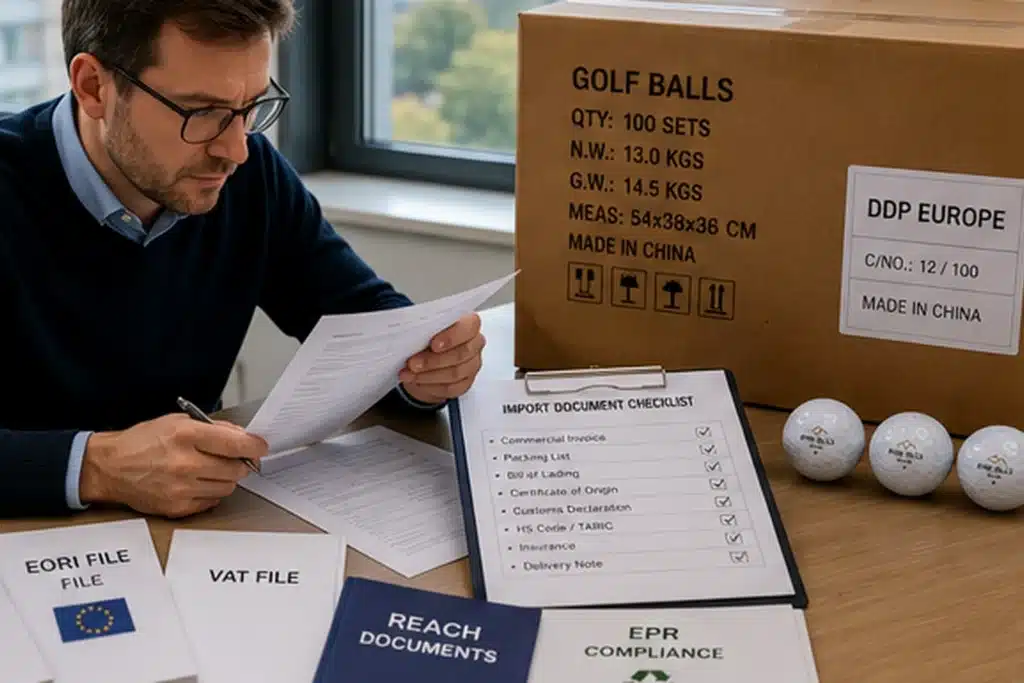
No. The product basis can remain unchanged while freight lane, border treatment, final-mile delivery, taxes or fees, accessorials, and service scope vary by country and destination. Every landed-cost model should identify the market and named delivery point it actually represents.
Do not transfer a U.S. door-delivery assumption to a European warehouse merely because the SKU is identical. Preserve the product input, then rebuild logistics, border, and destination lines using evidence for the new route. Country averages can support early research; they are not PO-level evidence.
Is a freight index enough to approve shipping?
No. A freight index can show whether market conditions have moved enough to challenge an old assumption, but it is not a shipment-specific quotation for your cargo, route, service level, destination charges, accessorials, or final delivery requirement.
Use the relevant lane and date as a benchmark signal, then obtain a current forwarder quote before booking approval. In a controlled cost model, the index helps you decide when to reopen the estimate; the shipment-specific quote supplies the number you actually approve.
Conclusion
The lowest-cost golf ball program is not necessarily the one with the lowest FOB line. It is the one whose product scope, logistics inputs, and validity are controlled before shipment—and whose usable-inventory cost still holds after receiving.
Normalize first. Optimize the variables you can still control. Calculate the delivered landed cost. Recalculate against accepted inventory where material acceptance loss exists. Refresh every material input before shipment and reorder.
Once you know the delivered cost—and, where relevant, the cost per accepted unit—the next question is whether the program still works after selling fees, returns, inventory exposure, and reorder economics are added.
You might also like — Private Label Golf Balls: Can Your Program Make Money?