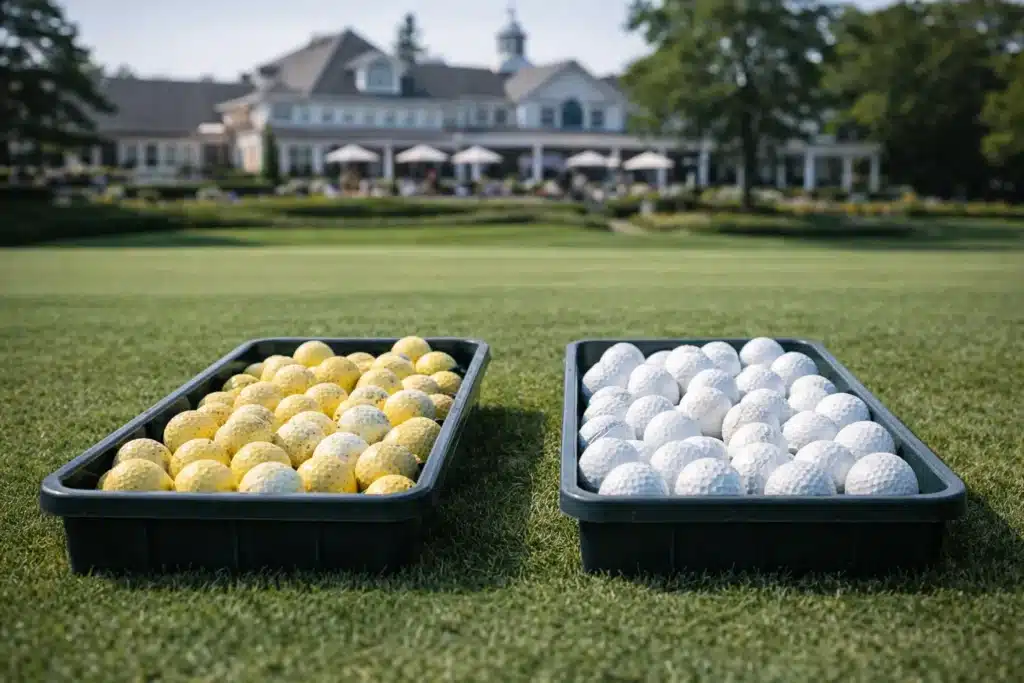
UV-yellowed range balls can still be playable, but at a premium club they can make the practice tee look tired before a member evaluates performance.
Premium clubs should verify range-ball whiteness retention, UV exposure proof, logo clarity, retained master match, batch-level WI/YI/ΔE records, and daylight receiving rules before buying UV-yellowed range balls. Playable is not enough when the tray looks yellowed, dull, mixed-shade, or below member-facing standards.
The real question is not only “Can yellowed range balls still be used?” It is whether playable inventory still looks premium enough for VIP arrivals, guest days, teaching clips, member posts, and daily tray presentation.
Use this guide to turn “stays white” promises into a controlled appearance program: retained master sample, QUV evidence, WI/YI/ΔE release records, logo clarity proof, packout protection, and receiving inspection before members notice the drift.
Why do yellow range balls hurt trust?
Your members see the tray before they judge flight, spin, or durability. If the balls look tired, the practice tee feels tired too.
Yellow range balls hurt trust because premium members judge tray presentation before ball performance. Your team should define a presentation-ready appearance standard for VIP arrivals, guest days, teaching content, member posts, and short-form swing clips before UV-yellowed range balls turn playable inventory into brand risk.
The “dirty teeth” effect works because it is instant. Nobody needs a lab report to feel the downgrade. A yellowed, dull, or mixed-shade tray can make a well-kept practice tee look less cared for, even when the turf, coaching staff, and service culture are strong.
This is why yellow range balls are not only a maintenance issue. They are a presentation, replacement-cost, and brand-risk issue. Your members may not know what WI, YI, ΔE, or QUV testing means. They do know when range balls look old, cheap, or mismatched.
Guest-day photos, teaching clips, and member swing videos make the problem larger. The camera does not separate “still playable” from “looks budget-grade.” It captures the whole practice scene. If the tray looks yellowed in the background, your premium club range can look less premium online.
| Pain/decision | What members see | Business risk | Action/evidence |
|---|---|---|---|
| VIP arrival | Yellowed tray | Premium image erosion | Set appearance spec |
| Guest day | Uneven white tone | Weak brand impression | Compare retained master |
| Lesson clip | Dull practice scene | Online downgrade | Check photo-ready tray |
| Member complaint | Old-looking balls | Trust loss | Log visible drift |
| Reorder review | Mixed shade batches | Supplier doubt | Ask lot release |
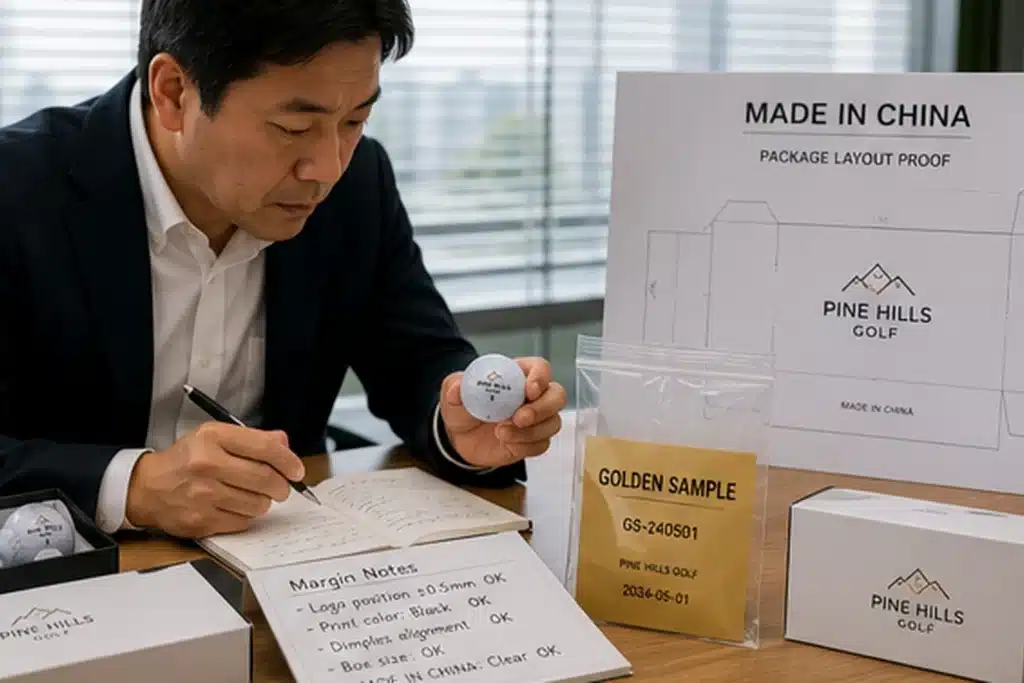
Create a premium tray appearance standard for club-use range balls. Compare visible shade, gloss, logo clarity, and tray impression against a retained master under consistent daylight-equivalent conditions.
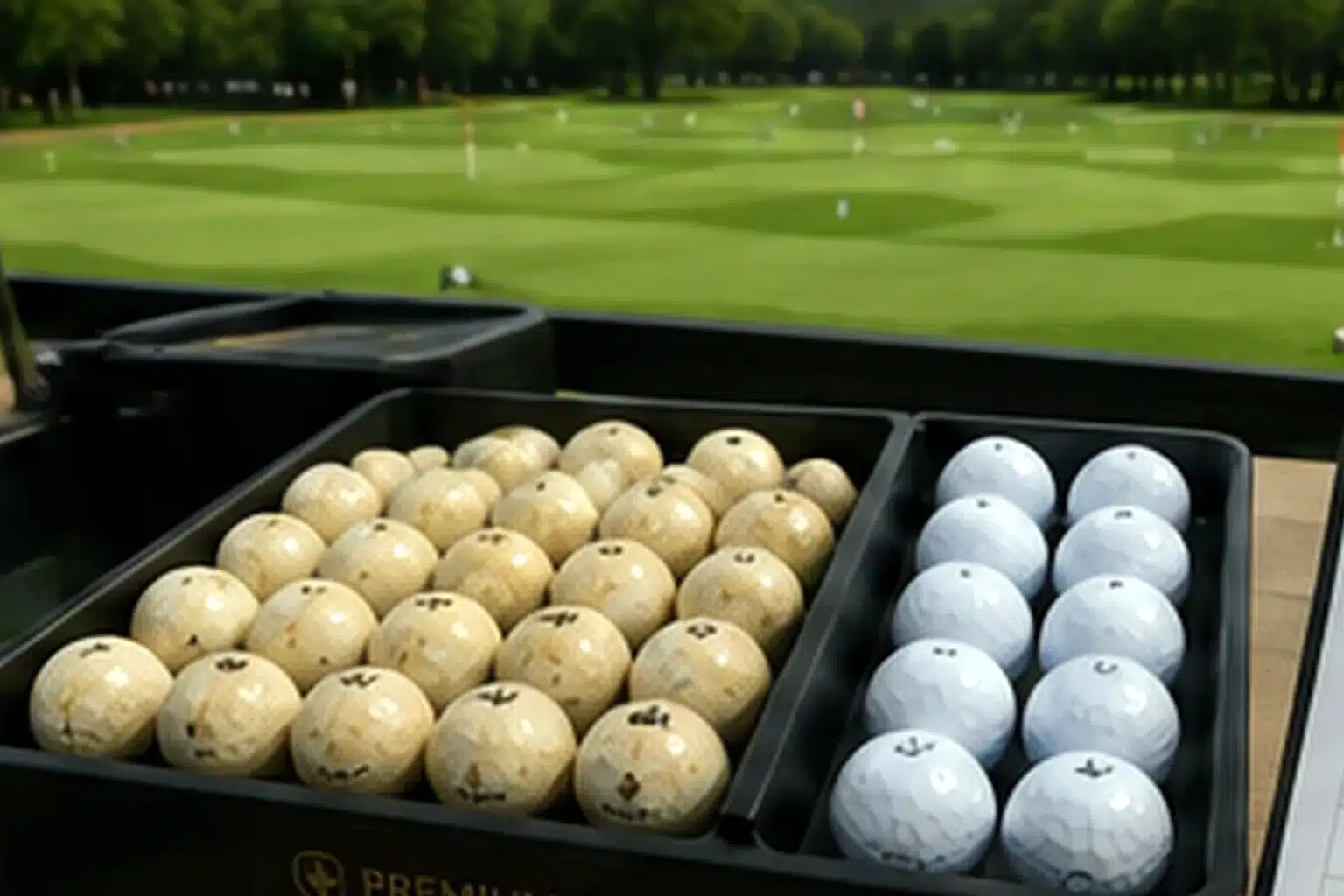
Do not define range-ball acceptability by playability alone when member-facing presentation is part of the product.
✔ True — Presentation is part of the product at a premium club
Your practice tee is not a back-room inventory zone. It is a member-facing stage, and the tray needs to look as intentional as the experience around it.
✘ False — “If the ball is still playable, the appearance problem is minor”
Playable can be enough for a casual range. It is not always enough for a premium club defending member trust, guest impressions, and visual standards.
Tray presentation before performance?
Your practice tee should look as intentional as the membership product behind it.
For a private club, resort, or high-end teaching facility, range balls are part of the visible service layer. Your team is not only buying impact durability. You are buying the look members see before they swing, the background in lesson content, and the quiet signal that your club is funded, managed, and cared for.
Are you replacing playable balls too early?
Your club may replace balls that still fly because they no longer look premium enough to place in front of members.
Premium clubs can replace playable range balls too early when cosmetic drift arrives before structural wear-out. Your team should track two end-of-life curves: cracks, cuts, and performance loss on one side; yellow cast, dull gloss, logo fade, mixed shade, and tray downgrade on the other.
A ball does not need to crack to become a procurement failure.
That is the frustrating budget problem behind UV-yellowed range balls. The core may still be usable. The cover may still survive normal range use. The ball may still fly acceptably for practice. Yet the inventory becomes commercially weak because your club can no longer present it without lowering the visual standard of the tee.
The buying error is treating “range ball life” as one curve. Premium clubs usually face two. One is physical: cracks, cuts, severe scuffs, and performance loss. The other is visual: yellowing, gloss loss, logo fade, and mixed trays. When visual failure comes first, finance is not paying for true wear-out. It is paying for appearance drift.
Premium clubs should buy appearance retention, not day-one whiteness.
| Pain/decision | What fails | Club impact | Action/evidence |
|---|---|---|---|
| Structural wear-out | Cracks/cuts | Playability loss | Replace for function |
| Visual failure | Yellow cast | Premium look loss | Set appearance limit |
| Logo aging | Faded mark | Brand control loss | Test logo clarity |
| Mixed lots | Uneven shade | Tray looks cheap | Compare batches |
| Early retirement | Still playable | Budget waste | Track visual life |
Create a visual retirement rule separate from structural scrap criteria. Track yellow cast, gloss drift, logo fade, mixed shade, cracks, cuts, and severe scuffs as separate categories.
Do not evaluate supplier value only by unit price if cosmetic drift forces early replacement.
Cosmetic drift vs true wear-out?
Your finance team should know whether it is paying for physical wear-out or visual failure.
The useful question is not simply, “How long do range balls last?” The better question is, “When does this inventory stop looking acceptable for our member-facing standard?” Once you separate structural failure from visual failure, supplier comparisons become sharper, reorder timing becomes less emotional, and early replacement becomes easier to explain.
What causes range balls to yellow?
Your samples may start white, then UV exposure, gloss loss, washing, handling, and outdoor storage reveal finish weakness later.
White range balls turn yellow when finish stability fails under UV exposure, gloss loss, abrasion, washing, and daily outdoor handling. Your team should ask how the coating route, clear coat, brightness approach, coating thickness control, and finish records support whiteness retention beyond the day-one sample.
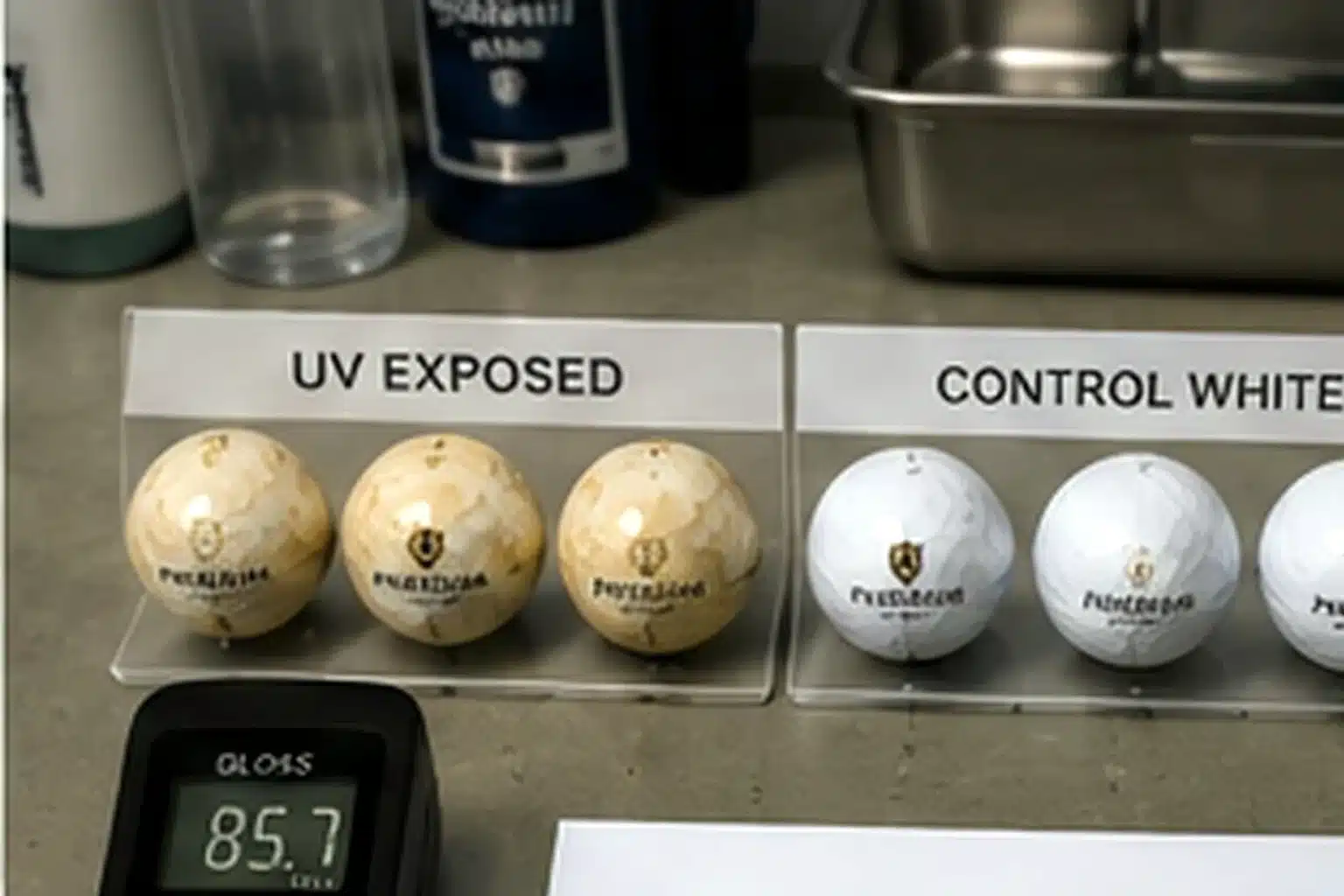
Two white range balls can look nearly identical when the carton opens. The difference often appears later, after sunlight, heat, humidity, washing cycles, recovery, friction, and repeated outdoor handling begin testing the finish.
Not every white finish is engineered for the same appearance life. A low-cost route may look bright at approval but shift faster under outdoor exposure. A stronger premium route should be built around UV stability, controlled brightness, consistent clear-coat behavior, and finish application discipline. That does not mean any supplier should promise “never yellow.” Serious buyers should reject that kind of magic language. The real goal is controlled appearance retention.
The finish route is not a cosmetic afterthought. Coating affects the visible life of the tray: whiteness, gloss, shade consistency, logo readability, and whether the ball still looks club-worthy after outdoor exposure. If coating thickness drifts, curing is weak, or gloss breaks down unevenly, the tray can look patchy before the balls are structurally worn out.
| Pain/decision | Finish factor | Visible risk | Action/evidence |
|---|---|---|---|
| Day-one white | Weak UV stability | Early yellow cast | Ask exposure proof |
| Gloss loss | Coating wear | Dull tray | Check finish route |
| Patchy aging | Thickness drift | Uneven shade | Request thickness record |
| Washed balls | Surface stress | Faster dulling | Test handling cycle |
| Bright sample | Over-optimized look | Unstable whiteness | Compare checkpoints |
Request a finish-control note covering coating route, UV-stability logic, thickness control, and comparative appearance-retention proof. Compare candidate and control balls after UV, handling, washing, and abrasion logic under the same conditions.
Do not approve a supplier only because the new sample looks bright when opened.
✔ True — The visible difference often appears after exposure
A weak finish can look clean at sample approval. The separation appears after UV, washing, handling, and gloss loss start testing whether the ball was built for premium range use.
✘ False — “All white range balls are basically the same if they look white on day one”
Day-one whiteness is easy to admire and dangerous to overtrust. Appearance retention is the buying problem.
UV, gloss loss, and coating drift?
Your club should buy the look that lasts, not the whitest first impression.
Range balls face a rougher life than display balls. They are hit, washed, collected, sorted, stored, and returned to trays again and again. That cycle makes coating stability, gloss retention, and logo readability part of the product, not an optional beauty layer.
What should a UV report prove?
Your supplier may show a big QUV hour count, but the report is weak if it hides test conditions, control samples, checkpoints, appearance data, or lot linkage.
A useful UV report proves comparison logic, not just test hours. Your team should ask for disclosed QUV or ASTM G154 conditions, control samples, checkpoint photos such as 0h/250h/500h, WI/YI/ΔE change, and production-lot linkage before accepting a “stays white” claim.
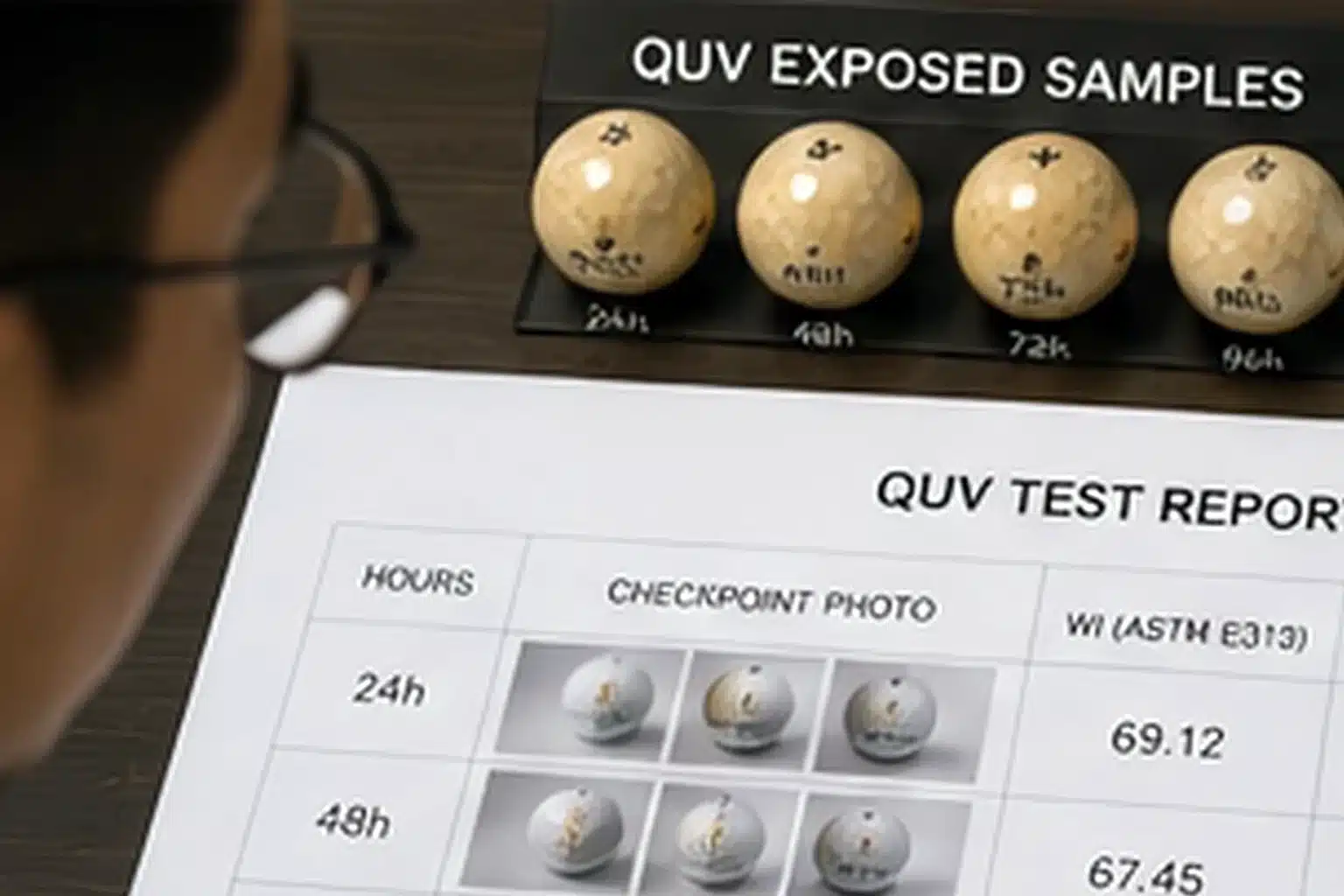
A “500-hour QUV passed” claim sounds scientific. It may still be too thin for a premium club buyer.
Accelerated UV exposure is useful when it is treated as a comparison framework. It can help your team compare finish routes under controlled stress. It should not be turned into a simple promise that one chamber result equals a fixed number of outdoor months. Outdoor exposure includes sunlight, heat, moisture, turf contact, washing, storage, and handling. Chamber testing helps you compare; it does not replace receiving discipline.
500-hour QUV claim with no cycle details is a failure signal.
A serious report should show what was tested, how it was stressed, what changed, and how the tested sample connects to the lot you will receive. The checkpoint sequence matters. A single flattering final photo can hide when yellowing started, whether gloss faded early, or whether the candidate only looked better because the comparison was weak.
| Pain/decision | Report field | Why it matters | Action/evidence |
|---|---|---|---|
| Hour-count claim | Lamp type | Changes stress | Disclose method |
| Hidden cycle | UV/moisture cycle | Affects failure mode | Show cycle |
| No baseline | Control sample | Enables comparison | Include control |
| Final photo only | Checkpoints | Shows drift path | Use 0/250/500h |
| Subjective color | WI/YI/ΔE | Quantifies change | Record values |
| Lab/bulk mismatch | Lot link | Ties proof to order | Match batch |
Use 0h, 250h, and 500h as practical example checkpoints, not as the only acceptable timeline. Your supplier may use a different test plan, but the logic should remain auditable: baseline, midpoint, endpoint, control, conditions, quantified appearance change, and production link.
The UV report shall identify the exposure condition, control sample, checkpoint photos, WI/YI/ΔE output, tested sample reference, and production-lot linkage used for shipment release.
Request a UV comparison report with disclosed conditions, control, checkpoints, WI/YI/ΔE outputs, and production-lot link. Check whether the report explains what was tested, how it was stressed, what changed, and how that connects to release of the shipped lot.
Do not accept a QUV hour count without cycle details, control sample, checkpoint evidence, and appearance-change records.
QUV conditions, checkpoints, and controls?
Your team should make UV evidence auditable before it becomes a supplier slogan.
The goal is not to collect a thicker PDF. The goal is to stop buying “stays white” language with no bridge to production release. A useful UV file should help procurement, finance, and operations reach the same decision: accept, hold, reject, or retest.
Your sample can look premium at approval but still lose the argument after logo fade, weak protection, transit heat, storage light, carton damage, or rushed receiving.
Logo durability is not decoration for a premium club; it is part of tray control. Your team should verify mark clarity, print protection, clear-coat behavior, packout shielding, transit condition, and arrival inspection before custom range balls are released to members.
A premium-looking white ball can still look uncontrolled if the logo fades, blurs, smears, shifts color, or ages differently from the finish around it. Members do not separate the print from the ball. They see the tray as one presentation.
For range-ball marks, clarity, wear resistance, easy identification, and bulk stability matter more than a beautiful new-sample photo. UV printing is not automatically more durable than pad printing, and pad printing is not automatically weaker. Durability depends on coating, ink, curing, surface preparation, protective layer, and actual hitting, rubbing, washing, and cleaning tests.
Logo durability promise with no rub/cleaning proof is a failure signal.
Packout is part of the same appearance program. Heat, light exposure, moisture, crushed cartons, weak inner protection, and inconsistent storage can make landed inventory look older than the approved sample. If your club uses custom logos, range IDs, or sorting marks, the approval file should include logo position, color, size, clarity, and visible defect limits.
| Pain/decision | Where risk happens | What to request | Action/evidence |
|---|---|---|---|
| Logo fade | Outdoor use | Print-protection note | Rub/cleaning proof |
| Blurred mark | Weak curing | Logo clarity rule | Inspect sample |
| Yellowed arrival | Transit heat/light | Packout spec | Check cartons |
| Mixed shade | Storage drift | Retained master | Compare lot |
| Repeat drift | Reorder cycle | Spec lock | Review release |
Custom-marked lots shall meet the approved logo clarity, position, color, and durability rule before release, and packout records shall reference the same approved appearance version.
Request logo durability evidence, packout protection spec, and arrival-side appearance inspection method. Check mark clarity after UV, rubbing, cleaning, and handling; check packaging condition and shade consistency at receiving.
Do not release custom range balls if logo clarity, shade match, or packout condition fails the approved appearance version.
✔ True — The last mile can ruin a smart buying decision
A good finish strategy can still be undercut by weak logo protection, loose packout, transit heat, or rushed receiving. Appearance control has to survive delivery.
✘ False — “Once the sample is approved, appearance risk is solved”
Approval without packout standards, arrival checks, and repeat-order controls only postpones the problem until the landed lot speaks for itself.
Print, clear coat, transit, receiving?
Your brand mark should survive the same cycle as the ball’s premium look.
Treat the logo as part of the controlled SKU, not as decoration added after the serious work is done. If the ball stays white but the mark looks tired, the tray still looks tired. If the mark looks sharp but the lot arrives yellowed, the tray still fails.
What proof should your PO require?
Your supplier may promise premium white, but your PO protects the club only when sample, UV proof, logo proof, packout, batch records, and receiving checks are connected.
Your PO should define premium appearance as evidence, not adjectives. Require retained master sample, WI/YI/ΔE release format, disclosed UV report, checkpoint photos, coating and abrasion comparison, logo clarity proof, packout record, batch traceability, daylight receiving rules, and AQL-style hold/reject criteria.
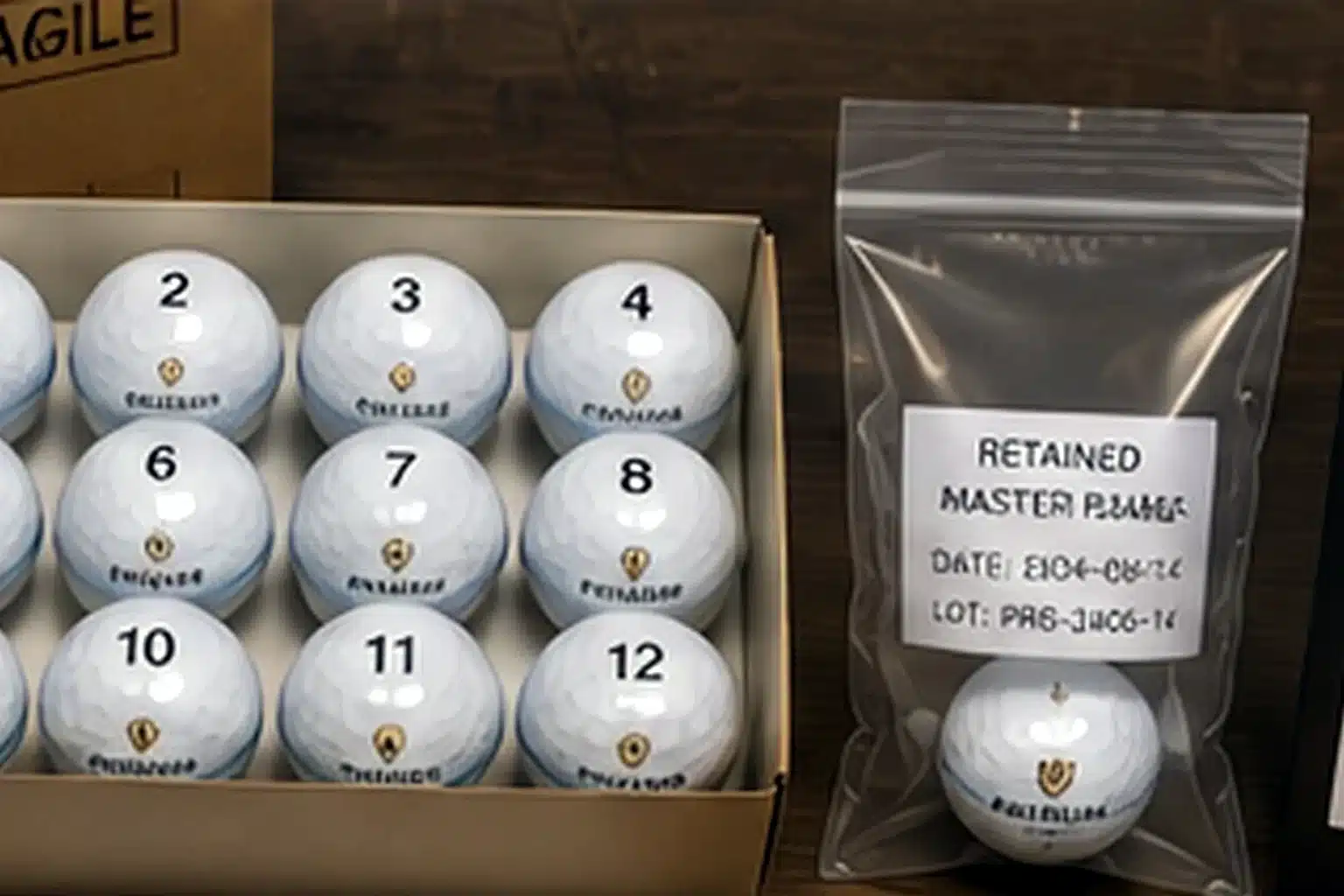
Ask the supplier to quote one premium-club range-ball program with retained master sample, WI/YI/ΔE release format, disclosed QUV/ASTM G154 conditions, checkpoint photos, coating-thickness or finish-control record, logo durability evidence, packout protection, batch-level appearance release, and daylight receiving inspection rule.
This is how “premium white” becomes a procurement standard instead of a sales phrase.
Your approved appearance should become a controlled reference, not an email photo. Keep a numbered retained master sample. Save a daylight-equivalent image reference. Write color, coating, logo, packaging, inspection method, and rejection handling into the spec annex. For repeat orders, compare the new lot against the same retained master before the balls reach the practice tee.
Bright sample with no WI/YI/ΔE release record is a failure signal.
| Pain/decision | Proof item | What it verifies | Action/evidence |
|---|---|---|---|
| Sample drift | Retained master | Approved look | Seal sample |
| Yellowing claim | WI/YI/ΔE | Color shift | Review data |
| Weak UV proof | QUV conditions | Stress logic | Check cycle |
| Finish wear | Coating/abrasion | Surface durability | Compare route |
| Logo fade | Print proof | Brand clarity | Run rub test |
| Landed drift | Packout record | Transit protection | Inspect cartons |
| Receiving dispute | AQL rule | Hold/reject path | Document release |
Whiteness and yellowing should be measured, not guessed. ASTM E313-20(2025) can support whiteness and yellowness index language for white, near-white, or colorless specimens, while ΔE helps express total color difference from the retained master. Your team does not need to turn receiving into a full laboratory, but it does need a consistent standard for comparing sample, bulk lot, and reorder.
Use standards as reference methods, not fake golf-ball certification. ASTM G154 can support UV exposure comparison language. ASTM E313-20(2025) can support whiteness and yellowness index language. ASTM D4060-25 can support relative abrasion comparison for organic coatings on flat rigid panels, so use it carefully as a finish-route comparison reference rather than a direct promise for curved, dimpled balls. ISO 2859-1:2026 can support AQL-style sampling and accept/reject rules for receiving inspection.
The 12-ball or agreed sample QC file should combine appearance proof and basic lot discipline. Include lot reference, retained master, WI/YI/ΔE format, visual photos, logo clarity result, coating or finish-control note, packaging condition, and basic fields such as weight, diameter, compression or hardness where relevant, visual defects, equipment note, and calibration status where available.
Supplier shall lock one approved appearance version and reference that version on retained master sample, WI/YI/ΔE release sheet, QUV comparison file, coating-thickness or finish-control record, logo durability proof, packout record, batch ID, packing list, and receiving inspection file.
Create a daylight receiving inspection routine. Open cartons under a consistent light condition, compare random balls with the retained master, spot-check logo clarity, record shade or gloss exceptions, check carton condition, and hold questionable lots before they reach operations.
Hold shipment if retained master match, appearance data, UV proof, logo clarity, packout condition, or batch traceability is missing.
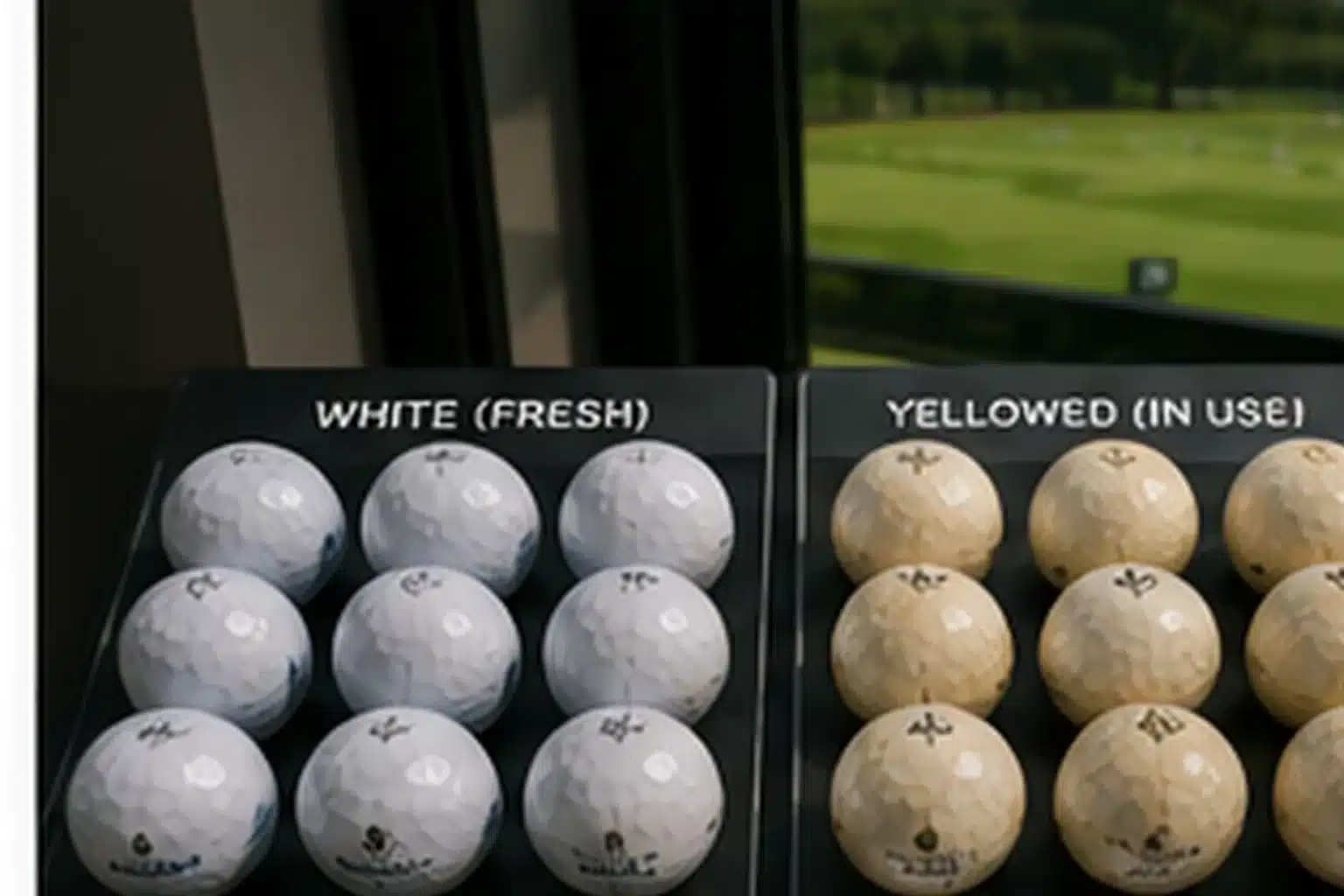
WI/YI/ΔE, retained master, lot release?
Your PO should protect the look your members actually see.
Procurement should compare sample, bulk, and reorder lots against the retained master before the range sees the balls. The best supplier is not the one making the biggest “stays white” promise. It is the one that can show how the approved appearance is engineered, measured, packed, repeated, received, and corrected in writing.
FAQ
Why do white range balls turn yellow?
White range balls turn yellow when UV exposure, coating drift, gloss loss, washing, handling, heat, and outdoor storage outpace the finish system. A bright new sample does not prove long-term whiteness retention for a premium club range.
A sample has not lived the range-ball life yet. Real club use adds sunlight, washing cycles, sorting, recovery, turf contact, storage, and repeated handling. Ask for UV comparison evidence, finish-control records, and retained-master comparison so your team can judge appearance retention rather than a single bright first impression.
Can yellowed range balls still be playable?
Yes. Yellowed range balls can still fly, but premium clubs also need presentation-ready inventory that looks acceptable in front of members, guests, coaches, and cameras. Playability and member-facing presentation are separate buying standards.
Structural scrap covers cracks, cuts, severe scuffing, and performance loss. Visual retirement covers yellow cast, dull gloss, faded marks, mixed shade, or tray downgrade. Your club should define both because waiting for physical failure may leave the practice tee looking under-maintained.
Can cleaning fix UV-yellowed range balls?
Cleaning can remove dirt or surface residue, but it may not reverse UV yellowing, coating drift, gloss loss, or finish aging. Your team should test whether cleaning restores the ball close to the retained-master appearance.
Compare before and after cleaning under the same light. If the ball returns close to the retained master, the issue may be dirt or surface film. If yellow cast, dullness, or shade drift remains, the problem may sit in the finish system. Do not rely on washing alone when the purchasing issue is UV-yellowed range balls.
What should a QUV report prove for range balls?
A QUV report should prove test conditions, controls, checkpoints, appearance change, and production-lot linkage. A 500-hour claim alone is not enough because the hour count does not explain how the ball was stressed.
Ask for lamp type, cycle, temperature, moisture or condensation logic, control sample, checkpoint photos, and WI/YI/ΔE change. The report should help your team compare finish routes and connect lab evidence to the lot being shipped. If the tested sample and production lot do not match, the report is weak.
What should a whiteness QC sheet include?
A whiteness QC sheet should help receiving decide whether the landed lot matches the approved retained sample. It should include lot reference, retained master, WI/YI/ΔE, inspection condition, operator/date, photos, and release or hold decision.
A useful sheet is not decoration with numbers. It ties appearance data to a batch, shows the inspection condition, and makes the release decision clear. Your receiving team should be able to compare the landed lot with the retained master without arguing whether the balls look “white enough.”
Will custom logos fade before the ball wears out?
They can. Custom logos may fade, blur, shift color, or lose clarity before the ball structurally fails, so logo durability should be part of the appearance program, not a small decoration detail.
Ask for rub, cleaning, handling, and UV exposure behavior. Define logo defects before receiving, including fade, blur, color shift, poor placement, missing marks, or weak readability. The mark is part of premium tray presentation, especially for resort, academy, or private-club range balls carrying club identity.
When should premium clubs retire visually failed balls?
There is no universal replacement cycle. Premium clubs should retire visually failed balls when yellow cast, gloss drift, logo fade, mixed shade, or tray downgrade falls outside the retained-master appearance standard.
Track replacement reasons instead of using one vague age-based rule. Separate structural scrap from visual retirement. If balls are being retired while still playable, your team needs to know whether the cause is yellowing, logo fade, mixed batches, dull finish, or member-facing tray standards.
Does conformity matter for range-ball appearance buying?
Only when your use case requires formal competition status. For many club range programs, appearance control, lot proof, and receiving discipline matter more than conformity language because the balls are member-facing practice inventory.
Separate play rules from premium presentation. If the ball must meet a specific formal-play requirement, verify that separately. But many premium range-ball purchases fail because of sample-to-shipment drift, weak appearance records, poor logo durability, or receiving checks that catch problems after members do.
Conclusion
A premium club should not retire range balls only when they crack. It should control the point where playable inventory stops looking premium enough to place in front of members.
That means buying more than a bright sample. Your team needs a retained master, WI/YI/ΔE release format, UV evidence with conditions and checkpoints, logo durability proof, packout protection, batch traceability, and a daylight receiving routine.
The safest supplier is not the one promising “forever white.” It is the one that can show how whiteness is engineered, measured, packed, repeated, received, and corrected in writing.
You might also like — Cheap Commercial Range Balls: What Is the Real TCO?