Your golf ball packaging can add cost, storage volume, and assembly work before anyone proves those layers are actually needed.
The best golf ball packaging is the least complex format that fits how the balls will be used or sold. Facility programs may need bulk or mesh packing; retail often uses sleeves and dozen boxes; e-commerce adds delivery protection; gift packaging is justified when presentation or bundling creates value.
Do not start by choosing a box. Start with the use case.
A simulator facility may discard retail sleeves on arrival, while a pro shop may need them as part of the selling unit. A resort gift program may need a box, accessories, and final kitting because presentation is part of the product.
That is why the decision order is function first, channel second, appearance third.
Even bulk packaging still needs controlled quantity, identification, master-carton packout, and shipment protection.

Do You Need Retail Packaging at All?
You may request custom sleeves and printed dozen boxes before asking whether your customer will ever buy, display, or even see the balls in that packaging.
If your golf balls stay inside a practice facility, simulator venue, academy, or training program, you may not need retail packaging at all. Bulk or mesh-bag packing can be the better operational choice when storage, handling, counting, and replenishment matter more than shelf presentation.
| Program | Packaging Job | Starting Format | What to Confirm |
|---|---|---|---|
| Indoor range | Handling + replenishment | Bulk / mesh | Count + master-carton packout |
| Simulator venue | Storage + issue | Mesh / simple inner pack | Bag size + closure |
| Academy | Distribution + identification | Mesh / simple pack | Count + ID |
| Retail / pro shop | Presentation + unit sale | Sleeve + dozen | Fit + artwork |
| E-commerce | Sell + protect | Retail pack + shipper | Final packed configuration |
| Corporate gift | Presentation + bundle | Gift format | Fit + final kitting |
Operational-use packaging mainly supports Store → Move → Count → Replenish. Retail packaging has another job: Protect → Present → Identify → Sell. If the package disappears before the golfer ever sees it, you should question how much retail presentation you are buying.
In indoor-practice and simulator programs we have supported, the balls functioned as operating inventory rather than retail SKUs. Elaborate sleeves or boxes added handling without improving replenishment. In some of our facility programs, around 15–25 balls per mesh bag has worked well, with larger bags around 30 when the bag dimensions and workflow supported it. Those capacities reflect our project experience, not an industry-standard mesh-bag count. The useful pack was the one staff could store, issue, count, and refill easily.
A custom retail box proposed for a facility-use program with no retail function is a warning sign. Ask your supplier for an operational-pack option and a retail-pack option separately, then compare both against what actually happens after receiving.
Your Use-Case Packout Brief should identify where the balls go, who handles them, how they are replenished, and whether anyone actually buys them in the proposed package.
Operational or Retail Packaging?
Will your customer actually buy the balls in this package? If the answer is no, start with operational handling. If the answer is yes, define the selling unit and presentation requirement before choosing materials or finishes.
Bulk does not mean “throw the balls into a carton.” Define the bag or inner-pack count, closure, identification, quantity per master carton, and a physical packed sample.
✔ True — Facility-use packaging should support handling and replenishment.
If balls move between storage, staff, bays, baskets, and replenishment inventory, the pack should make those movements easier while keeping quantity and identification controlled.
✘ False — “Custom OEM golf balls always need custom retail boxes.”
A retail box earns its place only when presentation, identification, selling, or another channel requirement makes that box useful.

Which Packaging Fits Your Sales Channel?
Once packaging is necessary, “premium-looking” can still become a shortcut for avoiding the real channel decision.
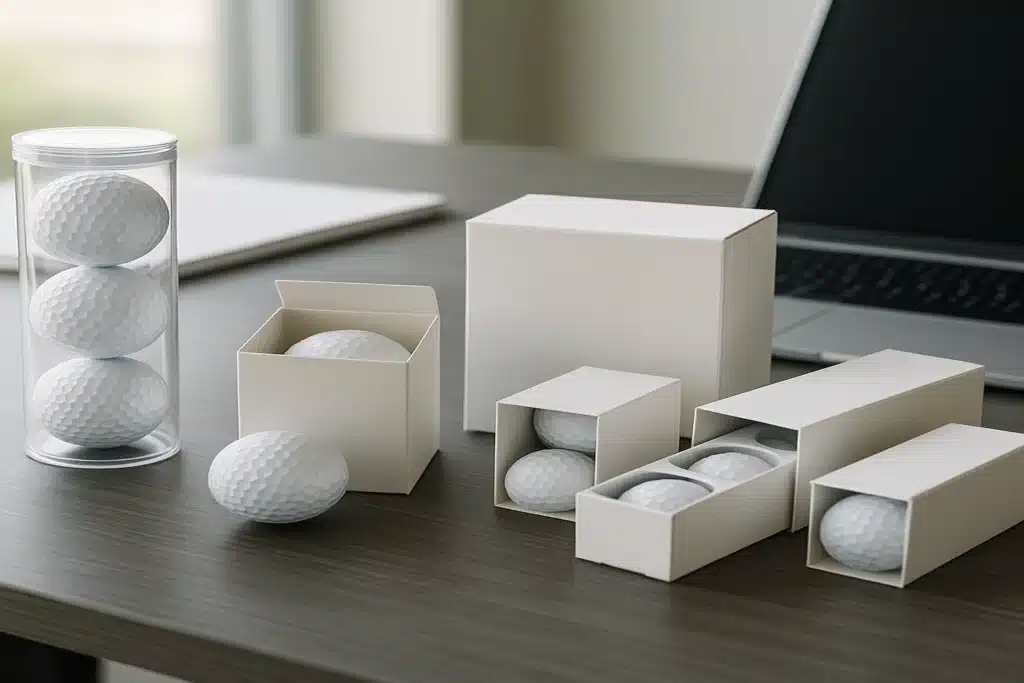
Choose golf ball packaging options by Packaging Job → Channel → Evidence. Mesh supports facility handling, custom golf ball sleeves create retail selling units, dozen boxes group and present them, e-commerce packs add delivery protection, and gift formats make sense when presentation or bundling creates real customer value.
| Buyer Need | Starting Format | Function | Main Risk | Buyer Action |
|---|---|---|---|---|
| Facility use | Bulk / mesh | Handling | Over-packaging | Confirm count |
| Retail | Sleeve + dozen | Sell + present | Poor fit | Approve loaded sample |
| E-commerce | Retail pack + shipper | Protect + receive | Final-pack failure | Validate real pack |
| Visual promo | PET / clear pack | Visibility | Added volume / scuff | Confirm need |
| Corporate gift | Rigid / gift format | Presentation + bundle | Unnecessary complexity | Compare baseline |
| Multi-item kit | Integrated gift pack | Organize final set | Interface failure | Assign owner |
This is where packaging should earn its keep.
A sleeve creates a small retail selling unit. A golf ball dozen box groups those units and gives your brand more presentation space. An e-commerce outer pack protects the sellable unit. A mesh bag supports handling and replenishment. A gift box can organize several products and become part of the recipient experience.
For every additional layer, write one sentence explaining its job. If a box, insert, clear pack, or extra sleeve adds printing, volume, assembly, or receiving work but nobody can explain what it improves, challenge it.
Do the same with price. Historical mesh-bag or gift-box prices are weak decision tools because dimensions, material, finishing, quantities, and packout vary. Request a current quote for the exact configuration you are considering.
A simple Packaging Job Matrix gives your team a better comparison than a catalog of packaging materials.
When Is Sleeve-and-Dozen Worth It?
Three-ball sleeves are familiar enough that buyers can treat them as the automatic OEM format even when the program has no real need for an individual retail unit.
Sleeve-and-dozen packaging earns its place when you need a recognizable retail selling unit, larger branding surface, and controlled shelf presentation. If the balls never reach a retail shelf, confirm those functions justify the added packaging before making golf ball sleeve boxes your default.
For pro shops, distributors, branded retail programs, and many private-label SKUs, the architecture makes sense. The sleeve is part of the sale, not just a container.
The physical load also matters. Under the current golf-ball equipment rules, a conforming ball may weigh up to 45.93 g. Twelve balls can therefore total roughly 551 g before the sleeves, dozen box, labels, inserts, or shipper are added.
That proves the package carries a dense load. It does not prove that every project requires one universal 350gsm or 400gsm paperboard specification.
Put actual production balls into the intended sleeves and golf ball box packaging. Check sleeve pressure, movement, lid closure, insert contact, ball-logo rubbing, and visible bowing or deformation. An empty box can look perfect while the loaded unit rattles, binds, or closes poorly.
Packaging approved only as a dieline, render, or empty box is a failure signal. The evidence you want is an Approved Packed Sample representing the actual sellable configuration.
Production packaging shall match the approved packed sample using actual production golf balls. Buyer acceptance shall confirm fit, unit count, identification, artwork version, closure or box function, and master-carton packout before shipment release.
✔ True — Retail packaging should be approved with the actual product load.
Real balls expose fit, movement, closure, pressure, and deformation problems that an empty packaging sample cannot show.
✘ False — “Three-ball sleeves are the universal OEM default.”
They are useful when your channel needs a retail selling unit. Facility inventory, bulk programs, and bundled projects can require a different packout.

What Must E-Commerce Packaging Survive?
Your dieline can be correct and the barcode artwork can look clean while the finished pack still fails after loading, labeling, wrapping, shipping, or receiving.
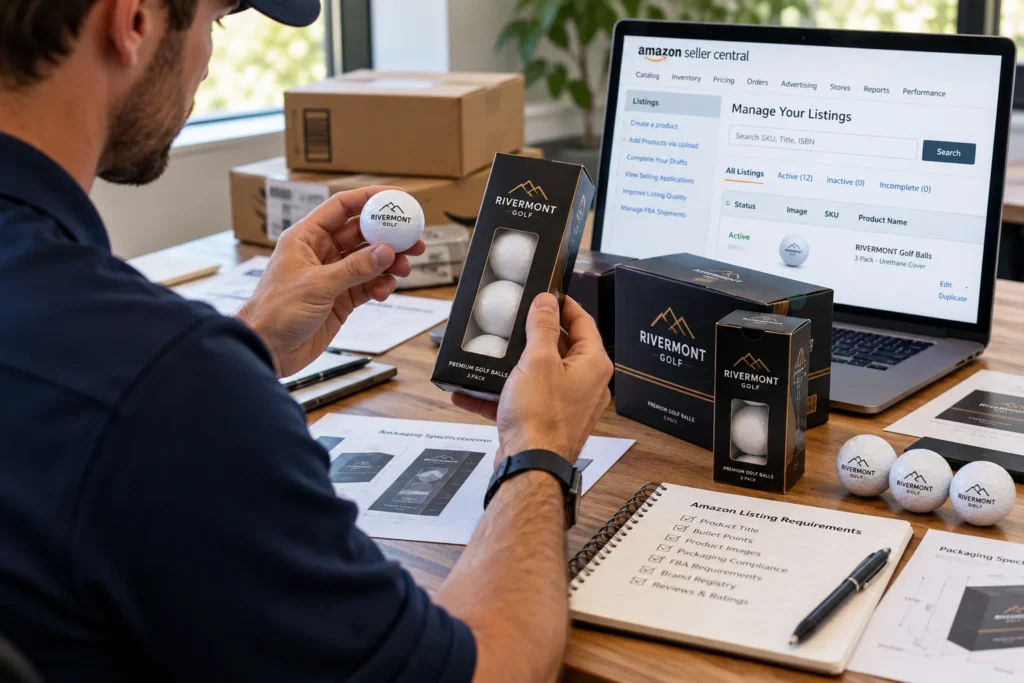
E-commerce packaging has two jobs: keep the sellable unit intact and pass the receiving workflow you actually use. Approve the finished configuration with production balls, then verify current barcode, labeling, shipping, and platform requirements instead of relying on one generic FBA golf ball packaging checklist.
Amazon packaging requirements depend on the fulfillment or certification path that applies to the product, and those requirements can change. The current Prep Free Packaging procedure is a useful example of why an old packaging checklist should not be treated as permanent.
Identify the applicable path first. Then validate your real package against the current requirement.
Barcode control needs the same discipline. The current GS1 General Specifications address placement conditions such as folds, flaps, seams, edges, tight curves, and other physical features that can interfere with the barcode in the finished package.
That changes the buyer question from “Is the barcode correct in the artwork?” to “Can the barcode still be read after the packaging process is finished?”
Scan the actual unit after printing, lamination, wrapping, labeling, and assembly are complete.
Is the Final Pack Ready for E-Commerce?
Does the real printed and packed configuration pass the receiving and shipping requirements that apply to your program today?
Check product fit, sellable-unit integrity, identification, barcode accessibility, and the current platform requirement on the finished unit. A fixed board grade, DPI number, or old test reference is weaker than current requirements plus evidence from the real pack.
The deliverable should be a Final E-Commerce Pack Approval tied to the physical configuration that will ship.
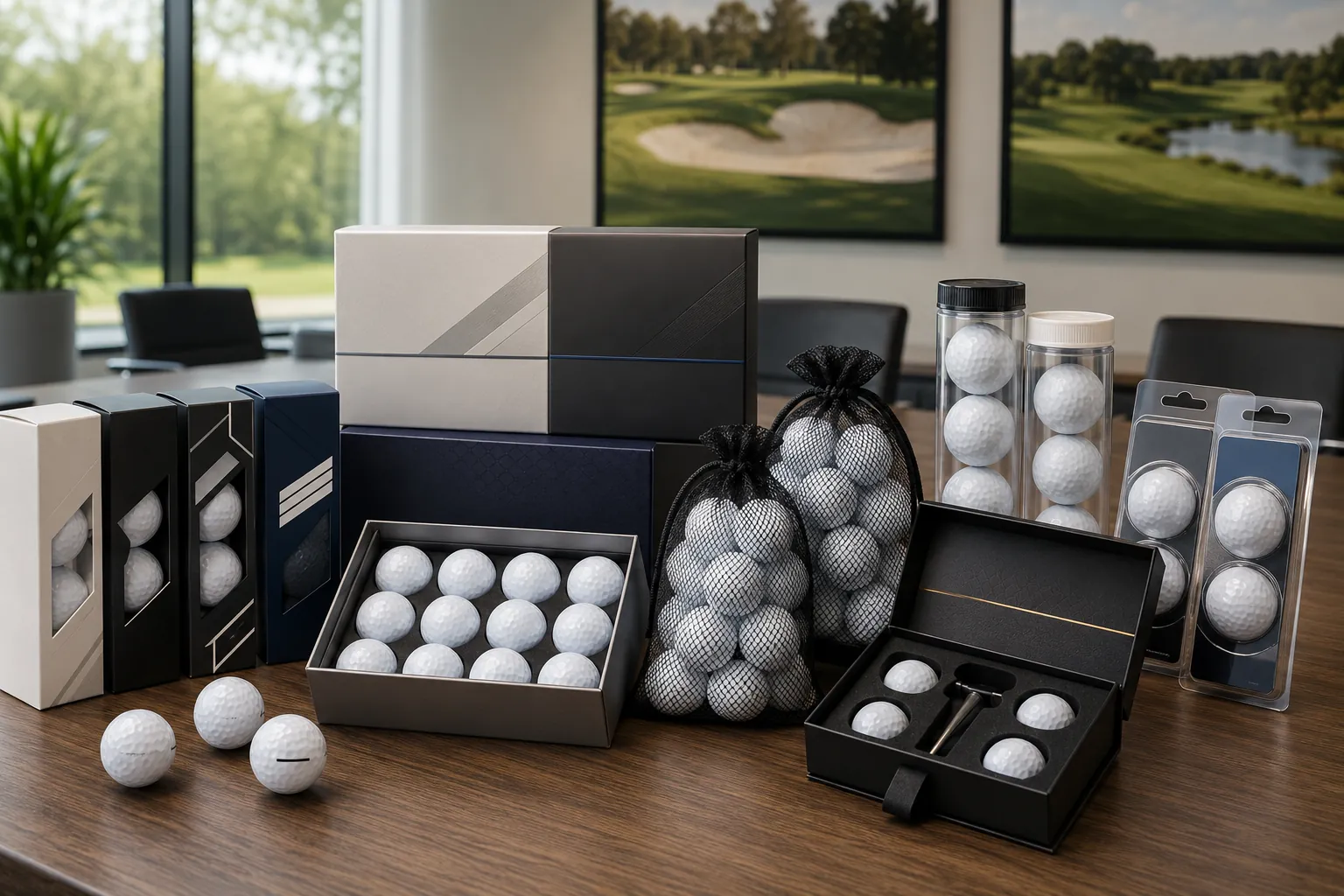
A rigid box, PET presentation pack, or premium insert can win an internal design review without anyone explaining what additional commercial function the upgrade performs.
Premium golf ball packaging is justified when presentation or bundling is part of what your customer buys. If a rigid box, PET structure, or insert adds cost, volume, and assembly without improving gifting, display, protection, organization, or conversion, it has not earned its place.
| Premium Format | Value It Must Create | Hidden Consequence | Evidence | Buyer Action |
|---|---|---|---|---|
| Rigid gift box | Unboxing / gifting | Bulkier packout | Packed sample | Compare baseline |
| PET display pack | Visibility | Scuff / volume | Final sample | Confirm display need |
| Insert / EVA | Organize / protect | Fit tolerance | Loaded fit | Check actual items |
| Multi-item gift set | Bundle value | Assembly interfaces | Final kit sample | Assign packout owner |
| Premium sleeve | Branding | Added print step | Physical proof | Keep only if useful |
Corporate gifting, resort programs, membership kits, commemorative sets, tournament hospitality, and multi-item bundles can justify premium golf ball gift box packaging because packaging itself contributes to the offer.
The useful comparison is premium format versus simpler baseline. What does the upgraded format do that the simpler format cannot? Does it organize several accessories, protect the presentation, improve display, or create the gift experience the channel is selling?
Premium formats can also change shipping volume and carton density. Keep that consequence visible when you choose the format; detailed CBM, dimensional-weight, and chargeable-weight analysis belongs in the freight decision rather than this packaging-selection page.
Ask for both the premium option and the simpler baseline as physical samples. Approve the upgrade only when your team can name the value created by the extra structure.
✔ True — Premium packaging should create a buyer-visible function.
Gifting, bundling, display, organization, or recipient experience can justify more complex packaging when those functions are part of what the customer is buying.
✘ False — “A more expensive package automatically strengthens premium positioning.”
If a simpler format performs the same commercial job, extra structure may be complexity rather than value.
What Must You Lock Before Mass Packing?
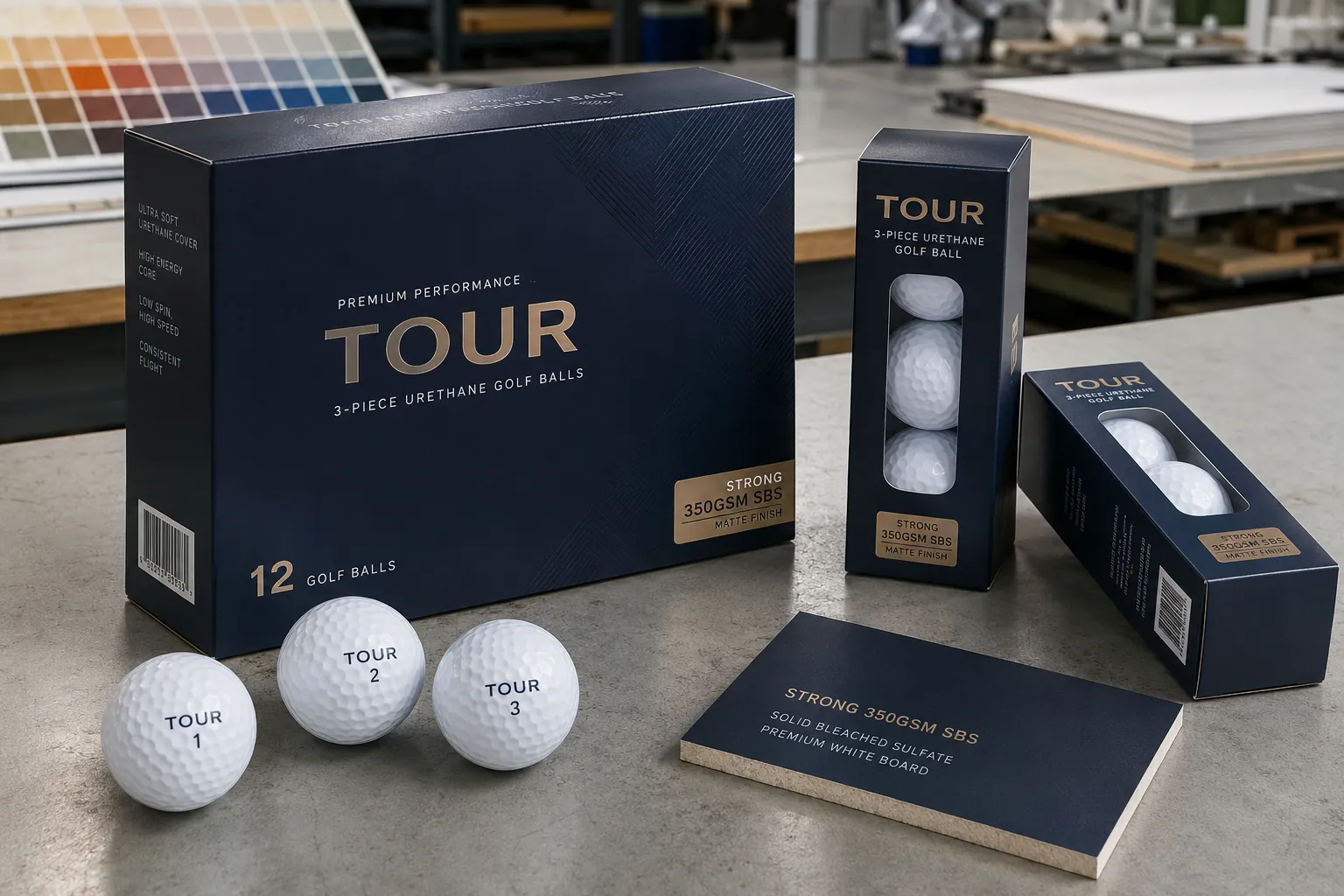
A correct sample can still drift in bulk when dimensions, material, inserts, artwork, labels, unit count, accessory placement, or master-carton arrangement change after approval.
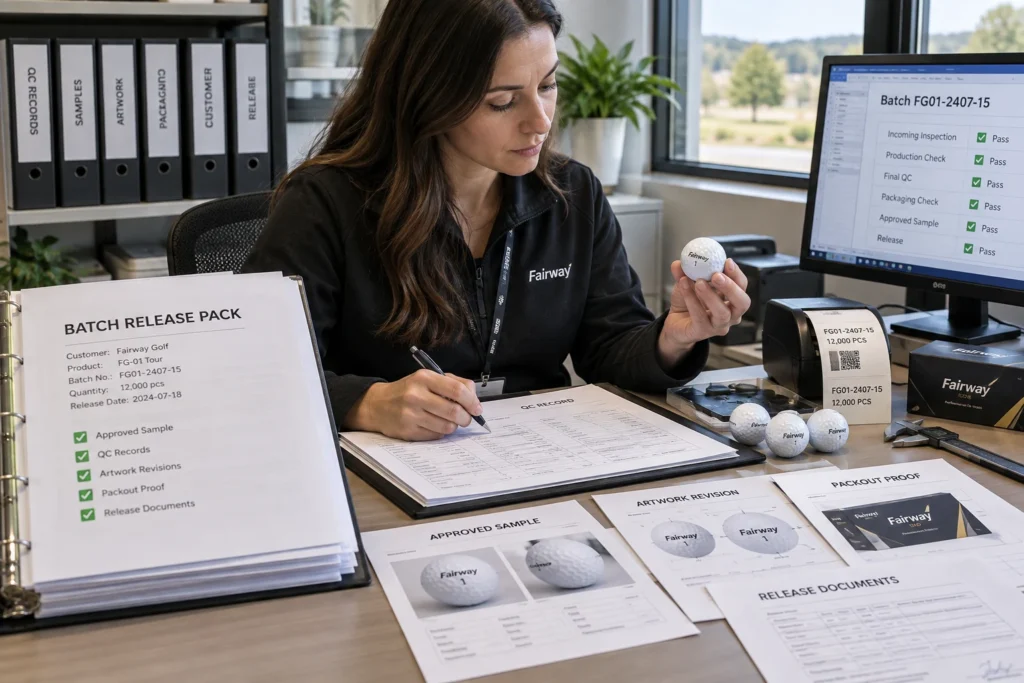
Do not approve packaging as a picture. Approve a packaging version. Your production record should tie the approved format, dimensions, material, artwork, unit count, packed sample, and master-carton packout to the same version your team reviewed before mass packing begins.
| Decision | What to Lock | Evidence | Release Action |
|---|---|---|---|
| Format | Sleeve / mesh / gift / bulk | Approved sample | Freeze format |
| Physical fit | Dimensions / insert | Loaded sample | Approve fit |
| Artwork | File / revision | Physical proof | Freeze version |
| Unit count | Balls / accessories | Packout list | Confirm count |
| Identification | Barcode / labels | Final-pack check | Approve scan / ID |
| Master carton | Quantity / arrangement | Carton sample / record | Release packing |
Packaging version control should cover the complete configuration. Artwork revision, dimensions, material, insert, closure, count, labels, accessory placement, and master-carton arrangement should not drift independently after the sample is approved.
This is also why split sourcing is not automatically a problem. Your golf ball supplier, paper-box supplier, label vendor, accessory supplier, and 3PL can all perform well individually. The risk appears at the interfaces.
Final packout changes after approval with no single release owner are a failure signal.
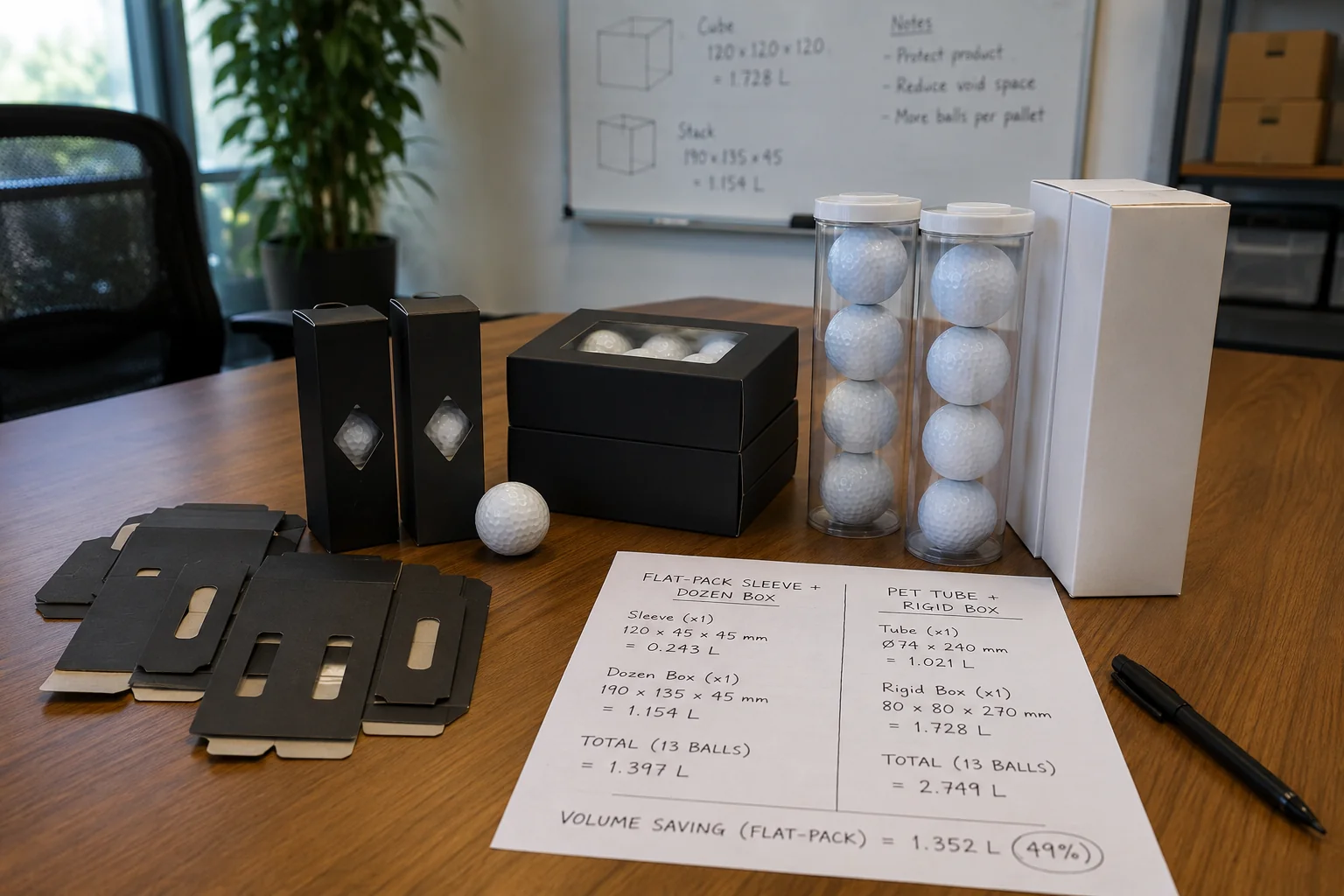
Who Owns Final Packout Approval?
Who has authority to say that the completed physical set—not the individual components—is ready for mass packing and shipment?
That owner may be the manufacturer, packaging supplier, kitting partner, or 3PL. What matters is accountability for the finished configuration.
One U.S. customer originally imported the golf accessories into the United States, produced the gift box domestically, and assembled the final sets there for golf resorts and clubs. After an initial golf-ball program, the customer asked us to consolidate accessory sourcing, gift-box customization, and final kitting in China. We sourced the gloves, tees, belt pouch, towel, and other accessories, customized the gift box, and completed the final kitting before shipment. One workflow now controlled sourcing, physical fit, assembly, and final packout. Compared with the customer’s previous U.S. box-and-assembly workflow, project records showed a total cost reduction of at least 28%.
The 28% cost reduction was specific to this customer’s previous U.S. box-and-assembly workflow; it should not be treated as a general benchmark for China-based kitting or golf gift sets. More importantly, this was a program where the packaging genuinely added value. The customer was selling a complete multi-item gift set, so the gift box and final kitting were part of the finished product rather than unnecessary packaging.
The two situations lead to the same rule: remove packaging that serves no useful purpose, but when packaging is part of the finished product, control the packaging and final packout as one approved configuration.
Once the packaging format is approved, lock it as one Packaging Version Record tied to the physical packed sample. The record should identify the approved format, dimensions, material, artwork, unit count, applicable inserts or accessories, labeling, and master-carton packout.
Please quote the packaging format by intended use and provide the proposed unit count, dimensions, material, artwork version, final packed sample, and master-carton packout for approval before mass packing begins.
Supplier shall identify each approved packaging version by format, dimensions, material, artwork revision, intended unit count, and master-carton packout, and shall link that version to the approved physical packed sample.
Mass packing should not begin until one accountable owner approves and releases the finished physical configuration.
FAQ
Can Indoor Golf Facilities Use Bulk Golf Balls?
Yes. If the balls are facility-use inventory rather than individual retail units, bulk or mesh packing can be more appropriate than retail sleeves and boxes.
Define the quantity per bag or inner pack, closure, identification, master-carton count, and shipment protection. “Bulk” should remove a retail layer that serves no useful job; it should not mean uncontrolled loose shipment.
How Many Golf Balls Can a Mesh Bag Hold?
There is no single industry-standard capacity. In some of our facility programs, roughly 15–25 balls per bag has worked well, while larger bags can hold around 30 when the dimensions and handling workflow support it.
Confirm the count against how staff actually store, carry, issue, and replenish the balls, then approve an actual packed sample.
Is a 3-Ball Sleeve Necessary for OEM Golf Balls?
No. A 3-ball sleeve is useful when you need a recognizable retail selling unit or branded presentation, but it may add no useful function to balls operated only inside a facility.
If you use sleeves, approve them with production balls and check fit, closure, movement, and the completed dozen configuration.
Should Golf Balls and Boxes Come From One Supplier?
Not necessarily. Split sourcing can work when one accountable party owns final fit, version control, identification, and packout approval for the completed package.
The buyer needs one release owner for the interfaces between the balls, box, insert, labels, accessories, and master carton—not necessarily one supplier for every component.
Does Premium Packaging Increase Shipping Cost?
It can. Rigid boxes, PET structures, inserts, and gift formats may increase packed volume or reduce carton density, depending on the final structure.
Confirm final carton dimensions and compare the premium version with a simpler baseline. Once the premium format is genuinely required, evaluate its freight consequences separately.
What Should I Approve Before Mass Packaging?
Approve the complete physical packout rather than artwork alone.
Lock the format, dimensions, material, artwork revision, unit count, labels, inserts or accessories where applicable, packed sample, and master-carton arrangement. If any of those variables change, reopen the affected approval before mass packing continues.
Conclusion
The right golf ball packaging is the least complex format and packout model that fully performs the job your program requires. Start with the use case, define the packaging job, choose the minimum viable format, and approve the finished physical configuration rather than a render or artwork file.
Some programs gain value by removing unnecessary retail packaging. Others gain value by integrating necessary gifting, accessories, and final kitting under one accountable owner. The answer is neither “less packaging” nor “more premium packaging.”
Use the decision chain:
Use Case → Packaging Job → Packout Model → Format → Proof
You might also like — How Do Golf Ball Gift Box Dimensions Affect Air Freight?