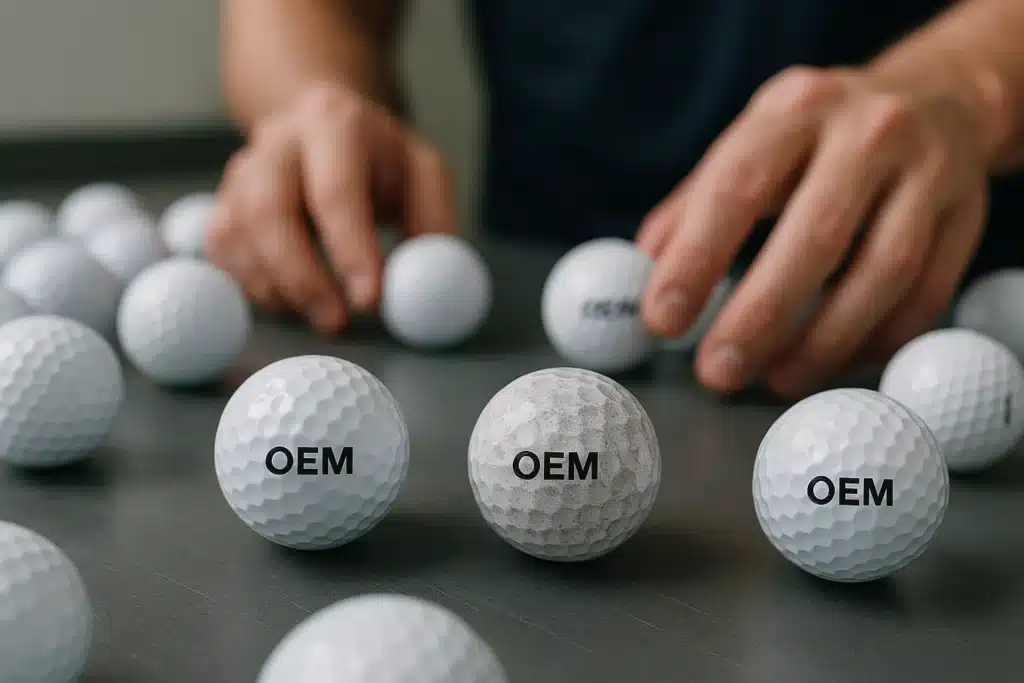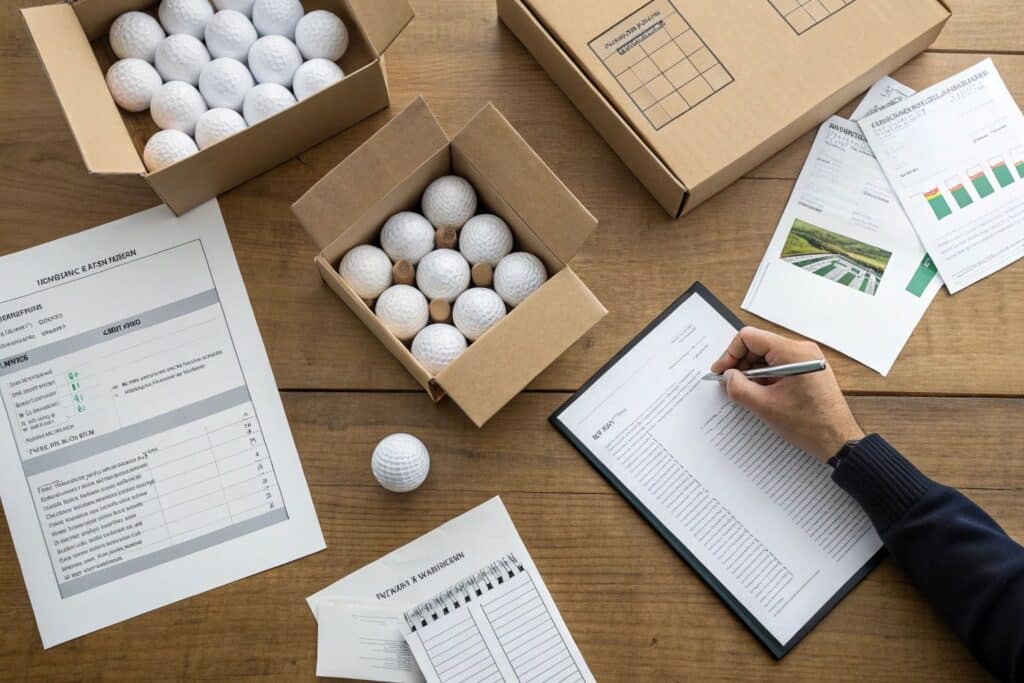
Wholesale custom golf balls are factory-made golf balls customized with your logo and packaging for bulk B2B programs. This guide shows how to choose the right construction, verify logo durability, lock sample-to-bulk consistency, and plan DDP shipping—so your delivery matches the approved proof, timeline, and budget.
Buying in bulk can look simple—until logo durability questions, sample-to-bulk drift, and landed-cost surprises hit your event deadline and budget at the same time. Use the decision questions below to pick specs that fit your recipients, timeline, and risk tolerance.
Why buy factory-direct wholesale custom golf balls?
Buying “in bulk” can still feel risky if you’re relying on a reseller, multiple handoffs, or a retail-style workflow that can’t support packaging changes, QC checkpoints, or predictable landed costs.
Factory-direct wholesale custom golf balls work best when you need bulk branding control (logo + packaging) plus predictable landed costs and on-time execution. You get clearer proof-to-production workflows and more packaging choices than retail/POD. The tradeoff is that you must manage specs, QC gates, and shipping terms—so you don’t save on unit price but lose on delays or rework.
Quick definitions (so everyone is on the same page):
-
POD = print-on-demand (usually retail-style, limited packaging control and fewer QC gates).
-
Factory-direct = specs approved closest to the production line (fewer intermediaries).
The real upside for US/EU B2B programs is control—if you use it:
-
Fewer miscommunications: Artwork, proofing, and production feedback can stay in one thread instead of bouncing across brokers.
-
Better spec-to-channel matching: You can align construction, finish (gloss/matte), logo method, and packaging tier to your use case instead of buying a one-size spec.
-
QC gates you can document: Digital proof → pre-production sample → first-batch check → pre-ship inspection becomes a process, not a hope.
The risks are real, but they’re manageable when you plan:
-
Seasonality squeezes capacity: Pre-holiday, spring build-up, and pre–CNY windows can tighten schedules. That’s when minor drift (logo position, finish feel, carton crushing) becomes more likely unless your checkpoints are written.
-
Origin tradeoffs are constraint-based: China vs other origins isn’t a “better/worse” debate. It’s about matching your acceptance criteria (consistency vs speed vs MOQ flexibility) to what’s feasible for your quantity and ship week.
✔ True — Factory-direct reduces risk when you define checkpoints.
A factory-direct program becomes predictable when proof dates, production windows, and inspection deliverables are written and enforced—so “quality” is evidence-based, not interpretive.
✘ False — “Factory-direct always means the lowest risk.”
Risk shifts to spec clarity, QC control, and logistics scope. If you skip gates, you can lose time to rework and disputes even with a good unit price.
If you’re evaluating a factory-direct supplier: this shop-floor video from Golfara is a quick way to validate how your order is executed from proof approval to production.
Which golf ball construction fits your buyer audience?
It’s tempting to buy the most “premium” spec to avoid complaints—yet over-spec’ing can create a different problem: you pay for performance your audience won’t notice, while under-investing in what they will notice (appearance consistency and packaging).
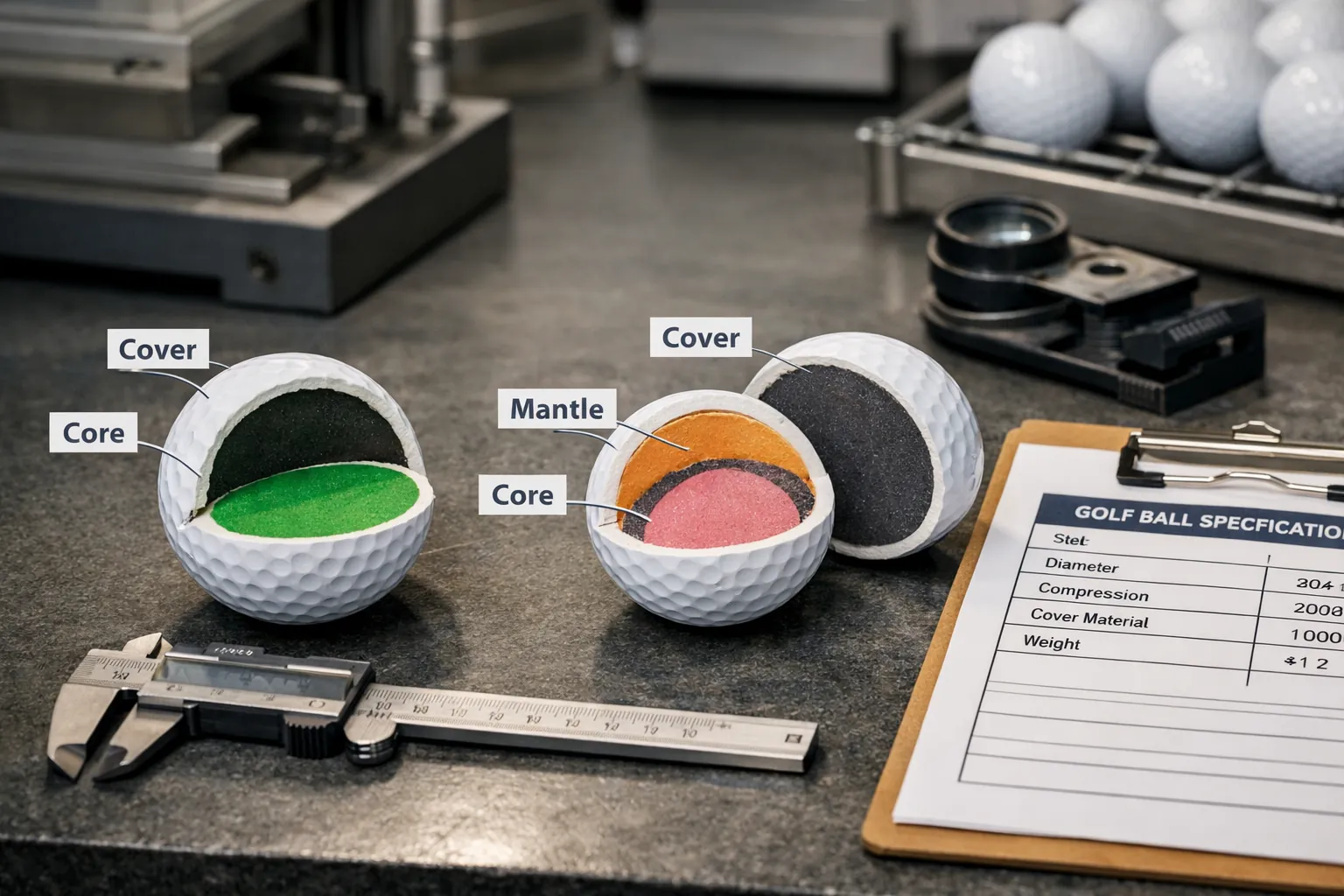
The best construction is the one your audience can feel and use—not the most expensive spec. For corporate giveaways and mixed-skill events, 2-piece Surlyn is typically the safest ROI choice (durable, fewer complaints). For tournaments or better players who value greenside control, step up to a 3-piece urethane-style build and validate by samples.
A key one-liner that helps non-golf stakeholders: Surlyn/ionomer is a durable cover material commonly used on 2-piece balls, often chosen for scuff tolerance and stable appearance in high-volume programs.
To make the decision buyer-safe, segment by “recipient reality”:
-
2-piece (Surlyn/ionomer cover): Often best when the audience is mixed skill, loss rate is high, or the ball is primarily a branded takeaway. It’s usually more forgiving for scuff/appearance complaints.
-
3-piece (“urethane-style” builds): A stronger fit when the audience expects softer feel and more short-game control. This is where you must define what “urethane” means.
-
4-piece: Often used for premium gifting or advanced-player positioning. In B2B, it’s as much a packaging-tier decision as a performance one.
“Urethane” should be written precisely (and confirmed by samples)
Many buyers assume “urethane” automatically equals tour-level cast urethane. In practice, “urethane” may refer to different materials and processes (for example, injection-molded TPU vs cast thermoset urethane), which can change feel, scuff behavior, and cost expectations. Your safest approach is to request a material/process declaration plus a QC spec sheet that states the cover process and target windows (like thickness/hardness ranges) in writing.
Compression: use it as a starting point, then validate
Compression can be a useful proxy for feel, but it’s not a one-variable fitting rule. If you must discuss compression bands, frame them as a typical starting point for audience comfort, then confirm with A/B samples for feel, appearance, and print performance—especially if your recipients range from beginners to low handicaps.
Why it matters: the fastest way to avoid “wrong ball” complaints is to document your audience assumptions (skill mix + event goal) and tie them to a sample sign-off you can defend.
| Decision dimension | 2-piece Surlyn (typical) | 3-piece ‘urethane-style’ (typical) | 4-piece (typical) | What to request/accept |
|---|---|---|---|---|
| Audience mix | Lowest complaint risk for mixed skill | Better for “players notice feel” groups | Best for advanced expectations | Define audience + event goal in writing |
| Branding priority | Strong ROI when logo + packaging lead | Balanced: branding + feel | Premium positioning | Approve proof + appearance tolerance under consistent lighting |
| Durability expectations | Often strongest scuff tolerance | Depends on cover process and topcoat | Depends on cover/topcoat | Agree on scuff/wear check method using samples |
| Event goal | Giveaway, promo, charity | Tournament, club events | VIP gifts, premium retail | Match spec to channel and packaging tier |
| Sample validation | Quick A/B feel + print check | Must A/B for feel + scuff + print | Must A/B for appearance + feel | Keep a “golden sample” + sign-off record |
If you’re unsure, don’t “split the difference.” Run an A/B sample check with two constructions and let your audience goal pick the winner.
What printing method makes logos last on golf balls?
Most print disputes come from fuzzy language (“durable,” “high quality”) instead of a defined method and pass/fail standard. The fix is simple: choose a process, then agree on how you’ll verify durability before mass output.
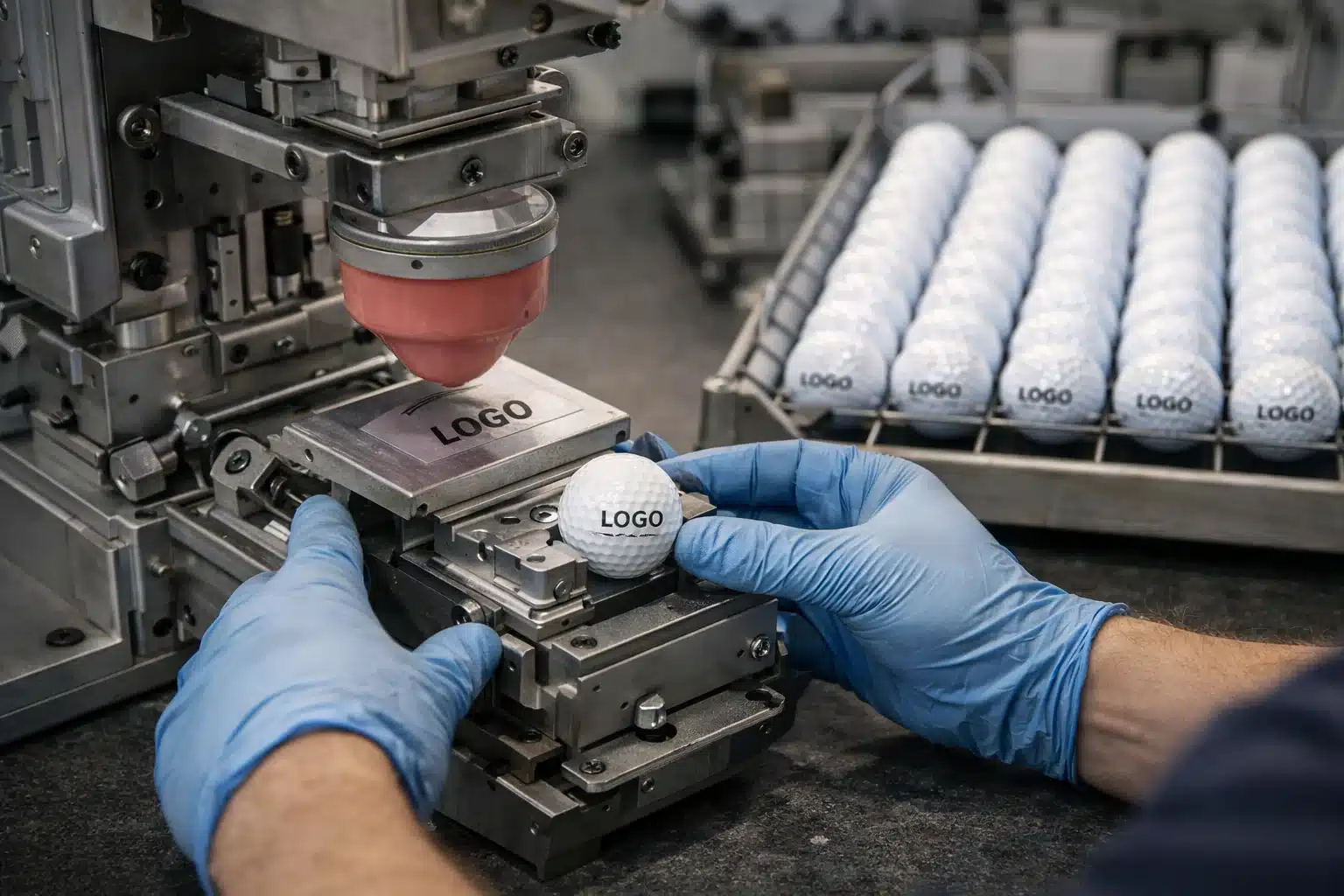
Choose a print method by the durability you can verify, not a promise. Pad printing is often preferred for bulk logos when you need consistent ink adhesion and repeatability. UV printing can shine for color vibrancy, but your decision should be validated by a repeatable wear/hit simulation and a visual grading standard approved before mass production.
A practical decision rule for bulk logo golf balls:
-
Choose pad print when your priority is repeatable alignment, consistent ink adhesion, and stable output at scale.
-
Choose UV when you need complex color graphics or gradients—but treat durability as a QC item you verify, not a marketing claim.
Before you approve any “best method” statement, lock three variables:
-
Artwork reality: fine lines, tiny fonts, and gradients increase risk regardless of method.
-
Surface system: prep (primer/adhesion treatment) and a protective clear coat often matter as much as the print method.
-
Verification method: define the test and the photo evidence you expect back.
A buyer-safe durability template you can request (evidence-forward, no inflated claims):
-
Method: hit simulation (or consistent abrasion substitute), fixed impact point, and check interval (e.g., inspect every set of hits).
-
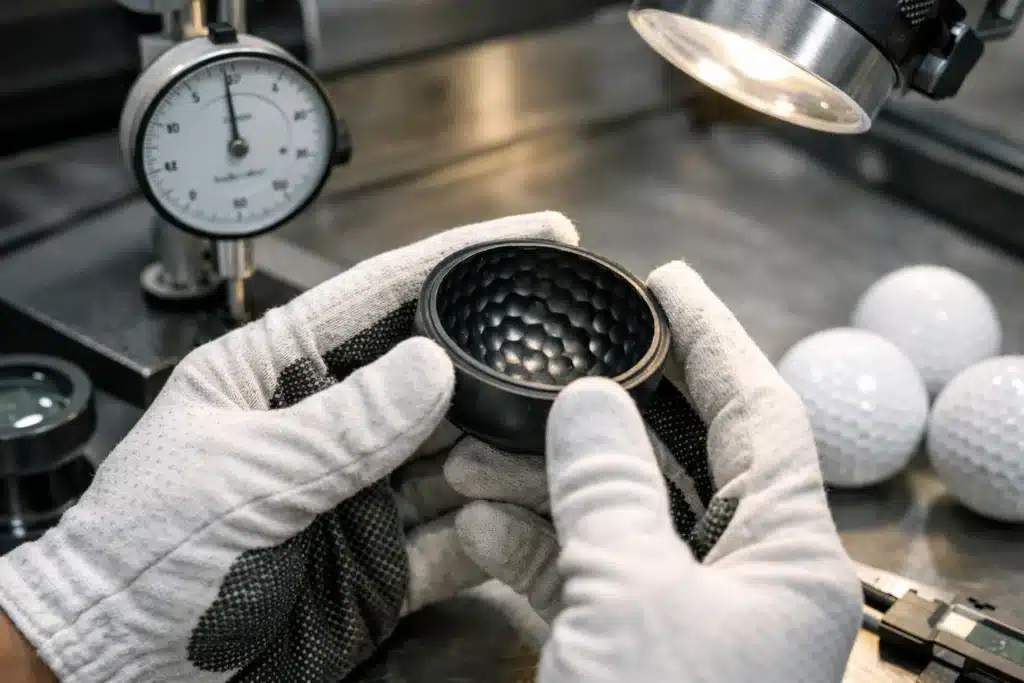
Scoring: logo legibility + crack/chip grading (simple 0–5 style) with photo evidence under consistent lighting.
-
Output: a small trend table plus photos of the tested balls.
Keep your artwork printable (these prevent most failures):
- ✅ Use high-contrast color combinations
- ✅ Avoid fine lines, script fonts, and gradients
- ✅ Keep it bold and legible at small print size
- ✅ Send vector files only (AI, EPS, PDF)
✔ True — Logo durability is a QC item you can measure.
When you define a repeatable test method and a visual grading standard, the discussion moves from opinions to evidence—making “durable” a spec, not a promise.
✘ False — “Pad print is always more durable than UV.”
Ink chemistry, curing, topcoat, and artwork placement can change results. Choose by design needs, then validate durability on real samples before mass production.
How should you customize packaging for wholesale orders?
Packaging is where brand perception and landed-cost reality collide. The wrong packaging choice can create three problems at once: higher freight (volume), higher damage risk, and a mismatch between “what recipients expect” and “what they receive.”
Packaging should be chosen like a risk-control tool, not a decoration. For events, simple bulk or sleeves reduce cost and speed up production. For premium gifting or retail, upgrade to gift boxes—but require export-proof inserts and carton reinforcement so boxes arrive crisp.
Choose the tier based on channel:
-
Bulk pack: best for large events, fast timelines, and cost control.
-
Sleeves/tubes: a clean mid-tier for tournament packs and club programs.
-
Gift box / window box: best when unboxing is part of the brand promise (VIP gifts, premium campaigns, retail).
Then treat protection as a deliverable (not an assumption):
-
Ask for photos of internal padding and how each ball is held to prevent friction marks.
-
Ask for reinforced corners and a carton spec that supports stacking.
-
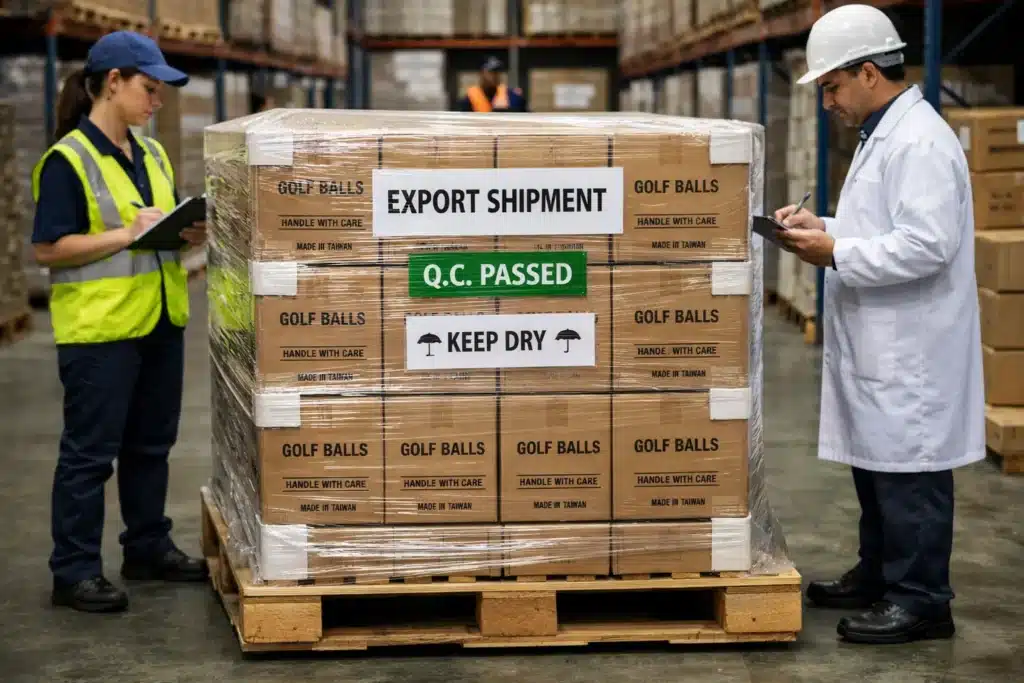
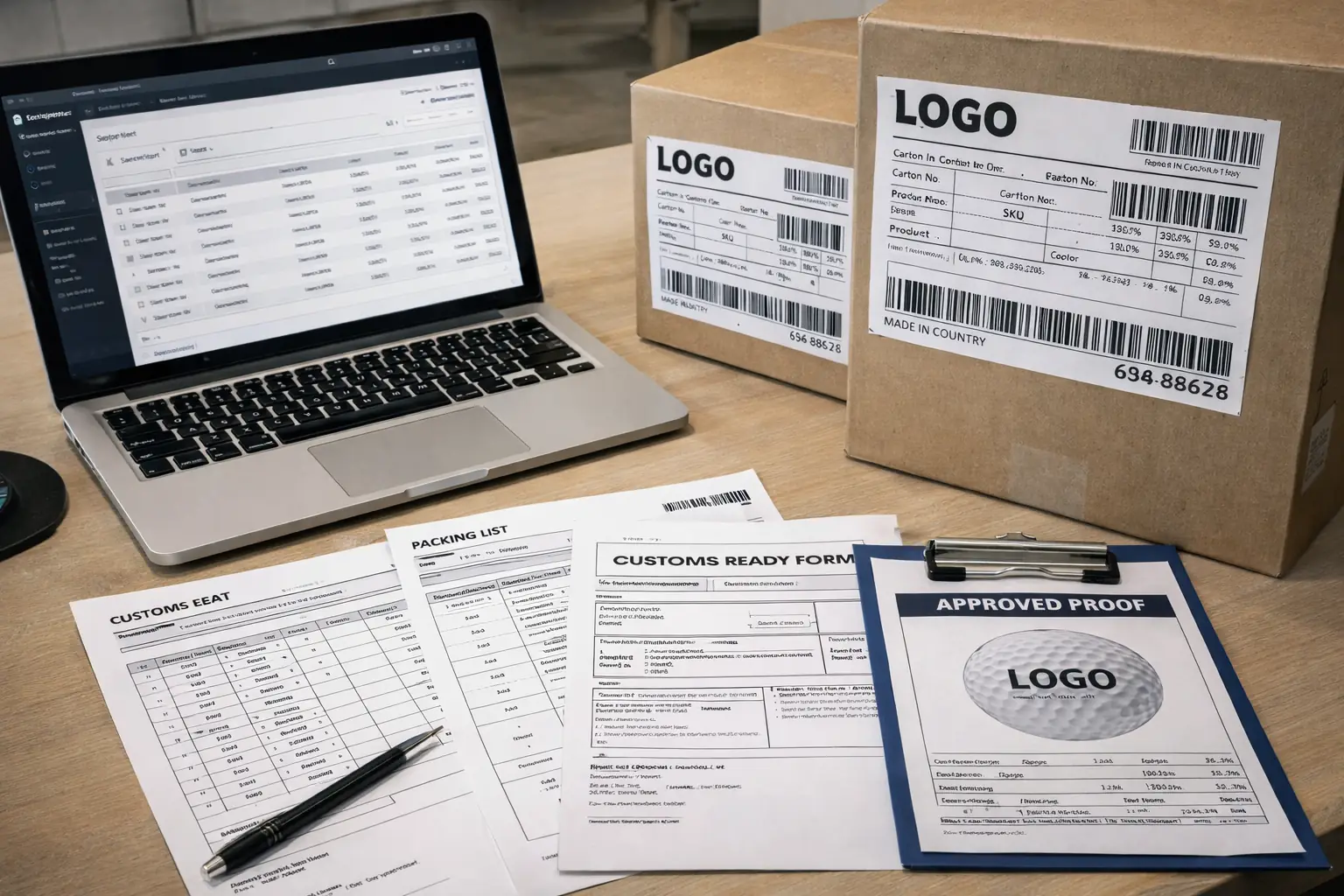
Confirm carton labeling + packing list matching before shipment to reduce customs friction.
A buyer note that prevents surprises: packaging changes shipping math. Gift sets often increase chargeable volume, so a premium look should be justified by the channel’s value (VIP perception, retail display, or campaign impact), not just preference.
How do you keep bulk goods matching the approved sample?
This is the #1 anxiety for B2B buyers: the sample looks perfect, the proof is approved, and the bulk still arrives slightly off—misaligned logos, subtle color shifts, or inconsistent finish. The solution is procedural: define “match,” then enforce gates.
Sample-to-bulk consistency is a process, not a handshake. Lock your “golden sample” and require a first-batch checkpoint before full production continues. Ask for a visual QC report (logo size/position, color match method, appearance defects) plus packing validation photos to protect your deadline.
A simple protocol that works across most OEM programs:
1) Golden sample lock: confirm the reference includes ball model, cover/finish, printing method, packaging, and carton spec.
2) First-batch gate: request side-by-side photos of the golden sample next to the first bulk batch under consistent lighting, plus measurement photos for logo position.
3) Pre-ship inspection checkpoint: request a small batch QC record (e.g., a 12-ball batch report) and the inspection scope so “checked” has a meaning.
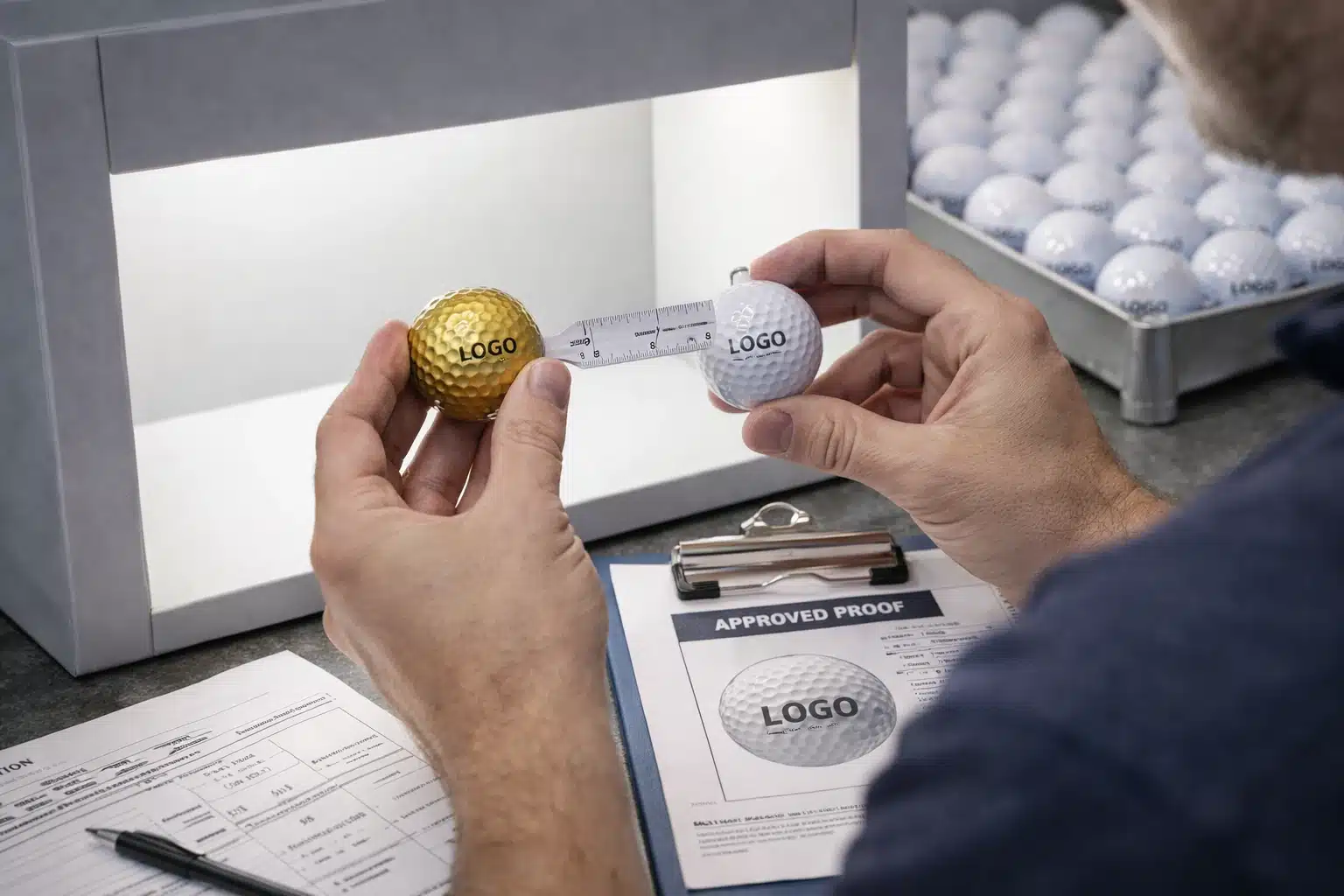
Why seasonality matters here: when production schedules tighten, QC drift becomes more likely unless the “stop/go” point is written. The countermeasure is boring but effective—lock the proof approval date, reserve the production window, and define the pre-ship inspection deliverables in the PI.
| Risk point | Acceptance criteria (describe) | How to verify | Supplier deliverable | Action if failed |
|---|---|---|---|---|
| Logo size/placement drift | Tolerance statement + placement rule | Measurement photos + jig confirmation | First-batch photo set + notes | Pause run; adjust jig; re-approve |
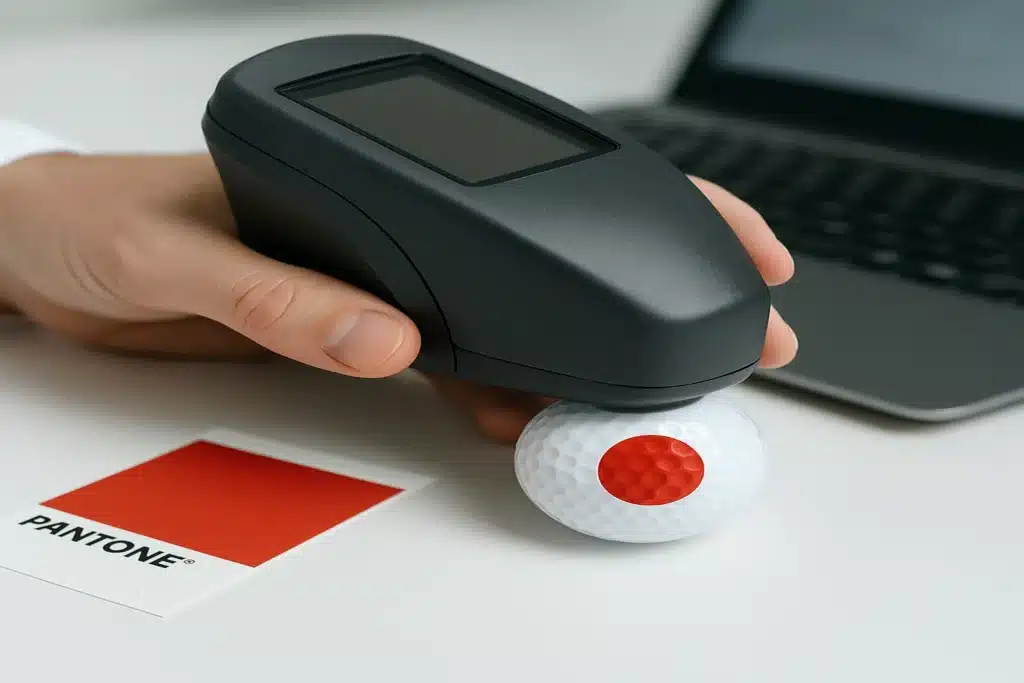
| Color deviation | Define color method (reference + lighting) | Side-by-side photo under set lighting | Method statement + comparison photos | Reproof color; confirm before full run |
| Surface defects | Define defect grading language | Inspection scope + sample photos | Visual QC report + records | Sort/rework; agree remedy path |
| Durability expectation | Agree test method + pass/fail | Photo evidence after test steps | Test photos + results summary | Change ink/topcoat/process; re-test |
| Packaging crush/damage | Carton spec + protection requirement | Packaging validation photos | Carton spec + packing photos | Upgrade inserts/carton; re-pack |
Take this and make it enforceable: paste the acceptance criteria into your PI/contract and require the first-batch photo set before the full run continues.
For first orders, structured deposits and balance-before-shipment are common in B2B. What matters is not the ratio—it’s whether your PI/contract references the checkpoints (proof approval, first-batch gate, pre-ship inspection evidence) so quality control is enforceable.
✔ True — The first-batch gate prevents drift before it scales.
Most “bulk doesn’t match sample” problems show up early. A first-batch checkpoint catches logo placement, finish, and color-method issues before thousands of units are produced and packed.
✘ False — “A digital proof guarantees bulk quality.”
A proof confirms artwork intent, not production reality. You still need physical checkpoints (first batch + pre-ship inspection evidence) to protect consistency.
How does DDP shipping work for golf balls from China?
First-time buyers rarely fear freight itself—they fear surprise duties, unclear local charges, and paperwork gaps that delay delivery. DDP can reduce those surprises, but only if you confirm the quote scope and the carton assumptions behind it.
DDP (Delivered Duty Paid) means the seller arranges shipping, clearance, and duties/taxes to your door—so you can budget a single landed price. For first-time buyers, DDP reduces surprise import costs and paperwork. Still, request an itemized scope and carton specs so you can compare quotes apples-to-apples and avoid hidden local charges.
DDP vs other terms (plain-English impact):
-
DDP: seller manages the end-to-end chain to your door, including clearance and duties/taxes in the agreed scope.
-
DAP: delivered to place, but duties/taxes are typically your responsibility—this is where “surprises” often appear if expectations aren’t aligned.
-
FOB/EXW: you manage most logistics (or appoint a forwarder). This can be cost-effective for experienced importers, but it shifts coordination and paperwork risk to you.
Air vs. ocean: why quantity changes the answer
To compare shipping options without getting lost in rate noise, use a simple per-ball allocation model:
Per-ball freight cost = (total freight cost + fixed handling fees) ÷ total balls shipped
Here’s how to interpret it (buyer-safe, quote-friendly):
-
Air freight is usually priced per kg, so the cost per ball stays relatively high even as quantity grows.
-
Ocean freight can become very low per ball at scale, but smaller orders often ship as LCL, where fixed fees (origin/destination handling, documentation, deconsolidation, local delivery) can outweigh the ocean line-haul.
Use this model to compare quote structures—not to predict exact rates. Ask each supplier to quote using the same carton spec and incoterm, then normalize to a per-ball landed view.
Planning reality: capacity and timing
Shipping and production both have seasonality. If your ship week is non-negotiable, confirm the production calendar slot before finalizing specs, and keep proof approval dates and inspection checkpoints explicit—so peak season doesn’t turn into silent delays.
FAQ
Is it cheaper to buy golf balls in bulk?
Usually, yes—if you compare landed cost per ball at the same spec and packaging tier. The biggest swing often comes from shipping mode, packaging volume, and how fixed fees get spread across your quantity.
Bulk savings can disappear when specs aren’t matched. Lock the construction, cover/finish, printing sides/colors, and packaging tier first. Then compare under the same shipping term (DDP vs FOB vs DAP). If the terms differ, ask for itemized scope so you can normalize the math.
Which golf balls are best for corporate logos?
For mixed-skill corporate audiences, durable 2-piece Surlyn is often the safest choice because it reduces scuff complaints and stabilizes cost. If recipients expect premium feel, validate a 3-piece option by samples plus print durability checks.
“Best” depends on the recipients, not your internal preference. If the ball is a branded giveaway, appearance consistency and durability often matter more than marginal spin differences. If it’s a tournament audience, feel and control expectations rise—so sample validation becomes critical.
Does “urethane cover” always mean tour-level performance?
Not necessarily. “Urethane” can refer to different materials and forming processes (for example, injection-molded TPU vs cast thermoset urethane), which can affect feel, scuff resistance, and cost.
The buyer-safe move is to request the cover process in writing, then validate with samples against your audience’s expectations. Treat “urethane” as a category label, not a guarantee.
How can I tell if a golf ball manufacturer is reliable?
Look for measurable QC capability and structured communication—not just marketing claims. Reliable factories can show what they test, how they record results, and where you can inspect.
A mature program produces simple evidence: first-batch comparison photos vs the golden sample, measurement records for logo placement, and a clear inspection scope. You’re not looking for perfection—you’re looking for repeatability and transparency.
Do I need USGA/R&A conforming status for my order?
Only if your use case requires conforming-list eligibility (certain tournaments or branded programs). Many corporate/event orders don’t require it, but you should still require consistency and QC documentation.
If conformity is required, confirm feasibility early because it can affect model choice and timeline. If it’s not required, focus your energy on measurable QC, print durability verification, and packaging protection.
What should I do if bulk goods don’t match the sample?
Prevent it with a first-batch gate: don’t let full production run until a small batch matches the golden sample under agreed criteria. Put acceptance criteria and remedy steps into the PI/contract so you’re not negotiating after delivery.
When mismatch happens, timelines shrink fast. If your criteria are written (logo size/position, color method, defect grading language, packaging protection requirements), resolution becomes a process decision rather than a debate.
Conclusion
Factory-direct wholesale custom golf balls work best when you run the purchase as a controlled program: choose the sourcing model, match construction to your recipients, select a verifiable printing plan, align packaging to the channel, enforce a first-batch gate, then pick the shipping term that fits your landed-cost needs.
If you want fewer surprises as of 2026, the simplest win is procedural: define what “match” means, request evidence deliverables, and don’t let mass production outrun your checkpoints.
You might also like — How to Choose a Reliable Golf Ball Manufacturer in China?