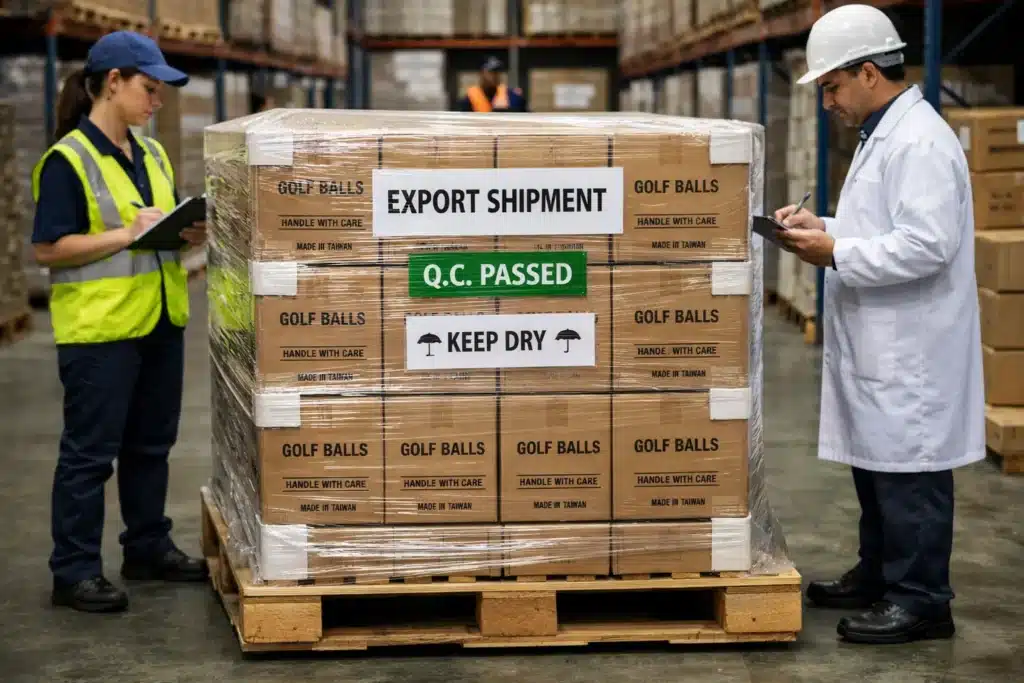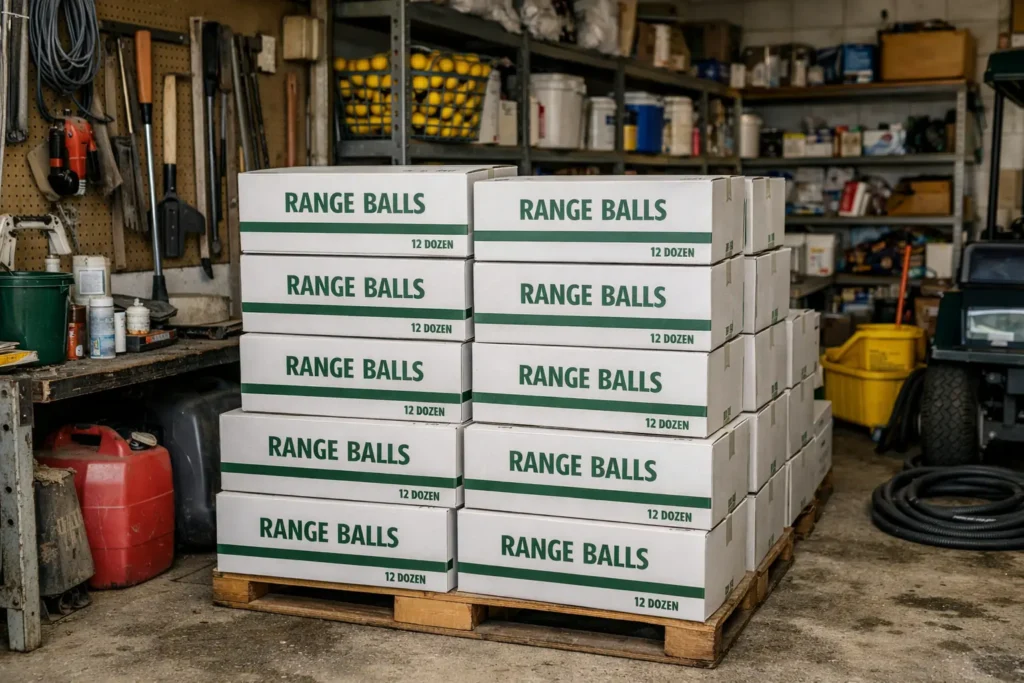
Micro-batch DDP sourcing for golf ranges replaces one large annual bulk order with smaller, scheduled replenishment lots delivered under a duty-paid, door-to-door model. The result can be lower capital tie-up, less storage exposure, fresher inventory, and a more manageable order-to-door timeline.
The expensive part of range-ball buying is often not the unit price. It is the cash you park in a storage room just to feel safe.
For US and EU clubs, ranges, and golf entertainment venues, that changes the buying question. You are not only deciding how many balls to buy. You are deciding how much cash, storage risk, and timeline uncertainty your current procurement model is carrying through the year.
Once that framing is clear, the conversation gets better. Instead of asking, “How many balls should we stock?” you start asking, “How much money are we keeping asleep just to avoid feeling exposed in spring?” That is a much more useful question before the next 1,000+ ball order.
The hidden cost of hoarding range balls is not only the purchase order. It is the cash tied up in average inventory, the space consumed by dead stock, the storage-related aging risk, and the slower correction cycle when demand or quality assumptions turn out to be wrong.
Annual bulk buying feels safe because the danger it solves is obvious. Nobody wants to open the season short on balls. Nobody wants to discover in March or April that local stock is tight, lead times are murky, or replacement pricing suddenly looks less friendly than it did in winter. So the operation does what feels prudent: buy big, stack cartons high, and tell itself the problem is solved.
The trouble is that one anxiety gets replaced by four quieter ones. First, the cash leaves early and stays idle for months. Second, the range gives up usable space to cartons that are not generating revenue. Third, the inventory gets older whether demand matches the forecast or not. Fourth, if the initial assumption was wrong on quality, finish, logo durability, usage speed, or member acceptance, the facility is now trapped inside that decision for much longer.
That is why US/EU buyers are not only comparing suppliers; they are comparing cash-conversion models. A large annual order may look like operational discipline, but it can behave more like dead stock with a reassuring label. One failure signal says a lot: the storage room is full, yet reorder certainty is still weak. That is not resilient procurement. That is expensive nervousness.
This comparison usually makes the issue easier to see:
| Dimension | Annual bulk model | Micro-batch model | What buyer verifies | Next step |
|---|---|---|---|---|
| Cash flow | High upfront outlay | Lower upfront outlay | Compare initial landed spend | Model average inventory |
| Storage | Space locked year-round | Smaller local footprint | Estimate storage burden | Assign storage cost to inventory |
| Aging risk | Long dwell time | Fresher replenishment cadence | Review stock age by month | Set max stock-age rule |
| Correction speed | Slow to fix wrong assumptions | Faster to adjust next batch | Compare reorder cadence | Shorten learning loop |
The buyer-side check is straightforward. Compare annual bulk outlay against average inventory, storage use, and reorder flexibility. Then define a maximum local inventory window instead of treating “more stock” as an automatic good. For many facilities, the real risk is not running with too little stock. It is carrying too much old stock too long and calling it safety.
✔ True — Buying more can reduce one type of risk while increasing several others.
A large order may reduce stockout fear, but it can also increase average inventory, working-capital lockup, storage burden, and slow correction when the original forecast turns out to be wrong.
✘ False — “If the annual order prevents stockouts, it is automatically the safest model.”
A full storage room is not the same as a resilient supply model. Buyers should compare stock security against cash lockup, inventory age, and the cost of changing course later.
Do Range Balls Go Bad in Storage?
Range balls can become a storage risk before they become an obvious visual reject. The safest buyer language is that heat, humidity, long dwell time, and poor storage conditions increase the risk of finish instability, packaging damage, and inventory aging that may justify retesting before use.
Why inventory age is a quality risk, not just a finance risk
A sealed carton is not a guarantee against time. It protects the product, but it does not cancel the storage environment around it. Many facilities do not hold extra stock in climate-controlled warehouse space. They use maintenance rooms, sheds, mixed-use storage areas, receiving corners, and whatever square footage happens to be available. Some spaces run hot. Some are damp. Some see wide swings between cool mornings and hot afternoons. None of that is helpful when cartons are meant to sit for months.
This is where buyers can easily oversimplify the problem. Overstock is not only a finance issue. It is also an inventory-aging issue. The smart, evidence-safe way to discuss it is not to claim a neat percentage drop after a neat number of months. It is to recognize that heat, humidity, moisture cycling, and long dwell time all raise uncertainty. Finish may change. Packaging may soften. Visual consistency may drift. Stored stock can become less predictable even before it becomes an obvious reject.
One practical warning sign is more persuasive than any dramatic claim: fresh sample and aged stock no longer feel alike. The difference may be subtle, but subtle is enough to matter when the operation expected a controlled program and got a mixed one.
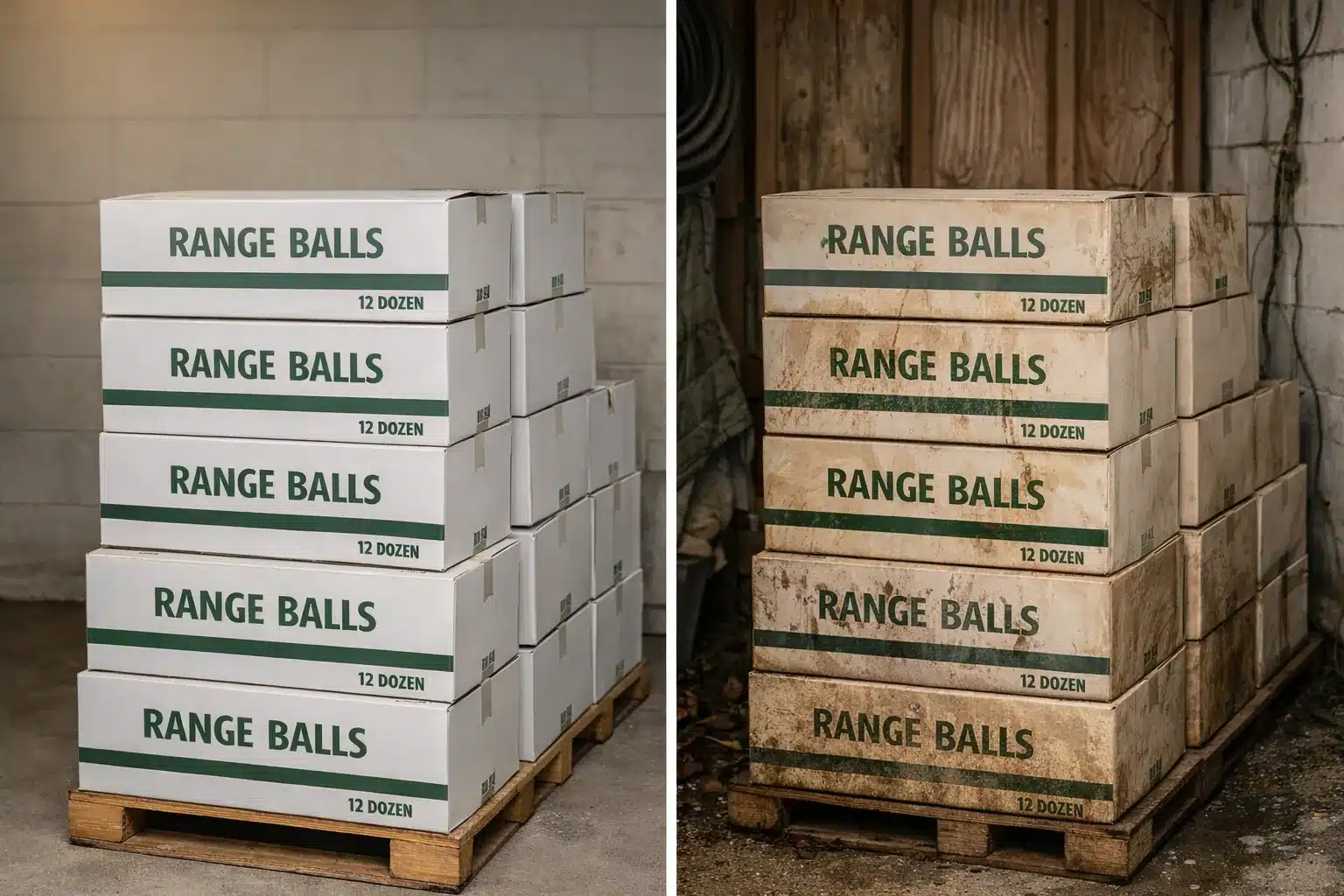
That is why a storage-risk matrix and retest checklist are better than fake lab precision. Compare storage condition, stock age, carton integrity, and visible finish changes before older stock enters circulation. Then write a release rule for aged or moisture-exposed inventory. If the stock has lived badly, it should not go straight from storage into the range bucket on blind faith.
What Is Micro-Batch Sourcing for Golf Ranges?
Micro-batch sourcing for golf ranges means replacing one large annual ball purchase with smaller, scheduled replenishment lots that better match real usage. The financial benefit is not always the lowest unit price, but lower cash tie-up, fresher stock, and faster correction when assumptions change.
Micro-batching is not about buying less. It is about keeping less money asleep. That distinction matters because many buyers still hear “small quantity” as a concession or a fallback. In practice, it is better understood as a replenishment discipline. The facility decides how much stock should be awake locally, how much should be reordered on schedule, and how quickly the next batch can correct the last one’s assumptions.
That is why JIT sourcing works so well in finance language. The value is not romantic manufacturing theory. The value is that average inventory comes down, stock age stays shorter, and the business does not have to fund a season of uncertainty up front. If member usage accelerates, the next batch can move sooner. If the logo needs adjustment, the next batch can carry it. If packaging or finish needs refinement, the learning loop is shorter instead of season-long.
Low MOQ also should not be treated as if every custom build behaves the same way. Existing molds, standard white builds, simpler packaging, lower customization depth, and off-peak ordering all make smaller replenishment lots more feasible without lowering discipline. Low MOQ is not the quality variable. Build complexity and release discipline usually matter more.
Micro-batching is not automatically faster in peak season. Smaller orders still need earlier confirmation, simpler build choices, and clear reorder triggers if the buyer wants schedule certainty. A small batch placed too late, with too many custom variables, can still lose queue priority when capacity gets tight.
Split shipment can help as a transition tactic, but it is not identical to a true micro-batch program. A real micro-batch model needs a written cadence, release points, pickup windows, and storage terms. Factory storage is finite. A serious supplier will frame split release as a managed window, not as unlimited free warehousing in disguise.
A useful deliverable here is a replenishment plan showing lot size, cadence, review points, and reorder triggers before the first program starts. That shifts the conversation from “Can you do small?” to “Can we run small with control?”
✔ True — Micro-batching replaces hoarding with scheduled replenishment and shorter learning loops.
The point is not to live dangerously with low stock. The point is to keep a deliberate stock window, then refill against real usage and real proof instead of funding a year of assumptions all at once.
✘ False — “Micro-batching just means the buyer is understocked.”
Weak planning causes that problem, not small lots by themselves. A structured cadence with standard-enough build choices is often safer than one giant order made in anticipation of uncertainty.
Why Does DDP Reduce Sourcing Anxiety?
DDP reduces sourcing anxiety by moving import clearance, duty handling, and door-delivery responsibility into the supplier’s service model. It does not make lead time disappear, but it can make the route, milestone ownership, and landed-cost logic far more visible for the buyer.
What a route-based DDP timeline should show
Buyers are often less afraid of the factory than of the handoffs between the factory and the facility. FOB, CIF, or loosely defined landed quotes can leave the buyer carrying too many unknowns: who handles import clearance, who owns duty exposure, who arranges final delivery, and what “lead time” even means in practice. That is why DDP matters. It changes responsibility, not just terminology.
DDP should be read as a responsibility model. It tells the buyer that the supplier is not stopping at the port gate and leaving the rest as a scavenger hunt. The stronger promise is not “shipping is faster.” The stronger promise is “timeline and obligation are visible.” In other words, DDP does not make lead time disappear. It makes lead time visible, allocated, and manageable.
That only works when lead time and delivery date are separated clearly. Production lead time is not the same as arrival date. Buyers should write both production lead time and delivery date into the PI or PO, because those are not the same promise. A factory may finish on schedule and still miss the facility’s comfort window if route logic, booking, clearance, or final-mile timing was poorly defined.
As of 2026, route planning should be lane-specific, not generic. West Coast ocean logic is not East Coast logic. North Europe is not the same planning problem as a faster urgent refill by air into the UK or Germany. That is why the buyer should ask for milestone visibility before asking for a lower unit price.
This is the kind of DDP conversation a buyer should push for:
| Route / mode | What buyer worries about | What DDP should clarify | Evidence to request | Next step |
|---|---|---|---|---|
| US West ocean | Port timing and final delivery | Milestone ownership | Route-specific timeline | Set reorder trigger by lane |
| US East ocean | Longer transit and inland timing | Handoff visibility | Redacted proof-pack checklist | Reorder earlier than West Coast |
| North Europe ocean | Customs and inland handoff | Named-place responsibility | Clearance + delivery evidence | Match timeline to EU lane |
| UK/Germany urgent refill | Mode choice and timing | Air vs ocean planning | Mode-based options sheet | Reserve air for urgent top-up |
Request one route-specific DDP milestone map, one redacted proof-pack checklist, one sample duty-paid document example, and one order-to-door planning timeline for your destination.
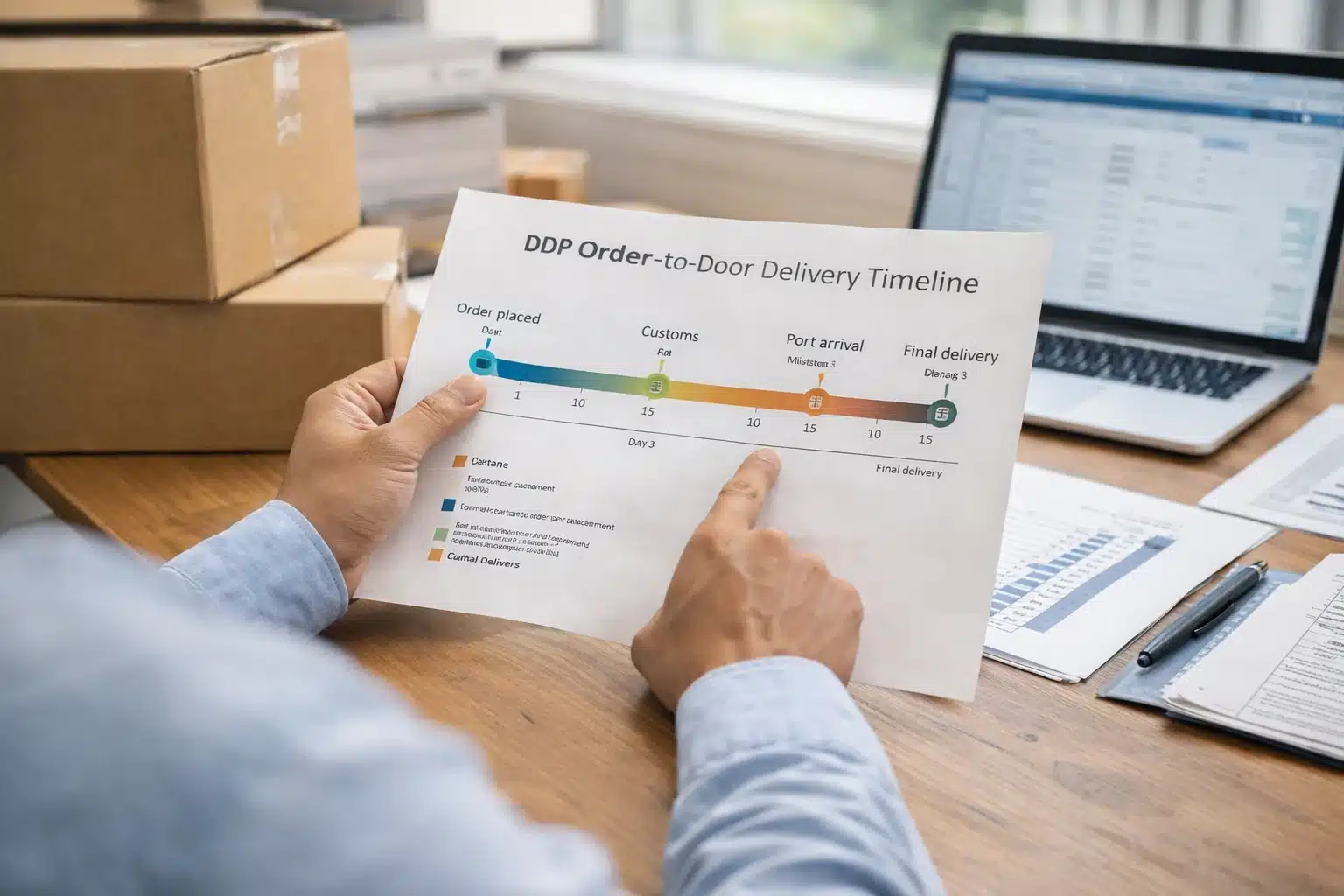
One failure signal should stop the conversation immediately: the supplier quotes DDP but cannot show a proof pack. A serious DDP supplier should be able to show named-place logic, main-transit proof, redacted import-clearance evidence, and final-delivery confirmation in a publish-safe format.
Write this into the PO or shipment file: for each DDP shipment, supplier shall provide a route-specific milestone plan and a redacted proof pack showing named place, main transit, import-clearance evidence, and final delivery confirmation. Any change to route logic, document responsibility, or shipment method requires buyer review before dispatch.
Does MOQ 1000 Reduce Quality Consistency?
Lower MOQ does not have to mean lower consistency. Smaller replenishment lots can stay controlled when the supplier uses repeatable production logic, lot-linked QC, protected packaging, and pre-shipment comparison against the approved sample instead of treating each micro-batch like a disconnected one-off.
Why fresh batch age can be an advantage
This is the fear that usually shows up after buyers accept the finance logic. If the lot is smaller, will the printing drift? Will the finish look weaker? Will cartons arrive less protected? Will the approved sample and the shipped batch quietly separate from each other over time? Those are fair questions, and the answer should not be reassurance. It should be proof.
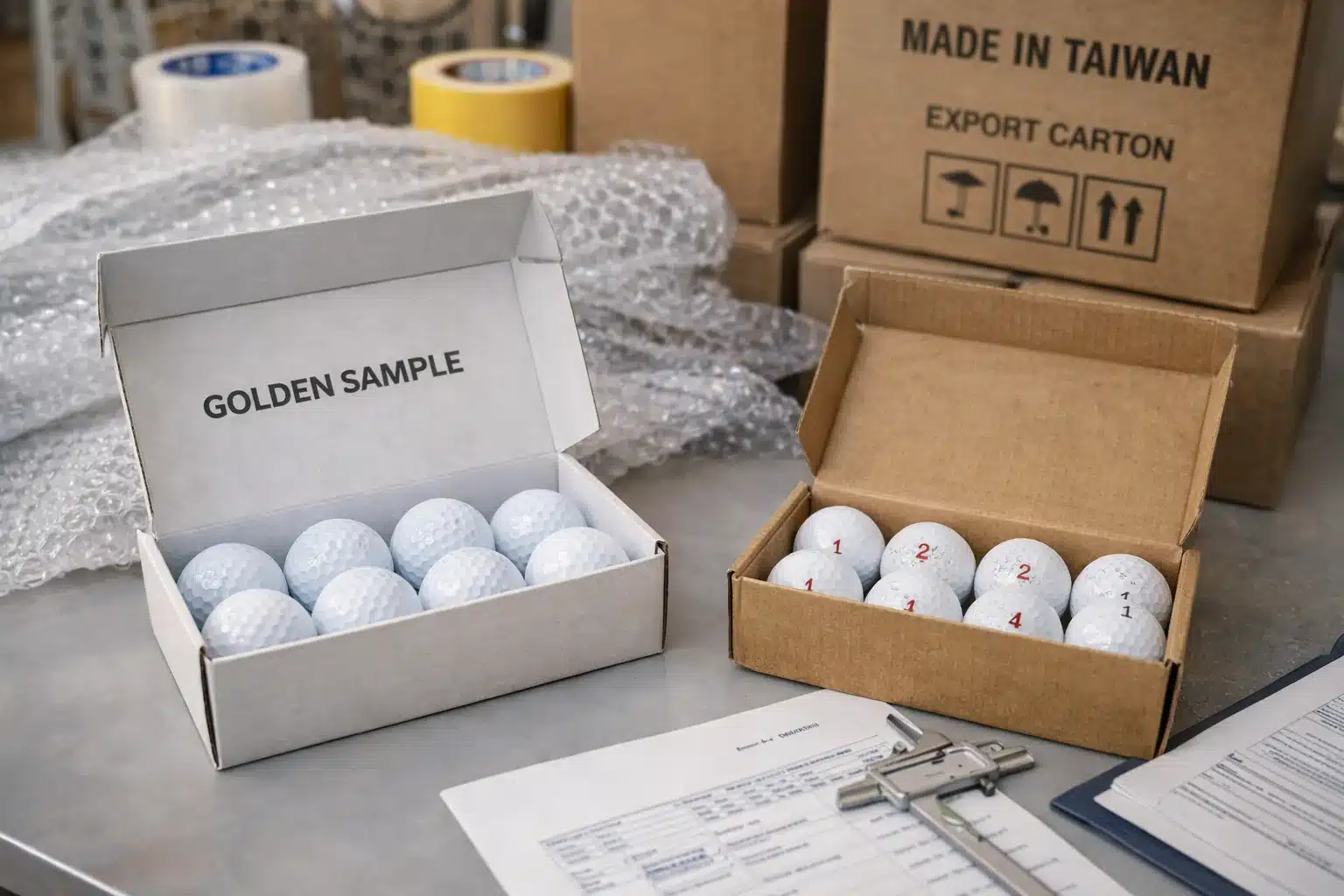
The strongest proof is visual and lot-linked. Compare golden sample against current batch photos. Review blind-batch samples before release. Check the pre-shipment QC sheet. Confirm that the batch is tied to the approved sample by lot number, production date, and shipment file continuity. That is what turns “small quantity” from a risk story into a controlled program.
Fresh batch age can also be a practical advantage, but it should be framed carefully. The useful claim is not that a micro-batch is magically better in every technical sense. It is that shorter dwell time lowers the chance that older stock, older finish exposure, or poor local storage becomes part of the quality problem.
Packaging matters here as much as print and finish. LCL shipments are not automatically weak, but they demand better protection discipline. Moisture control, internal protection, and void management matter more when smaller quantities move through mixed cargo conditions. Smaller volume does not mean lower quality. It means the packaging system must do more of the protective work, and the supplier should be able to show that logic clearly.
A capable micro-batch supplier usually reveals itself in the boring things: response quality, QC clarity, quote discipline, and willingness to show comparison photos before dispatch. That often matters more than how loudly the supplier talks about size, age, or factory scale.
Ask for lot-linked QC, sample comparison photos, and a carton-protection checklist. Then define what counts as unacceptable drift in appearance, logo sharpness, finish condition, or packaging condition before the shipment leaves.
Which Model Traps Less Cash Over the Year?
The right cash-flow comparison is not “Which unit price is lower?” but “Which procurement model leaves less money trapped in average inventory over the year?” Micro-batching often wins by reducing capital tie-up, storage burden, aging exposure, and emergency-buy risk rather than by claiming the lowest pure unit price.
This is the section many buyers skip too quickly. They compare a local-stock quote to an overseas quote and assume the job is to find the cheaper line item. That is not the real question. The real question is which model leaves less money sleeping in cartons between the day it is paid and the day it is actually used.
That is why factory-direct must be compared on a landed basis, not on FOB fantasy math. Once the landed basis is made comparable, the more interesting differences usually show up elsewhere: opening cash outlay, average inventory, warehouse burden, aging exposure, emergency-buy premium, and the cost of correcting a wrong assumption too slowly.
Micro-batching does not always win on pure unit price. It often wins on inventory behavior. The operation may buy more frequently, but it is carrying less stock at the midpoint, tying up less cash, and exposing less inventory to aging and forecast error. That matters to procurement managers, finance teams, and operators for the same reason: cash trapped in dead stock cannot pay staff, fix irrigation, upgrade turf, or solve more urgent operational problems.
This is the better comparison table:
| Metric | Local bulk model | Micro-batch DDP model | Why it matters | Next step |
|---|---|---|---|---|
| Initial cash outlay | Higher | Lower | Opening strain on working capital | Compare first-order burden |
| Average inventory | Higher | Lower | Cash parked in stock | Model midpoint inventory |
| Warehouse burden | Higher local footprint | Smaller local footprint | Storage is not free | Assign local storage cost |
| Aging / shrinkage exposure | Longer dwell time | Shorter dwell time | Older stock carries more risk | Set age and rotation rules |
| Emergency buy risk | Often higher when forecast fails | Lower when cadence works | Spot buys can be expensive | Build reorder triggers |

The buyer-side deliverable should be a simple landed-cost and average-inventory model. Use the same basis for both options. Then choose the model that keeps stock security within an acceptable window while minimizing cash lockup and timeline risk.
Write this traceability clause into the program: each micro-batch shipment shall show lot number, production date, retained-sample reference, and the matching pre-shipment QC summary on the packing list or shipment file. Receiving may hold any shipment that cannot be tied back to the approved sample and lot record.
FAQ
What does DDP actually remove from the buyer’s workload?
DDP removes much of the uncertainty around import-clearance, duty-handling, and delivery responsibility when the supplier is genuinely set up to execute it.
The named place matters because that is where the supplier’s responsibility is defined. Buyers should care less about the letters themselves and more about whether the supplier can show route logic, clearance capability, and final-delivery evidence. A proof pack matters more than a sales promise. If the supplier cannot show how DDP has been executed in redacted form, the buyer may still be carrying more uncertainty than the quote suggests.
How should I think about lead time if I buy factory-direct?
Separate production lead time from delivery date, then break delivery into milestones. That is more credible than asking for one universal ETA.
A useful buying timeline should include production-ready date, main transit, import clearance, and final-mile appointment. That matters even more on longer or more variable lanes. One route does not define all routes. The smarter move is to plan by lane, mode, and reorder trigger rather than by one reassuring number that hides too many assumptions.
Do golf balls always become unusable if they sit in storage?
No. Storage risk rises with condition and dwell time, but older cartons do not become unusable on a fixed calendar.
Heat, humidity, poor ventilation, and moisture exposure raise the risk. Long dwell time raises uncertainty. That does not mean every older box is bad. It means buyers should retest when conditions were poor or when stock age exceeds the program’s comfort window. The right question is not whether older balls are always dead. It is whether storage conditions have made the stock less predictable than fresh replenishment.
Can I really buy custom range balls in small quantities?
Yes, but not every build is equally low-MOQ friendly. Standard white builds, existing molds, simpler packaging, and lower customization depth usually make small quantities more practical.
Low MOQ works best when the build uses existing foundations instead of forcing too many fixed costs into one small run. Off-peak ordering also helps because capacity pressure is lower and approvals tend to move faster. Buyers should ask which parts of the build are standard enough for low-MOQ execution and which parts raise the threshold. That makes MOQ a planning question instead of a sales promise.
Is micro-batching just split shipment under another name?
Not exactly. Split shipment can be a transition tactic, but a true micro-batch program is a replenishment model with cadence, proof, and reorder triggers.
Split shipment may help buyers move away from annual hoarding, but it still needs written storage windows, release timing, and pickup terms. Factory storage is finite, and storage fees may apply. A true micro-batch program is more disciplined than “make a big order and send it later whenever I ask.” The cadence should be planned, not improvised.
Can the factory store part of my order and release it later?
Sometimes, yes, but that should be treated as a managed transition plan rather than as unlimited free warehousing.
Some suppliers can support staged release or split pickup windows, which can help buyers move away from one-shot annual hoarding. But the storage window should be written, the release cadence should be planned, and any extra storage terms should be explicit. Factory space is finite. Buyers should ask how long stock can be held, whether fees apply after a certain period, and how release dates are scheduled before treating factory storage as part of the model.
What should receiving inspect on each micro-batch?
Receiving should protect the financial logic of the program by checking lot identity, appearance, packaging condition, and shipment-file continuity before stock enters circulation.
Start with lot number and production date. Then confirm retained-sample match, logo and finish consistency, carton condition, and any sign of moisture exposure. Receiving is the last place where a proof-backed procurement model can still be protected. If the shipment cannot be tied back to the approved sample and lot record, it should not quietly disappear into inventory.
Conclusion
Annual hoarding feels safe because it turns supply anxiety into visible stock. The problem is that it also turns working capital into dead stock, stretches inventory age, slows correction, and forces the facility to carry more local storage burden than it may realize.
A better model is available. Micro-batch DDP sourcing does not promise magical speed or zero complexity. It offers something more useful: lower cash tie-up, fresher replenishment, clearer route responsibility, and faster learning from one batch to the next. That is why the better procurement question is no longer “How many balls can we cram into storage?” It is “How little money can we keep asleep while still staying reliably supplied?”
You might also like — How to Negotiate MOQ with Chinese Golf Ball Manufacturers