Your corporate golf ball order does not fail when the unit price is high. It fails when the gift makes your brand look cheap.
Bulk corporate custom golf balls should be sourced by event tier, logo durability, packaging experience, and itemized landed cost. Use Surlyn for large-scale promos, premium urethane or premium ionomer for VIP events, clearcoat-protected logo printing for brand safety, and itemized DDP to protect the approved budget.
The safest question is not “Can you print our logo?” It is “Will this gift still make our brand look premium when the client opens it, plays it, and remembers it?”
A corporate golf ball is not just a round giveaway with artwork on it. It is a brand-touch asset. PPAI’s Product Power 2026 promotional-product research found that most recipients feel appreciated when receiving promotional products, and most say branded items improve their perception of the brand. The reverse is just as real: poor durability, weak design, or irrelevant gifts can make a premium sponsor look careless in seconds.
This guide is not a factory audit manual. It is a corporate gifting SOP for buyers who need the balls to look right, arrive on time, protect the budget, and survive VIP use.
Which ball fits your event audience?
You may feel pressure to buy the cheapest logo ball or the most premium-sounding model, but the real decision is recipient fit.
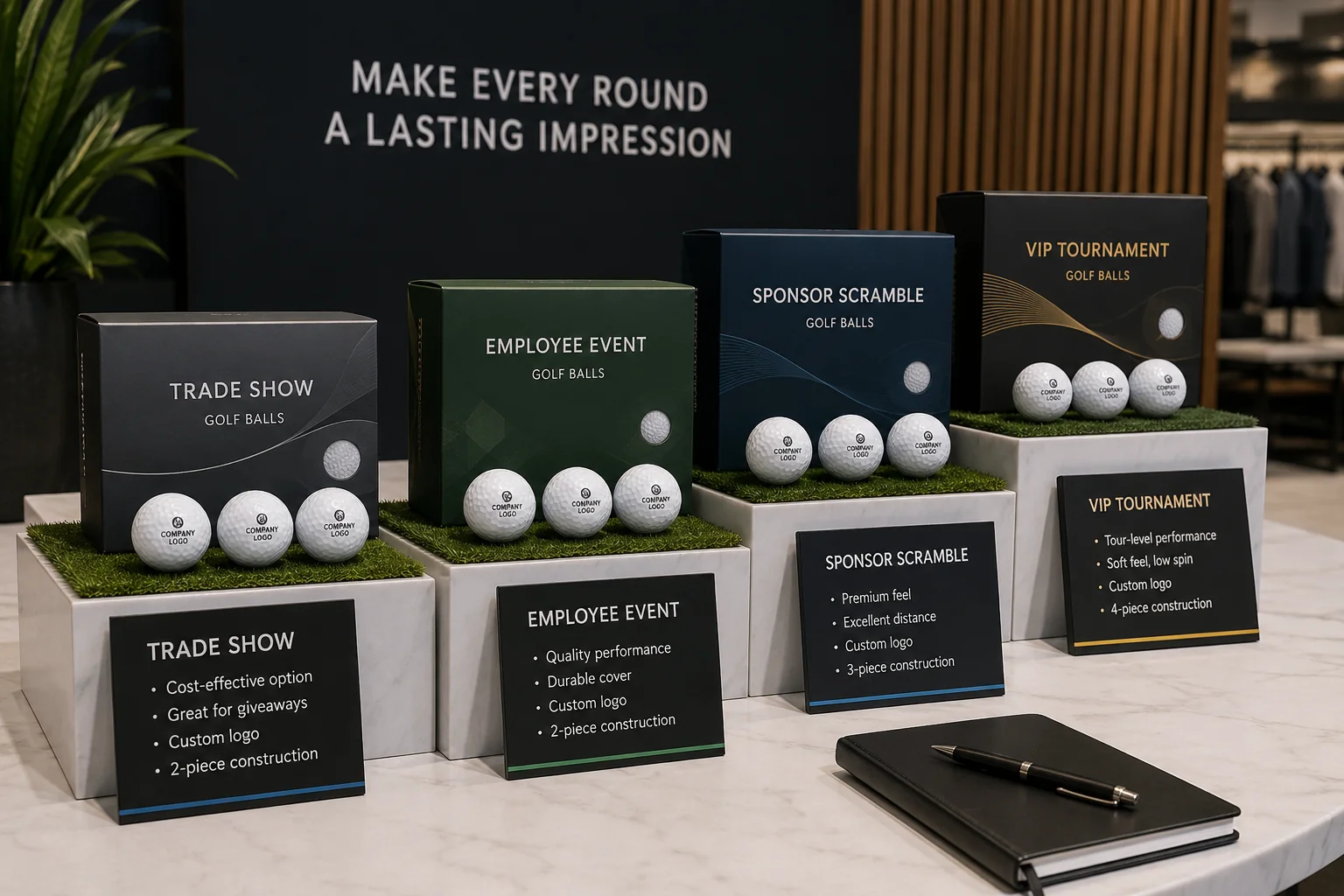
The best corporate custom golf ball depends on the audience, not the most premium label. Use durable 2-piece Surlyn for trade shows and mass promos, 3-piece Surlyn or premium ionomer for sponsor events, and urethane or premium 3-piece builds for VIP tournaments where players notice feel and control.
Corporate golf balls in bulk should never be treated as generic office supplies. A trade show giveaway, employee outing, sponsor scramble, VIP client round, and CEO Pro-Am are five different buying problems. The recipient will judge different things: durability, feel, logo sharpness, packaging, or the message behind the gift.
Executive assistants prefer brand safety, so the first approval should be an audience-to-spec recommendation. A large giveaway needs a durable, cost-controlled ball that can be handed out without overthinking. A mixed corporate scramble needs a ball that looks good, plays acceptably, and does not scuff too easily. A VIP round needs something softer, more premium, and more aligned with the recipient’s golf expectations.
The failure signal is “VIP event, cheapest 2-piece ball.” A basic Surlyn ball can be a smart choice for mass promos, but it may feel like a rock in a high-touch client setting. The opposite mistake also burns budget: buying urethane for a crowd that mostly cares about the logo and packaging.
| Event audience | Recommended ball | Logo route | Packaging | Buyer move |
|---|---|---|---|---|
| Trade show giveaway | 2-piece Surlyn | 1-color pad print | bulk / simple sleeve | control cost |
| Employee event | durable 2-piece / 3-piece Surlyn | pad print | sleeve / dozen box | protect appearance |
| Corporate scramble | 2-piece / 3-piece Surlyn | pad or UV + proof | branded sleeve | match skill mix |
| VIP client round | premium ionomer / urethane | adhesion proof required | premium box | avoid cheap feel |
| CEO / Pro-Am gift | 3-piece / 4-piece urethane | clearcoat + proof | magnetic gift box | approve samples |
Surlyn for promos or urethane for VIPs?
Surlyn protects scale, durability, and budget. Urethane protects feel, perceived quality, and player-sensitive events. The right choice depends on who receives the gift and how it will be used.
For trade shows, public promotions, employee events, and broad sponsor bags, a 2-piece or 3-piece Surlyn / ionomer construction is usually the safer commercial fit. It keeps appearance stable and avoids paying for performance many recipients will never notice. For CEO clubs, Pro-Am gifts, premium sponsor packs, or lower-handicap client rounds, premium ionomer or urethane can be easier to defend because the recipient may notice softness, spin, and control.
Request an audience-to-spec recommendation before quote approval. Check whether the supplier explains why the ball fits the recipient tier, not just what the cheapest model costs. Do not approve a low-end ball for VIPs or a premium urethane ball for mass giveaways without a written reason.
✔ True — The best ball is the one that fits the recipient.
For corporate gifting, better spec means better fit, not always higher price. Match the ball to the event purpose, player skill level, and brand impression you need to protect.
✘ False — “The most expensive ball is always the best corporate gift.”
A premium ball can be wasted in a mass promo, while a cheap ball can damage a VIP event. Audience fit protects both budget and brand perception.
How do you stop logo peeling?
You may approve a beautiful digital proof, then discover the logo flakes, smears, or wears too quickly after real handling or play.
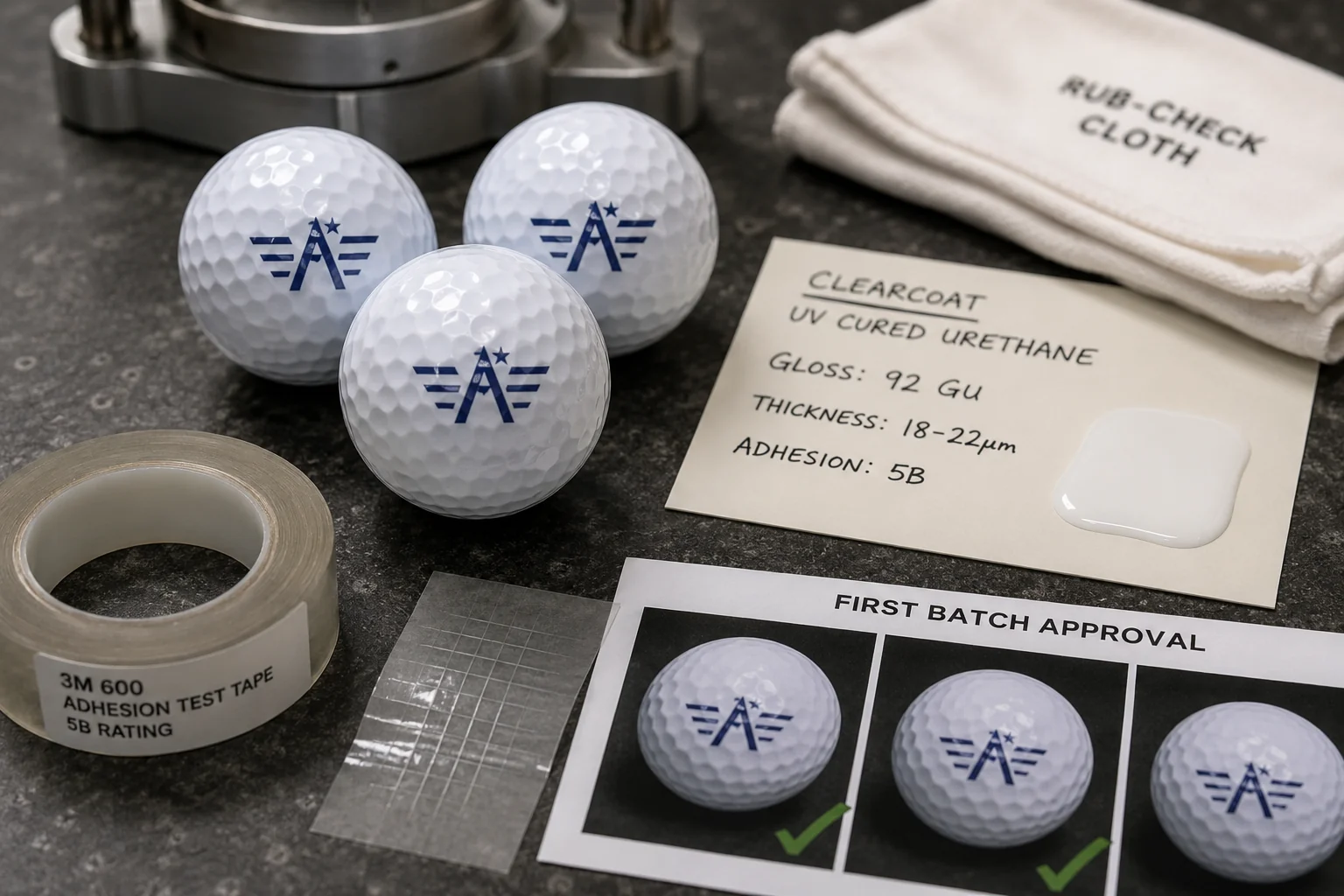
A custom golf ball logo should be approved by adhesion proof, not a render. Ask for print-method disclosure, surface-prep notes, clearcoat or topcoat protection, ASTM D3359-style tape evidence adapted to the golf-ball surface, rub checks, and first-batch photos before mass printing continues.
A digital proof proves artwork intent. It does not prove the logo will stay on the ball after packaging contact, handling, heat, humidity, or a few real strikes. The nightmare is not a slightly imperfect proof. The nightmare is your brand mark peeling in front of a VIP client who now remembers the wrong thing.
The better process is a “sandwich” approach: prepare the ball surface, print the logo, then protect the mark with clearcoat or topcoat where the program requires stronger wear resistance. Pad printing is often a stable route for simple one- or two-color corporate logos. Validated UV or transfer methods can work for more complex graphics, but they deserve proof, not blind trust.
A premium logo is proven, not just printed. Your approval file should show the print method, surface preparation, clearcoat or topcoat method, adhesion evidence, rub or handling evidence, after-hit photos where practical, and first-batch comparison images. For premium sponsor events, “looks good” is not a QC method.
| Logo risk | Weak supplier behavior | Proof you request | Buyer move |
|---|---|---|---|
| Peeling | render only | adhesion proof | pause approval |
| Smearing | no surface prep | prep disclosure | verify method |
| Fast wear | no clearcoat | topcoat note | require sample |
| Color drift | no first-batch check | side-by-side photos | release in writing |
| Packaging rub | untested insert | pack-contact check | test sleeve fit |
What proof should protect the logo?
Ask for an adhesion proof pack, not just a method label. Pad printing, UV, or transfer can all fail if surface prep, curing, topcoat, or packaging contact is weak.
An ASTM D3359-style cross-hatch or tape check can give the conversation a more disciplined format, but do not treat it as a mandatory golf-ball standard. The safer wording is “ASTM D3359-style tape / cross-hatch evidence adapted for curved golf-ball surfaces.” The goal is practical: reduce obvious peeling, cracking, smearing, and early wear before your logo reaches clients.
The failure signal is “perfect proof, no adhesion evidence.” A supplier can make a logo look good on screen and still fail to prove durability. For custom logo golf balls for corporate events, that is not enough.
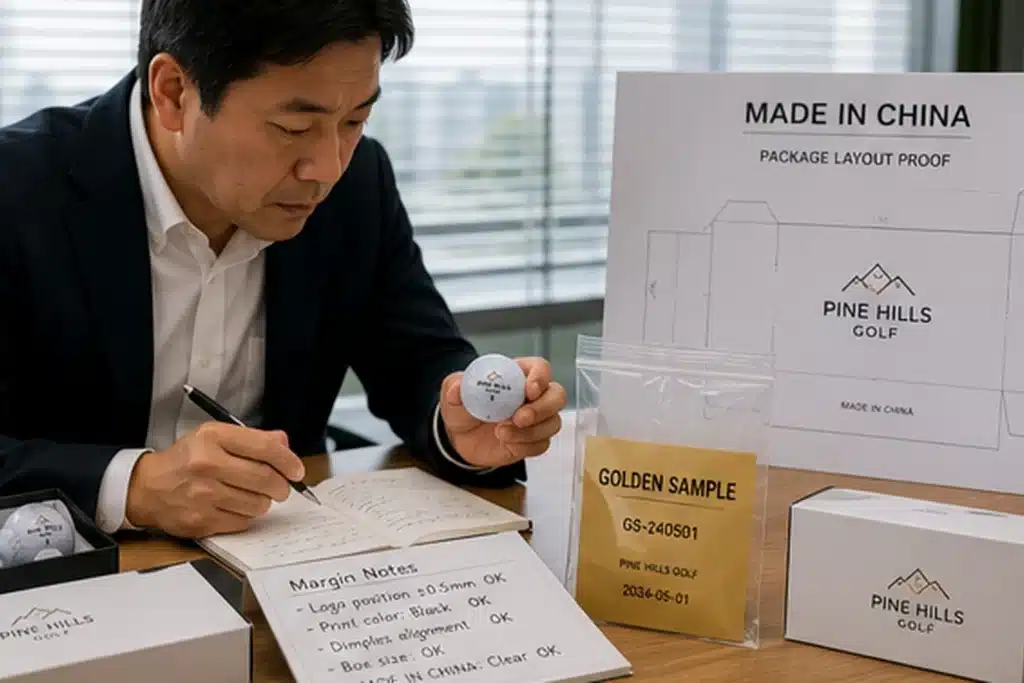
Supplier shall define the approved golden sample by ball model, cover type, finish, logo position, logo color, printing route, clearcoat / topcoat method, packaging version, and viewing condition. Bulk production shall pause after the first 10–20 units for side-by-side photo approval. Full production may continue only after written buyer release.
Request a Logo Adhesion Proof Pack. Review print method, surface prep, clearcoat / topcoat method, tape-style adhesion result, rub evidence, after-hit photos, and first-batch images. No bulk logo approval from render alone.
You may buy acceptable balls but receive plain boxes, weak sleeves, cheap trays, or packaging that makes the whole gift feel lower-value than the event deserves.
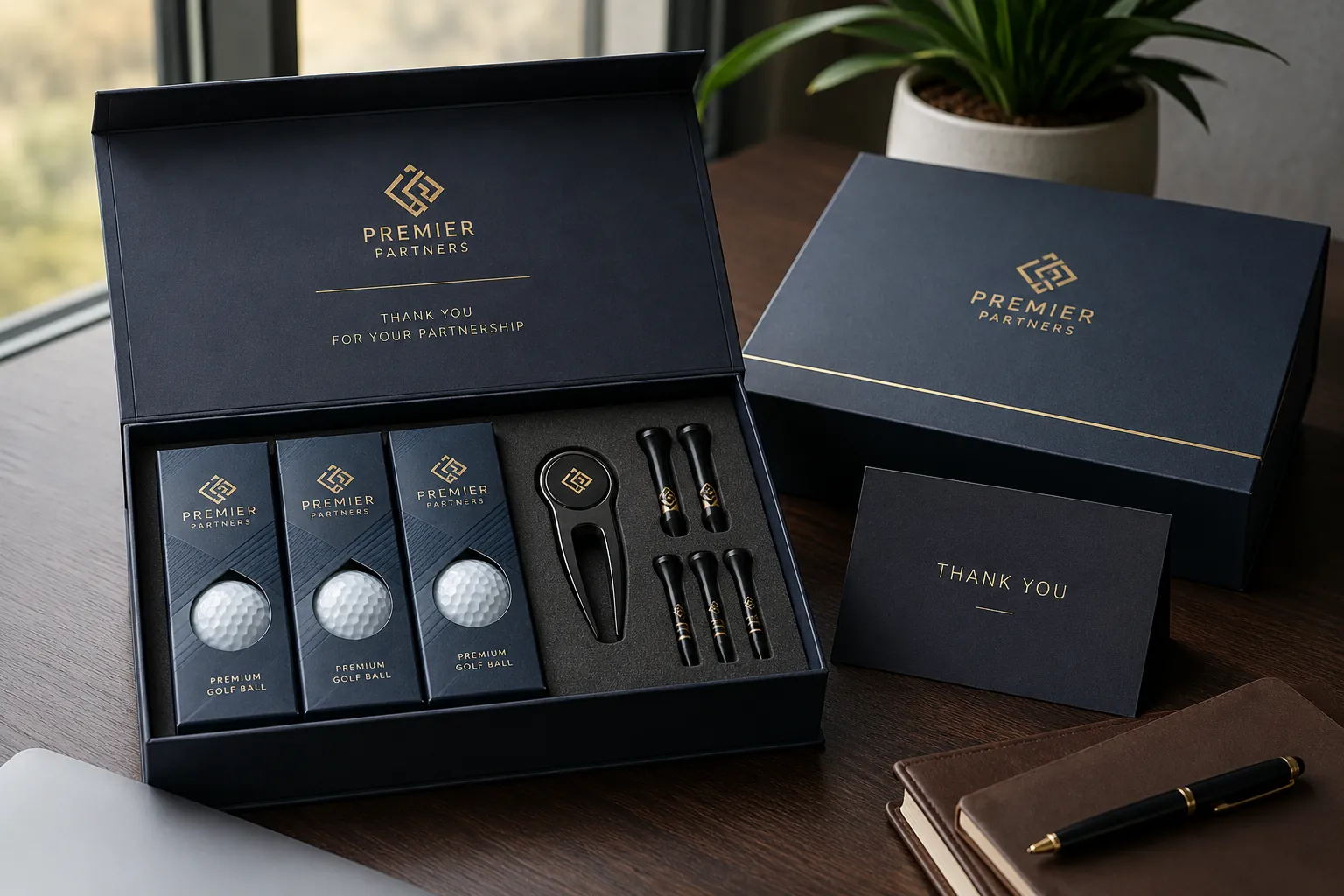
Corporate custom golf balls should be sourced as a gift kit, not just loose balls. For premium events, request branded 3-ball sleeves, dozen boxes, magnetic gift boxes, insert trays, and optional tees or divot tools so the unboxing experience matches the recipient tier.
Corporate gifting is a serious relationship market, not an office-supply afterthought. A Coresight Research and GiftNow study estimated the U.S. corporate gifting market would grow from $258B in 2022 to $312B in 2025, which shows why gifting deserves a controlled procurement file. Your golf ball gift sits inside a broader client-experience budget, not a random promo-bin expense.
The ball may be playable, but the package creates the first emotional signal. A premium client opening plain white boxes may wonder whether the sponsor ran out of time or taste. A clean 3-ball sleeve, rigid dozen box, magnetic gift box, fitted tray, thank-you card, branded tees, ball marker, or divot tool can change the whole impression before a single ball is struck.
Marketing directors prefer emotional impact, but packaging still needs control. Ask for dieline approval, material sample, color proof, insert-fit check, logo-rub risk review, accessory list, and carton packing method. Good kitting reduces vendor coordination and prevents the classic failure: acceptable ball, forgettable gift.
| Gift tier | Packaging option | Best use | Buyer move |
|---|---|---|---|
| bulk giveaway | loose / mesh | high-volume promo | keep simple |
| event handout | 3-ball sleeve | scramble / sponsor day | approve dieline |
| client gift | dozen box | premium but practical | check print proof |
| VIP gift | magnetic box | CEO / partner event | request mockup |
| sponsor kit | box + tees + card | brand story | approve kitting |
Which kitting level fits the recipient?
The kitting level should rise with the recipient’s importance and the event’s visibility. A mass giveaway can stay simple; a VIP gift should not feel like loose inventory.
For trade shows, bulk packaging or simple sleeves can make sense because reach and budget matter. For sponsor tournaments, branded sleeves and dozen boxes usually feel more polished. For CEO clubs, premium partner gifts, or high-value client events, a rigid or magnetic box with insert trays and optional accessories can make the gift feel planned instead of rushed.
Request a Packaging / Kitting Approval File. Check dieline, material, color, insert fit, logo-rub risk, accessory list, and carton packing. No premium event approval with plain box packaging unless you intentionally choose that tier.
✔ True — Packaging is part of the gift value.
For corporate gifting, the recipient judges the whole experience: ball, logo, sleeve, box, insert, accessories, and presentation. Good packaging makes the gift feel intentional.
✘ False — “The ball quality alone defines the gift value.”
A good ball in a cheap box can still feel forgettable. Premium packaging protects the first impression before the recipient ever plays the ball.
How do you lock the DDP budget?
You may receive a low EXW / FOB quote or vague “all-in” quote, then face extra freight, clearance, local handling, or final delivery costs after finance approval.
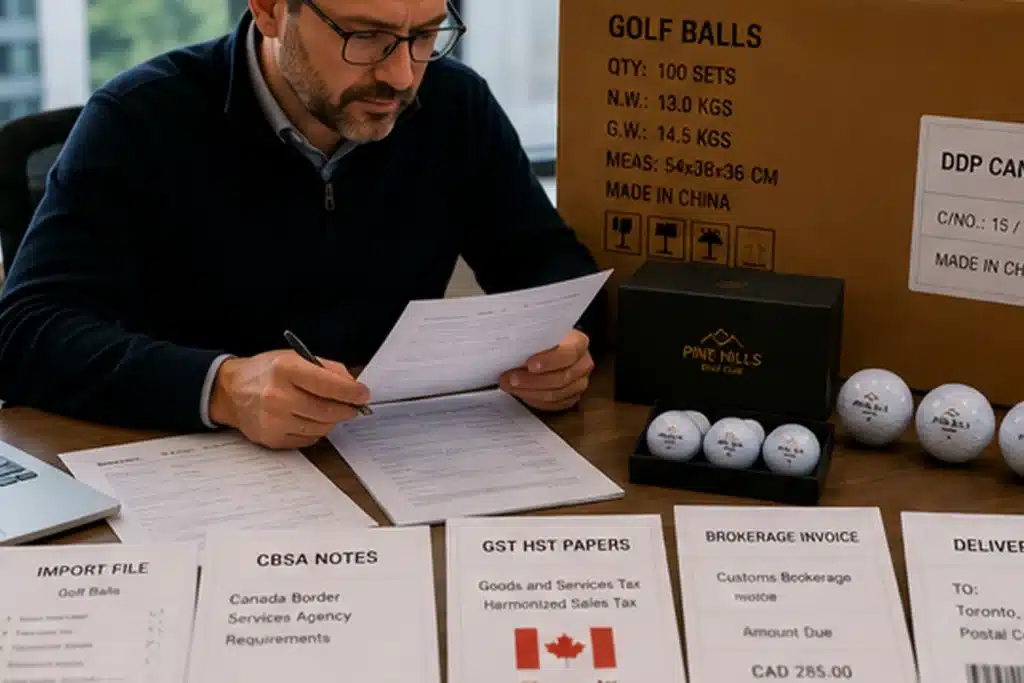
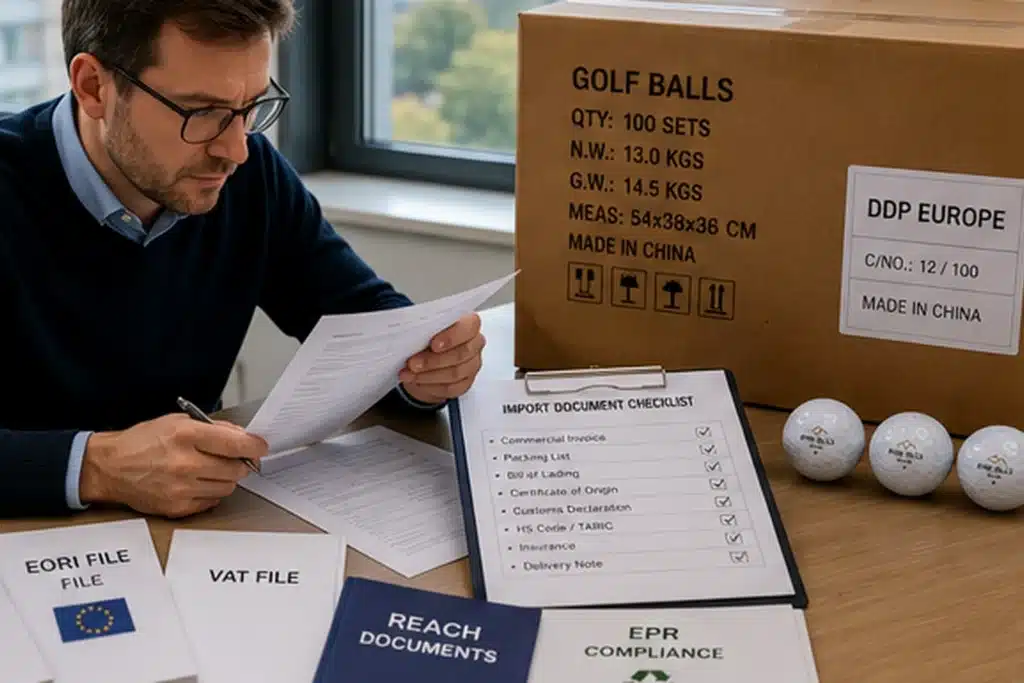
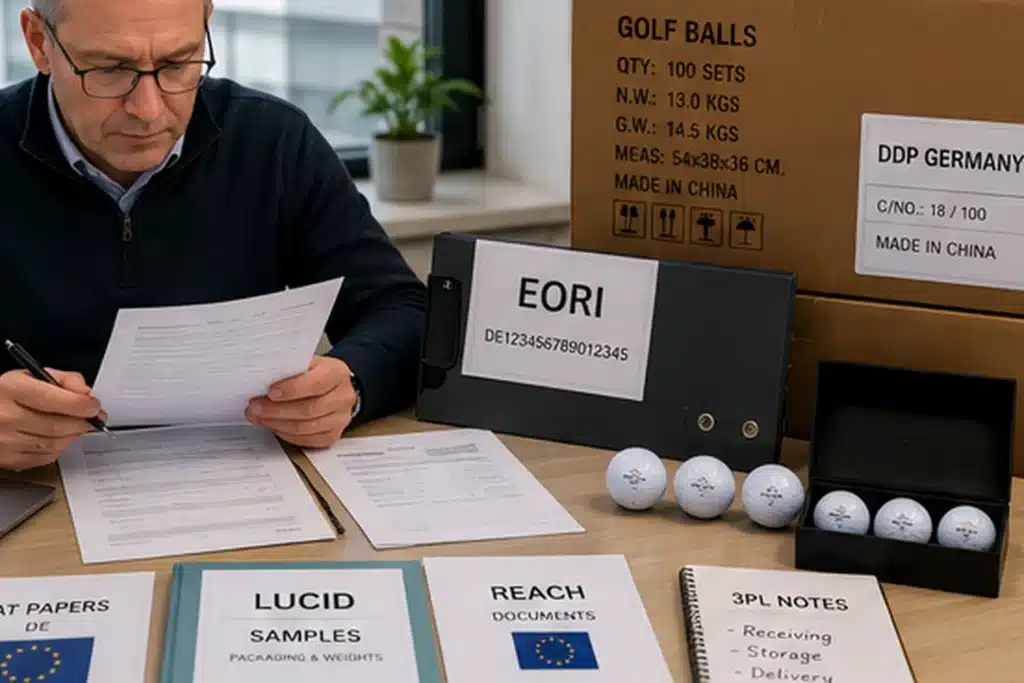
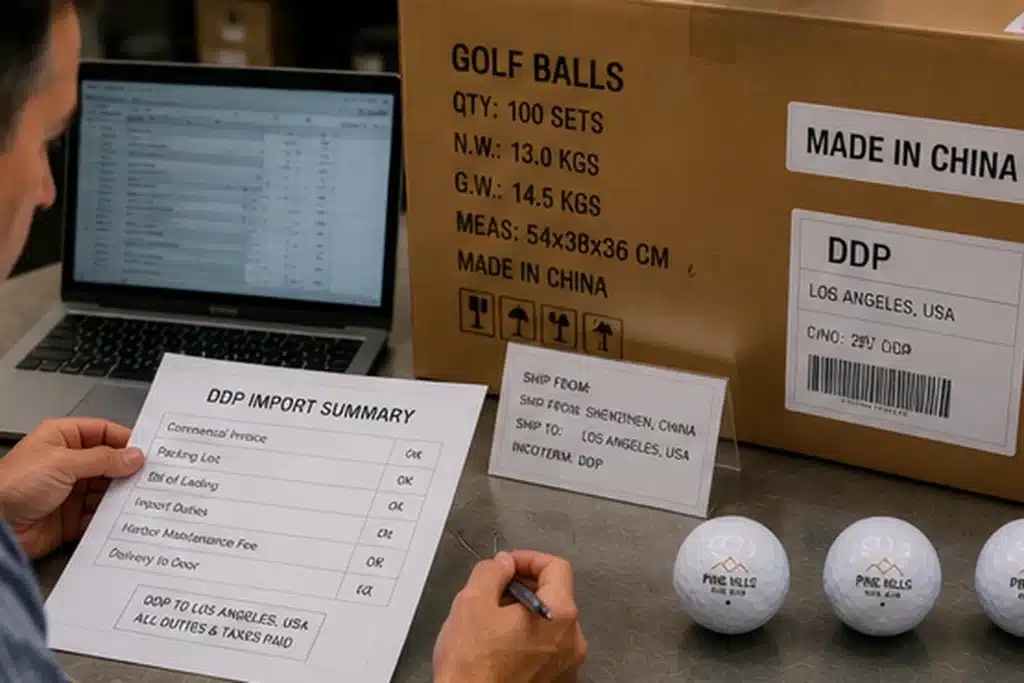
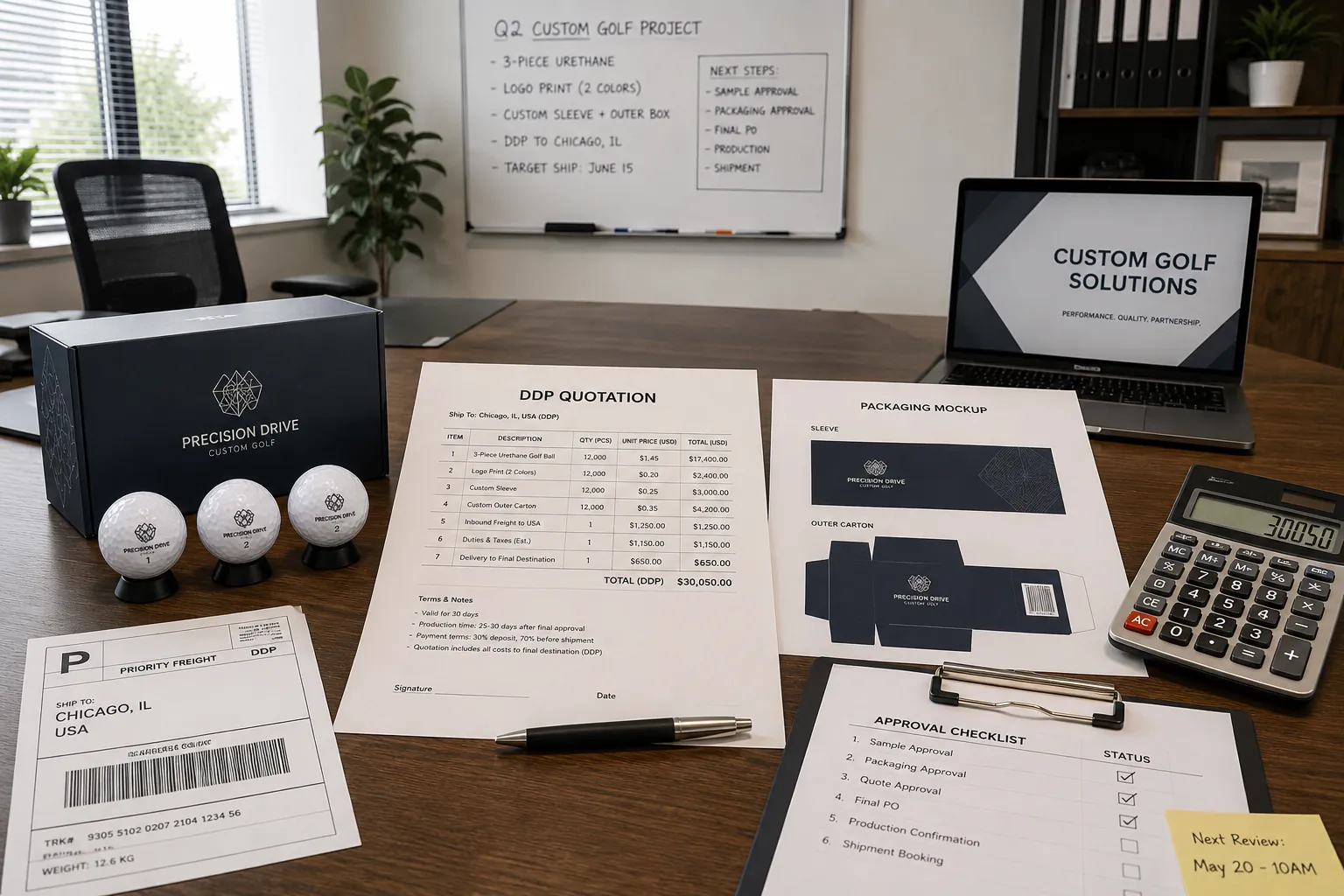
For corporate bulk orders, DDP should be a written budget lock, not a vague “all-in” promise. Ask for an itemized DDP quote that shows product, logo setup, printing, packaging, freight, import clearance, duties or taxes treatment, last-mile delivery, named destination, excluded fees, and delivery proof.
EXW and FOB quotes can be useful for experienced importers, but they can punish corporate event buyers who need one approved budget. Finance does not want a cheap factory quote followed by new line items for setup, packaging, freight, clearance, local handling, delivery appointment, or warehouse trucking.
Under DDP, the seller normally carries broad responsibility for delivery to the named destination, including import-clearance and duty-paid handling under the agreed Incoterms rule. For a corporate gift order, the value is not just convenience; it is budget control. A DDP quote should give you one landed number your finance team can approve without reopening the file later.
The failure signal is “DDP total, no destination-scope details.” That phrase looks simple until the order arrives and someone asks who pays a local fee that was never named. You do not want that conversation after the event budget is closed.
| Cost item | Why it matters | Hidden risk | Buyer move |
|---|---|---|---|
| ball value | base product cost | cheap quote anchor | itemize |
| logo / cliché fee | artwork setup | surprise setup charge | confirm |
| packaging | gift value | plain box downgrade | approve mockup |
| freight / clearance | budget exposure | destination fees | define scope |
| last-mile delivery | event deadline | local add-ons | include address |
What must itemized DDP include?
Itemized DDP should state the named destination, Incoterms rule, included costs, excluded fees, and delivery proof method. A friendly “all-in” line is not enough.
Finance teams prefer one approved number, so the quote needs to show ball value, cliché / tooling fee, logo printing fee, packaging cost, sample cost if charged, freight mode, export handling, import clearance treatment, duties / taxes treatment, local handling if included, last-mile delivery, named destination, excluded fees, and proof-of-delivery method.
Supplier shall provide an itemized DDP quotation showing named destination, Incoterms rule, ball value, cliché / tooling fee, logo printing fee, packaging cost, freight mode, export / import clearance treatment, duties / taxes treatment, last-mile delivery, excluded fees, and proof-of-delivery method. Any cost not listed as excluded in the approved DDP quote shall be treated as included unless caused by buyer-approved changes.
Before deposit, ask for an Itemized DDP Budget Lock that separates product, logo setup, packaging, freight, clearance, duties / taxes treatment, last-mile delivery, excluded fees, and delivery proof. Do not approve a deposit if the DDP quote cannot state destination-side scope in plain language.
When should you order bulk custom balls?
You may approve the quote late, change artwork too often, choose complex packaging too close to the event, or confuse production lead time with delivery date.
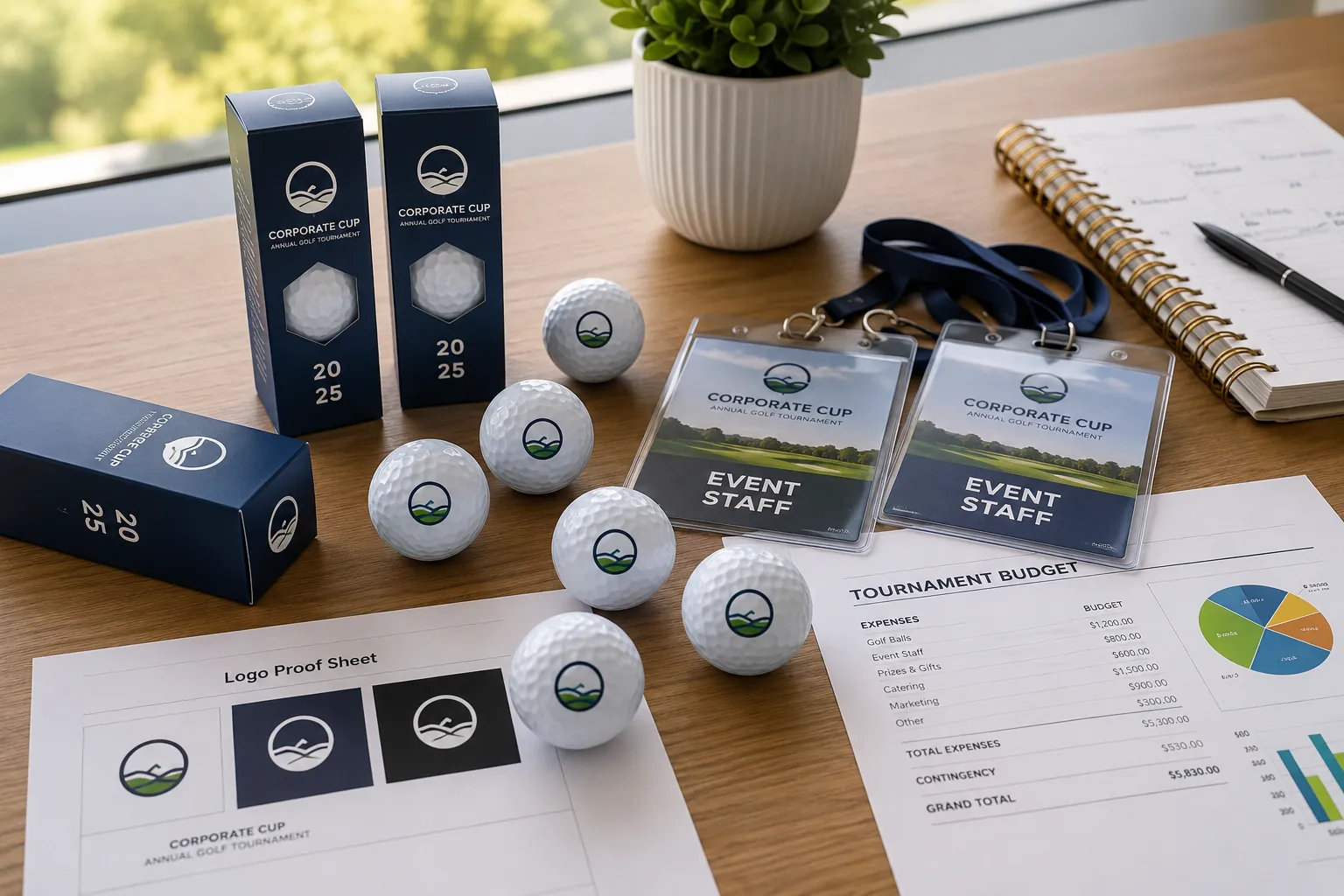
Order timing starts when the file is production-ready, not when you first ask for a quote. To protect the event date, freeze artwork, approve packaging, confirm the golden sample, set the first-batch gate, and lock DDP scope before the supplier starts mass production.
The fastest order is usually the clearest order. Day 0 is not the first email. Day 0 is when deposit, final artwork, packaging approval, golden sample logic, and DDP scope are complete enough for production to move without guessing. If any of those pieces is still shifting, the calendar is softer than it looks.
Trade show giveaways can often use simpler packaging to protect timing. VIP kits need earlier packaging mockups because sleeves, insert trays, cards, accessories, and gift boxes create more approval points. Complex multi-item kits are worth it when the event is premium, but they should not be added late and treated like a small decoration change.
Rushing should simplify the spec, not remove the gates. If timing is tight, reduce logo colors, choose standard sleeves, skip complex accessories, or use a simpler box. Do not remove logo adhesion proof, first-batch approval, or DDP scope checks. Those gates protect the exact things that create corporate embarrassment: peeling logos, mismatched samples, cheap packaging, and budget surprises.
| Approval point | What must be frozen | What can go wrong | Buyer move |
|---|---|---|---|
| artwork | logo file / colors | version drift | approve final file |
| sample | ball / logo / finish | sample mismatch | lock golden sample |
| packaging | dieline / material | cheap unboxing | approve mockup |
| first batch | 10–20 live units | mass drift | release in writing |
| DDP | destination scope | budget surprise | lock quote |
Which approvals set Day 0?
Day 0 should start only when the supplier can produce from final files and approved scope. A delivery promise without approval milestones is too easy to misunderstand.
Your deadline is the event date, not the factory’s ship-ready date. A supplier may say the goods can be produced quickly, but that does not mean artwork is approved, packaging is released, bulk printing is checked, DDP scope is locked, or final delivery is protected. Ask the supplier to separate artwork approval, production release, ship-ready date, and final delivery.
Request a Corporate Event Order Timeline. Confirm when Day 0 starts and which approvals must be complete before production. Do not accept a delivery promise that does not separate artwork approval, production release, ship-ready date, and final delivery.
✔ True — Rush orders should simplify, not skip controls.
If timing is tight, simplify artwork or packaging. Keep logo adhesion, first-batch approval, and DDP scope checks in place because those protect the event outcome.
✘ False — “We can save time by skipping approval gates.”
Skipping gates saves minutes early and can create days of recovery later. Your deadline is the event date, not the factory’s ship-ready date.
FAQ
How long do custom logos last on golf balls?
Logo life depends on print method, surface prep, clearcoat, cure quality, packaging contact, and actual play conditions, so no supplier should promise a universal hit count without proof.
Do not trust only a digital render. Ask for pad print or validated UV route disclosure, clearcoat or topcoat explanation, adhesion proof, rub evidence, after-hit photos, and first-batch images. For premium corporate events, the logo should be treated as part of the brand experience, not a decorative afterthought.
What is the best golf ball for corporate gifts?
The best corporate golf ball is the one that fits the recipient tier and event purpose: Surlyn for scale, premium ionomer or 3-piece Surlyn for mixed events, and urethane for VIP or player-sensitive programs.
Use 2-piece Surlyn for large giveaways and trade shows. Use 3-piece Surlyn or premium ionomer for mixed corporate tournaments. Use urethane or premium builds for VIP rounds, CEO clubs, and sponsor gifts where feel and perceived quality matter. Match packaging to the recipient level.
Can I get custom packaging for bulk golf balls?
Yes, and premium corporate gifts should usually include packaging, not just loose balls, because the box, sleeve, tray, and accessories shape the recipient’s first impression.
Options include 3-ball sleeves, dozen boxes, magnetic gift boxes, insert trays, tees, divot tools, ball markers, and thank-you cards. Ask for dieline and material approval. Check that packaging does not rub or damage the logo. Keep simple packaging for mass promos when budget and speed matter.
Is pad printing better than UV printing for golf balls?
Pad printing is often safer for simple corporate logos, while UV or transfer methods can work for complex graphics when the supplier validates surface prep, cure, clearcoat, and adhesion.
The print method alone does not guarantee durability. Surface prep matters. Clearcoat or topcoat can help protect premium logos. Ask for adhesion proof rather than accepting a method label. For VIP gifts, your approval should be based on proof, not just a pretty rendering.
How do I prevent logo peeling on custom golf balls?
Prevent logo peeling by requiring surface-prep disclosure, logo adhesion proof, clearcoat or topcoat details, rub evidence, after-hit photos, and first-batch approval before mass printing.
Use an ASTM D3359-style tape or cross-hatch check where appropriate, adapted for curved golf-ball surfaces. Review rub and handling evidence. Do not approve mass print from a render alone. The supplier should prove the logo system before your brand reaches clients.
How much do bulk custom golf balls cost?
Cost depends on ball construction, logo colors, packaging, quantity, setup fees, shipping mode, duties / taxes treatment, and final delivery scope, so compare landed cost per delivered ball.
Do not compare only unit EXW price. Request itemized DDP for corporate budgeting. Separate ball cost, logo fee, packaging, freight, clearance, duties or taxes treatment, and delivery. A higher-looking quote may be safer if it includes the scope that a cheaper quote hides.
What should be included in a DDP quote?
A useful DDP quote should show the named destination, product value, setup fees, logo printing, packaging, freight, customs clearance, duties / taxes treatment, last-mile delivery, excluded fees, and delivery proof.
Ask for the Incoterms rule and named place. Confirm whether local handling is included. Check the final delivery address. Do not approve vague “all-in” language. A corporate event budget needs a written landed-cost scope, not a friendly promise that the supplier will “handle it.”
When should I order corporate custom golf balls?
Order early enough to approve artwork, sample, packaging, first-batch release, and DDP scope before mass production, because Day 0 starts after the files and approvals are complete.
VIP packaging needs more approval time than simple bulk giveaways. Rush orders should simplify the spec, not remove logo or first-batch gates. Ask the supplier to separate artwork approval, production release, ship-ready date, and final delivery so your event deadline is protected.
Conclusion
Corporate custom golf balls are not judged only by the ball. They are judged by the recipient experience: the ball must fit the event, the logo must survive, the packaging must feel appropriate, the order must arrive on time, and the budget must not reopen after finance approval.
The best buyer does not ask only, “Can you print our logo?” They ask, “Will this gift make our brand look premium when the client opens it, plays it, and remembers it?”
You might also like — Golf Ball Shipping Costs: The 2026 CBM, Pallet & Freight Formula