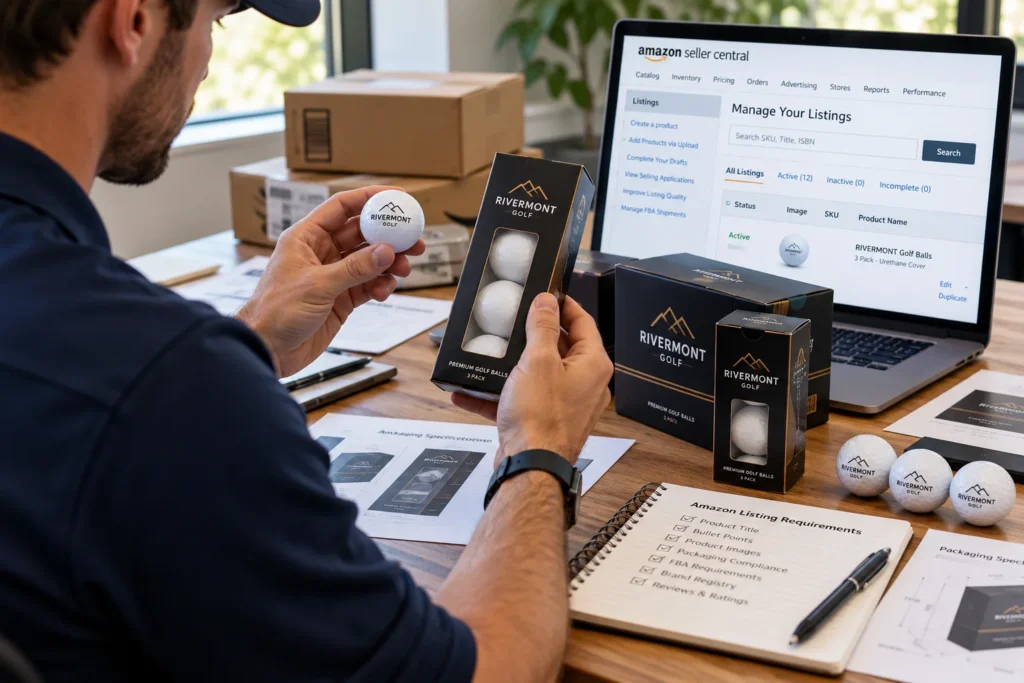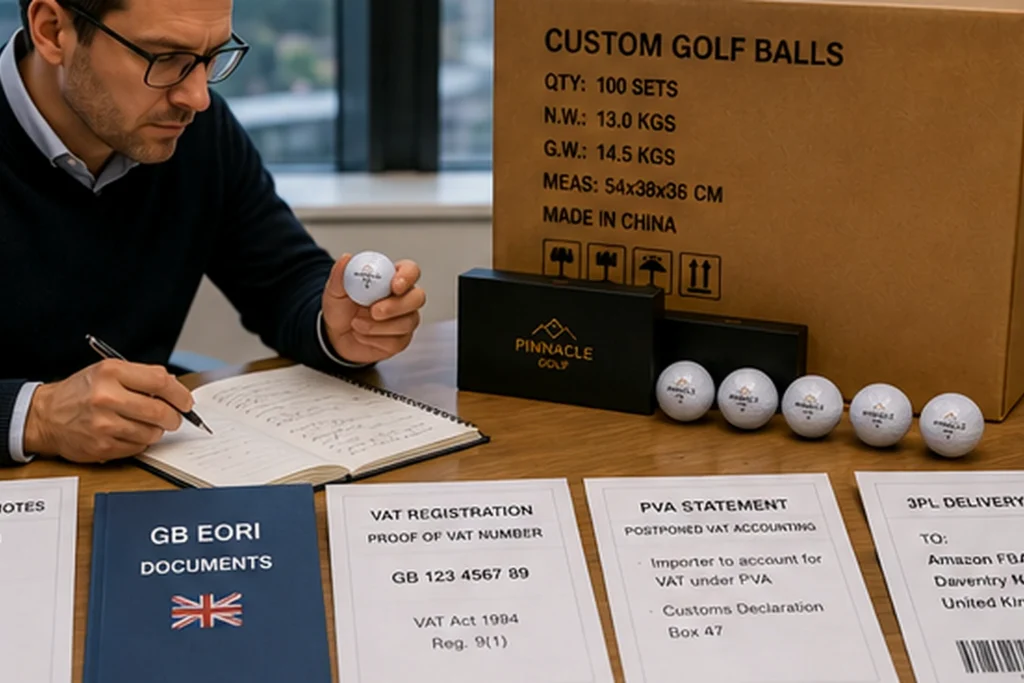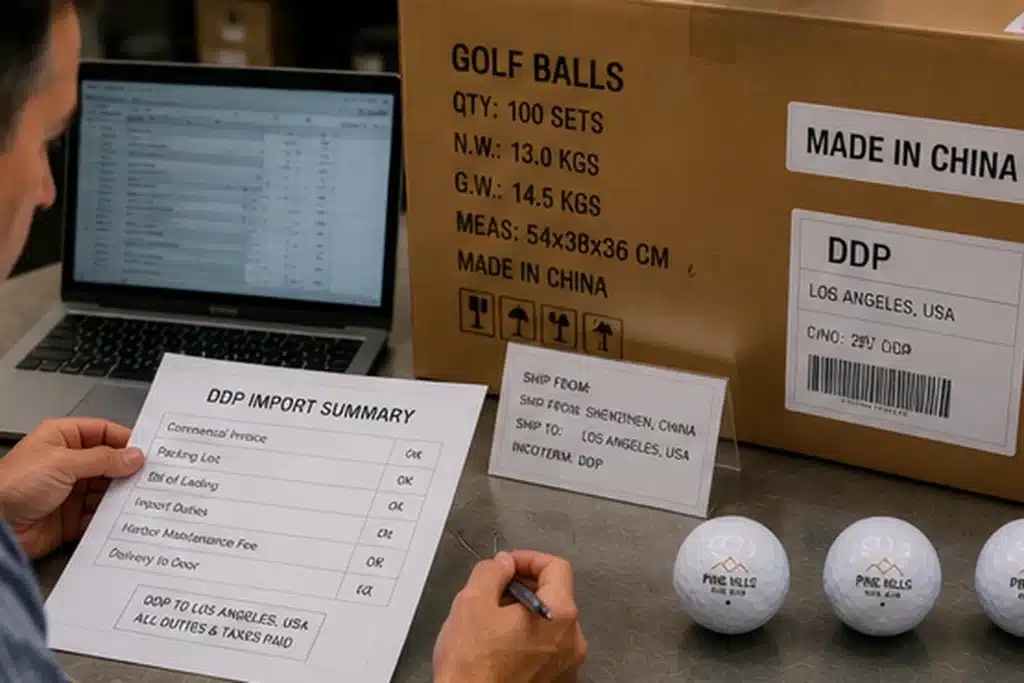
To import golf balls from China to the USA, finalize the shipment documents, assign responsibility for each handoff, pass a pre-shipment release gate, complete customs clearance, confirm the destination can receive the freight, and archive the final shipment record. The process is complete when the receiving point accepts the inventory—not simply when customs releases it.
A shipment can still fail if documents do not match, nobody owns the next handoff, or the destination cannot physically receive the freight.
Use one operating sequence:
Prepare → Assign → Release → Clear → Receive → Archive
Customs Cleared ≠ Successfully Received
Your goal is to build one controlled path from finished golf balls at the China factory to accepted, usable inventory in the United States.

Is Your Shipment File Ready Before Pickup?
Your invoice can be correct. Your packing list can also be correct. Your labels may even be approved. You can still have an execution problem if those records describe different versions of the order.
Your shipment file is ready only when the commercial invoice, packing list, labels, pack-out, destination, and logistics instructions describe the same final order. Document completeness is not the same as document consistency; each critical field should trace to one shipment ID and one approved version before pickup.
The weak question is:
“Do we have all the documents?”
The stronger procurement question is:
“Do all of these documents describe the same physical shipment?”
Shipment information naturally lives in different places. The commercial invoice identifies the goods and commercial transaction. The packing list describes how those goods are packed. Logistics instructions identify where they are moving. Carton labels and warehouse files tell the receiving point what it should expect.
Individually correct records can still create one incorrect shipment file.
That is why we apply the same traceability principle used in production control:
document + shipment ID + final version
A valid packing list from your last reorder does not prove today’s carton count. An approved label from an earlier artwork revision does not prove the labels on today’s cartons.
Build a Shipment Version Register around:
-
final PO or PI reference;
-
shipment ID;
-
final SKU description;
-
final quantity;
-
commercial invoice;
-
packing list;
-
carton count;
-
pallet count where applicable;
-
net and gross weight where relevant;
-
country-of-origin marking status;
-
shipping marks;
-
carton or warehouse labels;
-
exact ship-to address;
-
packaging revision;
-
logistics contact;
-
receiving instructions.
| What Changed | Match Check | Failure Risk | Buyer Action |
|---|---|---|---|
| SKU changed | Invoice vs PO | Wrong goods description | Confirm final SKU |
| Quantity changed | Invoice vs packing list | Clearance / receiving mismatch | Match quantity |
| Carton plan changed | Packing list vs pack-out | Receiving discrepancy | Freeze carton count |
| Label revision changed | Label proof vs receiving file | Rejection / relabeling | Approve current label |
| Ship-to changed | Logistics file vs receiving instructions | Wrong final-mile handoff | Confirm destination |

Do All Documents Describe the Same Shipment?
Correct Document ≠ Matching Document Set. You do not need every field repeated everywhere, but the critical identifiers should agree across the file.
For mixed promotional shipments—golf balls plus tees, towels, divot tools, markers, or other accessories—keep an itemized product list. Your broker and logistics partners need to know what the physical shipment actually contains.
If the question changes from document consistency to classification, tariff treatment, or customs value, move that separate decision to the guide that helps you verify golf ball HS code and U.S. import duty.
The buyer-side acceptance test is straightforward: do not approve pickup while a critical SKU, quantity, pack-out, destination, or label field is still tied to an obsolete version.
Supplier shall provide a shipment-release file matching the final order, including commercial invoice, packing list, carton and pallet count, origin marking, shipping marks, destination details, receiving instructions, and the responsible logistics handoff. Any shipment change after approval shall trigger a revised document version before release.
✔ True — Your import file should describe one physical shipment
Version control matters because a document can be correct for a previous sample, reorder, or packaging revision and still be wrong for the shipment being released today.
✘ False — “If every document is individually correct, the shipment file is automatically correct”
Procurement should verify the relationships between documents, not only whether each document exists.
Who Owns Each Import Handoff?
Factory, forwarder, broker, importer, final-mile carrier, and warehouse may all participate in one shipment. The dangerous gap is not lack of activity—it is unclear ownership between activities.
Your golf ball import process needs a named owner for every handoff from factory release to U.S. warehouse acceptance. A forwarder or broker may execute a task, but your team should still know who approves it, who supplies missing evidence, who receives exceptions, and who owns the next decision.
This distinction matters:
Doing the task is not the same as owning the risk.
A forwarder can arrange transportation. A broker can submit an entry. A carrier can make final delivery. A factory can prepare documents.
None of those facts answers:
-
Who approves the final data?
-
Who detects a mismatch?
-
Who retrieves supplier evidence?
-
Who authorizes a correction?
-
Who owns a failed delivery?
-
Who archives the proof?
CBP’s Tips for New Importers and Exporters explains that importers may use licensed customs brokers, but using a broker does not remove Importer of Record responsibility for the correctness of entry documentation and applicable duties, taxes, and fees.
For this article, the practical lesson is narrower: you can outsource execution without outsourcing visibility.
| Activity | Executes | Accountable / Approves | Evidence / Next Action |
|---|---|---|---|
| Final supplier documents | Factory | Buyer / import owner | Approved invoice + PL |
| ISF where applicable | ISF Importer / authorized filing agent | ISF Importer | Filing confirmation |
| U.S. entry | IOR / authorized broker or filer | IOR | Entry / release evidence |
| Supplier evidence request | Factory / procurement | Import owner | Corrected support file |
| Final delivery | Carrier | Logistics owner | Delivery confirmation |
| Receiving discrepancy | Warehouse / buyer | Buyer operations | Exception record |

Who Answers When a Handoff Fails?
A mature import workflow defines the exception path before the exception exists.
If the broker needs additional product information, who goes back to the factory?
If the forwarder discovers a document mismatch, who approves the revised version?
If the warehouse changes appointment instructions, who informs the carrier?
If receiving reports missing cartons, who owns the discrepancy?
Use one operating flow:
Issue → Receiver → Evidence Owner → Approver → Next Handoff
A clear failure signal is:
“The forwarder handles everything.”
That answer may describe convenience, but it does not identify who owns customs questions, corrected supplier evidence, receiving exceptions, or final proof.
For projects we manage, we coordinate export, international transportation, and the agreed delivery arrangements with our logistics partners. For you, the important control is not a promise that nothing can go wrong. It is a visible handoff chain showing who owns the next action when the shipment—or an exception—moves from one stage to another.
Your Responsibility Handoff Matrix should have no unnamed owner for a critical pre-arrival filing, customs response, final delivery, or receiving exception when cargo is released.
What Must Pass Before Cargo Leaves China?
Production completion creates finished golf balls. It does not automatically create a shipment that is ready to move.
Cargo should leave China only after the Shipment Release Gate shows no critical blocked item. Final documents, packaging and labels, destination, logistics owners, receiving instructions, and applicable pre-arrival data must all match the exact shipment the factory is about to hand over.
Use three statuses:
READY — confirmed and release-safe.
OPEN — still being completed or verified.
BLOCKED — the shipment should not move until the issue is resolved.
For current U.S. vessel imports, confirm the applicable CBP Importer Security Filing requirements before shipment release. Key ISF data for applicable vessel cargo may be required before the goods are loaded for the United States.
The operational lesson is more important than memorizing ISF fields:
Certain shipment information must be controlled before cargo moves—not reconstructed after pickup.
Your release gate should cover:
-
final SKU;
-
final quantity;
-
commercial invoice;
-
packing list;
-
carton and pallet count;
-
final packaging revision;
-
country-of-origin marking proof;
-
shipping marks;
-
warehouse labels;
-
exact destination;
-
forwarder handoff;
-
broker or filer handoff;
-
receiving instructions;
-
delivery-site capability;
-
ISF readiness where applicable.
Country-of-origin marking belongs here as a checkpoint rather than a separate customs lesson. 19 CFR 134.11 provides the general U.S. marking requirement for foreign-origin goods and applicable containers. Keep current artwork or production marking proof in the release file.
| Release Item | Ready | Open | Blocked / Action |
|---|---|---|---|
| Invoice + packing list | Matched | Minor confirmation | Stop for material mismatch |
| Packaging / labels | Approved | Proof pending | Stop if receiving label unresolved |
| Destination | Confirmed | Contact pending | Stop if ship-to is uncertain |
| Broker / forwarder handoff | Named | File transfer pending | Stop if no owner |
| Receiving conditions | Confirmed | Site check pending | Stop pallet release if unload method unknown |
What Should Block Shipment Release?
A shipment can be production-ready but not release-ready.
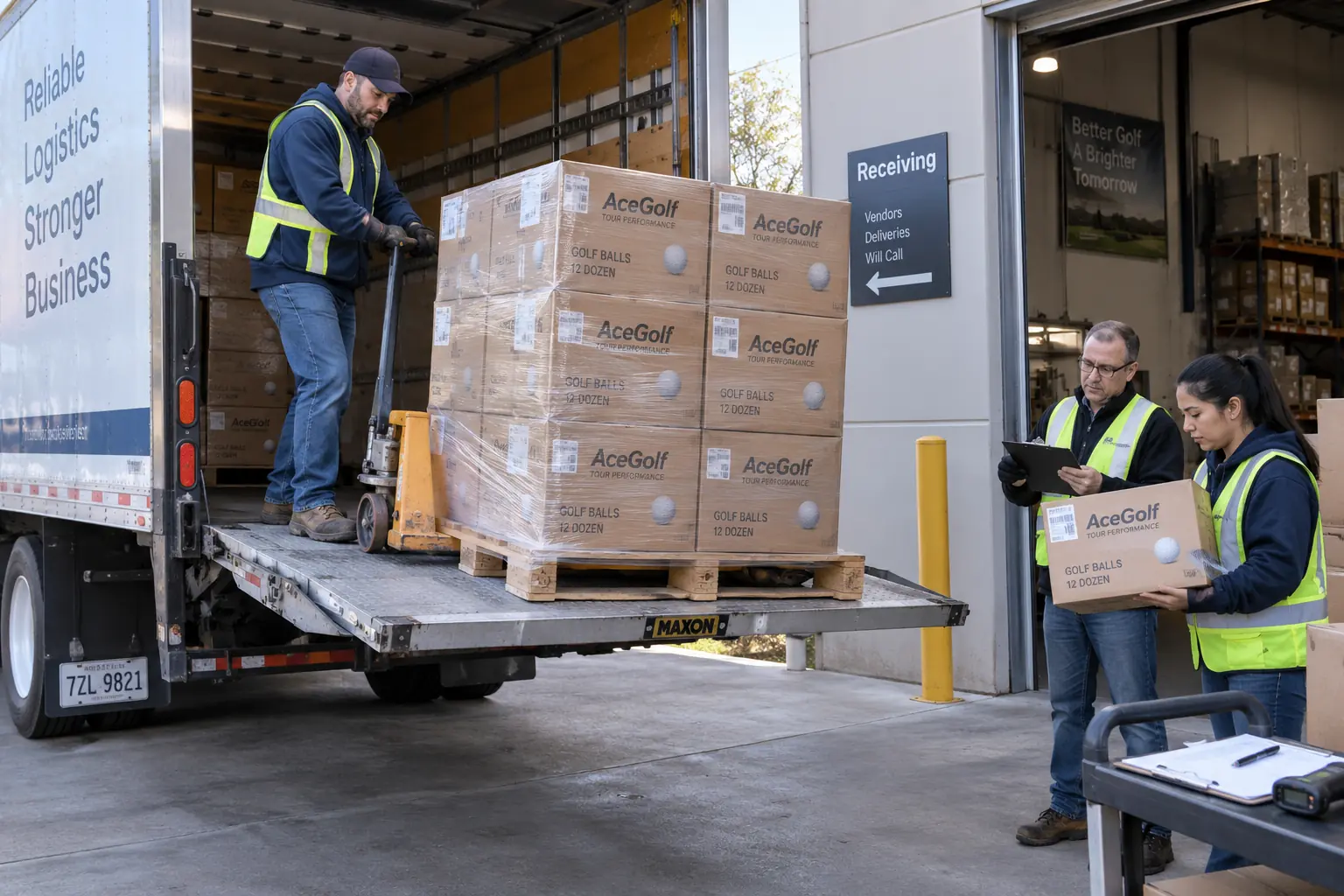
Block release when invoice and packing-list quantities disagree, the physical pack-out differs from the documents, warehouse labels remain unapproved, the final destination is uncertain, or the broker/forwarder handoff has no clear owner.
Palletized shipments add another pre-release question:
-
Is a loading dock available?
-
Is a forklift or suitable pallet-handling equipment available?
-
Is a liftgate required?
-
Is delivery palletized or loose-carton?
-
Is an appointment required?
Commercial documents, labels, and final pack-out describing different shipment versions is a failure signal. Adding another attachment does not fix version drift; identifying the final approved version does.
If carton CBM, chargeable weight, LCL/FCL, air, express, or freight scope is still unresolved, calculate golf ball shipping cost from China before release.
If the commercial decision is still whether the overall order economics work, use the separate guide to calculate total golf ball import cost.
If the physical pack-out itself is still under review, finalize your OEM golf ball packaging options before treating the shipment file as release-ready.
Please confirm the final shipment documents, logistics responsibility handoff, receiving destination and warehouse requirements, and provide the release evidence required before pickup. Any document, quantity, packaging, label, or delivery-scope change must be updated before shipment release.
✔ True — A shipment can be production-ready but not release-ready
QC completion tells you the goods are finished. Release requires the downstream documents, owners, destination, labels, and receiving conditions to be ready as well.
✘ False — “Once QC passes, the factory should ship immediately”
Moving finished cargo before downstream handoffs are controlled simply moves an unresolved problem farther away from the factory.

What Happens at U.S. Customs Clearance?
A broker can manage the customs filing interface, but a customs question may still depend on product or shipment evidence held by your buyer team or supplier.
Customs clearance needs an escalation path, not just a broker contact. If CBP or your broker requests more information, your team should know who interprets the question, who retrieves shipment-specific factory evidence, who approves a correction, who submits the response, and what clearance proof returns to the shipment record.
Keep this part of the golf ball import process focused on workflow:
Query Received → Interpreted → Evidence Requested → Correction Prepared → Approved → Submitted → Archived
CBP’s ACE guidance shows how the electronic environment supports entry activity, supporting documents, and responses to customs document requests.
CBP may also request additional shipment-specific information or supporting documents when the existing entry records are not sufficient. That is why your customs-response workflow should be able to retrieve evidence tied to the merchandise and shipment actually under review.
This is the practical weakness behind the phrase:
“The broker handles customs.”
The broker can handle the customs process without independently possessing every supplier fact that may be needed to answer a question.
| Customs Event | First Owner | Supporting Party | Evidence / Next Action |
|---|---|---|---|
| Query received | Broker / IOR | Buyer | Identify request |
| Product evidence needed | Buyer / procurement | Factory | Shipment-specific support |
| Correction prepared | Broker | Buyer / IOR | Review final version |
| Response submitted | Broker / filer | IOR | Submission record |
| Release confirmed | Broker / carrier | Buyer | Archive evidence |
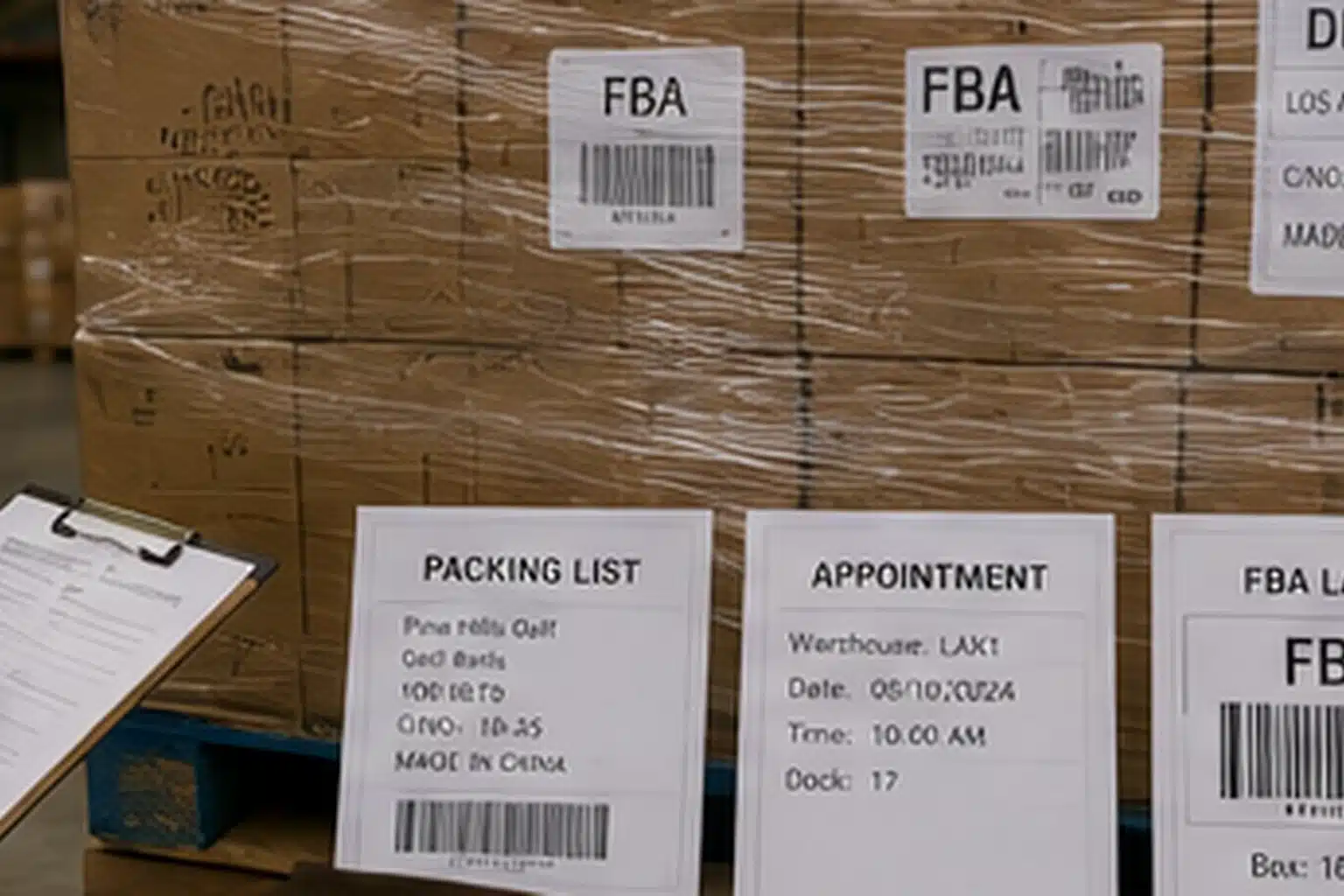
What If Customs Requests More Information?
Treat the request as an evidence handoff.
The broker or responsible import party receives the issue. The import owner identifies what is missing. Procurement obtains shipment-specific support from the factory. The broker prepares the response or correction. The accountable import party approves it. The submission and returned evidence are then archived against the shipment.
This is where the traceability rule matters again:
evidence belongs to a shipment
—not simply to a supplier relationship.
An old invoice, product explanation, photo, or label proof should not silently become today’s evidence because it happens to be easy to find.
The deliverable is a Customs Query Escalation Path with a query receiver, evidence owner, correction owner, approver, filer, and archive owner.
When the question becomes tariff classification, Section 301, customs value, or duty treatment, stop expanding here and review the customs and duty assumptions for your golf ball shipment.
Will Your Warehouse Accept the Delivery?
Customs release answers whether the cargo can enter. It does not tell you whether Amazon, your 3PL, distributor warehouse, retail DC, or business location can physically and operationally receive it.
Customs clearance does not prove that your inventory can be received. Before final delivery, confirm the receiving site’s labels, pallet rules, appointment process, unloading capability, delivery window, expected count, POD requirements, and exception process so cleared cargo does not become rejected, delayed, or unexpectedly surcharged inventory.
Customs Cleared ≠ Warehouse Accepted.
In March 2026, we shipped 25 cartons to a U.S. customer under a door-to-door DDP arrangement. At the customer’s request, we palletized the shipment at no extra charge to reduce handling risk. The local carrier later charged the customer more than $200 for liftgate service because the receiving site had no loading dock. The lesson was simple: palletization was not the problem—the receiving conditions had not been confirmed before final-mile delivery was booked.
For an all-in door-to-door quotation, verify before release whether the receiving site has a loading dock or suitable unloading equipment, whether liftgate service will be required, whether that service is included in the agreed delivery scope, and who will bear any resulting accessorial charge.
Estes’ LTL freight guidance explains that when a receiving location has no raised loading dock, forklift, or suitable unloading equipment, liftgate service may be required. Liftgate service is an accessorial and can create an additional charge.
That makes the buyer question larger than:
“Where are we delivering?”
You also need:
“How can that location physically receive the shipment?”
Build a Receiving Acceptance Gate around:
-
exact receiving address;
-
commercial, residential, or limited-access status where relevant;
-
delivery contact;
-
loading dock availability;
-
forklift or pallet-handling capability;
-
liftgate requirement;
-
palletized or loose-carton delivery;
-
pallet requirements;
-
carton labels;
-
appointment requirement;
-
delivery window;
-
expected carton or pallet count;
-
ASN or shipment ID where required;
-
POD expectation;
-
shortage and damage reporting.
Different channels create different receiving rules. A distributor warehouse may focus on appointment and pallet configuration. A DTC 3PL may require its own labels, ASN logic, or receiving references. Amazon FBA has another set of shipment-specific controls.
Amazon’s current LTL shipment guidance provides one useful public example: FBA palletized shipments require shipment-specific receiving controls, including FBA box identification, pallet labeling, and—depending on the carrier arrangement—delivery appointment coordination.
Amazon’s requirements are not universal warehouse rules. They prove the broader point that the receiving channel is part of the import workflow.
| Receiving Input | Hidden Failure | Proof to Confirm | Buyer Action |
|---|---|---|---|
| Exact destination | Wrong delivery point | Address + contact | Confirm ship-to |
| Dock / unload capability | Liftgate charge / failed unload | Site confirmation | Book correct service |
| Carton / pallet labels | Warehouse rejection | Label photo | Approve before release |
| Appointment | Failed delivery | Confirmation | Book before arrival |
| Count / condition | Shortage or damage dispute | POD + photos | Record at receipt |
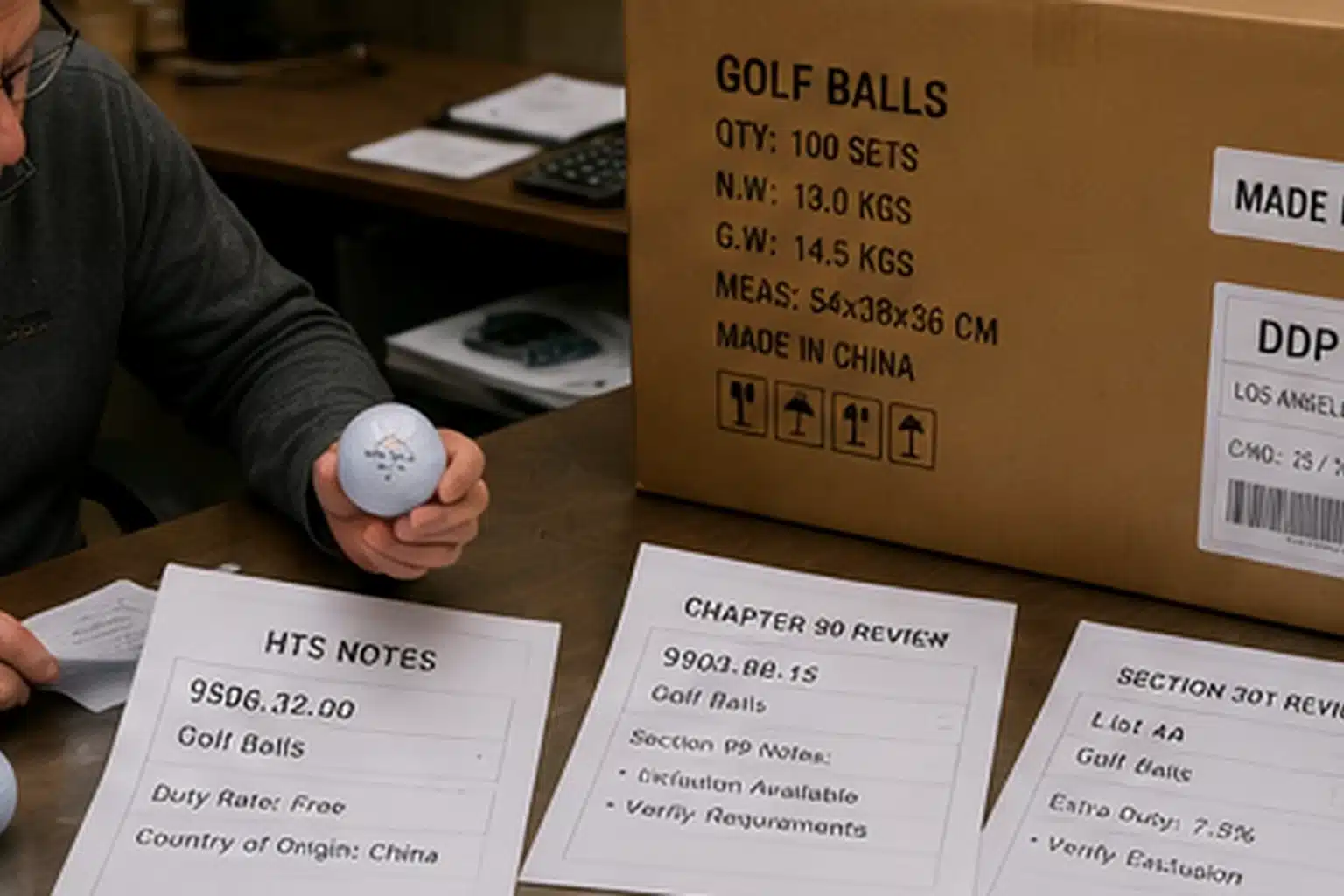
When Is Imported Inventory Really Received?
Inventory becomes operationally received only after the warehouse accepts it and material exceptions are controlled.
Use this chain:
Customs Release → Final-Mile Appointment → Warehouse Receipt → Count Check → Damage / Shortage Check → POD → Exception Closure → Inventory Ready
If receiving finds a problem, create an Exception Record containing:
-
shipment ID;
-
exception type;
-
POD;
-
expected quantity;
-
affected or missing quantity;
-
photo evidence;
-
receiving note;
-
resolution owner;
-
final resolution.
Exception types might include shortage, carton damage, wet damage, wrong label, warehouse rejection, missing carton, delivery discrepancy, or a liftgate/accessorial issue.
UPS cargo-claims guidance shows why receiving evidence matters in practice: supporting claim records can include commercial invoices, packing lists, signed PODs, inspection information, and damage photographs. Visible shortage or damage should be documented when the freight is received rather than reconstructed later.
A clear failure signal is customs already cleared while loading dock, liftgate, appointment, or warehouse receiving requirements are still unknown.
Shipment completion shall require documented delivery to the agreed destination, receiving or proof-of-delivery evidence, and written resolution of any reported shortage, transit damage, or receiving exception linked to the shipment reference.
✔ True — A correct address does not prove the site can receive palletized freight
Receiving readiness includes unloading capability, labels, appointments, expected count, POD requirements, and an exception path—not merely a street address.
✘ False — “Door-to-door DDP means unloading conditions never need to be confirmed”
A delivery arrangement does not remove the physical and operational constraints at the receiving site.
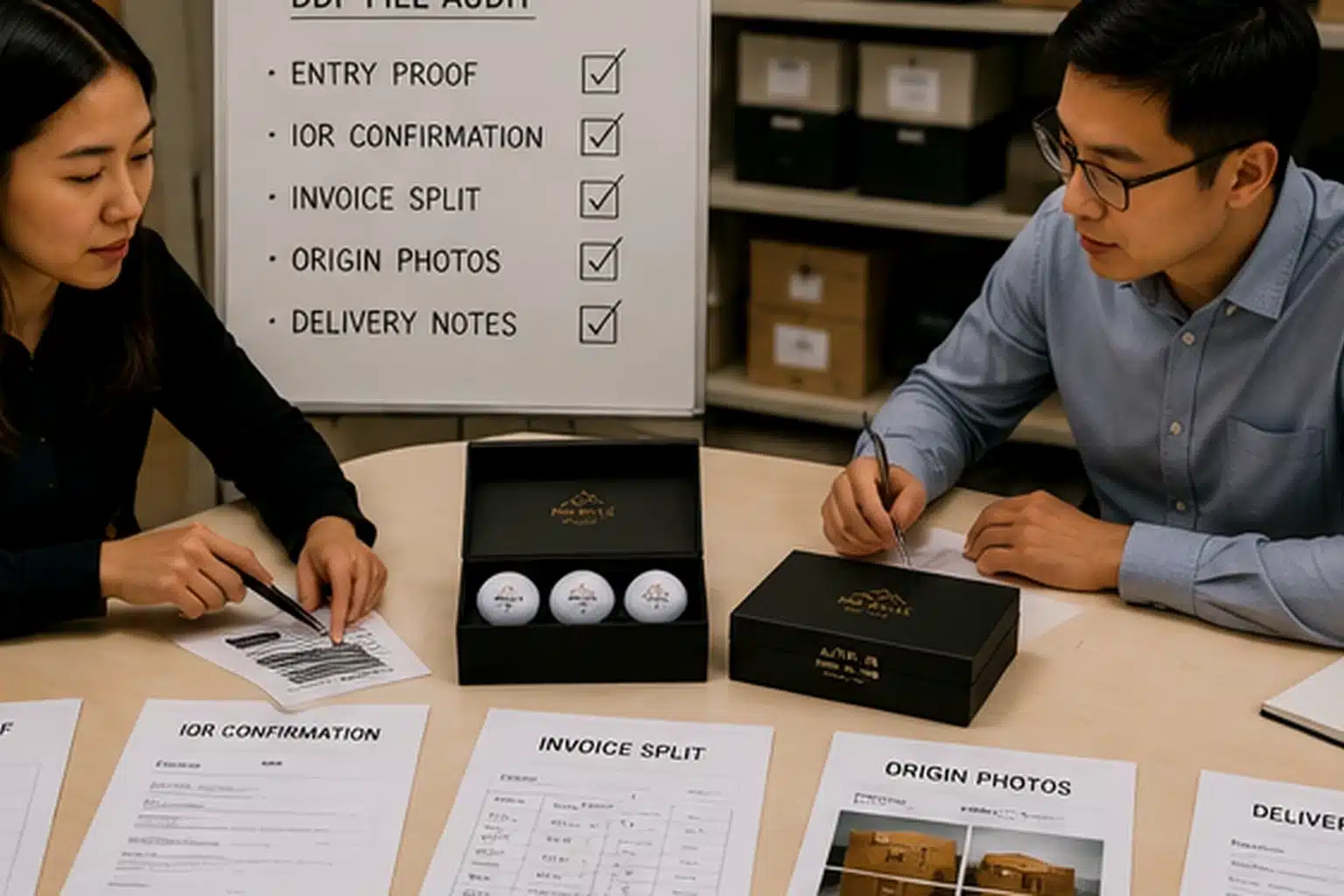
What Records Should You Keep for Reorders?
A shipment can arrive successfully and still leave your sourcing system weak if its final documents, delivery proof, broker records, photos, and exception history disappear into separate inboxes and service-provider portals.
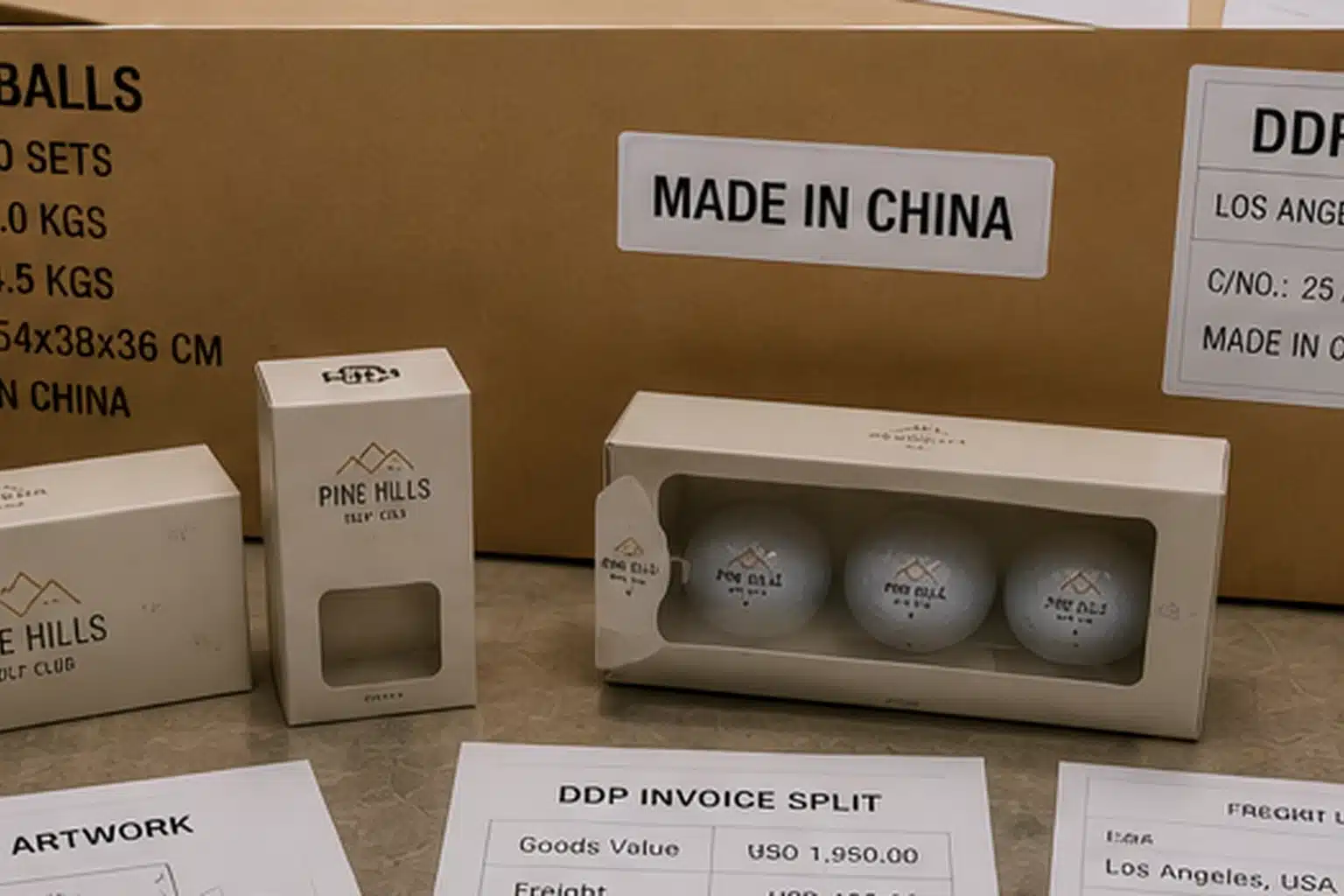
Your first successful import should become the controlled starting point for the next reorder. Keep final commercial documents, clearance evidence where applicable, labels, packing photos, POD, receiving records, exceptions, and resolutions under one shipment reference so your team can reuse the proven workflow and refresh only what changed.
Close the shipment through:
Pre-Release File → Customs File → Receiving File → Exception File → Closed Shipment Record → Reorder Reference
This is not paperwork for paperwork’s sake.
Current CBP recordkeeping guidance states that entry-related records generally need to be retained for five years from the date of entry or the activity that created the record.
Our Closed Shipment Record Pack is an operating framework, not a claim that CBP requires this exact folder structure.
Its purpose is to make the shipment reconstructable.
| Record Group | Keep | Reorder Value | Buyer Action |
|---|---|---|---|
| Commercial | PO, invoice, PL | Baseline order file | Archive final version |
| Execution | transport + release proof | Proven handoff structure | Reuse owners |
| Receiving | POD + count | Confirms inventory receipt | Compare next delivery |
| Exceptions | photos + resolution | Prevents repeat failure | Add countermeasure |
| Reorder notes | changed fields | Shows what must refresh | Update, do not copy blindly |
What Belongs in the Shipment Record Pack?
Keep four functional groups.
Commercial records include the final PO or PI, commercial invoice, and packing list.
Execution records include transport references, current labels, release evidence, and important handoff confirmations.
Receiving records include appointment or receipt evidence where relevant, POD, final count, and warehouse acceptance.
Exception records include shortage, damage, claim support, corrective action, and final resolution.
Then record what should change or be reconfirmed on the next order.
A previous shipment is a reference, not automatic approval for the next shipment.
Refresh dynamic items such as quantity, packaging, labels, route, broker or filer details where applicable, destination, receiving rules, and current customs assumptions.
The buyer-side benefit is simple: the second shipment should start from a controlled operating record, not from somebody searching old email and WhatsApp messages for what happened last time.
The shipment is closed only after final receiving evidence has been filed and any material exception has a documented disposition.
FAQ
Do I Need a Customs Broker to Import Golf Balls?
U.S. importers are not generally required to hire a customs broker, although many commercial importers use licensed brokers because customs filing is specialized. Using a broker does not remove the need to define importer-side responsibility, supplier evidence ownership, and the process for responding to customs questions.
CBP’s Tips for New Importers and Exporters explains that importers may make entry themselves or use a licensed broker. Confirm who provides shipment data, who reviews corrections, and who retains final clearance evidence. Your team does not need to perform the broker’s technical work, but it should know how accurate supplier information reaches the filer.
Do Golf Ball Shipments Need an Import License?
CBP does not require importers to hold a general U.S. import license, although another federal agency may require a permit, license, or certification depending on the merchandise being imported.
For a standard golf-ball shipment, give your broker the exact final item list rather than assuming every promotional configuration follows the same path. If the shipment also contains tees, tools, electronics, food items, chemicals, or other accessories, confirm whether any additional agency requirement applies before release.
For the general U.S. rule on import licenses and permits, see CBP’s Importing: Licenses and Permits guidance.
Who Files the ISF for Ocean Shipments?
The filing arrangement depends on the shipment and responsible parties, so identify the ISF responsible party and filing agent before vessel loading rather than assuming the factory or forwarder owns it automatically. Applicable U.S.-bound vessel shipments require key shipment data to be controlled before cargo moves.
Keep the responsibility in your handoff matrix. Confirm that the required shipment information is available to the filer and retain filing confirmation with the shipment record. Procurement does not need to become an ISF specialist; it does need to prevent the shipment from reaching the loading stage with no clearly assigned filing owner.
Can Golf Balls Ship Directly to Amazon FBA?
Golf balls can be routed to Amazon FBA when the current shipment, boxes, pallets, labels, carrier, and receiving requirements are satisfied. Treat FBA as a shipment-specific receiving system rather than simply another U.S. delivery address on the freight booking.
Use the current Amazon workflow for box IDs, pallet labels where applicable, shipment references, carrier information, and receiving instructions. Match the physical box count to the shipment plan before release. Amazon is one receiving path; a distributor warehouse or 3PL may use different appointment, label, ASN, pallet, or unloading requirements.
What Should I Record If Cartons Arrive Damaged?
Record the exception at receipt while the shipment, packaging, delivery record, and photographic evidence are still available. Link the issue to the shipment ID, POD, affected quantity, photos, receiving note, resolution owner, and final disposition instead of relying on a later email description.
Where appropriate, note visible shortage or damage on the delivery record, photograph the affected cartons and pallets, and preserve the relevant commercial and packing records. Assign one owner to close the issue. A claim or supplier discussion becomes much harder when nobody recorded the quantity and condition at delivery.
What Proof Should I Keep After Delivery?
Keep enough final evidence to show what shipped, what cleared where applicable, what the receiving point accepted, and how any material exception was resolved. Connect the commercial file, transport and clearance references, receiving evidence, and exception history to one shipment ID.
That normally includes final invoice and packing records, transport references, applicable clearance evidence, marking and label proof, carton or pallet photos, POD, receiving count, and shortage or damage resolution. Keep final versions rather than drafts, then add reorder notes showing what should be refreshed on the next shipment.
Conclusion
A successful China-to-USA golf-ball import is not finished when the factory releases the cartons or when customs releases the cargo. It is finished when the documents describe the same shipment, every critical handoff has an owner, the intended receiving point accepts the inventory, exceptions are closed, and the final record can support the next reorder.
Prepare → Assign → Release → Clear → Receive → Archive.
Once your team knows what must happen at each stage, the next decision is when those approvals, handoffs, and delivery milestones must happen.
You might also like — China Golf Ball OEM Lead Time: Mastering Your 2026 Launch Calendar