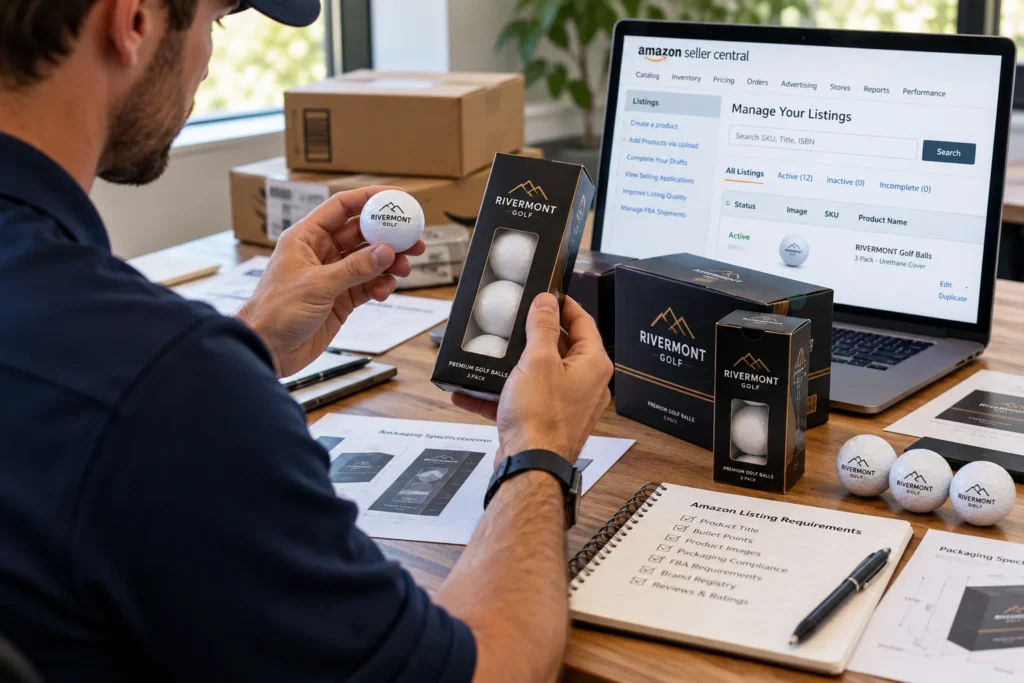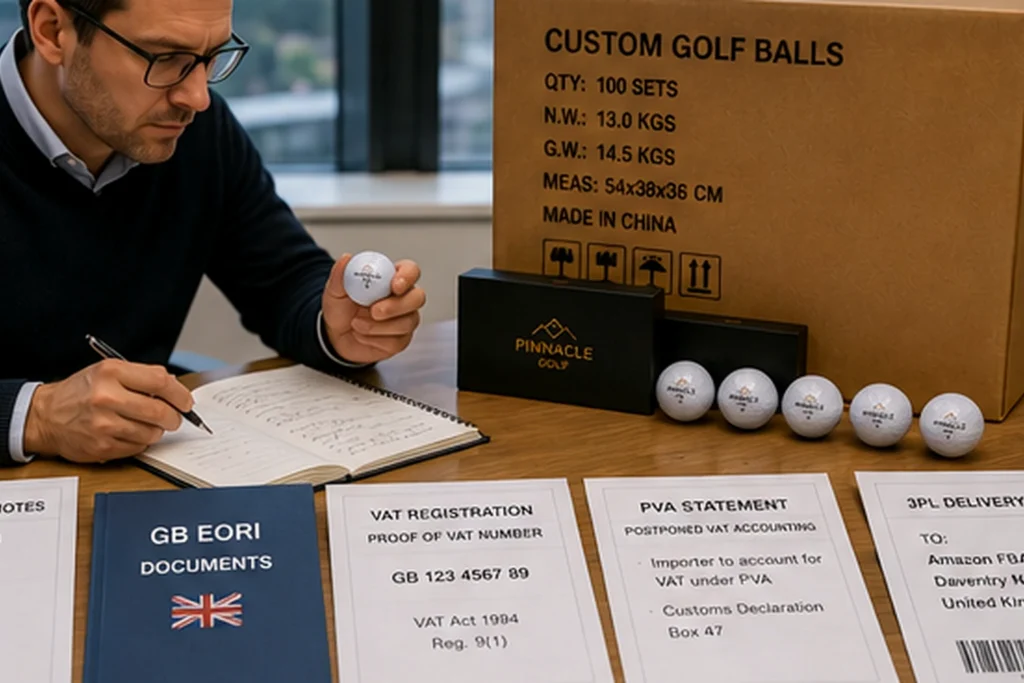
A supplier can promise a warranty before you place the PO and still leave you exposed if the first defect claim is when both sides begin negotiating what “defective” actually means.
A golf ball OEM PO should define the approved specification or sample, covered defect classes, required claim evidence, affected-lot rules, available remedies, related cost responsibility, and corrective-action closure. Without those terms, a warranty period defines only the coverage window—not how a quality claim will actually be decided.
The dispute usually starts with three unanswered questions: Compared with which approved reference? How much product is actually affected? What remedy applies? If your PO cannot answer those questions before production, “quality problems are covered” is not yet an executable warranty.
The goal is not to predict every failure. It is to agree on a process both sides can execute without renegotiating defect definitions, proof, responsibility, and remedy after the problem appears.
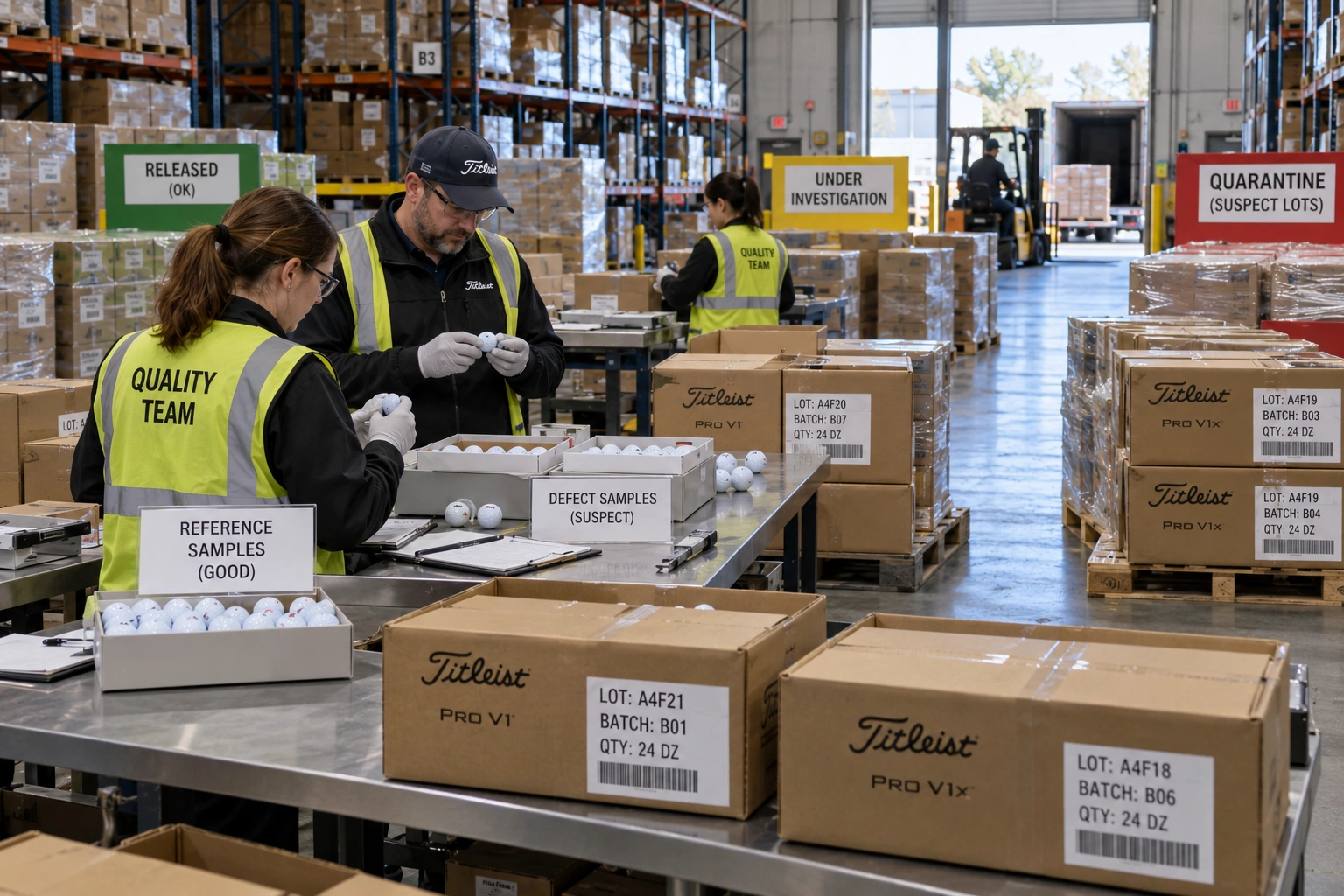
What Defects Should Your Warranty Cover?
“Manufacturing defects are covered” sounds reassuring until a customer reports peeling logos, a color mismatch, damaged packaging, or performance that was never part of the approved product promise.
Your warranty should define covered defects before it defines the warranty period. Separate manufacturing nonconformance from normal wear, misuse, and unsupported performance expectations, then connect every covered defect to the approved specification, sample, artwork, packaging proof, or other reference your supplier is expected to reproduce.
The first question in a golf ball quality dispute is not “Who is at fault?” It is:
Which approved requirement was not fulfilled?
That baseline may include your written specification, approved physical sample or pre-production sample (PPS), artwork revision, color or finish reference, packaging proof, and agreed performance evidence where the product promise depends on a measurable characteristic.
| Buyer decision | Possible defect type | Evidence basis | Warranty action |
|---|---|---|---|
| Construction / material | Wrong approved construction or material | Approved spec / version | Hold and investigate |
| Printing / appearance | Logo, position, or color outside approval | Artwork / approved sample | Classify and document |
| Physical quality | Measurable nonconformance | Agreed method / specification | Investigate affected lot |
| Packaging | Wrong or damaged approved pack | Pack proof / shipment evidence | Define responsibility |
| Normal use | Wear not caused by manufacturing | Use / condition evidence | Review exclusion |
Printing shows why vague warranty language creates trouble. Wrong artwork version, incorrect logo position, unacceptable color deviation, weak adhesion, premature rub-off, or a defined edge-clarity problem can all be investigated against an approved reference. Your PO does not need a printing-process lesson; it needs enough definition to distinguish nonconformance from preference.
The same applies to performance. If you approved a durable practice-oriented ball, a complaint that it does not behave like a different Tour-positioned product is not automatically a manufacturing defect. The warranty protects your approved product promise, not every expectation formed after delivery.
Customer complaint ≠ automatically manufacturing defect. A complaint starts an investigation; it does not replace the acceptance reference.
The American Society for Quality’s supplier-quality guidance describes supplier quality management as a proactive, collaborative process and emphasizes conformance to pre-established requirements. For an OEM buyer, that reinforces why the PO, approved sample, and acceptance references should sit inside the warranty architecture rather than beside it.
A supplier saying “defects covered” without defining defect classes or approved references is a failure signal. If the real question becomes how that physical benchmark should be established, use the approved golf ball sample and PPS workflow rather than turning the warranty into a sampling SOP.
Buyer and supplier shall define the covered defect classes and the approved specification, sample/PPS, artwork reference or agreed verification method used to determine nonconformance before production begins.
Your PO should enter production with an Approved Reference + Defect Classification already agreed.
✔ True — Warranty scope belongs to an approved product definition
A claim is easier to investigate when both sides can point to the same specification, sample, artwork, packaging version, or agreed performance reference.
✘ False — “Every customer complaint automatically proves a manufacturing defect”
A complaint identifies a condition to investigate. Responsibility still depends on the agreed requirement, evidence, affected population, and cause.
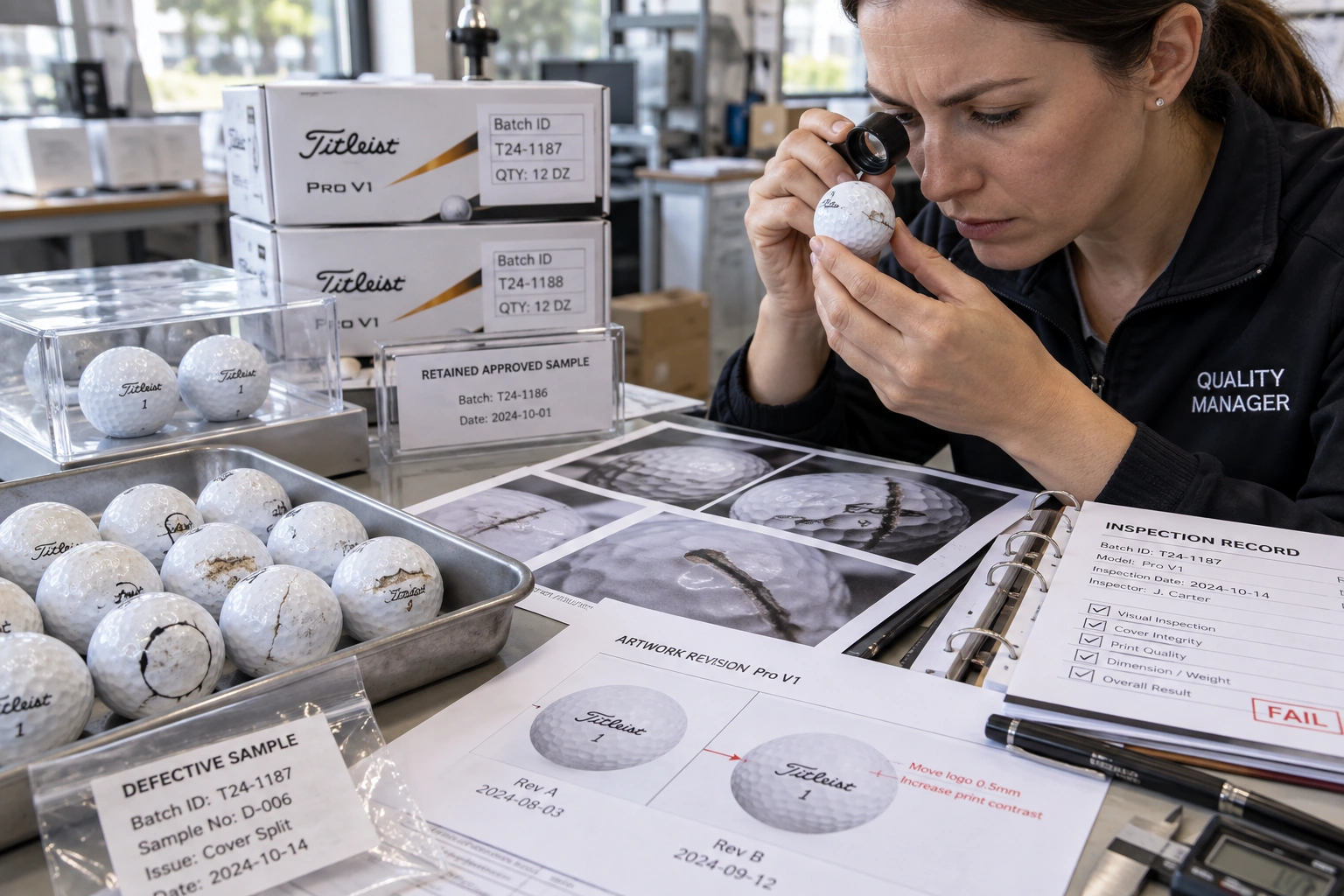
What Evidence Should Support a Warranty Claim?
You can hold an obviously defective ball in your hand and still have a weak commercial claim if nobody can identify which approved version, carton, lot, or production history it belongs to.
A golf ball warranty claim becomes stronger when the defect is tied to a specific approved version and production lot. Your PO should define the minimum evidence needed to connect the complaint, affected quantity, shipment identity, and supplier records before either side starts arguing about responsibility.
A useful Claim Evidence Pack should let your team move from:
We found bad balls
to:
These units came from this shipment and lot, were made against this approved version, show this condition, and can be compared with this agreed requirement.
Preserve the shipment or carton identity, batch or lot ID, approved sample/PPS, relevant artwork revision, observed affected quantity, photos, disputed or retained physical samples, applicable QC or release record, and discovery context when it matters.
Then match the evidence to the complaint.
Photo evidence documents what you saw. Measurement evidence helps determine whether the product actually falls outside the agreed specification.
A wrong logo may be established by artwork comparison. A color or surface complaint may rely on an approved physical reference. A compression, dimension, concentricity, or durability dispute may require measurable evidence.
For measurable claims, preserve the evidence architecture rather than only a pass/fail conclusion:
Method + Sample Identity + Batch Identity + Relevant Equipment / Calibration Context + Auditable Result
That does not mean your warranty should teach compression testing, X-ray procedures, or sampling plans. Those questions belong in golf ball QC and batch verification.
The supplier must also be able to work backward from the same identity. If your carton shows a specific lot, the factory should be able to retrieve the corresponding production version and relevant inspection or release records.
A supplier that demands photographs but cannot trace its own records to the implicated batch is a failure signal.
Preserve disputed samples with their lot identity before sorting, return handling, repacking, or redistribution can mix or break the evidence trail.
Use this once during quotation review:
Please provide your written warranty-claim requirements, including covered defect definitions, required claim evidence, batch/lot traceability method, available remedies, freight responsibility and corrective-action process.
Supplier shall link each warranty claim to the approved product version, shipment identity and applicable production batch or lot, with records sufficient to trace the affected units to the relevant inspection and production evidence.
A strong Claim Evidence Pack defines what you must preserve and what the supplier must be able to retrieve before the dispute occurs.
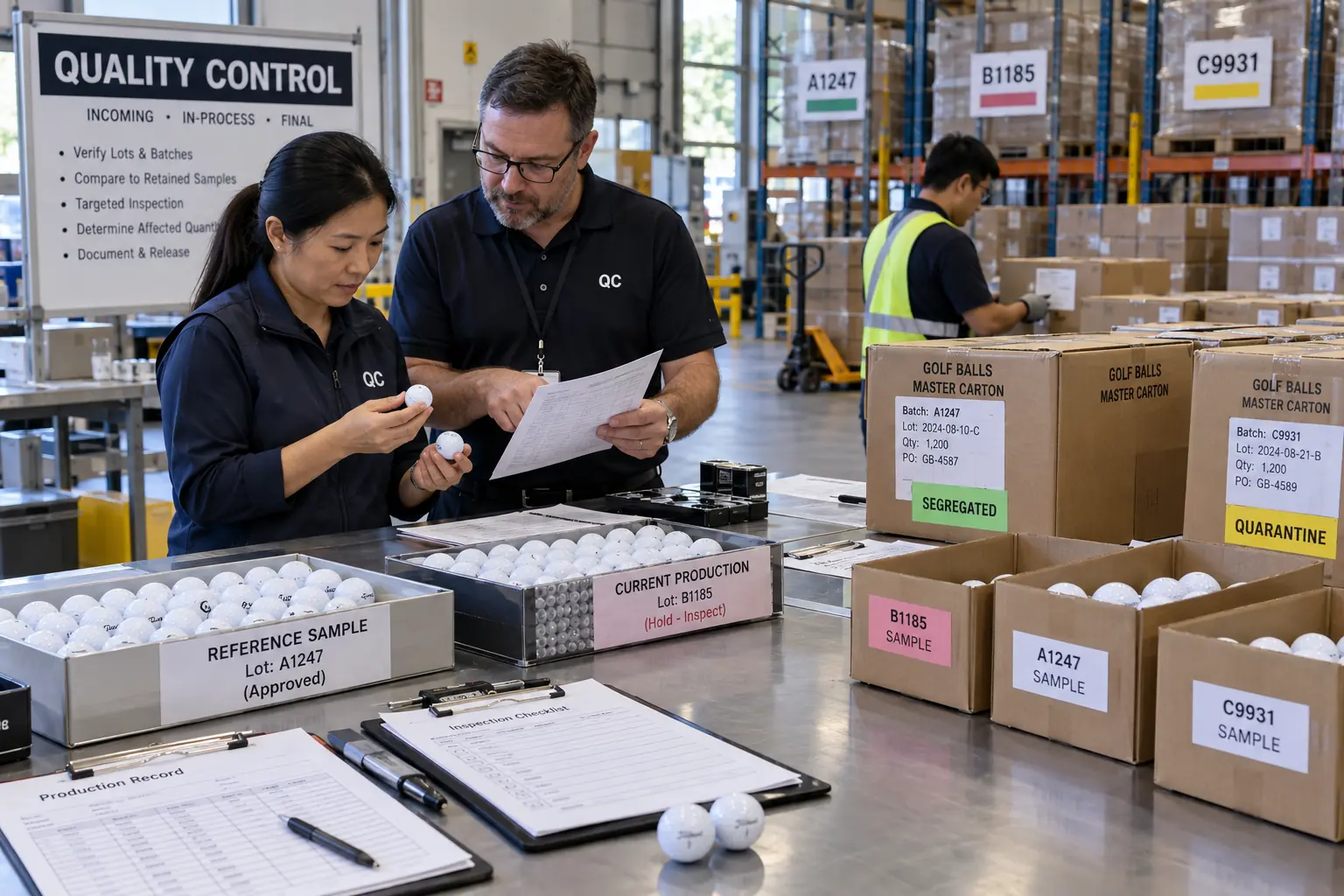
How Should You Define the Affected Lot?
One failed ball can trigger two bad reactions: “It is only one ball” or “the whole shipment is defective.” Neither conclusion is safe before you understand the scope.
Do not decide the remedy quantity before you know the affected population. Use lot identity, retained references, production records, segregation, and targeted inspection to determine whether the issue is isolated, carton-level, batch-level, or potentially systemic before you accept or reject a broader quantity.
Use this sequence:
Observed Defect → Lot Identity → Segregation → Targeted Inspection → Affected Population
Then:
Affected Population → Remedy Quantity
| Observed problem | Scope question | Evidence to check | Buyer action |
|---|---|---|---|
| Single-unit defect | Isolated or repeated? | Lot / retained-reference comparison | Contain and check |
| One-carton pattern | Carton issue or batch issue? | Carton + batch identity | Widen inspection |
| Multiple cartons | Common lot or process? | Production / release records | Hold affected population |
| Repeated failure | Potential systemic cause? | Process / root-cause evidence | Escalate corrective action |
Segregate suspect inventory early so its identity does not disappear into fulfillment, retail distribution, or mixed warehouse stock. Then look for commonality: shared batch, artwork revision, process route, production period, retained sample, or release record.
The commercial question is:
How much product can the evidence reasonably connect to this failure?
The answer may be one unit, one carton, part of a batch, the full batch, or a broader population linked by a common cause. No universal sampling rule should predetermine that answer.
Request an Affected-Lot Assessment before final disposition. It should state which population is suspected, what evidence widened or narrowed the scope, and what quantity moves into the remedy decision.
✔ True — Lot scope should be evidence-based
Carton identity, batch records, retained references, common process history, and targeted inspection can show whether a failure is isolated or part of a wider affected population.
✘ False — “One defective golf ball proves the entire shipment failed”
One failure is enough to investigate. It is not automatically enough to determine the remedy quantity for every unit shipped.

Which Remedies Should You Agree Before Production?
A supplier can promise “free replacement” and still leave nearly every difficult commercial question unanswered until your inventory and customer relationship are already exposed.
A useful warranty defines the remedy before either side knows which remedy will be needed. Agree how confirmed defects can lead to rework, remake, replacement, concession, rejection, or credit, and state how related freight, sorting, and inspection costs will be reviewed instead of assuming product value settles the entire loss.
The PO does not need one automatic remedy for every defect. It needs a Remedy Matrix that tells both sides what options exist, what evidence triggers them, who approves disposition, and how the confirmed affected quantity is established.
| Defect situation | Possible remedy | Evidence needed | Buyer action |
|---|---|---|---|
| Correctable before release | Rework + reinspection | Disposition record | Approve only after pass |
| Failed / missing quantity | Remake / replacement | Confirmed affected count | Define replacement scope |
| Usable deviation | Concession / credit | Written buyer acceptance | Document concession |
| Serious nonconformance | Reject / replace / credit | Lot-level evidence | Apply agreed remedy basis |
Technical disposition and commercial compensation are related, but they are different decisions. Affected units might be segregated, reworked, scrapped, remade, replaced, or accepted under a documented concession. The commercial settlement may separately involve credit, replacement, or another agreed adjustment.
In August 2024, final QC on a 24,000-ball 2-piece Surlyn order identified 982 balls with a printing nonconformity. We segregated and scrapped all 982 affected balls, produced 1,200 replacements, reinspected the replacement quantity, and released the batch only after the corrected output passed. The schedule moved by about two days. The warranty lesson is the documented path from affected quantity through disposition, remake, reinspection, and final release.
A confirmed defect needs a disposition path, not just a promise to “make it right.”
That case does not establish a universal remedy for printing defects. The defect class, confirmed scope, product condition, acceptance criteria, and agreed remedy still control the decision.
Cost responsibility also needs more precision than “free replacement.” Who pays for sorting or reinspection where required? What happens to rejected inventory? If urgent replacement freight becomes necessary, how will that responsibility be reviewed?
Do not invent a universal rule that the supplier always pays every related freight cost. Responsibility can depend on cause, agreed remedy, shipping arrangement, contract language, and governing jurisdiction.
A credit equal to product FOB value can also leave freight, receiving, inspection, or replacement exposure unresolved. If that broader question matters, use the landed-cost guide’s defect-cost framework rather than assuming FOB value equals the buyer’s total loss.
Payment protection does not replace warranty protection. Deposit and balance controls belong in the golf-ball OEM payment-protection process.
A supplier promising replacement while affected quantity, related costs, and corrective-action closure remain undefined is a failure signal.
Before deposit, agree a written Remedy Matrix linking defect classification, affected quantity, disposition authority, available remedies, and responsibility review.
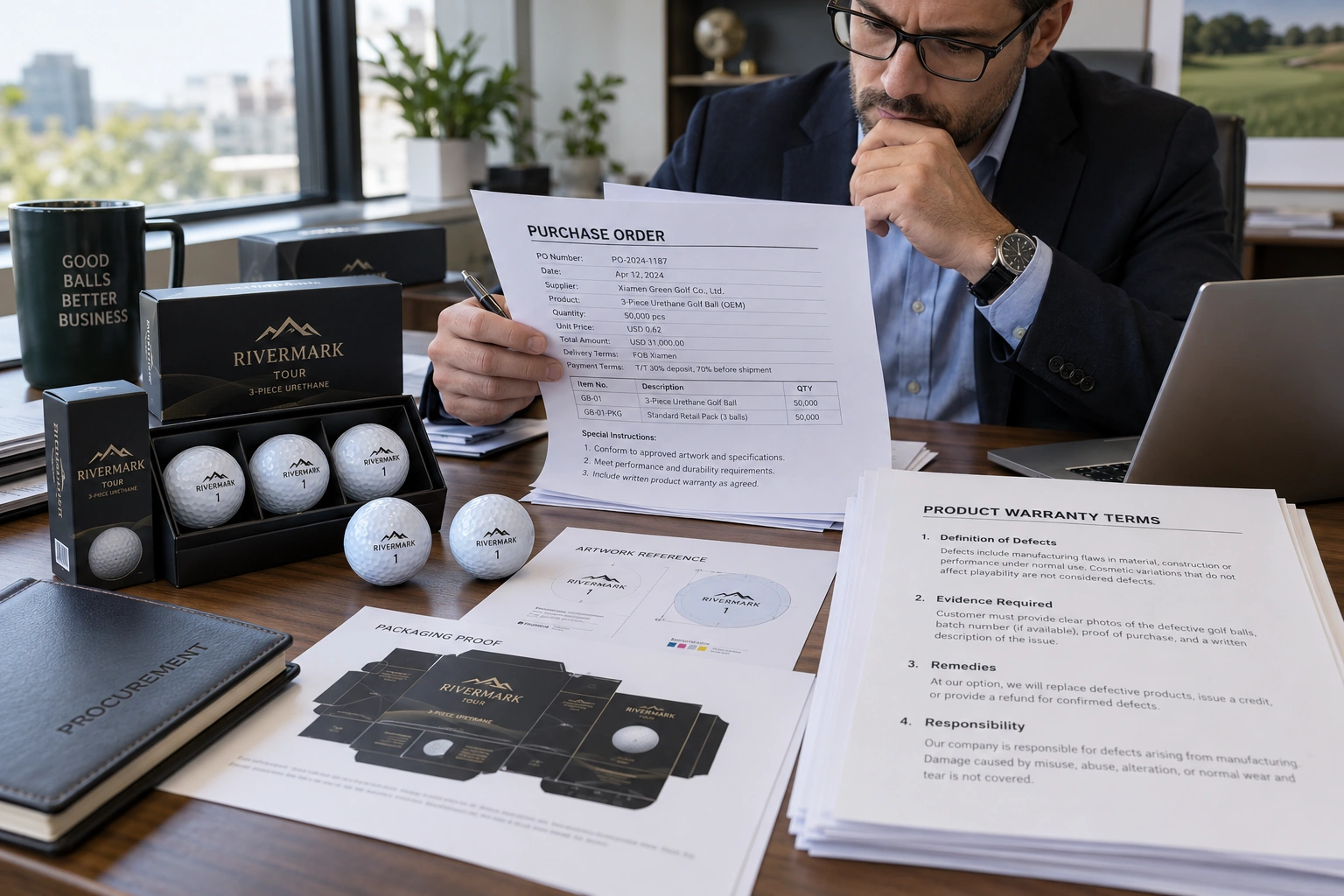
How Should Corrective Action Close the Dispute?
Your replacement shipment can arrive and your credit memo can be booked while the process that created the original defect remains unchanged.
Replacement closes the immediate commercial problem; corrective action should close the recurrence risk. Before you treat a quality dispute as finished, ask what caused the failure, what changed, how that change was verified, and whether your next reorder needs additional evidence or revalidation.
This is the distinction many supplier warranties miss:
Commercial Remedy ≠ Corrective Action
Sorting, replacement, rework, or credit addresses the current problem. Corrective action addresses the cause so the same failure is less likely to return.
A useful closure should answer what failed, what quantity was affected, what happened to those units, why the failure occurred, what immediate correction or containment occurred, what process or control changed, how the change was verified, and whether the next PO needs a different control.
The sequence is:
Containment → Cause → Correction → Corrective Action → Verification → Closure
The ASQ article on supplier corrective action requests (SCARs) describes a similar path through containment, root-cause corrective action, implementation, effectiveness, and closure. That distinction matters because a supplier can resolve the immediate shortage before it has resolved the recurrence risk.
Suppose printed logos begin wearing prematurely. Segregating suspect stock contains the exposure. Replacing the affected balls corrects the immediate commercial problem. Neither action proves why adhesion failed.
If the supplier then changes a relevant control, the next question is:
Did the change work?
For a defect with recurrence risk, request a Corrective-Action Closure linked to the affected process or product version. It should identify the cause, changed control, implementation evidence, and how corrected output was verified.
When that correction must carry into the next production run, move to your repeat-order consistency process so the previous batch, retained reference, corrective action, and new production evidence stay connected.
The final buyer question is not only:
Did the supplier compensate us?
It is:
Will this happen again, and what evidence will protect your next PO?
✔ True — A supplier can compensate you before the underlying process is fully corrected
Replacement or credit can close the immediate commercial claim. Corrective-action closure should address the cause, changed control, verification, and recurrence risk where the defect warrants it.
✘ False — “Replacement proves the root cause has been corrected”
Replacement tells you the immediate buyer problem was addressed. It does not prove that the manufacturing cause was identified, corrected, and verified as effective.
FAQ
Should a Golf Ball OEM Warranty Start at Shipment or Delivery?
There is no universal start point for every golf ball OEM warranty. Your PO should define the trigger explicitly and identify objective evidence showing when shipment, delivery, warehouse receipt, or another agreed event occurred.
Avoid undefined phrases such as “from order date” unless deliberately negotiated. Governing law and contract facts can also affect legal rights and notice obligations, so commercial and legal terms should be reviewed for the applicable jurisdiction.
Does Passing PSI Cancel the Supplier’s Warranty Responsibility?
No—not automatically. Pre-shipment inspection (PSI) addresses the agreed inspection scope before release the agreed inspection scope before release; warranty responsibility can cover different evidence, timing, or conditions discovered after shipment.
Keep batch-linked PSI or release records because they may become useful claim evidence later. A passed PSI does not invalidate every later complaint, just as a later complaint does not automatically prove the PSI failed.
Who Should Pay Replacement Freight for Confirmed Defects?
Replacement-freight responsibility should be agreed before production rather than assumed after the claim. It can depend on defect cause, affected quantity, agreed remedy, shipping arrangement, contract wording, and governing jurisdiction.
Separate original freight, return freight, replacement freight, and expedited rescue freight. Define how responsibility will be reviewed instead of assuming the original Incoterm or FOB value automatically answers a later defect remedy.
Can Logo Defects Use the Same Warranty as Performance Defects?
They can share one claim framework, but they may require different acceptance evidence. Printing, color, and placement claims can rely on approved artwork or physical references, while measurable performance claims may require relevant test evidence.
Keep the same architecture—approved reference, batch identity, evidence, affected population, and remedy—while using the verification method appropriate to the defect class.
What If Only Part of the Shipment Is Defective?
Do not automatically accept or reject the full shipment. Determine the affected population through traceability, segregation, common lot or batch identity, production evidence, and appropriate additional inspection before deciding remedy quantity.
An isolated unit may remain isolated; a repeated pattern may justify widening the investigation. Preserve suspect inventory identity and document why the final scope was narrowed or expanded.
Should Repeat Orders Use the Same Warranty Terms?
The framework can remain applicable when the approved production version and commercial agreement remain unchanged, but prior corrective action or a material change may require the references, evidence, or acceptance terms to be reviewed.
A reorder should not rely on “same as last time” after a quality case. Carry the corrected baseline, approved reference, and relevant corrective-action requirements into the next PO.
Conclusion
A useful golf ball OEM warranty is not just a number of days. It is a written system for defining a defect, proving the claim, identifying the affected population, applying an agreed remedy, and preventing the same manufacturing problem from returning.
Before production, your PO or quality annex should already answer what was approved, what counts as nonconformance, what evidence supports a claim, how lot scope will be defined, which remedies are available, how related responsibility will be reviewed, and what closes corrective action.
The strongest warranty is the one both sides can execute without renegotiating the rules after the problem appears.
Corrective action should not end with the replacement shipment. Carry the approved correction, retained reference, batch evidence, and applicable change controls into your repeat-order consistency process.
You might also like — Why Do Reordered Golf Balls Feel Different?