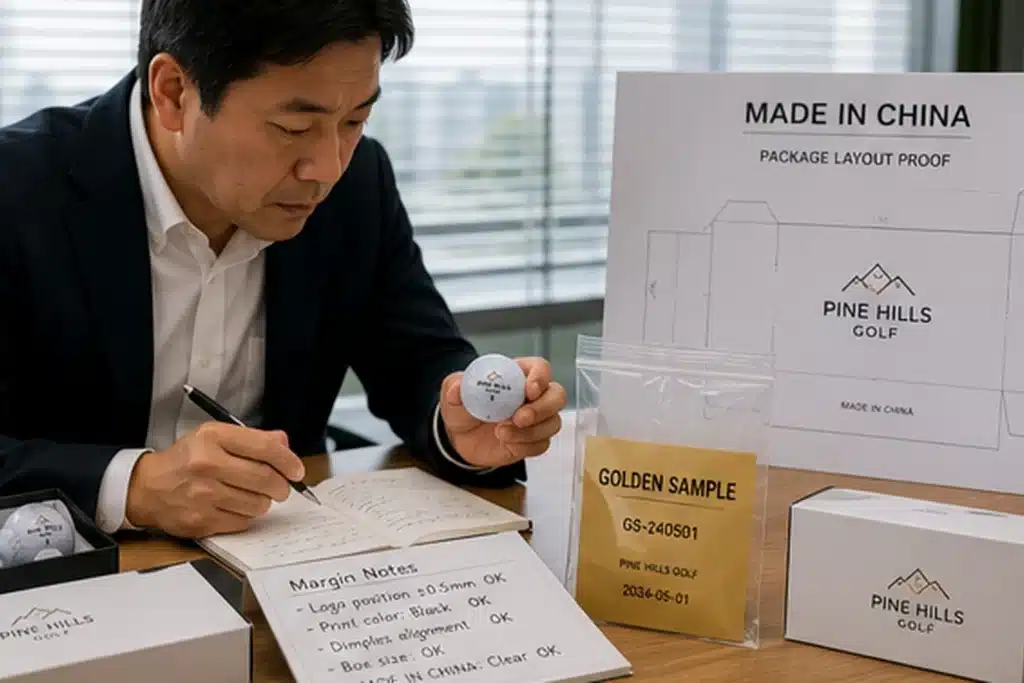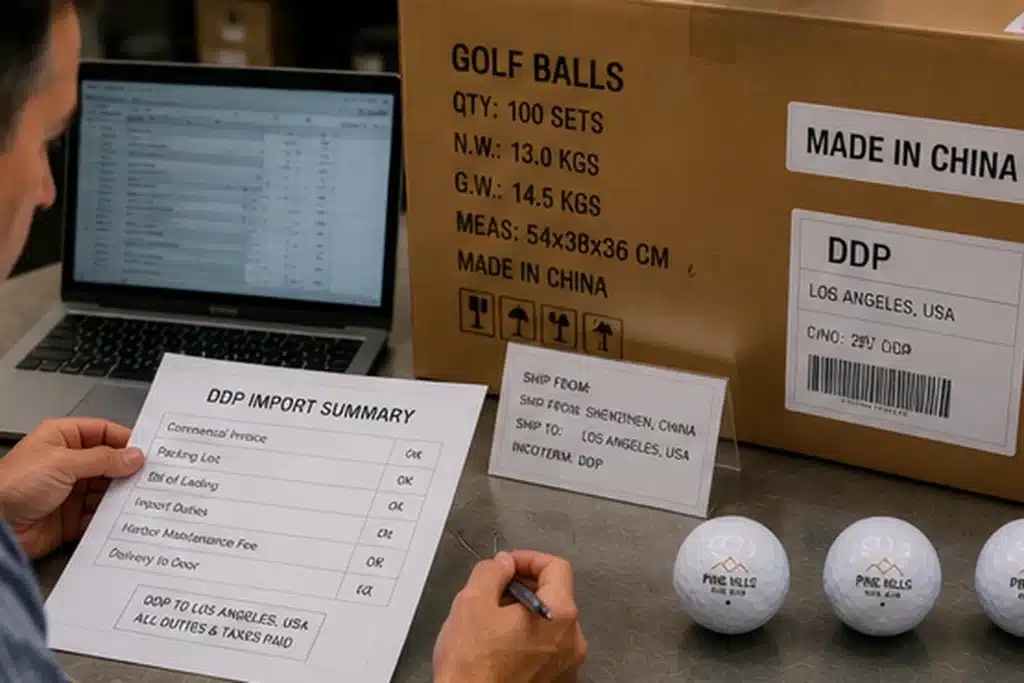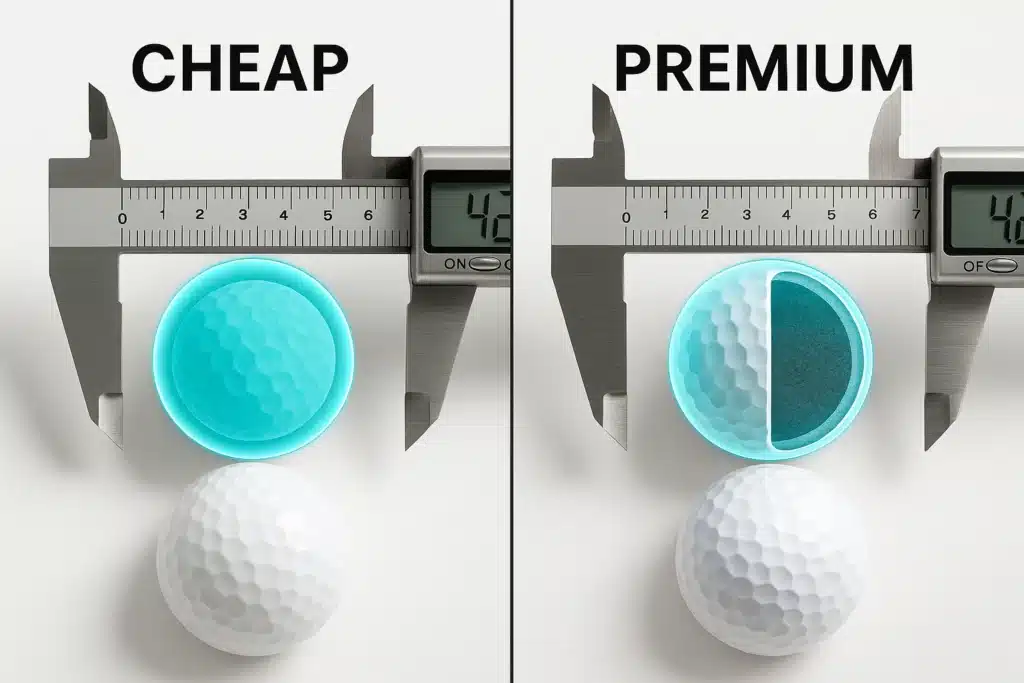
Are cheap golf balls less consistent? Not necessarily. Cheap golf balls are not automatically less consistent than premium balls; unverified golf balls are. For OEM buyers, the real question is whether the supplier can prove compression spread, weight, diameter, cover durability, coating control, batch ID, retained samples, and 12-ball QC data.
A value golf ball can be stable when the lower price comes from simple construction, mature tooling, efficient production, and controlled QC. A premium golf ball can still create risk if the supplier only provides a good sample sleeve, premium packaging, or one clean average compression number without raw values, standard deviation, range, retained sample ID, and change-control notes.
Before approving cheap vs premium golf balls, your team should verify:
-
Whether consistency is measured by raw data, not one sleeve sample.
-
Whether the lower price comes from efficient construction or risky shortcuts.
-
Whether compression spread, weight, diameter, cover hardness, coating, logo durability, and lot control are documented.
-
Whether the supplier can provide a 12-ball QC report with raw values, average, standard deviation, range, batch ID, and retained sample ID.
-
Whether value or premium construction fits the channel promise your buyers actually sell.
-
Whether future reorders are protected by retained samples, batch records, and buyer-approved change-control terms.
Use this guide to decide when a value ball is commercially safe, when premium proof is worth paying for, and what QC evidence should appear before bulk approval.
What does consistency mean for OEM buyers?
You may hear consistency and think about feel, distance, or one good sample sleeve, but OEM risk starts when the approved window fails in bulk.
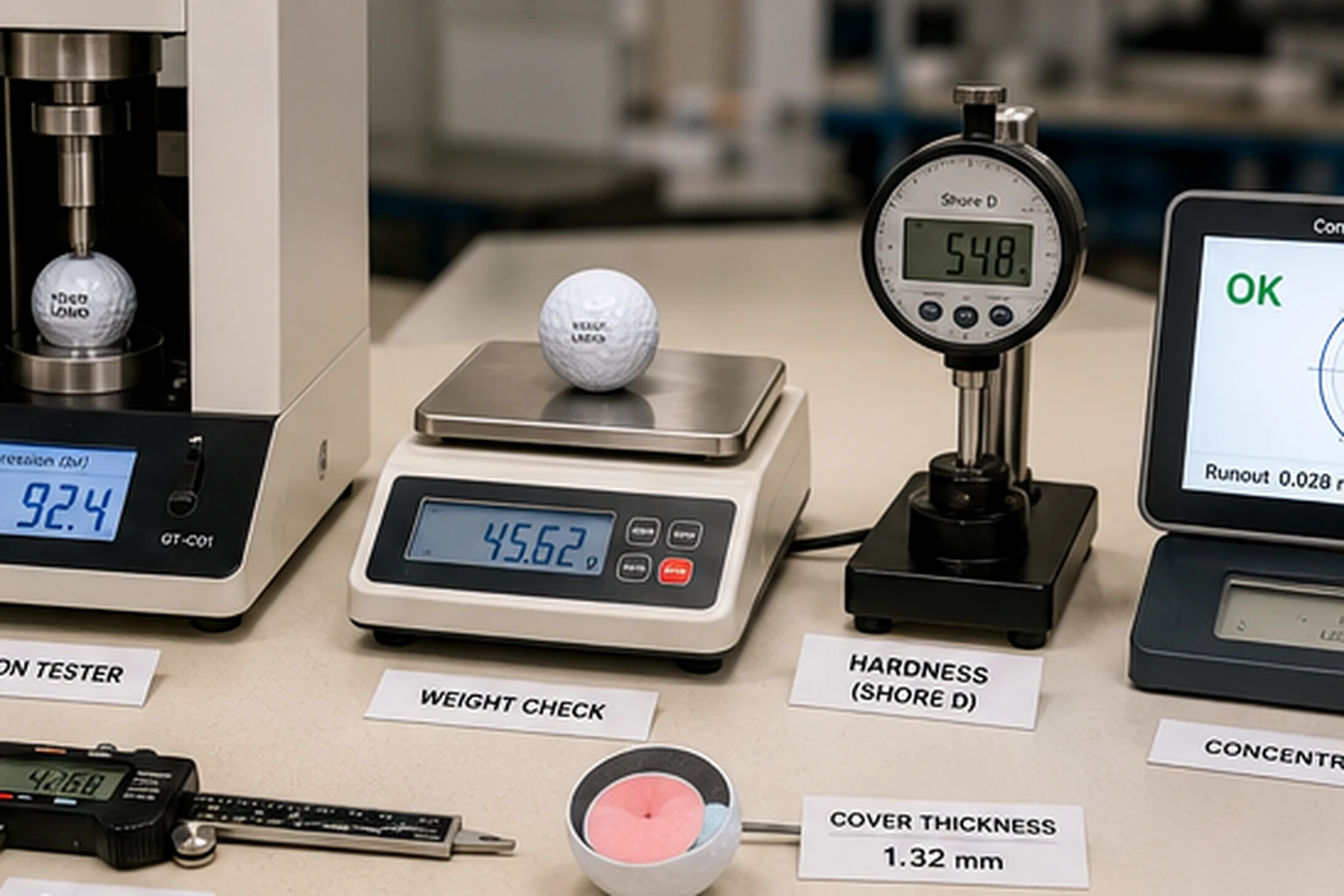
Consistency is not one feeling; it is a set of measurable controls. Your team should compare compression spread, weight, diameter, cover hardness, cover thickness, concentricity, dimple/coating notes, logo durability, and lot-to-lot control before approving value or premium balls.
What should buyers measure first?
A consistent golf ball is not just one ball that feels good. It is a batch that repeats the approved sample window across production, shipment, and reorder lots.
For OEM golf ball quality, the useful question is not “cheap or premium?” It is “can the supplier prove the lot stays inside the approved window?” Compression spread affects feel and launch feedback. Weight and diameter support baseline consistency. Cover hardness and cover thickness influence feel, scuff behavior, and durability. Dimple and coating notes help connect surface control to flight and appearance. Logo durability matters for corporate gifts and promotional balls because the brand mark is part of the delivered product.
Rule-level conformance is a baseline, not batch consistency. A ball can meet broad equipment-rule requirements and still show too much batch spread for your SKU promise. Independent Ball Lab quality and consistency testing also treats golf ball quality as measurable variables, including weight, diameter, and visual inspection.
| Consistency area | Buyer symptom | What to measure | Weak proof | Buyer action |
|---|---|---|---|---|
| Compression | Feel and launch drift | Raw values + avg/SD/range | One claimed number | Compare spread |
| Weight / diameter | Flight and baseline risk | Individual measured values | Pass/fail only | Inspect lot |
| Cover hardness | Feel and scuff behavior | Shore D record | Feel claim | Match sample |
| Cover thickness | Durability and response | Method note or thickness data | Looks normal | Request proof |
| Concentricity | Flight stability | X-ray/CT or method note | No layer proof | Use for hero SKU |
| Dimple/coating | Flight and surface drift | Tool/finish notes | Dimple count only | Tie to batch |
| Logo durability | Gift/promo complaints | Adhesion/rub note | Nice photo | Inspect print |
| Lot-to-lot | Reorder changes | Batch ID + retained sample | Verbal promise | Lock controls |
Request a consistency proof matrix before sample approval. Compare approved sample, pre-production sample, first-article report, and retained sample. Do not approve consistency claims from price, packaging, or one sample sleeve alone.
✔ True — Consistency should be measured by QC data
A value ball and a premium ball should both be judged by measurable spread, batch records, retained samples, and agreed acceptance criteria.
✘ False — “Premium packaging proves tighter production”
A premium sleeve, glossy box, or tour-style message is positioning. It is not proof of compression control, cover durability, or reorder stability.
Are cheap balls riskier, or just less verified?
You may assume cheap golf balls are risky and premium balls are safe, but that shortcut can reject a stable value SKU or approve an expensive unverified batch.
Cheap golf balls are not automatically less consistent; unverified golf balls are. A value ball can be stable when savings come from simple construction and efficient production, but it becomes risky when the supplier cannot prove the batch.
When is a value ball acceptable?
A value ball is acceptable when its proof level matches your channel risk. Low price is not the problem; unexplained low price is.
Lower price can come from simple 2-piece construction, mature tooling, efficient production, lean overhead, standard finish, or a factory-direct workflow. Those are not automatic red flags. In fact, a simpler construction can be easier to control when the process is mature and the inspection plan is clear.
Consumer content often discusses budget golf balls by price, durability, construction, and performance priorities, which shows the search demand is real. But OEM buyers need a different filter: is the ball lower-cost because the design is efficient, or because the supplier has loosened sorting, changed material, reduced inspection, mixed lots, or skipped retained samples?
A value ball with batch-linked data can be safer than a premium-looking ball with no compression spread, cover route, retained sample, or change-control note. Ask what the price is removing: unnecessary complexity, or necessary control?
| Buying signal | Safe interpretation | Risky interpretation | Evidence to request | Buyer action |
|---|---|---|---|---|
| Low unit price | Efficient construction | QC shortcuts | Process note + QC data | Verify savings |
| Simple 2-piece route | Stable value design | Low proof route | Batch report | Check repeatability |
| Existing mold | Mature tooling | Worn mold | Tooling/inspection note | Ask condition |
| Standard coating | Controlled finish | Unknown coating change | Coating note | Lock finish |
| Premium sleeve | Brand position | Packaging masks weak proof | Lot data | Separate box from ball |
| Bulk value SKU | Channel fit | Mixed-lot risk | Batch ID | Block mixed lots |
Ask the supplier to explain where price savings come from. Check whether savings come from design efficiency or weak sorting, coating, lot control, and final inspection. Accept value balls only when proof level matches your channel risk.
Which shortcuts create real batch drift?
You may focus on price while the real consistency risk enters through undocumented material, process, coating, lot, or inspection changes.
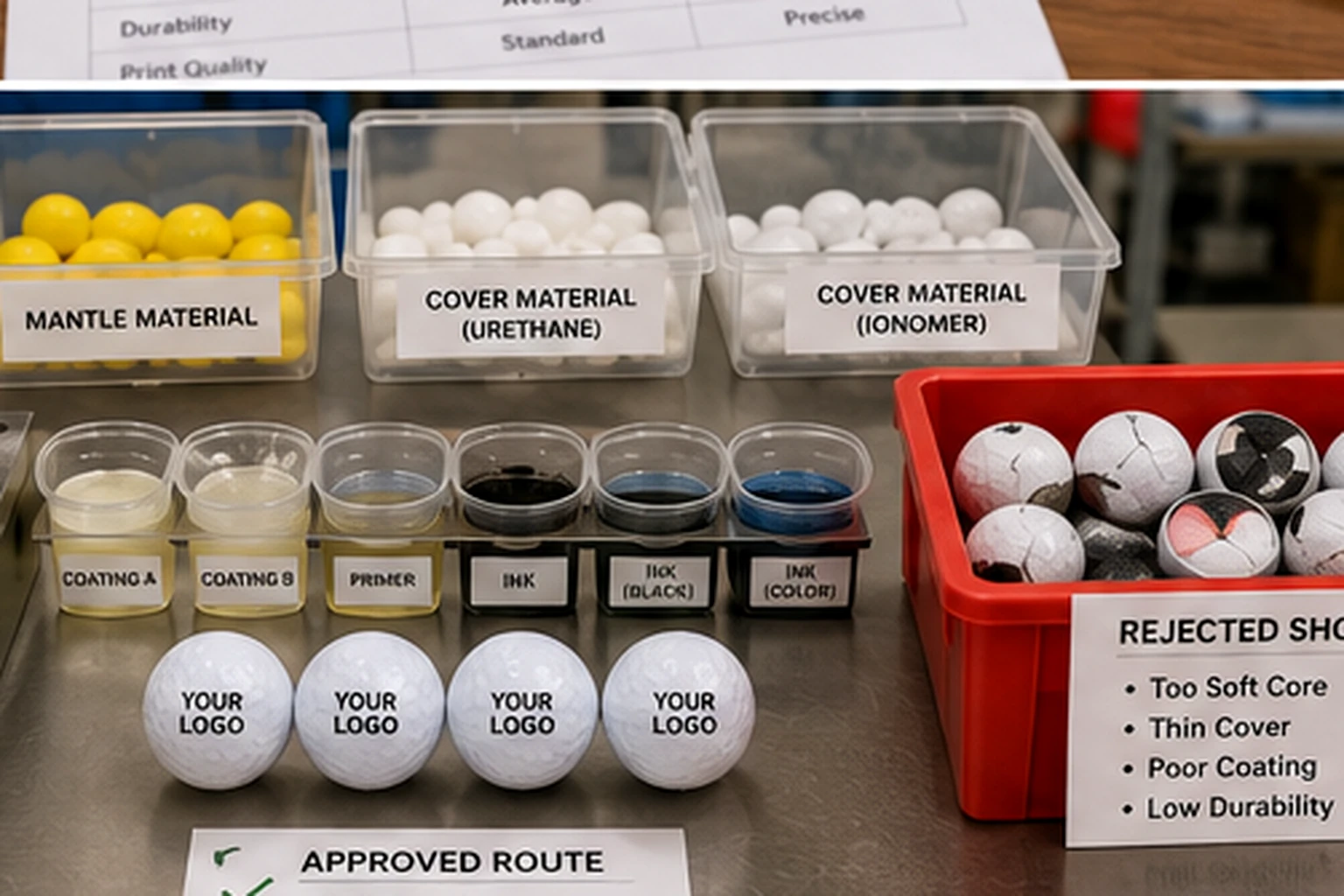
The biggest low-price risk is not the word cheap; it is undocumented drift. Your risk rises when suppliers loosen sorting, change materials, use worn molds, alter coating, mix lots, or skip retained samples without written control.
What changes without a record?
Not every cost saving damages consistency. The dangerous shortcuts are the ones that change the ball without leaving a traceable record.
Safe value engineering can mean simpler construction, mature molds, standard finish, same model/lot control, and efficient production. Risky shortcuts are different. Loose compression sorting can change feel and launch. A material grade change can affect durability or response. Core curing drift can shift hardness. Worn molds can affect diameter, seam quality, and appearance. Coating changes can affect gloss, surface feel, logo survival, and scuff behavior.
For promotional programs, logo survival is part of consistency proof. A low-cost ball that loses its logo, fades, or scuffs too quickly can create brand complaints even if the body of the ball looks acceptable. A low quote with no batch ID or retained sample is a failure signal because nobody can prove what changed later.
| Cost move | Safe value engineering | Risky shortcut | Evidence to request | Buyer action |
|---|---|---|---|---|
| Construction | Simple stable 2-piece route | Unverified material swap | Material route note | Lock route |
| Compression | Controlled sorting window | Loose sorting | Raw values + spread | Compare distribution |
| Mold use | Mature inspected mold | Worn mold | Tooling/inspection note | Ask proof |
| Coating | Standard controlled finish | Unknown coating change | Coating/curing note | Lock finish |
| Printing | Simple logo with proof | Weak adhesion/clearcoat | Logo durability check | Test print |
| Lot handling | Same lot or controlled lot plan | Mixed shipments | Batch ID | Block mixing |
| Inspection | Defined final check | Thin inspection | Defect criteria | Request report |
| Change control | Written approval rule | Silent change | Change-control note | Write PO term |
Request a shortcut-risk explanation for any unusually low quote. Compare material, tooling, coating, lot ID, final inspection, and retained sample records. No material, tooling, coating, print, or inspection-plan change should be made without written buyer approval.
✔ True — Cheap becomes risky when process control is weak
A lower-cost ball can be stable when savings come from simple construction and efficient production. It becomes risky when changes are undocumented.
✘ False — “Every cost saving damages consistency”
Good value engineering removes unnecessary cost while keeping the production window stable. Your job is to verify where the savings come from.
What QC proof separates value from risky cheap?
You may receive a clean sample sleeve or one average compression number, but neither tells you whether the batch is stable.
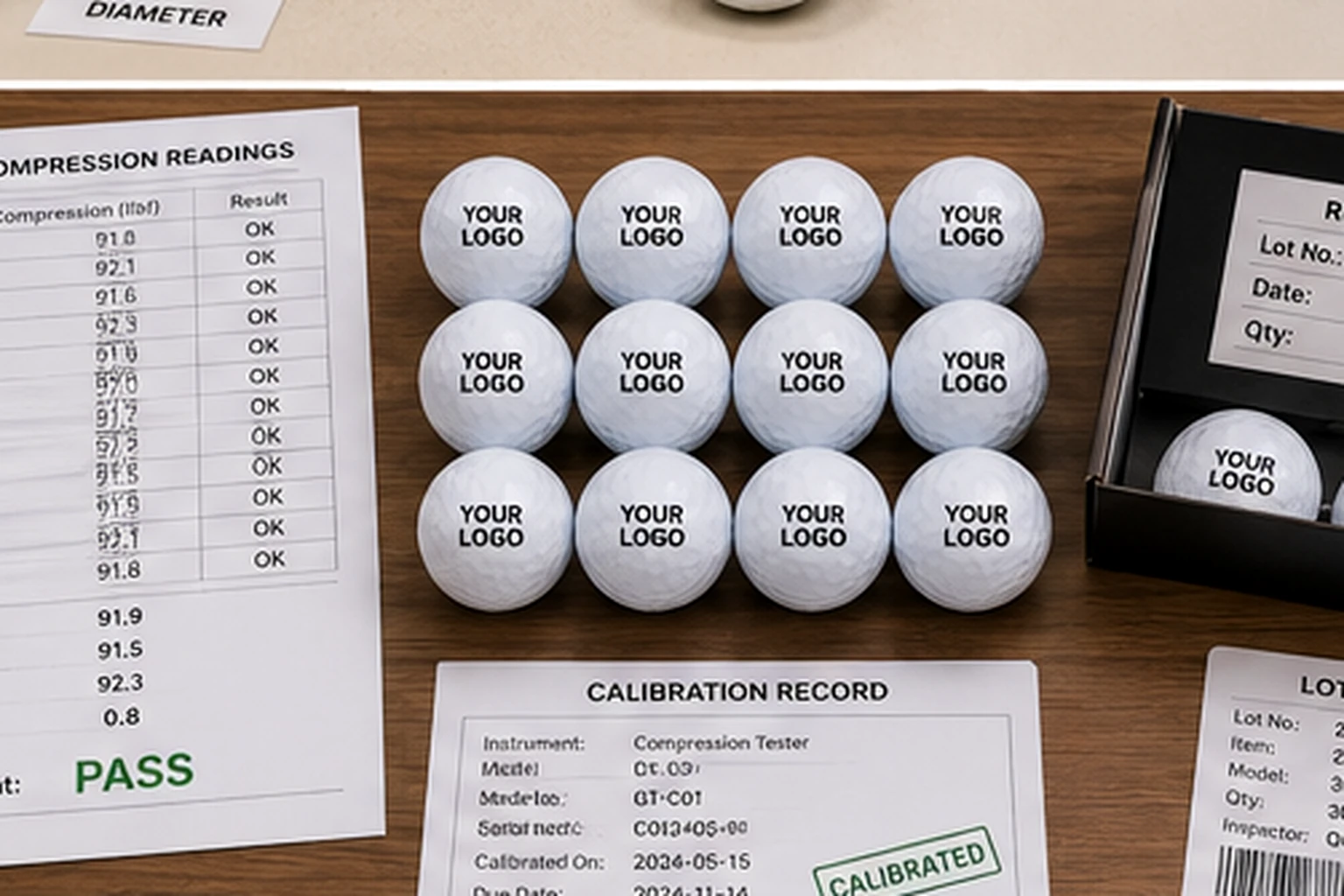
Your RFQ should request spread data, not only pass/fail or one average. A 12-ball QC report should show raw values, average, standard deviation, range, method notes, batch ID, retained sample ID, calibration status, and change-control terms.
What should a 12-ball report show?
Average compression is not enough. Averages can hide variation, outliers, and sorting drift that your customers may feel later.
A useful 12-ball QC report should include compression raw values, average, standard deviation, range, weight, diameter, Shore D hardness, cover thickness or method note, concentricity method where relevant, dimple/coating notes, logo adhesion where relevant, batch ID, retained sample ID, instrument method, calibration status, and change-control notes. The goal is not to drown your supplier in paperwork. The goal is to prove that the batch is repeatable enough for your SKU promise.
The same file should connect the approved sample, pre-production sample, first-article report, shipment lot, and retained sample. If a supplier sends only one clean average, your team cannot see spread. If a supplier sends only a photo, you cannot compare raw values. If a supplier sends no retained sample ID, your reorder dispute has no physical reference.
| QC proof | Risk controlled | Strong evidence | Weak evidence | Buyer action |
|---|---|---|---|---|
| Compression raw values | Feel and launch drift | 12-ball raw + avg/SD/range | Average only | Compare spread |
| Weight / diameter | Baseline consistency | Individual values | Pass/fail only | Inspect lot |
| Shore D hardness | Cover feel/scuff behavior | Hardness record | Feel description | Match sample |
| Cover thickness/method | Durability and response | Thickness or method note | No cover proof | Request method |
| Concentricity / dimple / coating | Flight and surface drift | Method/tool/finish record | Photo only | Tie to lot |
| Logo adhesion | Gift/promo risk | Rub/adhesion note | Nice logo photo | Inspect print |
| Batch ID / retained sample | Lot and dispute traceability | Lot-linked sample ID | Verbal promise | Store evidence |
| Change control | Silent changes | Written approval term | No record | Write PO clause |
Supplier shall provide a 12-ball pre-production and first-article QC report showing compression raw values, average, standard deviation, range, weight, diameter, Shore D hardness, cover thickness or method note, concentricity method where relevant, dimple/coating notes, logo adhesion where relevant, batch ID, retained sample ID, instrument method, calibration status, and change-control terms before bulk shipment.
A supplier that gives average compression only is a failure signal. Request a 12-ball QC report before bulk shipment. Compare approved sample, pre-production sample, first-article report, and incoming lot. Supplier must provide batch-linked raw data and retained sample reference before shipment approval.
When does a value ball fit the channel?
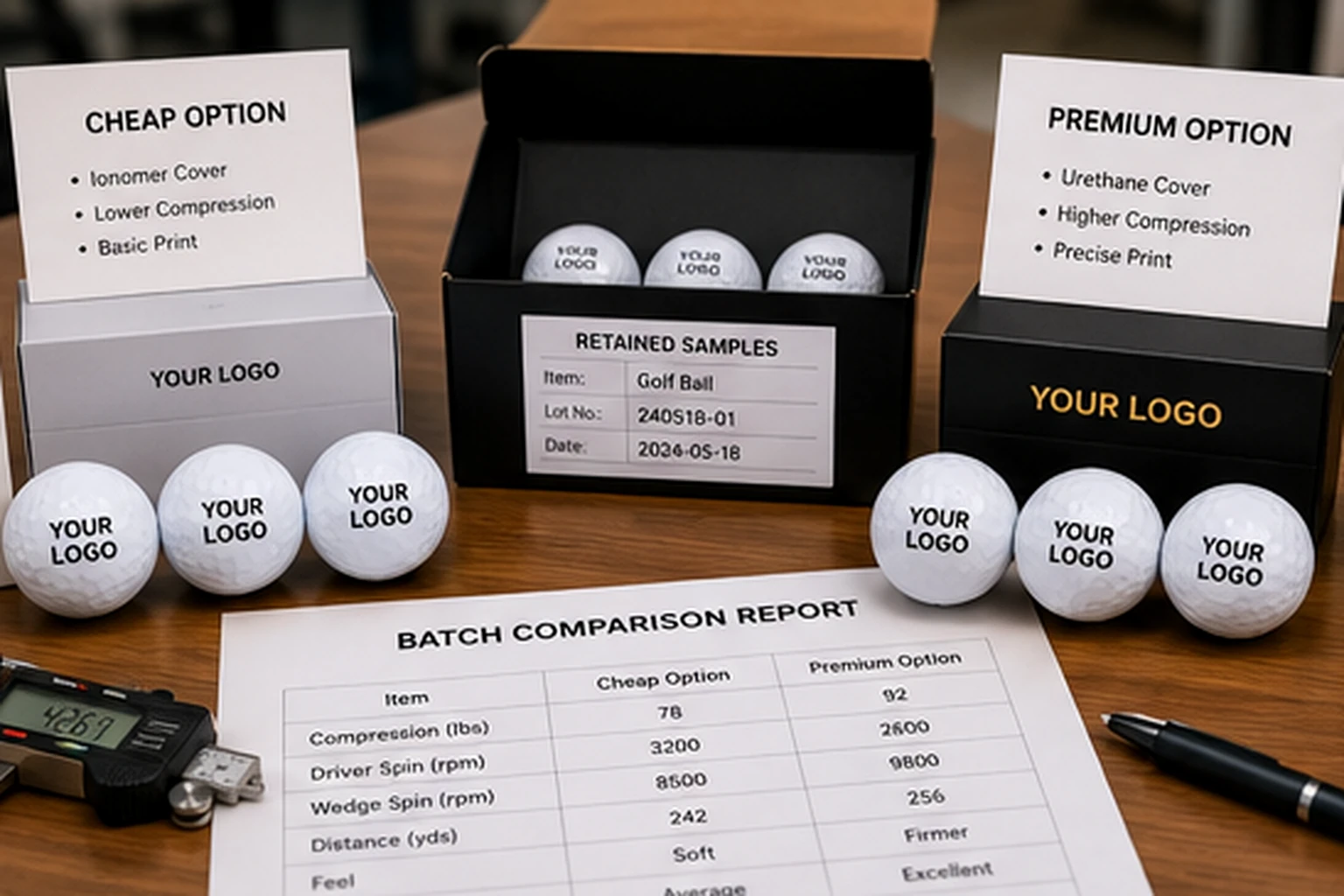
You may reject value balls too quickly or buy them only because they are cheap, but value balls work only when their proof matches the channel.
Value balls work best when durability, replacement economics, clean branding, and predictable reorders matter more than premium greenside spin. Your team should approve them by channel risk, usable life, logo survival, and batch stability—not unit price alone.
Which use cases reward durability?
Value golf balls are not second-class products when the channel rewards the right traits. They simply need the right proof for the job.
Driving ranges and academies often care about durability, replacement economics, stable averages, and lot control. Corporate gifts and promotional golf balls care about clean appearance, logo survival, surface quality, and packaging consistency. Event giveaways need acceptable flight and dependable visual quality at volume. DTC value packs need review stability because one weak batch can damage trust faster than a slightly higher landed cost.
For range or academy programs, averages and condition matter more than one-shot outliers. External launch-monitor guidance on range-ball and premium-ball differences also highlights that cover material, dimple pattern, wear, and dirt can change performance numbers. Your buyer action is not to demand premium-ball behavior from every value ball; it is to control the model, condition, and lot.
| Channel | Why value can fit | Must control | Risk if ignored | Buyer action |
|---|---|---|---|---|
| Driving range | High consumption | Durability and lot stability | Training noise | Lock model/lot |
| Academy | Repeatable feedback | Same model and averages | Coaching shifts | Track averages |
| Corporate gift | Branding and appearance | Surface + logo durability | Gift complaints | Inspect print + ball |
| Event giveaway | High volume / low loss concern | Appearance and basic QC | Cheap feel hurts brand | Approve sample |
| DTC value pack | Price-sensitive reviews | Reorder consistency | Bad reviews | Use retained samples |
| Bulk recreational | Durable acceptable flight | Batch control | Mixed lots | Request batch ID |
Create a value-channel fit sheet. Check usable life, cover wear, logo survival, complaint risk, and reorder stability. Approve value balls only when the consistency proof fits the channel’s risk.
✔ True — Value balls can be smart when the use case matches
Ranges, academies, corporate gifts, event giveaways, and value packs often need durable, consistent, affordable balls more than premium greenside spin.
✘ False — “The lowest unit price is always the lowest cost”
A cheap ball becomes expensive when it wears out quickly, triggers complaints, loses logos, or changes between reorders.
You may pay more for premium construction because the market expects feel and spin, but premium still needs stronger proof, not less.
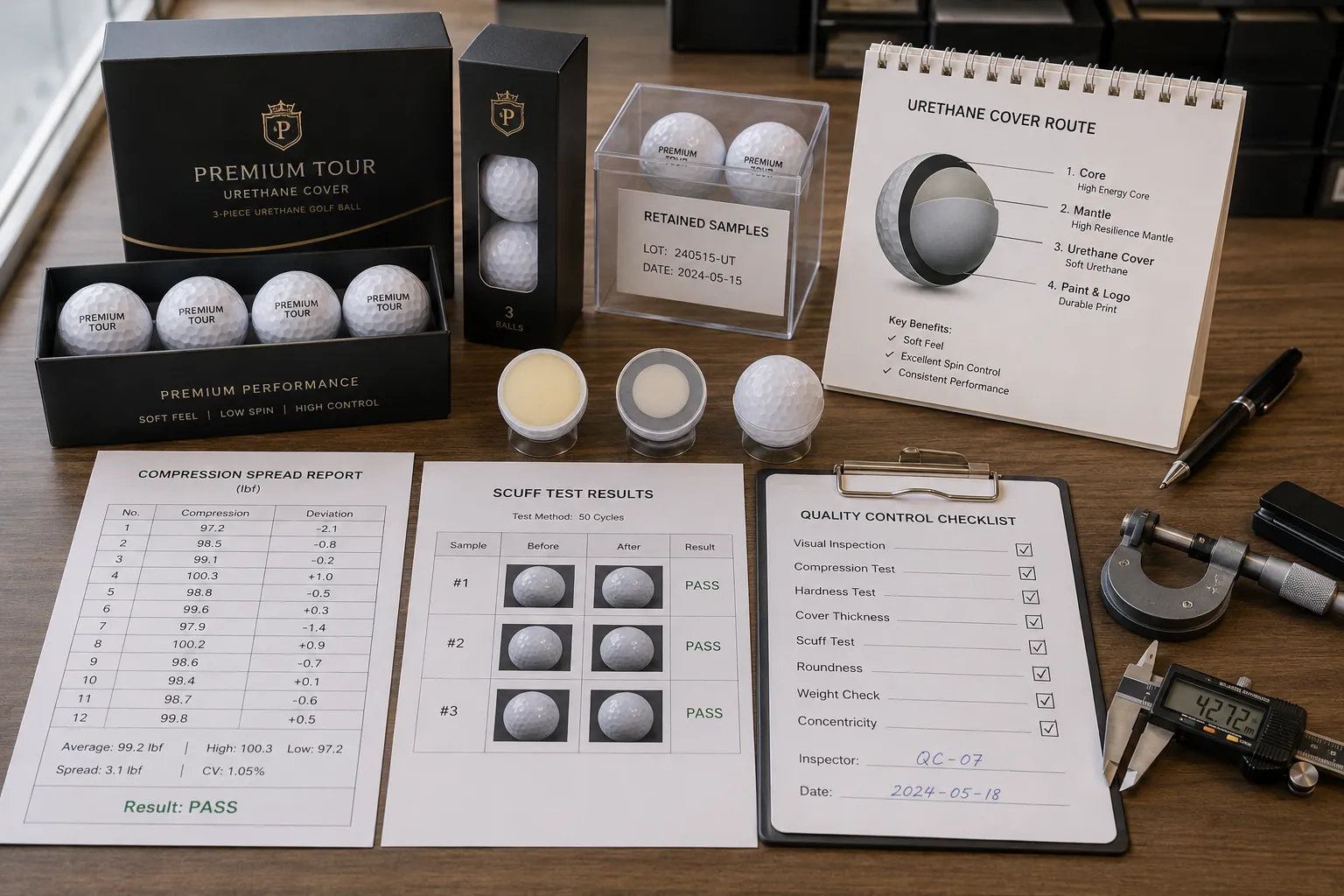
Premium balls should carry more proof, not less. Pay the premium route only when your market values feel, spin, control, and review protection—and when the supplier can prove cover route, compression spread, cover durability, and sample-to-bulk repeatability.
What evidence proves premium repeatability?
Premium is a performance target, not a QC shortcut. Higher construction complexity usually raises the proof burden.
Premium DTC lines, tour-style retail SKUs, low-handicap audiences, and review-sensitive channels may justify premium construction when buyers pay for feel, short-game spin, control, full-bag performance, and brand trust. But a premium claim without cover route, compression spread, cover thickness or method note, hardness window, scuff proof, retained sample, and lot traceability is still unverified.
Cover route matters because different cover materials and process routes can affect cost, yield, feel, spin, durability, and surface behavior. A buyer-facing background guide on urethane and ionomer cover differences can help explain why premium claims often involve feel and spin expectations. It does not replace OEM batch proof.
| Premium trigger | Why premium may win | Proof still needed | Risk if missing | Buyer action |
|---|---|---|---|---|
| Premium DTC line | Brand promise needs feel/control | Compression + cover proof | Reviews reject feel | Validate pilot |
| Tour-style retail SKU | Control story matters | Cover route + thickness | Premium claim unproven | Request cover proof |
| Low-handicap audience | Spin and feedback matter | Wedge/scuff proof | Short-game complaints | Test target user |
| High review sensitivity | Small defects visible | Raw QC + retained samples | Public complaints | Tighten acceptance |
| Brand reputation SKU | Repeat trust matters | Change-control terms | Second batch differs | Lock spec |
| Multi-layer program | Performance separation | Lot traceability | Hidden process drift | Require batch proof |
A premium claim with no cover route or sample-to-bulk proof is a failure signal. Request premium proof before paying premium pricing. Compare cover route, cover thickness or method, hardness, compression spread, scuff evidence, and retained samples. Premium approval requires measurable performance value and repeatable batch proof.
FAQ
Are cheap golf balls less consistent?
Not automatically. Cheap balls become risky when the supplier cannot prove compression spread, weight, diameter, cover durability, coating, lot ID, retained sample, and change-control discipline.
A value ball can be stable when savings come from simple construction, mature tooling, and efficient production. It becomes risky when lower price comes from loose sorting, weak coating control, mixed lots, or missing retained samples. Ask whether price savings come from efficiency or shortcuts, then request batch-linked QC data before bulk approval.
What is the difference between cheap and premium golf balls?
Value balls often use simpler construction and focus on durability and cost control. Premium balls usually target feel, spin, and tighter performance windows.
Both need QC proof. Value balls may fit high-consumption channels such as ranges, academies, gifts, and recreational bulk programs. Premium balls may fit DTC, retail, and review-sensitive channels where feel and spin matter. The buyer decision should compare proof level, use case, and reorder stability—not packaging language alone.
Are expensive golf balls worth it?
They are worth it when your channel pays for feel, spin, control, review protection, and repeatable performance. They are not worth it when premium claims lack batch-linked proof.
A premium price should come with premium evidence. Ask for cover route, compression spread, cover thickness or method note, hardness window, scuff proof, retained sample, batch ID, and change-control terms. If the supplier cannot prove sample-to-bulk repeatability, the premium story is not ready for bulk approval.
Do expensive golf balls make a difference?
They can, especially in feel, spin, and short-game control. For OEM buyers, the difference must be measurable and repeatable in bulk.
Do not rely on brand-like language or one sleeve sample. Compare the target performance window, cover behavior, durability, compression spread, and lot traceability. The commercial question is not whether premium balls can feel different; it is whether your supplier can reproduce that difference across production and reorders.
What makes a golf ball consistent?
Consistency comes from controlled compression spread, weight, diameter, cover hardness, cover thickness, concentricity, dimple/coating quality, logo durability, and lot-to-lot control.
Use raw values, not claims. Ask for batch ID, retained sample ID, method notes, and change-control terms. A consistent golf ball is not just one ball that feels good. It is a batch that stays inside the approved window and can be repeated in the next production lot.
Does golf ball compression matter?
Yes. Compression affects feel and response, but buyers should not look only at one compression number. Compare raw values, average, standard deviation, and range.
Average compression can hide variation. A 12-ball report shows whether the batch clusters tightly or spreads too widely. Compare the approved sample, pre-production sample, first-article report, and incoming lot. Compression is useful only when it is tied to batch data and acceptance criteria.
Are premium golf balls more durable?
Not always. Some premium cover routes prioritize spin and feel, while some value balls prioritize durability. Durability needs cover-wear, scuff, coating, and use-case proof.
Match durability to the channel. A corporate gift ball needs logo survival and clean appearance. A range ball needs cover and washer/picker durability. A premium retail ball may need scuff proof without losing feel and spin. Do not assume premium equals tougher; ask for proof tied to your use case.
What QC data should OEM buyers request?
Request a 12-ball QC report with compression raw values, average, SD, range, weight, diameter, Shore D hardness, cover thickness or method note, dimple/coating notes, batch ID, retained sample ID, calibration status, and change-control notes.
The report should connect the approved sample, pre-production sample, first-article inspection, shipment lot, and retained sample. Raw values matter because averages can hide spread. Retained samples matter because they give both sides a physical reference when reorders, complaints, or disputes appear.
Conclusion
Approve golf balls by evidence, not by price tag. The right decision depends on your use case, compression spread, cover durability, batch ID, retained samples, 12-ball QC data, and change-control discipline.
Cheap vs premium is the wrong first question. Verified vs unverified is the better buyer question. A controlled value ball can be the best commercial choice for the right channel, while a premium-looking ball without QC proof can still create reorder risk.
Golfara can help you compare value and premium golf ball routes based on use case, target price, compression window, logo/packaging scope, and batch-linked QC requirements.
You might also like — Which Golf Ball Should Each Practice Setting Use?