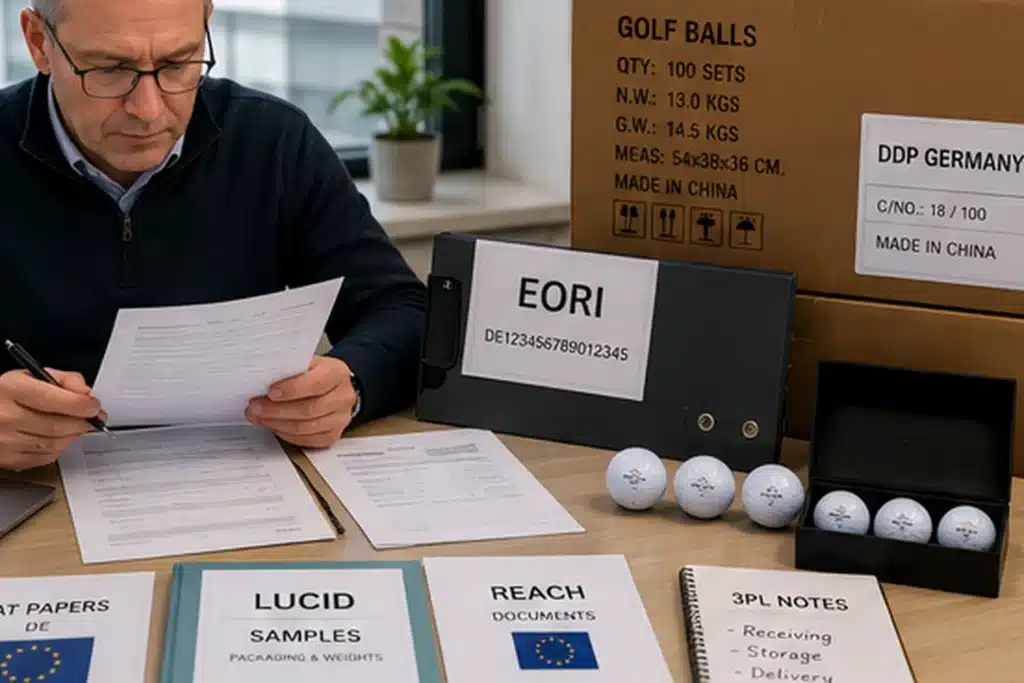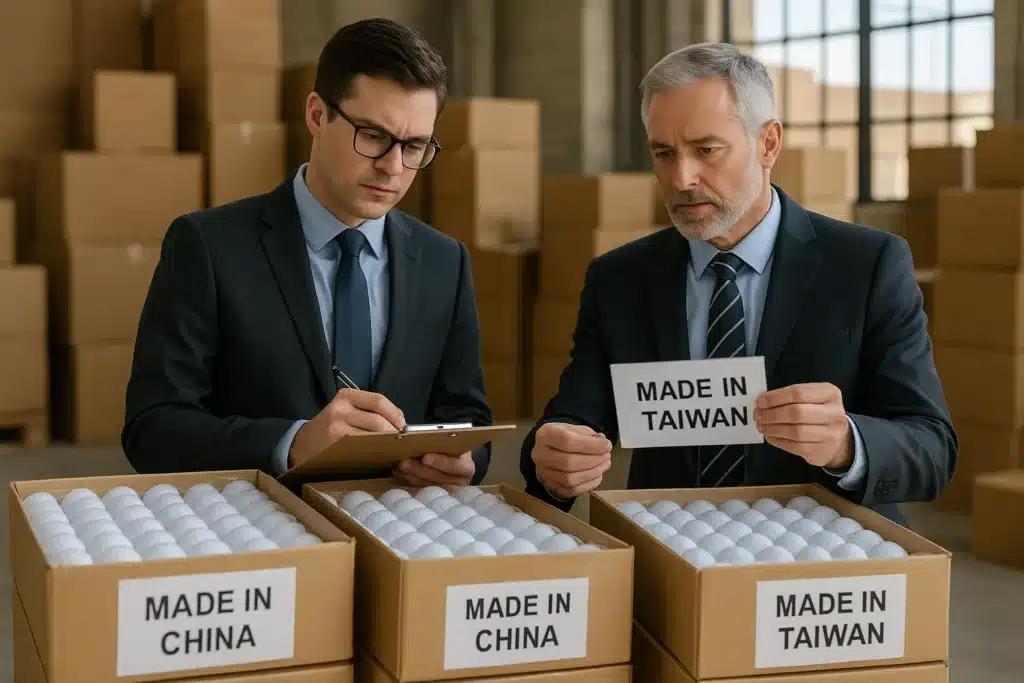
For China vs Taiwan golf ball costs in 2026, Taiwan usually carries about a $0.10–$0.20 EXW premium per ball over China. The gap is not mainly resin price: materials and electricity are near parity. The real drivers are golf ball manufacturing labor cost, first-pass yield (FPY), coating rework, and golf ball custom packaging cost. China usually protects margin on Surlyn and packaging-heavy SKUs, while Taiwan can justify its multilayer PU premium when yield stability protects reviews and returns.
If you are comparing two OEM quotes, do not ask which one is “cheaper” until you know what the quote includes. Ask whether it is bare ball or retail pack-out, whether PU means Cast Thermoset Urethane or Injection TPU, and whether the supplier can show FPY, labor minutes, coating reject rate, rework allowance, and true cost per good ball.
This guide does one job: cost accounting. You will compare China and Taiwan by Golf ball EXW cost breakdown, material parity, labor minutes, First-pass yield FPY in golf ball manufacturing, cast urethane rework, packaging squeeze, and ROI on Taiwan’s premium.
What Is the EXW Cost Baseline?
You may have two quotes and only see Taiwan as more expensive, but the useful question is which cost layer creates the gap.
At the EXW level, Taiwan usually carries about a $0.10–$0.20 premium per golf ball over China. The gap is smaller for 2/3-piece Surlyn and larger for 3/4-piece PU because multilayer PU consumes more labor minutes, coating control, and yield discipline.
| Structure | Taiwan EXW mid | China EXW mid | Gap | Buyer action |
|---|---|---|---|---|
| 2-piece Surlyn | $0.44 | $0.33 | $0.11 | Check pack cost |
| 3-piece Surlyn | $0.45 | $0.34 | $0.11 | Model labor minutes |
| 3-piece PU | $0.67 | $0.46 | $0.21 | Verify FPY |
| 4-piece PU | $0.68 | $0.47 | $0.21 | Normalize process |
These midpoint numbers are planning references, not guaranteed quotes. Their value is that they expose the shape of the cost gap. Surlyn gaps are narrower because the structure is simpler, the direct labor touch time is lower, and the material input is close. PU gaps are wider because multilayer construction adds curing, coating, buffing, inspection, cosmetic reject risk, and rework control.
On a dozen basis, the same model puts 2-piece Surlyn at about $3.96 for China and $5.28 for Taiwan. For 4-piece PU, it puts China around $5.64 and Taiwan around $8.16. That spread is not a moral judgment on either region. It is a prompt to ask what the premium is buying.
A proper Golf ball EXW cost breakdown separates bare-ball manufacturing from packaging, rework allowance, quality loss, and retail pack-out. If one supplier quotes bare balls and another includes sleeves, cartons, inserts, and final pack-out, you are not comparing two factories. You are comparing two scopes. That is how clean spreadsheets become messy purchase orders.
Your quote should state EXW per ball, structure, cover process, material line item, labor minutes, FPY by process stage, coating or cosmetic rework allowance, packaging cost per ball, carton or sleeve spec, and whether the scope is bare ball or retail pack-out.
Request an itemized EXW worksheet separating bare ball, packaging, labor minutes, FPY, and rework allowance. Check that both quotes use the same construction, cover process, packaging scope, MOQ, and inspection standard. Do not approve the lower EXW quote until the supplier explains FPY and packaging scope.
✔ True — EXW is only useful when the scope matches.
A China quote and Taiwan quote must use the same structure, cover process, packaging scope, and inspection standard before the gap means anything.
✘ False — “The lower EXW quote is automatically better.”
A cheaper quote can become more expensive after FPY loss, coating rework, cosmetic rejects, and retail pack-out are included.
Are Materials and Energy a Distraction?
You may assume Taiwan is higher because it buys better resin, but material and energy deltas are too small to explain the real EXW gap.
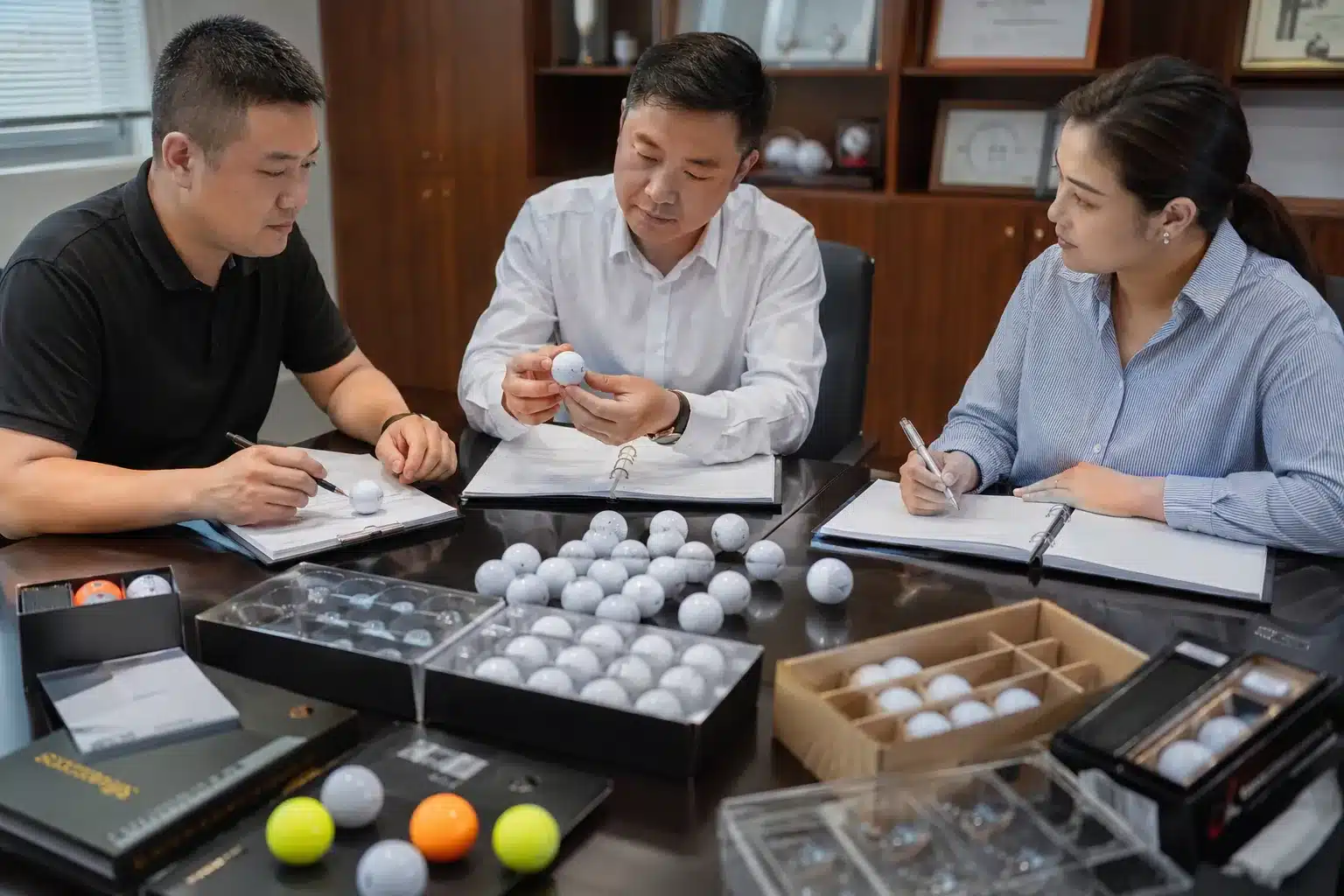
Materials and electricity are usually distractions in China vs Taiwan golf ball cost analysis. Surlyn, TPU, PU systems, pigments, and coatings are influenced by regional commodity markets, and even meaningful resin spreads often translate into only fractions of a cent per ball.
| Input | Taiwan cost | China cost | Buyer action |
|---|---|---|---|
| 2-piece Surlyn material | $0.13–0.17 | $0.13–0.17 | Stop blaming resin |
| 3-piece Surlyn material | $0.14–0.18 | $0.14–0.18 | Compare process |
| 3-piece PU material | $0.20–0.25 | $0.20–0.25 | Verify cover type |
| 4-piece PU material | $0.20–0.26 | $0.20–0.26 | Check yield loss |
| Surlyn energy | $0.004 | $0.003 | Treat as minor |
| PU energy | $0.008 | $0.005 | Treat as minor |
The Material Parity Illusion pushes buyers into the wrong debate. Taiwan does not usually cost more because it uses magical resin, and China does not usually cost less because it has secret plastic. Surlyn, ionomer-type inputs, TPU, PU systems, pigments, paints, and coating materials are influenced by regional commodity markets. Their prices can move, but that movement rarely explains the full EXW spread.
Use a simple resin-spread test. If a polymer spread is $70–$85 per metric ton, that is $0.070–$0.085 per kilogram. If a ball uses 40–50 grams of relevant input, the impact is about $0.003–$0.005 per ball. Even a stronger PU-related input shock of $500 per metric ton equals about $0.0075–$0.0100 per ball if 15–20 grams are used. Those numbers matter, but they do not explain a $0.11 Surlyn gap or a $0.21 PU gap by themselves.
Electricity is smaller again. A Surlyn ball may use roughly 0.03 kWh, while a PU ball may use roughly 0.06 kWh. At the unit level, energy adds fractions of a cent to less than one cent per ball. It belongs in the model, but it should not dominate the decision.
Resin excuse, no labor model is a failure signal. If a supplier explains a $0.10–$0.20 gap with resin alone, ask for grams per ball, resin family, cover process, material line item, and yield loss. If the math does not bridge the gap, the missing cost is elsewhere.
Materials are transparent; execution creates the margin gap. You should stop arguing about resin price and start verifying labor minutes, FPY, coating rework, and packaging cost.
Request material cost, grams per ball, resin family, cover process, and energy assumptions. Compare material line items against regional market movement and supplier BOM. Do not accept resin price as the explanation for a $0.10–$0.20 gap unless the supplier shows the grams and formula.
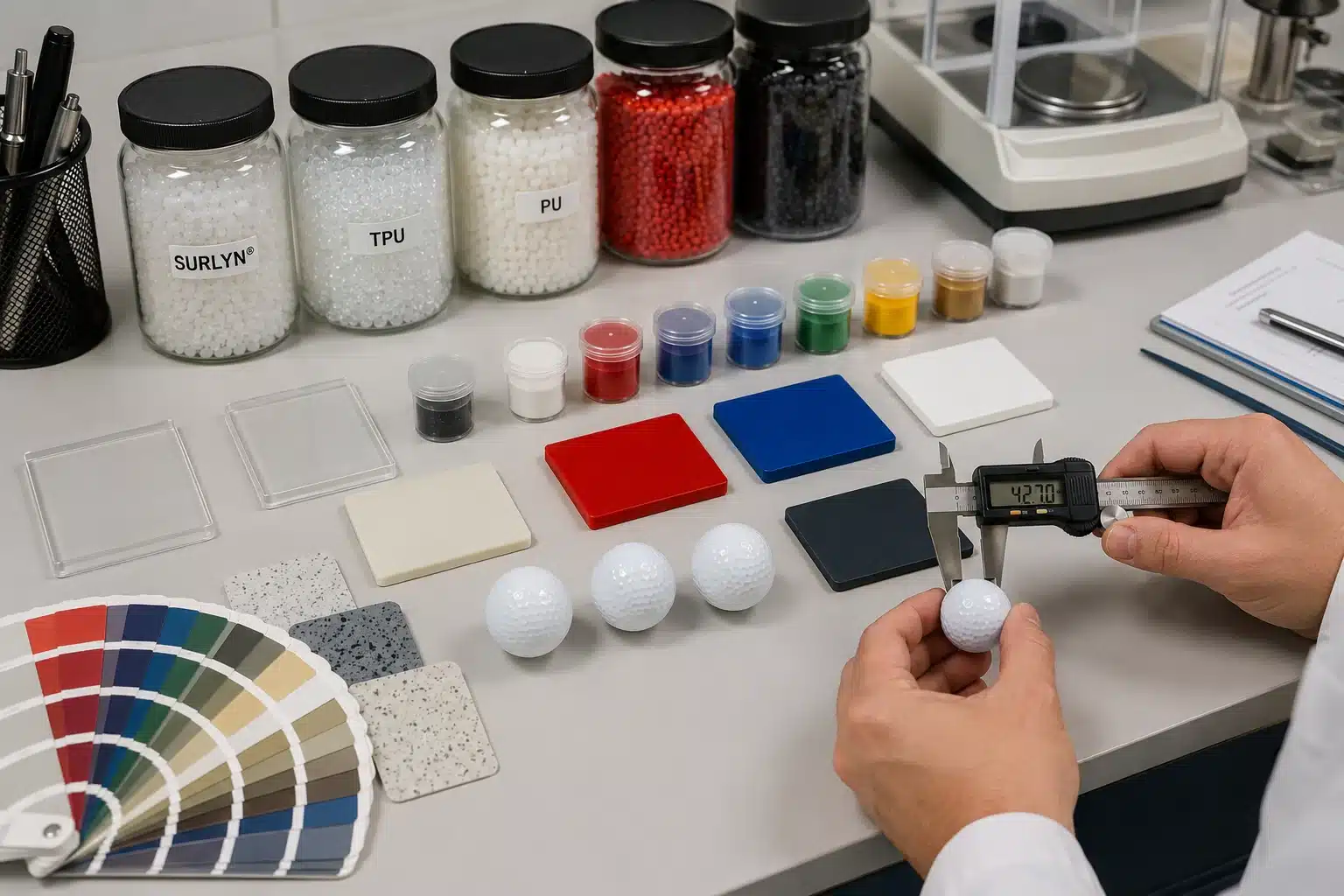
✔ True — Materials are transparent; execution creates the margin gap.
Surlyn, TPU, PU systems, pigments, and coating inputs are shaped by regional markets. The bigger cost swing comes from labor minutes, FPY, and coating rework.
✘ False — “Taiwan is more expensive because its resin is much more expensive.”
Regional resin spreads often translate into fractions of a cent per ball. A $0.20 PU gap usually comes from process control, not plastic price alone.
What Actually Drives Margin?
You may compare EXW totals while missing the two variables that actually move margin: labor minutes and first-pass yield.
The true margin drivers are labor minutes and first-pass yield. A 2-piece Surlyn ball may need about 0.4–0.5 minutes of labor, while a multilayer PU ball may need 1.2–1.5 minutes. When the process adds curing, coating, inspection, and rework risk, the Taiwan–China gap expands.
| Structure | Labor minutes | Taiwan labor model | China labor model | Buyer action |
|---|---|---|---|---|
| 2-piece Surlyn | 0.4–0.5 | Low impact | Low impact | Compare pack cost |
| 3-piece Surlyn | around 0.5 | Still controlled | Still controlled | Check automation |
| 3-piece PU | around 1.2–1.5 | Gap expands | Lower labor base | Ask FPY |
| 4-piece PU | around 1.5 | Highest sensitivity | Process-dependent | Normalize process |
This is where Golf ball manufacturing labor cost explains what resin cannot. A 2-piece Surlyn ball is comparatively simple. The process has fewer handling points, fewer coating variables, and less inspection burden. The wage-base gap still matters, but the ball does not stay in labor-heavy steps long enough for the gap to explode.
A multilayer PU ball behaves differently. It may require more handling, buffing, inspection, coating, curing, logo work, cosmetic review, and rework decisions. A 3-piece or 4-piece PU ball can consume roughly three times the labor minutes of a 2-piece Surlyn ball. Once those minutes are multiplied by a higher wage base, the gap expands quickly.
Public wage benchmarks support the labor-minute model. Taiwan’s wage floor is higher than many mainland China production-worker references, and practical Taiwan manufacturing wages are higher again. China’s eastern production and manufacturing-worker benchmarks remain lower. When a Surlyn ball needs only about half a minute of labor, the cost difference stays contained. When a PU ball needs 1.2–1.5 minutes of effective handling, inspection, coating, and rework control, the difference becomes visible in EXW.
The China–Taiwan gap does not widen because Taiwan uses magical resin. It widens because cast-PU balls consume more labor minutes, more inspection time, and more yield discipline.
FPY then decides whether the quote survives reality. First-pass yield measures how many balls pass the required standard without rework. A low quote with weak FPY can become more expensive than a higher quote with stable output. Scrap, coating defects, bubbles, eccentric covers, poor adhesion, cosmetic rejects, and delayed replacement lots all become cost.
Cheap PU quote, no FPY is a failure signal. It means the price is visible, but the loss mechanism is hidden.
Supplier shall state whether the quoted PU cover is Cast Thermoset Urethane, Injection TPU, or another urethane-cover process, and shall attach the process declaration, material version, coating stack, retained-sample ID, and FPY basis used in the quote.
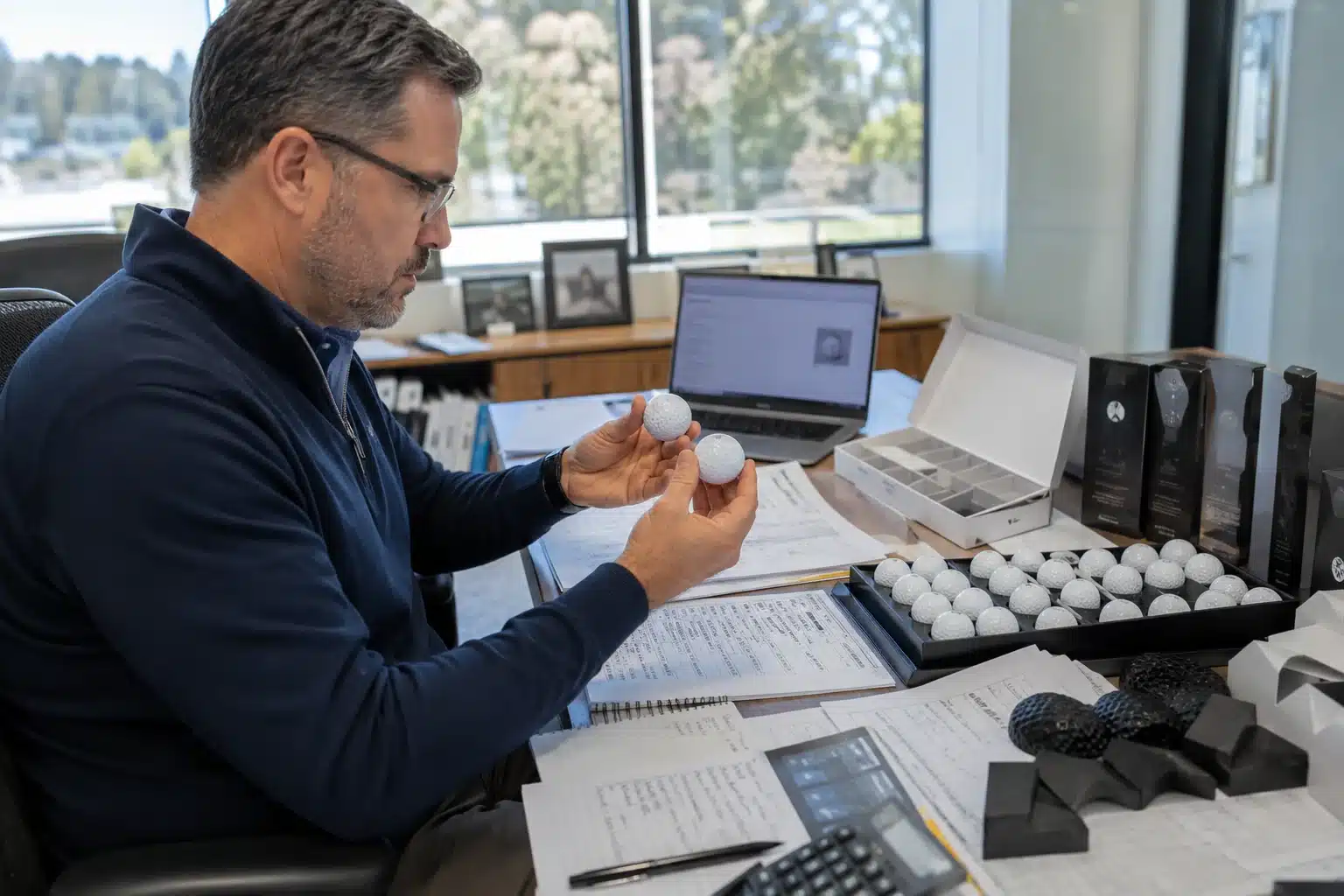
Request labor-minutes assumptions, FPY records, coating reject rate, and rework cost. Check whether the supplier’s quote includes rework, cosmetic rejects, and yield allowance. Do not compare PU quotes until both suppliers state FPY and cover process.
How Does Cast Urethane FPY Multiply Cost?
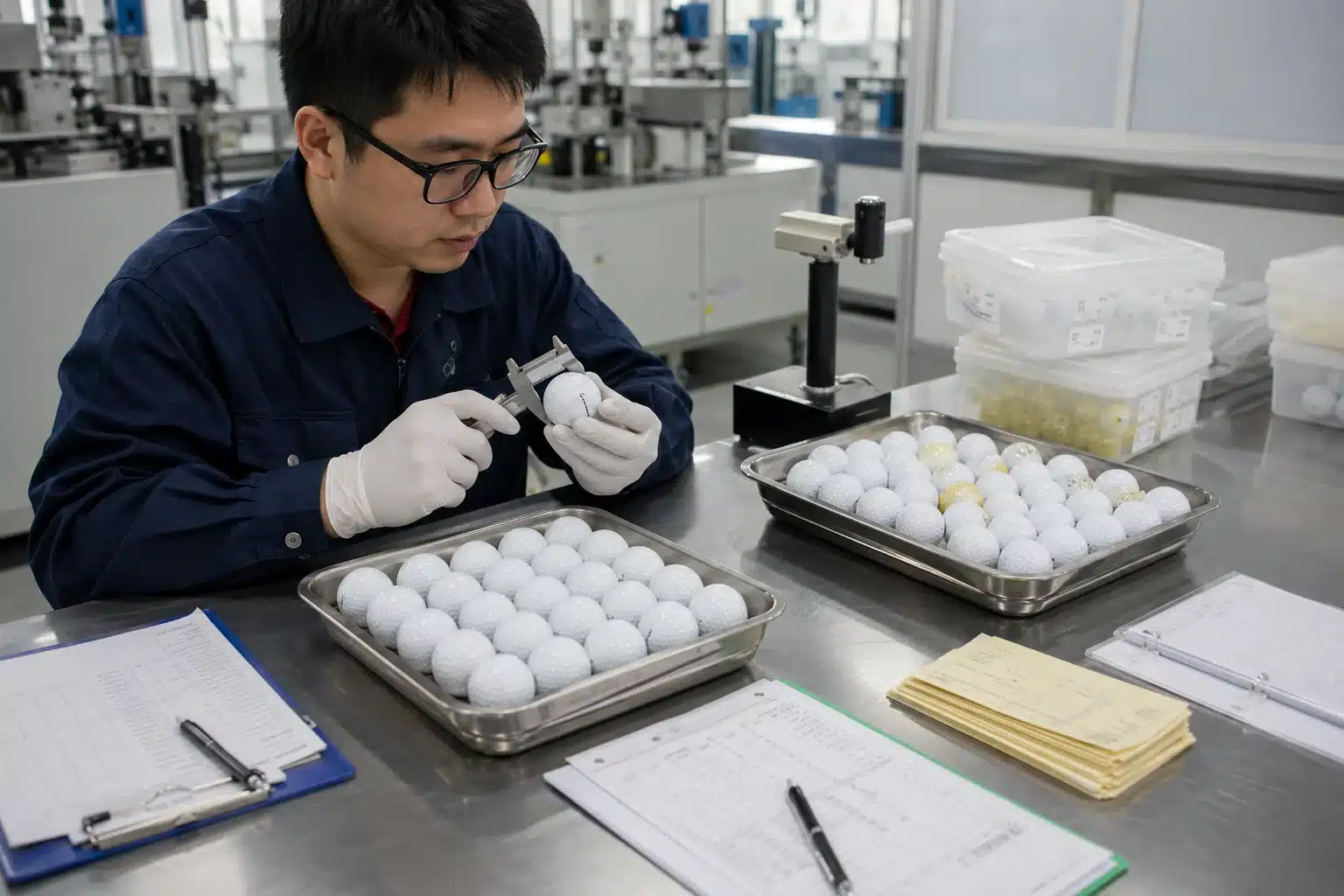
Cast Thermoset Urethane is slow, sensitive, and financially unforgiving. The cover is chemically crosslinked and controlled by curing, degassing, cover thickness, adhesion, coating behavior, and inspection discipline. If bubbles, eccentricity, adhesion failure, yellowing, or cosmetic defects appear, the loss is not only resin. You also lose cure time, machine time, handling, coating labor, inspection labor, and delivery buffer.
The correct formula is:
True Cost per Good Ball = Quoted Factory Cost ÷ First-Pass Yield + Rework Cost + Delay Risk + Return / Warranty Allowance.
| Scenario | Quoted cost | FPY | True cost before rework |
|---|---|---|---|
| Taiwan PU line | $0.67 | 97% | $0.691 |
| Lower-cost PU line | $0.58 | 88% | $0.659 |
| Lower-cost PU line + $0.04 rework | $0.58 | 88% | $0.699 |
| Lower-cost PU line + delay / return risk | $0.58 | 88% | Often worse than Taiwan |
A cheaper PU quote only works if FPY holds. A $0.58 PU quote at 88% FPY becomes about $0.659 before rework. Add $0.04 rework, and it becomes about $0.699 before delay or return risk. That can be worse than a $0.67 Taiwan PU quote if the Taiwan line holds stronger FPY, cleaner cosmetics, and fewer downstream complaints.
For Multilayer PU golf ball OEM cost, FPY is not a factory KPI sitting in the background. It is a margin protection tool. The premium can be rational when higher FPY protects launch timing, review stability, return rates, and repeat-order confidence.
Marcus Vance, procurement lead for a UK golf brand, almost blew his Q2 margin chasing a cheap PU quote. He bypassed a stable $0.68 Taiwan quote for an unverified $0.55 offer. The catch? The factory’s First-Pass Yield (FPY) was a disastrous 82%. Marcus had to absorb the 18% scrap rate plus a hidden $0.08/ball in cosmetic rework.
He brought the mess to Golfara. We rebuilt his 3-piece PU SKU with a guaranteed 96% FPY and our $0.15 integrated packaging, making his true landed cost plummet. Marcus learned the hard way: a cheap PU quote without FPY guarantees is just a down payment on scrap.
✔ True — FPY changes the real cost per accepted ball.
A low PU quote can lose its advantage when coating rejects, bubbles, eccentricity, rework, and return allowance are added.
✘ False — “A cheaper PU quote is safer for margin.”
For cast urethane, price without FPY is just a number with a trapdoor under it.
Why Do Taiwan Boxes Cost More?
You may judge the quote by bare-ball EXW, then discover the retail pack-out cost changes the margin.
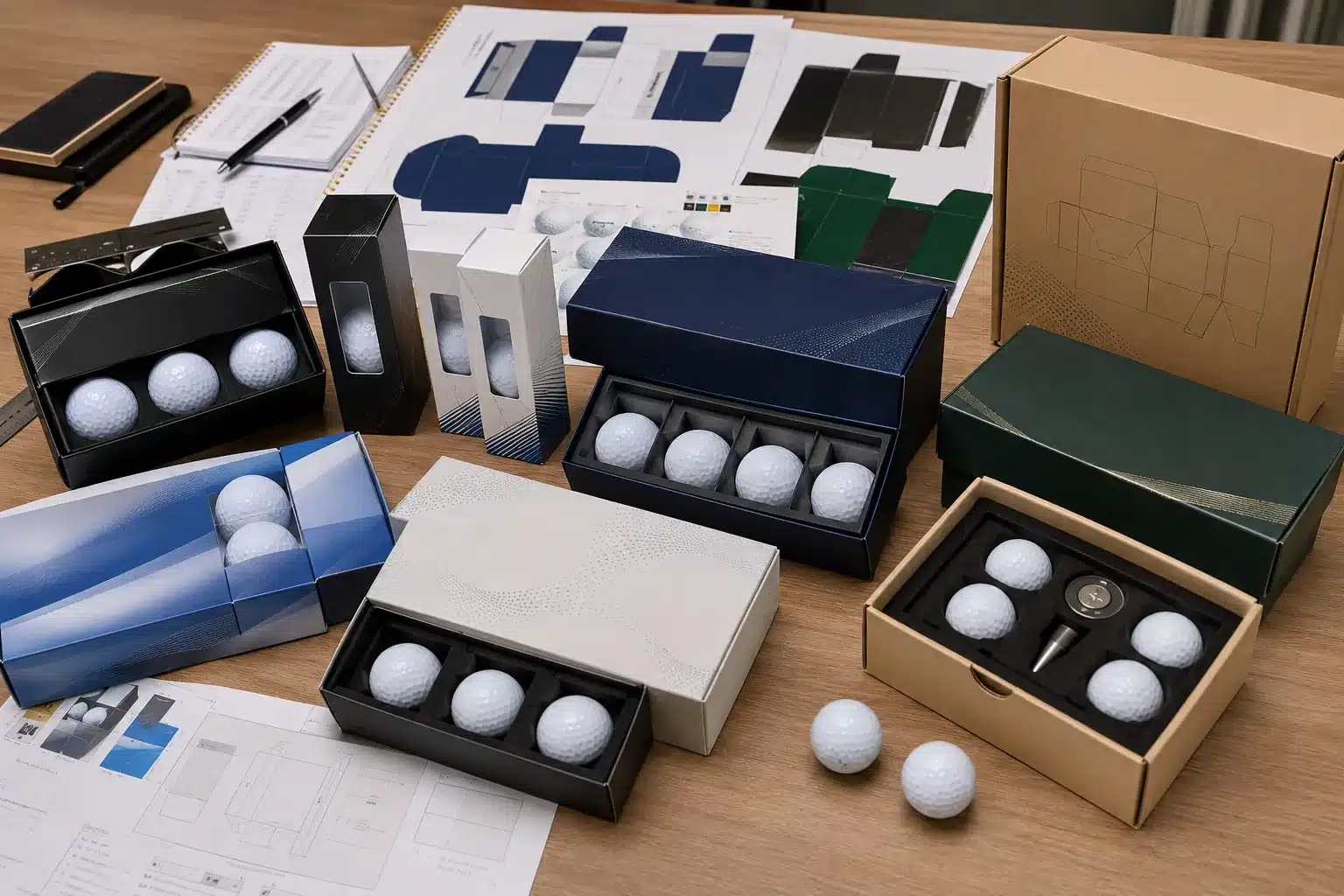
Packaging is not a minor add-on in China vs Taiwan golf ball costs. China often quotes packaging around $0.10–$0.20 per ball, while Taiwan can run around $0.18–$0.30. On 2-piece promo or range balls, that difference can erase the margin you thought you had.
| Packaging type | China | Taiwan | Buyer meaning |
|---|---|---|---|
| Basic sleeve / white box | $0.10–0.14 | $0.18–0.22 | Use China for volume |
| Retail printed box | $0.14–0.20 | $0.22–0.30 | Compare pack-out |
| Gift set / premium insert | $0.20+ | $0.30+ | Use only if margin allows |
| Bare ball quote | Looks low | Looks acceptable | Add pack cost first |
This is the Packaging Sticker Shock. The buyer sees an attractive bare-ball quote, then adds sleeves, retail cartons, inserts, labels, color matching, premium paper, gift-box tooling, or pack-out labor. The ball did not suddenly become more expensive. The missing scope finally appeared.
China’s advantage comes from packaging ecosystem density. Printing, sleeves, cartons, paperboard boxes, labels, stickers, EVA inserts, premium gift boxes, and pack-out support are easier to coordinate in dense manufacturing clusters. That competitive ecosystem can compress Golf ball custom packaging cost and create more options when artwork or retail requirements change.
Taiwan can still be the right choice for premium PU when packaging is not the main margin lever. The problem appears when buyers place simple 2-piece promo, range, corporate, or DTC trial products into a quote structure where packaging is expensive. For those SKUs, a $0.15 per-ball packaging gap can consume most of the margin difference.
For 2-piece promo and range balls, packaging can matter more than the ball itself. If you ignore packaging, the Taiwan quote may look reasonable on bare balls and then fail at retail pack-out.
Bare ball quote, no pack cost is a failure signal. It means the quote comparison is incomplete. If one supplier includes retail pack-out and another quotes bare balls, the cheaper number is not really cheaper.
Request packaging cost per ball by sleeve, retail box, gift set, insert, label, and pack-out. Ask whether the quote includes artwork changes, printer MOQ, box tooling, color matching, carton test, and final pack-out. Do not compare Taiwan vs China quotes until both include the same packaging scope.
✔ True — packaging can rival the labor gap.
On promo, range, corporate, and DTC trial balls, packaging cost can decide whether the SKU still has margin after retail pack-out.
✘ False — “Packaging is negligible.”
A bare-ball quote hides sleeves, cartons, inserts, tooling, artwork changes, color matching, and pack-out labor.
You may reject Taiwan because the EXW is higher, but for premium PU the extra cost can behave like quality insurance.
Taiwan’s premium pays off when higher FPY, tighter PU consistency, cleaner cosmetics, and fewer returns protect revenue. China usually protects margin better for Surlyn, promo, range, corporate, and packaging-heavy SKUs where the buyer needs low EXW and packaging efficiency more than PU review stability.
| SKU type | Cost risk | Better cost logic | Acceptance evidence |
|---|---|---|---|
| 2-piece promo/range | Packaging margin loss | China | Pack cost per ball |
| 3-piece Surlyn DTC | Labor + packaging | China-first | EXW + pack-out |
| 3-piece PU premium-adjacent | FPY risk | Compare both | FPY + returns |
| 4-piece PU flagship | Review volatility | Taiwan if FPY proves out | Robot + cosmetic data |
| Gift set / retail pack | Packaging squeeze | China unless premium story pays | Pack margin |
Taiwan’s higher EXW is not automatically waste. It can be rational when the product’s revenue depends on tight feel, robot-test stability, cosmetic pass rate, fewer returns, and consistent reviews. In that case, the premium is not just manufacturing cost. It is a form of yield insurance.
This is especially true for 3-piece and 4-piece PU programs. Premium buyers notice feel, cover durability, finish consistency, and ball-to-ball variation. If a flagship SKU develops review volatility or return pressure, the downstream loss can exceed the EXW savings from a cheaper line.
China has the stronger cost logic for other categories. Surlyn volume, range balls, promo balls, corporate balls, retail packs, and packaging-heavy SKUs usually benefit from China’s lower labor-minute exposure and denser packaging ecosystem. If the SKU wins through volume, logo work, retail packaging, or DTC pack-out, China can protect margin more effectively.
Taiwan’s PU premium is rational only when yield and review stability protect downstream margin. Pay the premium only when FPY, returns, cosmetic pass rate, and reviews move revenue.
Buyer approval requires a cost worksheet showing EXW per ball, material line item, labor minutes, FPY, rework allowance, packaging cost per ball, bare-ball vs retail-pack scope, and true cost per good ball.
Request a SKU ROI model comparing EXW, FPY, rework, packaging, return rate, review risk, and gross margin. Check whether the premium affects actual sales, reviews, or return rates. Pay Taiwan’s premium only when FPY and downstream margin justify it; use China where packaging and volume economics dominate.
✔ True — Taiwan’s premium can buy margin protection.
For premium PU, higher FPY, tighter dispersion, cleaner cosmetics, and fewer returns can protect revenue more than the EXW premium costs.
✘ False — “Taiwan’s higher EXW is always waste.”
For the right flagship PU SKU, the premium may be the cost of stable reviews and fewer downstream complaints.
FAQ
Why are cast urethane golf balls expensive to make?
Cast thermoset urethane is expensive because it requires careful curing, cover-process control, finishing, inspection, and yield discipline. Compared with 2-piece Surlyn, multilayer PU uses more labor minutes and carries higher scrap and rework risk.
A 2-piece Surlyn ball has fewer labor-heavy steps. A cast urethane ball adds sensitive cover processing, coating, curing, cosmetic review, and rework decisions. Normalize Cast Thermoset Urethane versus Injection TPU before comparing quotes, then request FPY by process stage, coating reject rate, cover thickness evidence, retained samples, and true cost per good ball.
Is Taiwan more expensive than China for golf balls?
Yes, at the EXW level Taiwan usually carries a planning premium of about $0.10–$0.20 per ball. The gap is not mainly resin price; it comes from labor minutes, FPY, coating rework, and packaging cost.
The gap is narrower for Surlyn and wider for multilayer PU. Use the same structure, cover process, packaging scope, and inspection standard before deciding. If one quote includes retail pack-out and the other is bare ball, the cost comparison is not valid.
What is the typical EXW cost of an OEM golf ball?
It depends on structure. A planning model places 2-piece Surlyn around $0.33–$0.44 EXW and premium 4-piece PU around $0.47–$0.68, with China at the lower end and Taiwan at the higher end.
Those ranges should be treated as planning references, not fixed market promises. Separate bare ball from packaging, then ask whether the quote includes retail pack-out, box tooling, artwork revisions, cosmetic inspection, and rework allowance. For PU, normalize the cover process before comparing numbers.
Do material prices explain the China Taiwan cost gap?
Usually no. Surlyn, TPU, PU systems, pigments, and coating inputs are regionally traded and relatively transparent. Resin spreads often translate into fractions of a cent per ball, not a $0.10–$0.20 EXW gap.
Ask for grams per ball, resin family, cover process, and material line item. Then compare process cost, labor minutes, coating rework, FPY, and packaging. In most quote reviews, the bigger gap comes from execution and yield, not plastic price alone.
How does FPY change real golf ball cost?
FPY changes the cost per good ball. A cheaper PU quote can lose its advantage if scrap, coating rejects, rework, delay risk, or returns are added.
Use quoted cost divided by FPY, then add rework allowance, cosmetic reject risk, delay risk, and return or warranty allowance. Compare accepted balls, not just produced balls. For premium PU, FPY is a margin protection tool, not a background production metric.
Does cheap packaging lower the overall cost?
Yes, especially for Surlyn, promo, range, and DTC products. Packaging can cost $0.10–$0.30 per ball, which can match or exceed the labor gap between regions.
Ask for packaging cost per ball. Compare bare ball versus retail pack-out. Check printer MOQ, artwork-change rules, sleeve cost, box tooling, inserts, color matching, carton testing, and final pack-out. Packaging should be modeled before the quote is approved.
When is Taiwan’s higher PU cost worth it?
Taiwan’s premium is worth it when FPY, robot-test stability, cosmetic rate, lower returns, and review consistency protect downstream revenue. It is less compelling for promo, range, and packaging-heavy SKUs.
Use Taiwan for premium PU when FPY proves out and review stability affects revenue. Use China for Surlyn volume, packaging-heavy programs, and cost-sensitive retail packs. Tie the origin to SKU margin, not country reputation.
Should buyers use China or Taiwan for 2-piece Surlyn?
For most 2-piece Surlyn, China is usually the better cost base because materials and electricity are close, while China tends to win on labor, packaging ecosystem, and volume efficiency.
Check packaging first. Compare EXW with the same scope. Use Taiwan only if the channel pays for the difference through brand positioning, quality assurance, or a specific retail requirement. Avoid overpaying for promo balls where packaging and volume drive margin.
Conclusion
China vs Taiwan golf ball costs should be read like a cost-accounting worksheet, not a country debate. Materials and electricity do not explain the real gap. Labor minutes, first-pass yield, coating rework, and packaging scope do.
China usually protects margin better for Surlyn volume, promo balls, corporate programs, range balls, DTC packaging, and retail pack-out. Taiwan can justify its premium for multilayer PU when FPY, robot-test stability, cosmetic rate, returns, and reviews protect downstream revenue.
You might also like — Top 4 Golf Ball Manufacturers in Taiwan for OEM (2026 Vetted List)