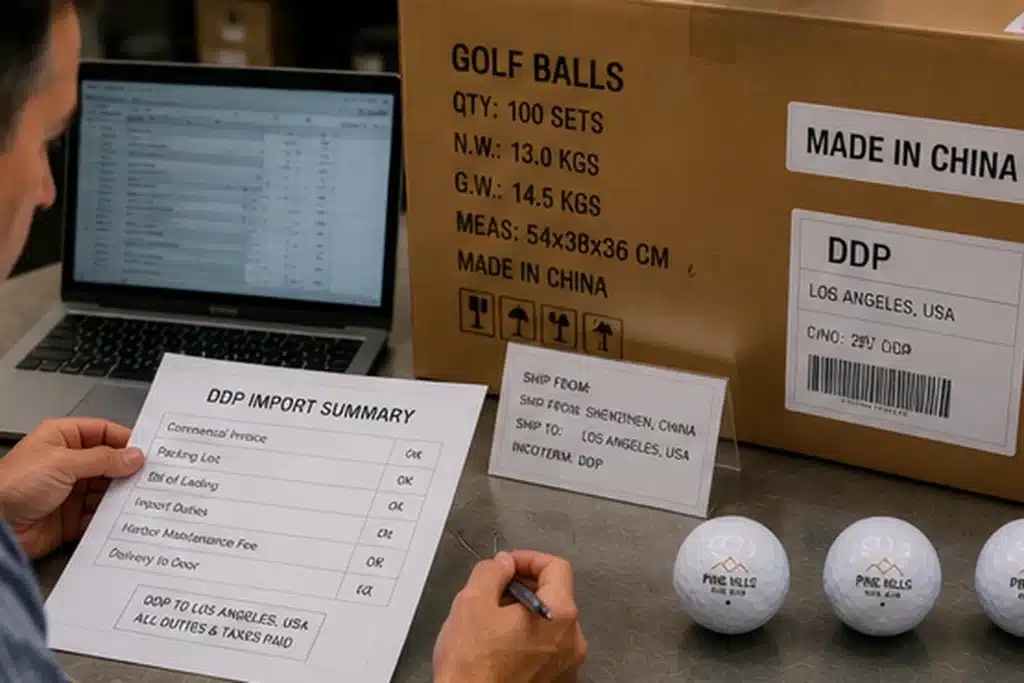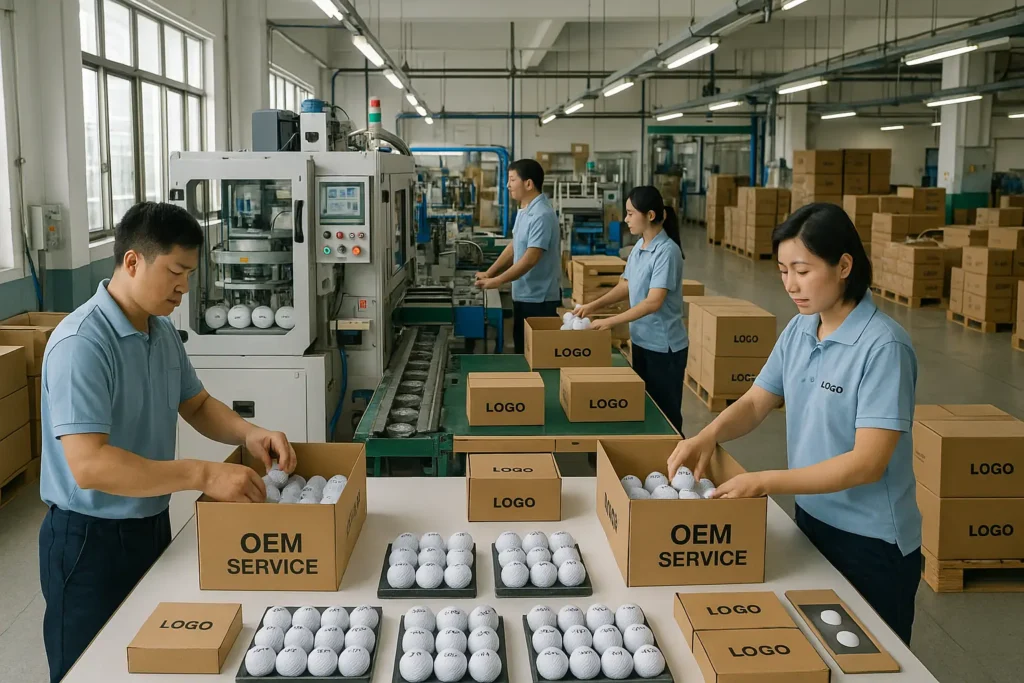
Your OEM golf ball order rarely fails at the quote. It fails when samples, tooling, quality, payment, and inspection were never locked.
To purchase OEM golf balls in Asia, use a 7-step SOP: define specs, verify the factory, lock tooling and USGA responsibility, approve Golden Sample and PPS, control payment terms, run AQL/PSI inspection, then hand off Incoterms and delivery. Do not pay the balance before PSI Pass.
The real nightmare is not a supplier quoting too high. It is a perfect sample followed by weak bulk goods, a private mold you cannot move, or an “audited factory” quietly sending your order somewhere else.
This guide turns sourcing from supplier guessing into a pass/fail procurement system. Use it before your deposit, not after a container of mismatched golf balls arrives.
What is the 7-step OEM procurement SOP?
A supplier list is not a procurement system. Your risk starts after the quote, when samples, tooling, payment, inspection, and shipment handoff are still vague.
How to purchase OEM golf balls in Asia starts with control gates, not supplier names. Your team should define specs, verify the real factory, lock tooling and USGA responsibility, approve Golden Sample and PPS, write payment and rework clauses, run PSI, and only then hand off Incoterms.
The buyer gates from RFQ to delivery handoff
A weak golf ball sourcing process usually sounds harmless at first. You ask for “good quality golf balls with logo.” The supplier sends polished photos, a friendly price, and a few samples that feel fine on the range. Then the bulk order arrives with paint rub, logo drift, inconsistent compression, or packaging that does not match the approved proof. Now everyone is arguing from memory.
A serious OEM golf ball procurement SOP removes memory from the deal. Each step should produce written evidence: RFQ fields, factory identity, tooling ownership, Golden Sample approval, PPS approval, inspection standard, payment trigger, and Incoterms handoff. That evidence is your dispute firewall.
| Pain / decision | Buyer gate | Required evidence | Acceptance action |
|---|---|---|---|
| vague RFQ | define specs | construction, cover, compression, packaging | send measurable RFQ |
| hidden factory risk | verify real factory | license, audit, dated line video | approve no-subcontracting terms |
| tooling / compliance dispute | lock NRE and USGA owner | tooling invoice, CAD owner, fee owner | sign PO annex |
| sample vs bulk mismatch | approve Golden Sample / PPS | signed sample, real-line PPS, retained samples | freeze production standard |
| payment dispute | lock terms | PI / PO, rework clause, PSI trigger | balance after PSI Pass |
| quality dispute | run AQL / PSI | ISO 2859-1 plan, inspection report | Pass before release |
| delivery handoff | define Incoterms | FCA / FOB / DDP rule, documents | transfer to logistics model |
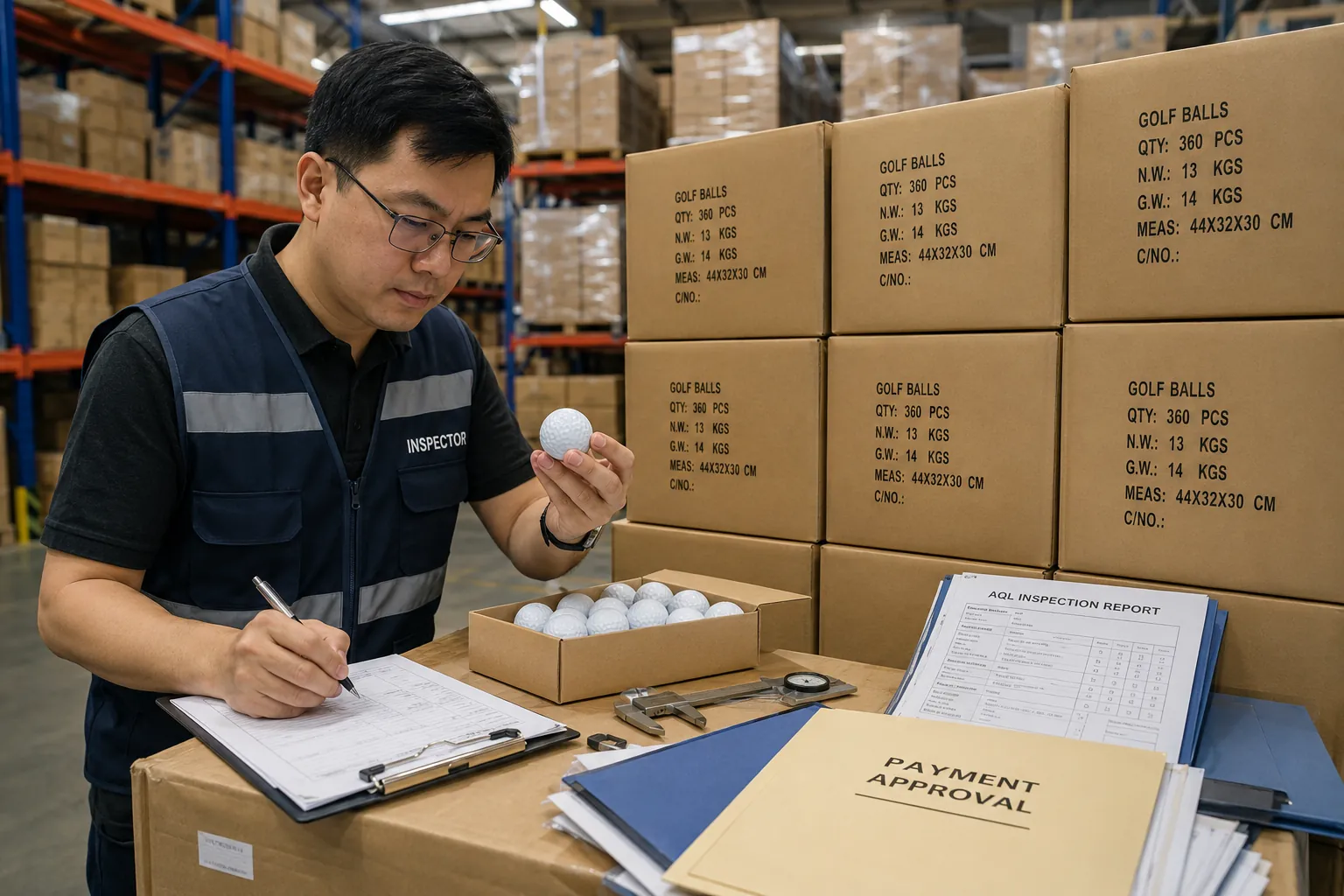
Request a procurement pack with RFQ spec sheet, factory verification, tooling annex, Golden Sample record, PPS approval, AQL plan, PSI provider, and Incoterms line. Verify whether each step has one buyer-side owner, one supplier-side owner, a deadline, and a pass/fail gate.
Do not pay deposit until the RFQ, factory identity, tooling responsibility, sample path, payment trigger, and inspection method are written. Smaller DTC brands need this discipline even more than large brands, because your leverage is strongest before money moves.
✔ True — A sourcing SOP prevents disputes before they start.
Every step should create evidence: a spec sheet, approval record, PO clause, inspection plan, or document pack. That turns OEM sourcing into a controlled process.
✘ False — “Supplier selection alone protects your order.”
A capable supplier can still disappoint you if tooling, samples, payment, inspection, and rework rules are left to email memory.
How do you brief specs and verify the factory?
A vague RFQ invites a vague quote. A polished sales office also does not prove the audited site will make your actual golf balls.
Your RFQ should define the ball and verify who will actually make it. Do not rely on “same as Pro V1” or sales-office photos. Your team should specify construction, cover, compression, packaging, quantity, QC method, and require a no-subcontracting rule for core processes.
RFQ brief + no-subcontracting gate
Your first risk is not price. It is losing control of who actually makes your balls.
For the RFQ, write measurable fields: construction, cover system, compression target, surface finish, logo colors, Pantone references, packaging structure, carton marks, quantity tiers, sample path, QC method, and intended channel. If the product is a premium construction, define the measurable performance window instead of writing “same as Pro V1.” That phrase creates confusion, IP risk, and a very expensive shrug later.
For factory verification, ask for legal entity, production site, equipment list, same-category production evidence, export experience, and written acceptance of third-party PSI. If the supplier uses partner facilities, that must be disclosed. Hidden subcontracting in golf ball manufacturing is dangerous because your approved capability may not be the capability that touches your order.
Request a factory verification pack showing legal entity, production site, core-process ownership, equipment list, dated SKU-specific production-line video, PSI acceptance statement, and no-subcontracting confirmation for core molding, mantle forming, urethane casting, injection molding, coating, printing, and final assembly.
| Buyer risk | What to request | Supplier behavior | Acceptance action |
|---|---|---|---|
| vague spec | construction, cover, compression, packaging | “same as Pro V1” only | reject RFQ until measurable |
| sales-office-only supplier | legal entity and factory site | cannot identify production location | pause deposit |
| hidden subcontracting | no-subcontracting clause | refuses process ownership | require written approval rule |
| fake production evidence | dated SKU line video | generic factory video | request batch / SKU proof |
| weak QC readiness | PSI acceptance statement | refuses third-party PSI | exclude supplier |
A warning sign appears when the supplier refuses a no-subcontracting clause or only sends generic factory videos. A real production update should show SKU, batch ID, date, and process stage. Your order should not disappear into a workshop nobody approved.
A practical PO line can read: Supplier shall not subcontract core processes, including core molding, mantle forming, urethane casting, injection molding, coating, printing, or final assembly, without the buyer’s prior written approval.
Verify production site and core-process ownership before deposit. Your acceptance gate is simple: the supplier must accept no-subcontracting terms and third-party PSI before you treat the quote as serious.
Who owns tooling and USGA responsibilities?
Tooling and compliance feel like side issues until you pay for them and still cannot move the project, reuse the files, or control the listing path.
Tooling ownership and USGA responsibility must be assigned before the mold or submission begins. Your PO should state who owns the mold, dimple master, CAD files, logo plates, and packaging dies, and who pays for USGA submission, annual resubmission, sample selection, and future changes.
Tooling ownership + conformance fee owner
Custom golf ball tooling ownership must be written before the tooling is made. If your brand pays for a private dimple mold, dimple master, inserts, CAD work, drawings, logo plates, packaging dies, or project-specific derivatives, the PO should say what belongs to you, what the supplier merely stores, and what the supplier may not use for another customer.
This is where “free tooling” can become expensive. Free may mean the factory owns the mold, controls the CAD files, and limits your ability to move production later. Paid tooling is not automatically buyer-owned either. Ownership exists when the contract says it exists.
As of 2026, USGA submission responsibility should also be assigned before the PO is signed. The 2026 USGA Golf Ball Conformance Submission Guidelines list new submission and annual resubmission at US$1,200 per ball type for 24 sample balls, with a late submission fee listed at US$1,500 per ball type when accepted. Your team should agree who pays, who selects production-representative samples, who controls resubmission, and what compliant wording may be used. Avoid loose phrases like “USGA Approved.” Use “Conforms with the Rules of Golf” only when verified and permitted.
| Pain / decision | Asset or cost | Contract risk | Acceptance action |
|---|---|---|---|
| private mold lock-in | mold and inserts | factory claims asset ownership | buyer-owned tooling clause |
| dimple IP loss | dimple master and CAD | cannot move supplier later | CAD and drawings transfer rule |
| logo / packaging control | plates and dies | reuse without permission | non-use and custody clause |
| USGA budget surprise | submission / resubmission fee | nobody owns cost | USGA fee owner clause |
| model identity drift | markings, finish, color, construction | new ball type issue | written change approval |
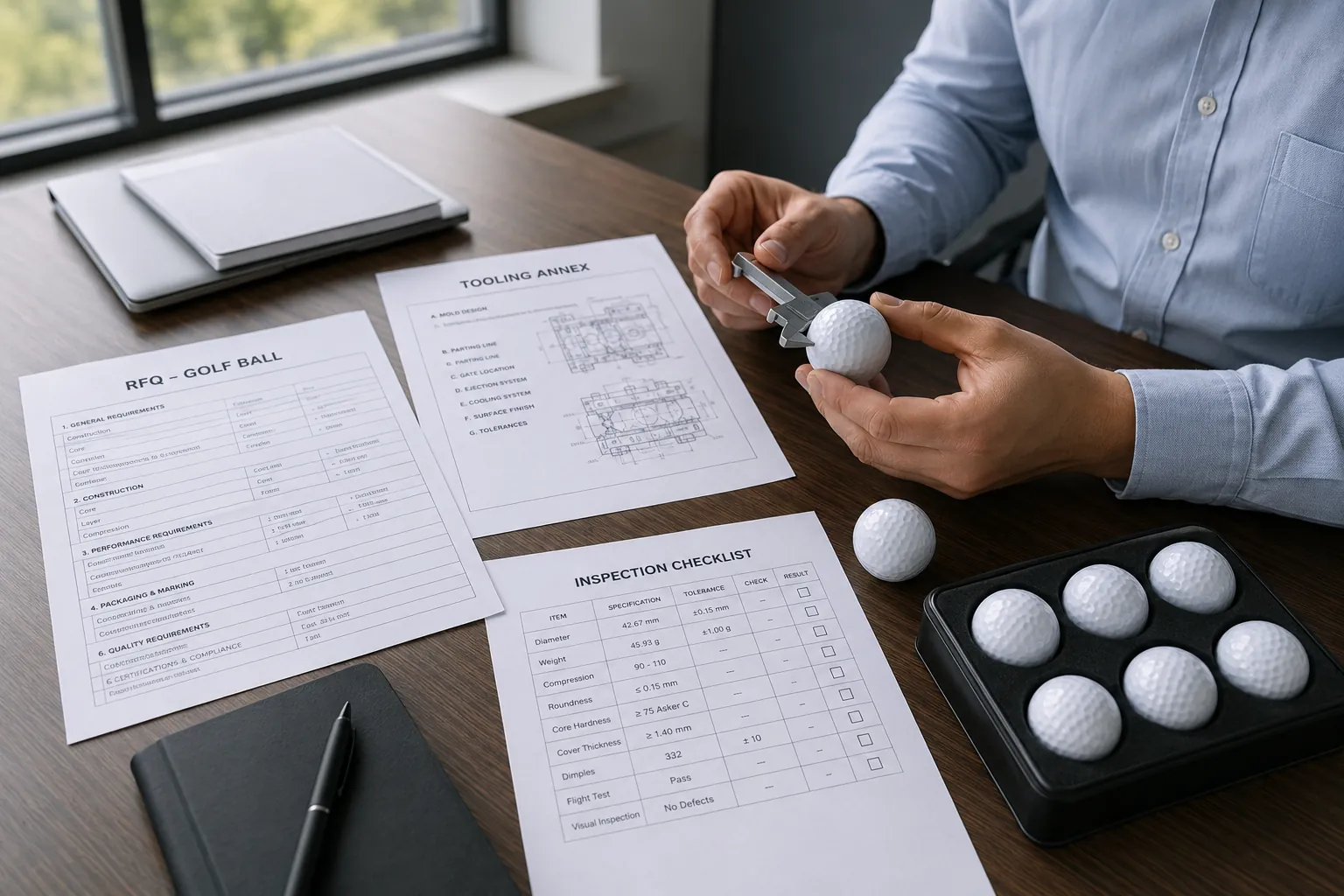
A warning sign appears when tooling fee is paid but CAD files, dimple master, and ownership language are missing. Your tooling payment should buy control, not dependence.
A practical clause can read: Upon full payment of tooling or NRE fees, all project-specific tooling, molds, inserts, dimple masters, CAD files, drawings, logo plates, packaging dies, and derivatives shall be owned by the buyer; supplier holds such assets only as custodian and may not use them for any third party.
Request tooling ownership annex and USGA responsibility annex. Verify whether physical tooling, CAD files, dimple master, logo plates, and packaging dies are included in the paid NRE. Do not authorize tooling or conformance submission until ownership, custody, non-use, sample selection, fee owner, and annual responsibility are written.
✔ True — Paying for tooling does not automatically prove ownership.
Ownership should cover the physical mold, inserts, CAD files, drawings, dimple master, logo plates, and project-specific derivatives. Put it in the PO before tooling starts.
✘ False — “Free tooling is always cheaper.”
Free tooling may reduce today’s invoice but limit your control tomorrow. If the asset matters to your brand, ownership language matters more than the word free.
How do you lock the Golden Sample and PPS?
A few beautiful samples can create false confidence. Bulk production is where weight, compression, coating, logo position, and packaging can drift.
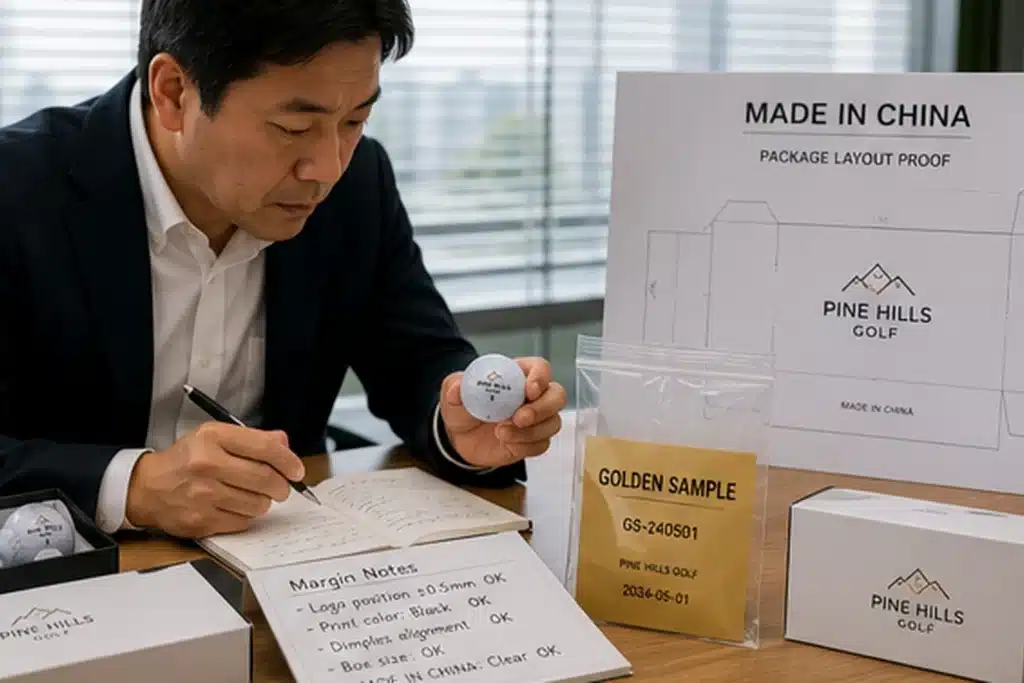
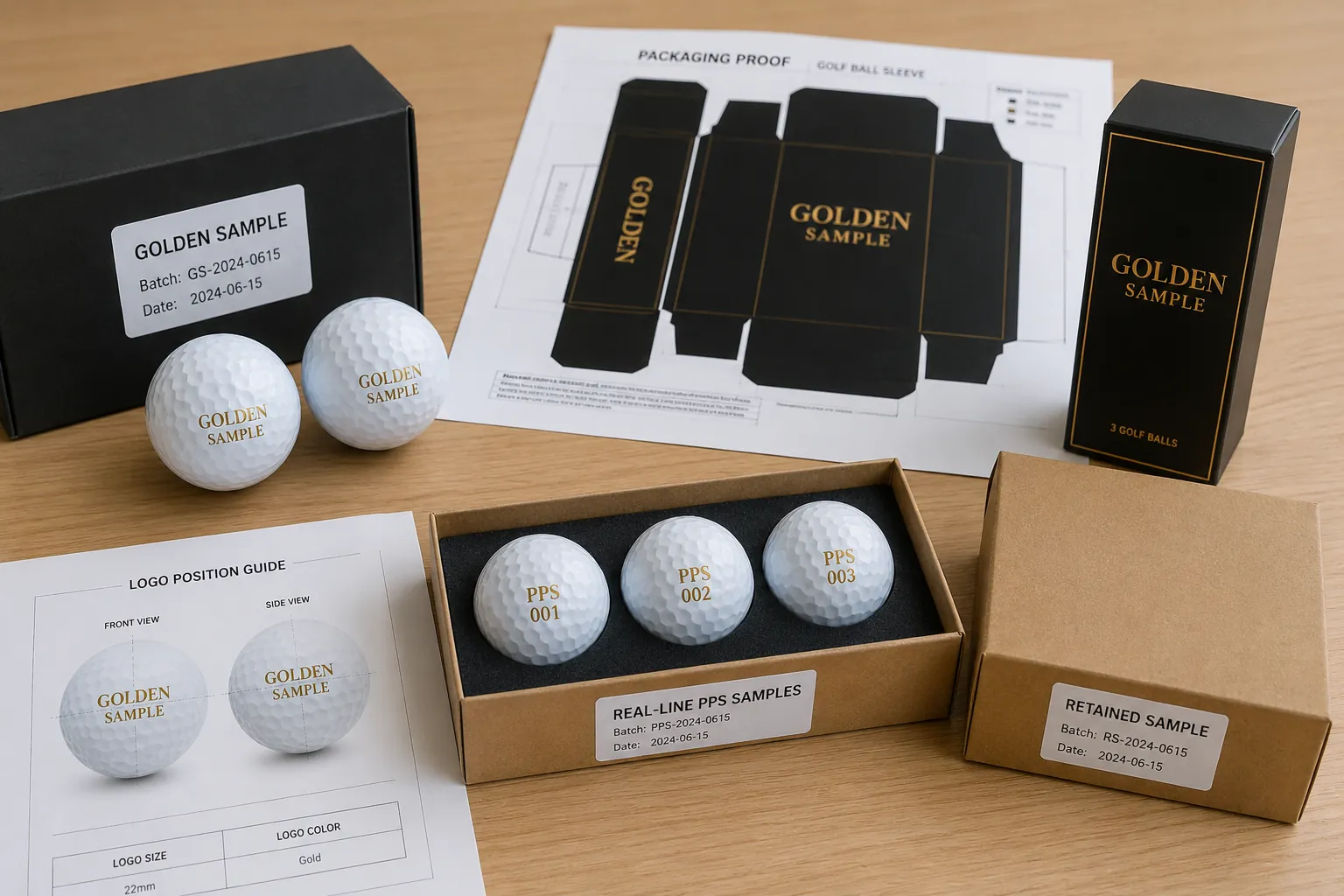
The Golden Sample is the production reference; the PPS proves the real line can repeat it. Your team should approve and seal the Golden Sample, then require pre-production samples from the actual mass-production line before bulk production, vessel booking, or balance-payment planning.
Counter-sample vs real-line PPS
The Golden Sample is the legal reference, not a souvenir. In Golden Sample golf ball manufacturing control, the signed sample defines the ball model, cover material, finish, logo position, compression target, packaging, carton marks, visual standard, sample ID, approval date, and retained-sample control.
The PPS, or pre-production sample, has a different job. A counter-sample proves the factory can make one good ball. Pre-production sample PPS approval proves the real mass-production line can repeat it under the intended process.
For premium products, your PPS pack may include ATTI compression data, weight, diameter, hardness, cover checks, coating adhesion, print alignment, and retained samples. For higher-risk constructions, add X-ray, CT, or cut-ball evidence when practical. The point is not to bury everyone in tests. The point is to define the standard before bulk production starts.
| Buyer risk | Golden Sample control | PPS control | Acceptance action |
|---|---|---|---|
| good sample, bad bulk | signed reference sample | real-line sample match | freeze production standard |
| logo drift | position and color record | print trial on real process | approve before bulk |
| compression drift | compression target | same-lot reading | require batch-linked data |
| coating failure | finish and durability standard | coating sample from line | run adhesion / rub check |
| packaging mismatch | sleeve, box, carton marks | pack-out PPS | approve package sample |
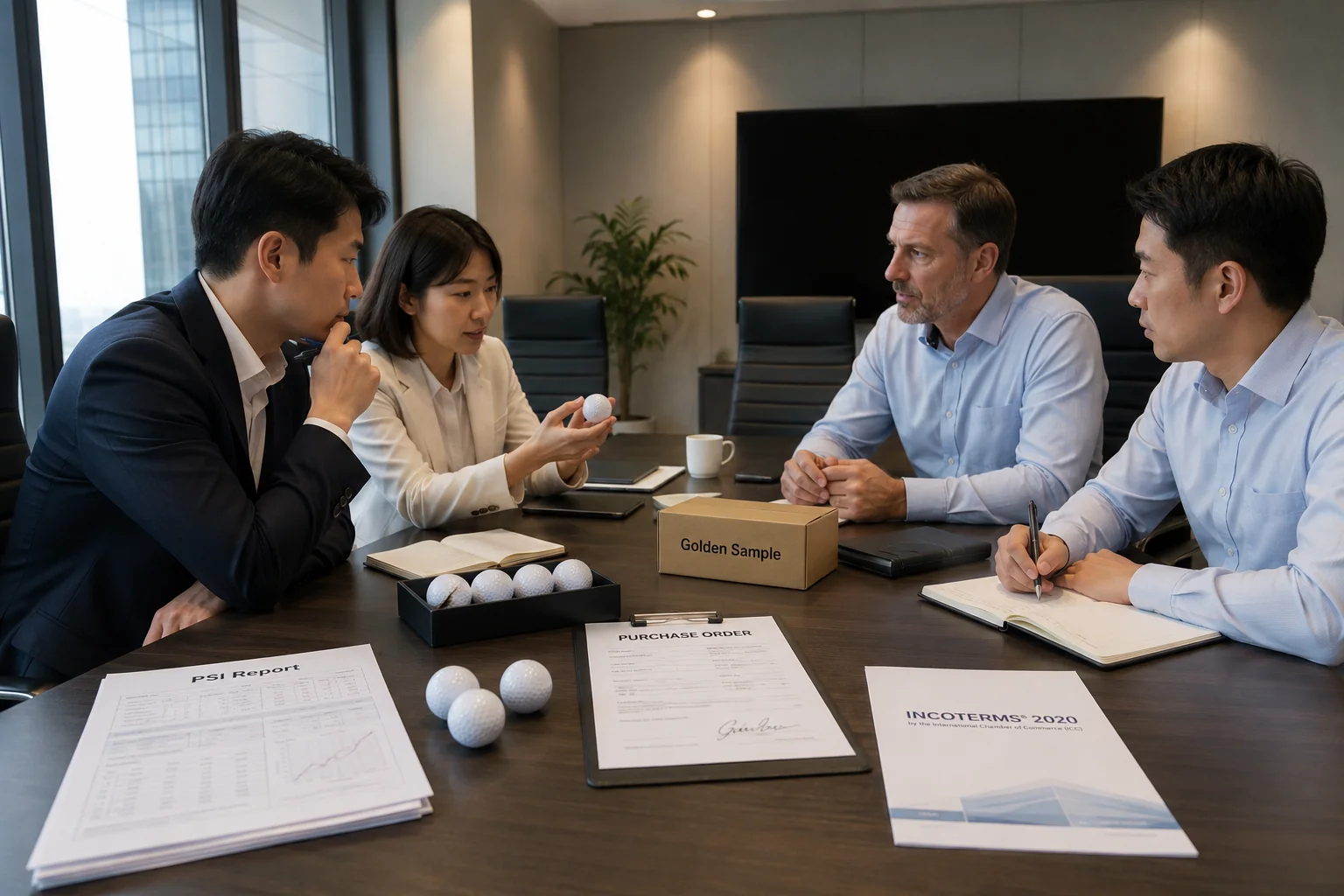
A warning sign appears when a supplier refuses real-line PPS before bulk production. Supplier photos can help communication, but they cannot replace signed physical samples and retained records. Photos are nice. Physical evidence pays the rent.
The approved Golden Sample shall serve as the binding production reference. It includes ball model, cover material, finish, logo position, compression target, packaging, carton marks, visual standard, sample ID, approval date, and retained-sample control. Any change requires written buyer approval.
Request a Golden Sample approval record and real-line PPS pack. Verify sample ID, batch ID, production line, test method, approval date, retained sample location, and buyer signature. Mass production should not begin until PPS matches the Golden Sample and buyer approval is written.
✔ True — Counter-sample proves possibility; PPS proves repeatability.
A counter-sample may come from a controlled sample setup. PPS should come from the actual mass-production line, using the process that will make your bulk order.
✘ False — “Supplier photos can replace Golden Sample approval.”
Photos cannot define compression, coating feel, packaging finish, retained-sample control, or inspection authority when a dispute begins.
How do payment terms and PSI prevent disputes?
Your cash is leverage until inspection passes. Once the balance is paid, quality disputes become slower, uglier, and more expensive.
Never release the 70% balance against supplier photos alone. Your PO should state that balance payment is triggered only after a buyer-approved PSI provider confirms the bulk lot matches the Golden Sample and passes the agreed ISO 2859-1 AQL plan.
No PSI Pass, no balance
A common OEM golf ball payment term is 30% deposit and 70% balance, but the payment trigger matters more than the split. “Balance before shipment” is too vague. “Balance after PSI Pass” is a control system.
Do not write “good quality” in an OEM purchase order. Write golf ball AQL inspection standards. Golfara recommends that bulk golf ball orders follow ISO 2859-1 Single Sampling Plan, Normal Inspection, General Inspection Level II, with Critical defects AQL 0, Major defects AQL 2.5, and Minor defects AQL 4.0 unless otherwise agreed in writing. These values are contract choices, not automatic law. They work because both sides know the pass/fail gate before production starts.
For premium cast-urethane programs, add batch-linked checks such as ATTI compression distribution, weight, diameter, cover thickness, concentricity, coating quality, and retained samples. A σ≤2–3 compression spread can be used as an internal RFQ benchmark when tied to method, sample ID, and batch data.
| Pain / decision | Contract gate | Evidence required | Acceptance action |
|---|---|---|---|
| supplier requests early balance | payment trigger | PSI Pass report | hold balance until Pass |
| vague quality promise | AQL plan | ISO 2859-1 sampling method | define Critical / Major / Minor |
| premium compression drift | statistical QC | ATTI data and σ target | reject if outside agreed gate |
| coating / logo defects | visual and functional QC | inspection photos and samples | require rework / sort |
| rework dispute | responsibility clause | defect type and reinspection path | assign cost and deadline |
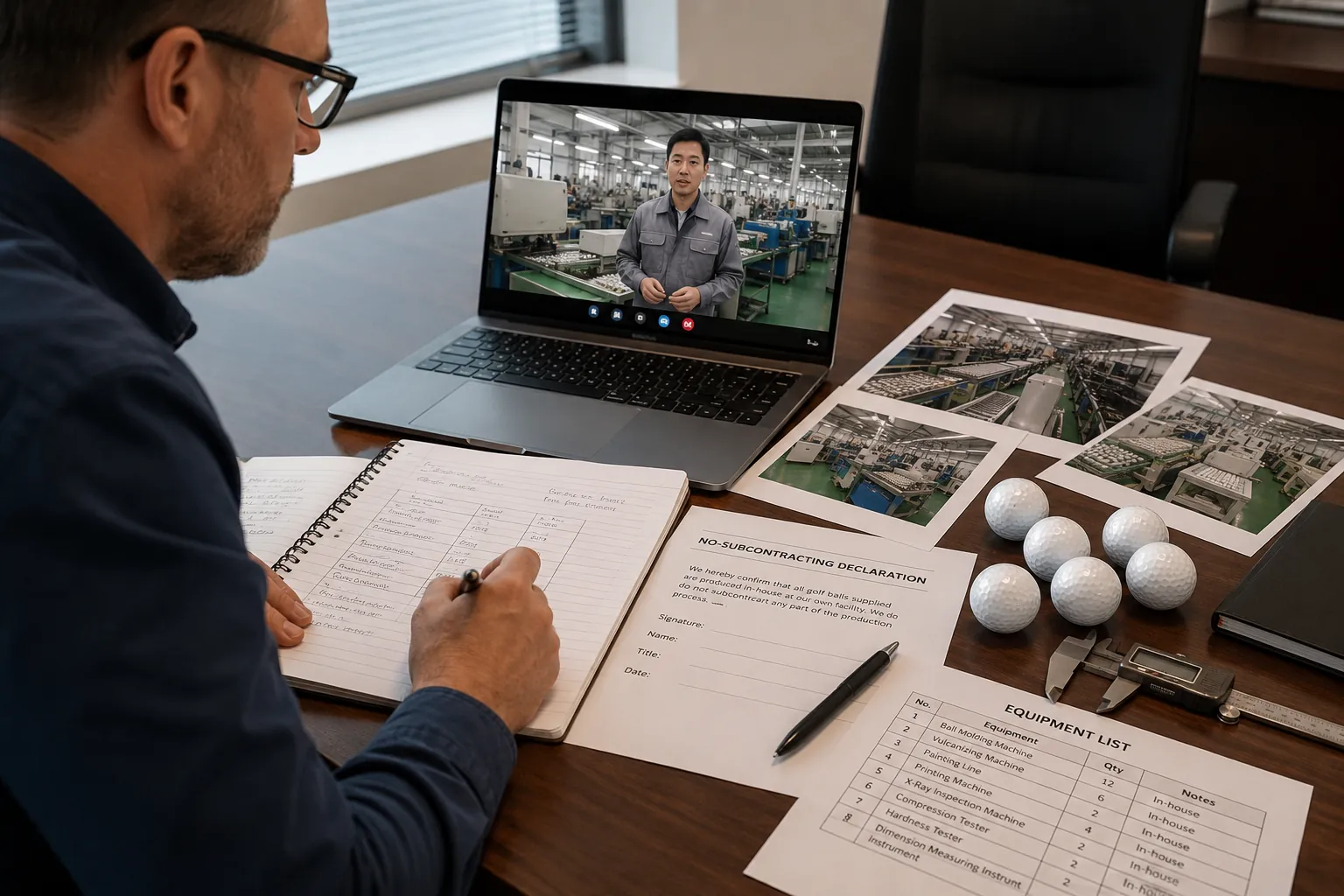
A serious red flag appears when a factory accepts the order but refuses third-party PSI. That removes your independent payment gate.
Final inspection shall follow ISO 2859-1 Single Sampling Plan, Normal Inspection, General Inspection Level II, with Critical defects AQL 0, Major defects AQL 2.5, and Minor defects AQL 4.0 unless otherwise agreed in writing. The 70% balance shall be released only after a buyer-approved third-party PSI provider issues a Pass report confirming conformity with the Golden Sample and agreed AQL plan.
Request an AQL inspection plan, PSI provider agreement, and balance-payment clause. Verify that the PSI provider checks Golden Sample match, packaging, carton marks, weight, diameter, compression, print, finish, and defect classes. For deeper inspection planning, review Golf Ball QC in China: The 4 Must-Have Testing Processes before approving production.
✔ True — Quality must become a payment gate.
AQL and PSI turn quality from a promise into a pass/fail event. Your balance payment should wait until the bulk lot passes the agreed inspection plan.
✘ False — “Supplier final photos are enough to release the balance.”
Photos can hide sampling bias, packaging mismatch, coating issues, compression drift, and carton-level defects. No PSI Pass, no balance.
Where do Incoterms hand off landed cost?
Incoterms are not just shipping vocabulary. They decide where tasks, costs, documents, and risk move from supplier to buyer.
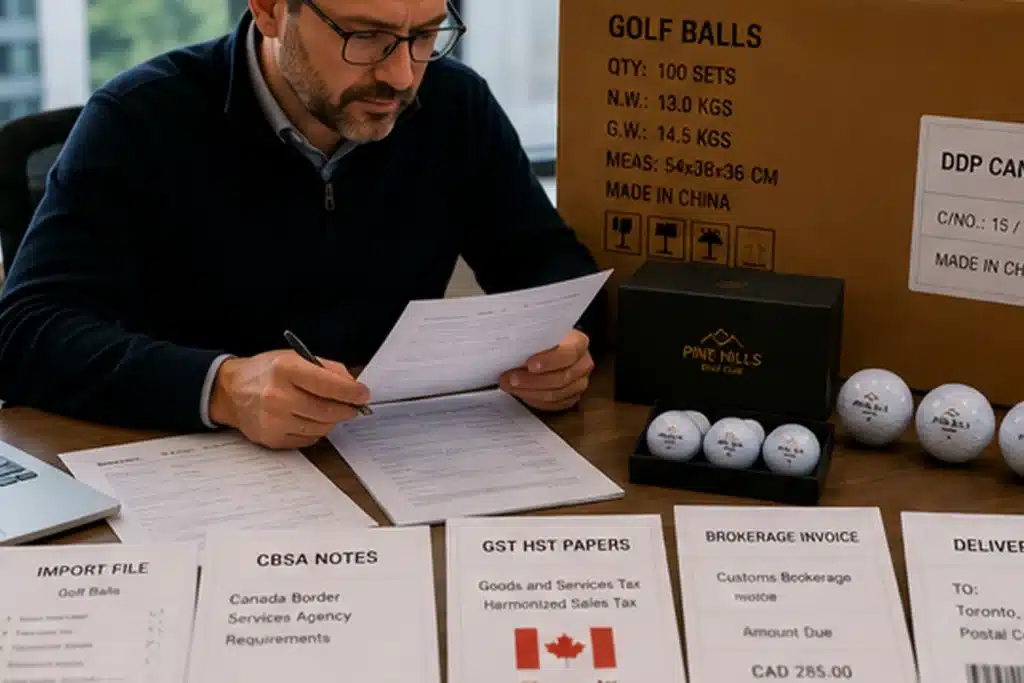
Incoterms decide where the procurement SOP hands off to logistics. Your PO should name the Incoterms rule, place or port, and version, then separate factory acceptance from landed-cost modeling. Use FCA, FOB, or DDP only when risk and document responsibility are clear.
FCA, FOB, or DDP handoff
Your procurement SOP ends at factory acceptance and document handoff. Your logistics model owns delivery risk. Mixing those two can create arguments over export pickup, carrier transfer, customs responsibility, port charges, carton marks, and warehouse arrival.
FCA can be cleaner when the buyer controls the carrier or uses multimodal logistics. The named place matters. FOB remains common for sea shipments, but the named port and loading responsibility must be clear. DDP can be useful when your team wants simplicity, but it must be itemized so you know what is included.
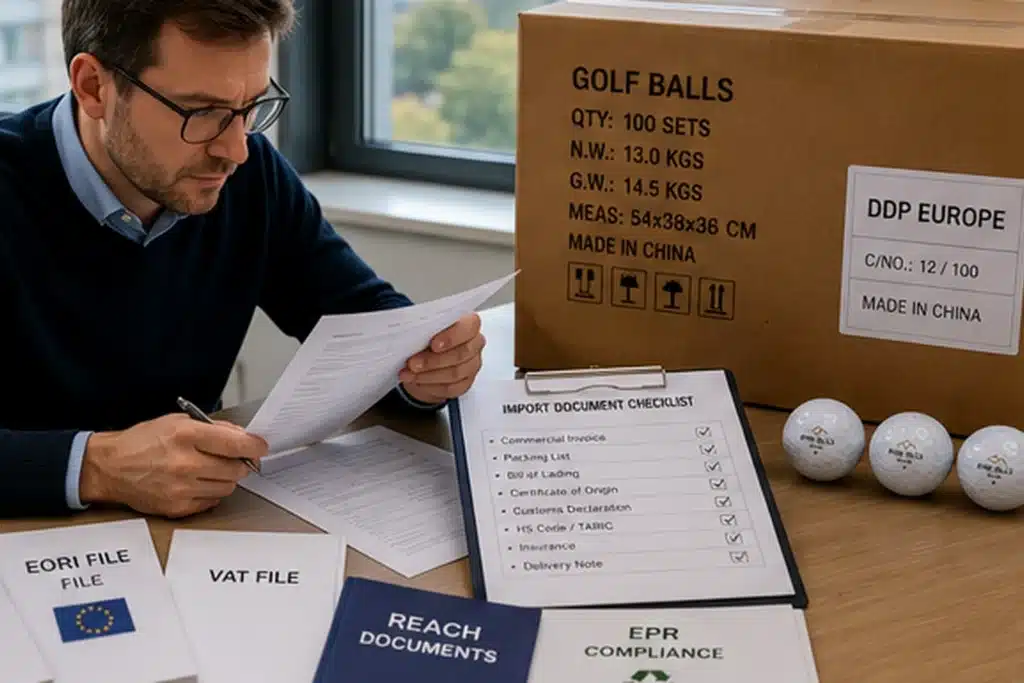
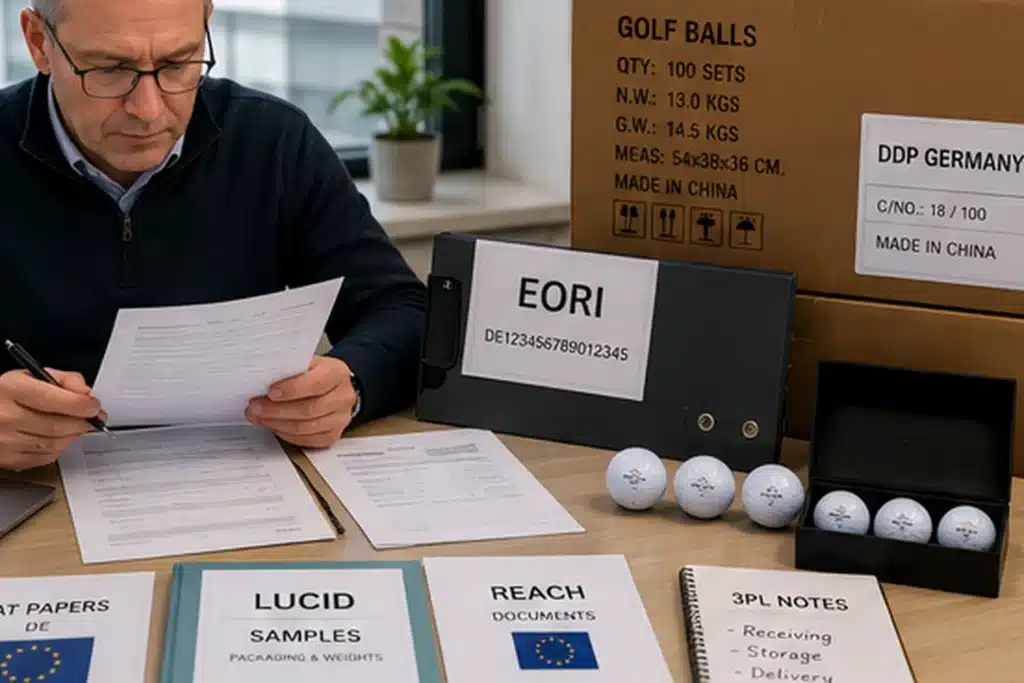
Documents also need a gate. Confirm commercial invoice, packing list, bill of lading or airway bill, declarations, HS code, carton marks, and consignee details before pickup. A clean document pack saves more stress than a heroic email chain at the dock.
| Buyer decision | Better when | Risk point | Acceptance action |
|---|---|---|---|
| FCA | buyer controls carrier / multimodal | named place unclear | write exact place and version |
| FOB | traditional sea shipment | risk point misunderstood | write named port and document owner |
| DDP | buyer wants simplicity | scope hidden or incomplete | demand itemized DDP quote |
| documents | shipment needs clean handoff | invoice / PL / marks mismatch | approve drafts before pickup |
| landed cost | buyer needs final margin | procurement article overextends | use landed-cost guide |
Request Incoterms line, named place or port, version, document pack, and landed-cost handoff owner. Verify whether the quote says EXW, FCA, FOB, DDP, or another term and whether it names the place or port precisely. Do not approve shipment release unless Incoterms, documents, carton marks, and landed-cost responsibility are clear.
For freight, customs, duty, DDP, and warehouse arrival modeling, use What’s the True Landed Cost When Importing Golf Balls from China? rather than stretching this procurement SOP into a logistics calculator.
FAQ
What is the standard payment term for OEM golf balls?
A common OEM golf ball payment term is 30% deposit and 70% balance, but professional buyers should tie the 70% balance to a buyer-approved PSI Pass report, not supplier photos.
No PSI Pass, no balance. Your PO should state which third-party inspection provider is accepted, which AQL plan applies, which Golden Sample defines the standard, and what happens if the lot fails. Some suppliers may negotiate different terms, but the principle stays the same: do not release your strongest leverage before independent inspection confirms the goods match the signed standard.
How do you verify a golf ball manufacturer in China?
To verify a golf ball manufacturer in China, check the legal entity, real production site, same-category production evidence, equipment list, dated SKU-specific line video, calibration records when available, and written acceptance of third-party PSI.
Marketplace badges are not enough. The no-subcontracting clause matters as much as the factory tour. Your supplier should confirm which site performs core molding, mantle forming, urethane casting, injection molding, coating, printing, and assembly. For key stages, request dated production-line video showing SKU, batch ID, and process location. A factory that refuses PSI or cannot identify the real site deserves caution.
What is a Golden Sample in golf ball manufacturing?
A Golden Sample is the signed physical reference for bulk production, defining the ball model, cover material, compression target, finish, logo, packaging, carton marks, and visual standard.
It should be sealed, labeled, photographed, and retained by the buyer and supplier. The PPS should then be made on the actual mass-production line and matched against that Golden Sample. Supplier photos are useful for updates, but they do not replace a signed physical reference. During PSI, inspectors should compare the bulk lot against the approved Golden Sample.
Do I own the mold if I pay for custom tooling?
You own the mold only if the PO says so. Paying a tooling or NRE fee does not automatically transfer ownership of the physical mold, CAD files, dimple master, inserts, or drawings.
Your tooling clause should state ownership, custody, maintenance, transfer rights, non-use for other customers, and what happens if you change suppliers. The factory may store the mold as custodian, but it should not use, copy, modify, transfer, display, or produce from your project-specific tooling for any third party without written approval.
What AQL level should I use for OEM golf balls?
Golfara recommends ISO 2859-1 Single Sampling Plan, Normal Inspection, General Inspection Level II, with Critical defects AQL 0, Major defects AQL 2.5, and Minor defects AQL 4.0 unless otherwise agreed.
ISO 2859-1 provides the sampling framework; your contract selects the defect classes and AQL levels. Tie the inspection to the Golden Sample, PPS approval, packaging standard, carton marks, and functional checks. For premium balls, add batch-linked compression, weight, diameter, cover, coating, and retained-sample criteria.
Can a factory subcontract part of my golf ball order?
A factory should not subcontract core golf ball processes without written buyer approval, especially core molding, mantle forming, urethane casting, injection molding, coating, printing, or final assembly.
Subcontracting is not always wrong, but hidden subcontracting is dangerous. If a process must move to another site, the buyer should know the location, process owner, inspection path, and risk change before deposit or production release. Require dated line videos with SKU and batch ID so your team can see where key stages actually happen.
Should I choose FCA, FOB, or DDP?
FCA can be cleaner when your team controls the carrier, FOB is common for sea shipments, and DDP can be simpler when you want the supplier to handle delivery under a clearly itemized scope.
Do not use Incoterms as casual labels. Name the rule, place or port, and version in the PO. Confirm the document pack before pickup. Keep procurement acceptance separate from landed-cost math, then use the dedicated landed-cost guide to model freight, customs, duty, DDP, and warehouse arrival.
Conclusion
OEM golf ball procurement works when every risk has a written gate. Your team should define specs, verify the real factory, lock tooling and USGA responsibility, approve Golden Sample and PPS, run AQL / PSI, and release balance only after the bulk lot passes.
Request a final procurement SOP pack with RFQ, verification, tooling annex, USGA fee owner, Golden Sample, PPS, AQL plan, PSI provider, payment trigger, and Incoterms handoff. Compare suppliers only after each accepts the same no-subcontracting, PPS, inspection, payment, and tooling terms.
You might also like — China’s Golf Ball Manufacturing Hubs: 2026 Capability & Selection Guide