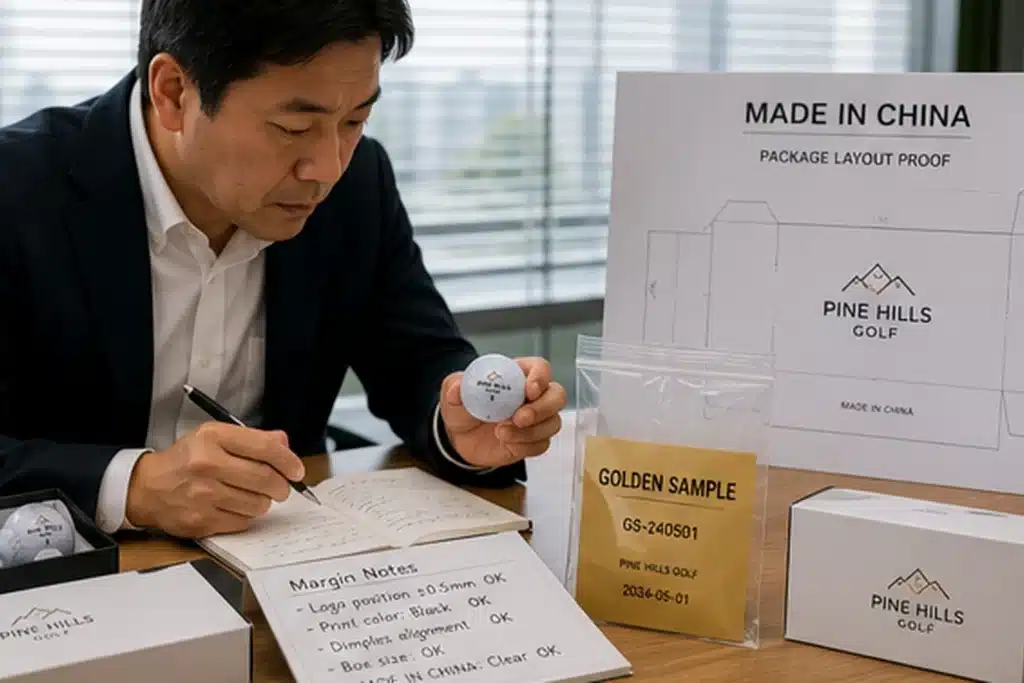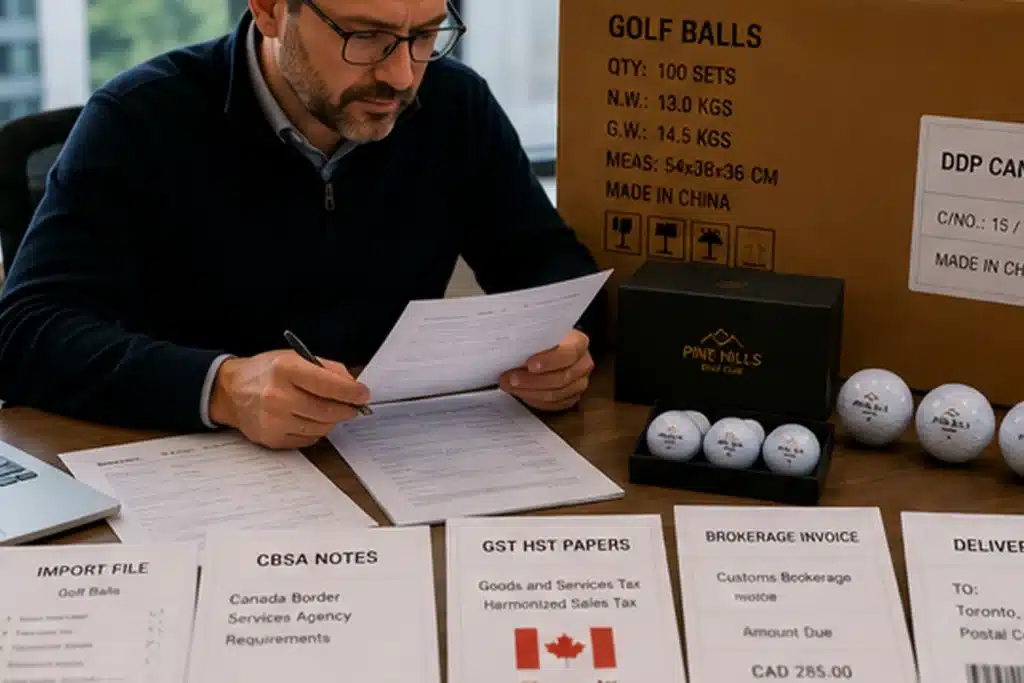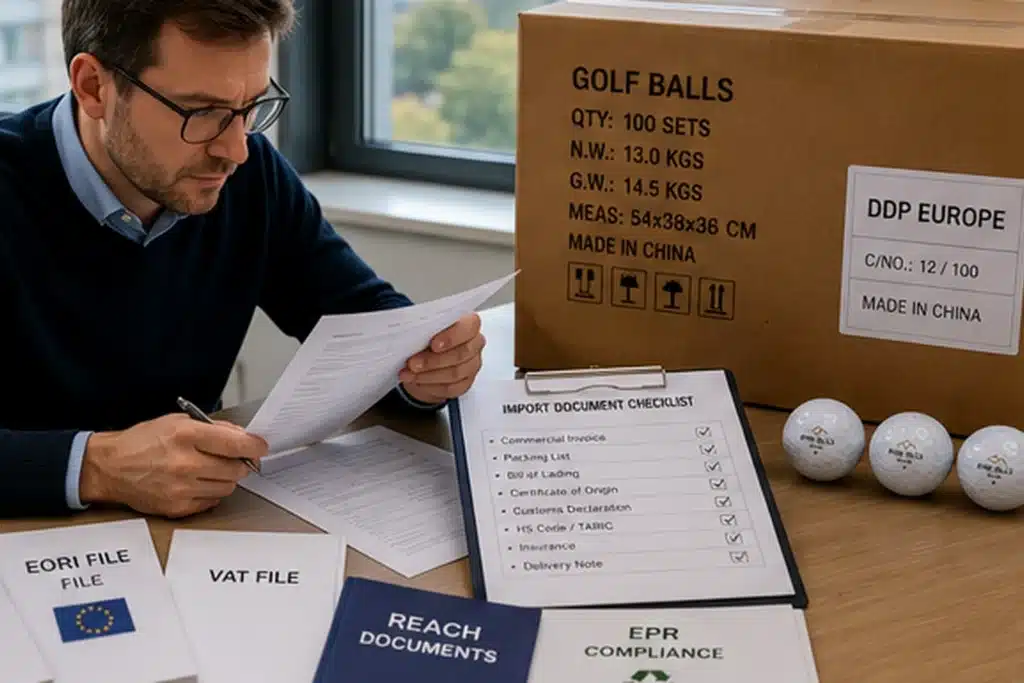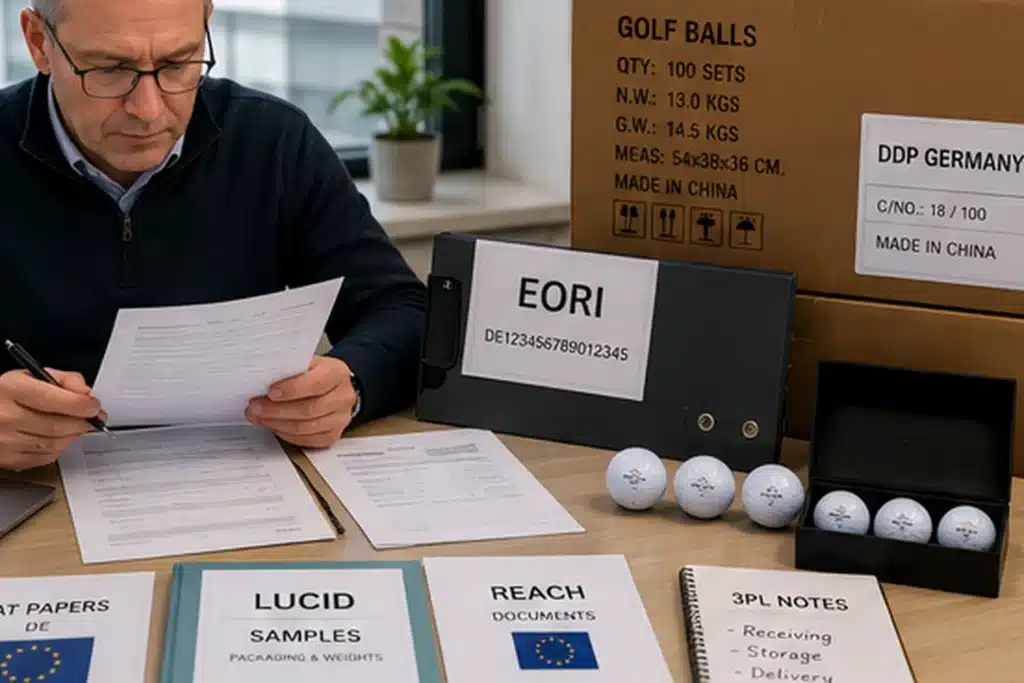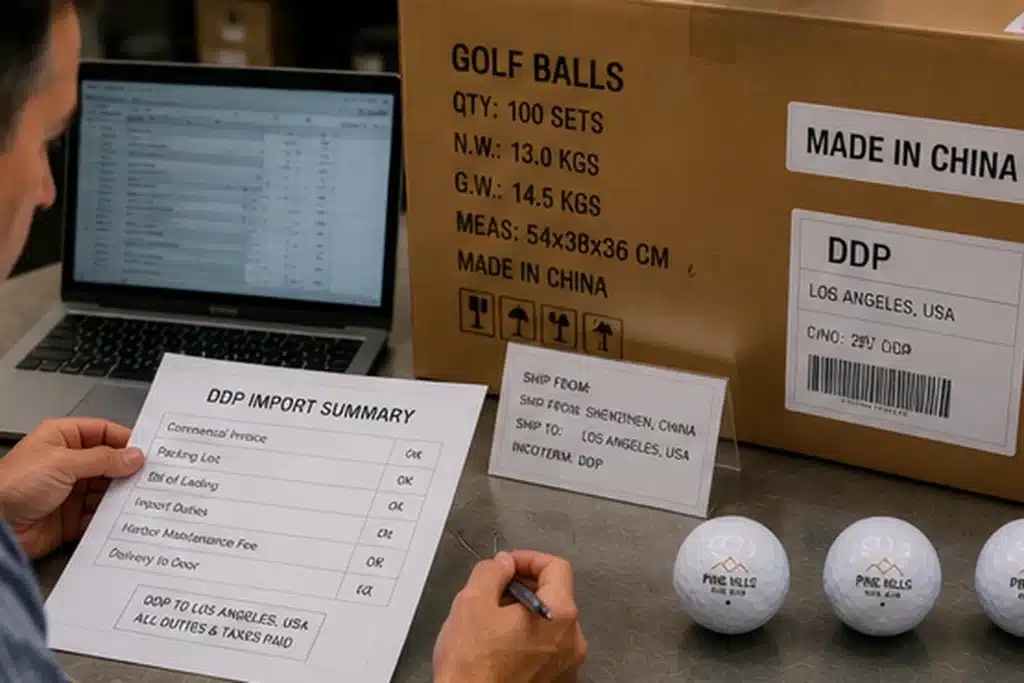
A good sample can still turn into a bad shipment if you negotiate specs, MOQ, inspection, IP controls, and delivery terms too late.
To source OEM golf balls from China safely, lock the RFQ and PO path before samples: construction, cover route, print, packaging, MOQ, supplier proof, QC evidence, IP controls, Incoterms, PSI, and ship-ready release. The strongest buyers use the RFQ to reduce avoidable complexity without weakening CTQ gates, batch traceability, or shipment-release evidence.
A Top 10 golf ball manufacturers in China list can help you build a shortlist. But the supplier you choose should prove factory control, repeatable batch quality, clear print and packaging costs, file-control discipline, and written PO terms before a sample makes the deal feel “almost done.”
To source OEM golf balls from China, follow five sourcing steps:
-
Define the product lane, channel, construction, cover route, packaging target, and launch risk.
-
Screen suppliers for factory control, QC proof, RFQ quality, and IP-safe behavior before full file disclosure.
-
Quote print, packaging, MOQ, FOB, and DDP under the same approved specification.
-
Write CTQ gates, PSI rules, sample-fee credit, IP controls, change-control rules, and acceptance criteria into the PO.
-
Define lead time by final approval to PSI-passed ship-ready / EXW release, not by vague production days.
The old sourcing question was “Can this factory make my golf ball?” The better PO question is “Can this supplier protect your margin, batch consistency, packaging cost, IP position, and delivery date after the sample is approved?”
How should you screen suppliers before RFQ?
You may move quickly because the supplier replies fast, but a fast quote is not the same as factory control or production discipline.
Before RFQ, screen suppliers by factory control, not by how fast they quote. Ask for catalog focus, process media, QC equipment, intended-use questions, compression/cover knowledge, and one anonymized batch file. A supplier that only gives price is not ready for your PO.
The first CPO mistake is treating a quote as proof. A quote proves the supplier can answer an email. It does not prove they own the production line, understand your channel, control print registration, or can stop bulk from drifting after sample approval.
A stronger supplier asks better questions. They should ask whether the ball is for range, corporate gift, DTC retail, tournament-facing resale, or distributor replenishment. They should ask about construction, cover family, compression target, print positions, packaging, Incoterms, and PSI ownership. If the first reply is only “price is X,” you still have no sourcing control.
| Pain/decision | Better supplier signal | Risk signal | Buyer move |
|---|---|---|---|
| Factory identity | Golf-ball-focused catalog | Sells many unrelated products | Request process video |
| RFQ quality | Asks intended use and specs | Only sends price | Send structured RFQ sheet |
| Technical fit | Explains cover/process options | Uses generic premium terms | Ask TPU/Cast declaration |
| Schedule fit | Breaks lead time into steps | Says about one month | Ask for ship-ready date |
| QC fit | Shares batch report example | Only sample photos | Request AQL/CTQ template |
How do you spot vertical factories?
A vertical golf ball factory usually looks narrower than a broad sporting-goods supplier. It shows ball construction, covers, printing, packaging, QC, and export workflow instead of trying to sell every golf product under one roof.
If the website sells golf balls, clubs, bags, apparel, training aids, and random accessories together, do not assume the supplier is a bad partner. Treat it as a reason to verify who controls production. Ask for a short video or 6–8 photos showing weighing, diameter screening, compression testing, print registration, coating, curing, and kitting.
The deliverable is simple: catalog, production media, QC equipment list, one anonymized batch QC example, and a clear rule for who receives full files. Do not proceed to samples until the supplier can explain specs, MOQ logic, lead-time steps, QC proof, and file-control discipline in writing. A fast supplier is useful. A structured supplier is safer.
✔ True — Fast replies are useful, but structured replies are safer.
A professional supplier should answer with options, constraints, and proof. Speed alone does not prove factory control, line access, or sample-to-bulk stability.
✘ False — “If the supplier replies quickly, the order will ship smoothly.”
Fast sales communication can still hide weak scheduling, packaging delays, or missing QC ownership.
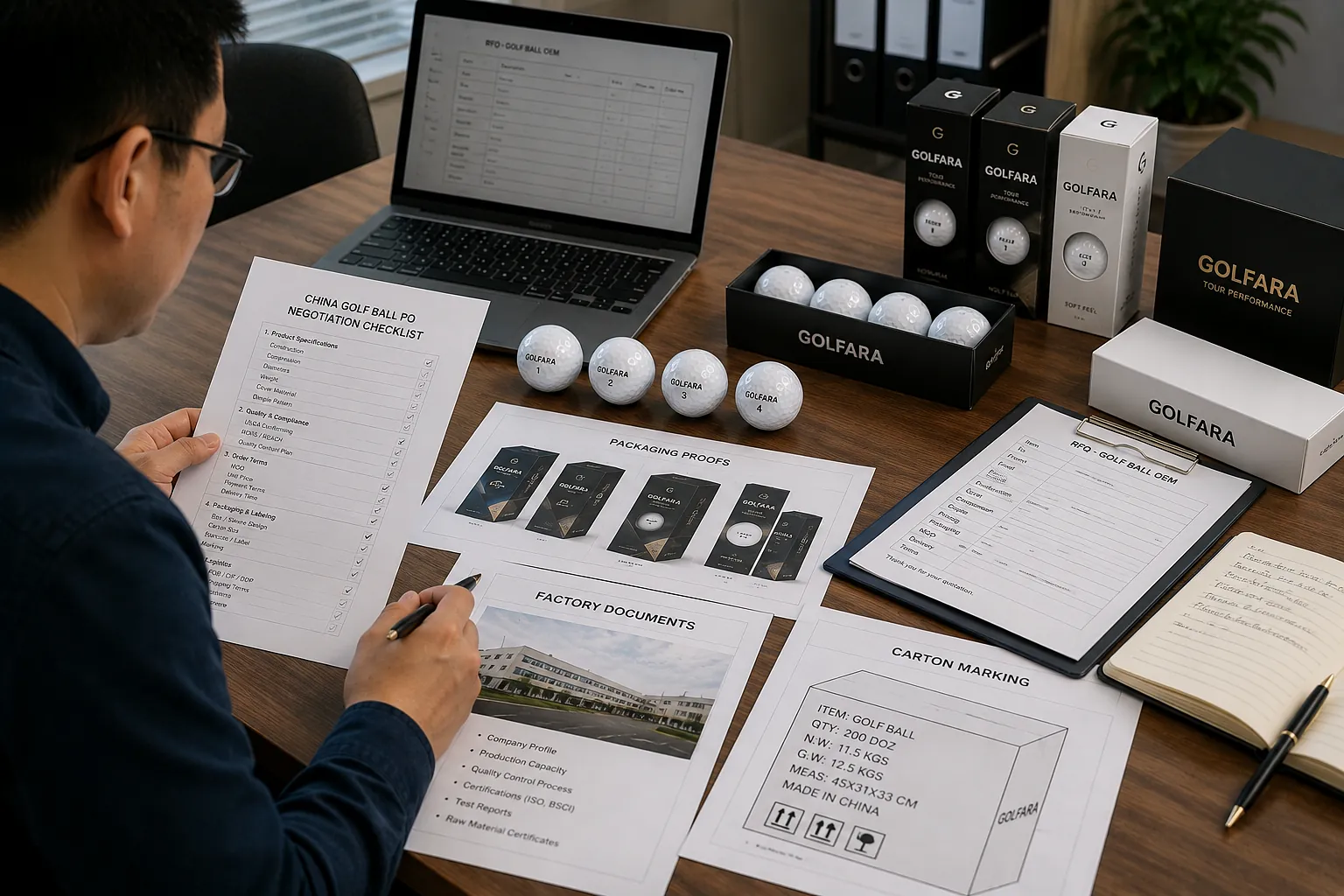
What specs must be locked before samples?
You lose leverage when you approve samples first and negotiate production tolerances, ownership, or inspection rules later.
Sample approval is not leverage; it is only one checkpoint. Before you pay sample fees, lock construction, cover process, compression window, print registration, coating tests, AQL/CTQ, mold or plate ownership, and change-control rules.
This is where “sample angel, bulk devil” begins. The supplier sends a beautiful sleeve. The ball feels good. The logo looks sharp. Then you ask about bulk compression tolerance, print adhesion, PSI ownership, plate fees, resample rules, and packaging version. Now the supplier knows you like the sample, and your bargaining power has already dropped.
Lock the technical windows first. Your pre-sample spec sheet should include 2-, 3-, or 4-layer construction, ionomer/Surlyn or urethane cover, TPU injection or cast urethane process, target compression, dimple or pattern requirement, coating plan, logo positions, registration tolerance, packaging version, and retained sample rule.
For tournament-facing SKUs, keep USGA limits and active List status separate from your production tolerance sheet. USGA weight and diameter limits are compliance floor checks; your PO still needs batch-control windows for compression, weight spread, print adhesion, packaging, and inspection. For the compliance side, use the dedicated guide to USGA conforming golf balls in China OEM.
| Spec risk | What to lock | Why it matters | PO wording / buyer move |
|---|---|---|---|
| Generic urethane | TPU injection or cast urethane | Controls cost, lead time, yield, and promise | State cover process in PO. |
| Feel drift | Compression target, method, and distribution | Protects sample-to-bulk match | Use same gauge method and batch spread rule. |
| Print failure | Registration, ink route, and adhesion test | Protects logo complaints | Define rub or adhesion check. |
| Wrong sample basis | Approved sample ID and retained sample | Stops sample switching | Attach sample ID to PO. |
| Supplier substitution | No-change rule | Stops hidden swaps | Require written buyer approval. |
| IP file exposure | NNN / no-use / no-resale / tooling ownership | Protects artwork, CAD, dimple, and customer data | Confirm before full disclosure. |
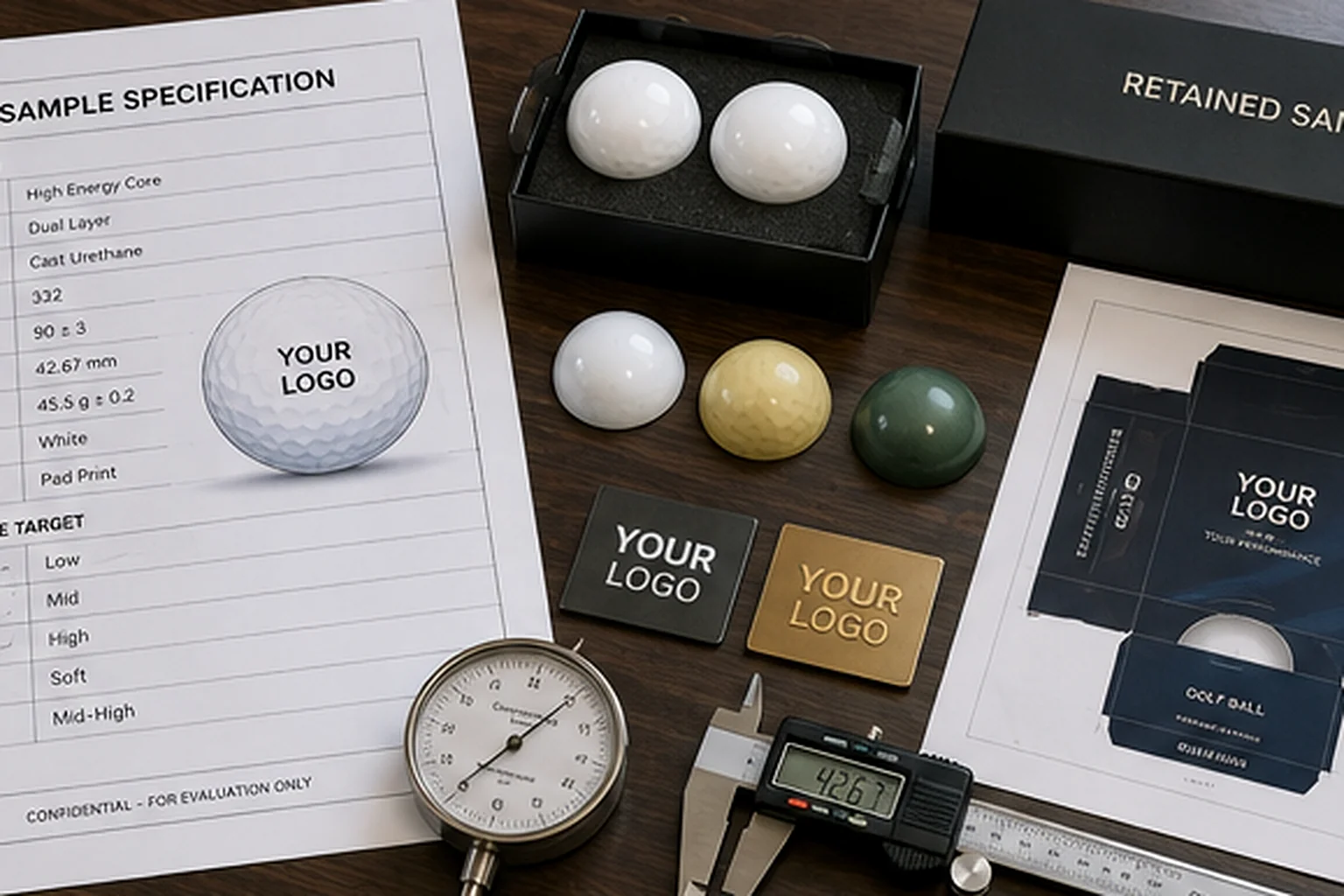
How should TPU vs Cast affect the PO?
TPU vs cast urethane should be a negotiation lever, not just a technical detail. A vague “urethane” line can make you overpay for a performance promise the factory has not actually quoted.
TPU injection is more scalable for value-to-mid retail and promotional programs. Cast urethane is more process-sensitive and depends on controlled chemistry, cure behavior, cover adhesion, and tighter production discipline. If the supplier cannot explain the difference, slow down.
For buyer-side acceptance, do not only write average compression. Write the method, distribution, sample ID, and release rule. If your program uses a tight premium target, a compression sigma target on the same calibrated gauge can be used as an internal batch-control gate; it is not an official rule and should be tied to sample ID, method, batch number, and raw QC data. The same logic applies to weight, diameter, print registration, coating adhesion, and logo durability.
For cleaner version control, ask the supplier to confirm the approved sample ID, ball construction, cover process, mold/plate ownership, artwork version, packaging dieline, production batch number, and retained-sample location before sample production. No material, mold, ink, coating, packaging, or subcontracting change should be allowed without written buyer approval.
Which print and packaging choices protect margin?
You may win a low ball price and still lose margin through print setup, packaging MOQ, CBM, kitting labor, and freight.
For a pilot order, simplify print and packaging before asking for a lower MOQ. One-color pad print and standard sleeve/dozen packaging usually reduce setup, inspection, CBM, and kitting risk better than premium boxes on the first run.
Print and packaging are not decoration after the quote. They are negotiation levers. If you ask for a 1,000-ball pilot with multi-position full-color printing, custom gift box, EVA insert, barcode labels, and special carton marks, the factory may quote high or push you into a larger MOQ because every step adds setup and inspection.
For planning, simple pad printing is often the lower-cost route at scale, especially for one-color or two-color logo programs. In verified China OEM quote ranges, pad printing may sit around $0.06–0.17 per color per position per ball. UV direct can fit small batches, gradients, and rush personalization, but the per-position cost is usually higher, often around $0.14–0.42. Decal or transfer with clear coat can fit gift and commemorative SKUs, often around $0.11–0.28 per position. Reconfirm current pricing by artwork, cover material, color count, position count, and batch size before PO.
| Decision | Lower-risk first run | Upgrade later | Risk blocked | Buyer move |
|---|---|---|---|---|
| Logo print | 1-color, 1-position pad | UV gradient / multi-position | Setup and scrap | Ask pad vs UV quote |
| Retail pack | 3-ball sleeve + dozen box | Foil/window/EVA | Packaging MOQ | Use standard dieline |
| DTC pack | Sized mailer + insert | Rigid gift set | CBM and labor | Quote carton CBM |
| Gift project | Simple box + label | Tin/acrylic/EVA | Lead-time delay | Upgrade after reorder |
| Pilot budget | White box + sticker | Full custom art pack | Cash tied in packaging | Separate pack MOQ |
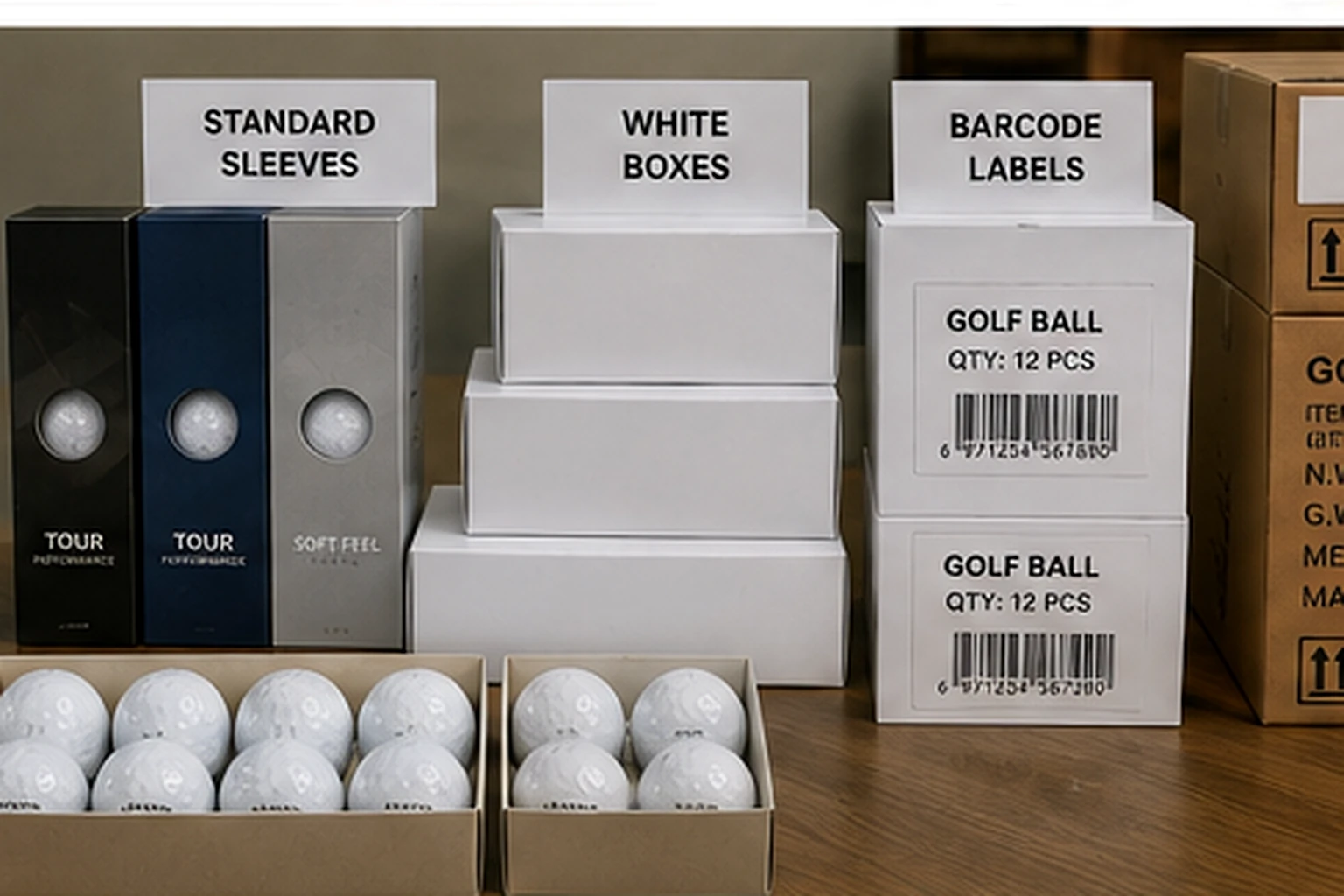
How do print choices change MOQ?
Print choices change MOQ because every color, position, plate, fixture, and inspection step adds cost. If you want lower MOQ, reduce print complexity before cutting QC.
For a first market test, one-color, one-position pad print is often the fastest way to trade complexity for MOQ relief. If your brand requires full-color artwork, ask for UV direct pricing separately and compare total landed cost, not just ball price.
Packaging deserves the same discipline. A standard 12-ball retail set using four 3-ball sleeves plus a dozen box can keep material cost lean, often around $0.35–$0.80 per set in China OEM planning quotes. Premium finishes such as foil, spot UV, windows, EVA, rigid gift boxes, acrylic displays, or tin packaging can lift cost, CBM, assembly time, and packaging MOQ. First orders should validate market fit. They do not need to win a packaging design award.
✔ True — Packaging cost is more than the box price.
Packaging affects MOQ, assembly labor, CBM, freight, carton strength, barcode accuracy, and launch timing. A cheap ball can still become an expensive landed product.
✘ False — “Fancier packaging is always better for first orders.”
Pilot orders should prove demand and protect margin. Upgrade foil, EVA, windows, or rigid boxes after repeat demand is visible.
How can you negotiate a lower MOQ?
You may think the factory is simply refusing a small order, but MOQ usually comes from setup loss, material changeover, print/kitting slots, packaging MOQ, and line priority.
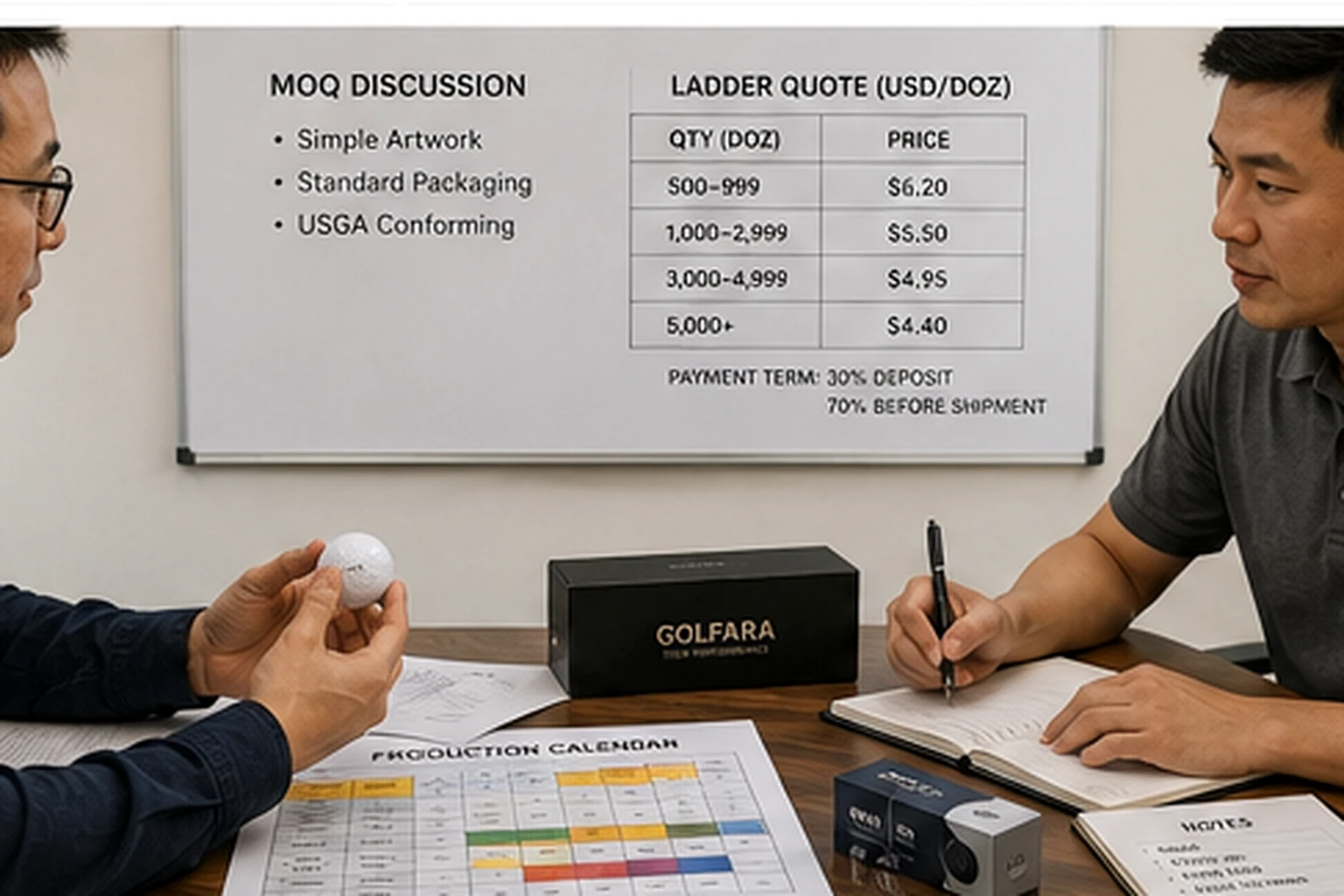
MOQ is negotiable when you trade the right variables. Use existing formula, single-color pad print, standard packaging, off-peak production, ladder quotes, wider ship window, and a credible reorder plan. Never trade away AQL, CTQ, or PSI.
The best way to negotiate MOQ with China factories is not to demand a favor. It is to make the first run easier to produce. MOQ protects the factory from setup waste, ink changeovers, packaging vendor minimums, curing batches, inspection time, and line disruption. If you want a lower first order, give the supplier a cleaner job to run.
Ask for ladder quotes, not one quote. A useful RFQ asks for 1,000 / 1,500 / 3,000-ball options using the same quality gates. Then compare what changes: unit price, sample fee, packaging method, print method, lead time, and reorder MOQ.
| MOQ lever | What you give | What you ask for | Risk to keep closed | Buyer move |
|---|---|---|---|---|
| Unit premium | Higher price per ball | Lower pilot MOQ | Quality downgrade | Keep AQL unchanged |
| Simple artwork | 1-color / 1-position | Earlier print slot | Logo complaints | Keep adhesion test |
| Standard packaging | Sleeve/dozen or white box | Lower pack MOQ | CBM surprise | Quote carton volume |
| Demand plan | 12-month forecast | Pilot flexibility | Empty promises | Use ranges, not fake certainty |
| Off-peak slot | Wider ship window | Lower MOQ or faster slot | Calendar drift | Define ship-ready date |
| Piggyback | Use matching active spec | Insert pilot run | Spec mismatch | Confirm sample ID |
Which concessions lower MOQ safely?
Safe concessions reduce complexity without reducing inspection. You can trade artwork, packaging, timing, and unit price, but do not trade away AQL, CTQ, PSI, or sample-to-bulk traceability.
A lower pilot MOQ is more realistic when you use an existing mold, proven formula, simple artwork, standard sleeves or white box, and a wider ex-factory window. It is also easier when your demand plan feels credible. You do not need to promise fake volume. A 12-month range with channels, reorder timing, and launch assumptions is better than a fantasy forecast.
Piggyback production can help if your spec matches an active batch. That means you join compatible production instead of forcing a fresh setup. It is useful, but not magic. Confirm sample ID, material, cover, compression, logo method, packaging, and batch traceability before accepting the shortcut.
If an MOQ discount requires weaker inspection, vague packaging, or “we will try our best” timing, treat it as a failure signal. Reduced MOQ is acceptable only if AQL/CTQ, PSI, and sample-to-bulk traceability stay unchanged.
What PO terms prevent shipment surprises?
You can choose the right supplier and still lose money if FOB/DDP scope, sample-fee credit, PSI ownership, AQL, or lead-time definition is vague.
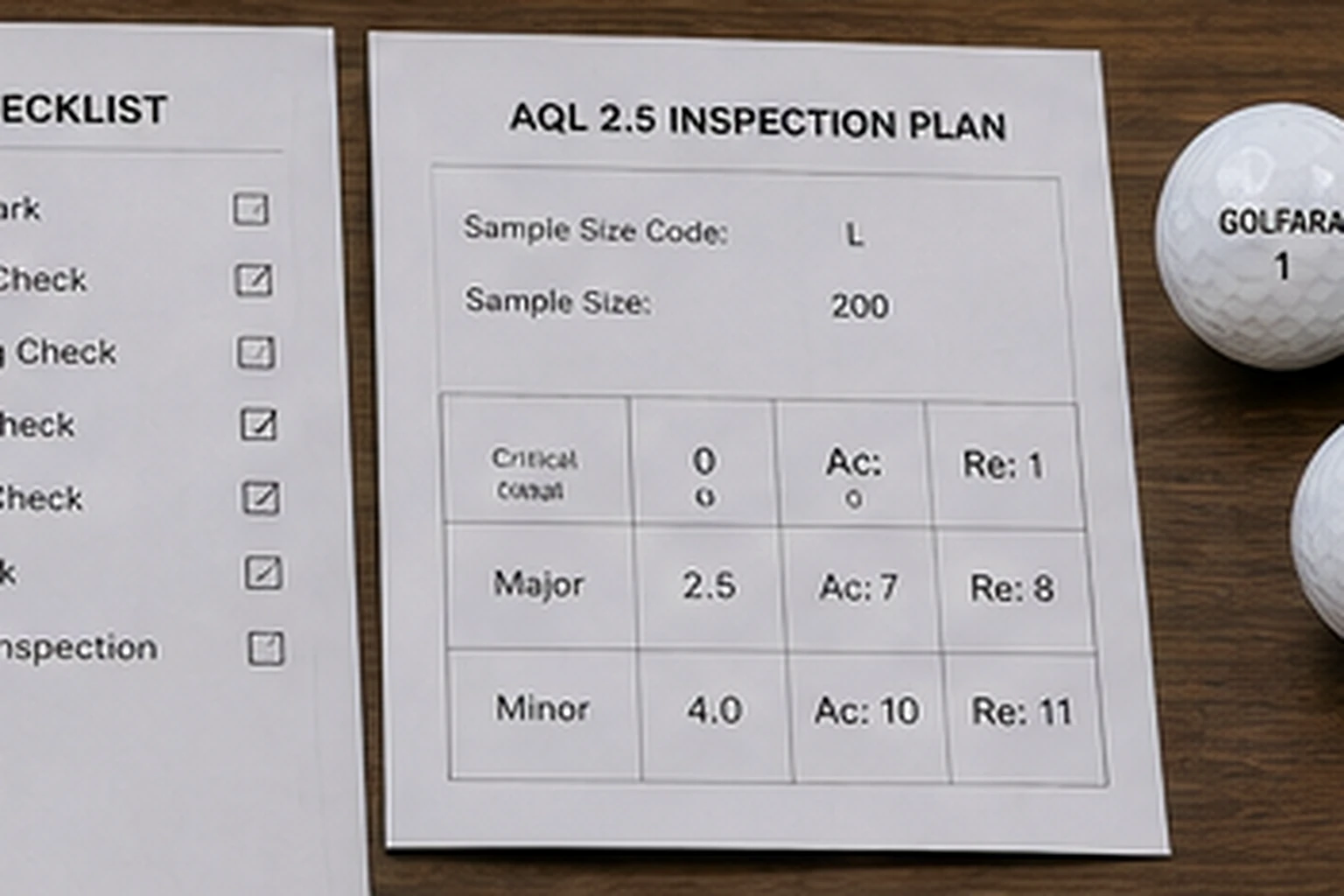
The PO should define price basis, Incoterms, sample-fee credit, PSI ownership, AQL values, CTQ checks, and ship-ready date before production. Do not compare FOB and DDP quotes unless the golf ball spec, packaging, carton data, and destination are identical.
This is the highest-leverage section of your sourcing process. A good sample does not fix weak terms. Before the sample is made, your PO path should define who owns the sample fee, what happens if the sample fails, who pays for PSI, which AQL values apply, how defects are classified, and when the order is truly ship-ready.
| PO term | Weak wording | Better wording | Buyer move |
|---|---|---|---|
| Incoterms | FOB or DDP available | FOB named port and DDP warehouse ZIP / postcode | Ask both prices under same spec. |
| PSI / defect class | Quality must be good | Agreed sampling plan, CTQ zero-acceptance rule, Major / Minor AQL values | Define defects before inspection. |
| Sample fee | Deduct later | 100% credit on PO ≥ agreed MOQ within agreed period | Write credit trigger. |
| Lead time | 30 production days | Final approval to PSI-passed ship-ready / EXW release | Define start and endpoint. |
| Change control | Same as sample | No material, mold, ink, coating, packaging, or subcontractor change without approval | Require written notice. |
| IP / tooling | Factory respects IP | No-use, no-resale, tooling ownership, subcontractor disclosure, overrun control | Lock before full files. |
How should FOB and DDP be quoted?
Quote the same approved spec under both FOB and DDP. FOB works best when your team already has freight, customs, and import support. DDP gives first-time buyers better landed-cost visibility, but it is not risk-free.
Please ask for two prices on the same approved golf ball spec: FOB [Ningbo/Xiamen/Shenzhen] and DDP [your warehouse ZIP/postcode]. FOB is useful when your team manages freight and customs. DDP is useful when you need a clearer landed-cost number before placing the PO.
Both quotes should show the same cost items: unit price, print cost, packaging cost, setup or plate fees, sample-fee credit, PSI responsibility, delivery validity, and surcharge exclusions.
Do not compare one supplier’s FOB ball price with another supplier’s DDP delivered quote. The same spec, packaging, carton dimensions, destination, duty/tax assumptions, and validity period must be used. FOB should itemize unit price, print cost, packaging cost, setup/plate fee, export carton, and local port charges. DDP should state destination, duty/tax inclusion, delivery validity period, and surcharge exclusions.
Pre-shipment inspection should not rely on feelings. Use ANSI/ASQ Z1.4 or an agreed sampling framework, with buyer-selected defect classes and acceptance rules. For premium OEM golf ball orders, physical and legal-performance CTQs should use zero-acceptance release logic, while Major and Minor appearance defects can use agreed AQL values. CTQ checks should include ball weight, diameter, compression spread, logo registration, print adhesion, coating appearance, quantity, packaging integrity, barcode accuracy, and carton marking.
Lead time also needs contract language. It should start from final written approval of the sample, artwork, packaging version, and mass-production release, then end when goods pass PSI and are ship-ready / EXW-ready with export cartons, packing list, commercial invoice, and shipping marks completed. “Production days” should not be used as the contractual delivery date.
✔ True — A sample is only useful when the PO path is already locked.
Price basis, inspection method, Incoterms, sample-fee credit, ownership, and timeline should be clear before sample approval changes your leverage.
✘ False — “A good sample automatically leads to a clean PO.”
A good sample can still lead to delays, surprise costs, or disputes if terms were left vague.
To make supplier quotes comparable, prepare one RFQ pack before negotiation: construction, cover process, quantity, logo file, print position, packaging target, destination ZIP / postcode, desired ship-ready date, PSI owner, CTQ rules, sample-fee credit rule, and IP / tooling requirements. If suppliers quote from different assumptions, the lowest price may simply be the least complete quote.
FAQ
Can you negotiate MOQ with Chinese golf ball factories?
Yes. MOQ is not a fixed attitude; it reflects setup loss, ink changes, packaging MOQ, QC sampling, and line priority. You can negotiate by reducing complexity while keeping inspection gates unchanged.
- Ask for ladder quotes at 1k / 1.5k / 3k.
- Use existing formula, standard packaging, and single-position pad print.
- Keep AQL, CTQ, and PSI unchanged.
What is the best printing method for custom OEM golf balls?
For large simple logo runs, pad printing is usually the lowest-cost path. For small batches, gradients, or rush personalization, UV direct can be faster because it avoids plates, but the unit cost is usually higher.
- Use pad print for 1–2 color logo pilots when MOQ pressure is high.
- Use UV direct for complex artwork and short personalized runs.
- Always quote by color, position, and batch size.
What Should Be Included in a Golf Ball PO?
A professional PO should lock construction, cover process, compression window, artwork, packaging dieline, CTQ gates, PSI owner, Incoterms, sample-fee credit, change-control rule, IP controls, and ship-ready release.
- State TPU injection or cast urethane if urethane is involved.
- Attach approved sample ID and packaging version.
- Define lead time as final approval to PSI-passed ship-ready / EXW release.
- Include no-change, no-use, no-resale, tooling ownership, and subcontractor disclosure rules where private files or tooling are involved.
How much does custom golf ball packaging cost in China?
Standard sleeve plus dozen box packaging can be kept lean for a first run, while premium finishes such as foil, spot UV, windows, EVA, rigid boxes, and acrylic displays increase cost, CBM, labor, and lead time.
- Use 3-ball sleeve + dozen box for pilot retail validation.
- Quote packaging MOQ separately from ball MOQ.
- Upgrade gift packaging after repeat demand is proven.
Should I choose FOB or DDP for OEM golf balls?
Use FOB when your team has freight, customs, and import experience. Use DDP when you need landed-cost visibility and fewer logistics handoffs. Always quote the same approved spec under both terms.
- FOB should name the China port.
- DDP should name the delivery ZIP/postcode.
- Ask what duties, taxes, validity period, and surcharges are included.
What is PSI for golf ball orders?
PSI is pre-shipment inspection before goods leave the factory or warehouse. For OEM golf balls, it should check quantity, packaging, labels, logo quality, weight, diameter, compression spread, coating, and carton markings.
- Use ANSI/ASQ Z1.4 or an agreed sampling framework.
- Choose defect classes, AQL values, and zero-acceptance CTQs in the PO.
- Book PSI before the promised ship-ready date.
How do I stop samples and bulk from mismatching?
Do not rely on a visual sample alone. Link the approved sample ID to production batch ID, retained samples, raw QC data, and a no-change rule covering material, mold, ink, coating, and packaging.
- Require batch QC report before final payment.
- Attach sample ID to the PO.
- Ban supplier substitutions without written approval.
When does lead time really start?
Lead time should start from final written approval of sample, artwork, packaging, and mass-production release, then end when goods pass PSI and are ship-ready / EXW-ready. Deposit date alone is not enough if artwork, packaging, samples, or production slots remain open.
- Write final approval date and ship-ready / EXW-ready date in the PO.
- Reserve print and packaging slots early.
- Avoid peak-season assumptions without written slot confirmation.
Conclusion
Sourcing OEM golf balls from China is simple only when negotiation happens early. The safer path is Supplier Screen → Spec Lock → Print / Packaging Margin Check → MOQ Levers → IP and QC Controls → Pre-Sample PO Terms → PSI Release.
Your strongest leverage comes before samples. Lock the construction, cover process, approved sample ID, packaging version, print method, CTQ gates, IP controls, MOQ logic, FOB / DDP assumptions, and ship-ready definition before sample approval makes the deal feel emotionally committed.
Compare suppliers only after each quote uses the same spec, same packaging, same Incoterms scope, same QC evidence, same IP controls, and same release condition. Otherwise, the cheapest quote may be only the least defined quote.
You might also like — China Golf Ball OEM Supplier Verification Checklist