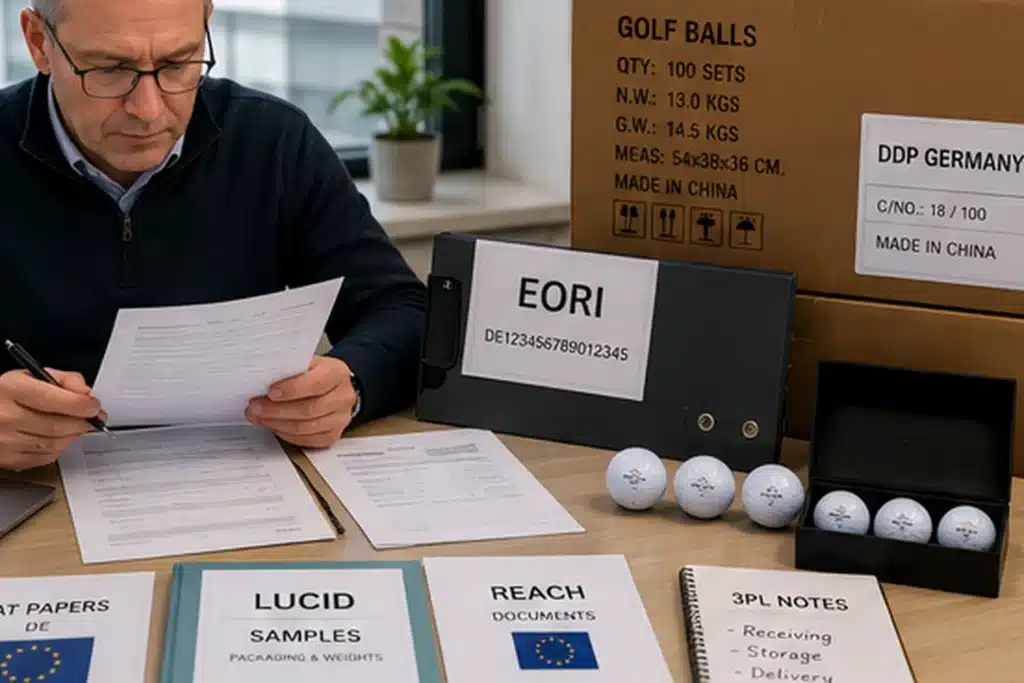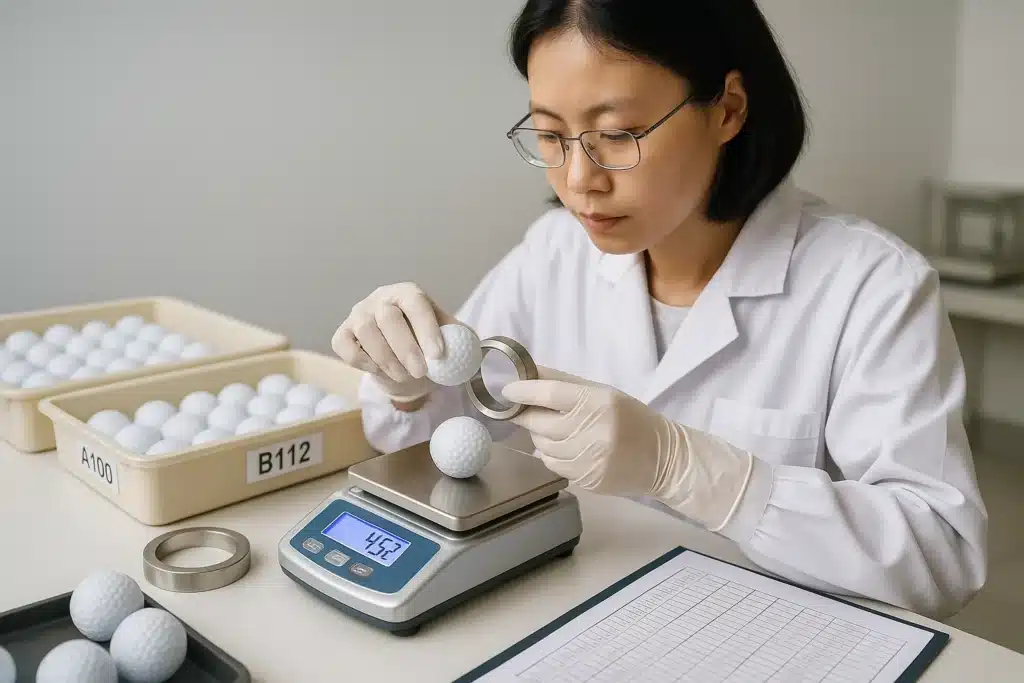
A 20-page golf ball QC report can still leave one critical question unanswered: do these results prove that the production lot you are buying is ready for shipment release?
To verify golf ball quality from a Chinese supplier before shipment, check four things: whether the tests match your SKU’s risks, whether the method is controlled, whether the results are traceable to your batch, and whether the evidence supports a release decision. A PASS report alone is not enough.
That is where many OEM programs lose control: the approved sample looks right, but bulk production drifts—or the test data is real but cannot be traced to the shipment you are buying.
For OEM golf ball quality control, keep one evidence chain visible from sample approval through final inspection:
Risk → Data → Evidence → Buyer Decision
Why Do Buyers Need Decision-Oriented QC Data?
You may receive compression, hardness, COR, weight, impact, and inspection records and still struggle to decide whether the product matches its intended market position or the shipment deserves approval.
Decision-oriented golf ball QC connects each measurement to a purchasing question. You should know what risk the test controls, which product and batch produced the result, and what decision follows. More QC data becomes valuable only when it helps you approve, hold, investigate, or compare production.
What OEM Buyers Actually Need From QC Data
In our OEM quotation and product discussions, we often review QC data for 2-piece Surlyn, 3-piece PU, and 4-piece PU balls. Those reports can contain compression, hardness, COR, weight, impact-related results, and other technical fields.
Most buyers do not need every technical field explained. They need to know which results matter for the product they are buying and what those results mean for approval, consistency, and customer experience.
When we review those constructions, we therefore do not treat every measurement as equally important. A durable 2-piece Surlyn program raises different commercial questions from a softer 3-piece PU ball or a premium 4-piece PU model.
| Golf Ball Construction | Buyer Should Focus On | Decision Supported |
|---|---|---|
| 2-piece Surlyn | Durability, consistency, value-channel suitability | Confirm market fit |
| 3-piece PU | Compression stability, feel consistency | Protect player experience |
| 4-piece PU | Performance consistency, production control | Protect premium positioning |
QC data should help buyers answer a decision question, not create a larger technical file.
That lesson changes how useful golf ball testing should be presented. Start with the product promise, identify the risk that could break it, and then show the evidence that closes that risk.
For a value or promotional ball, durability and repeatability may carry more commercial weight. For a premium DTC or retail PU ball, inconsistent feel or construction can damage a much more specific customer expectation.
Ask for a decision-oriented QC summary that explains why each major test belongs in your approval file and what decision an abnormal result would trigger.
✔ True — Useful QC evidence starts with the product risk
A smaller set of relevant, batch-linked measurements can support a stronger purchasing decision than a long report containing data with no clear commercial purpose.
✘ False — “More QC pages automatically mean better quality control”
Report length does not prove that the tests match your SKU, represent your production batch, or justify shipment release.

Which Golf Ball QC Evidence Should Buyers Prioritize?
Requesting every available test can create a different problem: the important signals disappear inside a technically impressive file.
Prioritize golf ball QC evidence by the failure your customer would notice. Compression distribution protects feel consistency, internal-structure evidence addresses concentricity risk, physical measurements catch critical variation, durability testing protects the cover experience, and finished-ball print checks protect the branded product you actually sell.
A practical QC evidence matrix keeps product, procurement, and supplier teams discussing the same risks.
| Buyer Concern | Useful QC Evidence | Why It Matters | Buyer Action |
|---|---|---|---|
| Feel changes between batches | Compression distribution | Shows production spread | Compare with approved sample |
| Flight stability concern | Concentricity evidence | Shows internal control | Verify batch-linked samples |
| Physical variation | Weight and diameter records | Flags outliers | Define release criteria |
| Cover complaints | Durability evidence | Protects player experience | Match test to product tier |
| Branding complaints | Logo durability check | Protects presentation | Inspect finished production |
The same generic QC template for every SKU is a warning sign. A 2-piece Surlyn or ionomer ball and a premium 3-piece or 4-piece PU ball can share inspection categories without carrying the same durability risk.
For a 2-piece Surlyn or ionomer program, your durability review should focus on whether repeated impact creates cracking, cover loss, abnormal surface wear, or other damage that conflicts with the product’s value and high-use positioning.
For a 3-piece or 4-piece PU program, the buyer concern changes. Scuffing may be expected to some degree, but early cut-through, peeling, clearcoat failure, or exposure of the layer beneath the cover can undermine the playing experience and the product claim you are selling.
Do not ask for the same durability evidence for every construction. Match the test to the cover system and to the customer complaint you are trying to prevent.
The useful evidence is not simply a supplier statement that the ball "passed durability testing." Ask for the test method, the tested SKU and batch, before-and-after condition, the defect or damage criteria used for the decision, and a retained sample reference when appropriate.
Build the QC evidence matrix before production. If you are still deciding whether the supplier itself has the systems to support those records, use a separate factory evaluation process rather than turning this shipment review into a full factory audit.
How Does Compression Data Reveal Production Consistency?
A supplier can give you one compression value that matches the specification while hiding a production spread that creates noticeably different feel inside the same SKU.
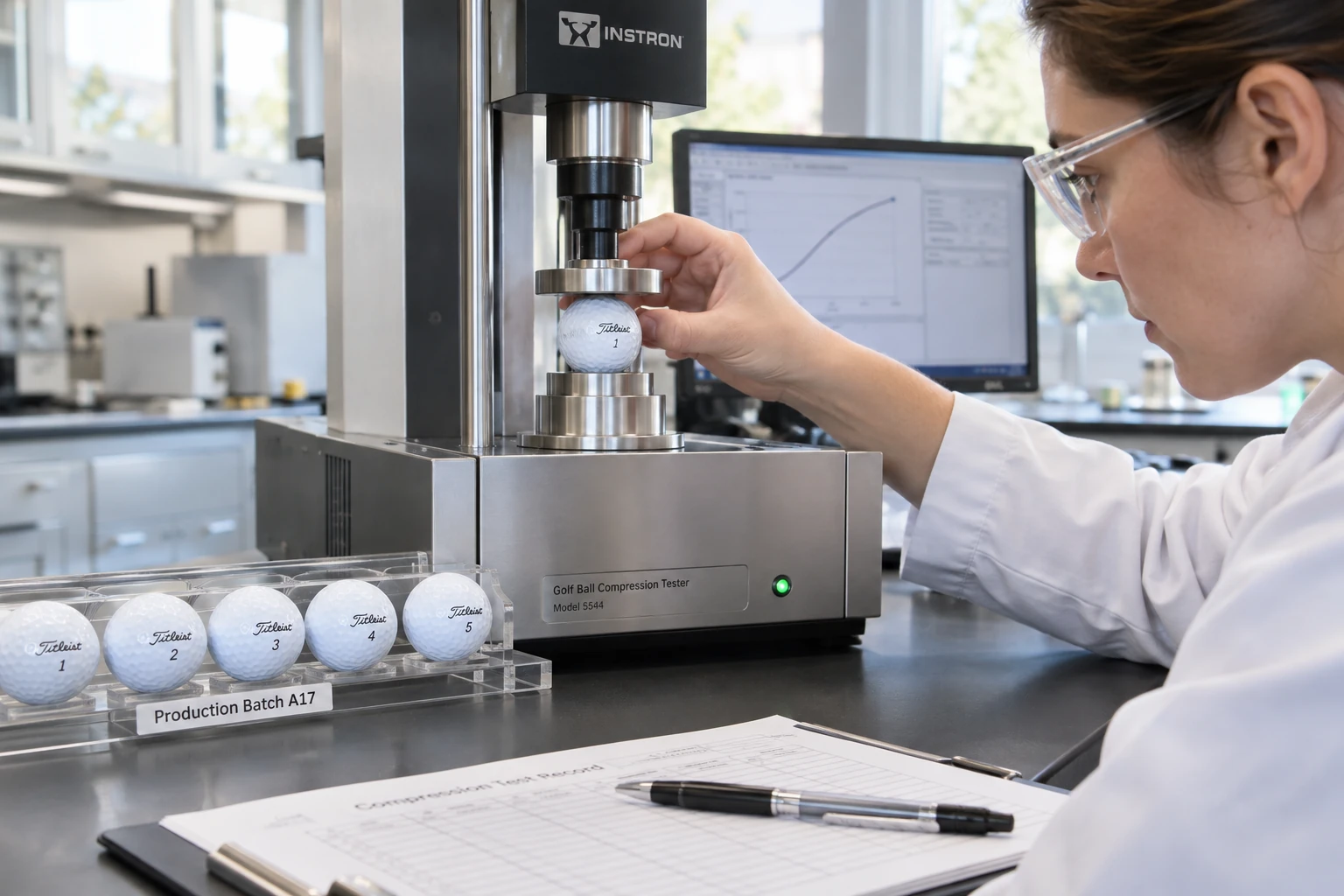
Compression data helps verify consistency when you review the batch distribution, range, and comparison with the approved sample—not just an average. The buyer question is whether mass production remains within the expected product profile using a comparable method, so a reorder feels like the product your team originally approved.
The average is useful, but it is not the whole decision.
| Evidence | Weak Review Method | Better Buyer Review |
|---|---|---|
| Compression value | Read one result | Review distribution and range |
| Approved sample | Approve and archive | Compare against production |
| Batch average | Check target only | Review variation and outliers |
Measurement discipline matters here. If the approved sample and production lot are measured using different equipment or methods, a neat comparison may create false confidence. Your team does not need to become a compression-lab specialist, but it should know whether the comparison is genuinely comparable.
A supplier that repeatedly sends only an average or “compression PASS” without showing production variation leaves the consistency question open.
Request a Batch Compression Record linking the tested balls to sample IDs, the production batch, the agreed method, instrument reference, and the approved comparison sample.
✔ True — Distribution can tell you more than the headline average
Two production lots can reach a similar average while showing different internal spreads. For a buyer, the spread helps reveal whether feel is being reproduced consistently.
✘ False — “If the average matches, production must match the sample”
Averages can hide variation. Compare the lot with the approved product using the same agreed measurement basis.
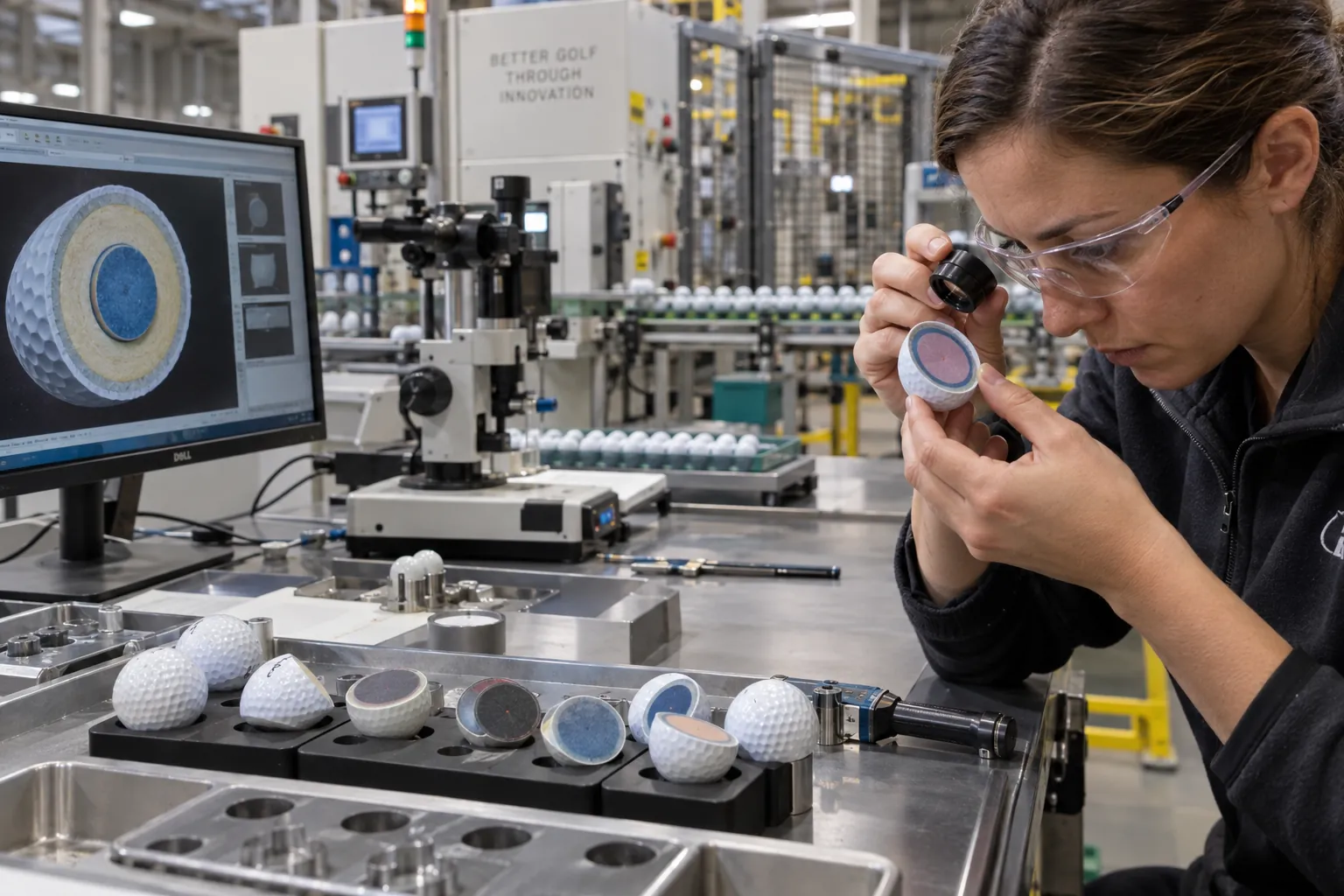
A finished golf ball can have a clean logo and flawless coating while internal layer variation remains invisible to normal golf ball inspection.
Internal quality evidence should show whether representative production balls maintain controlled core and layer geometry. X-ray, CT, or controlled cut-ball verification can support that decision, but sophisticated images are only useful when the inspected balls are identified and linked to the production batch you are approving.
You do not need an explanation of how an X-ray machine generates an image. You need to know what the image proves.
For a 2-piece ball, the internal control question is relatively simple. With 3-piece and 4-piece constructions, additional layers create more relationships that need to remain consistent. That does not mean “more layers equal poor quality.” It means a premium multi-layer specification deserves evidence appropriate to its complexity.
A beautiful X-ray image with no sample ID is still a weak purchasing document.
Request an Internal Structure Inspection Record that identifies the samples, relevant production lot, inspection method, observed condition, and retained reference. Then confirm that abnormal findings have a pre-agreed disposition rather than being filed as interesting laboratory pictures.

Which Physical Checks Should Affect Shipment Release?
A production average can look acceptable while an individual physical outlier still creates a release problem. Your inspection criteria therefore need to distinguish serious findings from ordinary cosmetic defects.
Weight, diameter, symmetry-related checks, and other agreed physical controls should feed a defined shipment decision. Use USGA/R&A requirements as a reference framework for physical risk, while keeping production QC separate from formal conformity status. Define Critical, Major, and Minor defects before inspection so risk—not report formatting—drives release.
The USGA Equipment Rules and R&A Equipment Rules organize golf-ball requirements around areas including weight, size, spherical symmetry, initial velocity, and overall distance.
For shipment QC, you do not need to turn those rules into a submission tutorial.
| Check | Buyer Risk | Evidence | Buyer Action |
|---|---|---|---|
| Weight | Physical outlier | Measurement record | Apply release rule |
| Diameter | Size variation | Measurement report | Hold abnormal findings |
| Symmetry | Flight-consistency concern | Test evidence | Investigate outliers |
If your program also requires current tournament or List status, treat that as a separate decision and review the USGA/R&A conformity requirements for OEM golf balls.
For finished-goods inspection, ISO 2859-1:2026 can support AQL-indexed acceptance sampling by attributes for lot-by-lot inspection. It helps define how samples are selected and how lots are accepted or rejected, but it does not determine how serious a golf-ball defect is.
A carton scuff, a logo defect, and a release-critical physical failure should not carry the same consequence simply because they appear within the same inspection plan. Your team still needs to classify defects by product and business risk before PSI begins.
Your inspection requirement can state: Critical findings shall follow the agreed lot-hold or disposition process before shipment; cosmetic acceptance criteria shall not override a Critical finding.
Prepare Pre-Shipment Inspection Criteria before the inspector arrives, with Critical, Major, and Minor classifications agreed in writing.
✔ True — Sampling and defect severity answer different questions
A sampling plan helps determine how inspection is performed. Your defect classification determines how seriously the resulting finding should affect shipment release.
✘ False — “One AQL rule can make every golf-ball quality decision”
Cosmetic appearance, branding defects, and release-critical physical variation do not automatically carry the same commercial risk.

What Should a Reliable Golf Ball QC Report Include?
The hardest QC problem often appears after the report arrives: the document looks professional, but nobody can prove that the measured balls came from your actual production lot.
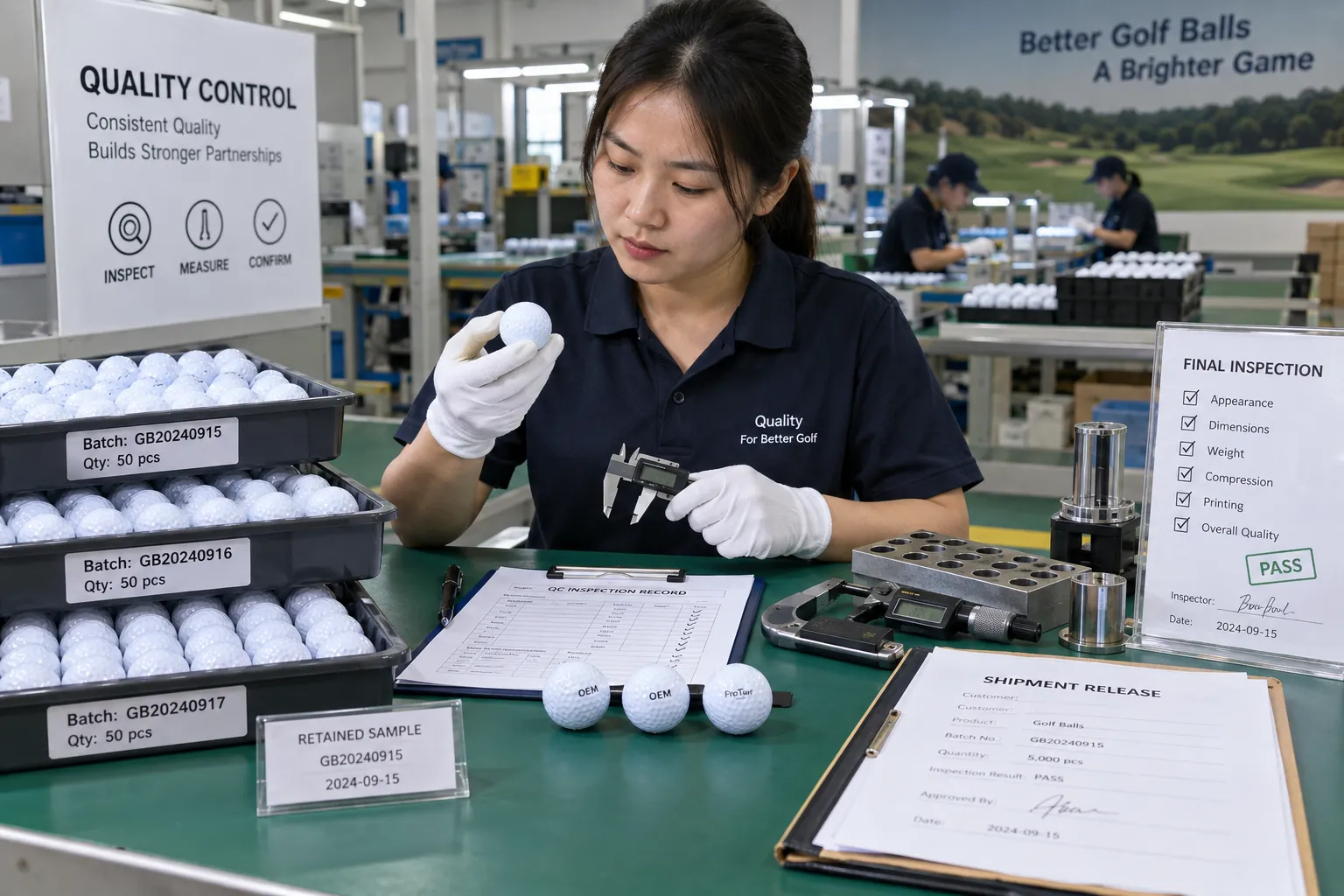
A reliable golf ball QC report creates traceability from the approved sample through pilot and mass production to shipment inspection and retained samples. It should identify what was tested, which batch it came from, how it was measured, what evidence was recorded, and why the lot was released.
Use one evidence chain:
Approved Sample → Pilot Production → Mass Production → Shipment Inspection → Retained Sample
| Evidence Item | Buyer Purpose | Verification |
|---|---|---|
| Sample ID | Identify tested product | Match SKU/version |
| Batch number | Connect data to production | Match shipment lot |
| Test method | Understand measurement | Compare approval/bulk |
| Instrument information | Identify testing source | Check record consistency |
| Calibration record | Support measurement confidence | Confirm valid record |
| Retained sample | Enable later comparison | Archive against lot |
This is what protects you from the sample-to-bulk gap. If complaints arrive after launch, you can compare the received product with a known retained reference instead of debating which spreadsheet or inspection photo belonged to which order.
A polished certificate with no sample ID and no batch reference may prove that the factory performs golf ball testing. It does not prove it tested your golf balls.
Supplier shall provide batch-linked QC records including test method, sample ID, batch reference, raw measurement data, and release criteria before shipment approval.
Backtrace the complete QC package from shipment to batch to tested sample. If that chain breaks, the approval question is still open.
FAQ
What Should a Golf Ball QC Report Include?
A golf ball QC report should include the SKU or approved version, sample IDs, production batch, test method, relevant raw measurements, instrument information, calibration status where applicable, inspection findings, acceptance criteria, release decision, and retained-sample reference.
The report should allow someone on your team who was not present at the factory to reconstruct the release decision later. That is especially useful when a reorder changes, a customer reports inconsistent feel, or the supplier sends a revised specification. A generic “PASS” line cannot provide that history. Traceability should let you move from the shipment back to the mass-production lot, the tested samples, and the approved reference without relying on a sales representative’s memory.
How Do Manufacturers Test Golf Ball Quality?
Golf ball manufacturers can use compression testing, physical measurements, internal-structure inspection, durability checks, and finished-ball visual inspection. The useful test mix depends on the product risk; buyers should judge each test by the purchasing decision it supports rather than by the sophistication of the equipment.
A 2-piece Surlyn ball may put greater commercial emphasis on durability and repeatability, while a premium PU construction can make feel consistency, cover behavior, and internal control more visible to customers. Strong golf ball manufacturer quality control therefore does not mean running every available test. It means selecting relevant methods, testing representative production samples, documenting the evidence, and defining what happens when a result does not meet the agreed expectation.
Is More QC Data Always Better?
No. More QC data is useful only when it is relevant to the product risk, generated with a controlled method, traceable to the correct batch, and connected to an acceptance decision. A shorter, well-linked QC package can be more useful than twenty pages of disconnected measurements.
This is why buyers should start with the question they need answered. If the concern is inconsistent feel, compression distribution is more useful than unrelated laboratory fields. If the concern is cover complaints, durability evidence deserves more attention. If the concern is sample-to-bulk drift, batch identity becomes essential. The purpose of a QC file is not to demonstrate how many things a factory can measure; it is to reduce uncertainty around the order you are about to release.
How Do Buyers Verify Golf Ball Consistency?
Buyers verify golf ball consistency by comparing approved samples, pilot production, mass-production records, and final shipment evidence using comparable methods and traceable sample IDs. Consistency is proven through repeated comparison across the production chain, not by receiving one excellent pre-production sample.
Keep the approved reference identifiable after mass production starts. Then compare the risks important to that SKU—such as compression distribution, physical measurements, internal structure, cover durability, or finished appearance. When a later lot moves away from the reference, your team should be able to see where the change appeared. That makes the QC system useful for approval and for investigating future complaints or reorder drift.
Why Does Golf Ball Compression Consistency Matter?
Golf ball compression consistency matters because unwanted variation can change the feel players experience within one SKU or between production runs. OEM buyers should therefore review the production spread and its relationship to the approved sample instead of treating a single nominal compression value as proof of consistency.
There is no need to turn procurement into a compression laboratory. The practical discipline is simpler: agree on the measurement method, keep the comparison basis consistent, review distribution rather than only the average, and retain enough evidence to compare later lots. That allows your team to ask whether production is reproducing the intended product experience—the decision that matters more commercially than a technically impressive standalone number.
What Is Golf Ball Concentricity Testing?
Golf ball concentricity testing helps verify whether the core and internal layers remain centered and sufficiently consistent for the intended product. For an OEM buyer, its value is finding structural variation that external appearance inspection cannot reveal before the shipment is approved.
Depending on the product and risk level, evidence may come from X-ray, CT, or controlled cut-ball inspection. The most advanced method is not automatically the best purchasing decision. The evidence should be proportional to the SKU and linked to representative production samples. Confirm the sample ID, batch reference, inspected condition, and disposition of abnormal findings. Without those links, even an impressive internal image has limited value as shipment evidence.
Conclusion
A reliable golf ball supplier does not build confidence by sending you more QC documents. The evidence should connect the requirement you approved with the production batch, test result, and shipment decision.
Product Requirement → Production Batch → Testing Evidence → Shipment Approval
Once you can verify the QC evidence behind a shipment, the next question is whether the supplier can repeat that control across future orders. Use the factory evaluation process to assess the manufacturer behind the QC evidence.
The purpose of quality control is not to create more technical files. It is to give you confidence that the golf balls you approve are the golf balls you will actually receive.
You might also like — How to Launch a Golf Ball Brand with a China OEM