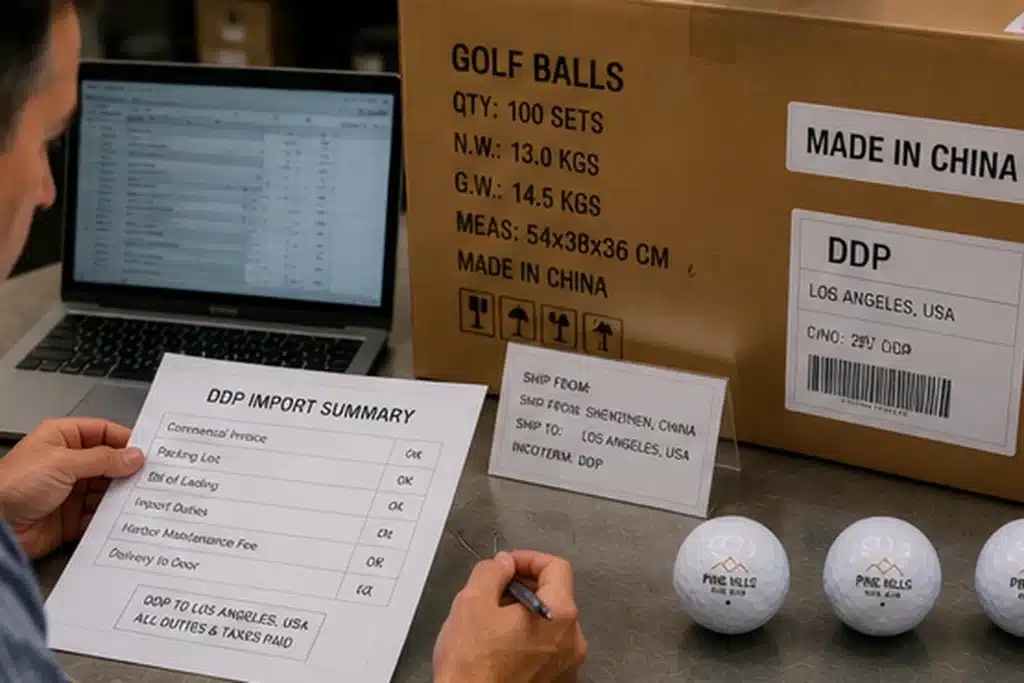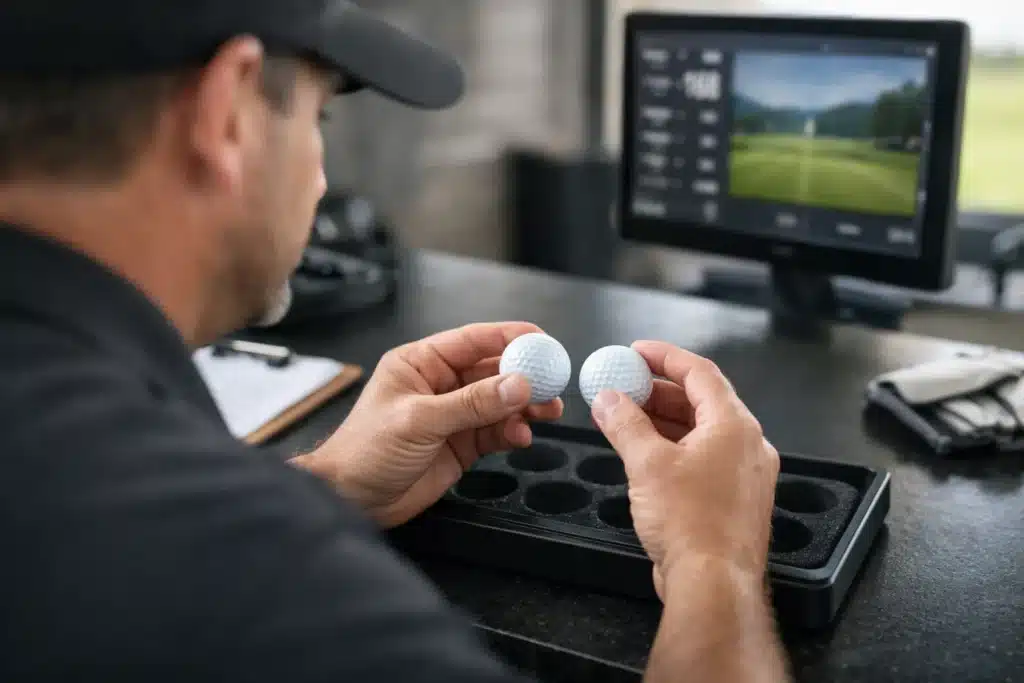
Do mint lake balls lower usable-lot cost? Only when the refurbished range ball lot can prove source history, process status, water-history risk, surface condition, washer-cycle durability, same-bay consistency, QC data, retained samples, and rejection rules before it enters circulation.
“Mint” is a cosmetic grade, not a range-ball specification. A clean white bucket does not prove that the balls were only washed, refinished, repainted, recovered from known sources, or consistent enough for premium bays, lesson areas, radar bays, or member practice.
For commercial ranges, usable-lot cost is not the delivered unit price. It is the real cost of the acceptable inventory after reject rate, sorting labor, washer debris, paint dust, coating flakes, logo breakthrough, emergency top-up orders, and premium-bay complaints are included.
Before your team approves refurbished range balls or mint lake balls, verify:
-
Whether the lot is recycled, washed-only, refinished, or repainted.
-
Whether actual-lot photos match the delivered balls, not just seller gallery images.
-
Whether water-history risk has been checked against a factory-fresh control lot.
-
Whether paint, coating, dimple edges, mixed gloss, and surface roughness are acceptable.
-
Whether washer-cycle testing shows paint dust, coating flakes, filter debris, tackiness, or logo breakthrough.
-
Whether same-bay A/B testing protects premium-bay, radar-bay, lesson, and member trust.
-
Whether the PO includes 12-ball QC, retained samples, batch ID, process declaration, and written rejection rules.
Use this guide to decide whether refurbished range balls belong in normal range circulation, lower-sensitivity zones, premium bays, lesson areas, or nowhere until the lot proves usable-lot cost.
What does usable-lot cost include?
You may see a low unit price and a clean white bucket, but your facility pays the real cost when the lot creates rejects, washer debris, sorting labor, premium-bay complaints, or emergency top-up orders.
A mint lot is cheaper only when the usable inventory survives sorting, washing, hitting, and premium-bay exposure. Your team should compare usable-lot cost, not cosmetic grade, seller photos, or delivered unit price.
What costs hide behind cosmetic grade?
Usable-lot cost is narrower than general range-ball TCO. For refurbished range balls, the extra risk comes from unknown source history, unknown process status, and surface behavior after circulation begins.
A useful refurbished lot cost model includes initial purchase cost, replacement cost, reject rate, sorting labor, washer cleaning or downtime, complaint or premium-bay risk allowance, emergency top-up orders, and actual usable inventory after testing. Use your own local labor rate and sorting minutes. A broad wage statistic will not know how long your staff spends pulling ugly, sticky, cracked, or odd-flying balls out of baskets.
Define acceptance levels before the lot arrives. Playable does not mean acceptable. Acceptable does not always mean premium-bay acceptable. A ball can be fine for low-sensitivity circulation and still wrong for a radar bay, lesson area, or private-club member practice line.
| Acceptance level | What it means | Risk if confused | Evidence to check | Buyer action |
|---|---|---|---|---|
| Playable | Can still be hit | Mistaken as acceptable | Visible damage check | Sort lower |
| Usable | Can enter normal circulation | Mixed weak lots | Washer + reject log | Control zone |
| Acceptable | Meets facility standard | Guest complaints | Appearance + consistency | Approve with rules |
| Premium-bay acceptable | Protects radar/member trust | Lesson/radar distrust | A/B test + control lot | Restrict if unproven |
Create a refurbished lot usable-cost worksheet. Track reject rate, sorting time, washer debris, premium-bay feedback, emergency top-ups, and usable inventory after testing. Do not approve a mint lot for member-facing use unless it wins on verified usable-lot cost.
✔ True — Mint is a cosmetic grade
A mint label can describe appearance, but it does not prove source history, water exposure, surface status, washer durability, flight consistency, or QC data.
✘ False — “White appearance proves operational equivalence”
A white ball can still carry unknown water history, altered coating, mixed source streams, soft dimple edges, or weak washer behavior.
What lot history should your team verify?
You may see recycled, refurbished, refinished, repainted, reclaimed, used, and mint labels mixed together, but those labels do not carry the same range-operating risk.
Do not compare price before the lot declares what it is. Your team should separate washed-only, recycled, refurbished, refinished, repainted, and mint-grade lots before judging savings, washer risk, or premium-bay suitability.
Washed, refinished, or repainted?
Market labels are not a QC protocol. They are starting points for questions, not proof that a refurbished range-ball lot is ready for circulation.
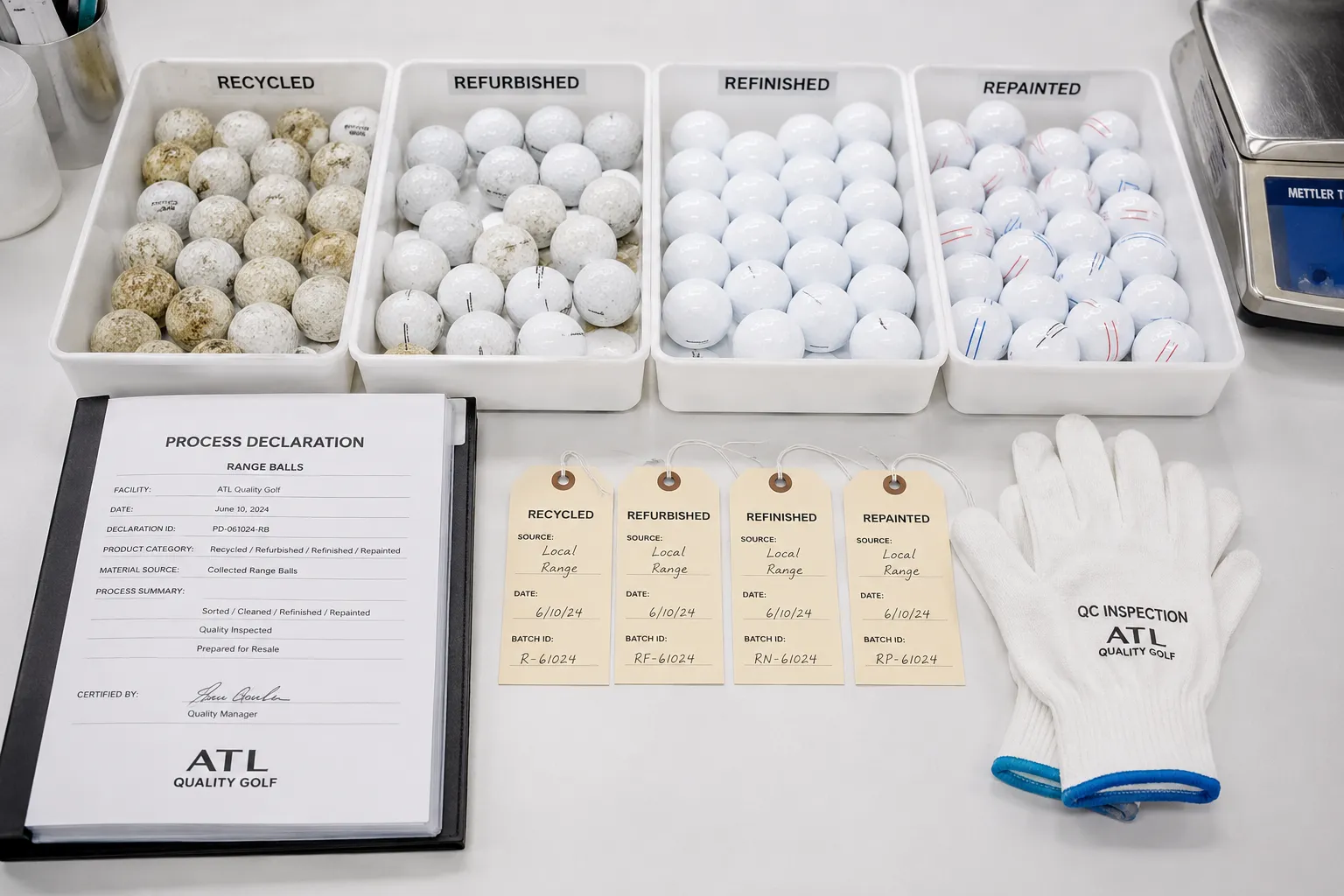
Recycled or recovered balls are generally cleaned and sorted. Refurbished or refinished balls may involve surface alteration. Repainted balls may have a new coating or paint layer over an old or altered surface. Mint lake balls are a cosmetic grade only. Used-ball terminology sources describe recycled, refinished, and refurbished balls differently, which is exactly why buyers need a process declaration instead of a sales label.
Ask whether the lot is washed-only, refinished, or repainted. Request source declaration, actual-lot photos, side-light dimple photos, retained sample, batch ID, and packing date. Do not accept generic website photos as proof. A supplier selling mint grade but refusing to declare process history is a failure signal.
| Lot label | Likely process | Main risk | Evidence to request | Buyer action |
|---|---|---|---|---|
| Recycled / recovered | Cleaned and sorted | Source unknown | Source declaration | Verify lot |
| Refurbished / refinished | Surface may be altered | Surface behavior | Process declaration | Inspect surface |
| Repainted | New coating/paint | Dimple/coating risk | Side-light photos | Wash test |
| Mint lake balls | Cosmetic grade | History unknown | Actual-lot proof | Do not rely on grade |
| Factory-fresh control | Known production lot | Higher opening price | Batch ID + QC | Use as benchmark |
Request a process-status declaration before price comparison. Check actual-lot photos, source declaration, process category, batch ID, packing date, and retained sample. Quarantine unclear lots until washed-only, refinished, or repainted status is declared.

You may want a yes-or-no answer on whether lake balls lose distance, but the real buying risk is that your team usually cannot verify soak time, prior cover damage, or mixed-generation history.
Lake balls do not create one universal distance rule; they create a verification problem. Your team should test the specific lot against a fresh control lot before allowing it into premium bays, radar bays, or lesson areas.
What should same-bay A/B testing show?
Consumer searches often ask whether lake balls lose distance. Commercial buyers need a narrower answer: can this lot protect trust in your facility?
A modern pond-submergence study found no evidence of degraded performance in the tested balls after up to 12 months in a golf pond, including no significant difference in distance traveled or carry dispersion versus controls. That is useful evidence against exaggerated claims that every lake ball is dead. It is not a free pass for every mint lot.
A water-history warning still matters because your receiving team usually cannot verify soak time, water conditions, prior cover damage, mixed generations, or whether balls were repainted after recovery. Different materials and constructions may respond differently to moisture exposure. Your team does not buy the research sample; it buys a specific lot.
| Premium-bay risk | What is unknown | Test method | Failure signal | Buyer action |
|---|---|---|---|---|
| Water history | Soak time | Source declaration + A/B | No history | Restrict use |
| Prior cover damage | Cuts or scuffs before recovery | Visual/side-light check | Damage clusters | Hold lot |
| Mixed generations | Different models/ages | Brand/model sort | Mixed feel/flight | Separate lots |
| Radar trust | Carry/dispersion window | Same-bay A/B | Wide unexplained spread | Block premium bay |
| Coach confidence | Lesson feedback | Staff notes | Repeated complaints | Use control lot |
Run a premium-bay A/B test before member-facing use. Compare the candidate lot to a fresh control lot using the same bay, club type, radar settings, and acceptance notes. Unverified lots stay out of premium, lesson, and radar bays until carry, dispersion, visible condition, and feedback are acceptable.
✔ True — Evidence is mixed, so test the lot
Modern evidence does not support one simple lake-ball distance-loss rule, but your lot may still carry unknown soak time, prior damage, or mixed-source risk.
✘ False — “Every lake ball is dead, or every mint lake ball is safe”
Both claims are too broad for commercial buying. Premium-bay approval should come from lot-specific A/B testing and receiving proof.
Can repainting change flight consistency?
You may treat repainting as cosmetic restoration, but the golf ball surface is functional and can affect flight consistency, washer behavior, and premium-bay trust.
Repainting is not cosmetic-only when it changes the aerodynamic surface. Your team should inspect dimple edges, coating buildup, paint uniformity, mixed gloss, surface roughness, hardness, and same-bay flight behavior before approving repainted range balls.
What do dimple edges and coating reveal?
A prior logo does not ruin flight. An altered surface can. That is the difference your receiving process needs to catch.
Paint and surface precision matter because dimples are part of the ball’s aerodynamic design. Titleist’s paint guidance says uneven paint application can affect aerodynamics and create inconsistent dimple depths, while its aerodynamics material explains that dimple number, depth, edge angle, and shape can all affect flight. That makes repainting a functional risk, not just a cosmetic refresh.
Repainting cannot restore original molding history, internal wear, water exposure, impact history, or balance. A bright white surface can hide coating buildup, dimple flooding, softened edges, mixed gloss, uneven shade, hardness drift, or weight/diameter spread. A repainted lot with no dimple, coating, or surface proof is a failure signal.
| Surface clue | What it may signal | Why it matters | Evidence to request | Buyer action |
|---|---|---|---|---|
| Dimple flooding | Paint/coating buildup | Aerodynamic surface changed | Side-light close-up | Hold lot |
| Softened edges | Sanding/refinish effect | Flight repeatability risk | Dimple photo | Restrict use |
| Mixed gloss | Mixed sources/processes | Lot inconsistency | Actual-lot photos | Quarantine |
| Uneven shade | Mixed batches/coatings | Sorting and surface risk | Sample comparison | Separate lots |
| Hardness drift | Cover/process variation | Feel and wear shift | Shore D check | Compare sample |
| Weight/diameter spread | Mixed models or buildup | Lot consistency risk | 12-ball QC | Review data |
| A/B flight spread | Surface/lot behavior | Premium-bay risk | Control-lot test | Restrict if wide |
Request a repainted-surface inspection pack. Check dimple close-ups, coating-status declaration, weight/diameter spread, Shore D hardness, and same-bay A/B behavior. Reject or restrict repainted lots that lack dimple, coating, washer, or same-bay consistency proof.
How should washers test refurbished lots?
You may receive a clean-looking lot, but commercial washing can expose repaint weakness, coating flakes, paint dust, logo breakthrough, tackiness, and surface roughness.
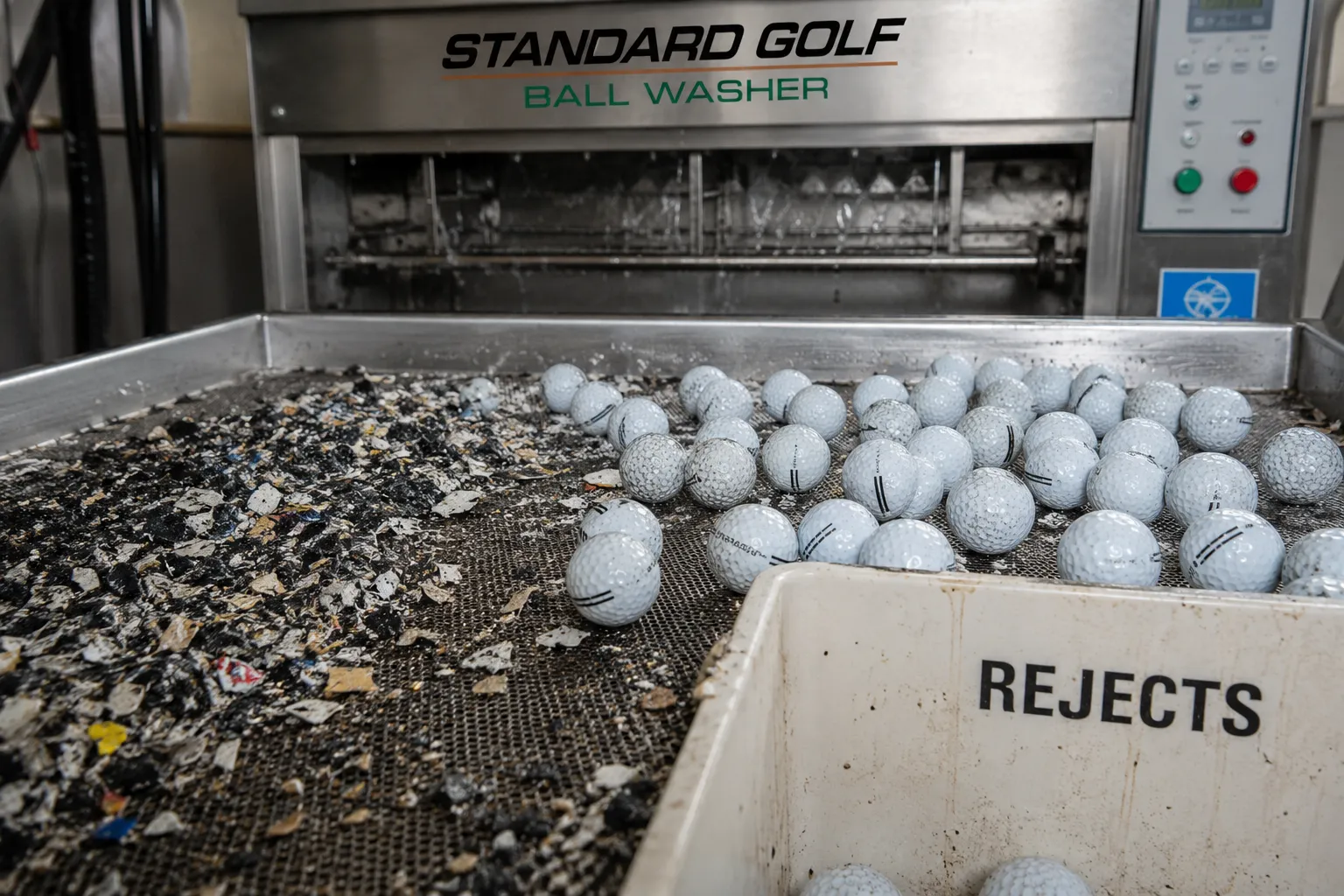
A commercial washer can turn repaint uncertainty into visible operating cost. Your team should test refurbished lots against a control set and record paint dust, filter debris, coating flakes, logo breakthrough, roughness, tackiness, surface dulling, and reject count.
What should the filter and surface log show?
Refurbished lots need washer-cycle proof that is specific to altered surfaces. This is not just a generic range-ball durability test.
Run candidate balls against a control set using the same washer, chemistry, cycle count, drying routine, and inspection criteria. Record paint dust, filter debris, coating flakes, logo breakthrough, roughness, tackiness, surface dulling, reject count, and dimple flooding after wash. Commercial washer examples list high-duty throughput such as 22,000 balls per hour, 38,000 balls per hour, and 28,000–56,000 balls per hour. Those are equipment examples, not universal averages, but they show why small surface failures scale quickly in a busy range.
ASTM D4060 and ASTM D5264 can support abrasion and rub thinking, but they should be used carefully. D4060 addresses organic coatings on plane, rigid surfaces; D5264 addresses abrasion resistance of printed materials using the Sutherland Rub Tester or equivalent. Finished golf balls are curved, dimpled, washed, hit, and sorted, so your team needs an adapted on-ball washer/rub protocol.
| Washer log item | What it catches | How to record | Failure signal | Buyer action |
|---|---|---|---|---|
| Paint dust | Weak repaint layer | Filter/brush photo | Powder buildup | Hold lot |
| Coating flakes | Poor coating adhesion | Filter sample/photo | Flakes appear | Reject or retest |
| Logo breakthrough | Surface wear / marking loss | Before/after photo | Unreadable marks | Restrict zone |
| Roughness/tackiness | Coating instability | Touch/visual log | Sticky/rough feel | Hold lot |
| Surface dulling | Early appearance loss | Photo comparison | Dulls fast | Update cost |
| Dimple flooding after wash | Coating buildup exposure | Side-light photo | Flooded surface | Reject premium use |
| Reject count | Usable inventory loss | Reject-bin reason | High rejects | Revise TCO |
Washer filter showing paint dust or coating flakes is a failure signal. Request a washer-cycle test log and run your own candidate-vs-control washer comparison. Hold or reject lots that create paint dust, coating flakes, filter-clogging debris, severe logo breakthrough, abnormal roughness, or unexplained finish variation.
✔ True — Washer-cycle testing belongs before a full switch
Your washer can expose repaint weakness, filter debris, logo breakthrough, and extra sorting burden before the lot becomes a member-facing problem.
✘ False — “Clean-looking balls have already passed commercial washer duty”
Clean at receipt only proves appearance at receipt. It does not prove the surface will survive your washer, chemistry, brushes, and handling routine.
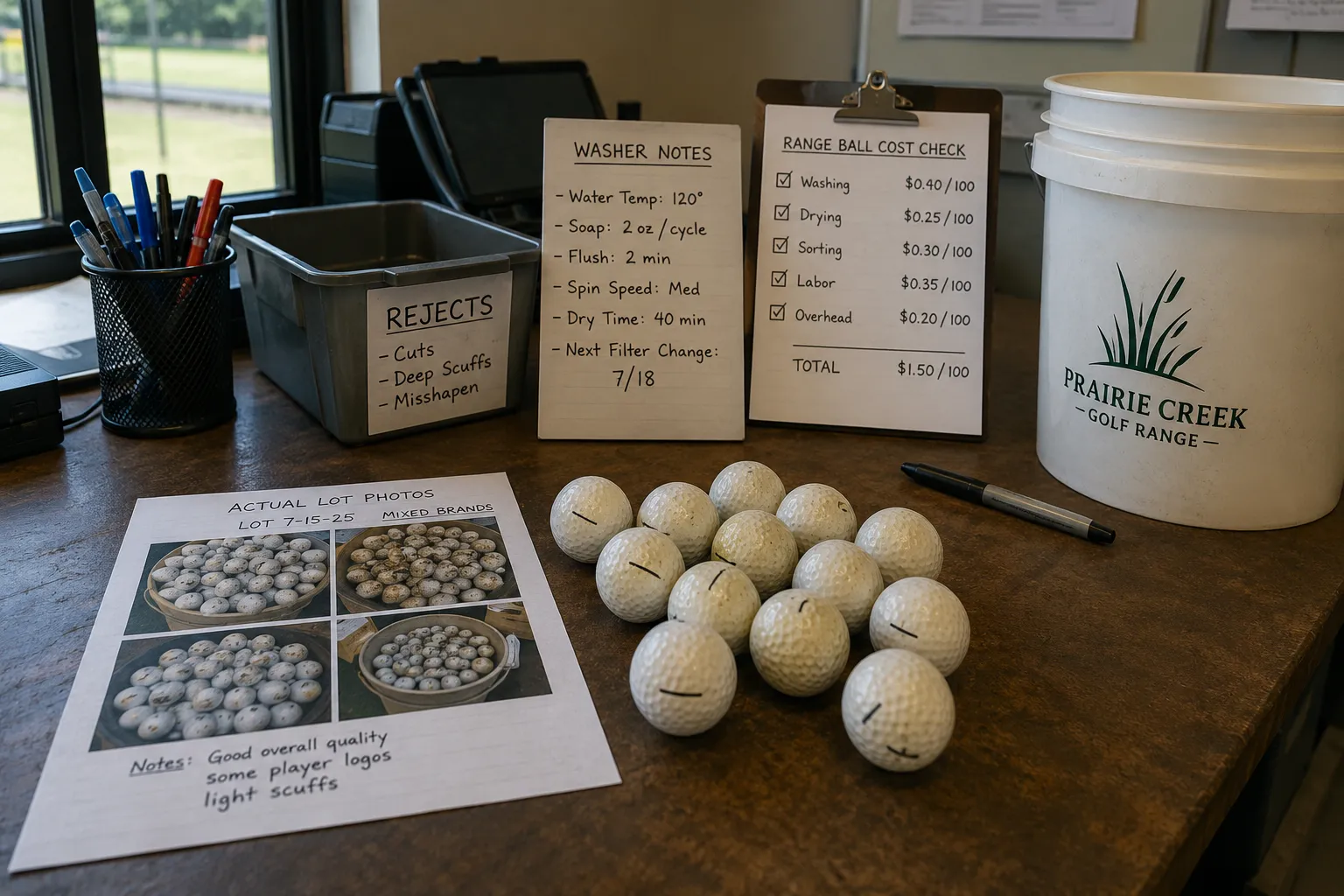
What should your PO require before circulation?
You may write white range balls or mint grade in the PO, but those phrases do not define process status, source proof, actual lot, QC data, washer behavior, or rejection rules.
Do not write only “white range balls” or “mint grade” in your PO. Your PO should require process declaration, source proof, actual-lot photos, batch ID, retained sample, 12-ball QC, washer-cycle evidence, A/B support, and written rejection rules before circulation.
What rejection rules make “mint” auditable?
Your PO should make mint prove itself before the lot enters circulation. Otherwise, your receiving team has no objective basis to hold, restrict, or reject a weak lot.
Require washed/refinished/repainted declaration, source declaration, actual-lot photos, batch ID, packing date, retained sample, 12-ball QC, washer-cycle evidence, same-bay A/B support where required, and written rejection rules. The 12-ball QC file should include weight, diameter, compression, Shore D hardness, coating/rub result where applicable, raw data, mean, standard deviation or range, equipment model, calibration status, and retained sample reference.
Use factory-fresh control balls as a benchmark, not a sales argument. A traceable control lot helps your team compare usable-lot cost, washer behavior, A/B spread, and receiving discipline.
| Receiving check | What it proves | Hold / reject trigger | Evidence required | Buyer action |
|---|---|---|---|---|
| Process/source declaration | Washed/refinished/repainted + source clarity | Missing or unknown | Supplier statement | Require declaration |
| Actual-lot photos | Real delivered condition | Generic photos only | Side-light photos | Request actual lot |
| Batch ID / packing date | Traceability | No lot ID | Carton/sample link | Quarantine |
| Retained sample | Dispute reference | Mismatch | Sample ID | Store reference |
| 12-ball QC | Lot data | Missing raw data | QC file | Review spread |
| Washer-cycle evidence | Surface survival | Flakes/debris | Washer log | Hold/reject |
| A/B support | Premium-bay suitability | Wide spread | Control test | Restrict zone |
| Rejection rules | Receiving discipline | No criteria | Written criteria | Train staff |
Supplier shall declare whether the lot is washed-only, refinished, or repainted, then link source declaration, actual-lot photos, batch ID, packing date, retained sample, 12-ball QC report, washer-cycle evidence, same-bay A/B support where required, and written rejection rules under one traceable refurbished range-ball acceptance file.
Receiving acceptance shall hold or reject any lot with missing process declaration, unclear source, generic photos only, mixed gloss or shade beyond agreed limit, severe dimple flooding, coating flakes, paint dust, abnormal washer residue, missing QC data, wide same-bay A/B spread, or retained-sample mismatch.
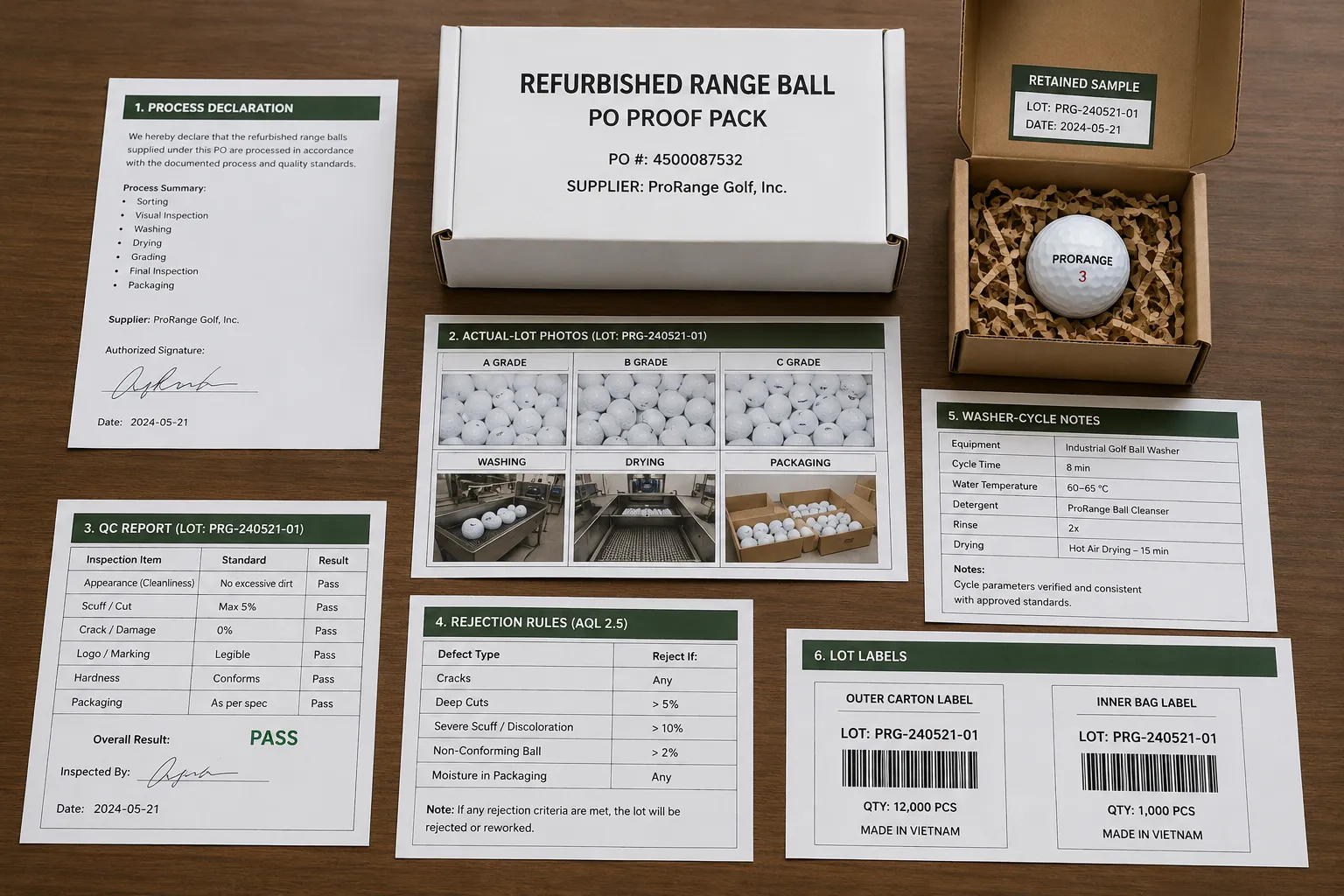
Request a refurbished range-ball acceptance pack. Compare delivered lot against process status, source declaration, actual-lot photos, retained sample, QC data, washer behavior, and A/B support. Hold or reject lots with missing process declaration, mixed finish, coating flakes, severe dimple flooding, missing QC, or retained-sample mismatch.
FAQ
What is the difference between recycled and refurbished golf balls?
Recycled golf balls are usually cleaned and sorted, while refurbished, refinished, or repainted golf balls may have altered surfaces. For commercial range buyers, that difference affects washer behavior, dimple condition, surface consistency, and premium-bay suitability.
Ask whether the lot is washed-only, refinished, or repainted. Recycled does not automatically prove source history, and refurbished does not automatically prove surface consistency. Request actual-lot photos, retained sample, batch ID, and process status so your receiving team knows what it is approving.
Are refurbished range balls good enough for commercial use?
Refurbished range balls can be good enough for commercial use only when source history, process status, washer behavior, QC data, and rejection rules are clear. Cosmetic mint grade alone is not enough for member-facing, academy, or radar-equipped areas.
A refurbished lot may work in lower-sensitivity zones after testing. Premium bays, radar bays, and lesson areas need stricter proof because the ball becomes part of the feedback system. Run washer and A/B checks before full circulation, and keep unverified lots away from high-trust environments.
Do mint lake balls lose distance?
No universal claim is safe. Some modern evidence does not support one simple distance-loss rule, but commercial buyers usually cannot verify soak time, prior cover damage, mixed-generation status, or repainting history for a specific mint lake ball lot.
Avoid fixed yardage-loss claims. The commercial buying issue is lot-specific uncertainty. Test the candidate mint lake lot against a factory-fresh control lot in the same bay, under the same settings, and restrict use until carry window, dispersion, visible condition, and staff notes are acceptable.
Can golf balls get waterlogged?
Golf ball materials can respond to moisture differently, and unknown submersion time creates uncertainty. For range operators, the practical answer is lot-specific testing, not generic assumptions about every lake ball or every mint used golf ball.
Ask for source history, inspect visible damage, and separate mixed lots. A ball that looks clean may still have unknown recovery conditions. Your team does not need a universal theory about every lake ball; it needs a receiving rule for the specific lot being purchased.
Are repainted golf balls bad?
Repainted golf balls are not automatically bad, but they become risky when repainting changes dimple edges, coating thickness, surface uniformity, washer durability, or flight behavior. A bright white finish does not prove restored performance.
Request side-light dimple photos and coating-status declaration. Run washer-cycle testing and same-bay A/B proof for premium areas. Repainted balls can look bright and still fail if the surface is flooded, uneven, tacky, rough, or inconsistent after washing.
Does paint affect golf ball flight?
Yes. Paint thickness and uniformity can affect the aerodynamic surface of a golf ball, so repainted range balls should not be judged only by whiteness, gloss, or seller photos.
Check dimple edges, coating buildup, uneven shade, mixed gloss, and same-bay flight behavior. A range ball does not need tour-level precision, but it does need enough surface consistency that one bucket does not create a mystery for coaches, members, or radar screens.
How should a range test refurbished balls before buying?
A range should test refurbished balls with actual-lot photos, retained samples, washer-cycle testing, same-bay A/B testing, 12-ball QC, and written receiving rejection rules before full circulation.
Use candidate balls against a control lot. Record filter debris, paint dust, coating flakes, surface changes, logo breakthrough, carry window, dispersion, and reject count. Store retained samples so receiving and reorder disputes have a physical reference.
Can clubs mix reclaimed and fresh balls?
Clubs should avoid mixing reclaimed and fresh balls in premium bays, radar bays, or lesson environments because mixed lots make complaints harder to diagnose and can weaken trust in practice feedback.
Use fresh control lots for radar bays and premium lessons. Restrict reclaimed or refurbished lots by zone if accepted. Track complaints by area. Mixed inventory may look efficient, but it makes root-cause analysis harder when members report strange carry windows or inconsistent feel.
What documents belong in the PO?
A refurbished range-ball PO should require process declaration, source declaration, actual-lot photos, batch ID, packing date, retained sample, 12-ball QC report, washer-cycle evidence, A/B support where needed, and written rejection rules.
Avoid white range balls as a specification. Ask for raw data, not only averages. Tie receiving to retained samples. Make missing process status, mixed finish, coating flakes, severe dimple flooding, missing QC data, and retained-sample mismatch clear hold or reject triggers.
Conclusion
“Mint” should remain a cosmetic grade until the lot proves usable-lot cost. Define the lot, test the lot, document the lot, and keep unverified refurbished balls away from premium bays, lesson areas, and radar-heavy use.
Refurbished range balls do not fail because they are used. They fail when source history, process status, surface behavior, washer durability, flight consistency, QC data, and rejection rules cannot be verified.
You might also like — Range vs Game vs Tour Golf Balls: The B2B OEM Sourcing Guide