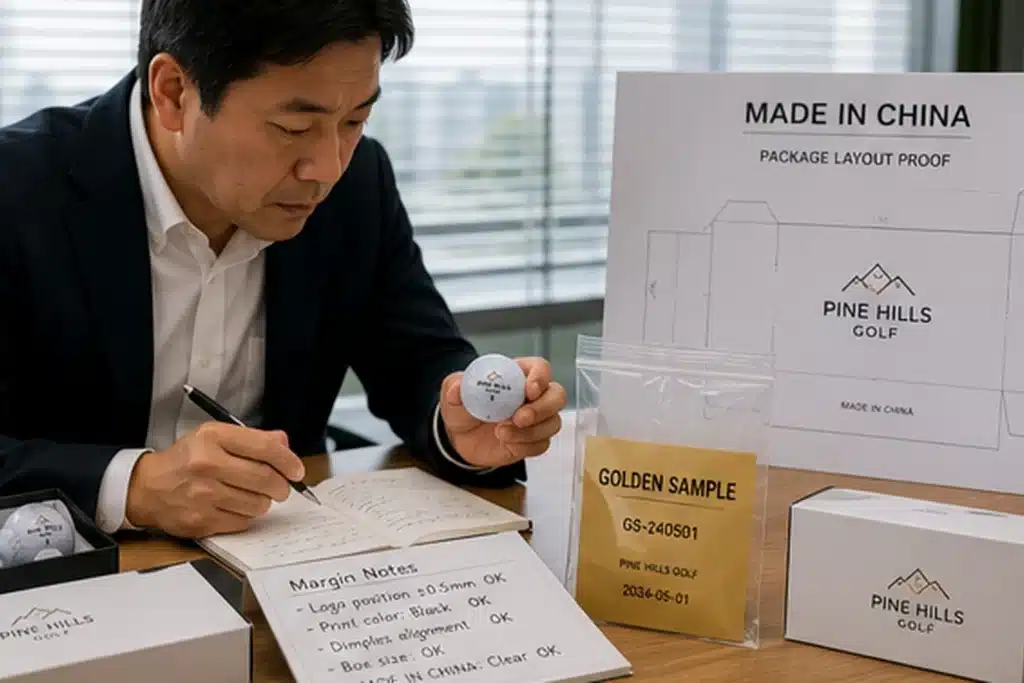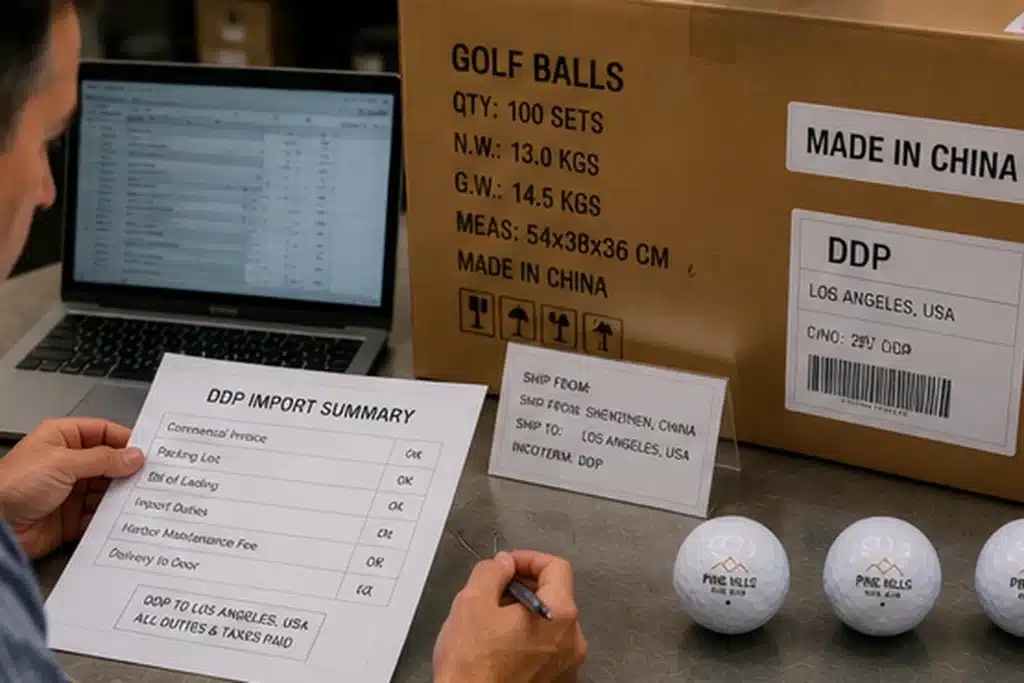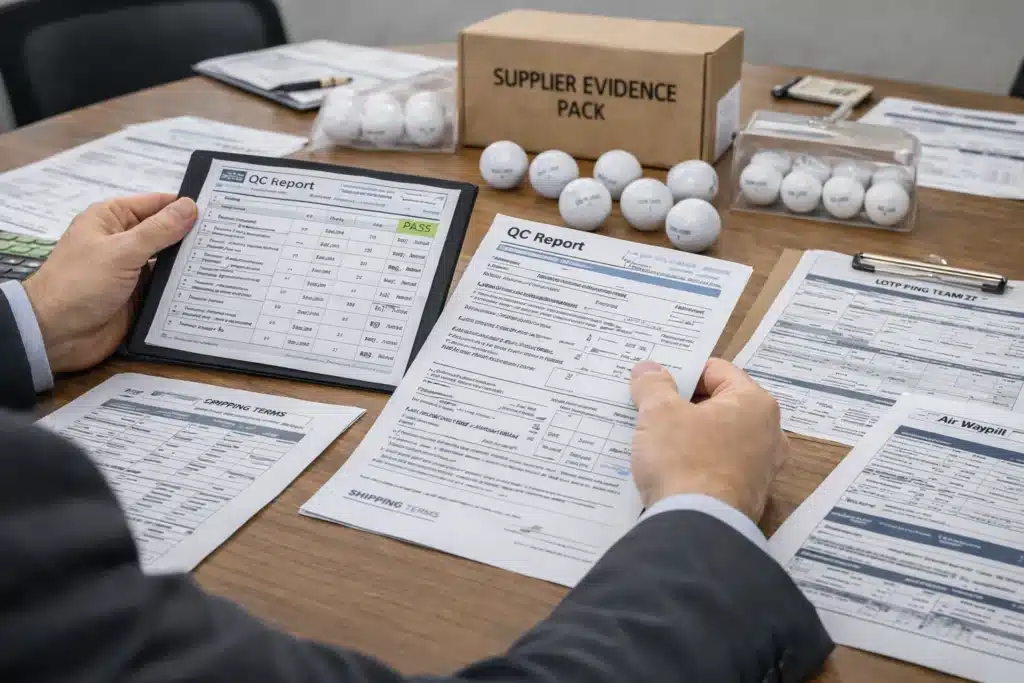
You can choose a factory with strong equipment, competitive pricing, and fast replies—and still end up with the wrong manufacturing partner if your SKU, order size, customization needs, or repeat-production plan sits outside its normal operating model.
To choose the right golf ball manufacturer in China, match six things to your program: the factory’s routine production route, normal order model, execution reliability, evidence readiness, customization capability, and repeat-production path. A technically capable factory is not automatically the right commercial fit for your SKU.
World Bank WITS 2024 golf-ball export data records about 370.3 million golf balls exported from China, valued at roughly US$147.3 million. That confirms China has a substantial golf-ball export base—but it tells you nothing about whether an individual manufacturer can routinely support your product, order model, launch deadline, or reorder plan.
That is why manufacturer selection should happen in two stages: choose for fit first, then verify the shortlisted supplier. Before comparing factory size, catalog breadth, or the lowest quote, define what your program actually requires and whether the manufacturer can support it as normal business rather than as a one-off exception.
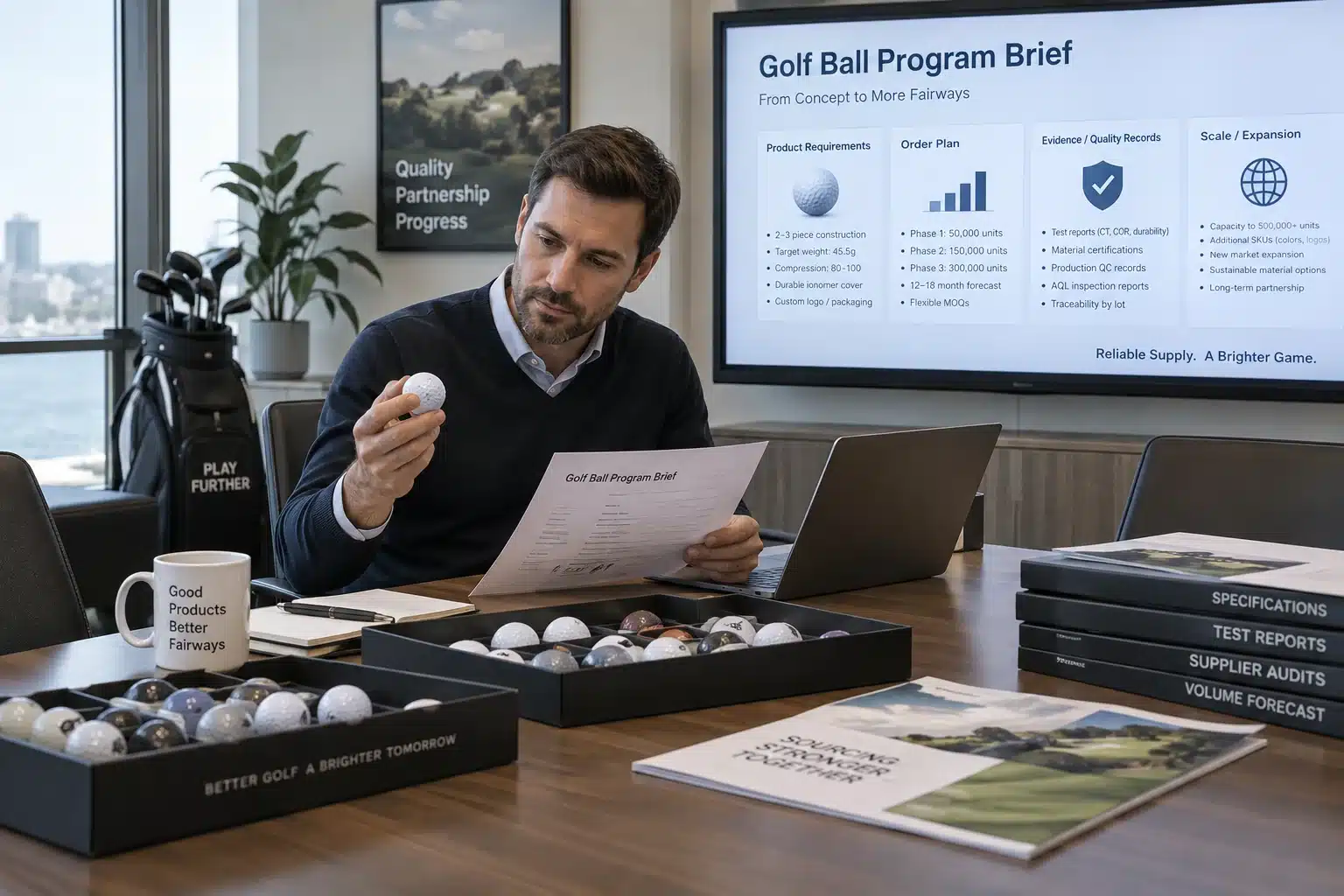
What Golf Ball Program Are You Actually Buying?
If your RFQ says only “we need custom golf balls,” suppliers can quote very different production models while your comparison sheet makes them look equivalent.
You cannot choose the right manufacturer until you define the program it must support. A range-ball account, promotional logo project, private-label retail SKU, and premium multilayer program can require different product routes, order models, evidence levels, execution priorities, and repeat-production paths.
Start with the commercial lane: Range / Practice, Corporate / Event / Promo, Private Label Pilot, Mainstream Retail, or Premium-positioned OEM. Then define the construction family, cover/process requirement, customization depth, packaging scope, opening-order stage, launch window, and expected reorder pattern.
For programs where current ball-list status matters, define that requirement in your Manufacturer Fit Brief and check the exact model on the official USGA List of Conforming Golf Balls. Treat conformance as a product or competition requirement—not as a universal manufacturer-quality score.
| Pain / Decision | Fit Dimension | What You Define | Buyer Action |
|---|---|---|---|
| Wrong product route | Product Fit | Channel, use, construction, cover route | Lock the SKU lane |
| Order treated as exception | Order Fit | Opening quantity, SKU count, packaging | Define the order model |
| Deadlines keep slipping | Execution Fit | Milestones, launch date, warning needs | Set milestone expectations |
| Claims exceed proof | Evidence Readiness | Evidence level your SKU needs | Define the proof burden |
| Pilot cannot scale | Scale Fit | Repeat quantity and route continuity | Define the scale path |
This is a better starting point than asking which factory is “best.” A technically capable manufacturer can still be commercially wrong for your program.
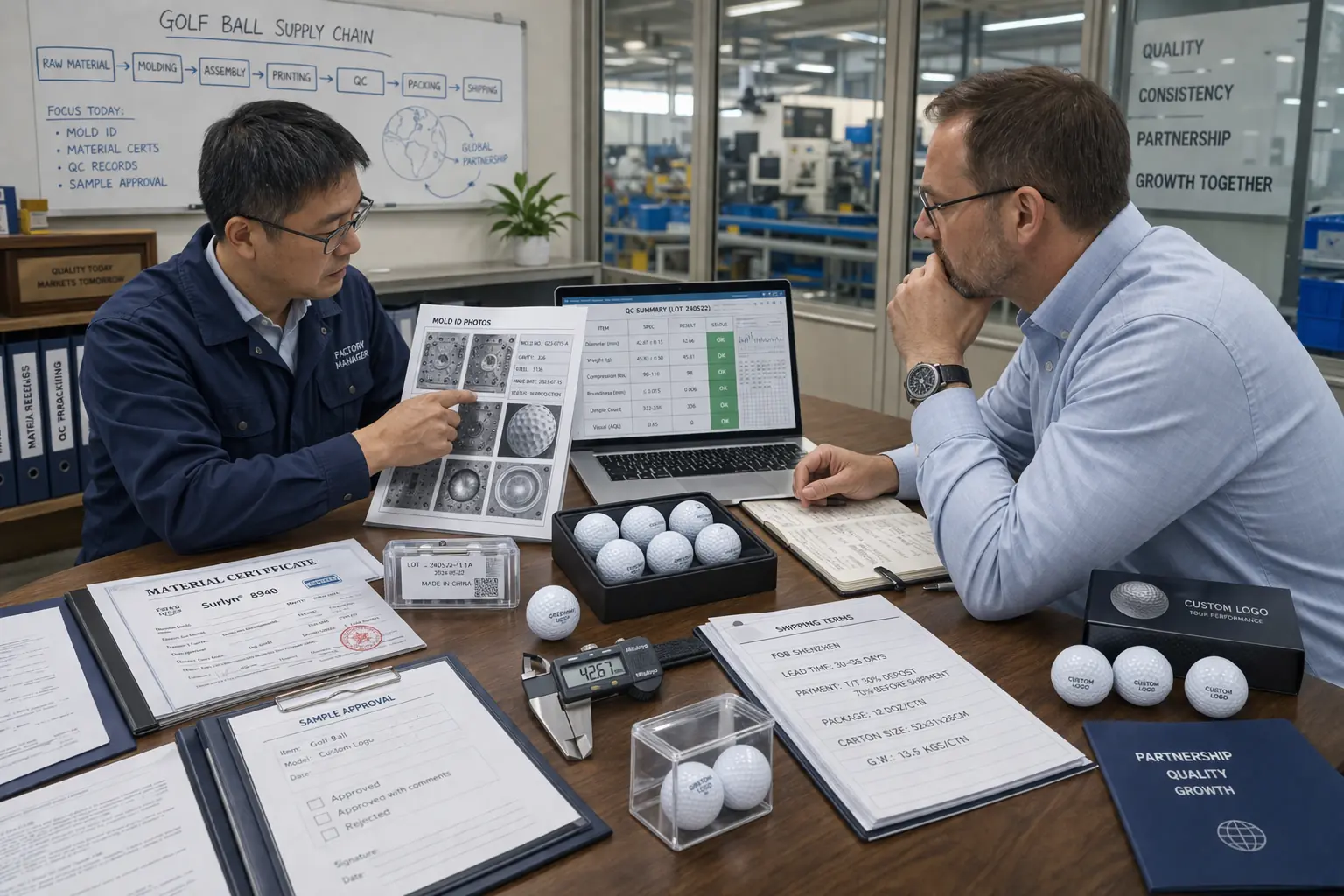
What Belongs in Your Manufacturer Fit Brief?
Give each shortlisted manufacturer the same buying problem to solve. Include your target channel, product use, construction family, cover/process route, customization depth, opening-order stage, SKU and artwork complexity, packaging scope, evidence level, launch window, reorder pattern, and expected scale path.
Send that brief before asking for another broad capability presentation. The quality of the supplier’s response—what it clarifies, what it questions, and where it sets limits—already tells you something about fit.
If you do not yet have candidates, build a China golf ball manufacturer shortlist first.
✔ True — The best manufacturer depends on the program you are trying to run
Range, promotional, private-label retail, and premium multilayer programs place different demands on production access, customization, evidence, deadlines, and repeat supply.
✘ False — “A higher-spec factory is automatically a safer sourcing choice”
Extra capability creates value only when your SKU and commercial model can use it without turning your account into a permanent exception.
Can This Supplier Keep Its Commitments?
A supplier can reply quickly, send an attractive sample, and still miss the milestones protecting your event date, retail launch, or replenishment window.
Fast replies do not prove reliable execution; completed commitments do. Track what your supplier promises against what it actually completes across artwork, samples, production milestones, QC release, and cargo readiness. A stronger execution partner also surfaces problems early enough for you to choose a recovery option before the commercial deadline fails.
Use Commitment Reliability as a Promise → Actual record. Note the promised and actual dates for quotation, artwork proof, sample completion, production readiness, QC release, and cargo readiness. Also record when a risk was disclosed, who owned the problem, and whether the proposed recovery still left you workable choices.
Your first sample cycle therefore tests more than the golf ball. It shows whether the supplier closes specifications, documents decisions, and moves the project forward without repeated chasing. Fast replies followed by repeatedly missed milestones are a failure signal.
In 2024, a U.S. buyer who later contacted Golfara said a previous supplier had offered competitive pricing but missed the agreed delivery date. To protect the buyer’s commercial deadline, the shipment had to move by emergency air freight, materially increasing landed cost. The issue was not necessarily whether the factory could manufacture the product. The sourcing failure was execution, and the recovery cost changed the economics of the original quote.
A missed commitment can erase a price advantage. Manufacturing capability may earn a place on your shortlist; execution reliability determines whether the supplier can protect your launch.
Keep a Milestone Commitment Record through the first sourcing cycle. It gives your team something more useful than “they seem responsive” when the shortlist needs to become a decision.
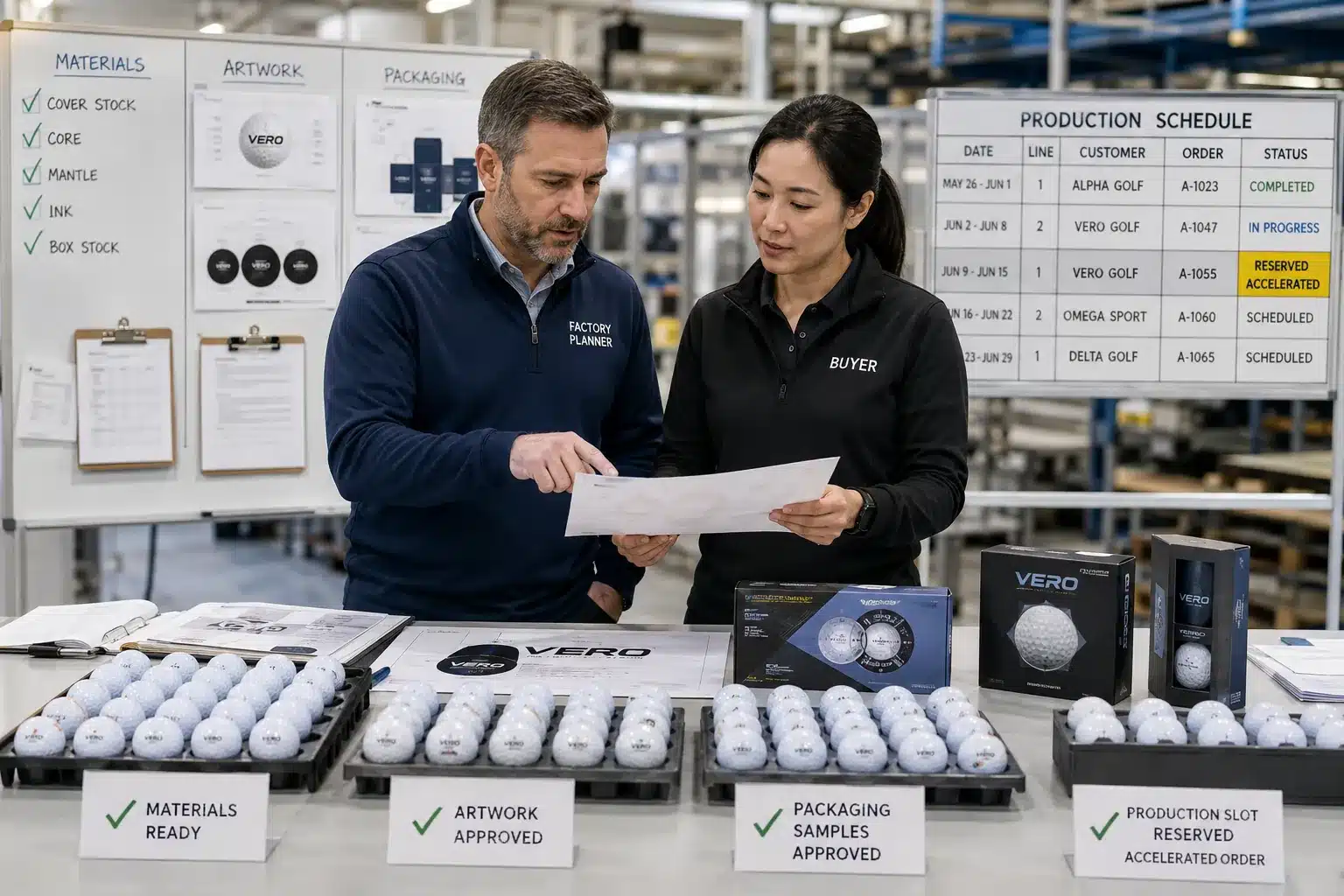
Does It Routinely Run Your Production Route?
A catalog can show 2-piece, 3-piece, 4-piece, ionomer, urethane, range, and premium balls without telling you which routes the factory actually runs as normal business.
A catalog shows what a supplier will sell; it does not prove what the factory runs routinely. Classify your exact construction and production route before shortlisting the manufacturer. Routine or regularly scheduled capability usually creates a clearer production path than capability dependent on special development or another production layer.
“Urethane” is a useful example. Injection-molded TPU and cast thermoset urethane can both appear under broad urethane wording while requiring materially different manufacturing routes. For manufacturer selection, you do not need a chemistry lesson. You need to know which route applies to your SKU and whether that route is part of the supplier’s normal OEM operation.
| Capability Status | What It Means | Main Risk | Buyer Action |
|---|---|---|---|
| Routine | Normal commercial production | Lower route uncertainty | Prefer when it fits |
| Regularly scheduled | Established but slot-dependent | Booking constraints | Confirm conditions |
| Partner-supported | Another production layer is involved | Control dependency | Clarify supplier role |
| Development / special | Engineering or exception route | Scale uncertainty | Treat as development |
| Not supported | Route is outside capability | Forced workaround | Remove from shortlist |
A supplier claiming that every golf-ball type in its catalog is routine production is a useful failure signal. Ask for classification instead of accepting breadth as proof.
Please classify the quoted construction and production route as routine production, regularly scheduled production, partner-supported production, development/special-project production, or not supported, and state which route will be used for this SKU.
Use the reply as your Routine Capability Declaration. If the production route itself becomes the technical decision, continue with the TPU vs Cast Urethane OEM Guide. If the supplier’s production role becomes unclear, use the Golf Ball Manufacturer vs Trading Company guide before moving deeper into supplier verification.
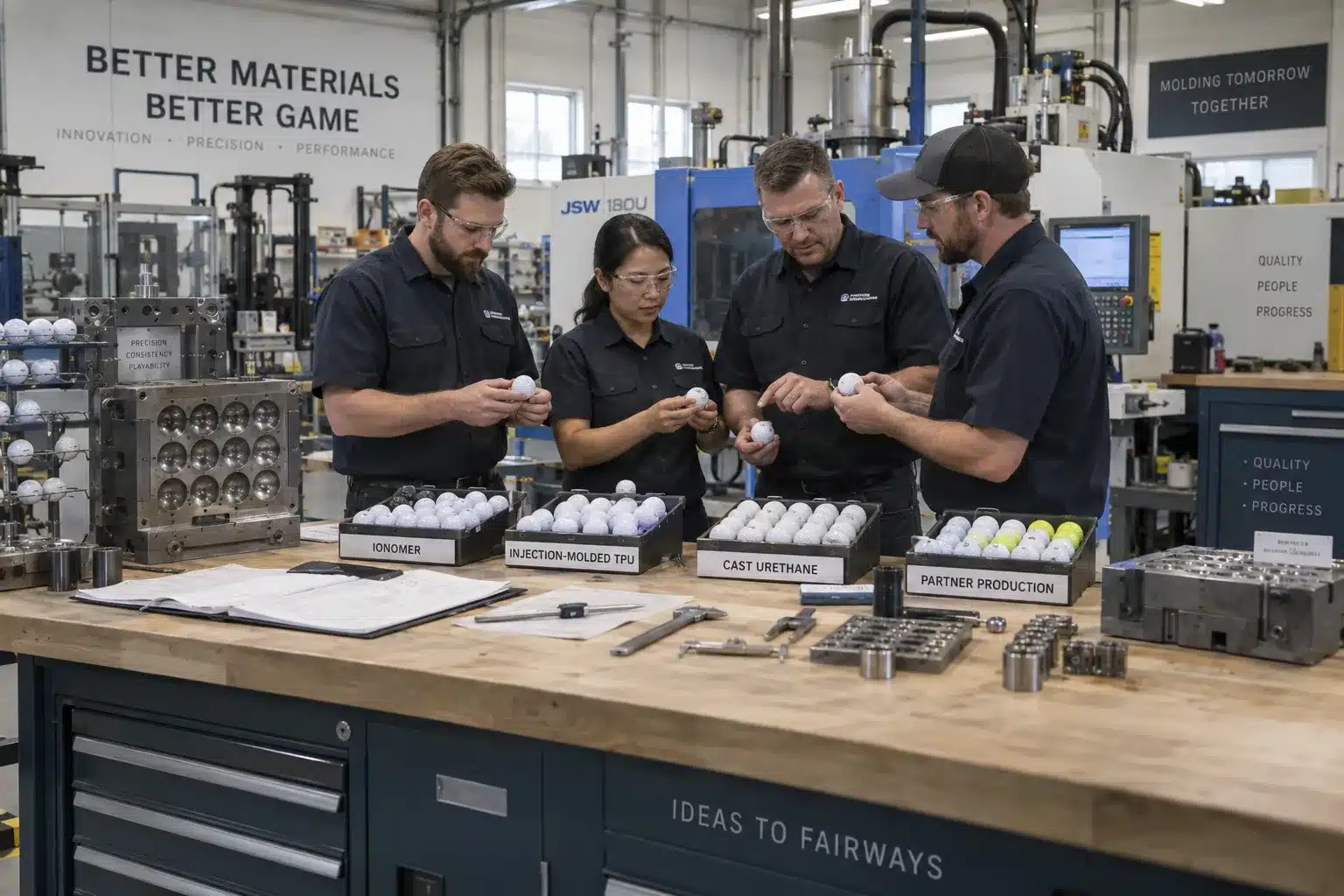
Routine, Scheduled, Partner, or Development?
These statuses describe operating fit, not product quality. A partner-supported or special-project route can be commercially workable, but it creates different assumptions around scheduling, ownership, evidence, and repeat production.
The practical question is simple: do not ask only, “Can you make it?” Ask, “How do you normally make it?”
✔ True — A legitimate manufacturer can offer products outside everyday production
What matters is whether your exact SKU is routine, scheduled, partner-supported, or developmental—and whether that status fits your launch.
✘ False — “Urethane available proves routine capability for every urethane route”
Broad material wording does not identify the production route, scheduling model, or operating access behind your quote.
Does Its Order Model Fit Your Launch Stage?
A factory can have impressive annual output while treating your account as an exception through awkward quantities, slow approvals, rigid packaging rules, or weak reorder priority.
Installed capacity matters only when your account can actually use it. A factory optimized for large repeat blocks may be a poor fit for an opening private-label program, while a flexible specialist may handle smaller SKUs or packaging changes within its normal system. Judge accessible OEM capacity, not headline scale.
Large organizations can have more internal approval and coordination layers. That can matter when your project involves several artworks, packaging revisions, or smaller repeat orders. A flexible specialist may fit that operating rhythm better. The reverse can also be true: a smaller manufacturer may be underqualified for a technically demanding route.
The decision is not big factory versus small factory. It is normal fit versus permanent exception.
Ask whether your opening quantity, SKU count, packaging scope, artwork-change frequency, and expected reorder pattern are normal business for the supplier. Record the answer in an Order Model Fit Statement.
MOQ is useful here because it reveals something about how the manufacturer operates; it is not a quality score. At Golfara, eligible bulk OEM golf-ball programs can currently start at 1,000 balls when the quoted SKU fits an available production route. Custom packaging can create a separate packaging minimum. That is Golfara’s commercial model—not a China-wide MOQ benchmark.
Apply the same logic to every shortlisted manufacturer: does your opening order belong to its normal production system, and what changes when you reorder?
If quantity mechanics become the main purchasing problem, use the dedicated custom golf ball MOQ guide instead of expanding them here.
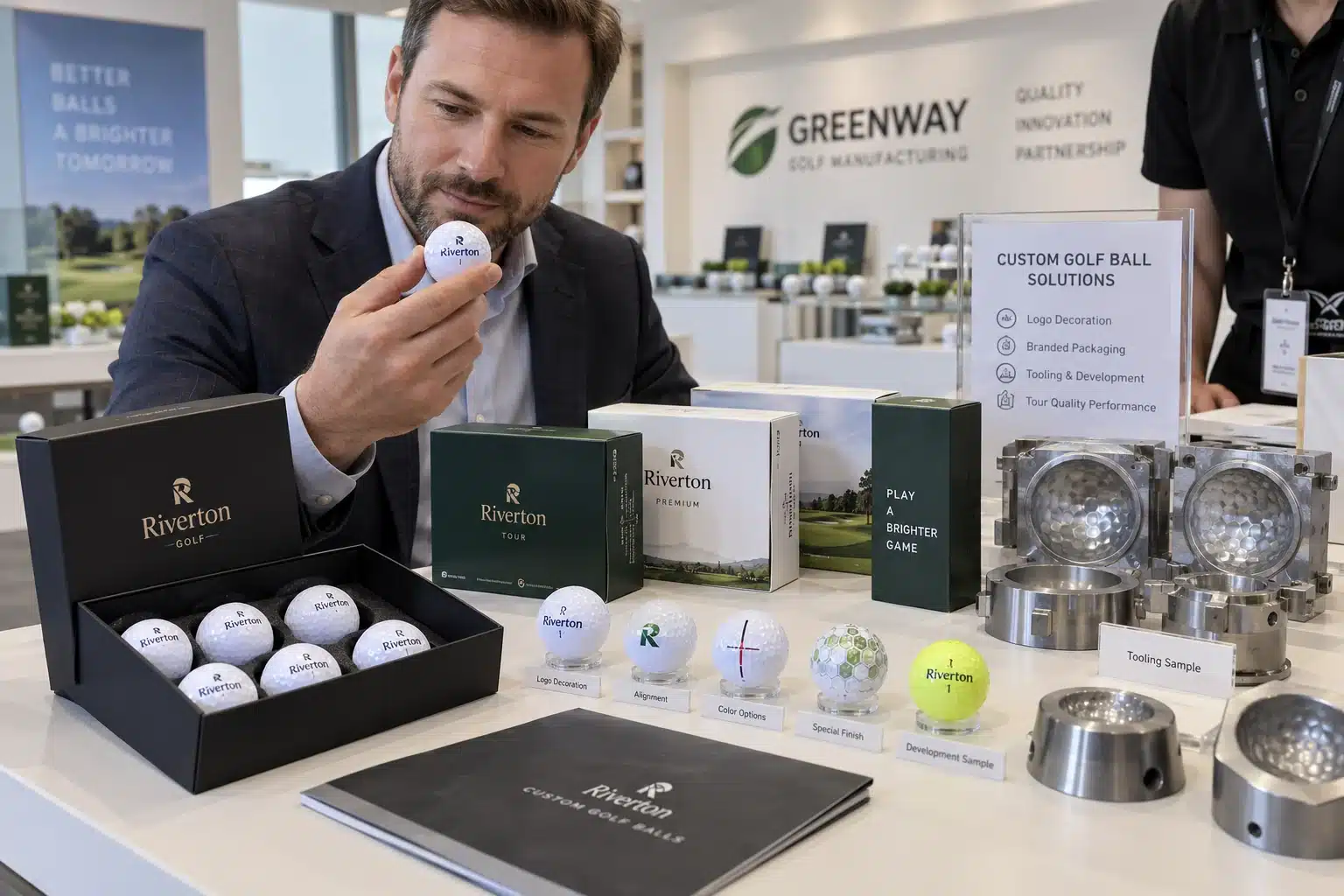
How Much Customization Do You Really Need?
“Custom golf balls” might mean one logo and a branded box—or a new construction requiring process development, tooling, engineering input, and a much heavier proof burden.
Your required manufacturing depth should rise only when your customization depth rises. A standard ball with a logo and custom box does not need the same engineering capability as a new cover route, formula, tooling set, or construction. Buy the capability your SKU needs rather than the capability that sounds most impressive.
Use a simple customization ladder before you evaluate the manufacturer.
| Customization Depth | Capability Needed | Wrong-Fit Risk | Buyer Action |
|---|---|---|---|
| Decoration | Print control | Overbuy engineering | Define artwork scope |
| Private label | Print + packaging coordination | Operational friction | Lock pack scope |
| Product variation | Stable standard route | Route substitution | Confirm routine route |
| Process-specific SKU | Process capability | Technical underfit | Confirm route status |
| New product development | Engineering + tooling | Supplier too shallow | Treat as NPD |
Printing shows how quickly “custom” can change meaning. A straightforward repeat logo may fit a stable pad-printing workflow. Multicolor or gradient artwork may require another decoration route and tighter control of artwork files, Pantone references, placement, and sample approval.
That does not make one printing method or manufacturer universally better. It means flexibility has value only when your channel actually needs changing artwork, packaging, SKU count, or presentation.
If printing method becomes the real decision, continue with the custom golf ball printing methods article.
Logo Project or Product-Development Program?
Force one fork before supplier selection: decoration-led customization or product-development customization. The first needs repeatable printing, packaging, approval, and replenishment. The second requires deeper process, engineering, tooling, and evidence capability.
Capture the answer in a Customization Depth Statement: decoration only, decoration plus packaging, standard-route variation, process-specific SKU, or true new-product development.
✔ True — A simpler program may be better served by a repeat-customization specialist
When your commercial value comes from logo, packaging, and replenishment, unused engineering depth can add coordination without improving the SKU.
✘ False — “More in-house engineering automatically creates more value for every private-label order”
Required capability should follow what you are actually changing, not the most impressive capability on a presentation.
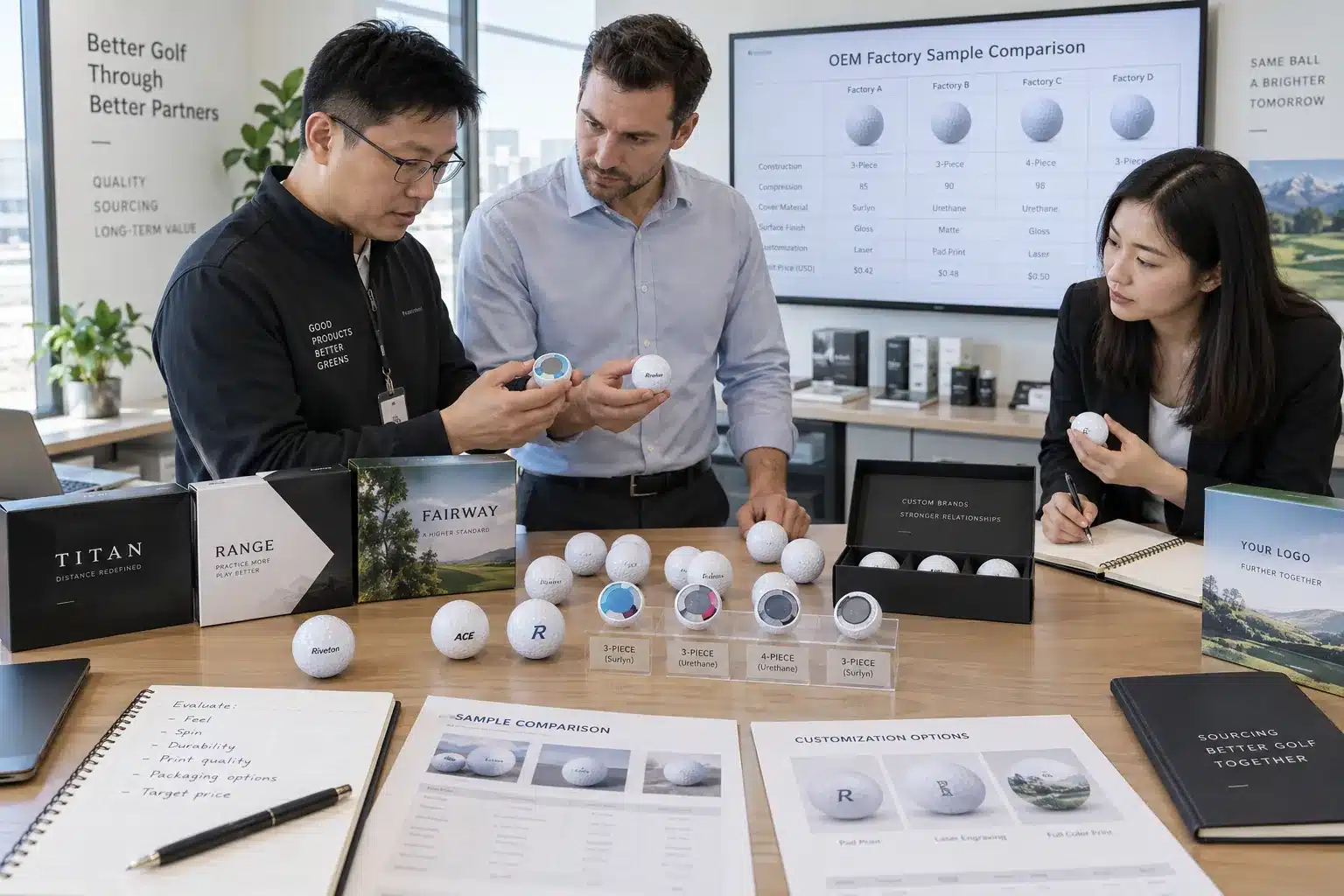
Can This Program Scale Without Changing the Route?
A supplier may accept your opening batch enthusiastically, but that does not prove repeat volume will stay on the same line, route, partner, packaging model, or commercial conditions.
A manufacturer accepting your opening order does not prove that the same production model can support repeat volume. Before full verification, ask how the SKU moves into replenishment, what changes when volume grows, and whether the approved production route remains unchanged unless your team authorizes a different route in writing.
Scaling is not simply running the same machine longer. Volume can change scheduling priority, line access, packaging runs, partner involvement, or commercial minimums. A successful opening order can therefore prove that the supplier accepted one order without proving that your repeat program fits the same operating model.
“We can accept the pilot” with no explanation of the repeat-production route is a failure signal.
Ask the supplier to map Opening Order → Repeat Order → Scale, including the production route at each stage, volume-triggered route changes, partner changes, packaging changes, and how proposed changes will be disclosed.
Capture that answer in a Scale Path Statement.
Opening and repeat orders shall use the same approved production route unless a proposed route change is disclosed and approved in writing before production.
If your real question becomes whether a small trial predicts bulk production, use the dedicated golf ball OEM pilot guide rather than turning pilot acceptance into proof of scale.
Advance the manufacturer only when you can explain its production route, normal order model, execution behavior, evidence readiness, customization fit, and repeat-production path in writing. If one of those remains materially unclear, hold the supplier at the first-screen stage instead of letting price or sample quality push it into full verification.
Once manufacturer fit is clear and basic supplier verification is complete, use a deep golf ball factory audit to test whether one comparable production lot can be traced through its declared route, linked records, exception handling, final release, and change control.
FAQ
Does ISO 9001 prove a manufacturer fits my program?
No. ISO 9001 sets requirements for a quality management system; valid certification can provide one layer of QMS evidence, but it does not prove that the manufacturer’s routine production route, commercial model, execution behavior, customization depth, or scale path fits your specific program.
The official ISO 9001 requirements page sets out requirements for a quality management system. For sourcing, treat valid ISO 9001 certification as one QMS evidence layer rather than an overall Manufacturer Fit score.
Should a fixed event date change how I rank suppliers?
Yes. A fixed corporate event, retailer reset, seasonal launch, or tournament date should give Execution Fit more weight because one missed milestone can force recovery decisions that erase a modest factory-price advantage.
Work backward from the commercial date into artwork, sample, production, QC-release, and cargo-ready milestones. Then observe whether the supplier closes commitments and flags risks while options still exist. For deadline-critical purchasing, compare execution plans as well as quotes.
Can a low MOQ still signal the wrong manufacturer?
Yes. A low MOQ can look attractive while still sitting outside the supplier’s normal operating model or carrying restrictions on SKU count, packaging, artwork, production route, or repeat volume.
Ask whether the quantity is routine or specially approved and what changes on the next PO. The better question is not simply, “Can you accept this quantity?” It is, “Does this order belong to the same operating model I expect to use again?”
Is a partner-supported route automatically a red flag?
No. A disclosed partner-supported route can be workable when responsibilities are clear and the route fits your program. The risk comes from assuming it is equivalent to routine production without understanding the dependency.
At first-screen stage, identify which part is partner-supported and whether it changes scheduling, evidence readiness, or future scale. If production ownership becomes important to the decision, move into the dedicated supplier-role analysis rather than trying to audit it here.
Is it a good sign when a manufacturer says “no”?
Sometimes. A manufacturer that rejects an unsupported process, unrealistic deadline, or unsuitable order model can show stronger decision quality than one that says yes to everything without explaining execution.
Useful communication identifies missing information, states boundaries, and offers a workable alternative when possible. A well-explained “no” can be more valuable than an easy “yes” that later becomes route changes or missed commitments. You are evaluating decision quality, not friendliness.
When should I start formal supplier verification?
Start once the manufacturer appears to fit your product route, order model, customization needs, execution requirements, evidence burden, and scale path. Manufacturer Fit comes first; formal Supplier Verification comes next.
First narrow the field by commercial fit. Then verify the exact supplier, production system, and SKU you intend to use. This keeps your team from spending deep due-diligence effort on a genuine manufacturer that is still the wrong operating fit for your program.
Conclusion
The right China golf ball manufacturer is not automatically the largest factory, the lowest quote, the broadest catalog, or the fastest reply. It is the manufacturer whose product route, order model, execution reliability, evidence readiness, customization depth, and scale path fit the program you are actually buying.
Choose for fit first. Verify the shortlisted supplier second.
You might also like — China Golf Ball OEM Supplier Verification Checklist