Mini golf balls look cheap until missing stock, scuffed covers, dull colors, and bulky cartons start draining weekend revenue.
Mini golf courses should buy durable, high-visibility venue balls built for repeated putting, hard-surface abrasion, guest handling, and easy replenishment. The best commercial spec uses a tough cover, stable clearcoat, bright venue-only colors, optional logo or numbering, bulk cartons, and repeatable batch control.
For B2B buyers, the right question is not “Which golf ball plays best?” It is “Which ball keeps our course stocked, visible, clean-looking, and easy to reorder?” As of 2026, broad golf participation and off-course formats support the larger entertainment-golf trend, while mini golf’s renewed role in FEC attraction planning makes this an operating-cost decision, not a toy purchase.
| Course need | Wrong buy | Better spec | Evidence to request |
|---|---|---|---|
| Hard surfaces | Cheap toy balls | Durable venue-use ball | Abrasion photos |
| Guest loss | Plain white balls | Bright venue-only colors | Master color sample |
| Blacklight play | Generic colored balls | UV-reactive neon option | Blacklight video |
| Replenishment | Retail sleeves | Bulk cartons | CBM packing sheet |
| Batch control | Random mixed stock | Color-coded batches | Batch ID label |
Your course loses money when balls disappear, wear out, look inconsistent, ship inefficiently, or arrive without proof. Use this guide to compare mini golf course balls by operating cost, surface wear, color visibility, blacklight needs, logo durability, bulk packing, and RFQ control.
What Balls Work Best for Mini Golf?
Your course does not need driver distance, wedge spin, tour feel, or premium performance language. You need balls that survive guests, counters, rails, cups, and fast reorders.
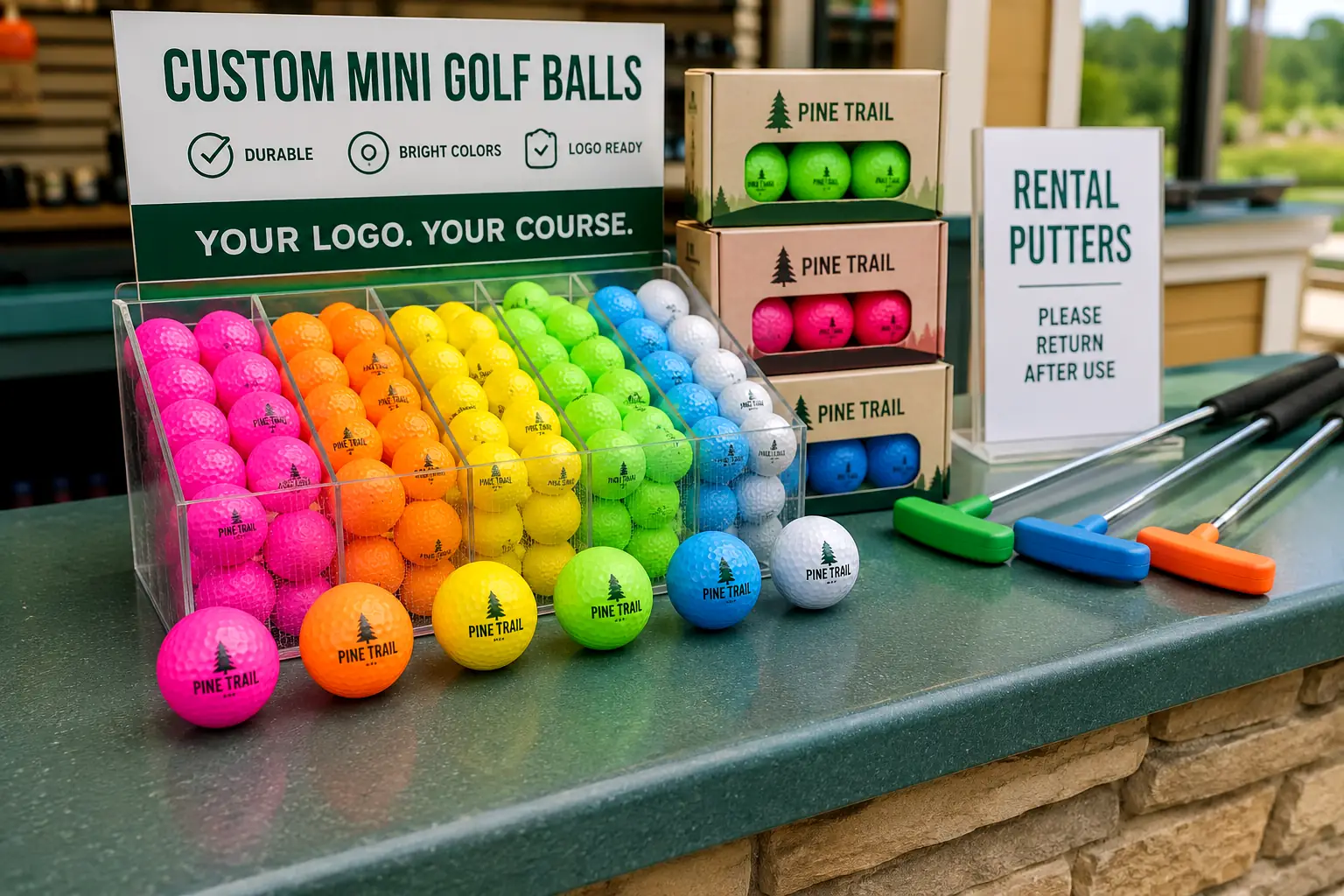
Mini golf courses should usually buy durable, high-visibility venue balls, not premium tour balls or cheap toy balls. Prioritize cover toughness, color visibility, logo or numbering options, bulk packing, and repeatable replenishment before discussing compression, spin, or tournament conformance.
A commercial mini golf ball is a hard-working consumable. It rolls across rough surfaces, hits obstacles, sits in trays, gets handled by children and party groups, and returns to your counter looking either venue-ready or tired. That appearance gap affects guest confidence.
The better starting spec is simple: a durable ionomer or Surlyn-style cover, stable clearcoat, bright solid or neon color, optional venue mark, bulk carton packing, and reorderable color control. A miniature golf ball supplier should understand that your course is buying operating reliability, not player prestige.
Request a category-labeled quote for mini golf course use. It should state color list, logo or numbering option, bulk packing, replenishment MOQ, lead time, and proof package. If the quote only says “colored golf balls available,” your team still does not know enough to buy.
| Pain/decision | Wrong product | Better mini golf spec | Evidence to request |
|---|---|---|---|
| Hard course surfaces | Soft toy ball | Durable ionomer/Surlyn-style cover | Abrasion proof |
| Guest ball loss | Plain white ball | Bright venue-only color | Master color sample |
| Night or indoor play | Normal color ball | UV-reactive neon option | Blacklight video |
| Reorder confusion | Mixed random colors | Color-coded batch plan | Locked color list |
| Freight waste | Retail sleeves | Bulk blank cartons | CBM sheet |
✔ True — Your course is buying a repeat-use operating consumable
A mini golf ball should be judged by surface life, visibility, sorting, loss control, packing efficiency, and reorder consistency. That is where your operating cost shows up.
✘ False — “A more expensive playing ball automatically works better for mini golf”
Your course should not pay for flight features it cannot monetize. Spend the budget on wear proof, color control, marking durability, and replenishment reliability.
Why Do Regular Golf Balls Wear Out?
A clean sample can look fine on your desk, then become scratched, dull, chipped, or rough after repeated contact with your course surfaces.
Regular golf balls can wear poorly on mini golf courses because the contact environment is different. The ball is not flying over grass; it is rolling, bouncing, and rubbing against concrete, brick, metal, cups, rails, artificial turf seams, ramps, and guest-handling surfaces all day.
Concrete, Metal, Brick, or Turf?
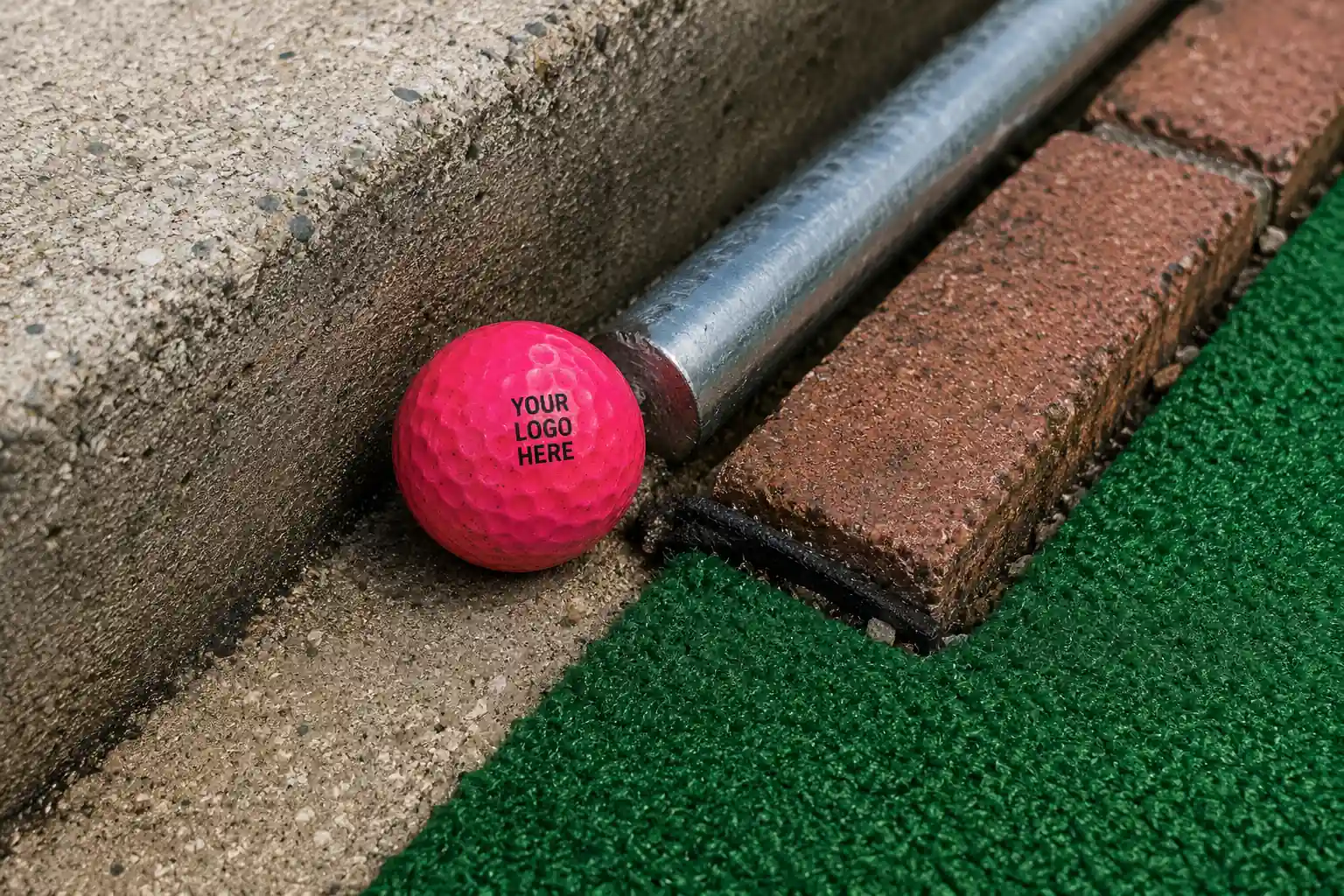
Your surface mix decides the proof you should request. Concrete and brick can scratch coatings, metal rails and cups can chip paint, and turf seams can trap grit that dulls the finish.
Mini golf balls often fail from surface abuse before they fail from performance loss. A ball can still roll, but if it looks dirty, chipped, or rough, your guest-facing product already feels cheaper. That is why clearcoat durability matters more than dimple design for many courses.
Ask miniature golf ball suppliers for hard-surface abrasion evidence, not only clean sample photos. Useful evidence can include before/after photos of the same colored sample, logo-after-rub photos, coating notes, and retained samples. A Taber-style coating-abrasion reference can support supplier comparison, but it should not be presented as a mini golf ball certification.
Your PO can state that approved color, clearcoat, printed sample, and abrasion/rub proof must be retained under the same proof version before shipment. At receiving, inspect severe scuffs, coating chips, rough seams, logo damage, and color mismatch against the retained sample.
How Do You Calculate Cost per Putt?
The cheapest quote may become expensive if balls disappear faster, wear out sooner, ship inefficiently, or force emergency replenishment during peak traffic.
Cost per putt is not the invoice price divided by balls ordered. It should include delivered price, monthly loss, visible rejects, cleaning or sorting labor, replenishment frequency, carton density, freight allocation, and the cost of running short during busy periods.
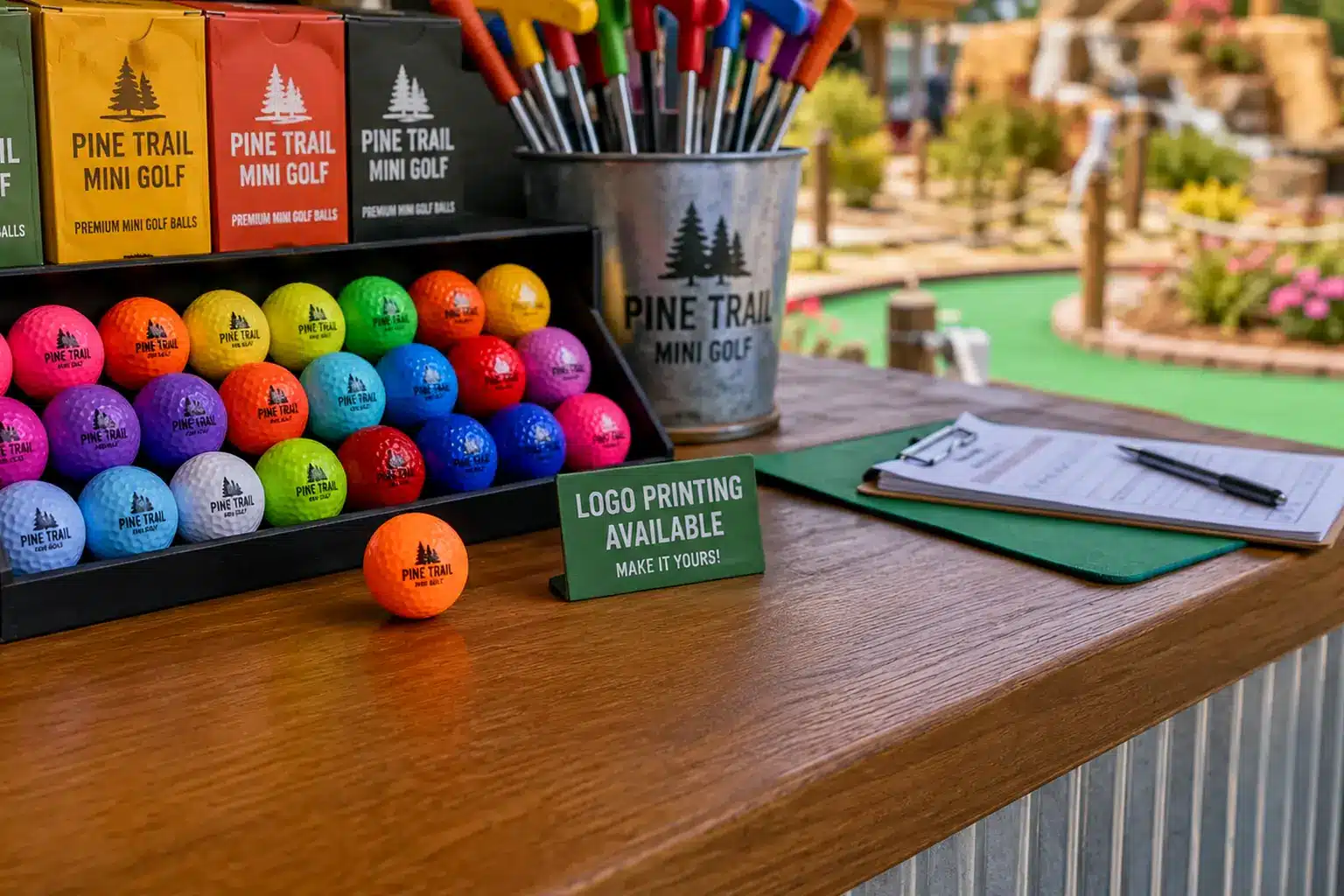
Family entertainment operators sell throughput, repeat visits, birthday groups, and weekend convenience. A ball that looks bad, goes missing, or runs short during a rush hurts more than a spreadsheet line. That is why cost per usable putt is a better buying metric than unit price.
Use your own data instead of a fake universal lifespan:
Cost per usable putt = delivered ball cost ÷ usable putts before loss or rejection
Annual ball cost = initial order cost + replacement orders + freight allocation + rejected-ball loss + emergency replenishment cost
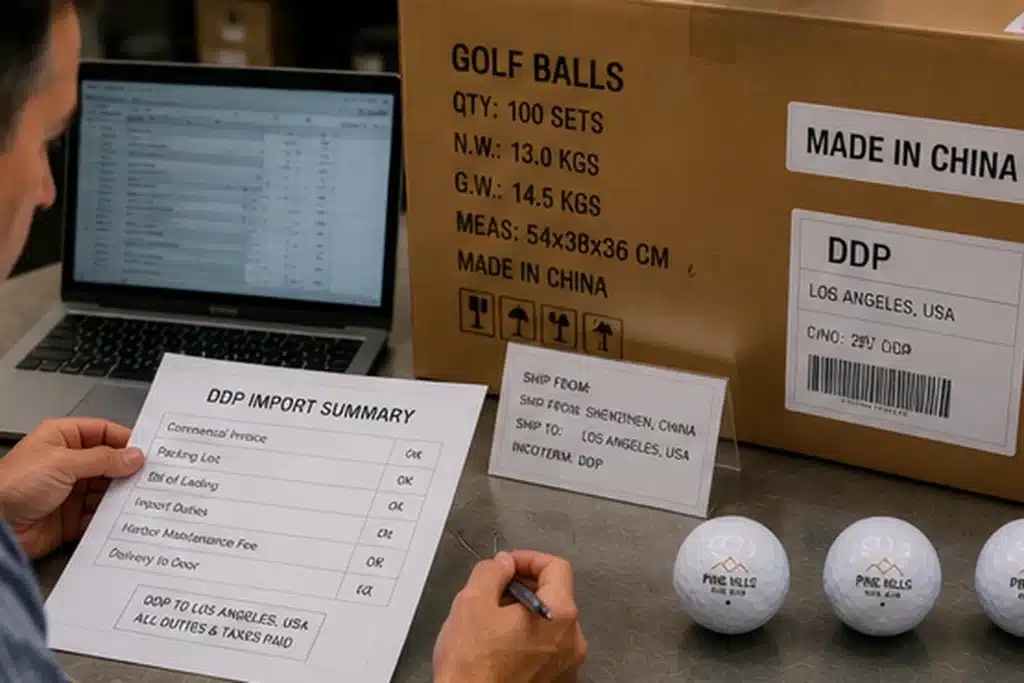
A supplier that quotes retail sleeves for course-use balls is a failure signal. Your stockroom usually does not need 3-ball sleeves, dozen boxes, or retail display packaging. Bulk cartons usually make more sense when the goal is lower landed cost, faster refilling, cleaner storage, and simpler counting.
Request DDP quote basis, carton dimensions, balls per carton, gross weight, CBM, replenishment MOQ, and lead time. Then set a reorder trigger based on your peak weeks, not your quietest month.
| Cost layer | What can go wrong | Variable to track | Buyer move |
|---|---|---|---|
| Unit price | Cheap quote hides fast wear | Price per ball | Compare same spec |
| Loss rate | Guests pocket normal-looking balls | Missing balls/month | Use venue colors |
| Wear rejects | Scuffed balls hurt appearance | Reject count/week | Request abrasion proof |
| Freight | Retail boxes waste CBM | Balls/carton | Ask bulk carton plan |
| Reorder timing | Peak stockout | Weeks of cover | Set reorder trigger |
✔ True — Cost per usable putt is the better buying metric
Your real cost includes loss, visible rejects, freight allocation, refill labor, and reorder timing. A slightly higher ball price can still be cheaper if it reduces avoidable churn.
✘ False — “The lowest per-ball quote always lowers annual cost”
A low quote can hide weak coating, poor packing density, color drift, or rushed replenishment. Your stockroom will find the missing cost later.
Which Colors Reduce Loss and Confusion?
Color is not only a design preference. It affects guest experience, staff sorting, shrinkage control, group flow, batch rotation, and reorder consistency.
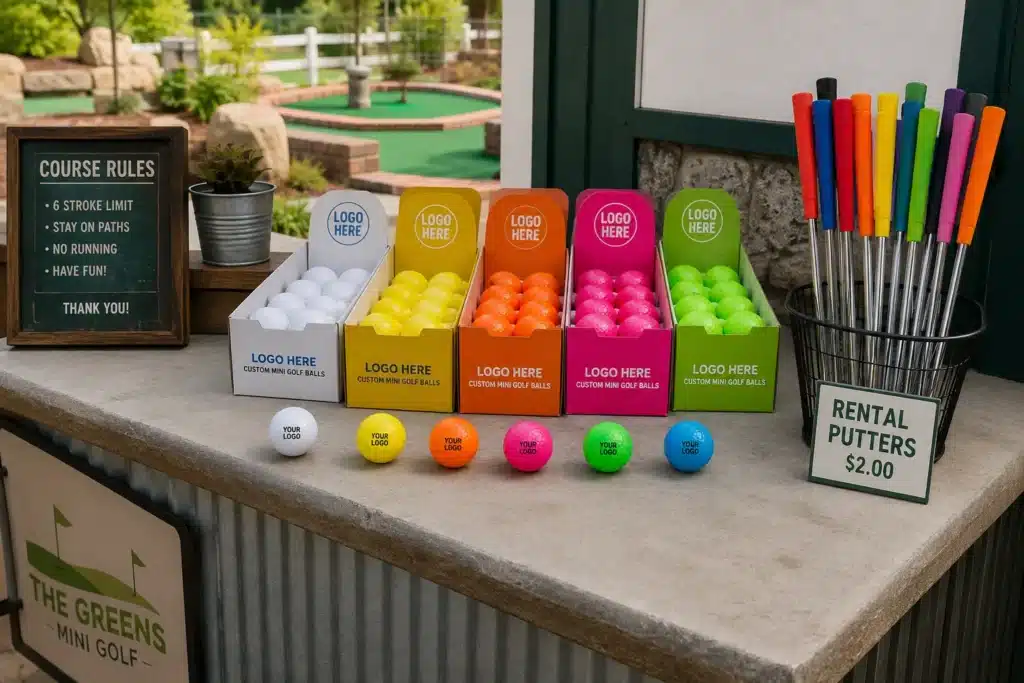
The best mini golf ball color is the one guests can see, staff can sort, and your course can reorder consistently. Bright solid colors, neon batches, venue-only logos, and numbering can reduce confusion, improve group flow, and make pocketed balls easier to identify.
Your ball color is a shrinkage-control tool. A plain white ball looks normal in a pocket, a car cup holder, or a regular golf bag. A bright purple, neon orange, venue-green, or numbered pink ball is easier for staff to recognize and less attractive for off-course use. It will not eliminate loss, but it can reduce ambiguity.
Ask for master color samples, color names or codes, carton labels by color, retained samples, and reorder matching rules. Color consistency is an operating issue. If the second neon green batch drifts darker, your course can look inconsistent and your staff loses a simple inventory signal.
| Color decision | Operational risk | Verification | Evidence to request |
|---|---|---|---|
| Plain white | Looks pocketable | Social-distance check | Venue-only color |
| Bright solid color | Batch drift | Master sample match | Approved color sample |
| Neon color | Weak blacklight reaction | UV photo/video | Sample-ID proof |
| Numbered balls | Sorting confusion | Counter check | Locked numbering plan |
| Multi-color set | Reorder mismatch | Batch label | Carton color code |
Does Blacklight Change the Color Spec?
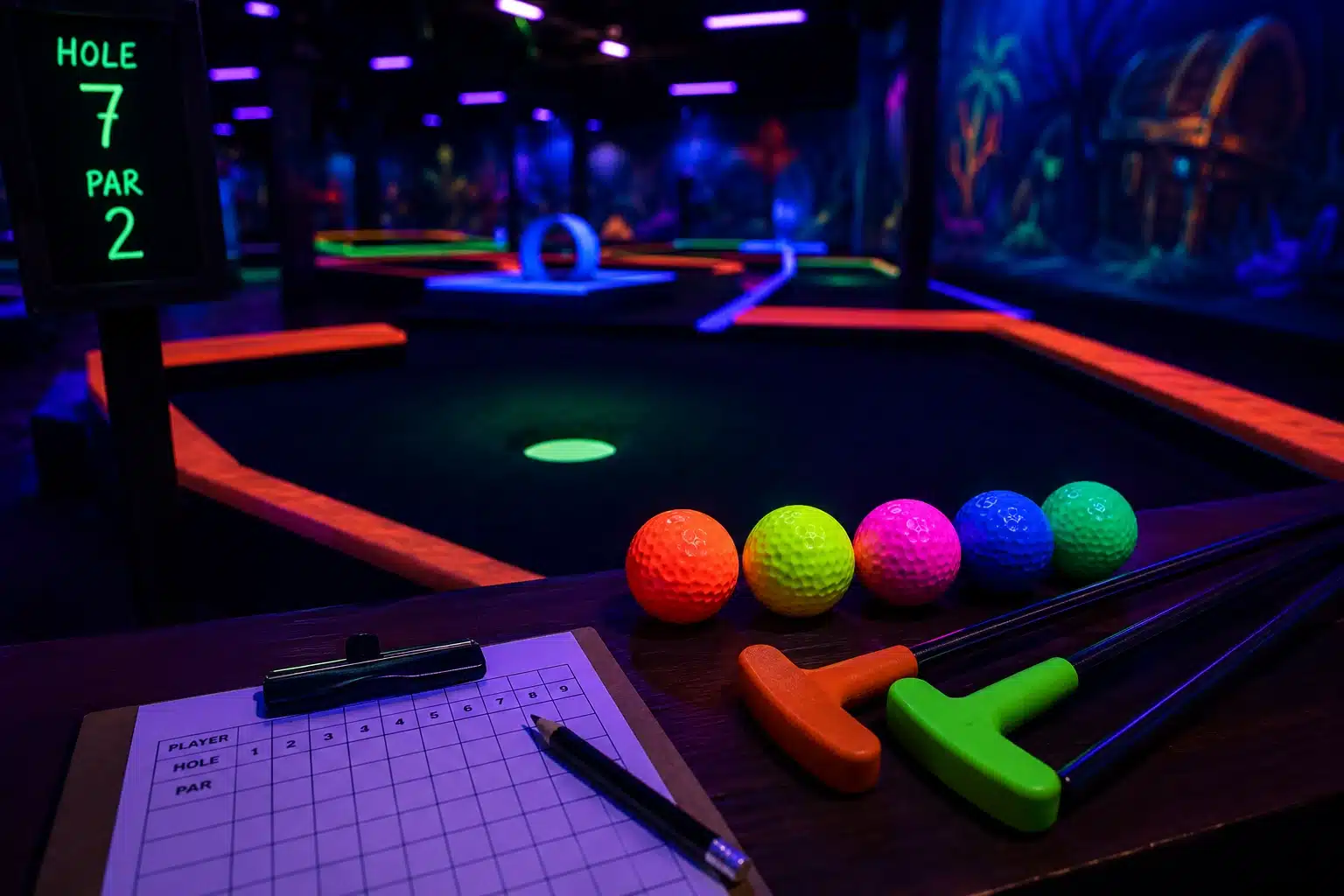
Blacklight changes the approval process. A neon ball that looks strong in daylight may look dull under your indoor lighting, especially if pigment choice or coating changes during bulk production.
A neon sample with no blacklight proof is a failure signal. For blacklight mini golf, approve the exact sample under lighting similar to your venue. Request blacklight reaction photos or video tied to sample ID, then connect that proof to batch ID, carton label, and retained sample. Do not mix a new batch into guest inventory until your team compares it against the approved sample under the same lighting.
How Does Color-Coding Help Daily Operations?
Color-coding turns loose balls into manageable inventory. Your course can use different colors for party groups, lane zones, course sections, staff refill trays, stock age rotation, seasonal events, or premium packages.
A controlled color plan is different from random mixed colors. Random colors may look fun in a sample photo, but they do not help your team track batch age, count stock quickly, or identify which color is running low before a weekend rush. A controlled plan links each color to a carton label, batch ID, quantity, retained sample, and reorder rule.
For a busy FEC, this can reduce staff friction at the counter. Your team can refill trays faster, retire old batches first, separate new stock from older stock, and keep event colors consistent. Ask the supplier to label each carton by color, batch ID, production date or proof version, and quantity.
✔ True — Color can reduce shrinkage and improve operations
Bright venue-only colors support guest visibility, staff sorting, group flow, and inventory tracking. They work best when each color is tied to a master sample and batch label.
✘ False — “Neon color automatically means strong blacklight performance”
Daylight brightness and blacklight reaction are not the same approval standard. Indoor glow venues should approve samples under their actual lighting conditions.
Should You Add Logos or Numbers?
Your logo or numbering is not only decoration. It supports venue identity, ownership recognition, theft deterrence, sorting, and batch control.
Add logos or numbers when they help your course control ownership, sorting, guest recognition, or brand identity. Your RFQ should define print method, artwork version, logo size, placement, curing, and rub-proof evidence before bulk production begins.
A logo only helps if it survives guest use and cleaning. If the mark wears off quickly, your course loses branding, property recognition, and part of the shrinkage-control benefit. For high-traffic venues, print durability is not a nice extra; it is part of the operating spec.
Pad Print or UV Print?
The real decision is artwork complexity versus durability evidence. Pad printing usually fits large-volume, simple marks: one to four colors, text, numbering, property marks, and cost-sensitive repeat orders.
UV printing can fit complex graphics, multi-color mascots, gradients, short runs, or personalized visuals. That flexibility does not automatically make it stronger. Durability depends on surface cleaning, ink system, curing, clearcoat, cover material, and the rub or abrasion proof you approve.
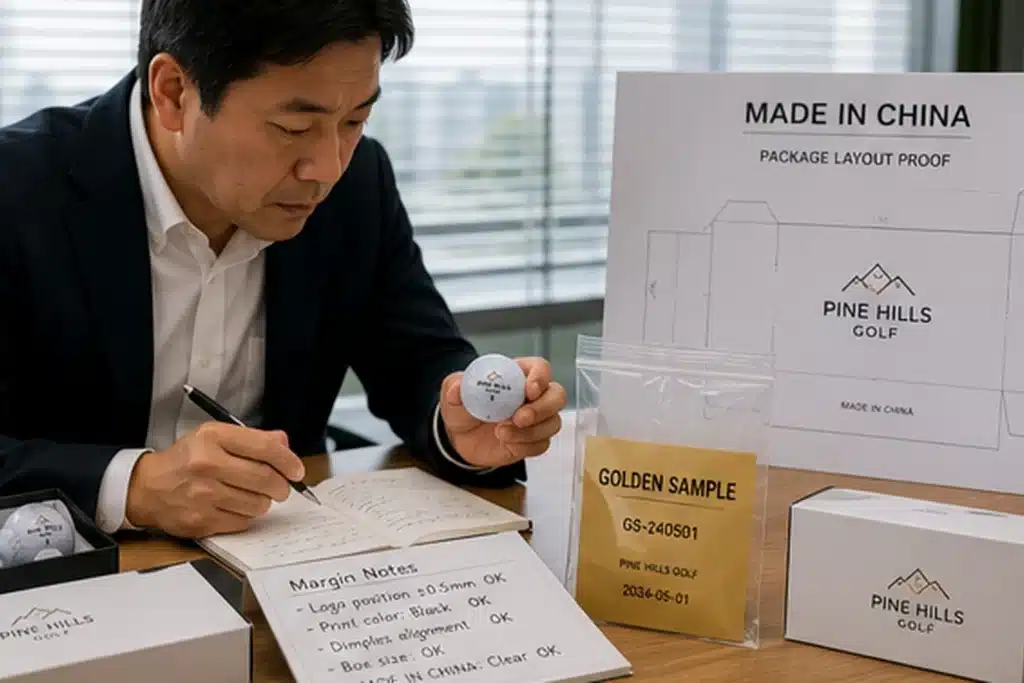
The purchase file should state that mass production cannot start until the final decorated sample matches approved artwork size, color, position, and rub-proof evidence. Request artwork proof, print method declaration, actual decorated sample, cured sample if UV is used, logo placement confirmation, rub-after-print photos, and retained sample.
| Pain/decision | Better first choice | Risk to control | Evidence to request |
|---|---|---|---|
| 1–2 color venue logo | Pad printing | Color drift | PMS proof |
| Simple numbering | Pad printing | Weak mark durability | Rub proof |
| Multi-color mascot | UV printing | Process variation | Cured sample |
| Blacklight graphic | Pre-test required | Dull UV reaction | UV video |
| Reorder program | Version lock | Sample-to-bulk drift | Batch ID |
✔ True — Print method is a risk decision
The right method depends on order size, artwork complexity, color count, budget, lead time, and post-print durability proof. Pretty artwork is not enough.
✘ False — “UV printing is always stronger or more premium”
UV can offer better graphic flexibility, but durability still depends on the surface, ink, curing, clearcoat, and friction testing.
What Should Your Mini Golf RFQ Include?
A vague quote for “colored golf balls” does not protect your course from surface wear, weak blacklight color, poor logo durability, bulky packing, or batch confusion.
Your RFQ should lock the ball as a mini golf operating product, not a generic golf ball. Ask for color, cover route, abrasion evidence, logo or numbering method, blacklight proof if needed, bulk carton packing, replenishment MOQ, batch ID, retained sample, and receiving criteria.
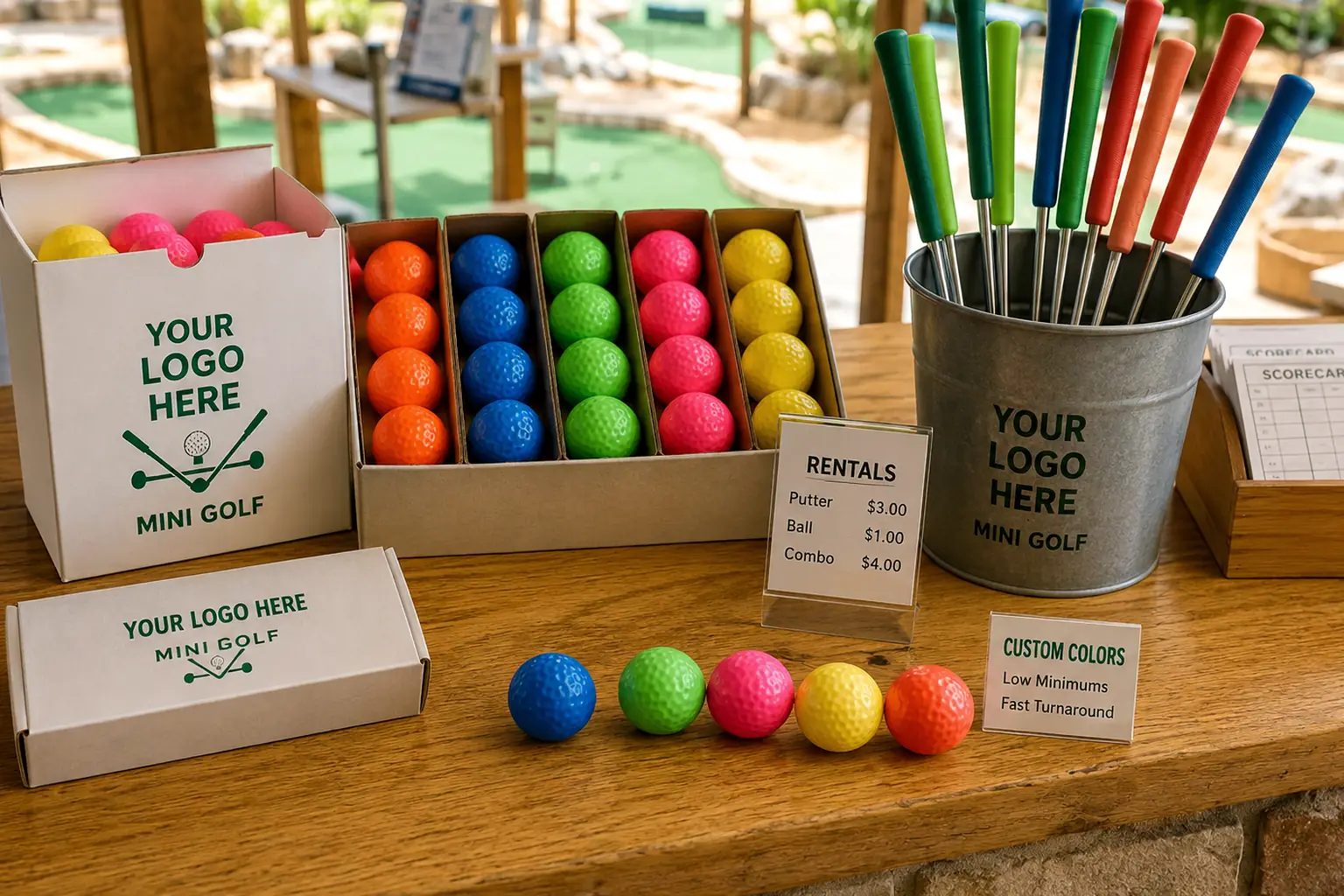
A quote that pushes tour or USGA language for mini golf use is a failure signal. Unless your venue has a special competition requirement, your budget is better spent on durability, visibility, logo survival, packing efficiency, and replenishment proof.
Use this RFQ wording with mini golf balls manufacturers or custom colored mini golf balls suppliers:
“Please quote mini golf course balls for commercial venue use only. Include solid/neon color options, logo or numbering method, abrasion/rub proof, blacklight proof if applicable, bulk carton packing, replenishment MOQ, batch ID labeling, and DDP option. Do not include USGA submission costs unless separately requested.”
Supplier shall link approved mini golf ball color sample, final decorated sample, abrasion/rub proof, blacklight proof if applicable, carton label, batch ID, packing list, and retained sample under one proof version before shipment.
For receiving, define an AQL-based lot-by-lot sampling approach with critical, major, and minor defects agreed before production. In practice, this means your team agrees what counts as a critical, major, or minor defect before production, instead of arguing after cartons arrive.
Buyer acceptance should require color match to approved sample, legible logo or numbering after agreed rub exposure, no severe coating chips on inspected samples, correct bulk packing, readable carton labels, batch ID match, and retained sample match.
| RFQ item | Why it matters | What to request | Acceptance evidence |
|---|---|---|---|
| Ball color | Visibility and shrinkage | Solid/neon color list | Approved master sample |
| Surface durability | Hard-course wear | Abrasion/rub proof | Before/after photos |
| Logo/numbering | Venue identity | Pad or UV method | Final decorated sample |
| Blacklight need | Indoor glow effect | UV reaction proof | Sample-ID video |
| Packing | Landed cost | Bulk carton plan | CBM sheet |
| Replenishment | Peak stock control | MOQ and lead time | Reorder plan |
| Batch control | Receiving disputes | Carton label and batch ID | Traceable packing list |
FAQ
What kind of golf balls are used for mini golf?
Durable, high-visibility venue balls. Commercial mini golf courses should prioritize wear resistance, color control, logo or numbering options, and bulk packing over flight performance.
A course-use ball does not need to behave like a premium player ball. It needs to survive the course environment and keep your operation clean. For most venues, that means bright solid colors or neon colors, a durable cover and clearcoat, optional property marks, and a packing format that fits your stockroom.
Are mini golf balls different from regular golf balls?
Yes, mainly by operating spec. Mini golf balls are judged by hard-surface durability, visible appearance, color repeatability, guest handling, and bulk replenishment control.
A regular golf ball may look usable, but your course does not monetize driver distance or wedge spin. Your team monetizes guest throughput, clean presentation, quick refills, and predictable replacement cost.
What is the difference between putt putt balls and regular golf balls?
Putt putt balls are judged by venue use. Regular golf balls are usually discussed around full-swing performance, while putt putt course balls need operating evidence.
Your course may still use a golf-ball-style product, but the acceptance standard changes. The ball should roll consistently enough for guests, stay visible on the course, resist ugly surface wear, and remain easy for staff to count, sort, and replenish.
How long do mini golf balls last?
There is no reliable universal lifespan. Concrete, metal rails, brick edges, artificial turf, cleaning method, sunlight, traffic level, and guest behavior all change the answer.
A better metric is your own replacement pattern. Count lost balls per month, visible rejects per week, and worn-out balls per 1,000 plays. Separate loss from wear so you know whether the problem is guest shrinkage, surface abuse, cleaning damage, or weak coating.
How many golf balls does a mini golf course need?
Use a formula, not a fixed number. Daily groups × balls issued per group × peak buffer + monthly loss + reorder lead time buffer is a safer starting point.
A low-traffic seasonal course and a busy indoor FEC do not need the same stock plan. Start with normal daily issue volume, then add a peak buffer for weekends, parties, school breaks, and holidays.
Do mini golf balls float?
Only some courses need floating balls. If your course has water features where retrieval matters, ask for new-ball and damaged-ball flotation proof before treating floating performance as approved.
Floating balls should not become the main purchase driver unless water hazards create real operational loss. A clean tank demo is useful, but it does not replace venue-specific acceptance.
What colors are best for mini golf balls?
Bright, sortable, venue-only colors usually work best. Standard white is often less useful for shrinkage control, staff sorting, and course identity.
A pink, orange, yellow, green, blue, or purple program can support group flow, staff counting, batch rotation, and identity control. Request master samples, color names or codes, carton labels by color, retained samples, and reorder matching rules.
Are neon golf balls good for blacklight mini golf?
They can be, but only after testing. Daylight brightness does not guarantee strong UV reaction under your venue lighting.
Blacklight courses should test the final sample before mass production. Ask the supplier to identify whether the color uses fluorescent or UV-reactive pigment, then link the blacklight proof to the same sample ID, batch ID, and retained sample.
Can mini golf balls have logos?
Yes, with the right proof. Define print method, logo size, position, color, rub proof, artwork version, and retained sample before approving mass production.
For simple high-volume marks, pad printing often fits. For complex multi-color graphics, UV printing may fit better if durability is proven. The real issue is whether the finished mark survives guest handling, cleaning, and hard-surface rub.
Do mini golf balls need USGA approval?
Usually no. Mini golf course balls are normally not sold for rules-governed tournament play, so most venues should not pay for unnecessary conformance costs unless they make specific competition-related claims.
The conforming ball list is designed for golf balls tested against the Rules of Golf and used where that requirement applies. Mini golf venues usually need a different proof set: color, durability, print adhesion, batch control, packing, and replenishment evidence. If your business makes formal competition claims, review that separately.
Conclusion
Mini golf ball buying is an operating-cost decision. Your course should buy for surface life, color visibility, shrinkage control, guest flow, bulk packing, replenishment rhythm, and proof version control.
The safer supplier is not the one that only quotes cheap colored balls. It is the one that can lock color samples, decorated samples, abrasion proof, blacklight proof when needed, carton labels, batch IDs, packing lists, and retained samples before production.
When your RFQ controls those details early, your team has fewer surprises at receiving, fewer messy reorders, and a cleaner way to manage mini golf balls as the hard-working consumables they really are.
You might also like — Glow Golf Balls for Night Golf: What Should Venues Verify?