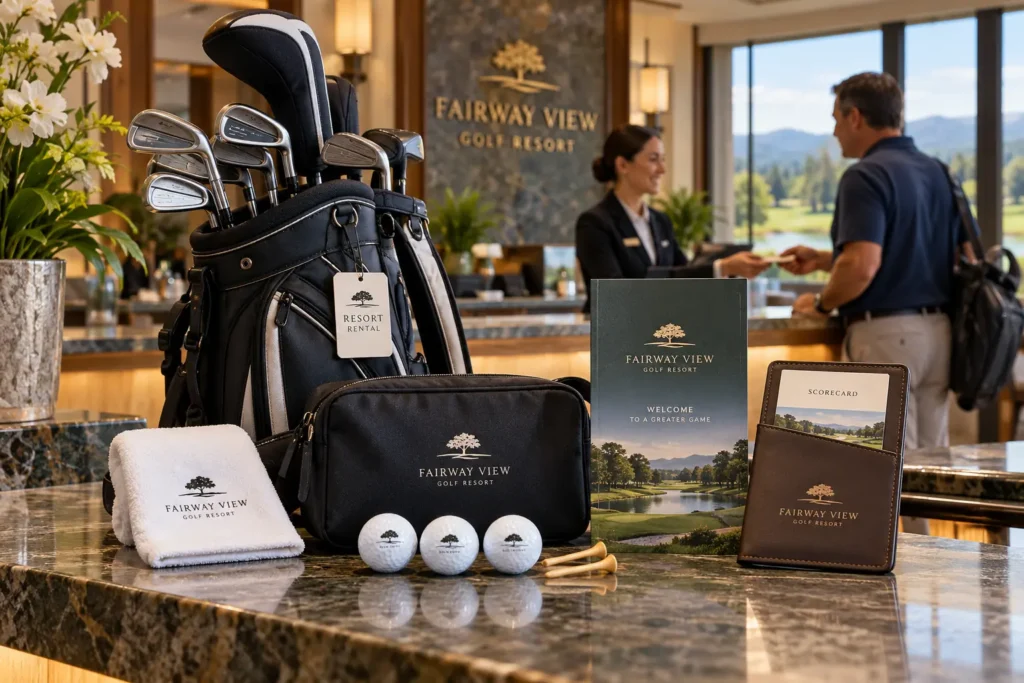
A premium rental-club experience can still disappoint when the golf balls are chosen for product prestige before anyone defines how rental guests actually use them.
A resort rental-club ball package should include six elements: a clear guest promise, the number of balls included, a branding choice, an appropriate ball tier, a practical handoff presentation, and a replenishment plan. The goal is a program your staff can deliver consistently and your purchasing team can reorder without rebuilding it.
Public resort programs are useful benchmarks, but they are not standards. Different properties make different choices because their guest mix, round format, loss exposure, service promise, and operating model are different.
Before choosing the ball, your team should answer one question: What should this package do for the guest and for the operation?
What Job Should the Rental Ball Package Do?
A resort can easily begin with the wrong assumption: “We are a premium property, so our rental guests should receive the most premium ball.”
That describes the property, but it does not yet define the rental program.
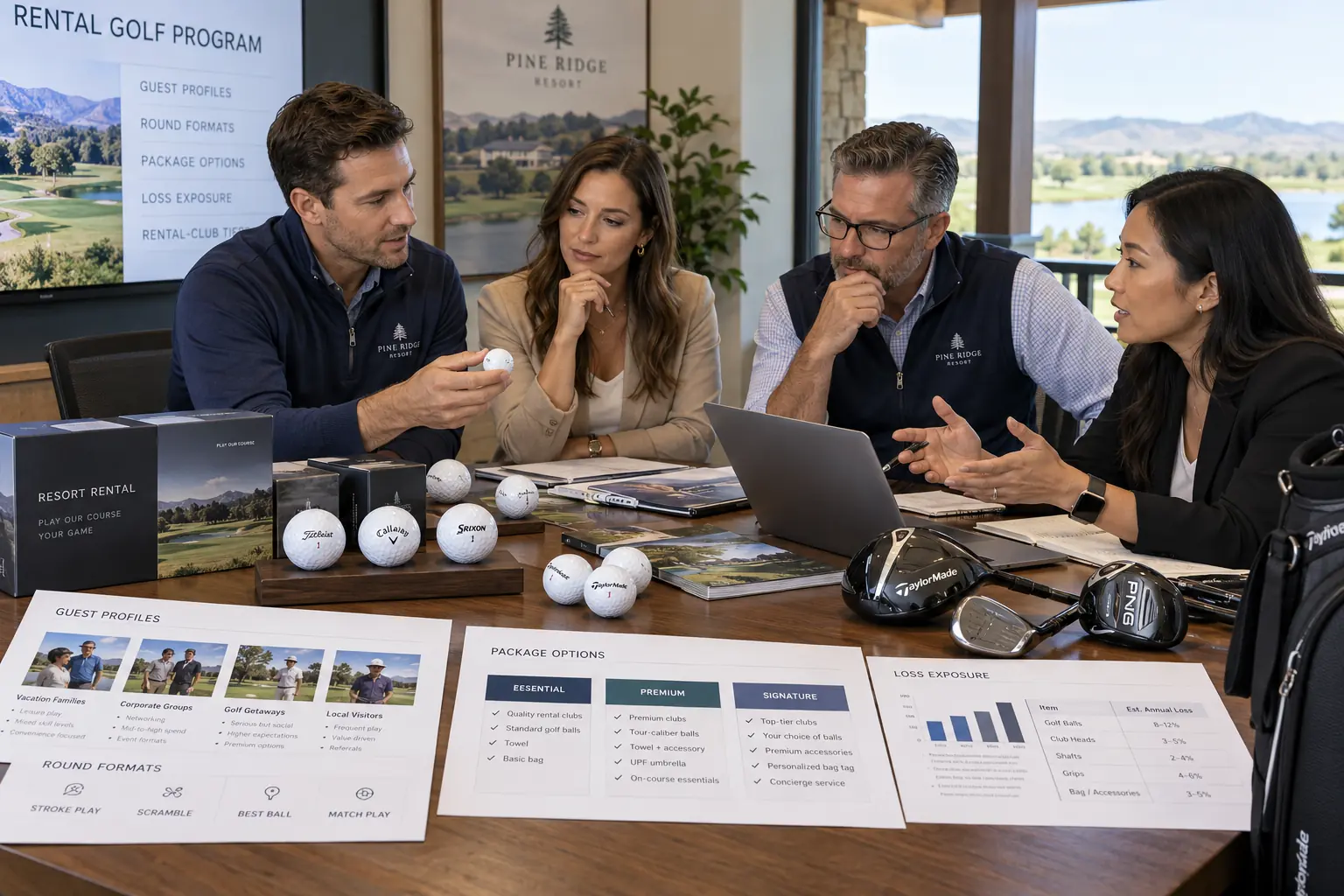
Your rental-ball package should support the guest experience before it showcases a product specification. Define whether the package is play-ready inventory, a premium service touchpoint, or a branded keepsake, then let that decision guide quantity, ball tier, branding, presentation, and replenishment.
Start with the operating model rather than the construction.
| Rental decision | What you need to know | Risk if unclear | Evidence / next action |
|---|---|---|---|
| Guest promise | Convenience, premium touchpoint, or keepsake | Product chosen by prestige alone | Write the guest promise |
| Round format | 9-hole, 18-hole, or multi-round | Package does not fit actual use | Define round mix |
| Loss exposure | Property-specific consumption | Cost model becomes unrealistic | Review internal history |
| Rental tier | Standard or premium clubs | Unnecessary SKU complexity | Match tier to real need |
| Ownership | What the guest keeps | Staff and guest confusion | Define take-home policy |
A rental counter may serve experienced traveling golfers, casual vacationers, and guests who simply did not bring equipment. Those groups can value the same resort experience while placing very different demands on the rental-ball program. Round length and ball-loss exposure can matter as much as the prestige of the club set.
In May 2023, a high-end U.S. resort contacted us looking for premium urethane balls to pair with its rental clubs. After discussing its operating model, we learned that its rental guests varied widely, ball loss was high, and many guests played no more than one round. At the time, the 3-piece urethane option cost more than twice as much as the 2-piece Surlyn platform we proposed. Rather than move directly into the higher-cost program, we recommended a 1,200-ball pilot. The resort later told us that ball-loss costs had declined, reducing the operating cost of the rental program. It has continued reordering the same SKU since the trial.
The lesson was not that a 2-piece ball is always better for a resort. It was that the ball tier had to justify itself inside the actual rental model.
For that property, guest mix, short-duration use, and loss exposure mattered more than matching premium positioning with the highest-cost construction. Another resort with a different guest promise could reach a different answer.
Before requesting a quote, document your rental guest type, round mix, rental-club tier, actual loss exposure, branding role, guest promise, and take-home policy in a Rental Guest Package Brief.
Please recommend a rental-ball program only after reviewing our guest type, typical round format, rental-club tier, expected loss exposure, branding role and included-ball policy, and return the proposed SKU, physical sample reference and handoff configuration for approval.
A failure signal is a recommendation that jumps straight from premium resort to premium construction without asking how your rental guests actually behave.
✔ True — A premium resort may need a premium rental-ball program when its guest promise supports it
Guest expectations, rental tier, loss exposure, and service design can justify a higher-performance ball. Resort positioning is relevant, but it should not replace the operating analysis.
✘ False — “Premium resort positioning automatically proves the most premium ball is the correct rental choice”
A higher-cost product can still be a poor operating fit when the guest mix, usage pattern, and loss exposure do not create equivalent guest value.
How Many Balls Should Each Rental Set Include?
“How many golf balls come with rental clubs?” sounds like a question that should have one standard answer. Current resort programs show otherwise.
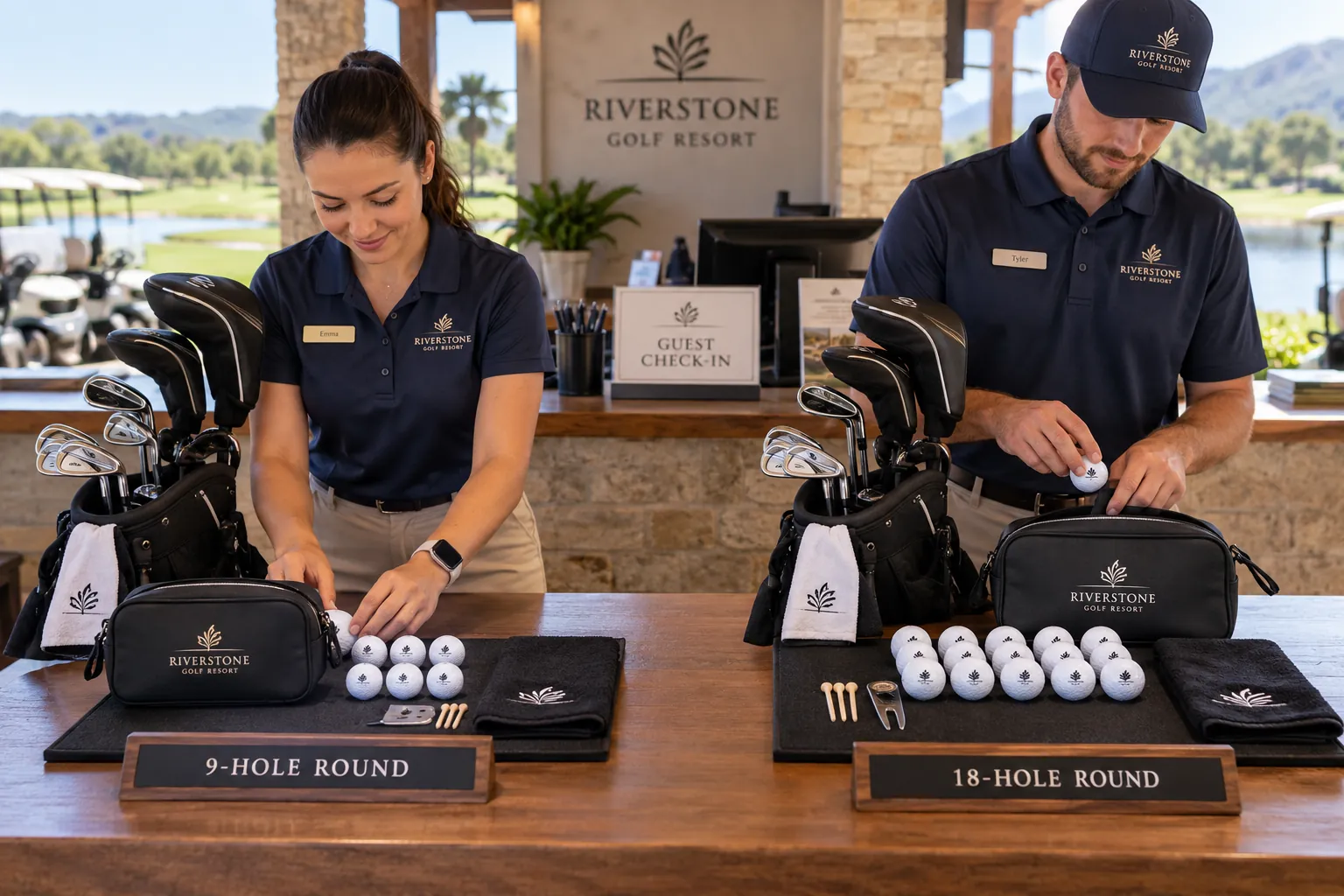
There is no universal number of golf balls that every rental set should include. Build the quantity around your round format, actual loss exposure, guest promise, and buy-more policy, then verify that the package works for both the guest and your operating team.
For example, Rancho de los Caballeros currently publishes six balls with an 18-hole rental and three with a 9-hole rental. By contrast, the Four Seasons Resort Lanai 9-hole experience includes rental clubs after noon while specifically telling guests to bring golf balls.
Those are not competing “best practices.” They are different operating programs.
Public examples are benchmarks, not standards.
| Quantity decision | Variable to check | Wrong shortcut | Buyer action |
|---|---|---|---|
| 9-hole package | Round and guest mix | Copy another 9-hole program | Set your own rule |
| 18-hole package | Consumption and buy-more access | Assume a published quantity is standard | Check property data |
| Multi-round use | Upfront vs staged issue | Multiply one-round quantity | Define replenishment |
| High-loss course | Historical consumption | Use generic online averages | Review internal history |
| Premium promise | Service expectation | Add balls for appearance | Define guest benefit |
Build an Included Quantity Rule around:
Round Format + Property-Specific Loss Exposure + Buy-More Policy + Guest Promise → Included Quantity
Your own consumption history should outrank an internet claim about how many balls the “average golfer” loses. Rental guests can differ materially from members or regular daily-fee players, and your course layout, round length, guest mix, and ease of buying additional balls can change the answer.
For multi-round programs, define whether balls are issued upfront, replenished by round or day, or supplemented through guest purchases. Do not assume that a second round simply doubles the first-round allocation.
“Another resort includes six balls, so we should too” is a failure signal. Document one Included Quantity Rule for every genuinely different rental program.
Should You Use Resort-Logo or Brand-Name Balls?
A rental ball can be a consumable, a recognizable equipment product, a destination-brand touchpoint, or a keepsake the guest takes home.
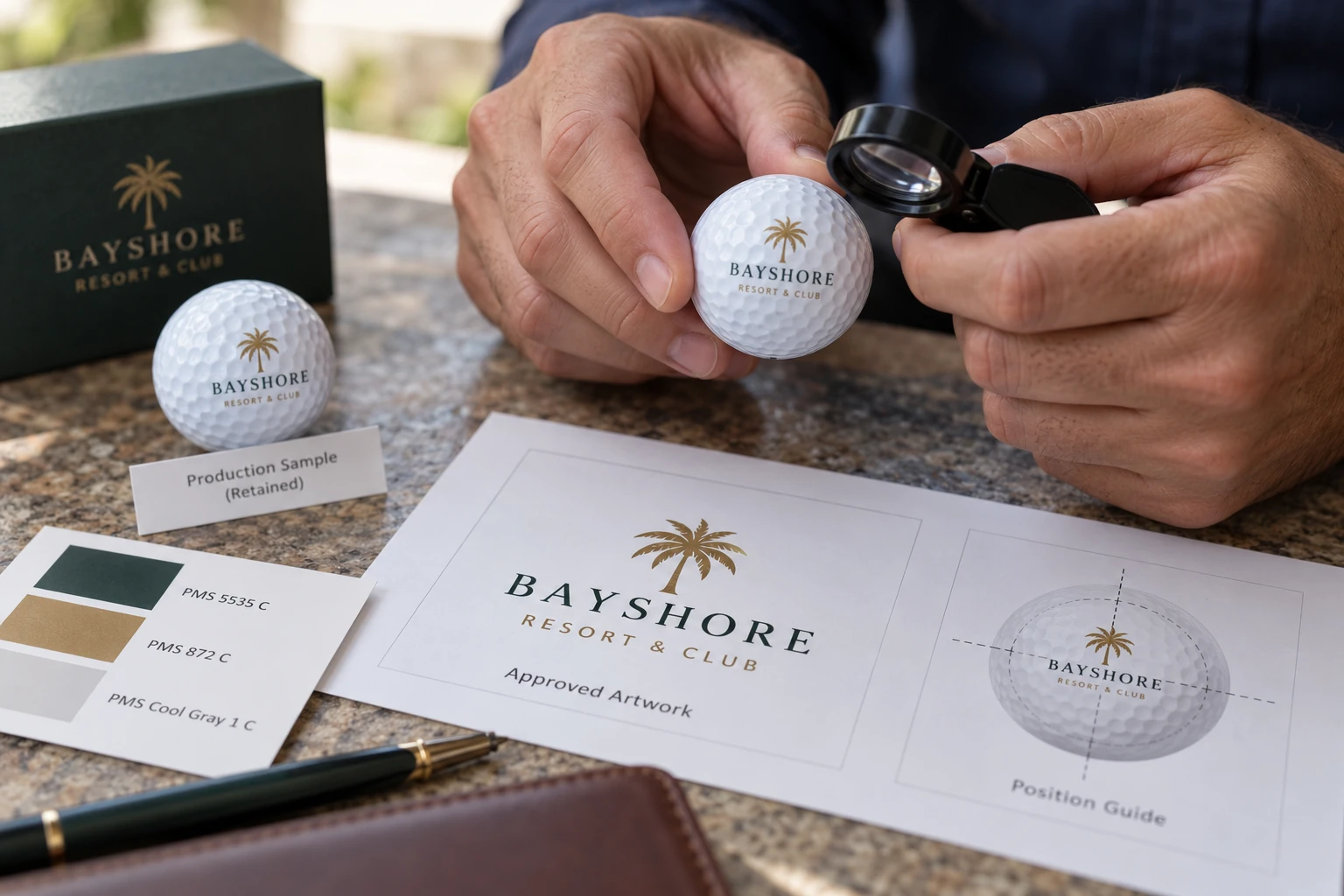
Choose resort-logo or manufacturer-branded balls according to the role the ball plays in your guest experience. If branding matters, approve the actual mark on the physical ball—not only the artwork file—and preserve that accepted reference for future rental-program reorders.
Both approaches exist in current resort operations.
For example, Ocean Edge Resort & Golf Club currently includes six Ocean Edge logo golf balls in a complimentary pouch with its club rentals. That shows how the ball can become part of the property’s guest-facing experience.
A manufacturer-branded ball can support a different objective: familiarity, recognizable equipment positioning, or alignment with the rental-club brand. Neither model is automatically superior.
If you choose resort logo golf balls, control the elements the guest actually sees:
-
current artwork revision;
-
logo position and size;
-
approved color;
-
clarity on the real dimpled surface;
-
physical printed-ball proof;
-
applicable wear or durability evidence when agreed.
A digital artwork file can be correct while the physical result is still wrong. Dimples, curvature, finish, logo scale, and print location all influence what the guest actually sees.
Approve the actual mark on the actual ball.
A failure signal is: “The artwork looks right on screen, so a physical proof is unnecessary.”
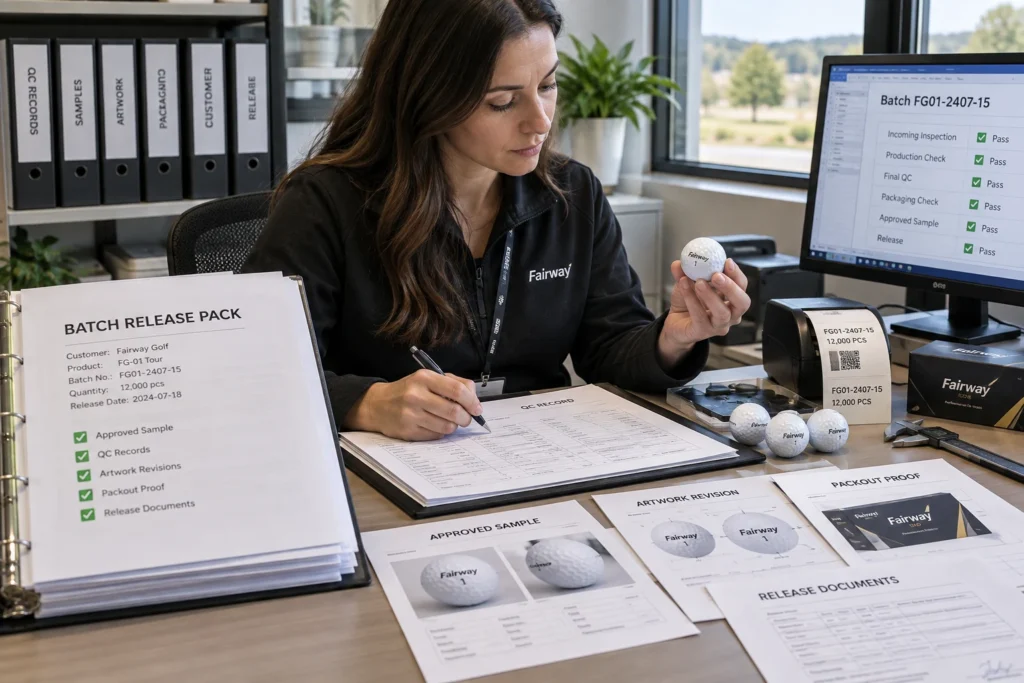
Preserve the accepted ball together with the artwork revision in a Logo Approval Record so a future reorder does not restart from an old attachment buried in someone’s inbox.
Supplier shall identify the approved rental-ball SKU, physical sample reference, artwork revision and applicable package version on the quotation and production approval record so the same controlled references can be reused for replenishment orders.
If the decision changes from whether the rental ball should carry your logo to how that logo should actually be printed and verified, use the guide to custom golf-ball logo printing.
✔ True — A resort-logo ball can become part of the destination experience
If unused balls leave with the guest, the physical ball can continue carrying the resort identity after the round. That branding role should be deliberate and physically approved.
✘ False — “A resort logo is automatically better than manufacturer branding for every rental program”
Some programs benefit more from a recognizable golf-equipment brand. Choose the branding model according to the guest promise rather than treating the logo as a default.
Should Every Rental Package Use One Ball Tier?
A resort can make the rental menu look sophisticated by adding standard, premium, VIP, member, or property-specific ball tiers. Every extra tier also creates another SKU to approve, stock, explain, and replenish.
Do not add another rental-ball tier unless it solves a different guest or operating problem. A second SKU may be justified by a genuinely different rental-club package or service promise, but every additional tier also adds inventory, approval, staff-training, and replenishment complexity.
Ask one question before creating another recurring SKU:
What different problem does this tier solve?
| Tier decision | Legitimate reason | Risk | Buyer action |
|---|---|---|---|
| One standard tier | Similar guest promise | May underserve a distinct premium program | Validate fit |
| Premium tier | Different service promise | Prestige-only upgrade | Define benefit |
| Multi-property tier | Property needs differ | SKU proliferation | Compare operations |
| High-loss program | Cost exposure differs | Product chosen on image alone | Review consumption |
Product knowledge still matters. A durable value-oriented platform may suit one rental model, while a premium-performance platform may suit another. Feel, durability, guest expectation, loss exposure, and operating cost can all contribute to the decision.
But this should not become a 2-piece-versus-3-piece comparison. The operating question comes first: does the second tier correspond to a genuinely different guest promise, rental-club level, or property requirement?
Write one reason next to every recurring rental SKU. If the reason is merely “it looks more premium,” you may be adding complexity without creating a distinct guest benefit.
If your question changes from “Do we need another rental tier?” to “Which golf-ball category or construction fits that tier?”, move to the golf-ball category and performance selection guide.
What Presentation Belongs With the Rental Set?
Rental guests are checking in to play golf, not browsing a retail shelf. That changes what good packaging needs to accomplish.
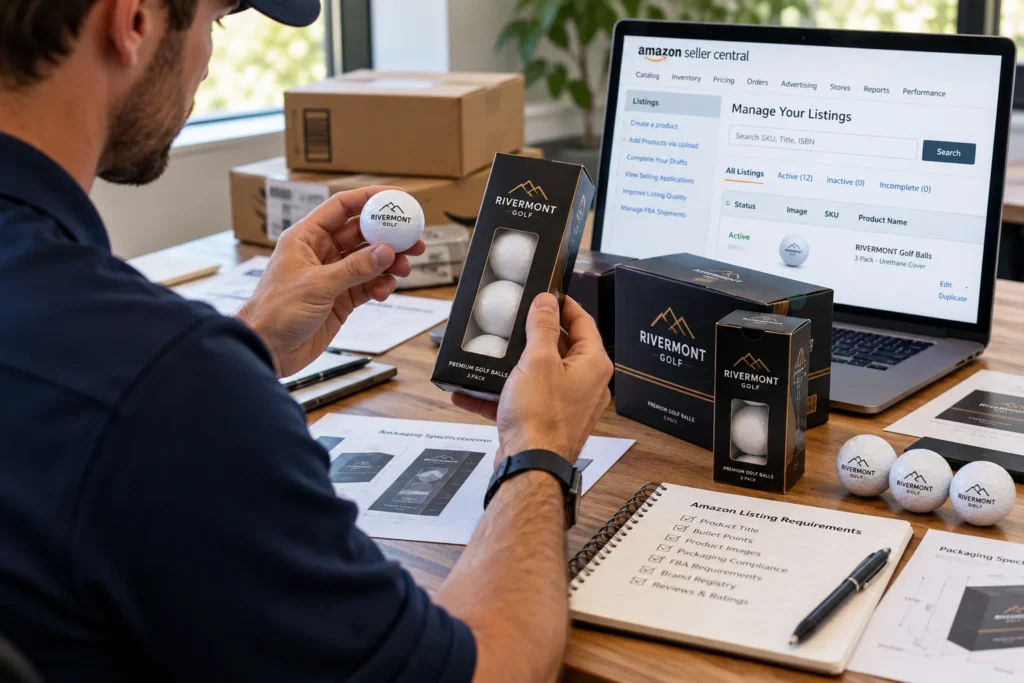
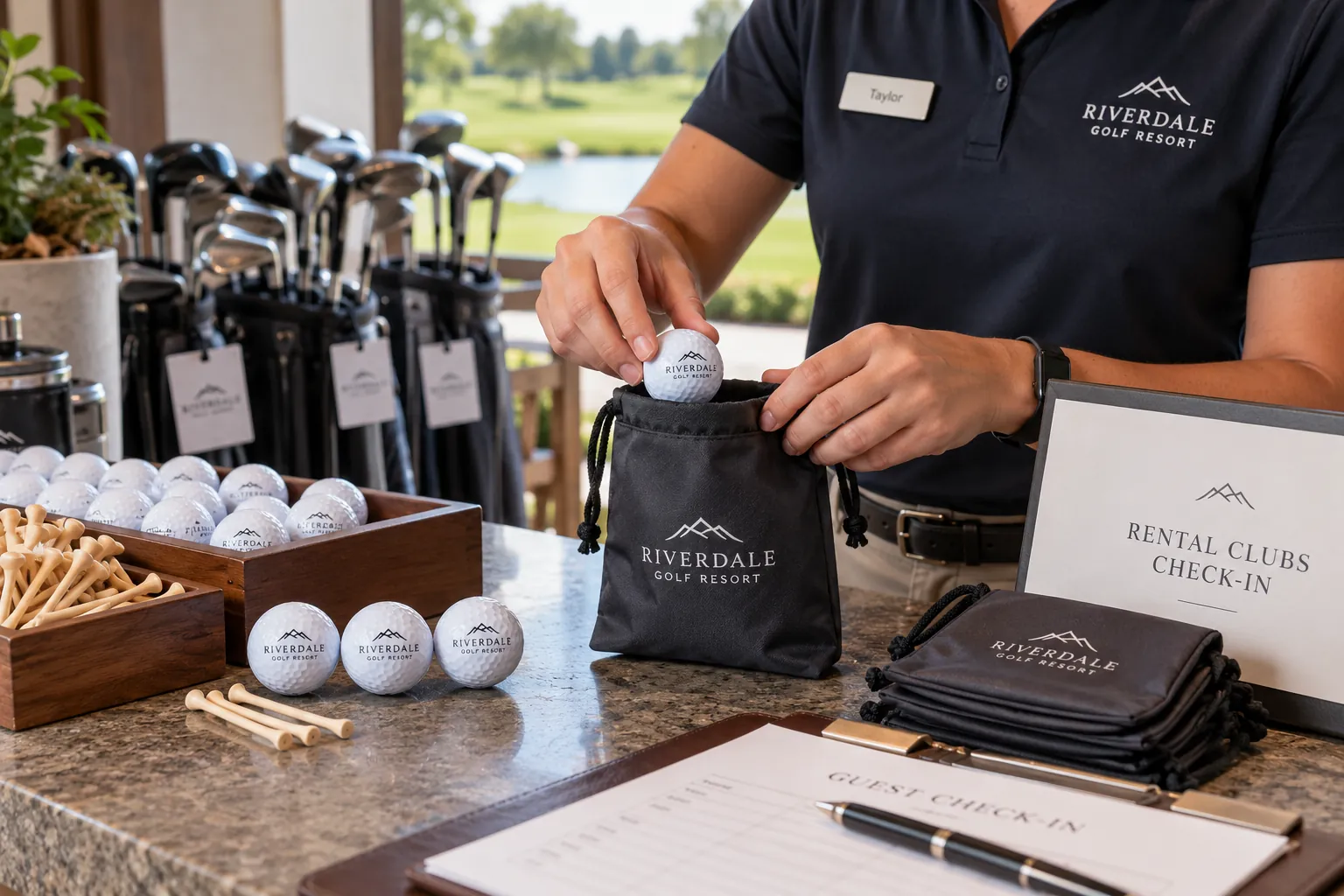
Design the rental-ball presentation as a guest handoff unit, not automatically as retail packaging. Choose the simplest approved format that lets your staff identify, count, and deliver the balls consistently while making it clear what the guest receives and may take away.
A sleeve may be enough. A compact pouch may simplify staff handling. A commemorative pouch may support a higher-touch destination experience. The format earns its place by improving the handoff.
Before approving the recurring package, put a Physical Handoff Sample at the real counter and ask:
-
Can staff identify the correct program quickly?
-
Is the included quantity obvious?
-
Can staff hand it over without assembling loose components?
-
Does the guest understand which items are theirs to keep?
-
Does the presentation support the intended service level?
Retail presentation may prioritize shelf impact and product choice. Rental presentation primarily needs to support a predictable service interaction. A commemorative format can still add value when take-home memory is part of the guest promise; it simply needs an operating reason.
Final approval shall be based on the agreed physical ball, approved logo position and artwork, applicable appearance or durability evidence, and the approved handoff configuration before the rental-ball program is released for recurring purchase.
Have front-line staff test the handoff before you freeze the recurring version. A package that looks excellent in a sourcing review can still slow down a busy pro-shop counter.
If the question becomes which packaging format, material, or configuration to source, move to the separate guide on OEM golf-ball packaging options.
✔ True — A pouch or sleeve can support a clean rental handoff when it solves an operating need
Good presentation helps staff identify, count, and deliver the package while making the guest’s take-home items clear.
✘ False — “Premium retail packaging automatically creates a better rental-club experience”
Retail packaging can add cost and handling without improving the rental interaction. Design the handoff first; choose the package second.
How Should You Plan Rental-Ball Replenishment?
The first order is not the hard part. The harder test arrives later, when inventory drops and someone must reorder the same program without reconstructing it from old email threads.
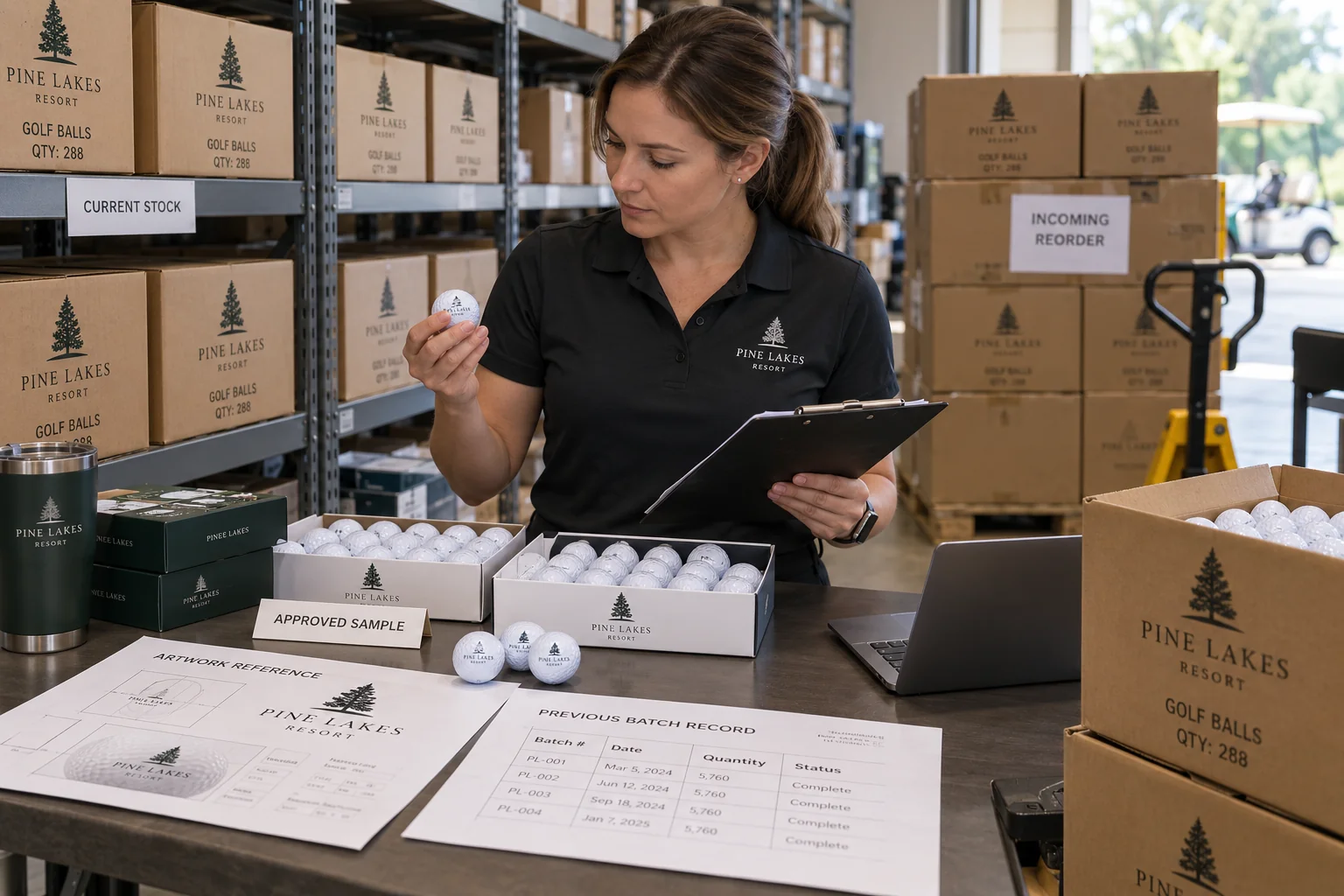
Treat resort rental club golf balls as recurring operating inventory, not a one-time promotional order. Track consumption and usable inventory against the approved SKU, physical sample, logo, and handoff version so your purchasing team can replenish the program without rebuilding the specification every season.
Use the relationship as an operating guide, not a universal forecast formula:
Rental Sets Issued × Balls per Package → Baseline Usage → Adjust for Actual Consumption and Inventory
Then account for seasonality, your internal safety-stock policy, supplier replenishment time, and planned changes to the rental program.
| Replenishment decision | Variable | Failure risk | Buyer action |
|---|---|---|---|
| Usage | Rental sets issued | Guessing consumption | Track actual issue |
| Quantity | Balls per package | Forecast disconnect | Use approved rule |
| Inventory | Current usable stock | Reorder too late | Set internal trigger |
| Version | SKU / logo / package | Silent change | Preserve references |
| Incoming batch | Batch identity | “Same as last time” | Record new batch |
A useful Rental-Ball Replenishment Sheet should preserve the approved SKU, physical sample reference, artwork revision, handoff package version, applicable QC reference, previous batch identity, current inventory, consumption history, and incoming batch identity.
Those references matter because your operation has already made several decisions that should not drift silently: which ball, which logo, which quantity, and which handoff configuration.
Once the program works, a reorder should reproduce the controlled program unless someone deliberately approves a change. “Same as last time” is too vague to serve as the control.
When the question changes from when to replenish the program to whether the next manufacturing batch technically matches the approved ball, use the separate repeat-order consistency controls.
Your team should be able to place the next PO without re-deciding the guest experience from scratch.
FAQ
Can One Resort Group Use the Same Rental Ball at Every Property?
Yes, when the properties genuinely share the same rental guest promise and operating requirements. Standardization becomes risky when headquarters convenience overrides material differences in guest profile, round format, loss exposure, rental tier, or property branding.
Compare those variables first. Standardize the common elements that help purchasing and replenishment, then preserve justified property exceptions.
Should Group Bookings Use the Normal Rental-Ball Package?
Use the normal rental package when the group booking creates essentially the same guest experience. Create a separate version only when the booking introduces a genuinely different branding, gifting, sponsor, or service requirement.
Avoid creating a permanent rental SKU for a temporary event. If sponsor merchandise or corporate gifting becomes the real decision, move to the corporate custom golf-ball program.
Can a Resort Pilot a New Rental-Ball Package First?
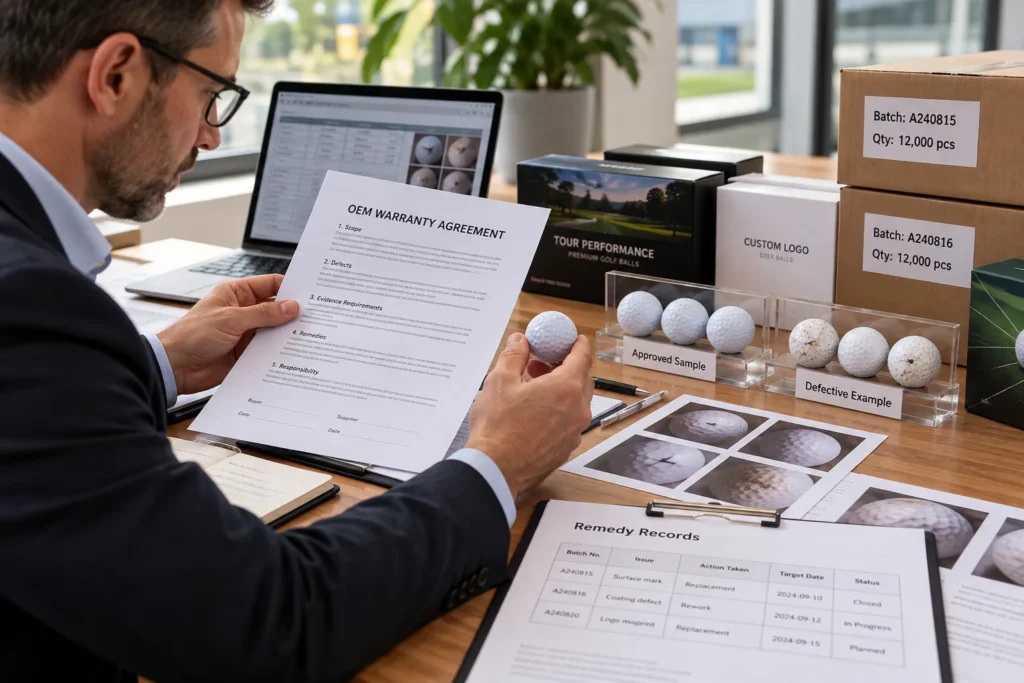
Yes. A controlled pilot can test guest fit, staff handoff, included quantity, consumption, and operating economics before you make the package recurring inventory.
Preserve the pilot SKU, physical sample, branding, handoff configuration, and actual operating results. There is no universal pilot size; the 1,200-ball quantity discussed earlier belongs only to the documented 2023 resort project.
Should Pro-Shop Retail Balls Match the Rental Ball?
Not necessarily. Rental and retail golf balls can serve different commercial jobs. Rental inventory is built around guest handoff, service consistency, loss exposure, and replenishment, while retail inventory may prioritize customer choice, margin, and merchandising.
Use the same SKU only when those goals genuinely align.
Can Sponsor Branding Replace the Resort Logo?
Yes, when the commercial agreement and guest experience justify it, but sponsor artwork should be treated as a controlled version rather than an informal logo swap.
Define who owns approval, approve the artwork and physical ball, and preserve the accepted version. Event merchandise and gifting should move into the corporate-program workflow.
What Should You Save for the Next Rental-Ball Reorder?
Preserve the ball SKU, approved physical sample, artwork revision, handoff package version, applicable QC reference, and relevant batch identity. Those references let purchasing reconstruct what the property approved instead of relying on “same as last time.”
The replenishment file controls what to reorder; technical cross-batch comparison belongs in the repeat-order consistency process.
Conclusion
A strong resort rental-ball program does not begin with the most premium golf ball or another property’s published package. It begins with your guest journey and turns that operating need into a quantity, branding choice, ball tier, handoff format, and replenishment plan your staff can execute consistently.
Before approval, your team should be able to answer six questions: What guest promise are we protecting? How many balls belong in this program? What branding role should the ball perform? Do we really need more than one tier? How should staff hand over the package? What controlled references will govern the reorder?
Do not copy another resort’s rental package. Build a program your guests understand, your staff can hand off consistently, and your purchasing team can replenish without starting over.
You might also like — Why Do Reordered Golf Balls Feel Different?