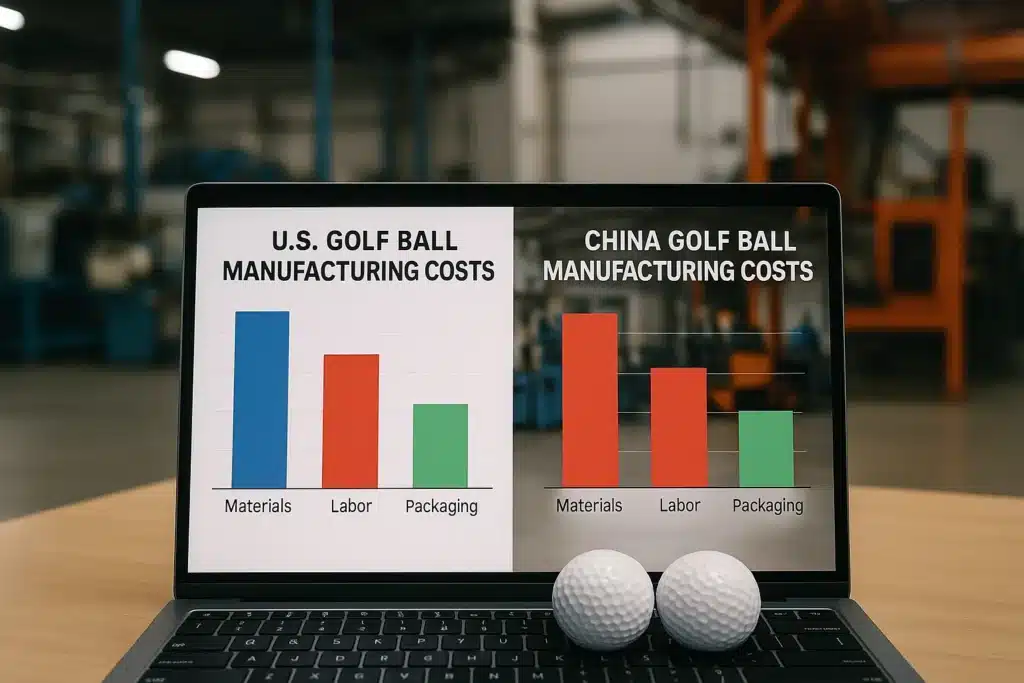
A 7.5% tariff can push buyers toward the wrong factory when they ignore the larger FOB, labor, packaging, and compliance gap.
For China vs America golf ball costs in 2026, China can still win landed cost after Section 301 when its lower FOB, labor structure, supplier scale, VAT rebate effect, and packaging efficiency outweigh the 7.5% tariff. U.S.-made golf balls make sense only when Tour-grade positioning or domestic origin lifts MSRP enough to cover the higher cost base.
The decision is tariff-adjusted landed cost per sellable ball, not origin emotion.
If you are comparing China vs America golf ball costs, do not stop at “China has tariff” or “Made in USA sounds safer.” A China-origin golf ball may face US Section 301 tariffs on sporting goods, but a 7.5% surcharge on a $2.00 golf ball customs entered value adds only about $0.15/ball. That may be far smaller than the U.S.–China factory-stage COGS gap.
This guide keeps the discussion financial. You will compare FOB, HTSUS 9506.32.0000 import duty, Section 301, golf ball OEM COGS, labor allocation, Made in USA golf ball manufacturing cost, freight per ball, golf ball packaging density, USGA amortization, and fixed compliance cost before choosing where each SKU belongs.
What Is the Landed Cost Formula?
You may compare U.S. and China by factory quote or tariff headline, but your real cost appears only after duty, freight, packaging density, and compliance amortization.
A golf ball landed cost calculator should include factory cost, customs entered value, HTSUS 9506.32.0000 duty treatment, Section 301 exposure, freight per ball, packaging density, MPF/HMF, USGA amortization, and defect allowance. FOB alone cannot tell you whether China or America is cheaper.
| Cost layer | China-origin variable | U.S.-made variable | Buyer action |
|---|---|---|---|
| Factory cost | Lower FOB baseline | Higher domestic cost base | Normalize construction |
| Tariff | Check Section 301 | No import duty | Broker verifies |
| Labor | Lower allocated labor | Higher hourly benchmark | Model seconds per ball |
| Freight | Ocean + inland | Domestic logistics | Compare delivered cost |
| Packaging density | Can be optimized at source | Local pack options | Model per ball |
| Compliance | Channel-specific | Channel-specific | Amortize by volume |
The clean formula is:
Landed Cost per Ball = FOB or Factory Cost + Customs Entered-Value Duty Exposure + Section 301 if Applicable + MPF/HMF/Customs Fees + Ocean Freight per Ball + Brokerage/Drayage + Packaging Density Penalty + USGA/R&A Amortization + Defect Allowance.
That formula prevents the Tariff Blind Spot. A buyer sees a 7.5% China-origin duty layer and jumps to U.S.-made production before asking whether China’s factory-stage cost is 30–60% lower. If the base cost gap is large enough, the tariff adds cents while U.S. labor and overhead add dollars per dozen.
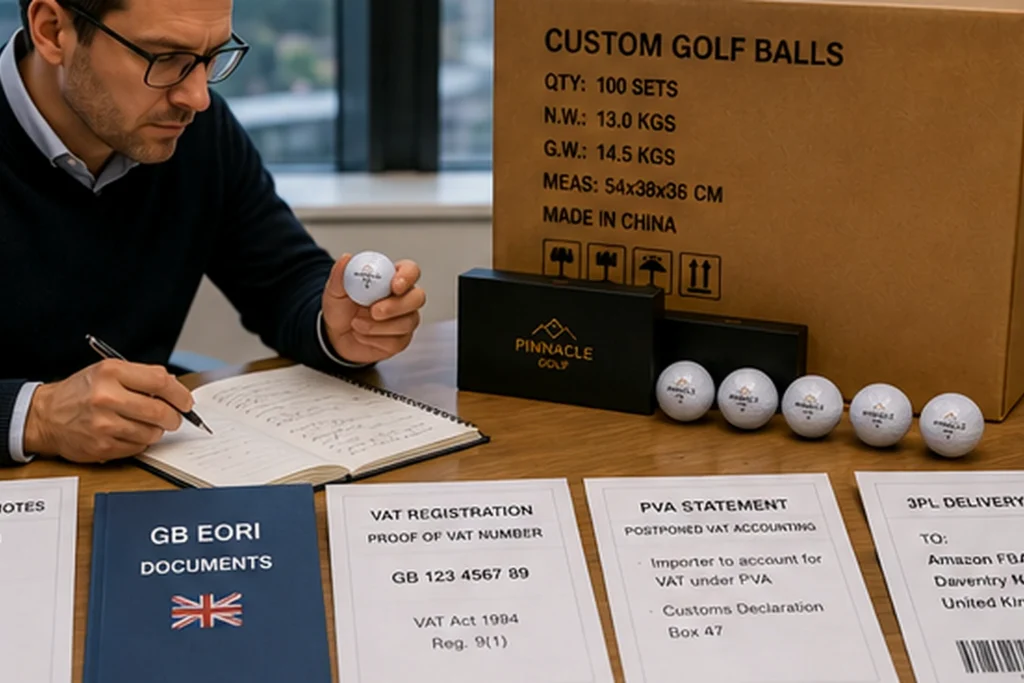
For China-origin golf balls, FOB is only the starting point. Golf balls are typically reviewed under HTSUS 9506.32.0000, where the base duty line is Free, but China-origin entries still need a Chapter 99 / Section 301 check. Duty should be modeled on golf ball customs entered value, not MSRP, not retail price, and not a sales email shortcut.
For U.S.-made golf balls, import duty and Section 301 do not apply. That does not mean the product is automatically cheaper. Domestic labor, plant overhead, automation cost, limited open OEM access, and larger inventory commitments still flow into the cost structure.
Place this in your RFQ: “Please quote FOB, customs entered-value basis, HTSUS/HS classification, country of origin, Section 301 or U.S.-made assumptions, ocean freight per ball, packaging dimensions, loaded balls per 40HC, MPF/HMF or destination fees, USGA/R&A listing cost treatment, and included/excluded logistics scope.”
Ask your supplier to state country of origin, HTSUS/HS classification support, customs entered-value basis, COO evidence, and whether the quote assumes Section 301 exposure, U.S.-made treatment, MPF/HMF, ocean freight, brokerage, or inland delivery.
✔ True — landed cost means accepted cost per sellable ball.
A tariff headline cannot decide origin. You need factory cost, duty exposure, freight, packaging density, compliance cost, and defect allowance in one worksheet.
✘ False — “The tariff rate decides the cheaper origin.”
A 7.5% tariff can matter, but it may be smaller than the factory-stage COGS gap between U.S. and China production.
How Big Is the Base Cost Gap?
You may overreact to tariffs while underestimating the factory-stage gap in materials, labor, electricity, and packaging.
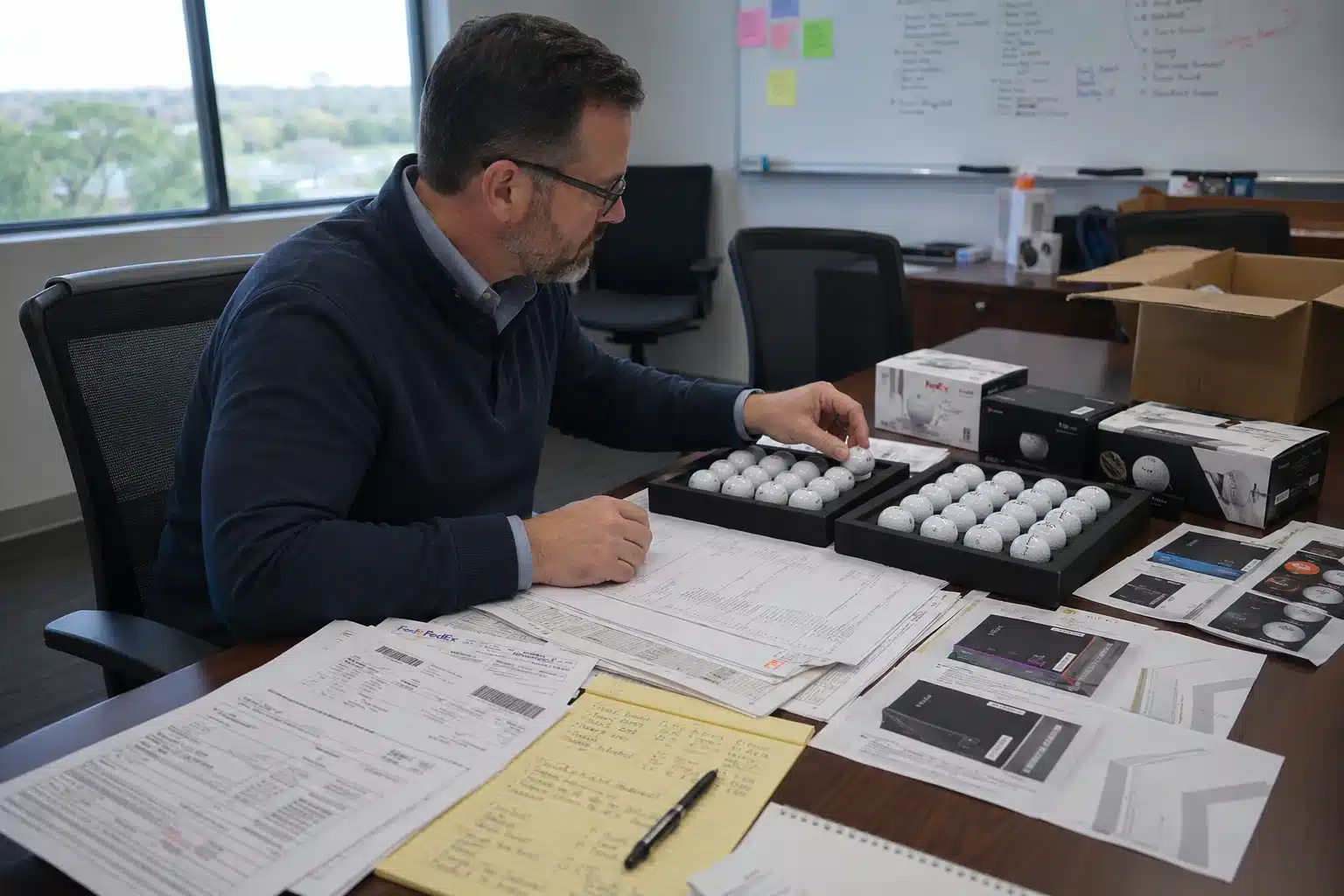
For a 3–4 layer cast urethane golf ball, the factory-stage cost gap can be larger than the tariff gap. A planning model shows U.S. subtotal around $2.54–3.30 per ball versus China around $1.73–2.24 before overhead, duty, and freight.
| Cost item | U.S. per ball | China per ball | Buyer action |
|---|---|---|---|
| Materials | $1.80–2.10 | $1.50–1.80 | Verify resin stack |
| Labor | $0.60–0.90 | $0.15–0.30 | Model seconds per ball |
| Electricity | $0.035–0.050 | $0.030–0.045 | Keep as minor layer |
| Packaging | $0.10–0.25 | $0.05–0.10 | Compare pack type |
| Subtotal | $2.54–3.30 | $1.73–2.24 | Add tariff/freight next |
This is the heart of golf ball OEM COGS. Materials and labor do most of the work in the cost model. Electricity is real, but usually not the layer that decides the origin. Simple packaging is also modest at the factory stage, though packaging can become a major margin killer later when it reduces container load.
The per-dozen view is sharper. At factory stage, this planning model places U.S. 3–4 layer urethane around $30.48–39.60 per dozen and China around $20.76–26.88 per dozen before tariff, freight, overhead, and destination costs. That spread is why a 7.5% tariff should be calculated, not feared.
Labor is the coldest number in the model. Even with automation, U.S. production still carries a higher hourly wage base, supervision burden, facility overhead, and maintenance structure. China’s allocated labor cost remains lower, and its supplier scale can compress packaging, printing, tooling, and production coordination.
The China VAT rebate golf ball export mechanism can also affect quote economics. Treat it carefully. China’s export rebate system can support lower effective FOB pricing for qualifying exporters, but your team should verify the product-specific rebate basis and avoid double-counting. If the supplier’s FOB already reflects rebate capture, do not subtract it again in your spreadsheet.
Request cost-layer assumptions for materials, labor, packaging, yield, and included/excluded overhead. Compare the same construction, cover type, packaging, MOQ, and compliance requirement before applying tariff math. Reject comparisons where the U.S. and China quotes do not match construction, packaging, or compliance scope.
How Much Labor Cost Survives Automation?
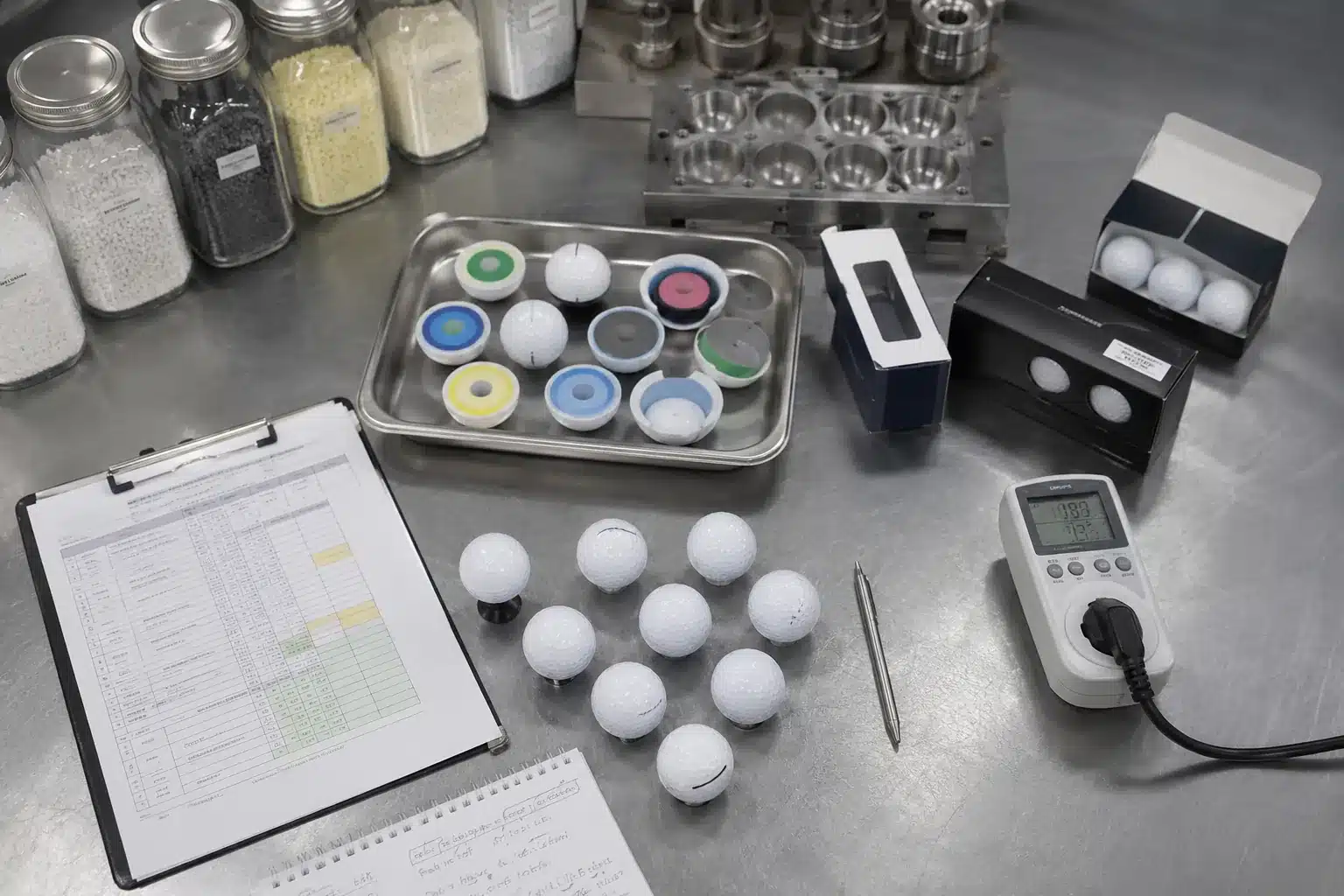
Automation reduces labor exposure, but it does not erase the wage gap. A current U.S. manufacturing labor benchmark sits near $30/hour, while China’s private manufacturing wage benchmark can be closer to the low single digits in U.S. dollar terms after conversion.
Under a 60–90 second allocated labor window, that difference can create roughly $0.40–0.60 per ball in labor-cost gap before benefits, payroll burdens, maintenance, and plant overhead. For a 3–4 layer urethane golf ball, that labor gap alone can exceed the Section 301 impact on a $2.00 China customs value.
How Does Section 301 Change the Math?
You may see China’s 7.5% duty layer and assume U.S.-made automatically wins.
Golf balls have a Free base duty under HTSUS 9506.32.0000, but China-origin golf balls usually need a Section 301 / Chapter 99 check. A 7.5% tariff on a $2.00 customs entered value adds about $0.15 per ball, which may not erase a much larger U.S.–China factory-cost gap.
| Scenario | Factory/customs value | Section 301 | Before freight result |
|---|---|---|---|
| China-origin ball | $2.00 | +7.5% = $0.15 | $2.15 |
| U.S.-made equivalent | $2.80 | $0 | $2.80 |
| U.S.-made equivalent | $3.00 | $0 | $3.00 |
| China advantage after 301 | — | — | $0.65–0.85 lower |
This is where tariff panic becomes expensive. The buyer hears “China-origin duty” and stops the model too early. Yes, US Section 301 tariffs on sporting goods can affect China-origin golf balls. No, that does not mean U.S.-made automatically becomes cheaper.
The key import variables are HTSUS classification, Chapter 99 treatment, country of origin, and customs entered value. The base duty line for golf balls is Free, but applicable China-origin entries may still map to a 7.5% Section 301 line. That 7.5% applies to customs entered value, not retail price.
The original landed-cost logic remains:
FOB China + Ocean/Insurance + Section 301 + Brokerage/Drayage = Landed Before Warehousing.
A $2.00 China customs value with a 7.5% surcharge adds about $0.15 per ball. In per-dozen terms, that is about $1.80 before MPF/HMF, brokerage, inland delivery, warehousing, and last-mile costs. It matters, but it is not the whole decision. If the U.S.-made equivalent starts $0.65–0.85 per ball higher before freight, the tariff does not close the gap.
Tariff panic, no FOB gap is a failure signal. It means the decision is being driven by rate anxiety instead of landed-cost math.
Require the quote to state HTSUS/HS classification, country of origin, customs entered value, and Section 301 assumptions. Ask your customs broker to confirm current Chapter 99 treatment before seasonal pricing. Do not reject China based on tariff rate until the 7.5% layer is compared against the factory-cost gap.
What Is the Tariff Blind Spot?
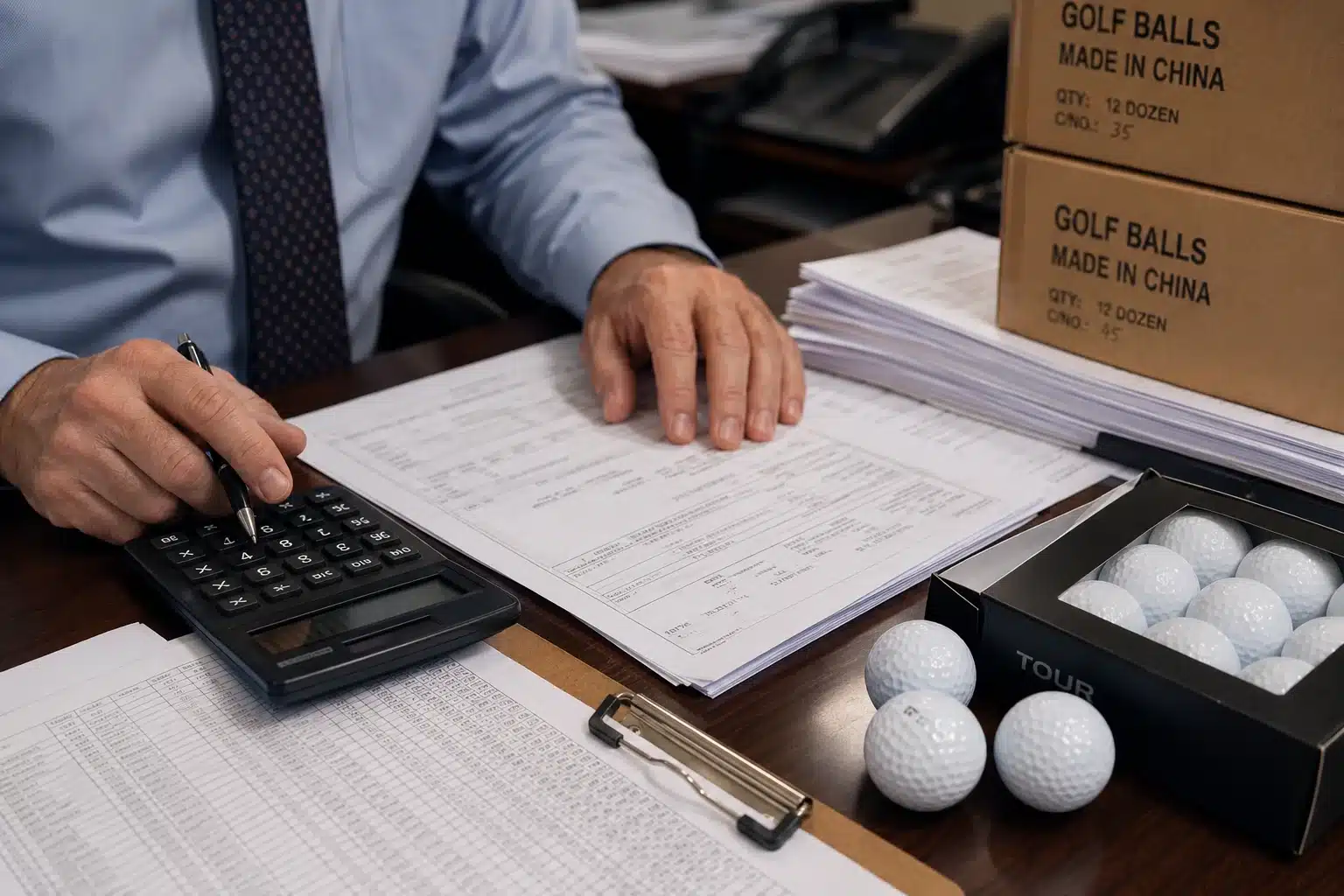
The tariff blind spot is treating a percentage as if it were a full financial answer. A 7.5% surcharge is visible, easy to explain, and easy to fear. Labor allocation, packaging density, USGA amortization, and cash tied up in inventory are quieter, so they get missed.
A tariff can add cents per ball. The wrong origin, wrong MOQ, wrong packaging, or unnecessary compliance requirement can add far more. Finance-minded buyers should model per ball, per dozen, and per order before changing origin.
✔ True — MFN Free does not mean China-origin is tariff-free.
Golf balls may have a 0% base duty under HTSUS 9506.32.0000, while China-origin entries still need a Section 301 / Chapter 99 check.
✘ False — “7.5% tariff automatically makes U.S.-made cheaper.”
If China’s FOB is much lower, the tariff may add cents while U.S. labor and overhead add dollars per dozen.
When Is Made in USA Worth It?
You may move too many SKUs into U.S. production because the origin story sounds safer, even when the channel will not pay for it.
Made in USA is worth the premium when the SKU can earn enough price lift from origin, consistency, and brand story. It is usually a margin squeeze for mid-tier, practice, promo, DTC, or packaging-heavy SKUs where buyers value price, variety, and cash-flow control more than domestic origin.
| SKU type | Recommended origin | Financial logic | Buyer action |
|---|---|---|---|
| $50+/dozen Tour flagship | U.S.-led or U.S. halo | Origin may support premium MSRP | Test price lift |
| $25–45/dozen mid-tier urethane | China or limited U.S. drop | Protect margin | Model channel response |
| 2-piece Surlyn / distance | China | Scale matters | Control FOB |
| Corporate gifting / logo | China | Packaging and printing drive margin | Optimize pack-out |
| DTC subscription / blind box | China | Iteration and packaging matter | Pilot before scale |
The Made in USA golf ball manufacturing cost problem is not that U.S. production is weak. It is that U.S. production needs a SKU that can pay for it. Tour-grade hero balls can justify domestic origin when the channel rewards consistency, trust, R&D control, and brand story. Pro shops, fitting channels, and premium retail can sometimes turn that story into higher MSRP or stronger conversion.
Mid-tier urethane, 2-piece Surlyn, practice balls, promo balls, DTC subscription packs, corporate gifting, and blind-box products are different. Those categories usually need variety, packaging control, lower inventory risk, and enough gross margin to survive promotions. If they are pushed into a high domestic cost base, “Made in USA” can become the margin squeeze rather than the margin engine.
Cost of capital also belongs in the calculation. If U.S. production requires a much larger inventory commitment, the buyer may tie up cash in warehouse stock long before sell-through is proven. A lower-MOQ China order can reduce inventory exposure and protect working capital while the market validates color, feel, price, logo, and packaging.
Made in USA claim, no MSRP lift is a failure signal. If the channel will not pay more, review better, return less, or convert faster, the origin premium may not produce financial return.
Request a SKU margin model showing MSRP, expected conversion lift, return-rate impact, review lift, and production-cost gap. Run A/B pricing or channel tests before assuming Made in USA increases margin. Use U.S.-made only when premium origin creates enough gross-margin or brand-equity return to offset production cost.
You may calculate FOB and tariffs correctly, then lose margin through packaging density, freight per ball, and fixed compliance fees.
The biggest hidden margin killers are packaging density and fixed compliance amortization. A $1,200 USGA listing spread across 3,000 balls adds $0.40 per ball, while oversized EVA or gift packaging can raise ocean freight per ball enough to erase tariff or FOB savings.
| Hidden cost | Where it appears | Margin risk | Buyer action |
|---|---|---|---|
| Oversized EVA box | Lower balls per 40HC | Freight per ball rises | Model load density |
| Premium gift packaging | More CBM per dozen | Margin leak | Compare compact pack |
| USGA listing | $1,200/model/year | $0.40/ball on 3,000 balls | Use only if channel needs |
| Four listed models | $4,800 before support costs | Fixed cost burden | Limit listing scope |
| Local assembly option | Split ball and packaging flows | May reduce ocean CBM | Test total cost |
Fearing the 7.5% tariff, Mark Stevenson, a DTC golf brand founder in Jupiter, Florida, almost made a costly sourcing error. He initially chose a U.S. factory quoting $2.90 FOB for a 3-piece cast urethane ball, assuming it was a safer bet than China’s $1.90 baseline.
But the hidden costs quickly surfaced: the U.S. plant demanded a rigid 25,000-piece MOQ, locking up $72,500 in working capital, and domestic premium EVA gift boxes added a staggering $1.20 per unit.
Last month, Mark contacted Golfara for a true landed-cost model. The comparison showed that even after ocean freight and a roughly $0.14/ball tariff surcharge, China’s integrated packaging ecosystem reduced the gift-box cost to just $0.35/unit. The lower 1,000-piece pilot MOQ also changed the risk profile: instead of tying up capital in a large U.S. run, Mark could sample his flagship urethane balls first and validate the Florida-market response before scaling.
The lesson is simple: the tariff was visible, but MOQ lock-up and packaging cost created the larger margin swing.
This is the Hidden Logistics Bleed. The spreadsheet looks clean until the package gets real. Oversized EVA boxes, rigid drawer cartons, display packs, and premium gift sets can reduce loaded balls per container. That raises ocean freight per ball and quietly eats the FOB advantage your team worked so hard to negotiate.
Packaging density is finance, not decoration. Ask for carton dimensions, balls per carton, cartons per 40HC, gross weight, CBM, and freight per ball. Compare compact sleeves, optimized paperboard packaging, bulk shipping plus local assembly, and premium gift packs before the design is approved. The package should support the channel margin, not simply look expensive.
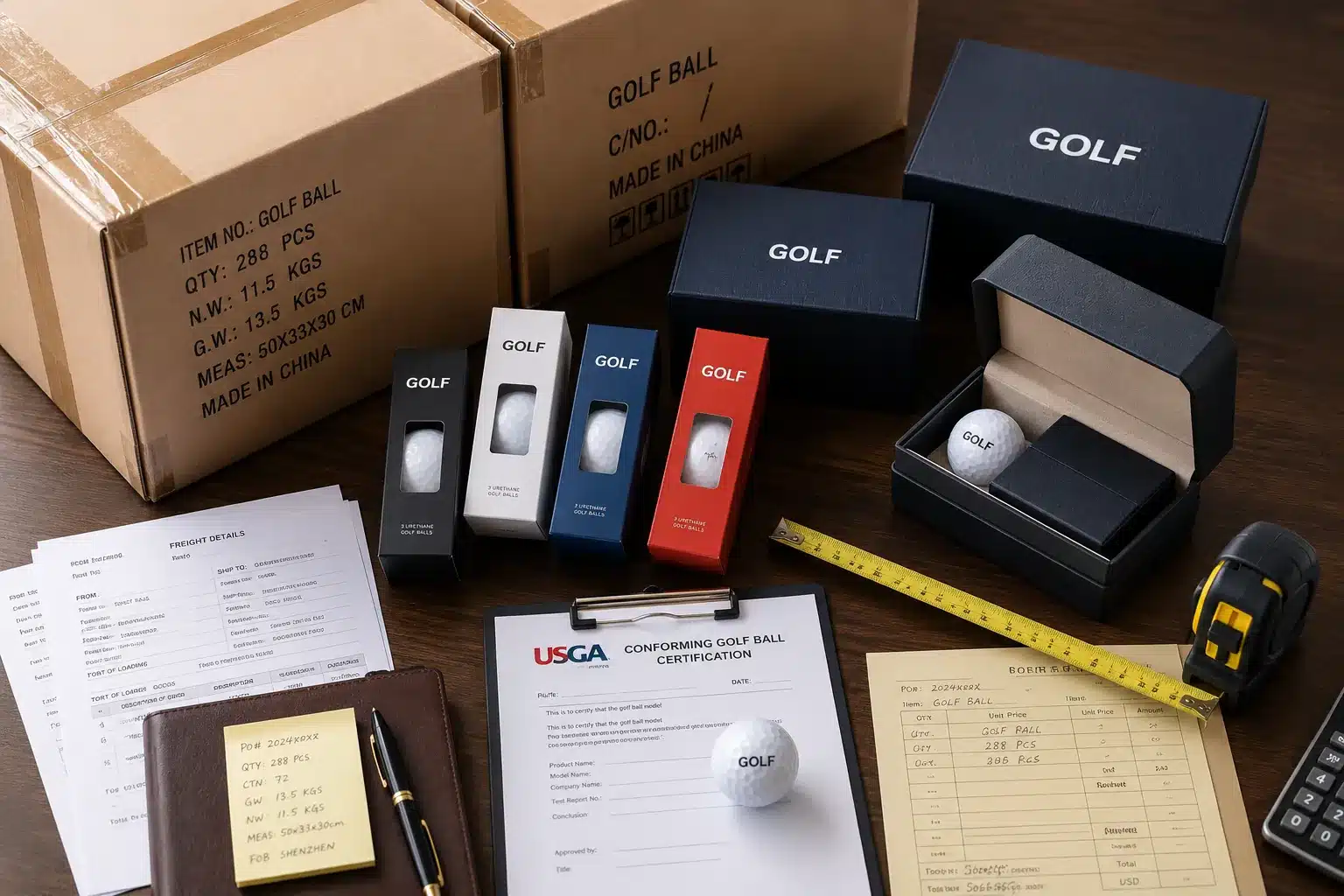
USGA amortization is the other hidden cost. A $1,200 model fee sounds manageable until it is divided by a small order. On 3,000 balls, it adds $0.40 per ball before freight, duty, defects, or packaging. Four models can create $4,800 before support costs. For tournament-facing premium SKUs, that may be necessary. For practice, range, corporate gifting, promotional balls, or early DTC tests, it may be optional.
Premium box, no load plan is a failure signal. It means the packaging decision is being made without ocean freight and container-loading math.
Buyer approval requires a landed-cost worksheet showing FOB, tariff assumptions, freight per ball, packaging density, USGA/R&A amortization, defect allowance, and delivered cost per accepted ball.
Request carton dimensions, balls per carton, cartons per 40HC, CBM, gross weight, freight per ball, and USGA/R&A fee ownership. Divide compliance fees and freight by order volume before approving packaging or listing requirements. Do not approve oversized packaging or USGA listing unless the channel margin justifies the added per-ball cost.
When Does USGA Listing Become a Tax?
USGA listing becomes a tax when the channel does not need it but the small order still absorbs it. A conforming-list requirement can be valuable for serious play channels, but it is not automatically required for every buyer journey.
If the SKU is for practice, range use, corporate gifting, launch testing, or DTC validation, confirm whether current listing status actually changes conversion or channel acceptance. If not, the fee behaves like a fixed-cost leak instead of a value driver.
✔ True — packaging density can decide landed margin.
Freight is not only a shipping bill. Oversized packaging lowers container load and can raise the cost of every sellable ball.
✘ False — “Freight is just a shipping line item.”
Packaging density, CBM, cartons per container, and local assembly options should be modeled before packaging approval.
How Should You Hedge SKU Margins?
You may choose one origin for every product line, then overpay for commodity SKUs or weaken your flagship story.
SKU margin hedging means using U.S.-made production only where the premium earns its keep, while using China’s cost structure for volume and margin protection. Your team should assign origin by MSRP, channel value, compliance need, packaging density, and landed cost.
| SKU role | Cost sensitivity | Origin logic | Acceptance evidence |
|---|---|---|---|
| Hero Tour ball | Lower | U.S. can support premium story | MSRP lift proves out |
| Mid-tier urethane | Medium | China protects margin | Landed model wins |
| Practice/range ball | High | China scale economics | Cost per usable ball |
| Corporate/logo ball | High | China print/pack efficiency | Pack-out cost |
| DTC blind box | High | China customization + packaging | Pilot economics |
This is not a supplier directory and not a generic sourcing strategy. It is a margin hedge. The question is not “Which country is better?” The question is “Which SKU can afford which cost structure?”
A $50+/dozen Tour flagship may be able to carry U.S.-made positioning if the channel rewards origin, consistency, reviews, or fitting-shop trust. A $25–45/dozen mid-tier urethane ball has less room for romance. Practice balls, range balls, promo balls, gift packs, and DTC boxes usually need China’s economics because packaging, printing, and volume discipline are the profit levers.
Made in USA is a margin strategy only when the channel pays for it. You should reserve U.S.-made production for halo SKUs, not every line. China can then carry volume SKUs, price-sensitive categories, packaging-heavy programs, and small test runs where cash-flow control matters.
This approach also protects the brand story. A U.S.-made hero SKU can anchor the premium narrative, while China-made mid-tier and promotional SKUs protect gross margin. Both can exist in the same portfolio if the buyer assigns origin by financial role instead of emotion.
Request a SKU-level margin worksheet for each product tier. Compare landed cost, MSRP, expected margin, channel requirement, compliance cost, and packaging density. Assign origin only after the SKU-level gross-margin model proves the route.
For a supplier-map path after the financial model is clear, review Top 10 Golf Ball Manufacturers in China for OEM.
FAQ
Do golf balls imported from China face U.S. tariffs?
Yes, China-origin golf balls usually need a Section 301 / Chapter 99 check. The base duty for HTSUS 9506.32.0000 golf balls is Free, but China-origin entries may still carry a 7.5% additional duty when the applicable Section 301 line applies.
Confirm HTSUS 9506.32.0000, Chapter 99 / 9903.88.15, country of origin, and customs entered value with your broker before seasonal pricing. Duty should be calculated on customs entered value, not retail price. A tariff rate matters, but it should be compared against factory cost, freight, packaging density, and compliance amortization.
Is it cheaper to manufacture golf balls in the U.S. or China?
China is usually cheaper for OEM production when the SKU is mid-tier, promotional, practice, DTC, or packaging-heavy. U.S. manufacturing can justify its premium only when the SKU earns enough value from origin, consistency, and brand story.
Compare the same construction, cover type, packaging, MOQ, compliance scope, and defect allowance. Then add Section 301, freight, brokerage, destination fees, and packaging density. U.S.-made can be right for halo Tour SKUs, but China often protects margin for volume and testing programs.
How much does a premium golf ball cost to manufacture?
A planning model for 3–4 layer cast urethane balls shows China around $1.73–2.24 per ball at factory stage and the U.S. around $2.54–3.30 before overhead, duty, and freight. Actual quotes vary by construction, MOQ, yield, and packaging.
Materials and labor dominate the model. Electricity is usually a smaller layer. Do not compare a U.S. premium flagship quote against a China mid-tier quote and call it a country comparison. Normalize construction, cover process, paint standard, packaging, and acceptance criteria first.
Why are some golf balls Made in the USA?
Some brands use U.S. production for Tour-grade hero SKUs because domestic origin, R&D control, process secrecy, and consistency can support a premium story. That does not mean every SKU can absorb the same cost base.
The U.S. origin story works best when the channel rewards it through higher MSRP, better conversion, stronger reviews, or lower returns. For mid-tier, practice, promo, DTC, and packaging-heavy products, the extra production cost may squeeze margin unless the buyer can prove a price lift.
How does Section 301 affect golf ball landed cost?
A 7.5% tariff on a $2.00 customs entered value adds about $0.15 per ball before MPF, HMF, brokerage, and inland delivery. The tariff matters, but it may be smaller than the factory-stage cost gap.
Use customs entered value as the duty base. Add ocean and insurance, apply Section 301 when applicable, then include brokerage, destination charges, inland delivery, packaging density, and compliance amortization. The correct comparison is delivered cost per accepted ball.
What is China VAT rebate for golf ball exports?
China’s export VAT rebate system can reduce the effective cost burden for exporters, but buyers should avoid assuming a fixed product-specific rebate without checking the current rebate code. Treat it as a quote-basis question, not a guaranteed discount.
Ask whether the quote assumes rebate capture and whether the supplier’s FOB reflects that mechanism. Do not double-count rebate savings by subtracting them again from an already optimized quote. Compare final FOB and landed cost, not tax theory alone.
When does USGA listing become a hidden cost?
USGA listing becomes a hidden cost when a small order absorbs a fixed annual fee that the sales channel does not require. A $1,200 model fee spread across 3,000 balls adds $0.40 per ball.
Use listing only if the channel requires it. Divide the fee by order volume, limit the number of listed models, and assign fee ownership in the PO. For practice, range, gifting, and early DTC tests, verify whether current listing status changes revenue before paying for it.
How does packaging density affect landed cost?
Packaging density changes freight per ball. Oversized gift boxes, EVA inserts, and low-load cartons can raise ocean freight per ball enough to erase FOB or tariff savings.
Ask for balls per carton, cartons per 40HC, CBM, gross weight, and freight per ball. Compare compact packaging, premium packaging, and local assembly options before approval. A beautiful pack that destroys container efficiency may be a margin problem, not a brand upgrade.
Conclusion
China vs America golf ball costs should be decided by tariff-adjusted landed cost per sellable ball, not by tariff fear or origin emotion. China often remains cheaper after Section 301 because the factory-stage COGS gap can be larger than the tariff layer. U.S.-made golf balls make financial sense only when the SKU earns enough premium from origin, consistency, and channel trust.
Use the clean financial rule: U.S.-made for halo SKUs where the premium pays back; China for mid-tier, practice, promo, DTC, and packaging-heavy SKUs where scale economics protect gross margin. Then test every decision through the same worksheet: FOB, customs entered value, Section 301, freight per ball, packaging density, USGA amortization, and delivered cost per accepted ball.
You might also like — How to Choose a Reliable Golf Ball Manufacturer in China?