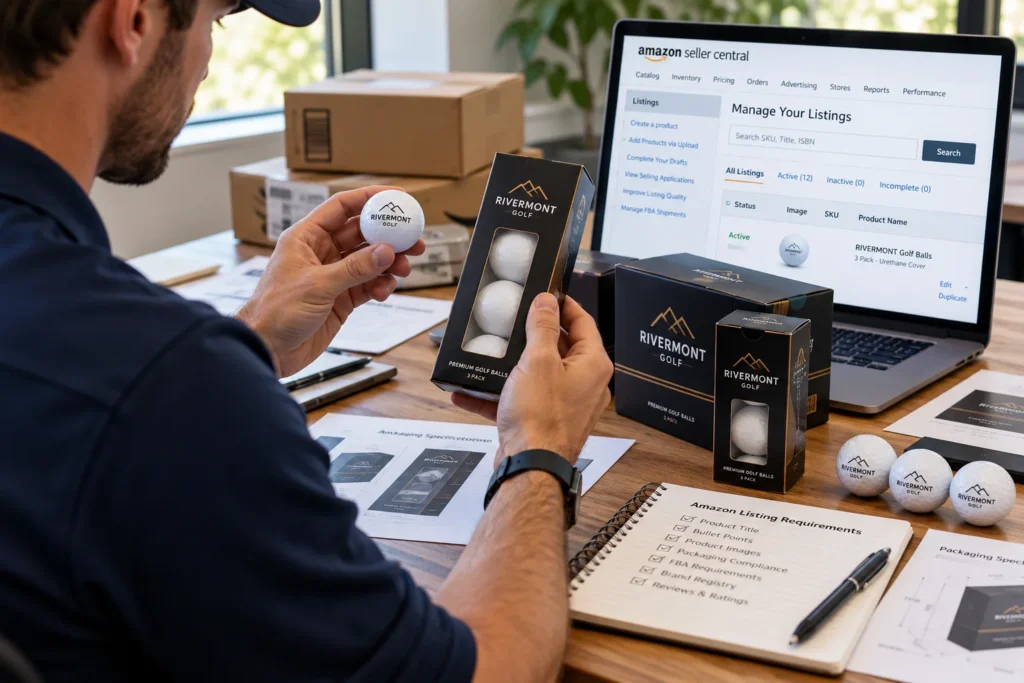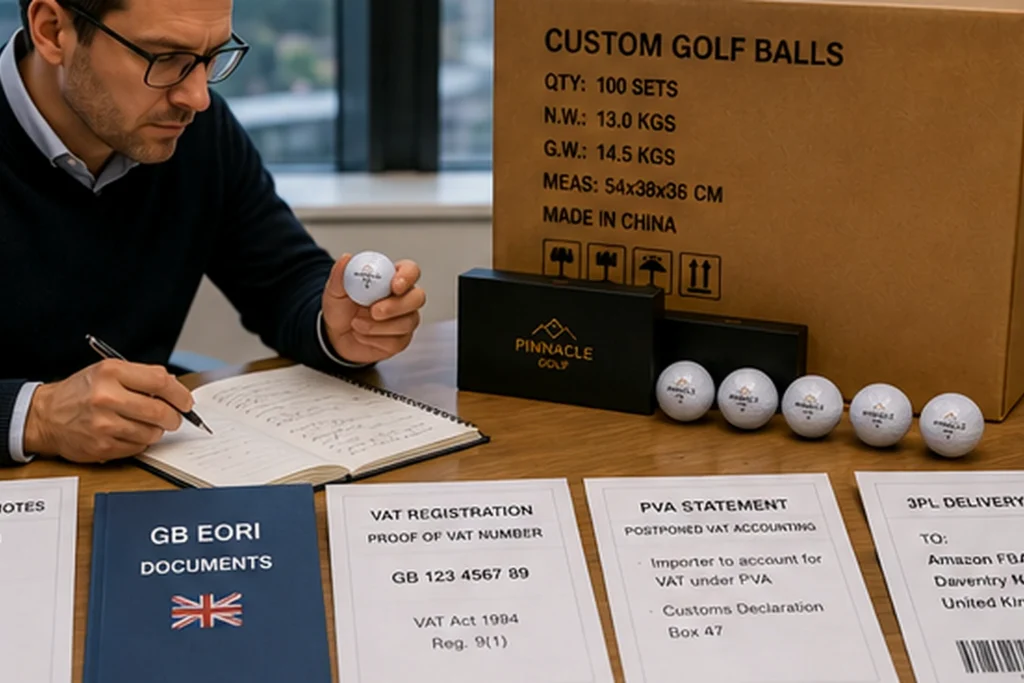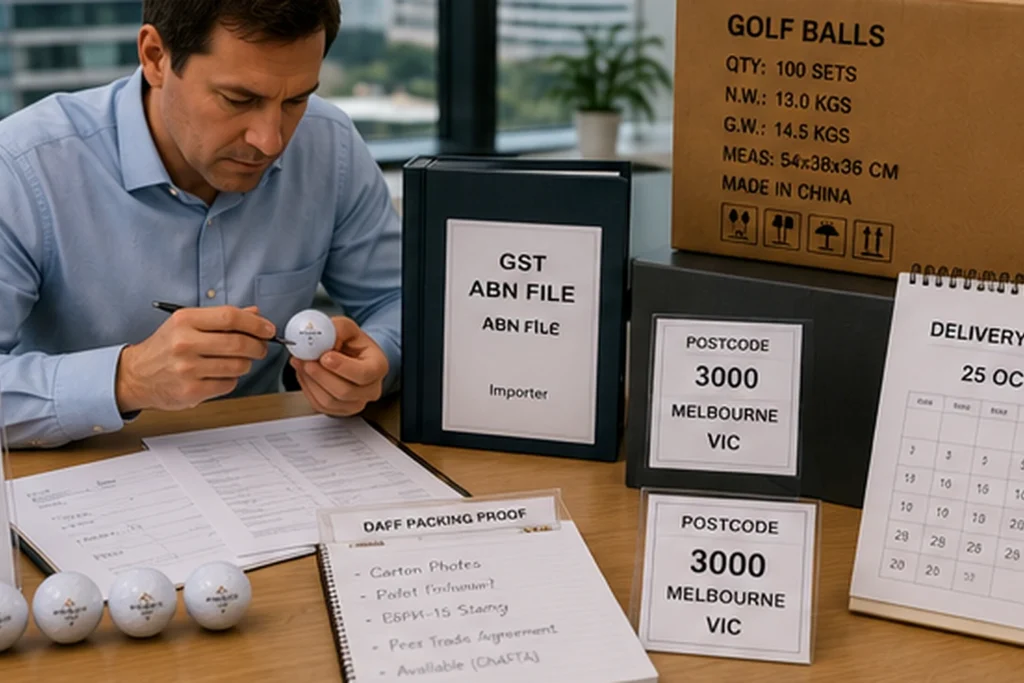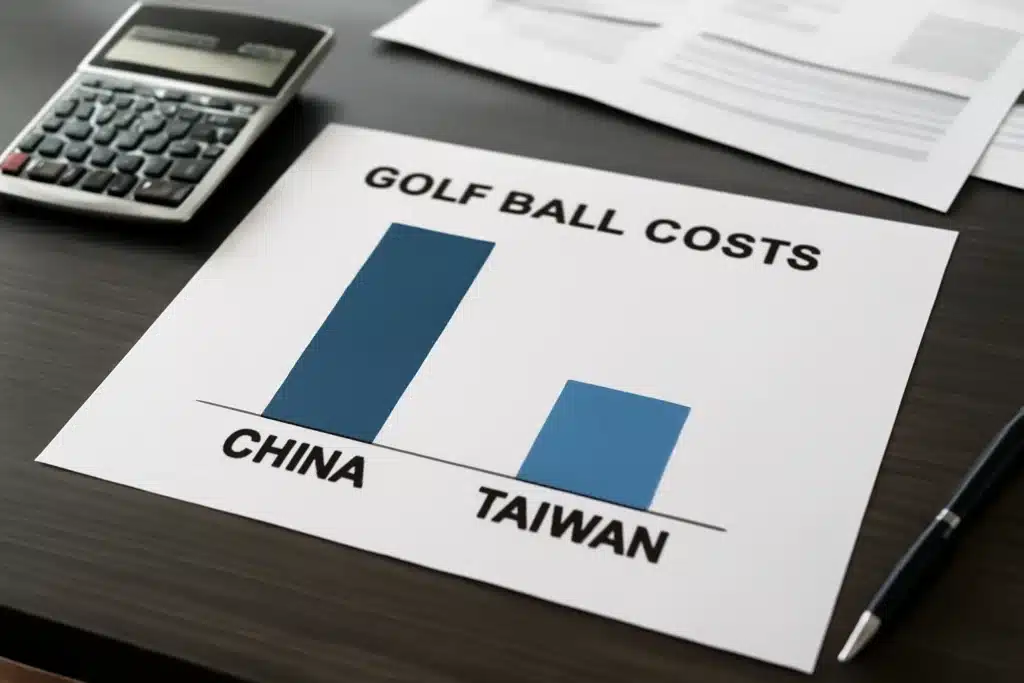
For China vs Taiwan golf ball sourcing in 2026, Taiwan is usually better for premium multilayer cast urethane balls that require tight tolerances, Cpk control, spin consistency, and batch-to-batch stability. China is usually better for bulk golf ball OEM manufacturing when you need high-volume Surlyn, logo balls, off-course venue demand, DTC bundles, fast packaging, and scalable private-label output.
The real question is not “Which country makes better golf balls?” It is: which route can protect your tolerance window, USGA/R&A conformance evidence, packaging workflow, and production capacity at scale?
For 50,000–500,000+ pcs programs, your biggest risks are batch-to-batch drift, peak-season capacity bottlenecks, conformance failure, logo/packaging delays, and unverified testing claims. A beautiful golden sample is only the entry ticket. The bulk shipment must hold ATTI compression, weight, roundness, cover hardness, C.O.R., markings, retained samples, and lot traceability across every production lot.
This guide removes price noise. You will compare China and Taiwan by Tour-grade cast urethane OEM quality control, China golf ball OEM production capacity, Taiwan golf ball manufacturing tolerances, USGA conforming golf ball manufacturers, Golf ball compression consistency Cpk, packaging ecosystem, and SKU-stage routing.
What Is the Core Sourcing Divide?
You may compare China and Taiwan as cheaper versus premium, but the real divide is R&D heritage versus agile scale.
The core sourcing divide is not simply quality versus price. Taiwan is stronger when you need premium multilayer consistency; China is stronger when you need scalable Surlyn output, logo work, packaging agility, and multi-SKU execution. Both routes can produce conforming products when engineering controls are locked.
| Buyer goal | Taiwan fit | China fit | Evidence to request |
|---|---|---|---|
| Premium PU flagship | Strong | Possible with verified top OEMs | Cpk + FPY + robot data |
| 2-piece Surlyn volume | Less efficient route | Strong | Capacity map |
| Logo/event balls | Selective fit | Strong | Print/pack proof |
| DTC bundle / gift set | Premium only | Strong | Packaging vendor map |
| USGA-conforming model | Strong with proof | Strong with proof | List + lot evidence |
Taiwan’s strongest role is premium multilayer cast urethane: flagship balls, tight visual standards, review-sensitive DTC programs, and models where spin, feel, cover finish, and compression consistency must stay stable from lot to lot. Its value is not vague “premium image.” Its value is repeatable process control.
China’s strongest role is scale. For bulk golf ball OEM manufacturing, China is built around high-volume 2-piece and 3-piece Surlyn, logo balls, color balls, corporate/event balls, DTC bundles, range programs, and packaging-heavy private-label SKUs. The advantage is not just factory output. It is the surrounding ecosystem: molding, printing, sleeves, cartons, inserts, gift boxes, pack-out, and repeat replenishment.
Current conforming-ball evidence also breaks the old country stereotype. China-linked and Taiwan-linked manufacturers both appear with conforming entries, including multilayer constructions. That does not prove country of origin, and it does not mean every supplier is equal. It does prove that country label alone is a weak QA method. You still need BOM control, markings control, construction confirmation, retained samples, and lot-level evidence.
Off-course golf demand makes this split more important. A growing share of golf participation now happens through ranges, simulators, entertainment venues, corporate events, and casual social formats. Those channels need durable, colorful, logo-friendly, high-volume balls more often than they need a tour-caliber cast urethane flagship. You should not route every growing channel into premium PU capacity just because “premium” sounds safer in a meeting.
Request a sourcing-role map that separates premium PU, Surlyn volume, logo balls, DTC bundles, corporate programs, and off-course SKUs. Check whether each proposed route matches the SKU’s tolerance, volume, packaging, and conformance requirements. Do not assign origin by reputation alone; assign origin by QA tolerance and scale requirement.
✔ True — country label alone does not decide quality
A sourcing route should be judged by BOM control, test protocol, lot traceability, retained samples, and production repeatability. Taiwan and China can both fit when the SKU role is clear.
✘ False — “Taiwan means quality, China means volume only”
Taiwan has a stronger premium PU consistency role, but verified China OEMs can produce conforming multilayer balls when tolerances and testing evidence are locked.
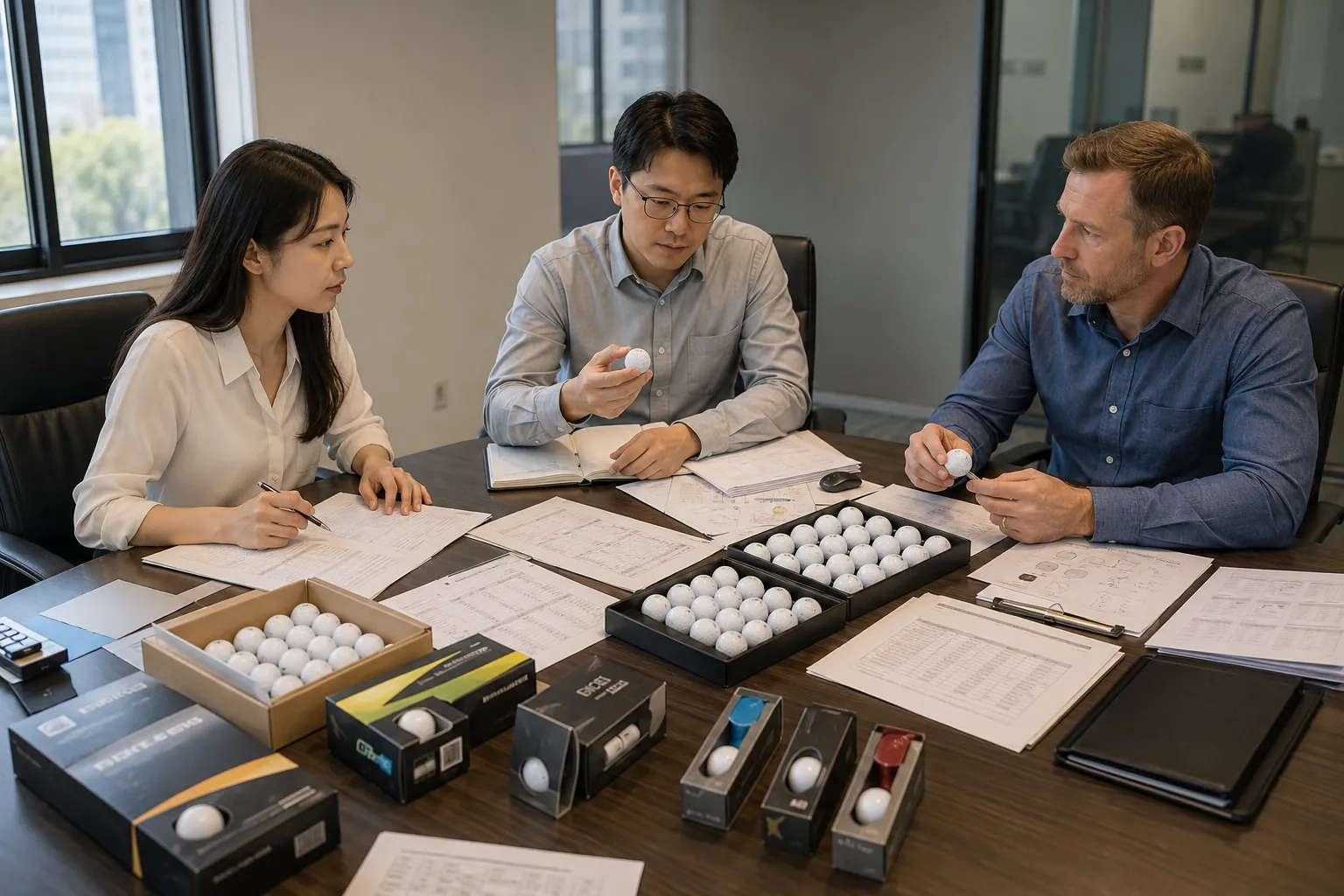
When Does Taiwan Beat China?
You may underpay for a premium SKU and then lose reviews when batch-to-batch compression, spin, finish, or feel drifts.
Taiwan beats China when the SKU is a premium multilayer cast urethane ball and your brand cannot tolerate batch drift. For flagship programs, you should lock ATTI compression, weight, roundness, cover hardness, layer control, and Cpk targets directly into the PO.
| Taiwan advantage | What can drift | Buyer tolerance to lock | Acceptance evidence |
|---|---|---|---|
| Compression repeatability | Feel and launch | ATTI window | Lot compression data |
| Layer control | Spin and flight | Cpk target | Layer/concentricity evidence |
| Cast urethane cover | Wedge spin / durability | Cover hardness + adhesion | Cover-process report |
| Cosmetic stability | Reviews and returns | Defect-rate limit | AQL + retained samples |
| Long-run consistency | Batch-to-batch trust | Lot traceability | COA by lot |
Taiwan’s sweet spot is measurable multilayer repeatability. When you buy a 3-piece or 4-piece cast urethane flagship, you are buying feel, spin control, cover durability, cosmetic quality, and repeatable launch behavior. If those variables drift, your first shipment can earn good reviews while your third shipment damages the same brand.
This is the Batch-to-Batch Drift Nightmare. The first approved sample performs well, then later mass-production lots lose distance, feel firmer, spin less around the green, show finish inconsistency, or fail to match the original retail experience. The buyer does not see the process drift until customers do. By then, your supplier may be discussing “acceptable variance” while your reviews are doing the shouting.
Taiwan golf ball manufacturing tolerances matter when they are translated into engineering controls. For premium PU, your PO should not say “high quality.” It should define ATTI compression window, weight tolerance, diameter or roundness, Shore D or cover hardness, layer-control evidence, cosmetic defect limit, retained-sample rules, and Golf ball compression consistency Cpk targets where applicable.
Cpk ≥ 1.33 can be used as a target for critical-to-quality dimensions when flagship repeatability matters, but it should be requested and verified rather than assumed. No factory should win a flagship order with reputation alone. The data must follow the lot.
Perfect sample, drifting bulk lots is a failure signal. It means the supplier passed the beauty contest but failed the production system test.
Supplier shall freeze BOM version, cover-process declaration, dimple/mold ID, markings, artwork version, retained-sample ID, and lot number before mass production; any formula, cover-process, mold, paint, marking, or packaging change requires written approval and renewed sample sign-off.
Request a Taiwan premium-PU validation packet with Cpk targets, ATTI compression data, retained samples, and layer-control evidence. Check whether the factory can link mass-production lots back to the approved sample, mold ID, BOM, and process version. Approve Taiwan for premium PU only when tolerance evidence protects the SKU from batch drift.
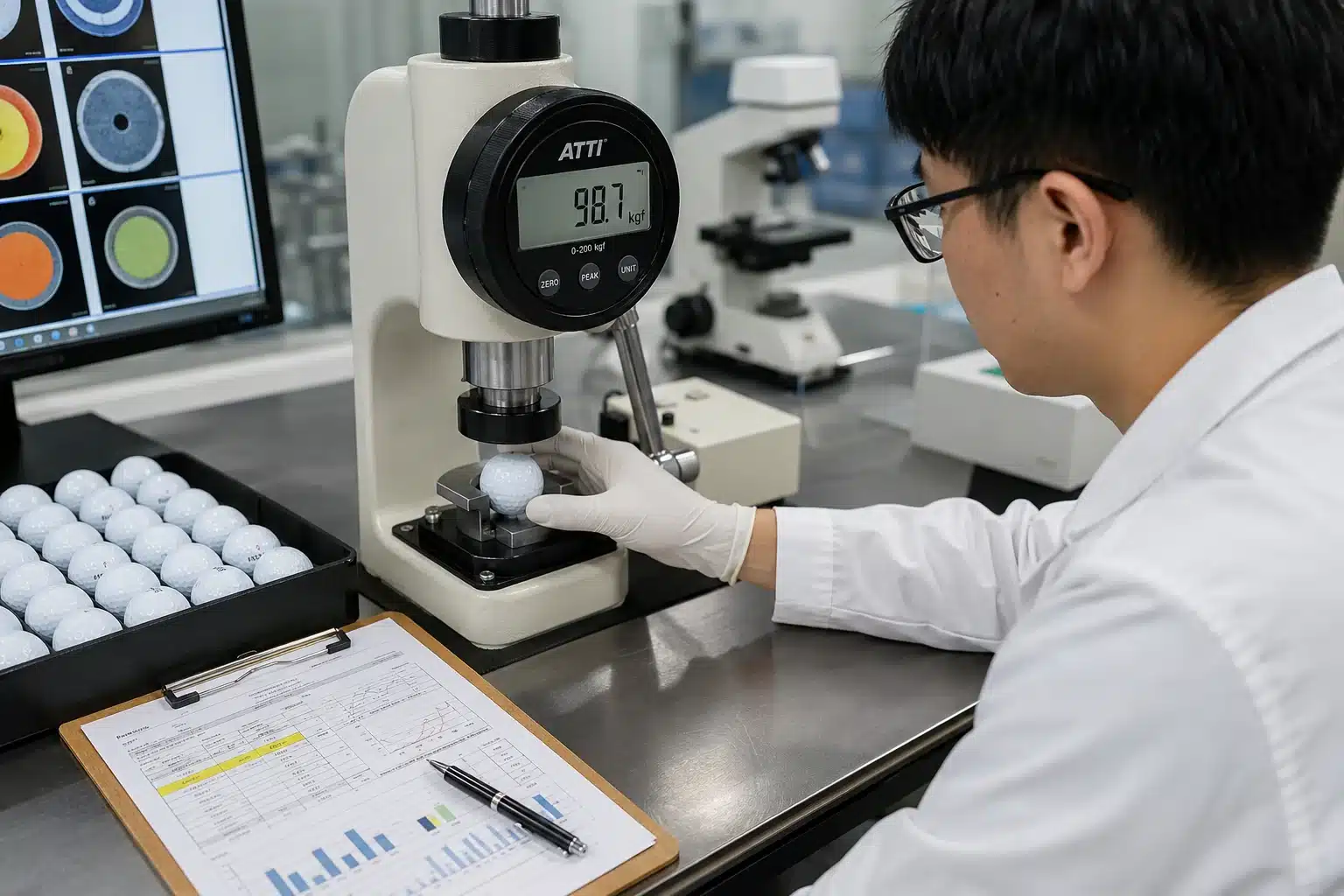
Why Does Strict CV Matter?
Strict CV control protects repeatability. Low variation in compression, weight, roundness, cover hardness, and layer behavior helps keep launch, feel, spin, and cosmetic performance stable across a large order.
For Tour-grade cast urethane OEM quality control, CV is not academic. It is the difference between “same model, same feel” and “same box, different experience.” If your flagship ball depends on repeat orders, reviews, and word-of-mouth, you need the factory’s variation control to be boring. Boring is beautiful in QA.
✔ True — Taiwan quality should become measurable tolerances
For premium PU, ask for ATTI compression, layer control, Cpk targets, cosmetic limits, retained samples, and lot traceability. Reputation should become acceptance criteria.
✘ False — “A good sample proves the whole order will match”
A sample proves capability once. Lot-linked data proves repeatability across the production run.
When Does China Beat Taiwan?
You may send a huge promotional or off-course order to a premium-oriented route, then hit capacity, printing, packaging, or multi-SKU bottlenecks.
China beats Taiwan when the order depends on scale, packaging, logo work, color variation, and fast SKU refresh. Off-course venues, corporate events, range programs, and DTC bundles usually need durable Surlyn output and packaging coordination more than flagship cast-urethane consistency.
| Demand shift | SKU implication | Why China fits | Evidence to request |
|---|---|---|---|
| Off-course venues | Durable 2-piece Surlyn | Volume and replenishment | Capacity plan |
| Simulator users | Color / alignment marks | Printing flexibility | Artwork proof |
| Corporate events | Logo balls + gift packs | Pack-out ecosystem | Packaging sample |
| DTC seasonal drops | Multi-SKU bundles | Fast revision loop | Vendor map |
| Range/practice programs | High-volume supply | Injection-molding scale | Line schedule |
China’s dominance is structural. Guangdong, Fujian, Zhejiang/Ningbo, and related export-oriented clusters support injection molding, tooling, dimple/mold work, core and cover processing, pad printing, color variation, sleeves, cartons, gift boxes, labels, and pack-out. That matters when your bulk order is not one clean premium SKU but many colors, logos, sleeves, and channel packs.
The Scale Bottleneck in Peak Season appears when a buyer sends a huge order to a route built for precision rather than throughput. A premium-focused factory may be excellent at cast urethane consistency and still be the wrong home for 100,000+ logo balls, corporate-event packs, range replenishment, or a 500,000 pcs off-course promotion. The issue is not respect. It is physics: line capacity, printing capacity, packaging capacity, and changeover tolerance.
China golf ball OEM production capacity is strongest when the product brief rewards scalable Surlyn output and packaging coordination. For high-volume private label golf balls, you may need a factory that can handle multiple logo versions, color variants, carton styles, sleeve updates, and split shipments without turning every artwork change into a crisis.
Big promo order, no capacity map is a failure signal. It means the supplier is accepting the PO before proving the production system can swallow it.
Request a high-volume capacity plan showing molding capacity, logo-printing capacity, packaging suppliers, pack-out workflow, and backup vendors. Check whether the factory can handle your total units, SKUs, colors, logo variants, packaging formats, and delivery split. Use China for bulk programs only when the capacity map proves the order can scale without batch drift or packaging delay.
If your program needs validation before a larger rollout, move MOQ details into a dedicated negotiation workflow for low MOQ private label golf balls instead of burying that discussion inside the bulk sourcing decision.
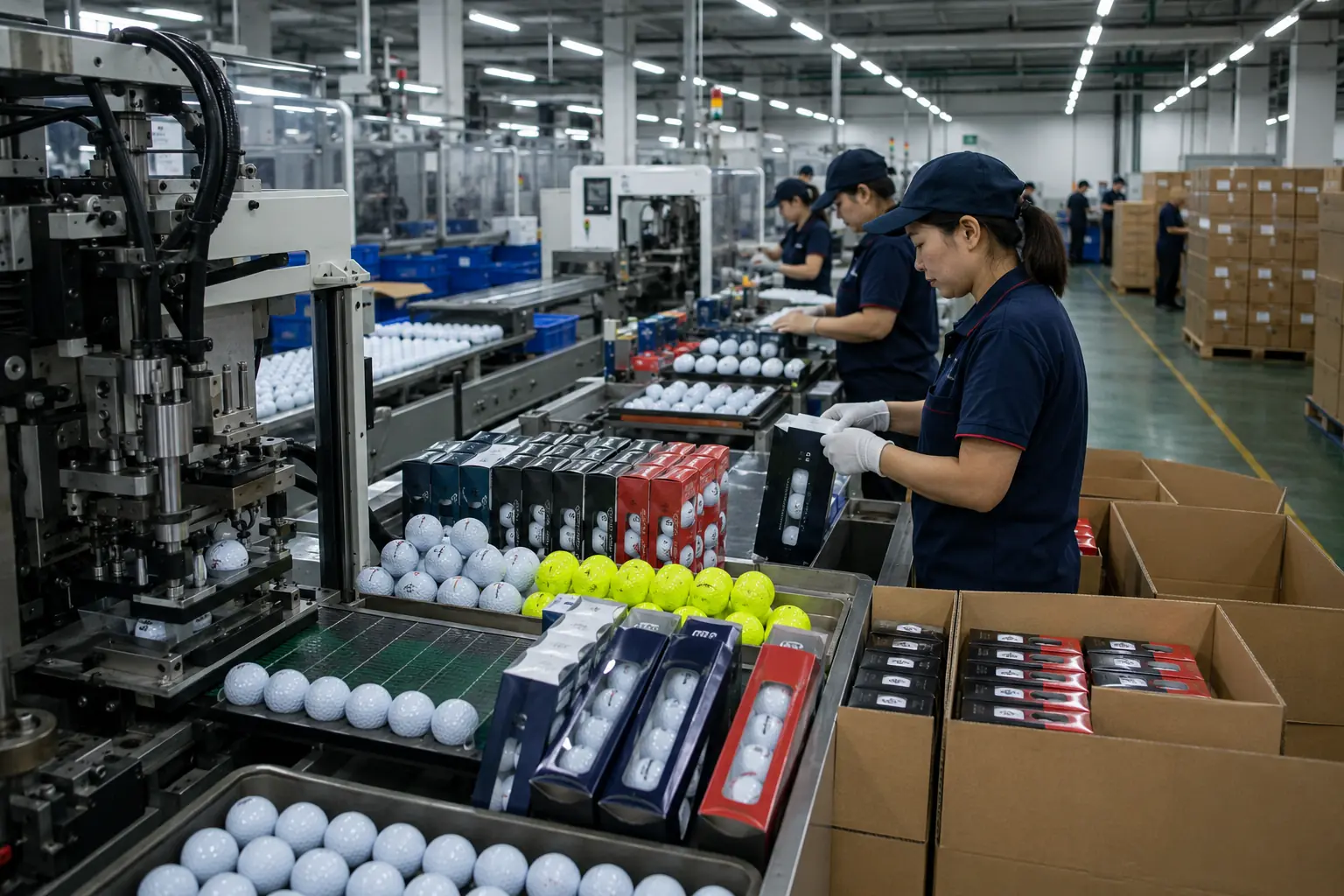
How Does Multi-SKU Scale Work?
Multi-SKU scale works when molding, printing, packaging, and pack-out can move together. The ball factory alone is not enough if sleeves, cartons, inserts, and artwork revisions cannot keep up.
China’s practical advantage is the cluster loop. A controlled standard project can often move quickly when construction, artwork, packaging, and approval gates are stable. The 3-hour packaging ecosystem should be treated as a practical cluster concept, not a universal promise. When confirmed, it helps your team revise artwork, align packaging, and coordinate multi-SKU output with fewer handoff delays.
✔ True — China’s bulk advantage is structural, not just cheaper output
For volume Surlyn, logo balls, color variants, DTC bundles, and event packs, molding capacity must connect with printing, packaging, and pack-out.
✘ False — “A premium-focused supplier can handle every large order”
Premium consistency and bulk throughput are different operating systems. Your 500,000 pcs event order needs a capacity map before it needs applause.
What QA Matrix Should You Lock?
You may approve a sample and then discover the mass shipment fails your compression, symmetry, markings, or conformance expectations.
For bulk golf ball OEM, the PO should lock a QA matrix before mass production. At minimum, require ATTI compression, weight, diameter or roundness, cover hardness, C.O.R. or initial velocity, retained samples, BOM version, and lot-linked COA.
| QA item | Premium PU target | Volume Surlyn target | Buyer evidence |
|---|---|---|---|
| ATTI compression | 80 ± 3 style window | 90 ± 4 style window | Lot data |
| Weight | 45.6 ± 0.3g | 45.6 ± 0.4g | COA + sample check |
| Roundness | ≤0.10mm deviation | ≤0.15mm deviation | Inspection report |
| Cover hardness | PU target window | Surlyn target window | Shore D data |
| Paint/gloss defects | Tighter cosmetic limit | Practical volume limit | AQL report |
| Symmetry/concentricity | CT/X-ray where needed | Lot sample checks | Scan / retained sample |
| C.O.R./initial velocity | Dual-point method where available | Sampling method | Test record |
The Conformity Trap is brutal because it often arrives late. Your team develops a model, approves the sample, places the bulk order, and then discovers that symmetry, markings, construction, or performance evidence is not aligned with the claimed standard. A mass shipment is a terrible place to learn that “USGA conforming” was used too casually.
The conforming-ball list identifies golf balls that have been tested and found to conform to the Rules of Golf. It includes markings, colors, construction, spin rating, dimples, and related model identifiers. It can be powerful conformance evidence, but it is not a country-of-origin certificate and it does not prove that every later bulk lot matches the tested model.
This point matters for USGA conforming golf ball manufacturers in both regions. China-linked entries can include multilayer constructions, and Taiwan-linked entries can include deep multilayer portfolios. The safe conclusion is not “all factories are equal.” The safe conclusion is that conformance follows controlled construction, markings, and testing evidence—not lazy origin stereotypes.
USGA claim, no lot evidence is a failure signal. It means the supplier is borrowing authority from a listing without proving that your shipment matches the approved construction, markings, BOM, and sample.
Use the list correctly. Confirm the exact model and markings, then connect that status to BOM freeze, mold ID, construction, cover process, markings, color, C.O.R. or initial velocity, symmetry/concentricity evidence, retained samples, and lot-level COA. If materials, markings, dimple pattern, cover process, or label identifiers change, your conformance support plan may need to be reviewed before shipment.
Place this in your RFQ: “Please provide the QA matrix for the quoted structure, including ATTI compression window, weight tolerance, diameter tolerance, roundness, Shore D or cover hardness, Cpk targets, dual-point C.O.R. or initial-velocity method, CT/X-ray or concentricity evidence where available, retained-sample ID, BOM version, and lot-level COA before mass approval.”
Buyer acceptance requires lot-linked ATTI compression, weight, diameter, roundness, Shore D or cover hardness, C.O.R. or initial-velocity method, Cpk target evidence where applicable, retained samples, and outbound AQL/COA matched to the shipped lot.
Request the full QA matrix and lot-linked test packet before PO approval. Confirm the current USGA/R&A list status for the exact model and markings, then connect it to BOM, retained samples, and shipped lot evidence. Do not release mass production until the supplier confirms tolerances, testing method, sample-retention plan, and change-control rules.
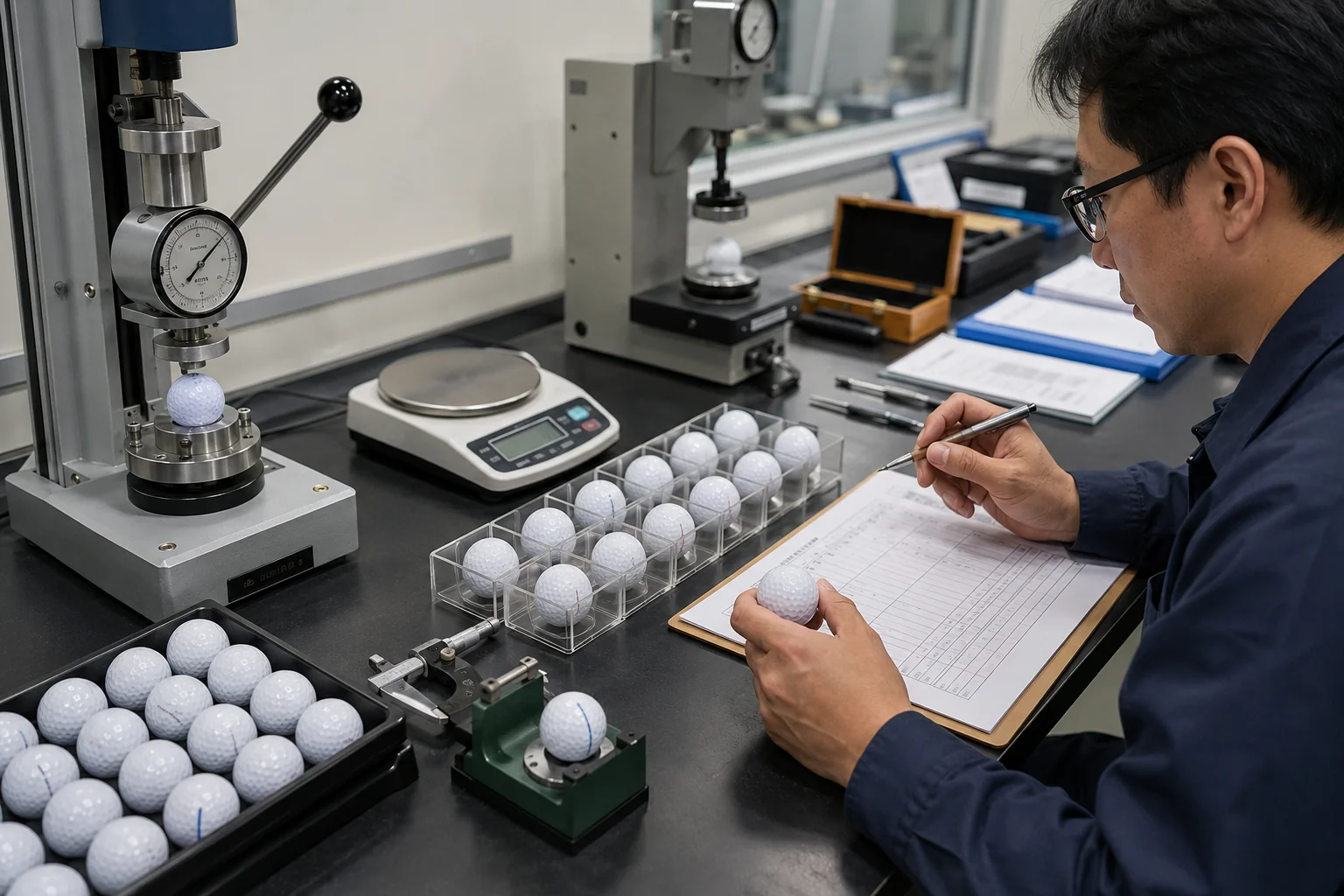
✔ True — USGA conformance follows testing, markings, and controlled construction
The conforming list can support a QA file, but your bulk order still needs BOM freeze, markings control, retained samples, and lot-linked test records.
✘ False — “USGA-listed means every future batch is automatically safe”
A listed model can still become risky if formula, mold, markings, color, cover process, or production controls change without approval.
How Should You Split Bulk SKUs?
You may force Taiwan or China to handle every SKU, then either lose scale on volume SKUs or consistency on flagship SKUs.
The safest China vs Taiwan sourcing plan routes SKUs by quality risk and scale burden. Use Taiwan for premium PU where tolerance and review stability matter; use China for Surlyn volume, off-course demand, logo balls, DTC bundles, corporate events, and packaging-heavy programs.
| SKU type | Better origin logic | Main risk | Acceptance evidence |
|---|---|---|---|
| 4-piece PU flagship | Taiwan if QA proves out | Batch drift | Cpk + robot + retained samples |
| 3-piece performance/DTC | China or Taiwan | Target mismatch | QA matrix + channel test |
| 2-piece Surlyn/range | China | Scale bottleneck | Capacity map |
| Logo/event balls | China | Print/pack delay | Artwork + pack proof |
| DTC gift bundle | China | Packaging bottleneck | Vendor map |
| Premium limited drop | Taiwan or verified China top OEM | Conformance/review risk | USGA + lot evidence |
Hybrid sourcing does not mean splitting every order down the middle. It means routing each SKU to the supply base that matches its tolerance requirement, volume burden, packaging load, and channel risk. The worst plan is forcing one origin to solve every product problem because it looks tidy in a spreadsheet.
Taiwan should anchor premium flagship PU when strict tolerance, batch stability, cover feel, cosmetic finish, and review consistency justify the route. China should anchor 2-piece Surlyn, 3-piece Surlyn, range balls, off-course venue balls, corporate logo balls, DTC bundles, color balls, seasonal drops, and packaging-heavy programs.
The middle tier needs judgment. A 3-piece performance DTC ball may fit Taiwan if reviews and tolerance are the main risk. It may fit a verified China top OEM if the program needs color variation, packaging agility, and scale while still meeting a strict QA matrix. Your decision should be based on SKU behavior, not country loyalty.
Off-course demand makes this split more important. More players are entering golf through entertainment venues, simulators, driving ranges, corporate events, and casual social formats. Those channels often need durable, colorful, logo-friendly, affordable balls with reliable replenishment. That demand structure naturally increases China’s value in golf ball supply chain scalability.
Request a SKU routing worksheet for flagship, mid-tier, Surlyn volume, off-course, DTC, corporate, and promo SKUs. Check each SKU against tolerance needs, packaging burden, volume size, conformance risk, and scale requirement. Route the SKU only after the QA matrix and scale plan match the channel.
FAQ
Are golf balls made in Taiwan good quality?
Yes. Taiwan is a global benchmark for premium multilayer cast urethane OEM when the buyer needs tight compression windows, layer control, cosmetic stability, and batch-to-batch consistency.
Ask for ATTI compression data, Cpk or process-capability evidence where available, retained samples, lot traceability, cover-process declaration, and cosmetic pass-rate data. Taiwan is strongest when your flagship SKU needs stable feel, spin, finish, and review performance across a long production run. Quality is not just the first sample; it is the tenth lot behaving like the first.
Can Chinese manufacturers make USGA conforming golf balls?
Yes. The conforming-ball ecosystem includes China-linked manufacturers with multilayer entries. That does not mean every Chinese factory is tour-grade, but it proves country stereotypes are not a valid QA method.
Verify the exact model and markings. Freeze BOM and construction. Require lot-level COA, retained samples, ATTI compression data, cover hardness, and conformance support for the specific shipped lot. Use the conforming list as conformance evidence, not origin proof. A verified China OEM can be a serious route when the QA matrix is strict.
How do you test golf ball quality in manufacturing?
A strong OEM quality plan should include ATTI compression, weight, diameter, roundness, cover hardness, C.O.R. or initial velocity, retained samples, lot traceability, and, where needed, CT/X-ray concentricity checks.
Lock the QA matrix in the PO. Tie test records to each lot. Use golden samples and retained samples. Control changes in mold, BOM, markings, cover process, paint stack, and artwork. For bulk programs, quality testing should follow the lot, not just the sample. That is how you prevent batch drift from reaching your customer.
Which country is better for bulk promotional golf balls?
China is usually better for bulk promotional, logo, range, event, and off-course golf balls because its Surlyn output, logo-printing capacity, packaging ecosystem, and multi-SKU flexibility are structurally stronger.
Request a capacity map, print and packaging throughput, color limits, artwork proof, pack-out workflow, and backup vendor plan. Use China for high-volume private label golf balls when the order depends on replenishment, logo variation, packaging, and volume stability. Premium PU consistency is valuable, but it is not the main operating need for most promotional Surlyn programs.
Why is Taiwan stronger for tour-grade cast urethane?
Taiwan’s strength is process repeatability in multilayer PU programs. Buyers use Taiwan when compression consistency, cover feel, spin stability, cosmetic pass rate, and batch control affect reviews and repeat orders.
Request cover-process declaration, layer and concentricity evidence, FPY and cosmetic reject data, ATTI compression records, retained samples, and Cpk targets where available. Taiwan’s premium value should be measured, not assumed. The decision becomes stronger when the supplier can prove that mass lots stay inside the same tolerance window as the approved sample.
What causes batch-to-batch drift in golf balls?
Batch drift can come from material changes, mold wear, cover-process changes, coating variation, finishing pressure, compression drift, or unapproved markings and artwork changes.
Lock BOM and mold ID. Keep retained samples. Require written change approval. Compare every production lot against the golden sample. For large orders, ask for lot-by-lot compression, weight, roundness, cover hardness, and C.O.R. or initial-velocity evidence. The goal is to catch drift before players feel it.
Is the USGA list an origin certificate?
No. The USGA list identifies golf balls that have been tested and found to conform to the Rules of Golf. It should not be treated as proof of factory origin or proof that every later lot is identical.
Use it as conformance evidence. Verify the exact markings, construction, color, and model identifier. Require lot-linked QA records and retained samples. Confirm any formula, mold, cover-process, marking, or color change before shipment. Conformance is a controlled evidence chain, not a country label.
When should buyers use hybrid sourcing?
Use hybrid sourcing when your brand has both review-sensitive premium SKUs and high-volume Surlyn or off-course SKUs. Taiwan can anchor premium PU, while China can handle volume, logo, packaging, and DTC programs.
Route by SKU role. Use Taiwan for premium consistency. Use China for scale and packaging. Review the routing plan every season as your off-course, DTC, corporate, and flagship channels mature. Hybrid sourcing is not about splitting orders for convenience; it is about putting each SKU where its risk profile fits.
Conclusion
China vs Taiwan golf ball sourcing should not be reduced to country reputation. Taiwan wins when your bulk program depends on premium multilayer PU consistency, tight tolerances, Cpk discipline, cosmetic repeatability, and review stability. China wins when your program depends on high-volume Surlyn, logo work, color variation, off-course demand, DTC bundles, packaging agility, and replenishment scale.
Your safest bulk plan is a QA-and-scale routing model: Taiwan for premium flagship PU where tolerance evidence proves the value, and China for volume Surlyn, corporate/event balls, range programs, DTC packs, and packaging-heavy private-label SKUs. Use the QA matrix to prevent drift before it reaches your customer.
You might also like — China vs Taiwan Golf Ball Costs: 2026 Labor, Materials & Yield Guide(2026 Quality & Scale Guide)