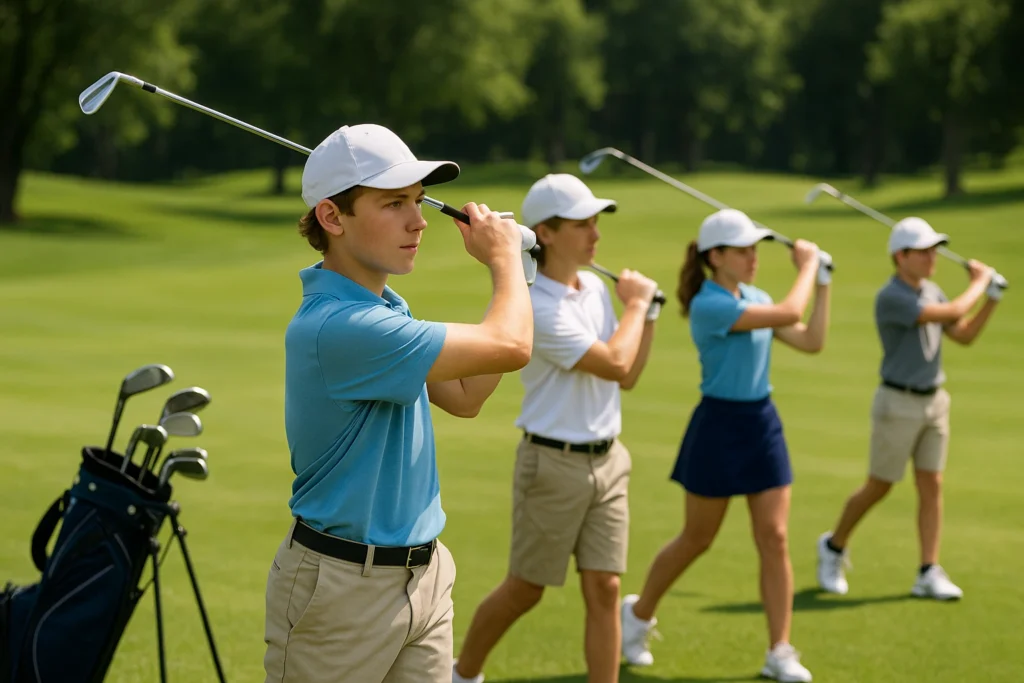
Buying golf balls for kids by age alone can lead to the wrong fit: the ball may feel too hard, fly too low, cost too much for practice, or make coaching feedback less reliable.
The best junior golf balls are chosen by swing speed, compression, practice frequency, and tournament needs—not by age label, package color, or adult tour-ball influence. Most juniors should start with a durable 2-piece ionomer training ball, then test urethane or higher-control balls only when wedge control and scoring performance matter.
To choose a junior golf ball:
-
Measure driver or 7-iron swing speed before trusting age labels.
-
Match junior golf ball compression to current speed and strike quality.
-
Use durable 2-piece ionomer golf balls for lessons, range work, and high-loss training.
-
Test 3-piece, urethane, or higher-control balls only when wedge control, approach stopping power, and tournament scoring justify the upgrade.
-
Recheck the fit after growth spurts, new training seasons, or clear changes in launch, distance, or dispersion.
The right junior golf ball is not one fixed product for every child. A beginner, a high-volume academy player, and a young tournament golfer may need different compression windows, cover materials, and durability levels. Use this guide as a practical fitting framework for parents, coaches, academies, retailers, and private-label buyers.
What should juniors fit first?
Parents often search for the best junior golf balls and end up choosing by age, price, color, or the most serious-looking box. That shortcut can send a young player into the wrong performance window.
Fit the junior’s swing speed first, then use age only as a rough estimate. A good junior golf ball should help the player launch the ball, keep feedback consistent, and avoid adult tour-ball stiffness until speed and strike quality can actually use that design.
Swing speed before age labels
A junior golfer is not a mini adult golfer. Many younger players do not generate enough speed to compress a firmer adult-performance ball, even when they are athletic, motivated, and improving quickly. If the core is too firm for the swing, the ball may feel harsh, launch too low, carry shorter, or create feedback that makes a good swing look worse.
As of 2025, the National Golf Foundation reports that just under 4 million juniors played on-course golf in the U.S., more than in any year since 2004. Junior participation has grown 58% since 2019, and the segment is more diverse than the overall golf population: 35% of today’s juniors are girls and 26% are People of Color.
That means junior golf balls are not just “golf balls for kids” with brighter packaging. For parents, the risk is buying a ball that is too hard, too expensive, or too adult. For coaches, the risk is unstable training feedback. For academies and retailers, the risk is building one generic junior SKU when beginners, high-volume trainees, and young competitors need different performance windows.
Your first question should not be “What is the most advanced ball?” It should be “Can this junior compress it and repeat it?” For an academy or private-label buyer, the question becomes “Which speed band, training stage, and proof standard does this SKU serve?”
Ask for a fitting note or product guide that explains the intended swing-speed band. Then compare launch and carry between a lower-compression candidate and a firmer adult-style ball. Do not accept an adult-performance claim unless the junior’s speed and strike quality can use it.
✔ True — Low compression can help many slower-speed juniors launch the ball more easily
A softer core can deform better at lower speed, which may improve launch, carry, and confidence for many young players. It is a fitting starting point, not a permanent identity.
✘ False — “Adult tour balls automatically go farther for juniors”
A tour-style ball may be excellent for the right player, but a junior who cannot compress it may lose height, distance, and clean feedback.
What compression fits junior speed?
Two juniors of the same age can need very different golf balls. One may still be learning center contact; another may already be preparing for events and controlling wedge distance.
Use age to estimate, but use swing speed to decide. Start with a compression window, test two candidates, and recheck after growth spurts because junior speed and strike quality can change faster than equipment habits.
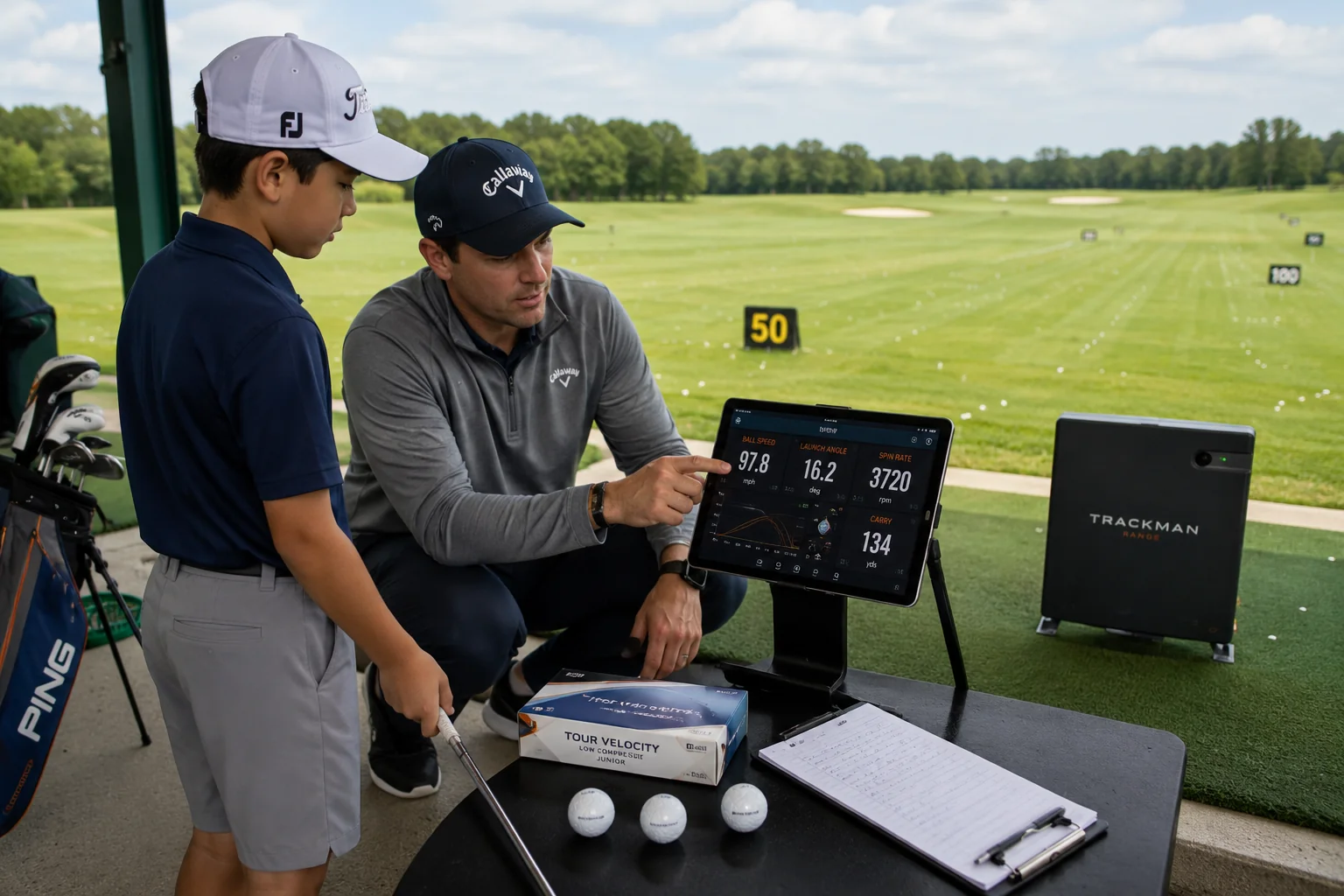
Recheck after growth spurts
Compression should follow speed and strike quality; it should not lead them. A 12-year-old beginner and a 12-year-old tournament player should not automatically play the same ball. Age gives you a rough starting point, but speed, launch, contact, and control decide the better fit.
Start with driver or 7-iron speed if you have a launch monitor. Without a monitor, use ball-flight clues. A ball that launches too low, feels harsh, and produces weak carry may be too firm. A ball that flies too high, floats in wind, or feels vague for a stronger junior may be too soft.
Use this table as a starting point, not a rigid rule.
| Junior profile | Starting compression | Likely structure | Best use | Buyer move |
|---|---|---|---|---|
| <60 mph / new player | 30–50 | 2-piece ionomer | Easy launch and training | Test carry and launch |
| 60–75 mph / regular practice | 50–70 | 2-piece or soft 3-piece | Lessons and casual rounds | Compare dispersion |
| 75–90 mph / competitive teen | 70–85 | 3-piece, possible urethane | Event prep and scoring | Add wedge test |
| 90+ mph / elite junior | 85+ | Fitted adult-performance ball | High-level play | Fit through full bag |
This is where many “low compression golf balls for juniors” searches get too simple. Low compression is often the first step, especially for slower swing speeds, but it is not the finish line for every young player. A stronger junior may need more structure, a different launch window, or more short-game control.
Your junior may outgrow a ball before the ball wears out. Recheck after a growth spurt, a new training season, or any clear change in carry distance, launch, or shot pattern. A warning sign is when fitting begins with “he is older now, so he needs a harder ball” without any speed or strike-quality check.
Create a simple fitting sheet with speed, compression window, test date, chosen model, and comments on carry, peak height, dispersion, wedge control, and feel. For retail or academy programs, publish compression guidance in plain language so parents do not treat “soft golf balls for juniors” as the only answer.
✔ True — Compression should follow speed and strike quality
A junior who gains speed, height, and better contact may need a different compression window within the same year. The ball choice should move with development.
✘ False — “Harder means more advanced for every junior”
A firmer ball only helps when the player has enough speed and contact quality to use it. Otherwise, it can make good swings look worse.
Which ball fits training vs matches?
High-volume junior practice burns through golf balls quickly. The wrong choice can make every lost ball expensive, while random practice balls can make coaching feedback unreliable.
Use a durable 2-piece ionomer ball as the safer training baseline, then reserve higher-control balls for event prep. This protects your budget, keeps practice feedback stable, and lets the junior calibrate wedge feel before matches.
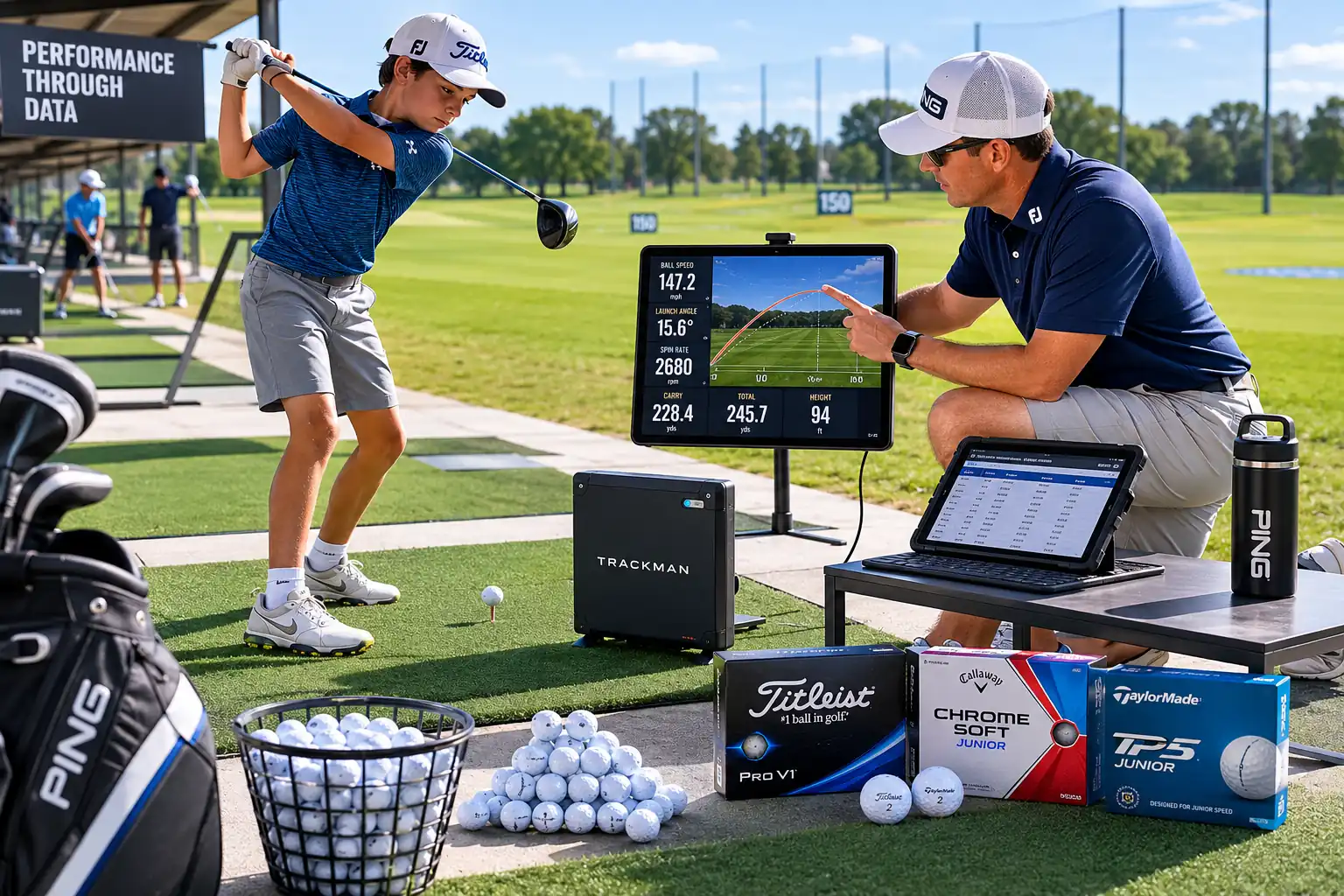
Two-bucket practice and event system
Most junior programs should separate training from match preparation. A 2-piece ionomer ball is usually the safer baseline for range work, mats, lessons, casual rounds, and players with high loss rates. It tends to be more durable, lower spinning, and more forgiving for newer or high-consumption players.
A 3-piece or urethane ball belongs in the match bucket when scoring feedback matters. That does not mean every serious junior needs urethane every day. Urethane can add short-game spin and softer feel, but it also costs more and can scuff faster. Use it when the player is preparing for events or learning to control wedge rollout.
| Bucket | Ball type | Use case | Risk controlled | Buyer move |
|---|---|---|---|---|
| Practice bucket | 2-piece ionomer | Range, mats, lessons | Cost and scuffing | Track loss rate |
| Match bucket | 3-piece or urethane | Event prep and tournaments | Wedge rollout | Test before events |
| Academy baseline | One model, one batch | Group training | Feedback inconsistency | Record lot ID |
| Retail/DTC starter SKU | Soft 2-piece | New juniors | Wrong first purchase | Publish speed guidance |
For parents, this system keeps the wallet from crying into the golf bag. For academies, it keeps training feedback stable. If a group uses random balls from mixed brands, mixed compression windows, and mixed wear levels, the coach may see flight changes that come from equipment, not technique.
For junior academies, stable feedback matters more than variety. If one class trains with several different ball models, a coach may mistake ball behavior for swing change. Keep one practice model for each training block whenever possible, especially when teaching launch, carry distance, wedge landing zones, or putting pace.
A practical purchase clause can state that each junior training cycle should be supplied under one lot ID, with packaging, ball markings, and compression window kept consistent through that cycle. This is especially useful for academies, camps, and youth programs that need repeatable feedback more than flashy packaging.
✔ True — Practice and match balls can coexist without confusing the junior
Use durable ionomer for volume work and introduce the match ball before events. The player still learns consistent feedback, while the family or academy avoids wasting premium balls on every range session.
✘ False — “One expensive ball for every session is always better”
If the junior loses many balls or practices heavily on mats, a premium-only plan may drain the budget before it improves scoring.
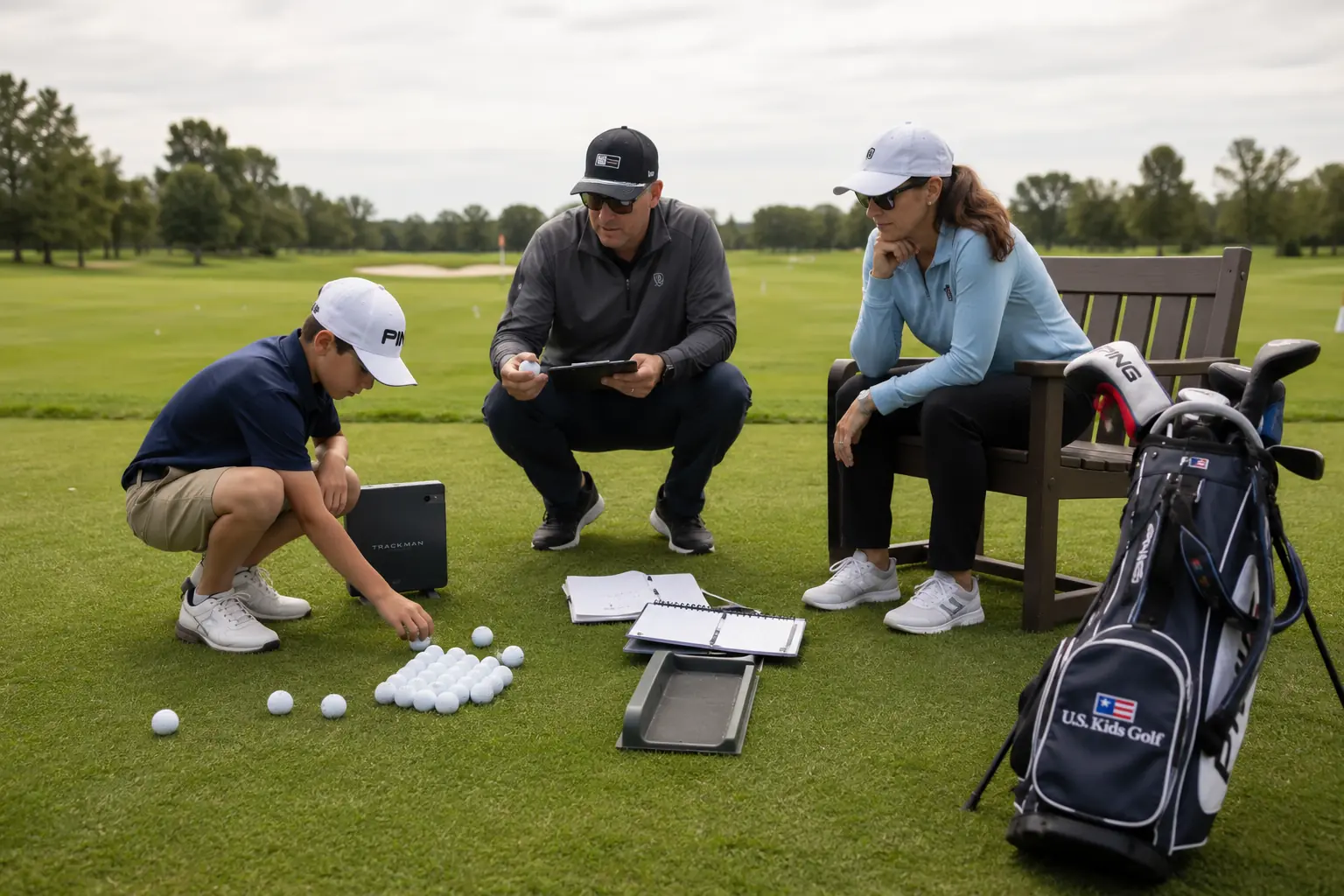
When should juniors upgrade to urethane?
A competitive junior may ask for a tour-style ball because better players use one. Extra spin helps only when contact and scoring intent are stable enough to benefit from it.
Upgrade to urethane when scoring control becomes the bottleneck, not when the junior simply gets older. If wedges release too far, approaches do not hold, and strike quality is stable, a urethane match ball may help.
Wedge control before tour labels
Urethane golf balls for juniors can make sense when short-game control becomes the limiting factor. If a player strikes wedges cleanly, controls distance, and needs the ball to check faster on firm greens, a urethane or higher-control model deserves testing.
If contact is still inconsistent, extra spin may magnify mishits. A urethane ball can help a junior who can use wedge spin, but it will not fix thin contact, open-face slices, or a player who is still losing several balls per round. This is where many parents overspend: the ball is better on paper, but the player is not ready to convert that performance into lower scores.
Use upgrade signals instead of age labels.
| Upgrade signal | What it means | Better direction | Buyer caution | Buyer move |
|---|---|---|---|---|
| Wedge releases too far | Needs more check | Test urethane | Do not rely on feel only | Run wedge test |
| 7-iron carry stable | Can compare balls | Try 3-piece | Avoid one-shot judgment | Use 10-ball sets |
| Tournament prep starts | Scoring feedback matters | Use match bucket | Check model legality | Verify current list |
| High loss rate remains | Budget risk high | Delay premium ball | Use training bucket | Retest later |
| Ball balloons in wind | Spin/launch mismatch | Test firmer option | Do not assume softer is better | Compare trajectory |
Your junior earns a urethane upgrade through control, not through age, ego, or packaging. A useful acceptance line for event-use balls is: tournament ball selection must be based on wedge rollout, 7-iron carry stability, driver dispersion, acceptable loss rate, and exact-model eligibility when event rules require it.
For young competitive players, the best junior tournament golf balls are the ones they can score with repeatedly. That may be a urethane model. It may also be a mid-compression 3-piece ball that gives better trajectory control without adding too much spin. The upgrade should solve a scoring problem, not create a new budget problem.
How should parents and coaches test?
You cannot choose the best golf balls for kids by squeezing one ball, reading “soft feel,” or hitting two lucky shots on a warm afternoon.
Junior ball fitting should be tested, not guessed. Compare two candidate balls with mid-iron carry, driver dispersion, wedge rollout, putting feel, and real-round loss rate before you lock the model for the next training block.
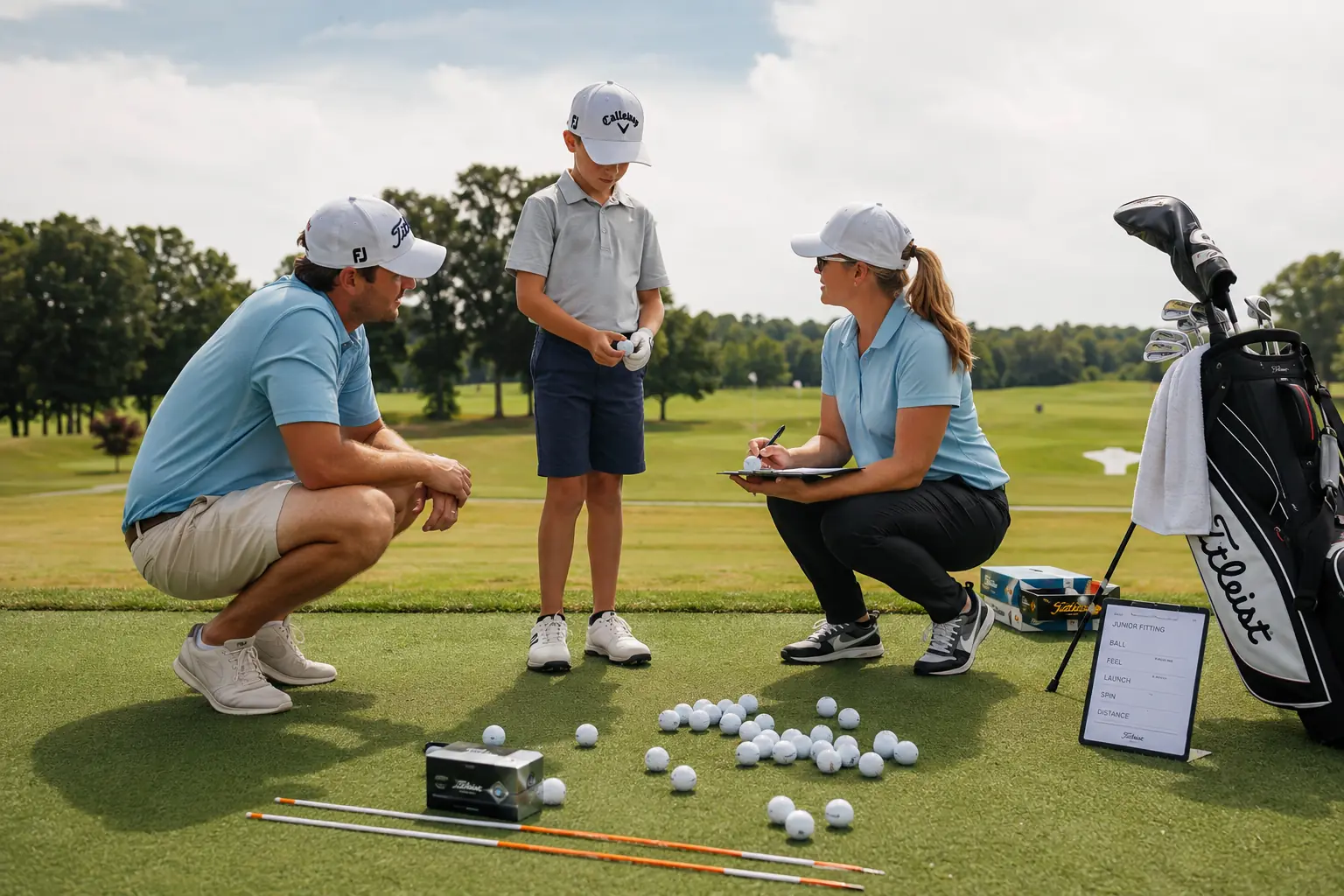
Carry, dispersion, wedge, and feel
Keep the test simple enough to repeat. Choose two balls within the likely compression window, then test them under the same conditions. A parent can run a basic version at the range and short-game area. A coach or academy can add launch-monitor numbers and a written sheet.
Do not let one flushed shot decide the winner. For each ball, hit enough shots to see the pattern. Track carry, height, driver offline spread, 35–50 yard wedge rollout, putting pace, loss rate, and player confidence.
| Test step | What to measure | Why it matters | Who uses it | Buyer move |
|---|---|---|---|---|
| 7-iron or mid-iron | Carry, height, dispersion | Speed and launch baseline | Parent/coach | Choose compression window |
| Driver | Carry and offline spread | Distance without wild misses | Coach | Reject unstable ball |
| 35–50 yd wedge | Check and rollout | Scoring development | Competitive junior | Decide urethane need |
| Putting | Pace and confidence | Feel consistency | Junior player | Confirm preference |
| 2-round trial | Loss rate and feedback | Real-world fit | Parent/academy | Lock or retest |
A/B testing is not about proving one ball is best for everyone. It is about finding the ball this junior can repeat. A ball that flies five yards farther but creates wider misses may not be the better fit. A ball that feels soft but scuffs quickly may be poor for academy training. A ball that performs beautifully on wedges but costs too much for a high-loss player may belong only in the match bucket.
Use a one-page test sheet with ball model, compression, date, carry, dispersion, wedge rollout, and player feedback. Repeat testing with enough shots to avoid one-swing bias. Pick the ball that improves launch and scoring feedback without increasing loss rate or dispersion.
✔ True — A simple A/B test beats guessing from packaging
Two compression candidates, a repeatable shot list, and a short real-round trial will tell you more than a shelf label. Carry, dispersion, wedge rollout, and confidence all matter.
✘ False — “The softest ball is automatically the best junior ball”
Too soft can launch too high, spin poorly, or feel vague for stronger juniors. Fit the player’s current speed and contact, not the softest claim.
What should OEM buyers verify?
A soft sample can look perfect. The problem starts when bulk production feels firmer, flies lower, scuffs faster, or no longer matches the sample approved by the buyer.
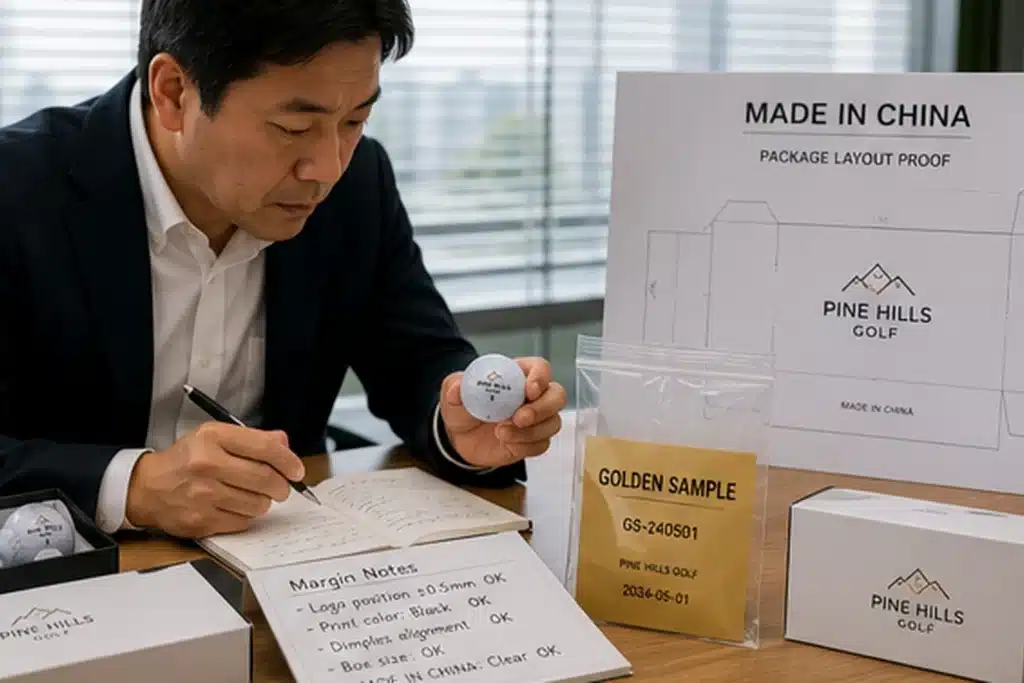
Do not approve a junior ball line from one soft-feeling sample alone. Ask for compression spread, weight, diameter, hardness, cover condition, lot IDs, retained samples, and a written spec so reorders match the approved training or match version.
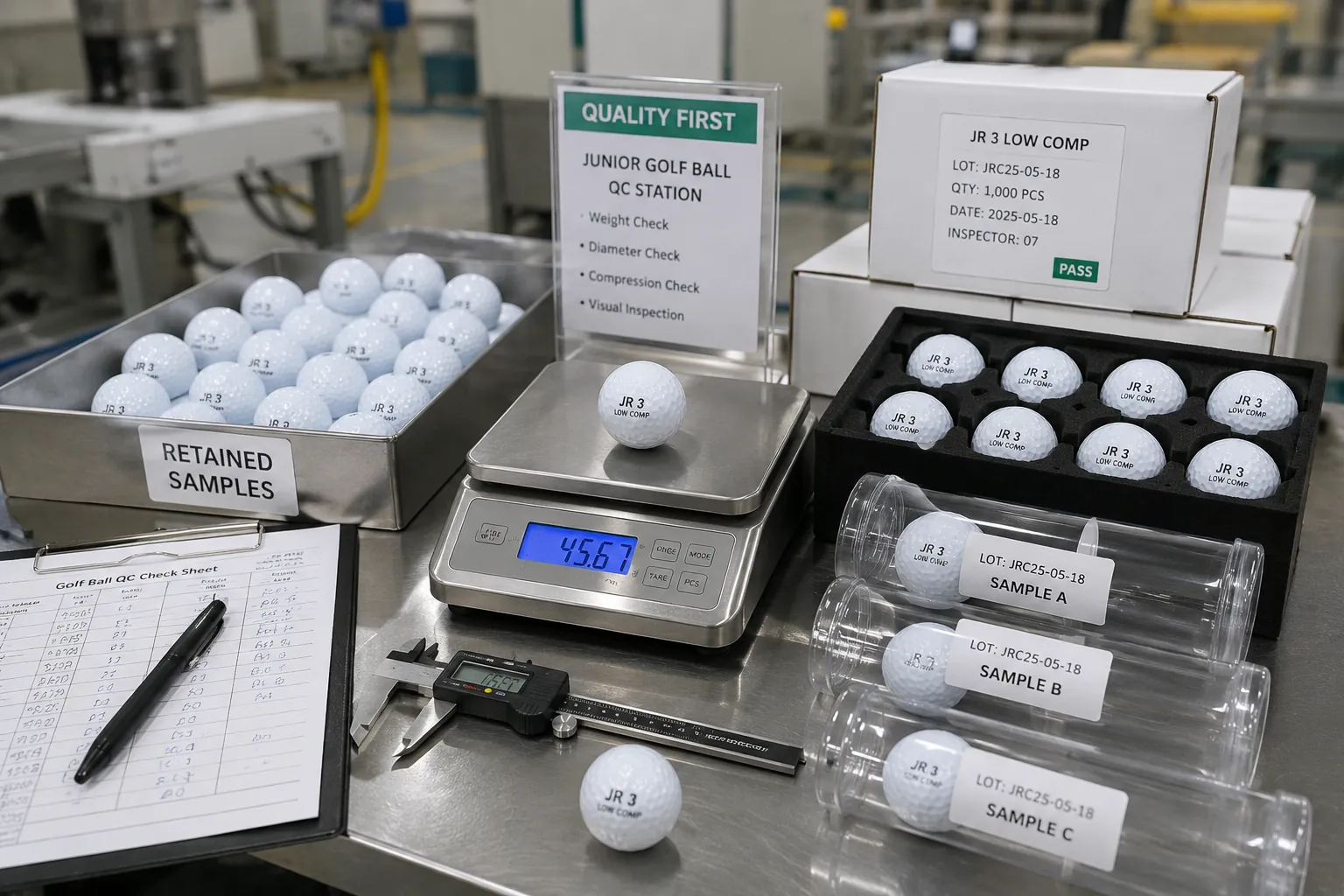
QC data, lot IDs, and sample lock
For academies, retailers, DTC brands, and junior golf ball OEM programs, the sample is not a rough promise. It should become the controlled reference for production. Lock the structure, cover material, compression window, weight, diameter, Shore hardness, color, print position, packaging version, and conformity requirement where relevant.
Compression is not just a number on the box. It comes from core formulation, molding control, layer thickness, material stability, and batch discipline. If those controls drift, a reorder can feel harder, launch lower, or scuff faster than the approved sample.
Request a 12-ball QC report tied to the production lot, including compression raw values, weight, diameter, Shore hardness, lot ID, retained sample reference, and any change-control notes.
| Proof item | Why it matters | Risk controlled | Acceptable evidence | Buyer move |
|---|---|---|---|---|
| Compression raw data | Junior feel and launch | Sample-soft bulk-harsh drift | 12-ball average/range/SD | Tie to lot ID |
| Weight and diameter | Basic consistency | Nonconforming or unstable batch | Measured QC record | Check receiving sample |
| Shore hardness | Cover feel/durability | Unexpected scuffing | Hardness report | Compare retained sample |
| Cover scuff notes | Training durability | Academy complaints | Abrasion or hit-test notes | Define use case |
| Color/print proof | Visibility and identity | Logo wear or color dispute | Adhesion/abrasion check | Approve artwork version |
| Retained sample | Reorder reference | Spec drift dispute | Signed sample photo/ID | Store with PO |
| Change control | Formula stability | Unapproved material change | Written notice requirement | Include in RFQ |
One warning sign is a supplier offering only one soft sample with no batch data. Another is the phrase “bulk production will improve later.” If the sample is not stable enough to approve, the order is not ready to scale.
Production acceptance shall be based on the approved sample and written specification, including structure, cover material, compression window, weight, diameter, Shore hardness, color or print requirement, packaging version, and buyer-approved AQL or receiving-inspection plan.
For private-label junior golf ball programs, the safer path is to start with a small controlled trial, lock the approved sample, and scale only after the first lot matches the written spec. Golfara supports flexible junior golf ball customization, QC checks, logo and packaging options, and export delivery coordination for buyers who want to test before scaling.
For junior academy or team balls, color and logo help tracking, sorting, and identity. They do not replace compression fitting. For custom junior golf balls, request print adhesion and abrasion evidence, especially if the balls will be used on mats, in group lessons, or in high-volume practice.
✔ True — A junior SKU needs proof, not just soft feel
Parents and coaches may not describe compression drift in technical terms, but they will notice reorders that feel harder, launch lower, or scuff faster. Batch proof protects repeat sales.
✘ False — “A lower quote removes the need for QC data”
Low price can still work, but only when the material, compression, cover, artwork, and packaging standards are written and checked.
FAQ
What golf ball should a junior golfer use?
A junior golfer should use a ball matched to swing speed, compression, and use case. Newer juniors usually start with durable low-compression training balls, while competitive juniors may test higher-control options once scoring control matters.
Do not begin with the most expensive ball or the most adult-looking box. Start with speed and contact quality. A slower junior often benefits from a soft 2-piece ionomer ball that launches easily and survives high-volume practice. A stronger junior may test a mid-compression or urethane option, but only after carry, dispersion, wedge rollout, and loss rate show that the upgrade helps. For parents, the safest first purchase is usually a small test quantity, not a full-season commitment.
Do juniors need special golf balls?
Not always. A junior label can help when the ball is genuinely designed for lower speed, easier launch, and durable practice, but the label matters less than compression, cover, contact quality, and testing.
Some juniors can play standard low-compression recreational balls very well. Others need a more controlled match ball as they improve. The mistake is assuming every product called a kids’ ball is properly fit, or assuming every improving junior must jump straight into an adult tour model. The better question is practical: does this ball launch well, stay consistent, survive training, and support the player’s current scoring goals?
What compression should junior golfers use?
Compression windows should be treated as starting points. Slower juniors often start softer, regular junior players may test low-to-mid compression, and competitive teens may test mid-compression or match balls.
A junior under 60 mph often begins around a soft 30–50 compression range. A 60–75 mph player may test 50–70. A 75–90 mph competitive junior may test 70–85 and include wedge control. These numbers are not laws. Ball flight, contact, trajectory, and scoring needs decide the fit. Retest after growth spurts because junior speed can change faster than buying habits.
Are low-compression balls always better for juniors?
No. Low compression is often a good starting point, but faster or more skilled juniors may need a firmer, lower-launching, or more controlled ball once speed and strike quality improve.
Low compression can help many juniors launch the ball and enjoy the game sooner. It becomes a problem when the ball flies too high, floats in wind, feels vague, or does not give enough control for scoring shots. If those problems appear, test a slightly firmer ball or a different structure. The best junior golf balls are not always the softest; they are the ones the player can launch, control, and repeat.
Should juniors use adult tour balls?
Only after fitting. Adult tour balls can help elite juniors with enough speed and wedge control, but they may cost more, feel harsh, scuff faster, or add spin a younger player cannot control.
Test wedge control first. If the junior’s 7-iron carry is stable, driver dispersion is manageable, and approaches need more stopping power, an adult-performance or urethane match ball can be tested. If the player is still losing several balls per round or cannot repeat wedge contact, keep the durable training bucket and revisit later. Serious development is not the same as buying the most serious ball.
Should juniors use different practice and match balls?
Often yes. A two-bucket system keeps practice affordable while giving the junior match-ball feedback before events. Training balls protect the budget; match balls calibrate scoring shots.
Use durable ionomer balls for range work, mats, lessons, and casual rounds. Move into the match ball before an event so wedge rollout, chipping feel, and putting pace are familiar. The key is organization. Label sleeves, keep practice and match balls separate, and avoid switching randomly. For academies, use one model and one batch during a training block when possible.
Are junior golf balls legal in tournaments?
Tournament legality depends on the exact model and event rules. When a competition requires the current Conforming Golf Ball List, the exact ball entry must be checked before making a tournament-use claim.
Check the current USGA Conforming Golf Ball List and R&A Conforming Ball List before the event. The USGA states that the list is updated the first Wednesday of each month and that, when the relevant Model Local Rule is in effect, only balls on the current list may be used. The R&A list covers balls submitted within the past 12 months and ruled to conform, so brand, model, pole marking, seam marking, and current status all matter. Do not rely on old screenshots, broad factory claims, or a similar-looking ball name.
Do colored golf balls help junior golfers?
Colored golf balls can help visibility, sorting, confidence, and academy organization, especially outdoors or in group training. They do not create distance, spin, or compression fit by themselves.
High-visibility junior golf balls can reduce lost-ball frustration and help coaches identify players’ shots. They can also help academies separate groups or training stations. For OEM and private-label orders, color should still be verified through color consistency, print durability, and abrasion checks. Performance still comes from compression, cover, layers, dimple design, and manufacturing control.
Conclusion
The right junior golf ball is the one that fits the player’s current speed, training volume, and competitive stage. Keep the choice dynamic, test before switching, and lock specs before any private-label or academy reorder.
Start with swing speed and compression. Use durable ionomer balls for training volume. Reserve urethane or higher-control balls for scoring phases. Recheck after growth spurts.
For academy, retail, or private-label junior programs, prepare your speed band, target use case, logo and packaging needs, and QC expectations before requesting samples. The best junior golf ball program is not the one with the loudest claim; it is the one your players can repeat, your coaches can trust, and your buyers can reorder without unpleasant surprises.
You might also like — Top 2-Piece Surlyn (Ionomer) Golf Ball Manufacturers in China (2026)