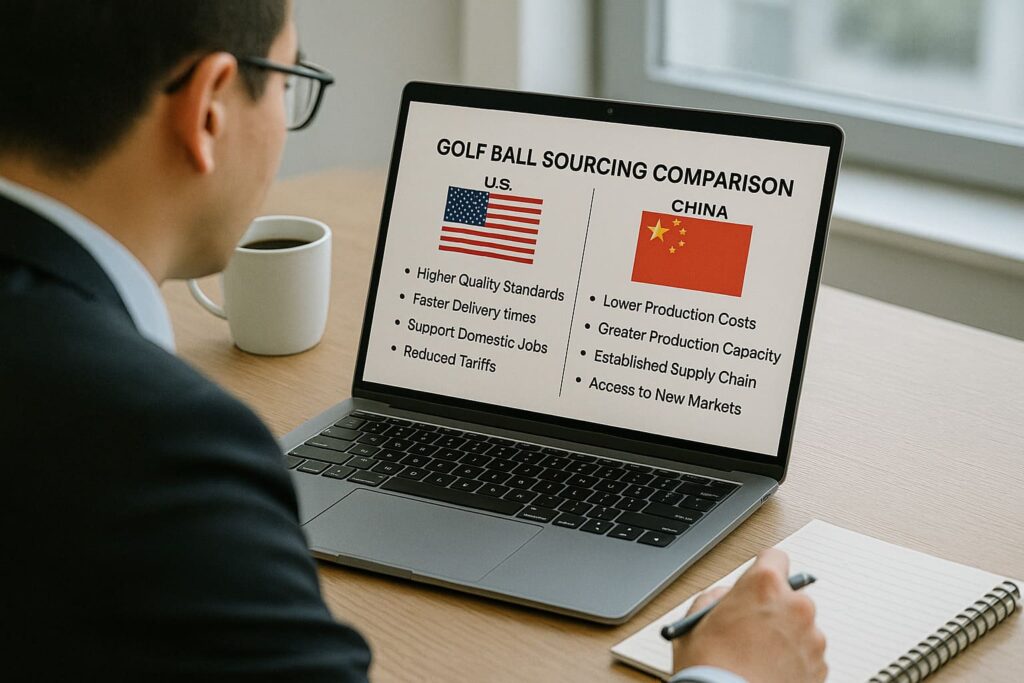
The U.S. can make elite golf balls, but most independent brands cannot book those premium production lines.
For U.S. vs China golf ball manufacturing in 2026, the U.S. is stronger as a brand-owned Tour-grade benchmark, while China is stronger for open OEM capacity, low MOQ pilots, fast packaging, and scalable private-label production. Independent B2B buyers usually choose China when they need testing, customization, and growth-ready supply.
Titleist proves ongoing captive U.S. premium capability. Bridgestone’s Covington history shows legacy U.S. capability, but also the fragility of domestic brand-owned capacity as a long-term OEM route.
If you are comparing U.S. vs China golf ball manufacturing, start with access: Can you actually book the production line? Can you test a new matte color, alignment mark, sleeve, or DTC gift box without locking into a large launch order? Can the supplier prove ATTI compression, C.O.R., retained samples, and batch traceability?
This FAQ removes the price noise. You will compare U.S. and China by brand-owned golf ball factories US, open OEM golf ball capacity, agile golf ball manufacturing, golf ball supplier lead times, low MOQ private label golf balls, golf ball packaging ecosystem, quality verification, and SKU-stage routing.
Can Buyers Access U.S. Golf Ball Plants?
You may assume that because Titleist manufactures in the U.S., your private-label brand can book similar Tour-grade capacity.
Yes, the U.S. still manufactures world-class golf balls, but B2B buyers should not confuse brand-owned plants with open OEM capacity. Titleist’s Massachusetts operations prove ongoing domestic premium capability. Bridgestone’s long-running Covington, Georgia operation shows legacy U.S. capability, but recent closure news makes it even clearer that domestic brand-owned capacity should not be treated as easily bookable private-label OEM supply.
| Buyer assumption | Reality | Better sourcing move |
|---|---|---|
| Titleist makes Pro V1 in Massachusetts, so my brand can use that line | Ball Plant 2 / 3 are brand-owned Titleist facilities | Treat Titleist as benchmark |
| Made in USA capacity is available if I pay enough | Premium domestic capacity is mostly captive | Verify open OEM access first |
| China only makes low-end balls | Top China OEMs can support Surlyn, TPU, and selected urethane programs | Use China for open OEM |
| U.S. origin means easier private label | Open slots may be limited or unavailable | Ask for capacity proof |
The most common U.S. sourcing mistake is confusing manufacturing capability with supplier access. Titleist’s Massachusetts operations show that the U.S. can manufacture elite golf balls with highly controlled processes. Bridgestone’s long-running Covington, Georgia golf-ball operation also showed that domestic production has existed beyond Titleist, although recent 2026 closure news makes it even clearer that U.S. golf-ball manufacturing capacity should not be treated as easily bookable open OEM supply.
That is the Captive Capacity Illusion. A captive plant is built to serve its owner’s product roadmap, R&D secrecy, quality system, intellectual property, and brand moat. It may offer consumer-facing personalization under the brand’s own system, but that is not the same as open OEM golf ball capacity for your new 3-piece urethane private-label program.
Famous plant, no open slot is a failure signal. It means your team is admiring a benchmark while still lacking a supplier. The U.S. can make world-class balls, but capability is not the same as access. Before you build a sourcing plan around a domestic factory address, verify whether that capacity is actually open to independent B2B buyers.
Request written confirmation that the supplier offers open third-party OEM capacity for your construction. Check whether the facility is brand-owned captive capacity, distributor supply, logo-overrun service, or actual private-label OEM. Do not build a U.S. OEM plan until the supplier confirms open capacity, MOQ, lead time, construction scope, and packaging responsibility.
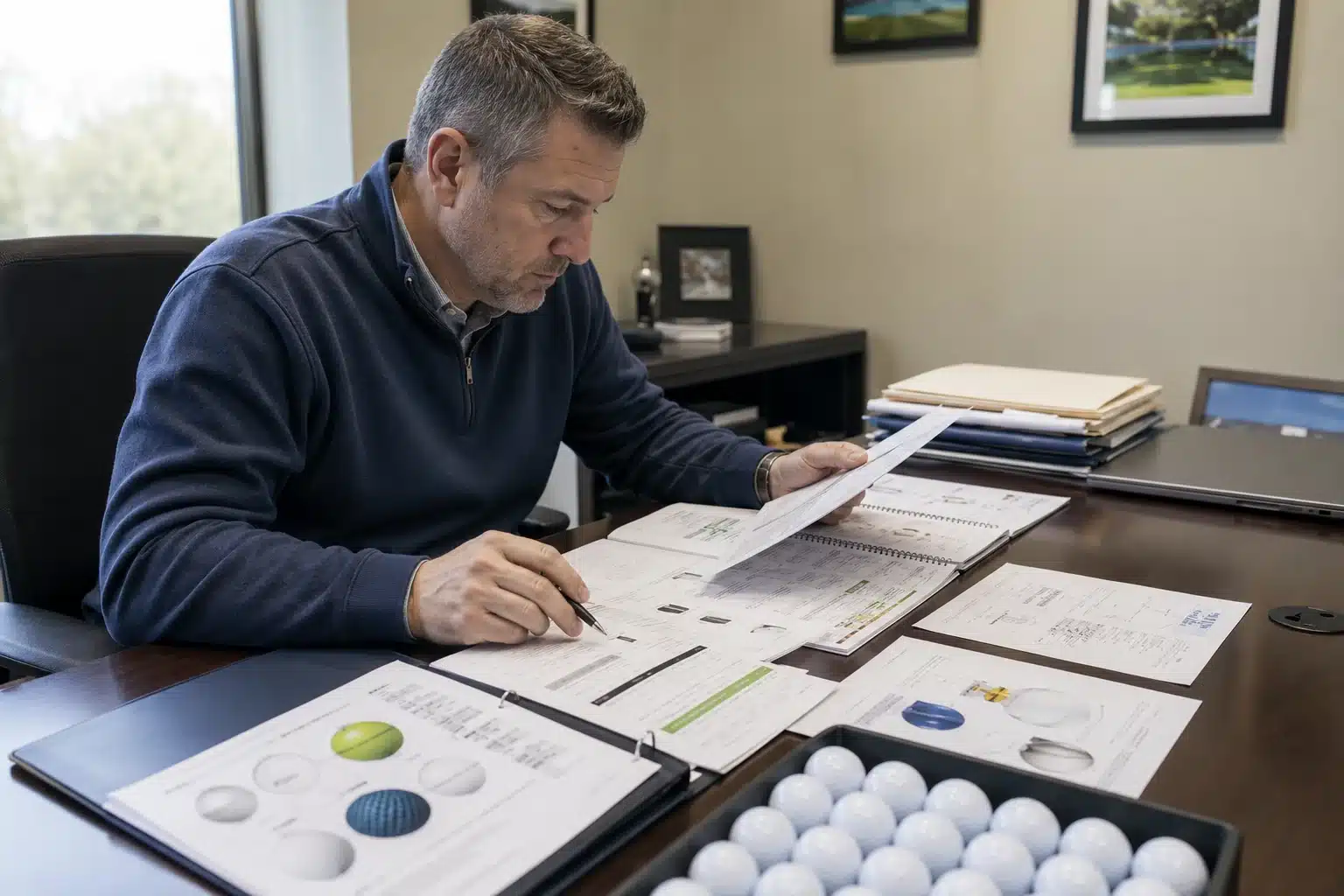
Brand-Owned vs. Open OEM Capacity
Brand-owned capacity serves the brand first. Open OEM capacity serves external buyers under defined MOQ, construction, packaging, testing, and production-slot rules.
That distinction protects your launch. If you need a private-label ball, ask whether the supplier accepts third-party OEM programs, which constructions are available, who controls the tooling, who owns the packaging workflow, and what batch-level test records you will receive. A famous U.S. factory can be an excellent benchmark and still be a closed door.
✔ True — U.S. plants prove capability, not OEM access.
Titleist’s Ball Plant 2 and Ball Plant 3 show that the U.S. can make world-class golf balls, but they are brand-owned manufacturing assets.
✘ False — “If Pro V1 is made in Massachusetts, my private-label ball can be made there too.”
Premium domestic capacity is usually captive. Independent B2B brands need open OEM lines, not just famous factory addresses.
Why Is China More Agile for OEM?
You may see China only as a scale country, but the real advantage is the ecosystem around molding, printing, packaging, sampling, and revision speed.
China’s OEM advantage is not only scale; it is ecosystem speed. In mature coastal clusters, golf ball factories, logo printers, carton suppliers, EVA insert makers, sleeve vendors, and pack-out partners can coordinate quickly, which makes China stronger for custom packaging and fast SKU iteration.
| Demand shift | Product implication | Why China fits |
|---|---|---|
| Entertainment golf venues | Brighter colors, event balls, logo packs | Fast printing and multi-SKU pack-out |
| Indoor simulator users | Alignment marks and special visuals | Small tests are easier |
| DTC buyers | Unboxing, seasonal drops, subscriptions | Packaging vendors sit near production |
| Corporate events | Logo balls, gift sets, deadlines | Low MOQ + quick coordination |
| Younger casual players | Non-traditional colors and styles | High customization tolerance |
China’s golf ball supply chain is built around clusters. Fujian, Jiangsu, Guangdong, Dongguan, Xiamen, Yangzhou, and Zhejiang/Ningbo support different parts of the ecosystem: molding, coating, logo printing, sleeve production, carton making, EVA insert sourcing, pack-out, export coordination, and private-label project management. That cluster structure is why China behaves less like a single factory and more like a connected product-development network.
This matters because the product brief has changed. Many buyers no longer need only a dozen white balls in a standard sleeve. Entertainment golf, indoor simulators, corporate events, DTC drops, subscription boxes, and younger casual players create demand for matte colors, mixed packs, alignment graphics, event logos, blind boxes, gift sets, and seasonal packaging.
That is where the Agility Trap in Customization appears. Your ball may be ready, but the sleeve, insert, carton, logo plate, sticker, gift box, or pack-out workflow can still delay the launch. If those vendors sit outside the supplier’s control, one artwork change can become a calendar problem. Golfers may forgive a slice. Retail buyers do not forgive a missed launch window.
Custom packaging, no vendor map is a failure signal. Your supplier should be able to show who handles printing, sleeves, cartons, inserts, gift boxes, pack-out, and backup packaging. If they cannot map the vendors, they may not control the workflow.
Request a customization feasibility sheet with packaging supplier location, sample timeline, artwork-change rules, and pack-out proof. Confirm whether packaging vendors are inside the same regional cluster or require separate sourcing. Approve China for fast-changing DTC/custom programs only when the vendor map, sample loop, and revision rules are confirmed.
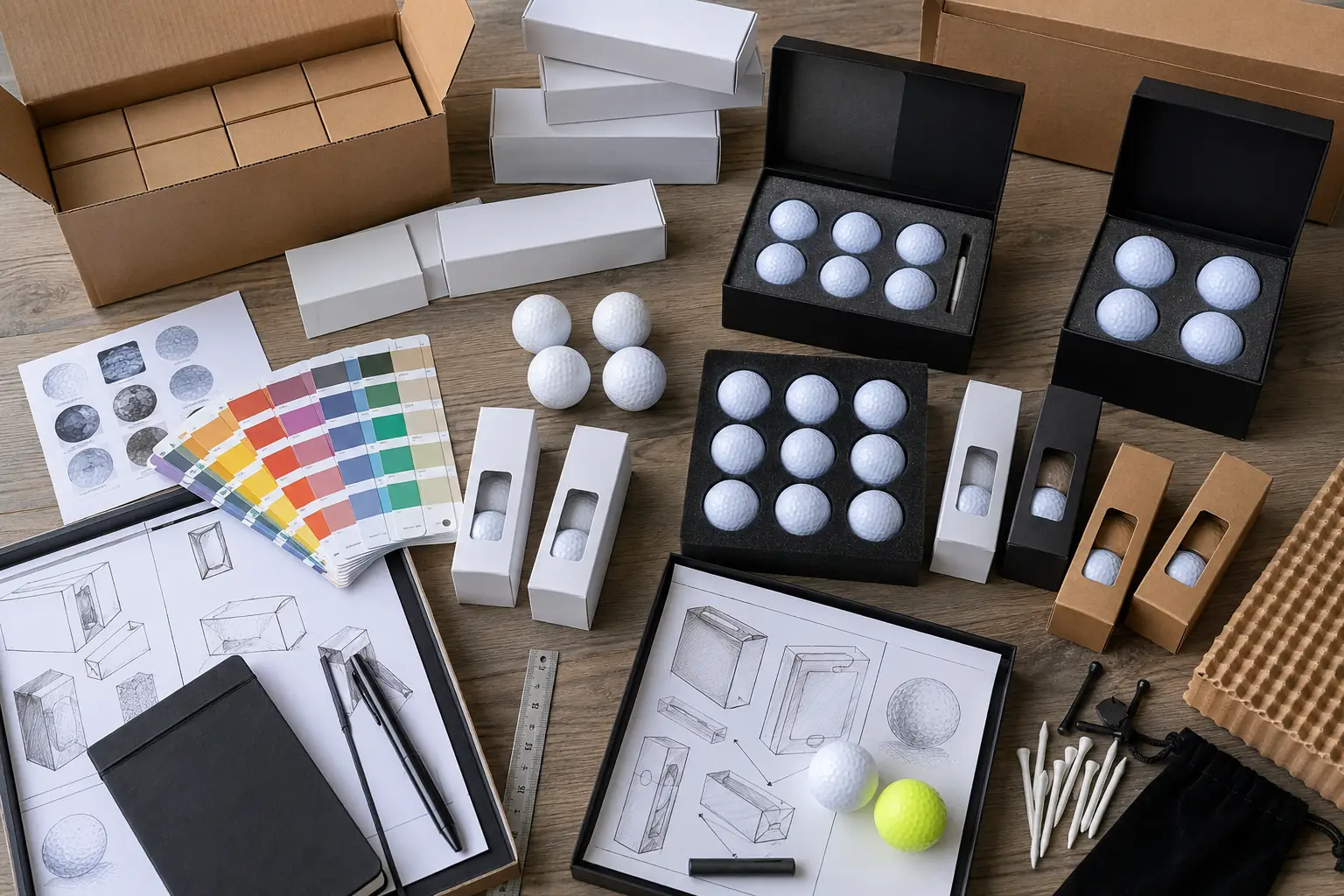
The 3-Hour Packaging and Customization Radius
The 3-hour radius is a practical cluster concept, not a universal promise. In strong China OEM regions, ball factories, print vendors, sleeve suppliers, carton plants, EVA insert makers, and pack-out teams can often coordinate within the same city or short trucking radius.
That short loop changes launch speed. If your brand revises a logo, swaps a colorway, changes a blind-box insert, or needs a sleeve correction, the supplier can coordinate faster than a fragmented route. In private-label golf, agility often comes from geography before it comes from software.
How Big Is the Agility Gap?
You may compare U.S. and China by quality image, but your operational risk comes from MOQ, lead time, packaging flexibility, and rush recovery.
China usually gives independent B2B buyers more agility because open OEM suppliers can support lower-MOQ pilots, faster packaging revisions, and more flexible SKU testing. U.S. premium manufacturing is strong, but accessible capacity for third-party private-label projects is often the constraint.
| Decision factor | U.S. route | China route | Buyer action |
|---|---|---|---|
| Open OEM access | Limited for premium lines | Broader private-label access | Confirm bookable capacity |
| Pilot MOQ | Often unattractive for captive plants | 1,000–3,000 pcs can be practical | Ask pilot vs mass MOQ |
| Packaging changes | Can be fragmented | Clustered vendors | Request sample timeline |
| Lead time | Longer planning if accessible | Often 15–30 days when scope is controlled | Get written schedule |
| Tour-grade validation | Strong benchmark | Possible with verified top OEMs | Require ATTI/C.O.R. |
A new golf ball brand rarely launches with a perfect first SKU. Your team may still be testing matte finish, compression feel, alignment markings, pastel color demand, sleeve design, carton structure, gift-box insert, or channel response. If the route requires a large production commitment before the market gives feedback, MOQ becomes an innovation bottleneck.
For suitable programs, China’s open OEM ecosystem can often support low MOQ private label golf balls in the 1,000–3,000 pcs range. Golfara can support low-MOQ pilots from about 1,000 pcs where construction, artwork, and packaging fit the production plan. That gives your team a safer way to validate an MVP before committing to a larger seasonal or retail program.
Lead time should be defined with approval gates. China programs can often fit a 15–30 day planning window when specifications, artwork, materials, and packaging are controlled. Some simpler 2-piece projects can move faster, while more complex 3-piece or packaging-heavy programs require more coordination. The real value is not a magic number; it is a written schedule that states what starts the clock.
High MOQ before market proof is a failure signal. It means the supplier is asking your team to finance uncertainty before the SKU has earned that risk.
Place this in your RFQ: “Please confirm whether your quoted capacity is open OEM or brand-owned supply, the MOQ by construction and packaging type, standard and rush lead times, available packaging sample timeline, ATTI compression and C.O.R. testing capability, and whether a 1,000–3,000 pcs pilot can run before mass production.”
Ask for pilot MOQ, mass MOQ, standard lead time, rush lead time, packaging sample timeline, and available OEM construction list. Check whether the quoted lead time starts after artwork approval, tooling approval, packaging approval, or deposit. Do not choose a route for a new SKU until pilot volume and revision cycle are written into the RFQ.
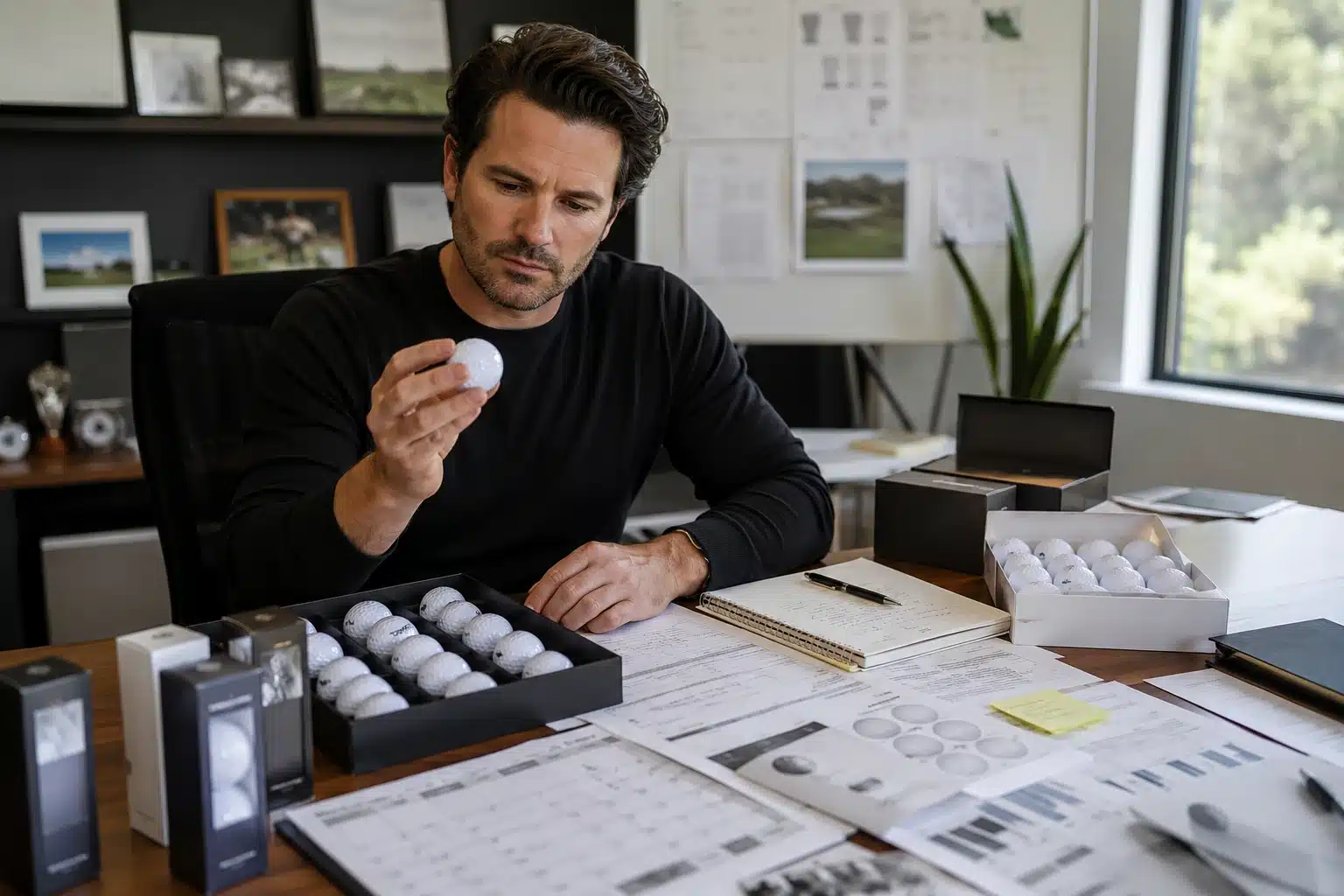
✔ True — MOQ is an innovation control tool.
For a new brand, low MOQ is not just a purchasing term. It lets you test feel, color, logo, packaging, reviews, and sell-through before scale.
✘ False — “A bigger first order proves the SKU is serious.”
A large order before market proof can turn a color, hardness, or packaging mistake into dead inventory.
Sarah Jenkins, operations director for a California golf franchise, almost missed her Q4 launch due to a fragmented supply chain. Her U.S. ball supplier outsourced her custom cartons to the Midwest. When Sarah needed an urgent artwork revision to match a software update, the packaging vendor froze, demanding a 12-week delay.
She immediately pivoted to Golfara. Leveraging our clustered China OEM ecosystem, we synchronized her custom UV-coated balls with the newly revised display cartons. The complete package was prototyped in just 8 days and mass-produced in 25 days. Sarah hit her Q4 deadline, proving a critical lesson: a factory is only as fast as its slowest packaging vendor.
Need an Open OEM Route for Your Next SKU?
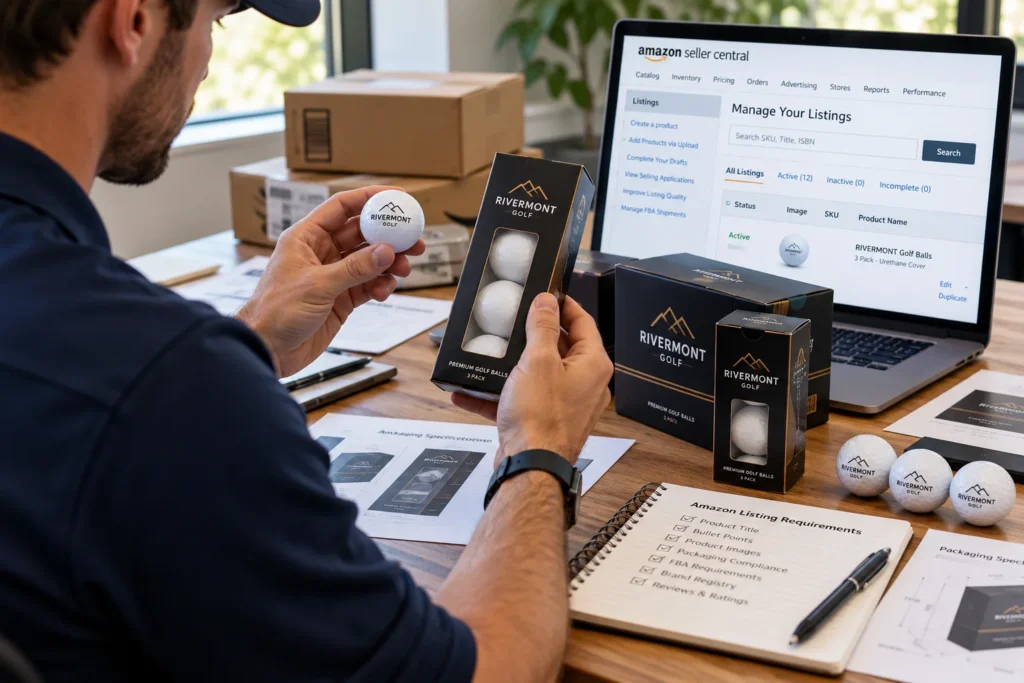
If U.S. brand-owned capacity is closed, or your launch still needs color testing, logo revisions, packaging samples, or low-MOQ validation, use Golfara’s China OEM ecosystem to test the SKU before you commit to scale.
- Low-MOQ private-label pilots from about 1,000 pcs when construction, artwork, and packaging fit
- Surlyn, TPU, and selected urethane-covered programs with process confirmation
- 15–30 day planning windows for controlled standard projects after specs and artwork are approved
- Packaging supplier coordination for sleeves, cartons, gift boxes, inserts, and pack-out
How Should You Route SKUs by Maturity?
You may force one country to serve every SKU, then lose either premium positioning or launch agility.
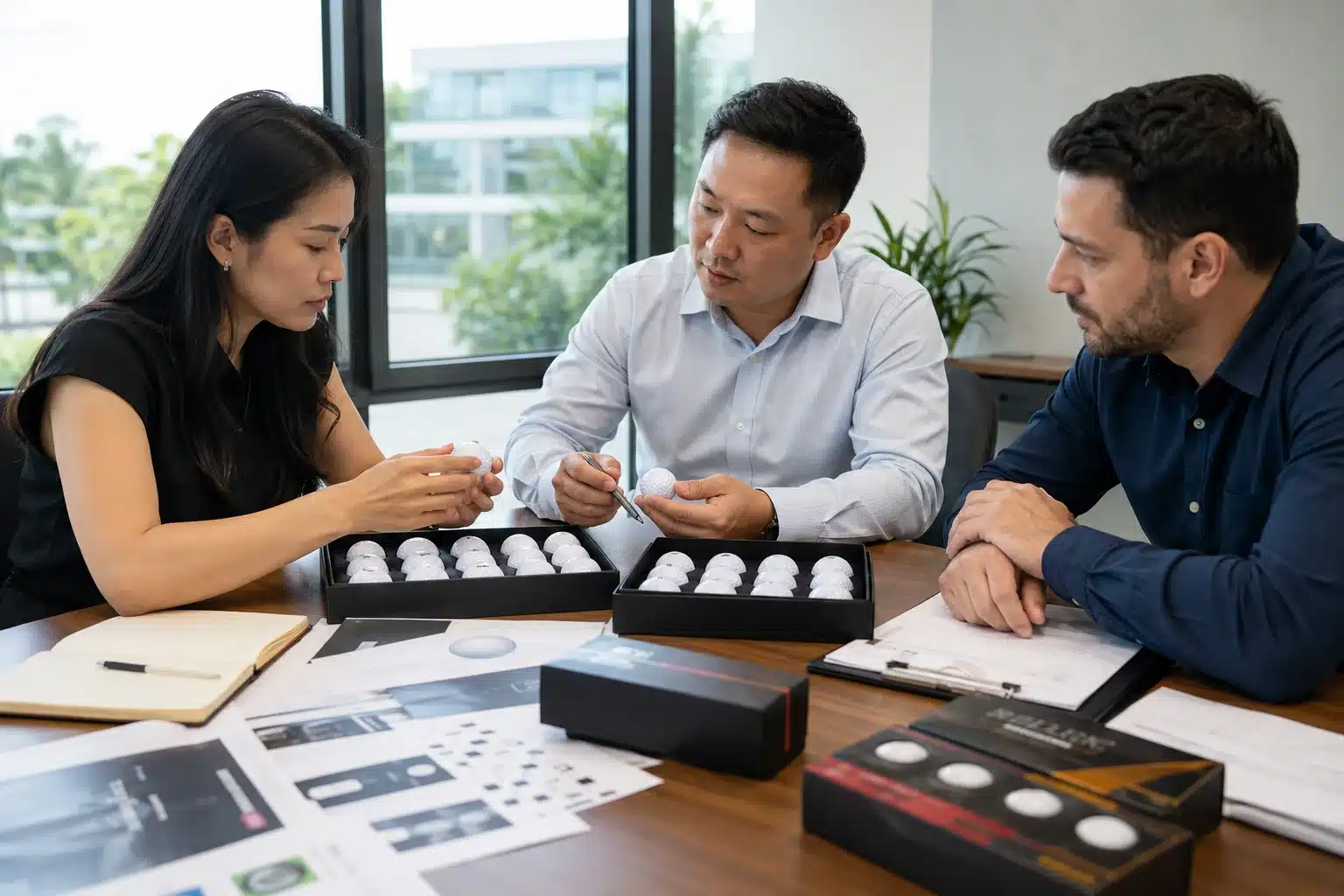
A hybrid golf ball sourcing strategy should route SKUs by maturity, not by country loyalty. Use U.S. manufacturing as a premium benchmark or halo reference when access exists, and use China for MVP pilots, low-MOQ validation, packaging-heavy DTC drops, and scalable private-label programs.
| Launch stage | U.S. brand-owned route | China OEM route | Best use |
|---|---|---|---|
| New color test | Hard to access | Low-MOQ pilot possible | Test in China |
| New packaging test | Fragmented vendor loop | Fast packaging sample loop | Use China ecosystem |
| DTC blind box | Difficult unless volume is large | Strong fit | Pilot first |
| 1,000–3,000 pcs validation | Usually not attractive to captive plants | Practical test quantity | Use MVP logic |
| Mature halo SKU | Possible as brand-story benchmark | Support scale or variants | Route by channel |
Hybrid sourcing does not mean splitting every order. It means assigning each SKU to the route that matches its maturity, customization burden, and capacity needs. A mature premium SKU may need a different route from a new colorway, corporate event pack, simulator-friendly alignment ball, or subscription-box test.
The U.S. route can still matter. It can be valuable as a benchmark, brand-story reference, or mature premium route when access exists and the channel rewards domestic positioning. But that is not the same as using captive domestic capacity for every private-label idea.
China is usually the practical route for MVPs, DTC drops, corporate gifting, promotional programs, packaging-heavy SKUs, mixed-color runs, and repeatable private-label lines. These products need iteration, pack-out support, and low-risk validation more than a famous domestic factory story.
A strong hybrid golf ball sourcing strategy keeps both truths in view. The U.S. can represent performance credibility. China can provide open capacity, packaging agility, low MOQ pilots, and test-to-scale execution. The buyer’s job is to avoid forcing one origin to solve every problem.
Request a SKU routing worksheet separating MVP, seasonal, DTC, corporate, mature retail, and halo SKUs. Check MOQ, lead time, customization changes, packaging complexity, and channel need per SKU. Assign each SKU to a route only after its maturity and risk profile are clear.
If the China route fits the SKU stage, use the Top 10 Golf Ball Manufacturers in China for OEM as a supplier-map follow-up after your capacity-access logic is clear.
What Trends Matter in 2026?
You may base sourcing decisions on outdated country stereotypes while the market is shifting toward off-course golf, DTC packaging, eco-materials, and verified China tour-grade capability.
The 2026 golf ball manufacturing trend is not only premium performance; it is faster product variation. Off-course golf, DTC drops, corporate events, eco-materials, and verified China tour-grade OEM capability are pushing buyers toward suppliers that can test, customize, document, and scale quickly.
| Trend | Buyer implication | Supplier proof to request |
|---|---|---|
| Off-course golf growth | More social and giftable SKUs | Color and pack-out samples |
| DTC seasonal drops | More packaging changes | Packaging timeline |
| Eco-materials | Need material proof | Bio TPU / recycled content docs |
| China enters Tour-grade | Origin stereotypes are outdated | ATTI + C.O.R. records |
| Automation and QA | Process evidence matters | Batch traceability |
Recent participation data shows golf demand has expanded beyond traditional green-grass play into entertainment venues, indoor simulators, driving ranges, events, and social formats. That changes what buyers need from a golf ball supplier. The market is asking for more color, more packaging variety, more corporate kits, more DTC bundles, and faster product refresh cycles.
This does not make performance unimportant. It makes repeatable variation important. A supplier must coordinate molding, finishing, logo work, color consistency, packaging samples, pack-out, and batch QA. A supplier that can make one good ball but cannot repeat a mixed-color gift set may still fail a modern DTC or event program.
Eco-materials also matter. Bio TPU, recycled cores, greener inks, and lower-impact packaging can support sustainability positioning, but only when the supplier provides documentation. A vague “eco” claim is not a material control plan.
China’s tour-grade progress should be discussed with discipline. Do not assume every Chinese factory can produce a Tour-grade cast urethane ball. Top-tier verified Chinese OEMs can support selected Tour-grade cast urethane OEM or near-tour programs when BOM, cover process, ATTI compression, C.O.R. or initial-velocity records, retained samples, and outbound AQL are controlled.
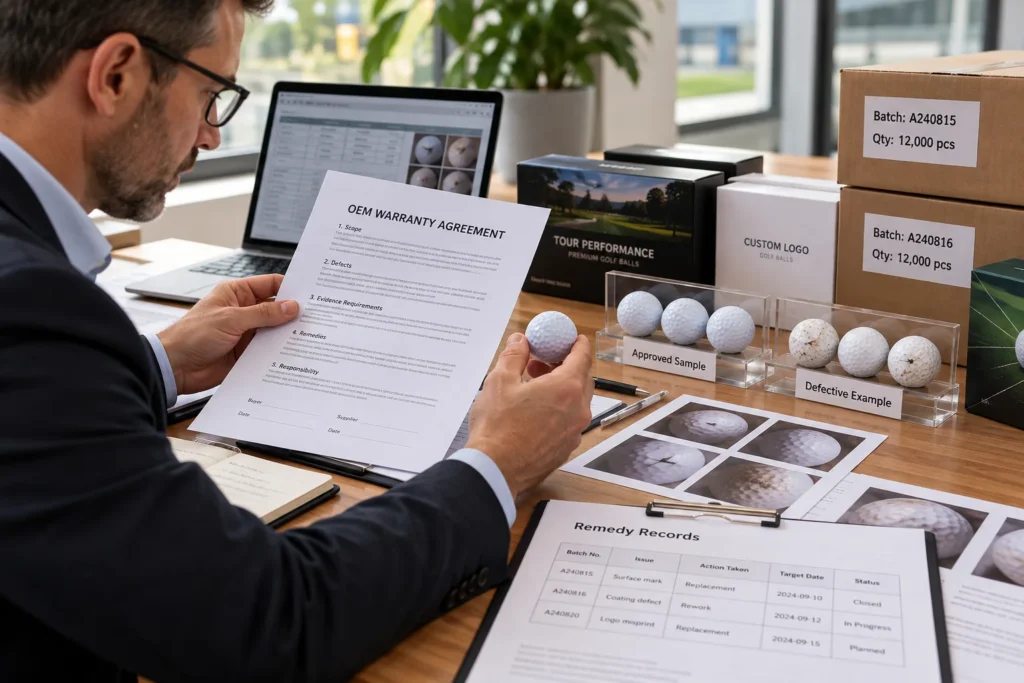
Supplier shall provide batch-level ATTI compression data, C.O.R. or initial-velocity records, retained-sample ID, BOM version, process-stage photos, and outbound AQL results for the quoted construction.
Request trend-relevant proof: eco-material documentation, ATTI/C.O.R. data, retained samples, packaging samples, and batch traceability. Check whether supplier claims are backed by batch data, not only catalog language. Do not approve trend-driven SKUs until the supplier proves material, testing, packaging, and repeatability.
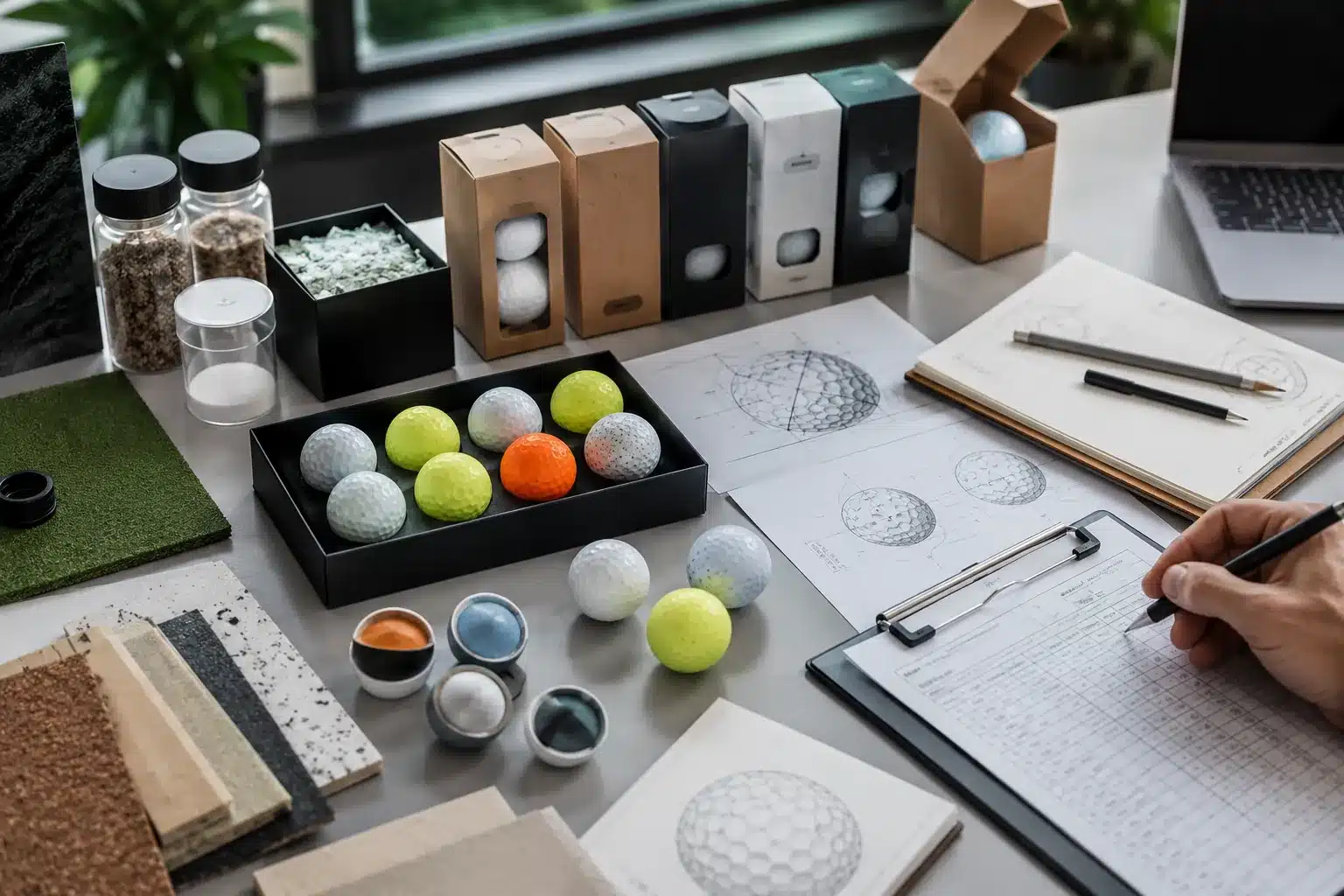
✔ True — Chinese quality should be verified by data.
Top-tier OEMs can use ATTI compression testing, C.O.R. or initial-velocity records, retained samples, and batch traceability to prove consistency.
✘ False — “Certification alone proves stable quality.”
Certification is a starting point. Your buyer-side protection comes from BOM control, process evidence, outbound AQL, and lot-level test records.
FAQ
Where are Titleist and Bridgestone golf balls made?
Titleist makes flagship golf balls in brand-owned facilities, including Massachusetts and Thailand. Bridgestone has historically operated domestic golf-ball production in Covington, Georgia, but 2026 closure news means buyers should treat that route as a brand-owned legacy capability, not open private-label OEM capacity.
Treat both names as capability benchmarks, not automatic OEM options. Do not assume open access. Ask whether any supplier has bookable third-party capacity, construction scope, pilot MOQ, and lead-time availability. Also separate buying branded retail balls from manufacturing your own private-label golf balls. A famous production location does not automatically create a sourcing option for your brand.
Can I manufacture custom tour-grade golf balls in the USA?
It is extremely difficult for a new private-label buyer. The U.S. has world-class tour-grade capability, but premium capacity is usually controlled by major brands and may not be available for third-party OEM programs.
Ask whether the capacity is captive or open OEM. Confirm construction scope, cover process, MOQ, lead time, and packaging capability. For flexible multilayer urethane development with private-label packaging, verified China OEMs are often more practical because the capacity is built around external buyer programs.
What is the typical lead time for OEM golf balls in China vs the U.S.?
China is usually more flexible because ball molding, printing, packaging, and export partners are clustered. Standard China programs may fit a 15–30 day planning window when specifications and packaging are controlled.
Ask what starts the lead-time clock. Separate sample time from mass-production time. Check rush limits, packaging sample timeline, artwork-change rules, and whether lead time begins after deposit, artwork approval, tooling approval, or packaging confirmation. For U.S. routes, verify access first; unavailable capacity has no useful lead time.
Are Chinese-manufactured golf balls good quality?
Yes, top-tier Chinese OEMs can produce high-quality golf balls when the buyer locks BOM, tolerance windows, QA gates, ATTI compression checks, C.O.R. records, and retained samples.
Do not judge only by country. Ask for batch data, cover-process declaration, retained-sample ID, outbound AQL results, and production-stage photos. Use third-party checks where risk is high, especially for new multilayer or urethane-covered programs. Quality comes from controlled process evidence, not origin stereotypes.
Why is open OEM capacity easier to find in China?
China has a broader supplier ecosystem built around private-label production, logo customization, packaging, and mixed-SKU orders. U.S. premium golf ball factories are more often brand-owned.
Check private-label acceptance, pilot MOQ, packaging and print scope, testing capability, and production control. A supplier that can make branded products is not automatically an OEM supplier for your brand. Open capacity must be confirmed in writing, along with construction limits, packaging responsibility, and batch-test deliverables.
What MOQ should a new golf ball brand expect?
MOQ depends on construction, color, packaging, artwork, and testing requirements. China can often support 1,000–3,000 pcs pilots for suitable programs, while captive premium plants may not be interested in small tests.
Separate pilot MOQ from mass MOQ. Ask by construction and packaging type. Use low MOQ for MVP testing, then scale after sell-through proof, customer feedback, and repeat-order assumptions are clearer. For new DTC brands, MOQ is a risk-control tool before it is a purchasing number.
How should I verify a China OEM supplier?
Ask for ATTI compression data, C.O.R. or initial-velocity records, retained samples, BOM version, process-stage photos, AQL plan, and packaging sample proof.
Verify testing equipment, lock BOM and artwork, check batch traceability, and use third-party inspection if risk is high. For multilayer urethane programs, separate Injection TPU, value urethane, and Cast Thermoset Urethane before approving samples. The supplier should connect test records to the exact lot you receive.
When should I use hybrid sourcing?
Use hybrid sourcing when your brand has both mature premium SKUs and fast-changing private-label or DTC products. Route each SKU by maturity, customization burden, and capacity access.
Use U.S. only where access and brand value exist. Use China for low-MOQ tests, packaging-heavy programs, mixed-color SKUs, corporate gifting, and repeatable private-label lines. Review the route every season as each SKU matures. Hybrid sourcing is SKU routing, not a flag-waving contest.
Conclusion
The U.S. still makes world-class golf balls, but much premium capacity is brand-owned and captive. The updated Bridgestone Georgia situation makes that lesson even sharper: domestic capability does not automatically equal accessible, stable, open OEM supply.
China is usually the practical open OEM route for low-MOQ pilots, custom packaging, DTC drops, corporate programs, and scalable private-label execution. Judge suppliers by access, MOQ, packaging agility, ATTI compression data, C.O.R. records, retained samples, and batch-level QA—not by old country stereotypes.
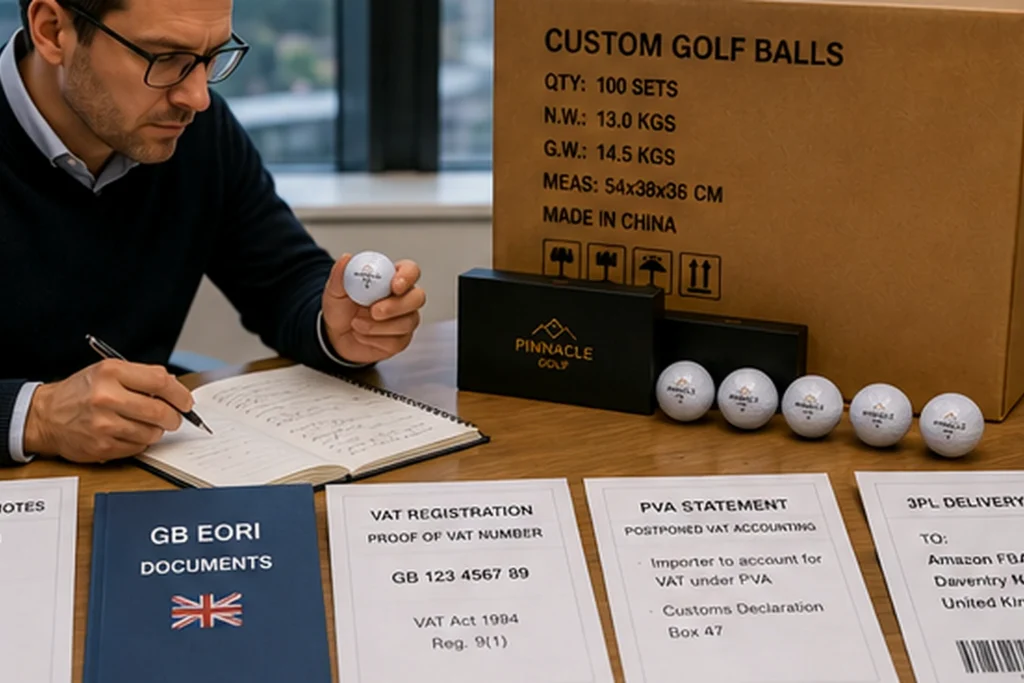
You might also like — China vs America Golf Ball Costs: 2026 Tariff & Landed Cost Guide