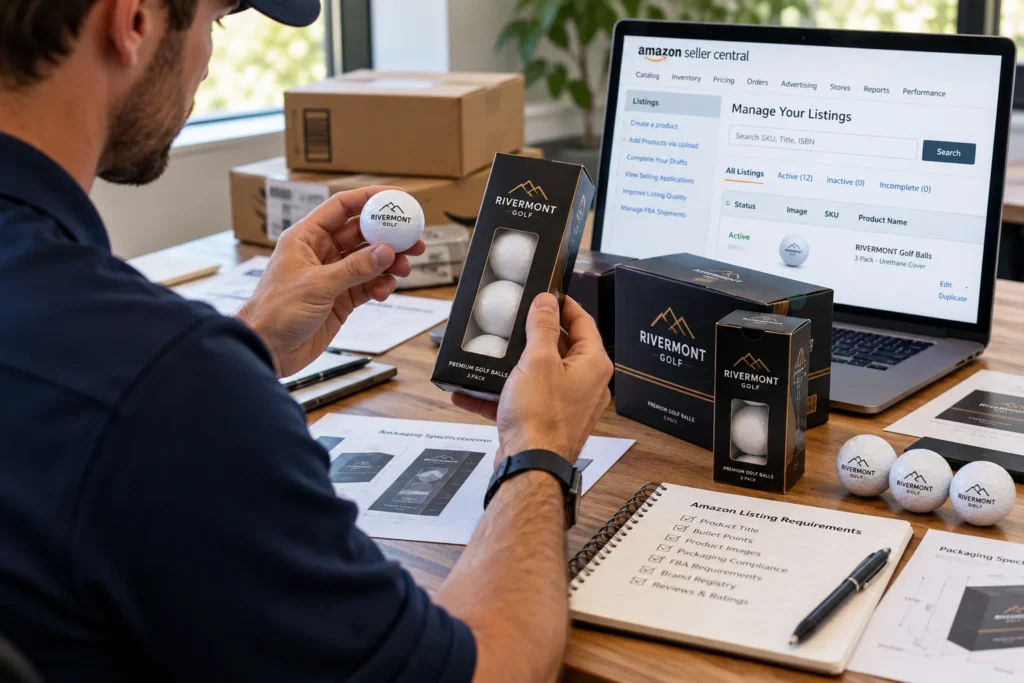
Your factory can print your logo before Amazon authorizes the brand name. If Amazon rejects it, you could be left with branded balls and packaging you cannot list as planned.
Yes—you may be able to sell private label golf balls on Amazon without a registered trademark if Amazon approves your unregistered brand name. Brand Registry separately requires an eligible pending or registered trademark. Verify your Seller Central authorization and genuine physical brand evidence before approving bulk production.
The right sequence is to define your intended brand name, request real branded samples from your factory, verify the applicable Amazon authorization, and only then release your first bulk order of logoed balls and packaging.
Do You Need a Trademark to List Your Brand?
You have chosen a name, designed your golf-ball logo, and found an OEM supplier. But without a registered trademark, you may assume Amazon will not let you sell under your own brand.
You do not necessarily need a registered trademark to list private label golf balls under your own brand on Amazon. You may qualify to request approval for an unregistered brand name, subject to Amazon’s applicable requirements. Brand Registry is separate, and catalog approval does not establish trademark ownership or guarantee access to brand-exclusive tools.
Amazon’s guidance on selling branded products confirms that an eligible seller can request authorization to use an unregistered brand name.
In Seller Central, the relevant process generally begins under Catalog → Add Products. After checking whether the product already exists, you can attempt to create a new listing using your intended brand name.
If Amazon has not recognized that brand, you may encounter Error 5665 and be directed to a Selling Application for Catalog Authorization.
That is an application route, not a promise of approval.
Amazon’s separate Brand Registry requirements allow eligible pending or registered trademarks from supported trademark offices. The trademark owner is responsible for the relevant enrollment.
If you later enroll the same brand in Brand Registry, Amazon says Seller Support may need to help associate your earlier unregistered-brand listings with the enrolled brand. That is different from converting a Generic listing into a branded one.
Unregistered Brand Approval ≠ Brand Registry ≠ Trademark Ownership
Even catalog approval does not establish that a proposed brand name is legally available. The USPTO’s trademark clearance guidance explains why similar names and related goods can create conflicts, even without an identical trademark match.
Before investing in branded inventory, prepare an Amazon Brand Eligibility Check recording your target store, proposed brand name, trademark owner and status, Seller Central authorization status, case reference if available, and unresolved restrictions.
Your first decision is whether your intended brand identity can be used for the listing—not whether your supplier can print it.
✔ True — Your brand may have a listing path before trademark registration is complete
Amazon provides an authorization route for eligible unregistered brands, although the seller must satisfy the applicable review requirements.
✘ False — “Amazon brand approval gives you trademark ownership or Brand Registry benefits”
Catalog authorization, legal trademark rights, and Brand Registry enrollment involve different requirements. One approval does not automatically establish the others.
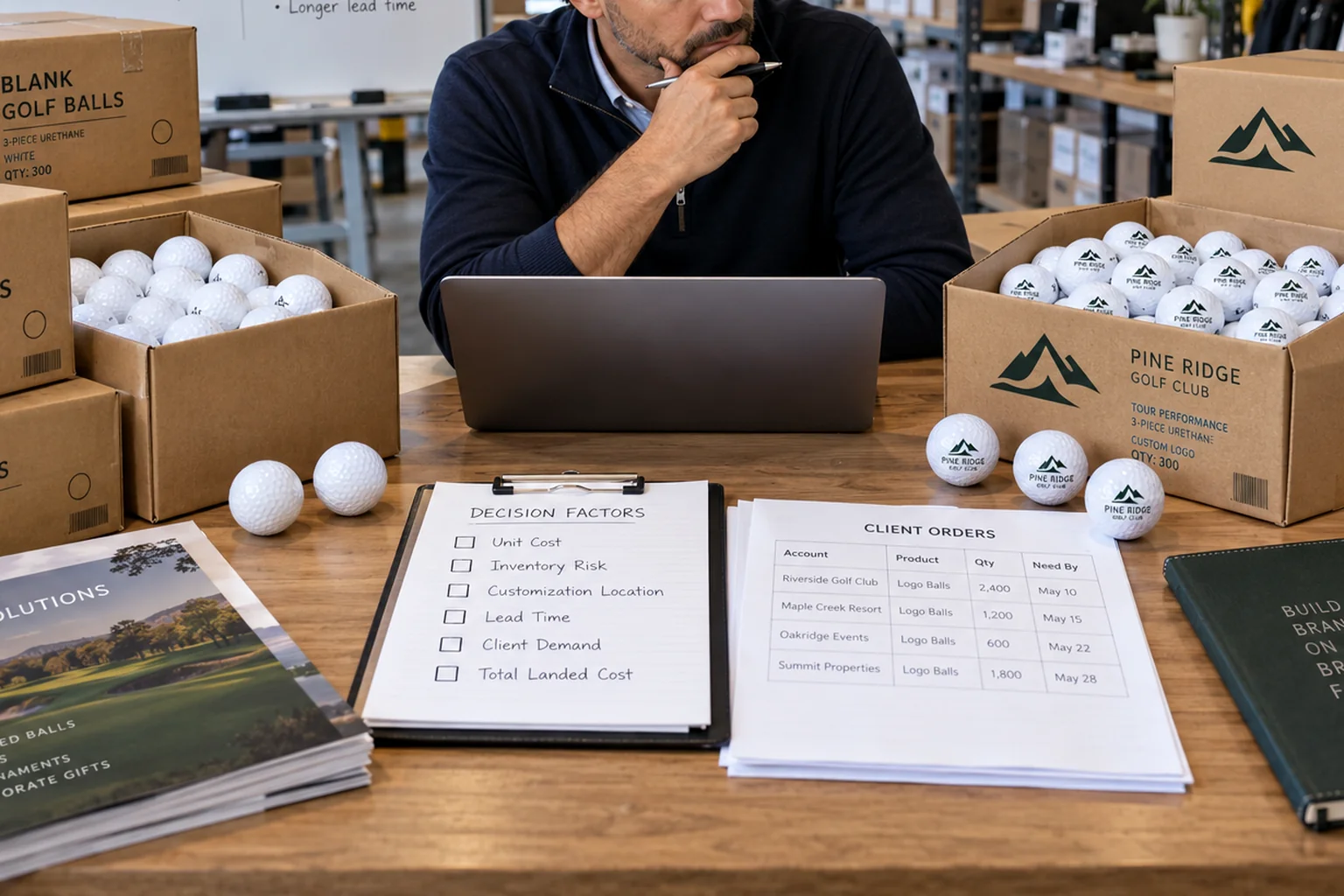
Should You Use Generic or an Unregistered Brand?
Unbranded white golf balls may seem like a sensible low-cost starting point for selling on Amazon. But if your plan is to establish your own brand, the initial listing identity can affect far more than your first shipment.
Choose Generic only when your golf balls are genuinely unbranded and you intend to list them that way. If you plan to establish your own brand, assess the unregistered-brand approval path before ordering. Amazon does not allow a Generic listing to be converted directly into a branded listing, even when the underlying product remains similar.
Under Amazon’s Generic Product Policy, products listed as Generic must genuinely lack identifiable branding.
More importantly, an existing Generic listing cannot simply be renamed to your private-label brand. Rebranding requires a new listing.
That can disrupt your intended catalog strategy. Do not assume the original listing’s reviews, ranking, or sales history will automatically transfer.
| Buyer Decision | Generic Product | Unregistered Brand | Action / Evidence |
|---|---|---|---|
| No brand on ball or packaging | Potential fit | Not needed solely for unbranded goods | Verify identity |
| Your brand is physically present | Not appropriate | Possible after approval | Confirm authorization |
| Brand will be added later | New listing required | Preserve intended identity | Decide before ordering |
| Physical evidence | Unbranded goods | Branded ball or package | Prepare real proof |
In 2024, we received an inquiry from Jack, a recent U.S. college graduate planning to sell golf balls on Amazon. With limited startup capital, he initially considered plain white, unbranded balls.
After several emails, we discussed a private-label option. Our custom-logo minimum for his project was 1,000 balls, making a relatively modest first branded order possible.
Packaging created a different commitment.
Custom packaging required 500 sets, with each set holding 12 balls in four three-ball sleeves. Jack’s planned first shipment of 1,200 balls needed only 100 sets.
He purchased the 500 sets, and we agreed to store the remaining 400 sets at no additional charge for future orders. That helped with immediate storage, but it did not eliminate the purchased packaging commitment.
Jack had not filed a trademark application or confirmed his Amazon brand requirements. We prepared a real logo-printed ball sample within five working days. After receiving it, he began preparing for Amazon Brand Registry enrollment, a separate process that requires an eligible pending or registered trademark. The physical sample alone did not establish eligibility or approval.
Approximately two months later, we shipped his first 1,200 custom-logo balls with branded retail packaging.
He continued ordering from us, with shipments of about 6,000 balls in most months.
That first order kept Jack’s ball inventory manageable, but he was still committed to the 500 packaging sets he had purchased. If his brand identity changed, the unused printed packaging could become unusable.
Packaging flexibility can ease receiving pressure without eliminating inventory risk.
Use a Product Identity Decision Record to confirm whether your product is genuinely Generic or Private Label, your intended brand name, long-term brand plan, listing route, product and packaging identity, and first OEM order scope.
Jack’s experience also raises a practical question: what must a physical branded sample prove before you authorize more inventory?
What Physical Brand Proof Must Your Factory Supply?
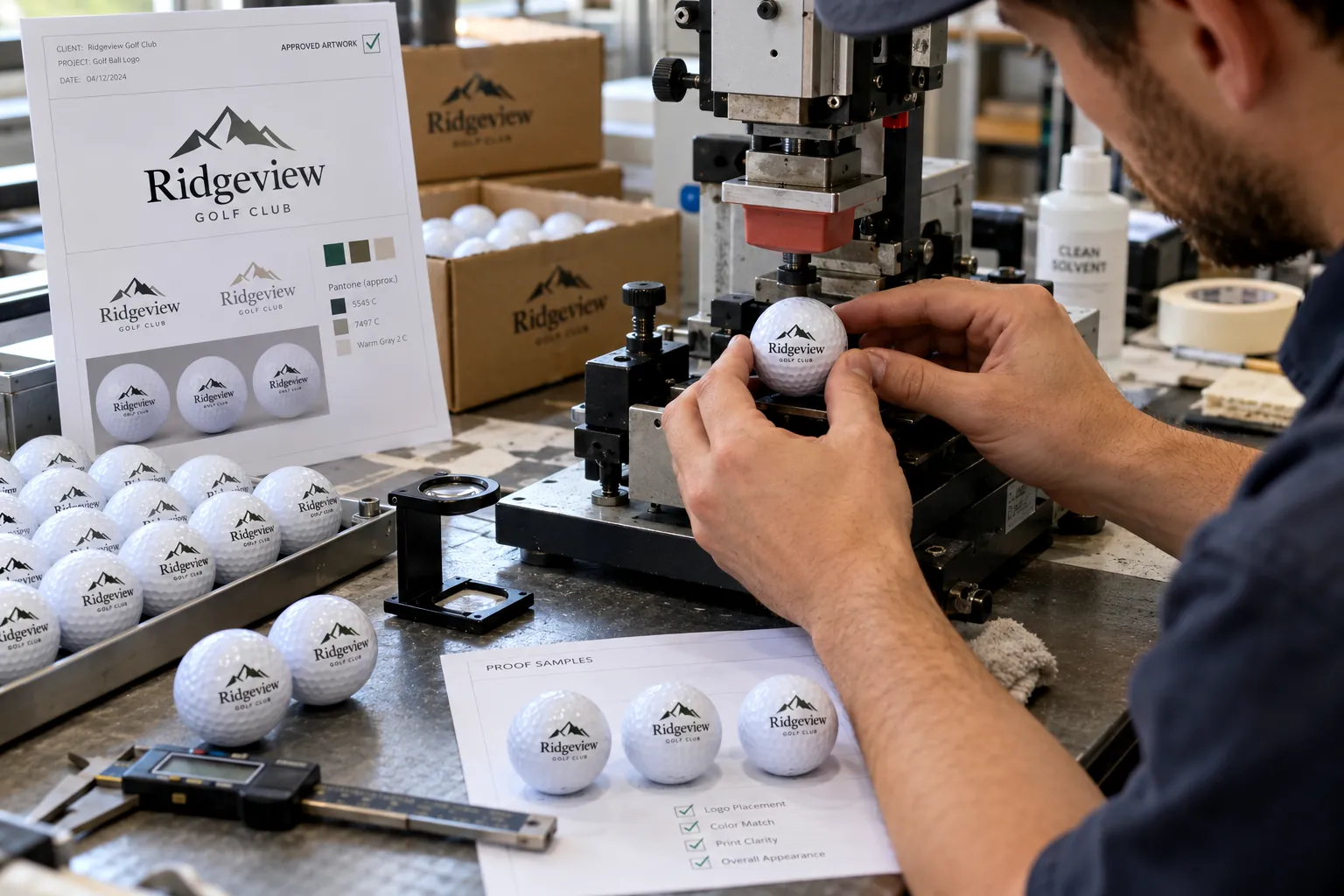
Your logo may look excellent in a digital rendering. But Amazon can require real photographs showing the intended brand permanently attached to a physical product or its packaging.
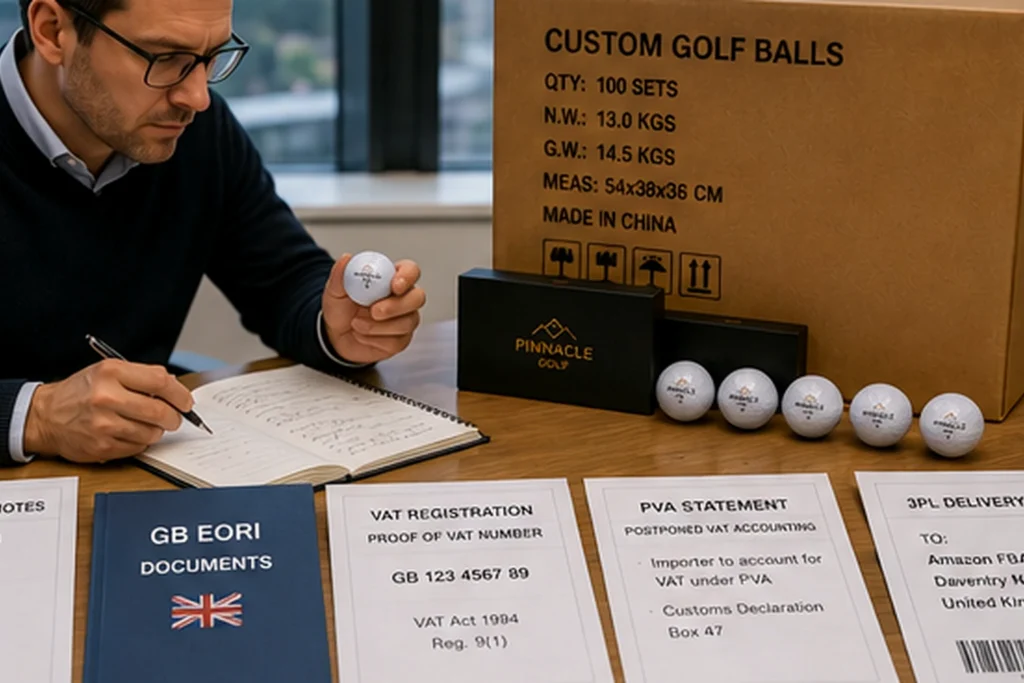
Your OEM factory should provide genuine branded golf balls or packaging that supports the physical evidence Amazon requests for your application. The displayed brand name must be consistent with your intended listing identity. A digital mockup, temporary sticker, or unverified print file should not replace a real sample and photographs of the actual branded item.
Amazon’s published requirements for branded products permit qualifying permanently affixed branding on the product or packaging.
This distinction matters for golf balls. Amazon does not universally require every ball to carry a printed brand name if the applicable requirements can be satisfied through qualifying branded packaging.
However, a decorative symbol on the ball does not necessarily demonstrate the exact brand name used in Seller Central.
Your supplier should therefore confirm that the physical branding is legible, correctly spelled, and consistent with the intended application.
For actual golf-ball printing, request suitable artwork—preferably a vector file—and verify logo size, placement, fine details, and color on the curved surface. A rendering cannot establish that small text will reproduce clearly.
Create a Brand Proof Sample Pack containing your exact Intended Brand Name, Artwork Revision, physical printed golf-ball or packaging sample as applicable, genuine photographs, Print Feasibility Confirmation, Sample Approval ID, and actual Seller Central evidence requirements.
Two warning signs deserve attention: the sample displays a different brand name from the proposed listing, or the supplier offers only a digital mockup instead of genuine physical evidence.
Supplier shall link the approved brand name, artwork revision, physical branded sample, packaging version, and production batch through identifiable records. No brand-name or artwork changes may be implemented without buyer approval.
For broader sample testing, use our China golf ball factory samples guide. If the artwork proves difficult to reproduce, the golf ball logo printing guide covers the technical options.
Your manufacturer supplies the physical evidence. You or an authorized user of your Amazon account must verify and submit what your actual application requires.
✔ True — Qualifying branded packaging may support an Amazon application
Amazon’s published requirements allow permanently affixed brand identity on products or packaging, subject to the applicable authorization process.
✘ False — “Amazon always requires the brand logo directly on every golf ball”
There is no universal golf-ball-specific requirement establishing one mandatory logo position, sample quantity, or printing method for every seller.
When Should You Release Your First OEM Order?
Your supplier can start printing next week, but your Amazon brand application remains unresolved. Should you authorize production to protect your launch schedule?
That decision can turn a manageable approval problem into expensive branded inventory.
Separate physical sample development from bulk production authorization while your Amazon brand-listing path remains uncertain. Confirm your intended brand identity, prepare the real evidence needed for your application, and resolve applicable listing restrictions before committing to difficult-to-reverse branded inventory. Ask your supplier to quote sampling, custom packaging, and commercial production as distinct commitments.
Physical Sample Development ≠ Bulk Production Authorization
You can prepare real branded samples while working through Amazon’s applicable approval process. You do not have to authorize the full commercial batch simply because the factory has demonstrated print capability.
A staged purchasing decision keeps those commitments visible.
| Buyer Decision | Required Confirmation | Main Exposure | Action / Evidence |
|---|---|---|---|
| Brand selection | Name and intended approval route | Wrong identity | Verify name |
| Sample payment | Actual sample scope | Unusable evidence | Approve scope |
| Amazon authorization | Seller Central status | Unlistable inventory | Confirm status |
| Bulk deposit | Artwork and packaging reference | Irreversible stock | Authorize after gate |
Your Approval-to-Production Timeline should record Brand Name Verification, Sample Request, Physical Sample Approval, Seller Central Application Status, Product Identifier Status, Packaging Approval, Bulk Authorization, and Planned Manufacturing Start.
Do not combine these into one promised launch date. Amazon’s review and the factory’s manufacturing process operate on separate schedules.
You should also distinguish:
Golf Ball MOQ ≠ Custom Packaging MOQ
A supplier may accommodate a smaller first branded-ball order while custom sleeves or printed retail boxes require a different minimum.
Likewise:
Packaging Storage ≠ Packaging MOQ Reduction
Any unused packaging still represents purchased inventory, even when your supplier agrees to store it.
Be cautious when a supplier urges full branded production before your Amazon listing route has been resolved.
Supplier flexibility can reduce manufacturing exposure. It cannot establish Amazon eligibility.
Your first deposit should fund the evidence or production stage you actually need—not force you into inventory whose intended brand identity remains uncertain.
Once your Amazon-specific authorization decision is settled, our guide to launching a golf ball brand with a China OEM covers the broader development program.
What Must Match When the First Batch Ships?
Your brand evidence has been prepared, the relevant listing path checked, and the factory has completed printing.
But what happens if the bulk goods carry the wrong logo revision, an outdated brand name, or packaging different from your approved sample?
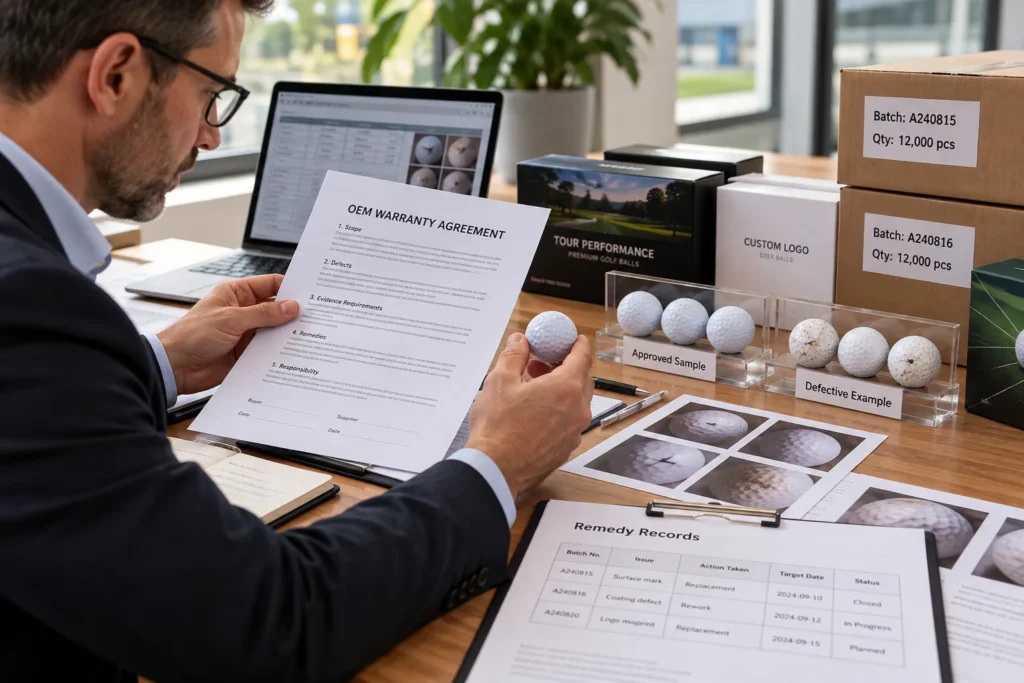
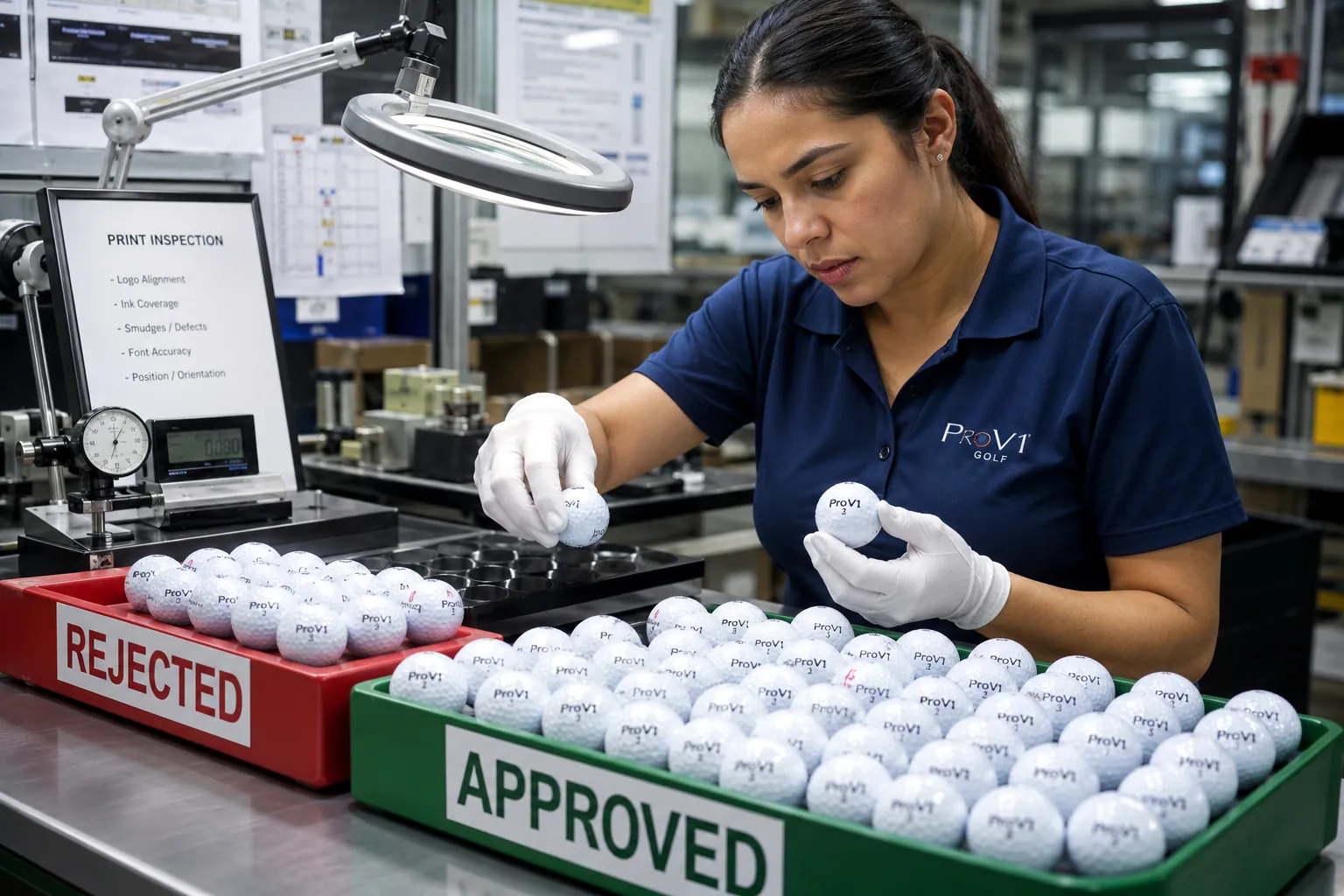
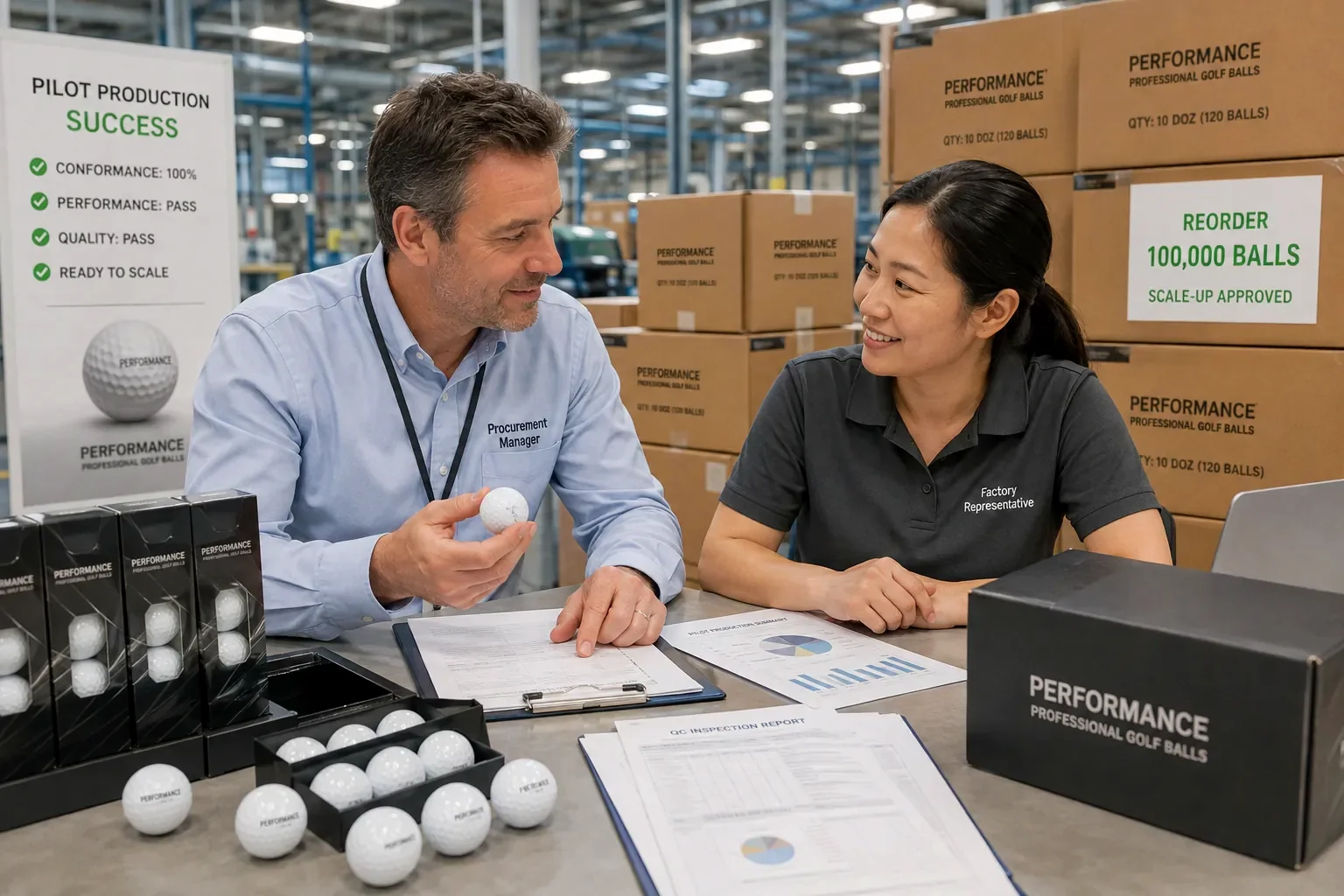
Your first production batch should match the approved brand identity, physical sample, artwork revision, and packaging specification. Require batch-linked inspection evidence before shipment, and document how any nonconforming branded units were handled. Amazon catalog authorization does not replace your manufacturing acceptance process, while factory QC cannot independently guarantee that Amazon will approve or retain your listing.
The supplier’s statement that printing is complete is not enough.
You need evidence that the finished goods reproduce the version you authorized—not merely that the factory produced the agreed quantity.
A Branded Batch Release Record should contain the Approved Brand Name, Physical Sample ID, Artwork Revision, Ball SKU, Packaging Version, Production Batch ID, Final Inspection Record, Nonconforming-Unit Disposition, and Written Shipment Authorization.
Check the actual brand spelling, print position, physical appearance, packaging identity, and agreed saleable configuration.
Where units do not match, require segregation and written disposition before shipment. Reprinting, replacing, accepting under concession, or rejecting those units should be a documented buyer decision.
Buyer acceptance of branded goods shall require comparison against the approved physical sample and artwork revision. Supplier shall provide the inspection method, sample ID, batch linkage, and documented disposition of any nonconforming branded units.
These are supplier-side purchasing controls, not claims that Amazon prescribes a particular golf-ball factory inspection template.
If your remaining questions concern packaging format rather than brand identity, use our OEM golf ball packaging guide.
You should receive evidence that the goods being shipped are the goods you approved.
✔ True — Manufacturing acceptance requires independent evidence
A documented comparison with your approved physical sample establishes whether the branded production batch matches the version authorized by the buyer.
✘ False — “Goods that pass factory inspection are automatically approved for Amazon sale”
Factory QC and Amazon catalog eligibility are separate decisions. Neither automatically establishes the other.
FAQ
Is GTIN Exemption the Same as Brand Approval?
No. GTIN exemption addresses applicable product-identification requirements, while brand approval concerns permission to use a particular brand identity in Amazon’s catalog. Approval for one does not automatically satisfy the other.
- Check the product ID requirement for your saleable golf-ball SKU.
- Review Amazon’s product ID and GTIN guidance.
- Confirm brand-name authorization separately.
Can a Factory Apply for Brand Approval for You?
Your manufacturer can prepare genuine branded golf-ball samples, printed packaging, and supporting photographs. The application itself must be handled by you or someone properly authorized to use your relevant Amazon selling account.
- Identify the responsible account user.
- Request the required physical evidence from your supplier.
- Retain the actual application status and Amazon case record.
What If Amazon Rejects Your Brand Application?
A rejection does not necessarily end your OEM project, but the appropriate response depends on Amazon’s stated reason. You may need to correct evidence, resolve a brand-name conflict, or reconsider the intended identity.
- Save the complete rejection notice.
- Compare the stated issue with your application and physical proof.
- Keep bulk branded production on hold until the issue is addressed.
Can You Join Brand Registry With a Pending Trademark?
Potentially, yes. Amazon may accept an eligible pending trademark application from a supported trademark office. However, having a pending application does not automatically establish Brand Registry eligibility or guarantee enrollment approval.
- Confirm the accepted trademark office and application status.
- Verify the trademark owner and intended brand identity.
- Check the current Brand Registry enrollment requirements.
Can You Use the Same Brand Approval Across Markets?
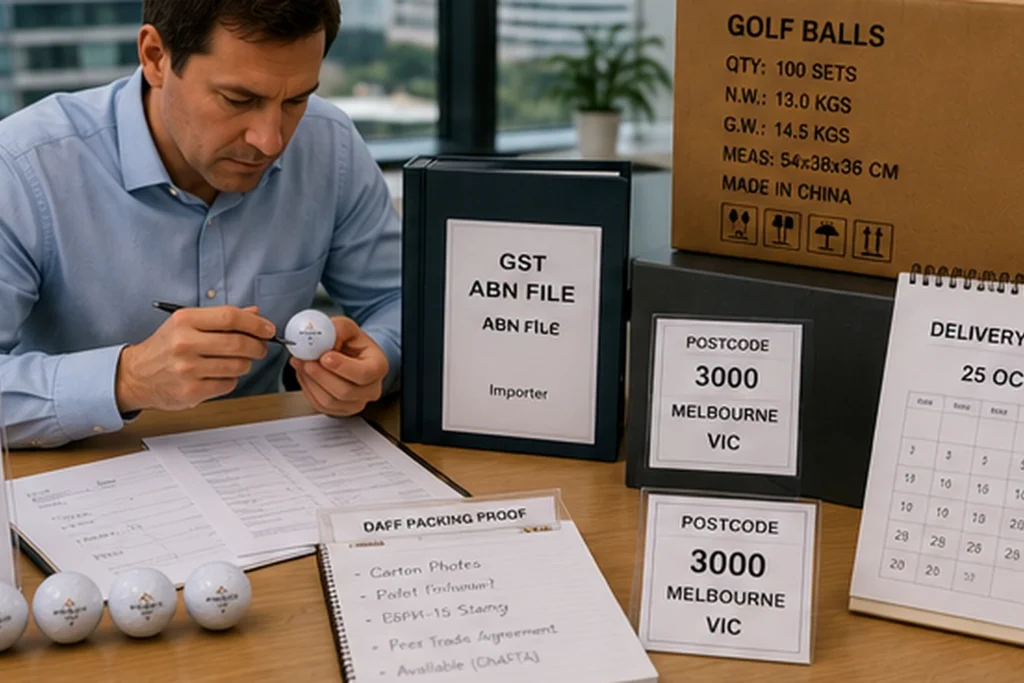
Do not assume brand authorization obtained for one Amazon marketplace automatically satisfies every other store’s requirements. Your applicable listing path, permissions, and product eligibility should be confirmed for each intended market.
- Identify the exact target Amazon store.
- Check its applicable authorization requirements.
- Retain store-specific approval evidence where needed.
Can You Change Your Logo After Approval?
Possibly, but a logo revision should not automatically be treated as an approved change to your brand evidence or production identity. The answer depends on whether the revision affects the trademark representation, brand name, or applicable application requirements.
- Compare the revision with the approved brand record.
- Check whether Amazon requires updated evidence.
- Approve the revised physical sample before production.
Conclusion
You may be able to sell private-label golf balls on Amazon without a registered trademark, but you still need to distinguish brand-name authorization, Brand Registry eligibility, legal trademark rights, physical evidence, and OEM production release.
Verify your intended brand identity and listing route first. Then approve genuine physical samples and release branded inventory only when the relevant authorization and purchasing conditions are clear.
Amazon approval does not replace factory acceptance, and factory capability cannot guarantee Amazon approval.
Approve the brand identity first. Commit to branded production second.
You might also like — How to Launch a Golf Ball Brand with a China OEM.