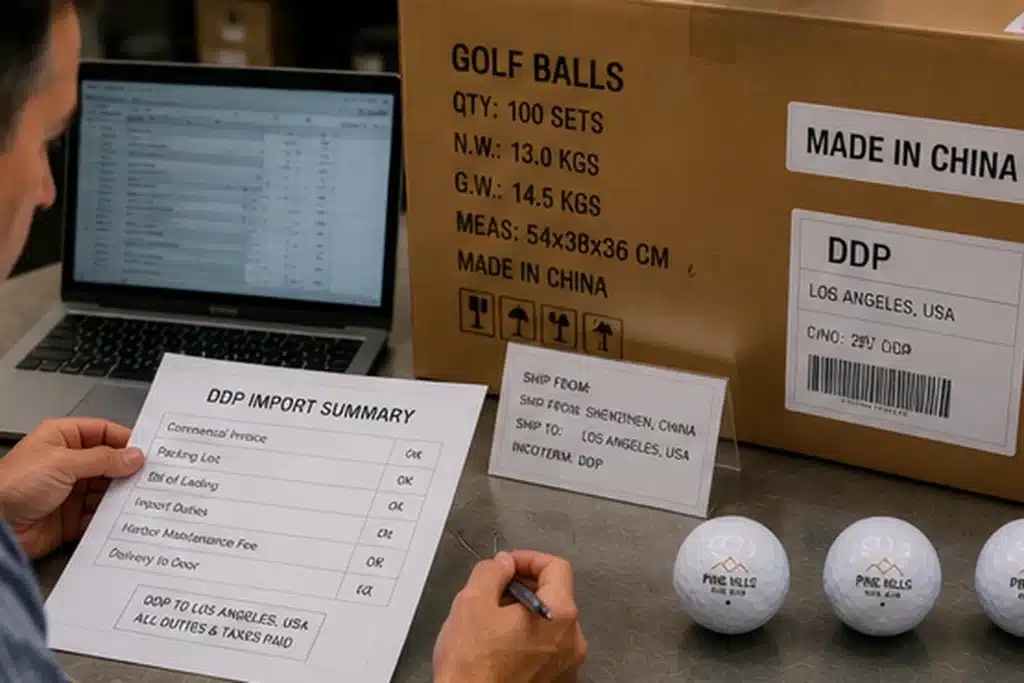
A golf ball brand can stall before your first commercial PO when the buyer promise, product decisions, artwork, packaging, and release criteria are not tied to one approved launch version.
To launch a golf ball brand with a China OEM, use five controlled gates: Promise → Platform → Proof → Release → Reorder. Define the buyer, choose an existing platform or development path, freeze one approved launch version, release the lot against evidence, and preserve that reference for PO #2.
The National Golf Foundation reports that 48.1 million Americans age 6+ participated in golf in some form in 2025. That confirms an active category—not demand for your specific brand or SKU.
Before requesting a production quote, you should already know who the product is for, why that buyer should care, and whether the program has passed your investment gate. This guide begins when the idea must become factory-ready, channel-ready, and reorderable.

What must your factory-ready launch brief define?
“I want a premium golf ball” is a brand intention, not a production instruction. Without a named buyer, channel, product priority, and acceptance basis, your China OEM is being asked to fill in the missing positioning through manufacturing choices.
Your golf ball brand is not factory-ready until your team can define who buys it, why they should care, which product priorities support that promise, and which decisions remain open. A Factory-Ready Launch Brief turns positioning, product, artwork, packaging, claims, evidence, and reorder requirements into one launch record your supplier can execute.
The critical translation is:
Brand Language → Product Decisions → Brand Assets → Factory Deliverables → Release Evidence
Words such as “premium,” “soft,” “tour-like,” “long,” and “different” may be useful in your brand strategy. They are incomplete factory inputs.
If you say “premium,” your team should also be able to answer: premium for whom, sold through which channel, compared with which alternatives, and because of which customer-facing benefit?
If you say “soft,” does softness outrank distance, durability, flight, short-game response, or another attribute? Which decisions are already locked, and which still require samples or evidence?
| Launch Input | What You Must Define | Factory Translation | Buyer Action |
|---|---|---|---|
| Target buyer | Who should buy first? | Intended use / user priority | Name buyer |
| Primary channel | Where will it sell? | Pack-out / handoff context | Freeze channel |
| Product promise | Why should they switch? | Measurable product priorities | Rank promise |
| Competitive reference | Compared with what? | Performance/positioning reference | Name SKUs |
| Product status | What is already decided? | Construction / cover / platform status | Mark open items |
| Brand assets | What is customer-facing? | Artwork / markings / color references | Freeze revisions |
| Packaging / claims | What must ship and be stated? | Pack-out + claim requirement | Verify route |
| Launch gate | What proves readiness? | Acceptance evidence + reorder reference | Define release |
When competitive references matter, use named SKUs from the relevant market and channel rather than a vague “premium ball price range.” Your factory needs a positioning reference, not a stack of generic golf-market statistics.
Before funding the launch, confirm the program has already passed your private label golf ball economics gate. Economics answers whether the program deserves your capital; this page answers how to launch the approved idea.
If the cover family is still unresolved, close the Surlyn vs urethane cover decision before freezing the brief. If urethane is selected but its manufacturing route remains open, resolve the TPU vs Cast Urethane route instead of leaving “urethane” as an unfinished input.
Treat it as a warning sign if your launch still depends on words such as “premium” without a written target buyer, product promise, and acceptance basis.
Before requesting final production approval, create a Factory-Ready Launch Brief containing the target buyer, primary channel, product promise, ranked product priorities, unresolved decisions, brand assets, packaging route, applicable claims, acceptance evidence, and intended reorder reference.
Your supplier should be able to explain the proposed launch without relying on adjectives to fill specification gaps.
✔ True — A strong brand promise gives the factory a decision framework
Your positioning becomes useful to production when it identifies the buyer, channel, priority attributes, approved references, and evidence needed to close open decisions.
✘ False — “Telling the factory you want a premium golf ball is enough to start development”
“Premium” can describe price, feel, spin, appearance, construction, or brand position. Until your team defines what the customer must receive, the factory is still guessing.

Should you use an existing platform or develop new?
Founders often begin a golf ball brand by asking how much the factory can customize. That question can turn a simple market test into a development program before customers have validated the basic offer.
Use an existing platform when it can deliver the promise your market still needs to validate; move into new development only when deeper product differentiation is commercially necessary. Just because your factory can change color, compression, formula, construction, or tooling does not mean those variables belong in your first launch.
The distinction is fundamental:
Custom Logo ≠ Custom Golf Ball
An existing platform may already provide a proven construction, established specification range, existing tooling, validated cover route, standard finish, logo customization, and workable packaging route.
New development begins when your request changes the validated product or production state—for example, a new formula, a compression target that requires redevelopment, a new construction, dedicated dimple tooling, another material or cover route, or a body-color process outside the current platform.
Golfara regularly receives inquiries from founders who want to differentiate their first DTC golf ball with a custom body color or modified compression target. Those options can be developed, but when SKU demand remains unproven, we usually do not recommend starting there.
For Golfara’s current production program, a custom ball color or custom compression target typically requires at least 1,000 dozen, or 12,000 balls.
This is not an industry-wide custom golf ball MOQ. It is evidence of how a seemingly simple request can change launch complexity.
The larger inventory commitment is only part of the issue. Deeper customization can also add specification confirmation, sampling, production planning, validation, and extra approval cycles before you answer the early-stage question that matters most:
Will customers actually buy and reorder this golf ball?
Your first launch does not need to prove how much your factory can customize. It needs to prove that customers want the product strongly enough to justify deeper customization later.

When does customization become development?
The boundary appears when a requested feature stops using an existing validated state and starts creating a new one.
| Buyer Request | Existing-Platform Path | Development Signal | Buyer Action |
|---|---|---|---|
| Custom logo | Existing ball + approved artwork | Usually none | Control artwork |
| Packaging | Proven pack-out | New structure/vendor/tooling | Verify route |
| Compression | Existing approved option | New target needs redevelopment | Classify first |
| Body color | Standard current finish | New color production route | Validate need |
| Dimple | Existing tool | New CAD/tooling | Delay unless essential |
| Construction/formula | Proven model | New architecture/formulation | Treat as development |
Ask your supplier for a Platform / Development Declaration showing which requested features use an existing validated platform and which require new formulation, tooling, material route, finish route, or other development work.
Be cautious if a supplier is ready to quote production before confirming whether your request uses an existing platform or requires new development.
Once customization has been classified and quantity becomes the commercial question, use the dedicated custom golf ball MOQ mechanics guide rather than turning your launch plan into an MOQ debate.
For an unproven launch, preserving the ability to learn can be more valuable than maximizing physical uniqueness. That is not a rule against custom development. If you already have verified demand, preorders, a mature channel, or a technically necessary differentiator, deeper development can be justified.
The strategic question is not only:
Can the factory do it?
It is:
Should you do it now?

What must be locked before the pilot?
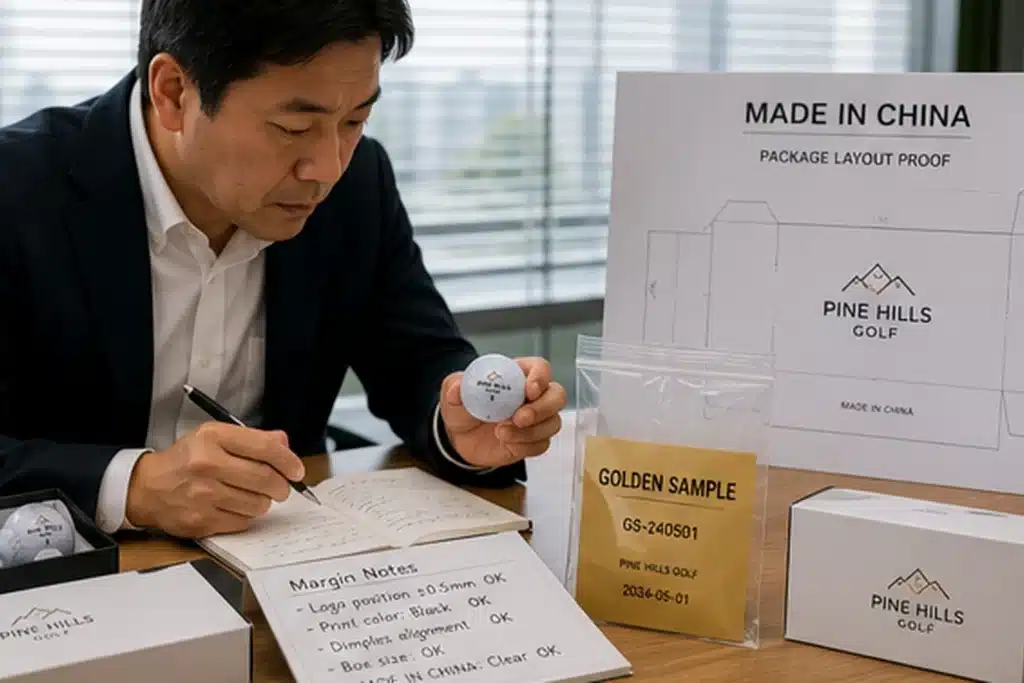
Launch drift rarely arrives as one dramatic mistake. More often, your product, artwork, logo color, package, claim wording, and physical sample are each “approved”—but belong to different revisions.
Before the pilot, lock one approved launch version linking your product specification, physical sample, artwork, markings, print position, packaging, platform reference, and applicable claims. Your factory should never have to decide which file is current by comparing email attachments or asking which version “looks right.”
A typical problem may look like this:
Product Rev.03.
Artwork Rev.02.
Logo color from Rev.01.
Packaging Rev.05.
An older physical sample.
New claim wording from last week.
Each element may appear correct when viewed alone.
Your customer does not experience them separately. The customer sees one ball, one logo, one package, and one brand promise.
Build one Brand Asset & Version Register.

Which assets need one controlled revision?
| Asset | Controlled Reference | Approval Proof | Buyer Action |
|---|---|---|---|
| Product | Specification revision | Approved sample | Freeze |
| Platform/tool | Factory reference | Platform/tool ID | Record |
| Brand name | Approved mark/version | Screening / legal-review status | Confirm |
| Artwork | Artwork revision | Signed proof | Freeze |
| Color | Pantone/reference | Physical/digital proof | Confirm |
| Print position | Side/location reference | Printed sample | Approve |
| Packaging | Dieline/revision | Pack-out proof | Freeze |
| Claims | Approved wording | Applicable evidence | Control |
Before freezing a public-facing brand name or logo, perform basic conflict screening in the markets where you intend to sell. The WIPO Global Brand Database provides a useful multi-market starting point.
For a U.S.-focused launch, the USPTO federal trademark searching guidance is particularly useful because an exact-name search is not enough; similar or confusing marks can matter too.
A database search is not a legal clearance opinion. Where filing, similarity, or infringement risk is material, use qualified trademark counsel in the relevant jurisdiction.
Your approval sequence should also distinguish product proof from brand polish:
Product Proof → Brand Proof → Packaging Proof
If performance is part of the brand promise, approve the base product before treating a printed sample or finished box as full launch approval. A polished logo can prove appearance. It does not prove the underlying product or production lot.
For artwork, controlled color, print route, and adhesion, use the custom golf ball printing methods guide. Packaging construction belongs in the OEM golf ball packaging options guide. If the concern shifts to factory use of tooling, confidential files, or brand assets, use the China golf ball factory IP-risk guide.
Treat any product-specification, artwork, or packaging change outside the controlled launch record as a warning that the approved launch version is drifting.
Before pilot production, maintain a Brand Asset & Version Register that identifies the exact revision of every product-facing and customer-facing asset.
No pilot production should use superseded specifications, uncontrolled packaging, unapproved artwork, or unconfirmed claim wording.
✔ True — IP control and version control protect different parts of the same launch
IP control governs who may use an asset. Version control identifies which product, artwork, marking, package, and claim the factory is authorized to produce.
✘ False — “If the logo file is correct, the brand assets are under control”
A correct logo on the wrong product revision, old position, superseded packaging, or unapproved claim is still an uncontrolled launch.
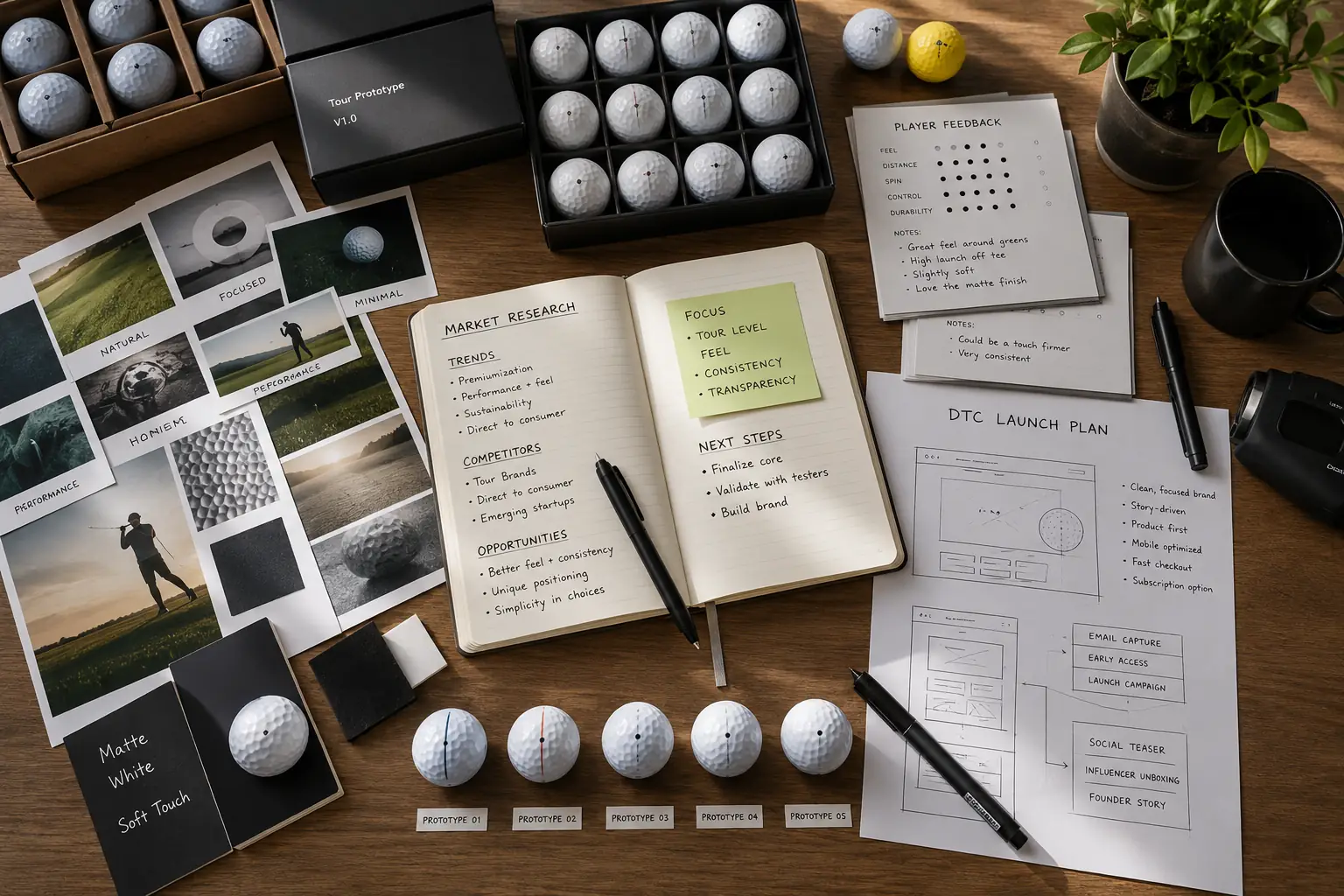
When is the launch lot ready to release?
A factory can truthfully report “production finished” while your golf ball brand is still blocked by an approval, evidence gap, delivery issue, or channel handoff.
Your launch lot is ready only when the approved product, brand assets, packaging, batch evidence, delivery scope, and channel handoff are aligned. “Production finished” is a factory milestone, not your commercial release decision; unresolved evidence or ownership can still stop the product from reaching the channel correctly.
Use a Launch Release Gate:
Product approved
→ Brand assets approved
→ Packaging approved
→ Batch evidence approved
→ Delivery scope approved
→ Channel handoff ready
Commercial release occurs when the applicable gates for your program are closed—not simply when the factory calendar reaches the ship date.
If an issue is found, the useful control architecture is:
Issue Found → Hold → Segregate / Correct / Remake → Reinspect → Release or Reject
You do not need another equipment checklist here. What matters is evidence tied to the actual launch lot rather than confidence borrowed from a pre-production sample.
| Release Gate | Responsible Owner | Proof to Retain | Release Action |
|---|---|---|---|
| Product | Factory + buyer | Approved product reference | Approve/hold |
| Brand assets | Buyer + factory | Current artwork/marking | Approve/hold |
| Packaging | Factory / packaging partner | Pack-out reference | Approve/hold |
| Batch evidence | Factory/QC | Lot-linked result | Release/hold |
| Delivery scope | Buyer/logistics | Confirmed commercial scope | Approve |
| Channel handoff | Seller/3PL/factory | Required handoff proof | Launch |
If your brand promise includes tournament, competition, conformity, or Rules of Golf language, activate a conditional conformity gate. Verify the current submission path and exact ball identity through The R&A’s official Golf Ball Submissions guidance and Conforming Ball List before freezing the claim.
Compliance belongs to the exact product and claim state. It is not an automatic requirement simply because you are starting a golf ball brand.
Who owns the factory-to-channel handoff?
Some of the most frustrating launch delays happen after manufacturing is complete.
The factory assumes the forwarder owns the next step. The forwarder expects the seller to generate a file. The 3PL assumes the carton information has already been approved.
Everyone is involved. Nobody owns the missing deliverable.
For each required handoff, define:
Owner → Deliverable → Handoff Point → Proof
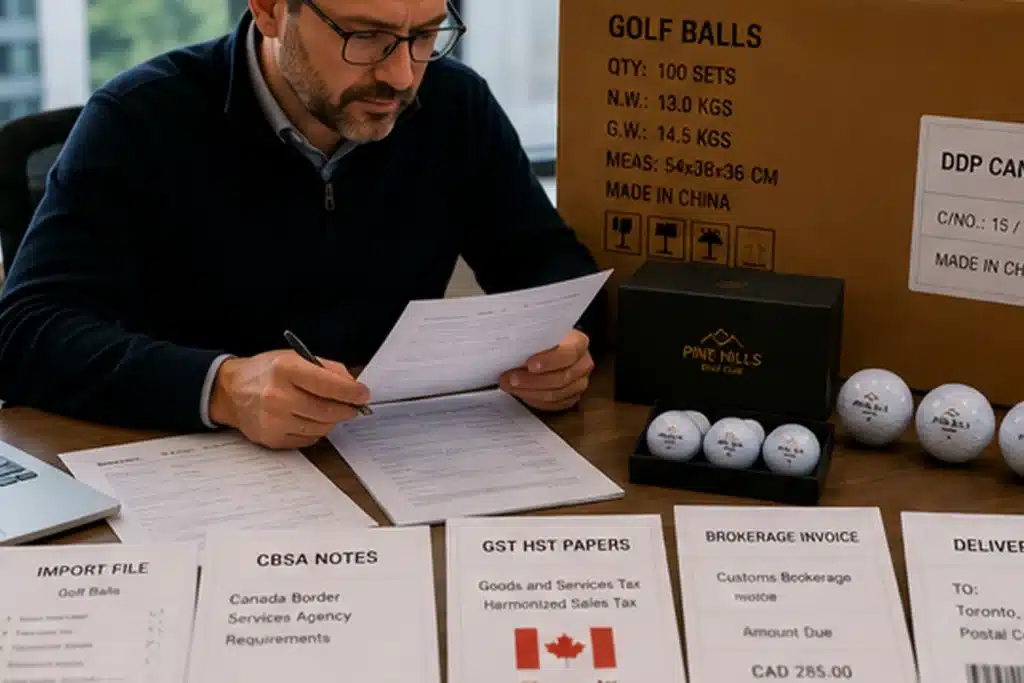
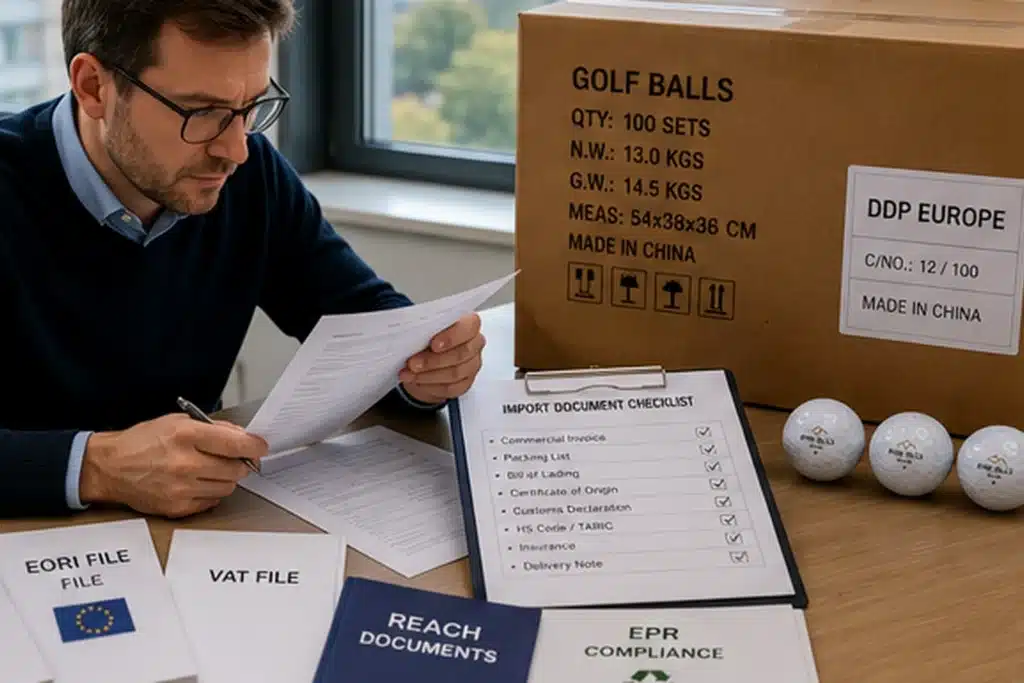
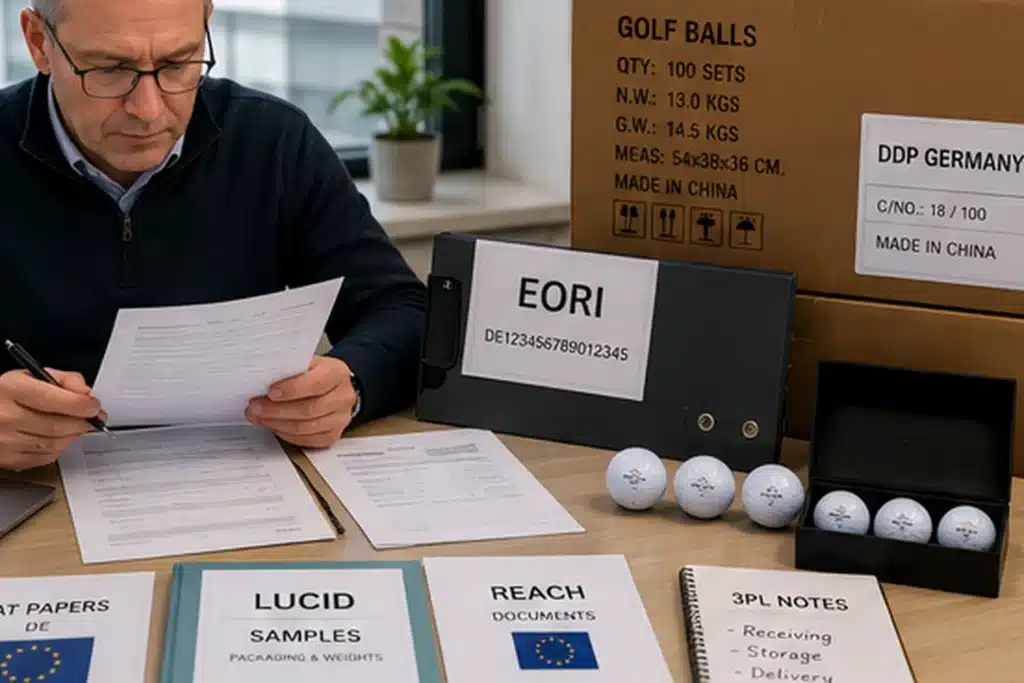
Amazon FBA provides a useful real-world example without turning this article into an Amazon-prep guide. Amazon’s current FBA prep, packaging, and labeling guidance separates product preparation and labeling from the inbound process, while its Send to Amazon workflow covers shipment setup, packing information, box labels, and carrier steps.
For an FBA-ready golf ball launch, unit pack-out, product labeling, case-pack information, carton dimensions and weight, shipment creation, box labels, carrier handoff, and receipt monitoring may involve different owners.
Responsibilities will vary by program. The operating principle does not:
Factory packed ≠ Channel ready.
Create a Launch Release Record showing what was approved, which lot was evaluated, which artwork and packaging references were used, who owns delivery and channel handoff, and whether any required deviation remains open.
Commercial release shall require batch-linked evidence against the approved launch specification, including the applicable agreed test method, sample or lot ID, acceptance result, approved artwork and packaging reference, and disclosure of any change to the controlled launch references or agreed production route from the approved pilot.
If the launch specification is frozen but you still need to determine whether the production run actually represents future production, move to OEM golf ball pilot validation.
If the unresolved issue is DDP, freight, duty, or delivery economics, use the golf ball landed-cost and delivery scope guide.
Do not release because the calendar says launch day. Release when the approved product and actual channel handoff are ready at the same time.
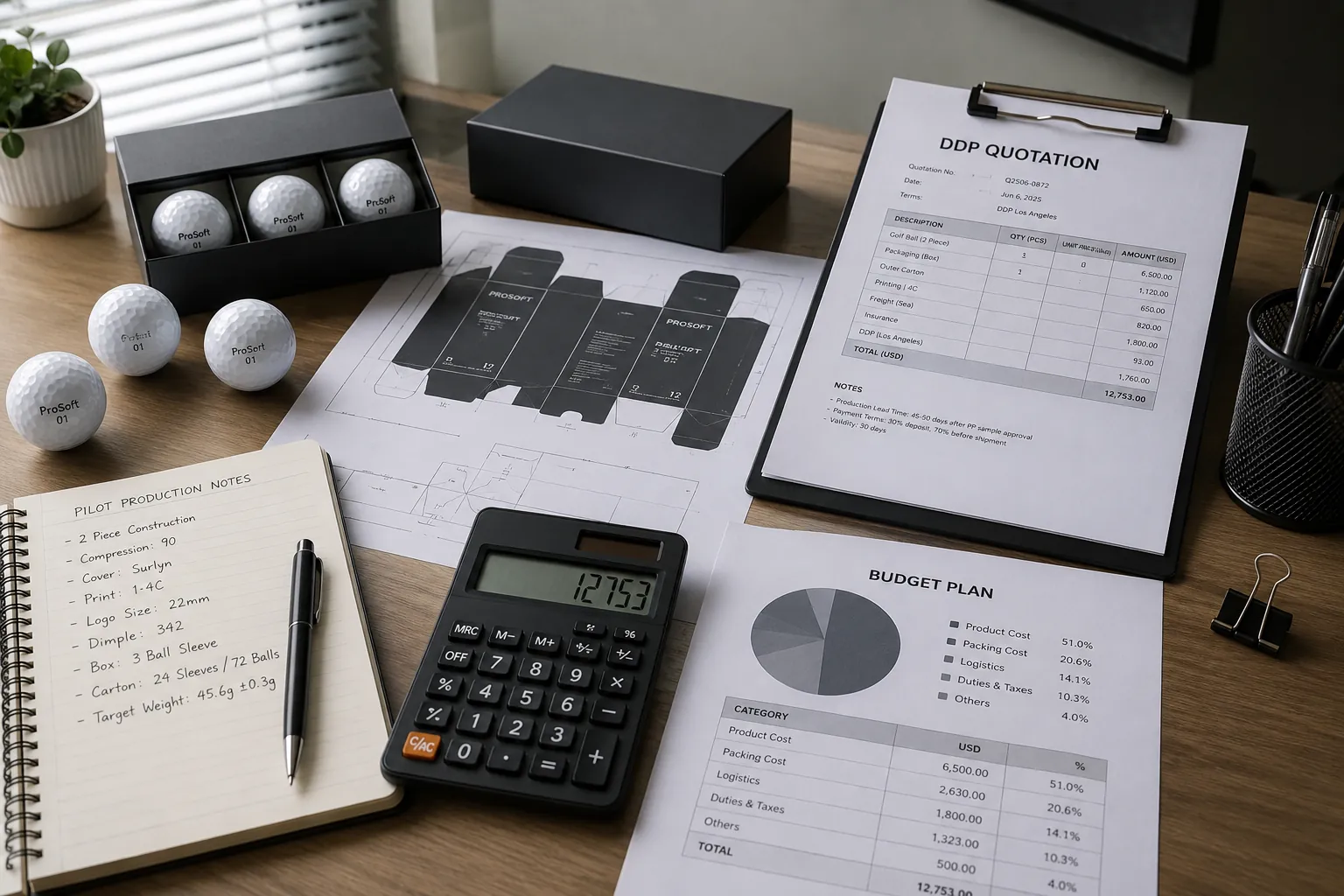
Can the first reorder reproduce the launch?
If PO #2 begins with your team searching old email threads for the file that “looks like the one we approved,” the first launch did not preserve enough control.
Your first reorder should reproduce an approved launch version, not your memory of the first order. Build the Reorder Reference during PO #1 by linking the product revision, physical sample, artwork, markings, packaging, production reference, approved deviations, and change-notification rules your supplier must use again.
A common reorder instruction is:
“Please make it the same as last time.”
The word same can hide a revised product specification, another artwork file, changed markings, a new print position, altered finish, updated packaging, different component, or changed platform state.
That is why:
Reorder starts at launch.
Build the Reorder Reference before the first commercial lot ships. Preserve the approved product revision, relevant platform/tooling reference, physical reference sample, artwork, markings, color, print position, packaging revision, lot reference, approved deviations, applicable claims, and change-notification requirement.
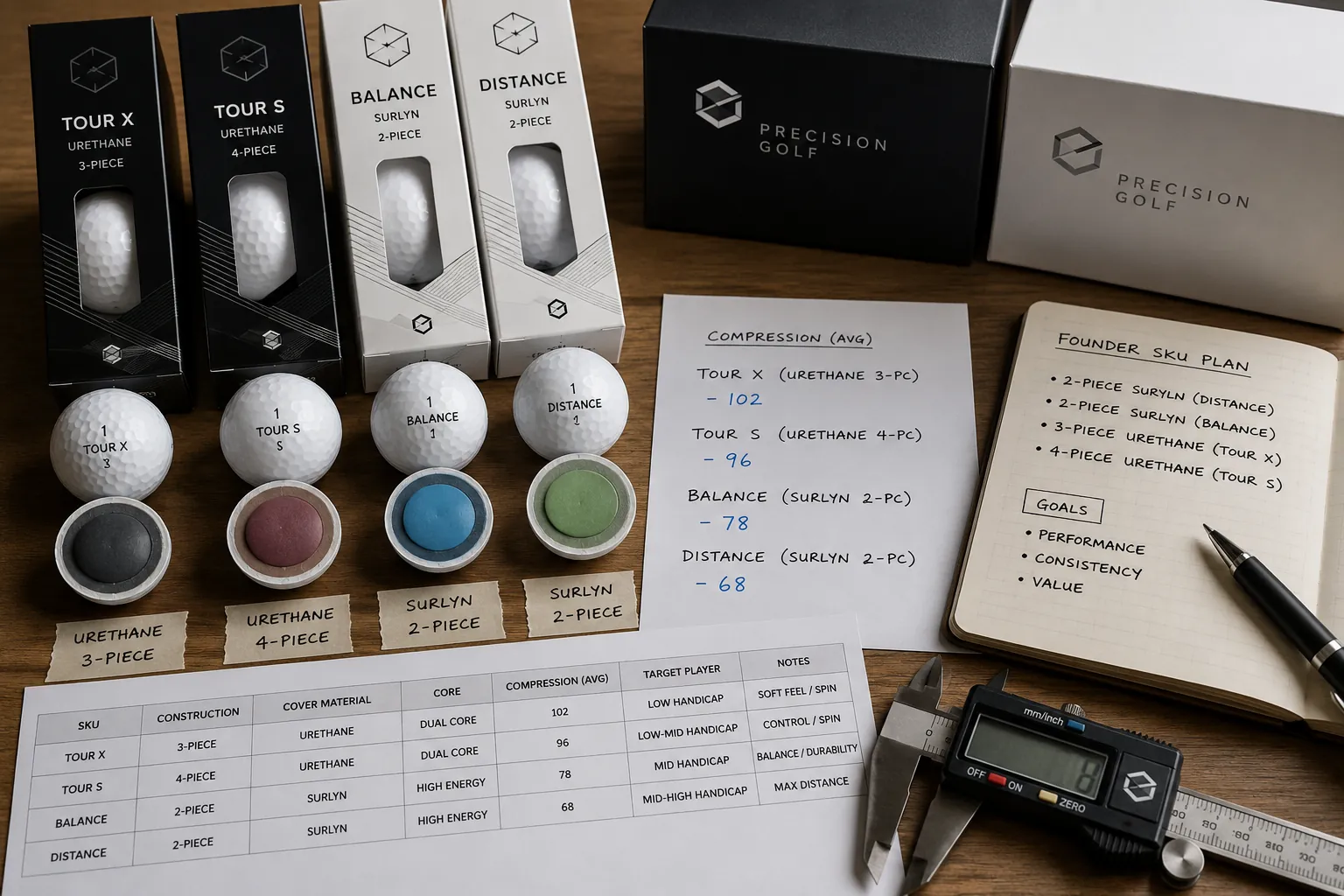
Which changes require buyer approval?
Buyer review should focus on changes that alter the approved launch identity.
That can include a formula or specification change, platform/tooling change, material or cover-route change, controlled body finish or color change, artwork or marking revision, controlled print-route change, packaging revision, or claim change.
Routine factory adjustments within a validated process remain the supplier’s responsibility. Buyer approval is appropriate when the change alters a buyer-controlled product, brand, packaging, claim, or production reference.
Before PO #2, compare:
Approved Launch State
vs.
Current Proposed Production State
Then require disclosure of applicable differences.
Supplier shall maintain one approved launch record linking the product specification revision, tooling or platform reference, agreed production route where applicable, approved physical sample, artwork revision, print position, packaging revision, and applicable compliance claim. Any change to those approved buyer-controlled references or agreed production route requires written buyer approval before production release.
Use the Reorder Reference as the controlled baseline for PO #2.
If your team has to reconstruct which ball, artwork, package, or claim was approved by searching old emails, the launch was not fully controlled.
An OEM launch succeeds operationally when the approved product can be reordered without rebuilding the specification from email history.
If the next question becomes whether the factory can actually maintain these controls in production, move to verify supplier process control rather than rebuilding a factory audit here.
✔ True — Reorder reproducibility is designed before the first commercial lot ships
A controlled launch preserves the approved product, artwork, packaging, physical reference, production identity, and change rules so PO #2 starts from a known baseline.
✘ False — “The supplier already made it once, so the second order does not need a controlled reference”
Memory is not version control. Without an approved baseline, “same as last time” can quietly reproduce the wrong file, finish, package, claim, or product state.
FAQ
Can one launch use more than one sales channel?
Yes, but your first launch should still identify one primary channel so the factory has a clear release target. Multiple channels work best when their product, packaging, labeling, pricing, and handoff assumptions do not create conflicting launch requirements.
Record secondary-channel differences instead of hiding them inside one generic launch. A DTC site, pro shop, distributor, and marketplace may sell the same core product while requiring different pack-out or handoff records. If two channels require materially different release conditions, control those differences rather than asking one pilot to prove several incompatible launch models.
When should a startup pay for custom tooling?
Custom tooling makes sense when the differentiator is important to the customer promise, an existing platform cannot meet the requirement, and your demand evidence justifies turning the launch into a development program. Technical availability alone is not a reason to buy uniqueness.
Define what the tooling changes for the customer and request supplier-specific development scope before approval. Verified preorders, mature distribution, established demand, or a technically necessary feature can justify the investment. If quantity becomes the primary issue, evaluate the binding MOQ separately rather than treating all customization as one tooling decision.
Do I need conformity for my first golf ball SKU?
Only when your intended claims, competition use, or market requirements make conformity relevant. Treat it as a conditional launch gate tied to the exact golf ball and markings rather than assuming every private-label or DTC golf ball brand follows the same submission path.
Define the intended claim before artwork is frozen. If you plan to reference tournament use, conformity, or Rules of Golf status, verify current requirements and connect that status to the exact launch revision. Avoid unsupported approval language, and recheck applicable requirements when the claim becomes commercially active.
What if artwork changes after sample approval?
Do not silently replace the approved artwork during production. Create a new controlled revision, identify whether the change affects color, position, print route, packaging, markings, or claims, and reapprove every launch element materially affected by it.
Retire the superseded version so buyer and supplier know which file is current. Update both the Brand Asset & Version Register and Reorder Reference. A small artwork edit can become a significant production problem when the ball uses one revision while packaging, marketplace content, or replenishment records use another.
What if my 3PL changes before launch?
Reopen the affected Factory-to-Channel Handoff items. A new 3PL can change labeling, carton data, routing, receipt, or documentation requirements even when the golf ball, logo, and primary packaging remain unchanged.
Reassign owners, reconfirm deliverables, update required handoff proof, and check whether the launch date still reflects the revised workflow. Do not assume a new logistics partner automatically inherits undocumented knowledge from the previous one. Channel readiness depends on the operating path that will actually receive the inventory.
What if the pilot passes but the launch lot changes?
Reopen the affected approval gate before commercial release. A pilot can prove one product state while the launch lot later changes a material, finish, tooling reference, artwork, packaging element, or another controlled input. Approval should not transfer automatically when the controlled baseline changes.
Identify what changed after pilot approval and determine whether it affects the approved launch identity. Obtain new evidence where necessary, update the Brand Asset & Version Register and Launch Release Record, and close the affected gate before shipment. If the question is whether the revised lot still represents the intended manufacturing route, return to the pilot-validation process rather than relying on the previous pass.
Conclusion
A golf ball brand is ready to launch only when the brand promise has been translated into one controlled product, brand, packaging, release, and reorder system. Your launch should prove not how much a factory can customize, but whether customers want the approved product strongly enough—and whether the same approved version can be reproduced when the program moves forward.
Start with the promise, choose the right platform, lock the proof, release the actual launch lot through written gates, and create the reorder reference before PO #1 becomes history.
Once your launch brief and approved product version are frozen, the next decision is whether the pilot actually represents the production route you intend to scale.
You might also like — Golf Ball OEM MOQ: Is a 1,000–3,000-Piece Trial Realistic?