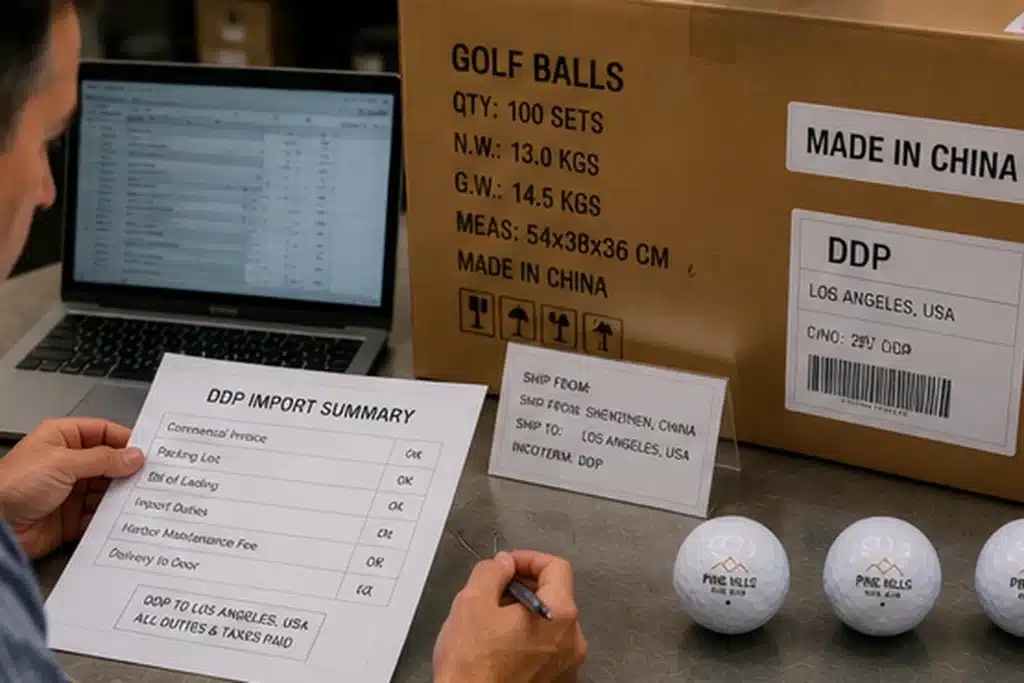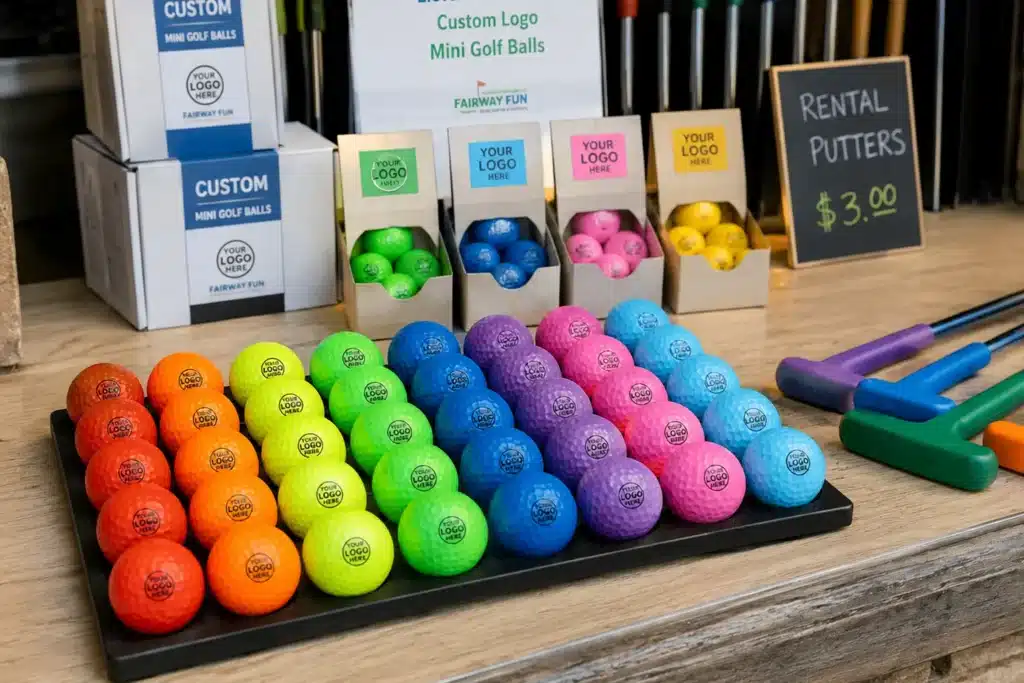
Your first bulk order may look perfect. The real sourcing test comes with the second PO, when color, artwork, packing, or product details no longer match.
Mini golf chains can buy custom mini golf balls in bulk from direct OEM manufacturers, specialty wholesalers, or promotional-product suppliers. For repeat multi-location programs, prioritize a supplier that can document and maintain the approved ball specification, artwork version, color reference, batch ID, and venue allocation across reorders.
A successful first order shows that a supplier can complete one shipment. Reorder control shows whether your team can scale the same approved program across locations without product drift—or an emergency purchase quietly becoming the new chain standard.
A one-time promotional order and a chain replenishment program are different purchasing problems. Your team needs a stable product identity, while individual venues may still require different quantities, destinations, and delivery schedules.
A scalable mini golf chain sourcing program follows three decisions:
-
Define the approved product standard.
-
Control every reorder version.
-
Manage MOQ and inventory commitment before higher-MOQ customization.
The first decision defines what must stay the same. The second prevents artwork, color, packing, or product specifications from drifting between orders. The third keeps customization commitments aligned with realistic venue demand.
That is what turns a bulk purchase into a repeatable multi-location supply program.
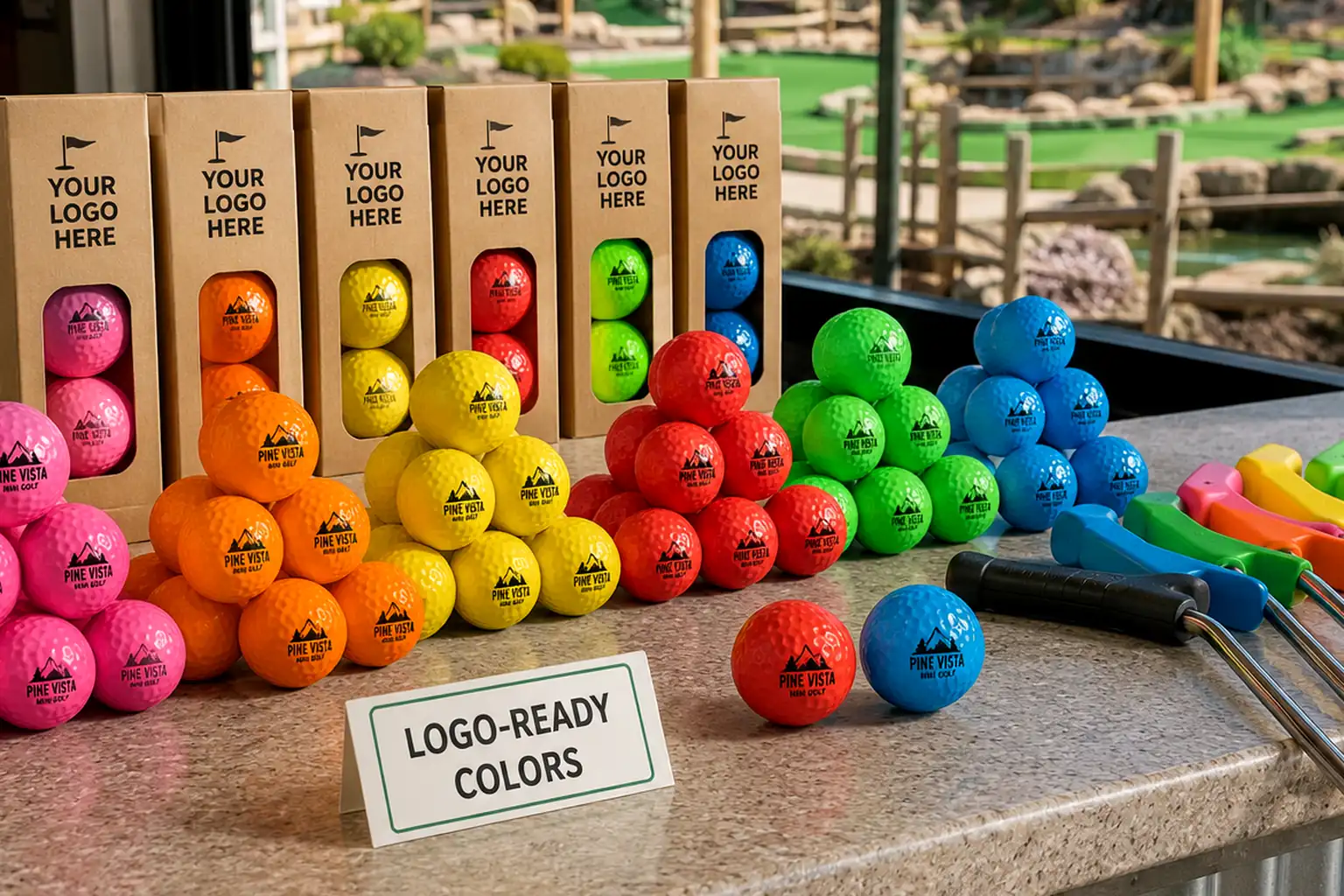
Where Should Chains Buy Custom Golf Balls?
Finding bulk custom mini golf balls is easy. Finding a sourcing route that still works when three venues become ten—and one location suddenly runs short—is harder.
Choose the sourcing route that matches the operating problem. Direct OEM manufacturers often fit planned repeat programs, while wholesalers or approved backup suppliers can cover urgent shortages. Your primary source should maintain the approved production reference and support controlled reorders; emergency routes should remain defined exceptions.
| Buying Route | Best Fit | Main Risk | Buyer Verification |
|---|---|---|---|
| Direct OEM manufacturer | Long-term chain programs | Weak reorder control | Verify production role and repeatability |
| Wholesale supplier | Fast replacement | Limited customization control | Confirm stock and consistency |
| Promotional supplier | Simple logo projects | Limited future support | Confirm sample and production route |
| Emergency supplier | Short-term shortage | Product drift | Define approved backup route |
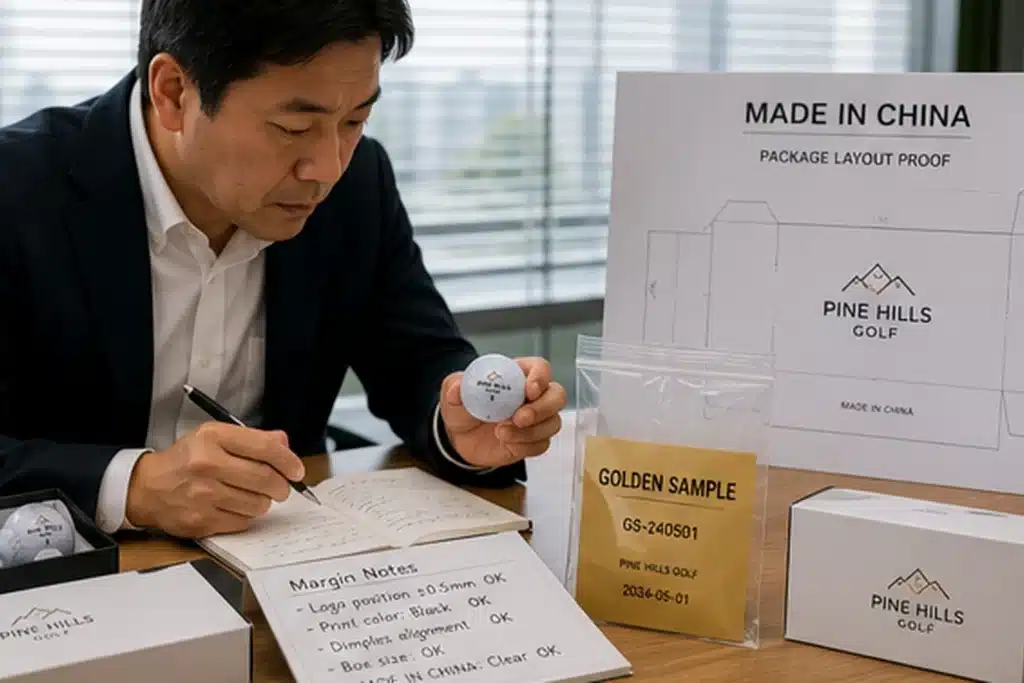
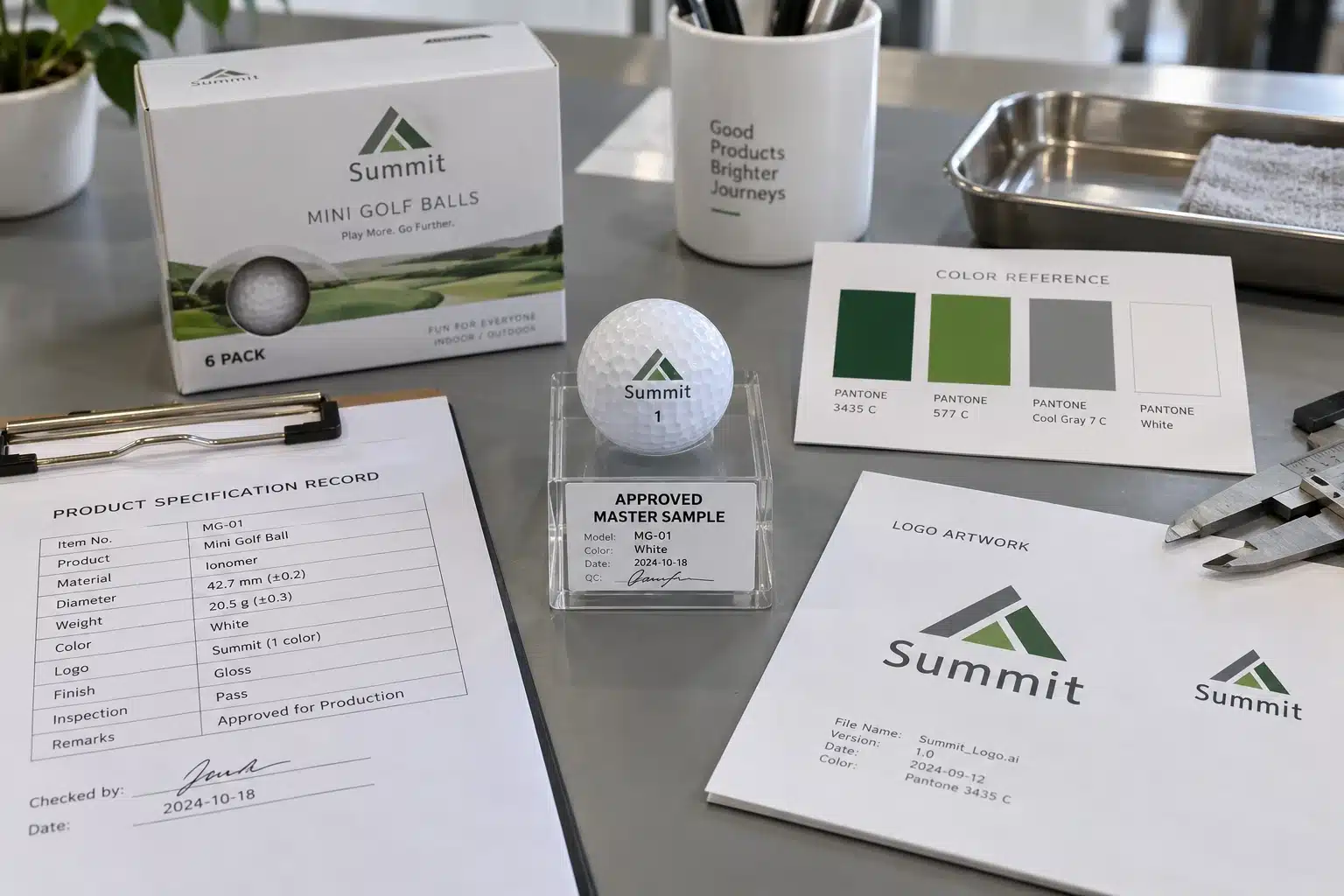
For a planned chain program, your primary supplier should maintain the approved production reference: ball platform, color reference, artwork version, printing route, packing specification, and batch-identification logic.
That does not mean one supplier must solve every inventory problem.
When Do You Need a Primary Source vs an Emergency Route?
A Primary Approved Source supports the normal program: approved specifications, controlled customization, repeat production, and documented reorders.
An Emergency Backup Route solves a different problem: a temporary shortage that cannot wait for normal replenishment.
The backup route should already define what can be substituted, which colors or markings are acceptable, who can authorize the purchase, and when the venue must return to master inventory.
A local manager should not solve a Friday-night stockout by creating Monday morning’s new chain specification.
Before approving a supplier, request production-role confirmation, customization-route details, and a written statement explaining how previous approved specifications are referenced during reorders. If the supplier relationship itself is unclear, use the China Golf Ball OEM Supplier Verification Checklist before moving deeper into sample or PO approval.
✔ True — A chain can use both a primary source and a controlled backup route
The primary source protects the long-term standard, while a pre-approved backup can solve genuine shortages without silently redefining the product.
✘ False — “The fastest emergency supplier can automatically become the new chain standard”
A temporary substitute should remain identifiable until headquarters deliberately approves it as a new product version.
Match the sourcing route to the replenishment problem, but keep the product standard under control.
What Should Your Chain Standardize First?
A chain does not lose consistency because suppliers cannot manufacture the product. It loses consistency when nobody controls which version should be repeated.
Create one Chain Master Spec for the product identity that must remain consistent across locations, then use a Venue Addendum for inventory and delivery variables. Headquarters protects the product standard; individual venues can still manage quantities, timing, and receiving needs without accidentally creating their own golf ball versions.
Your Chain Master Spec should identify:
-
approved ball platform;
-
approved color reference;
-
logo artwork version;
-
print method;
-
packaging format;
-
carton identification;
-
batch-reference format;
-
acceptance evidence.
The approved ball platform should already fit the venue-use program. Product-selection questions such as construction, surface durability, visibility, and venue conditions belong in the dedicated mini golf ball selection guide rather than being reopened every time your chain places a reorder.
| Item | Chain Master Spec | Venue Addendum |
|---|---|---|
| Ball platform | Fixed | No change |
| Logo version | Fixed | No change |
| Color reference | Fixed | No change |
| Quantity | Flexible | Venue-specific |
| Destination | Flexible | Venue-specific |
| Delivery timing | Flexible | Venue-specific |
What Belongs in a Venue Addendum?
A Venue Addendum should capture variables that affect inventory flow without changing product identity.
Typical fields include:
-
venue code;
-
quantity;
-
destination;
-
requested receiving window;
-
local inventory requirement;
-
seasonal demand;
-
approved venue-specific requirement where applicable;
-
receiving contact.
A blacklight attraction or a venue with a specific water-feature requirement may need an approved site-specific variation. That should be recorded in the Venue Addendum, not introduced through an informal store-level reorder.
The operating rule is:
Centralize the standard, not necessarily every shipment.
In a repeat OEM program, this separation helps suppliers understand which elements define the product and which elements only define delivery.
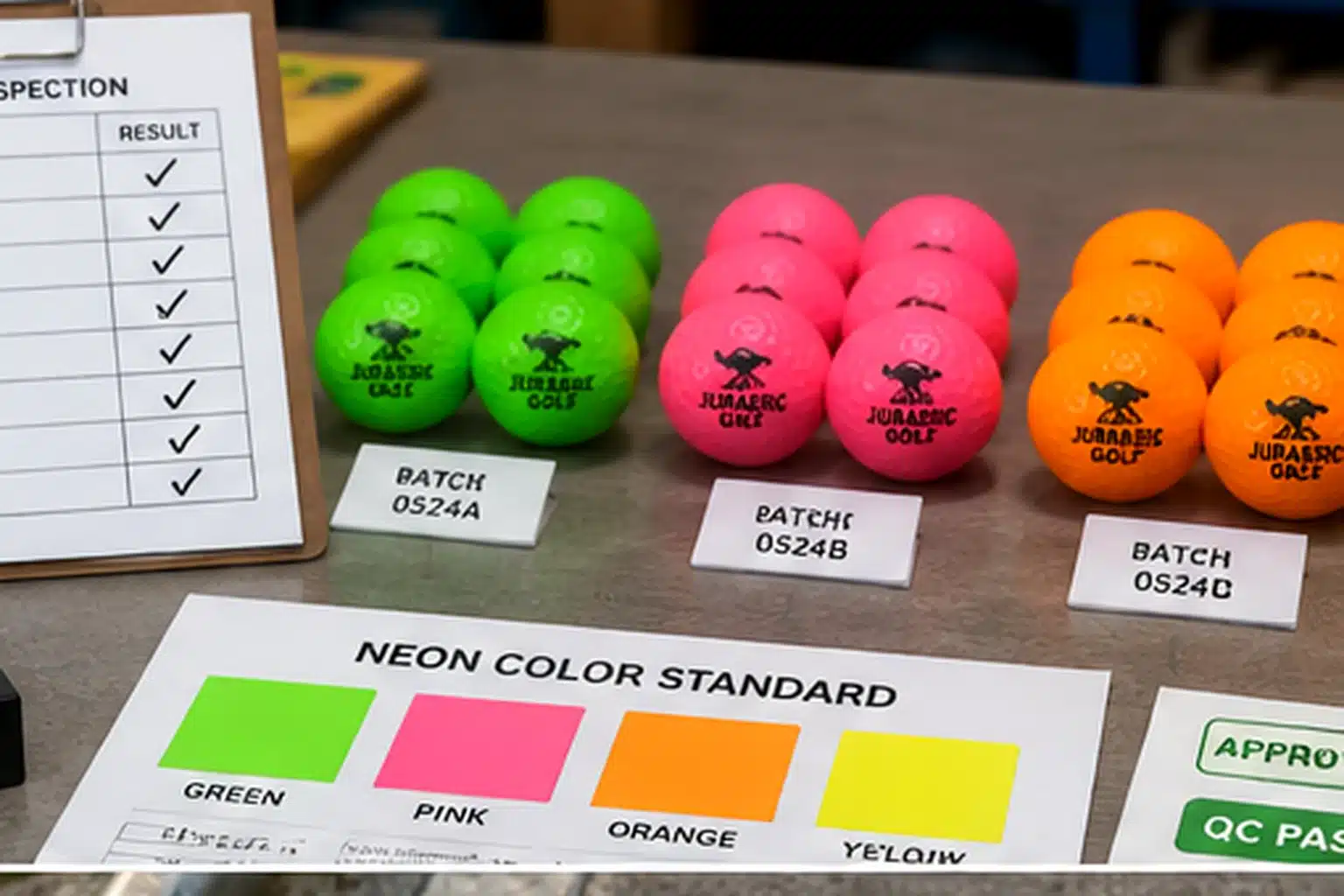
Before production, the PO should reference the approved Chain Master Spec version and the applicable Venue Addendum. That gives your operations team flexibility without giving every location permission to redefine the ball.
How Do You Keep Reorders Consistent?
The first order gets attention. The reorder is where weak systems are exposed.
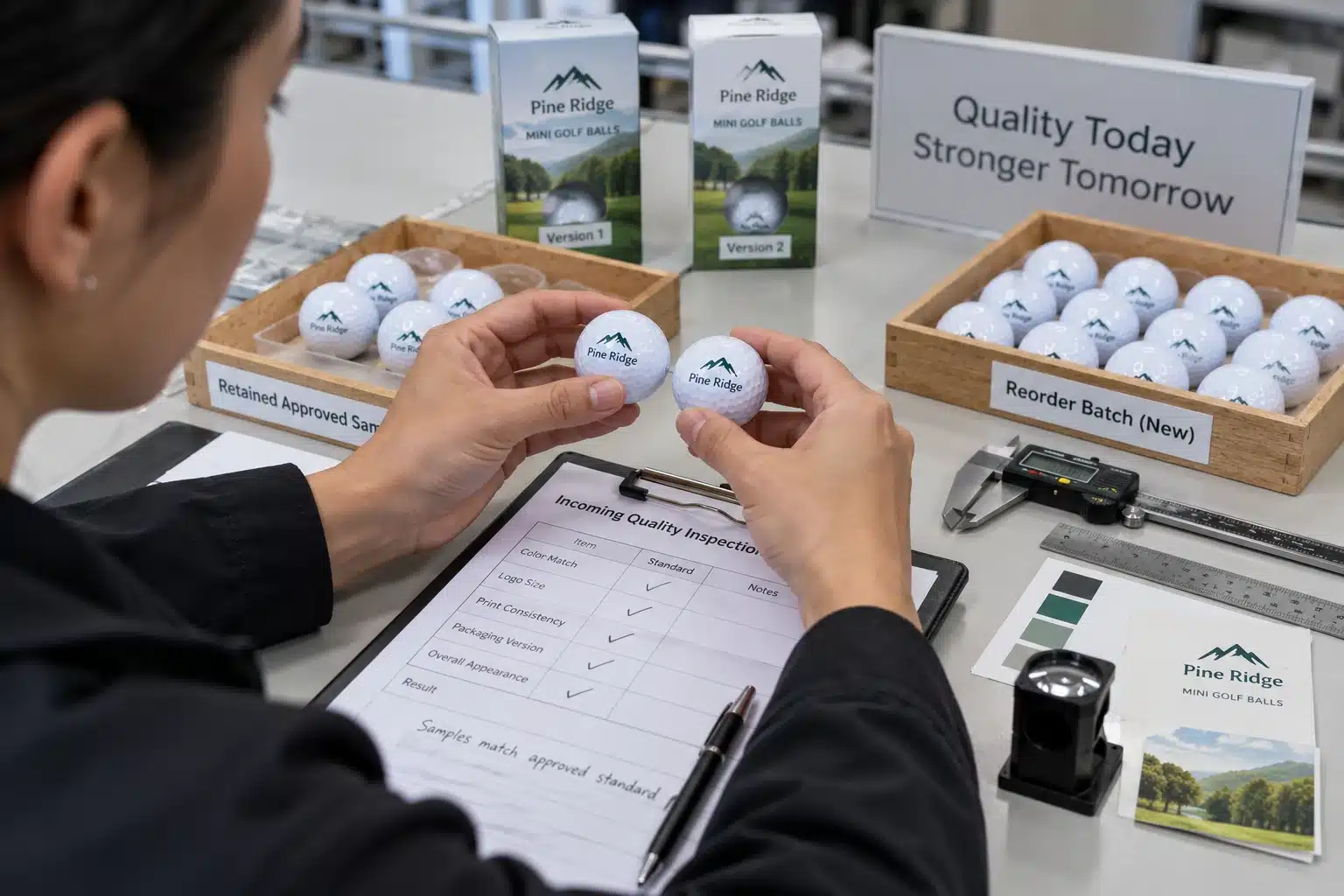
A reorder should reference the exact approved version being repeated. “Same as last order” is not enough unless your supplier can identify the previous sample, artwork revision, color reference, print method, packing version, and production reference tied to that product.
A supplier cannot reproduce an approved product that was never clearly defined.
The control chain should look like this:
Chain Master Spec → Approved Version → Production Batch → Retained Evidence → Reorder Reference
When Does a Reorder Become a New Version?
A reorder remains the same version only when the controlled product variables remain unchanged.
| Change | Risk | Buyer Control |
|---|---|---|
| Artwork update | Wrong logo version | Revision approval |
| Color change | Appearance drift | Approved reference |
| Ball platform change | Different product identity | Product reapproval |
| Packing change | Receiving confusion | Packing revision |
If one venue asks, “Can you make our logo slightly larger?” the answer may be yes—but that is a controlled change, not an invisible reorder note.
Create a new artwork revision, define which venue can use it, and keep the previous chain version traceable.
The same logic applies to printing. Lock the print method used for the approved decorated sample, then route detailed decisions about pad printing, UV printing, adhesion, curing, or artwork complexity to the custom golf ball printing process.
When color consistency is part of the Chain Master Spec, buyer and supplier should also agree on the color-reference method before repeat production. ASTM D2244-25 provides a recognized framework for calculating color differences between instrumentally measured samples, while commercial acceptance criteria still need to be defined for the specific program.
That matters because a color can be measurable without being universally acceptable. Your chain should define the approved reference and the acceptance method rather than copying an arbitrary tolerance from another product.
A supplier saying “same as last order” but unable to identify the previous approved sample or controlled version is a failure signal.
✔ True — Repeat orders need version control
Your supplier should be able to identify which approved sample, artwork, color reference, print route, and packing specification the next batch is supposed to repeat.
✘ False — “Order history alone proves what ‘same’ means”
Without controlled references, headquarters, venue staff, sales contacts, and production teams can all remember the previous order differently.
Which MOQ Applies to Your Chain Program?
A quote that says “MOQ: 1,000 pcs” may still leave your procurement team with six unanswered MOQ questions.
For a multi-location custom mini golf program, identify whether the minimum applies to the initial order, reorder, body color, artwork, production run, packing version, or destination. MOQ should be tied to the exact production route being quoted—not treated as one permanent number for every future variation.
Your MOQ scope declaration should cover:
-
initial-order MOQ;
-
reorder MOQ;
-
per-color MOQ;
-
per-artwork MOQ;
-
per-production-run MOQ;
-
per-packing-version MOQ;
-
per-destination MOQ;
-
whether colors or venue allocations can be combined.
For Golfara’s current bulk-ball programs, the base MOQ is 1,000 pcs. Separate customization requirements, such as a dedicated custom body-color route or custom packaging, can create their own higher minimums.
That can be useful for a new venue, smaller chain, or startup validating demand before committing more working capital to inventory.
The deeper question, however, is not simply whether a supplier can accept 1,000 balls. It is whether your proposed customization still fits that production route. For the broader production logic behind trial quantities, use the golf ball OEM MOQ guide.
Should You Customize Ball Color on Your First Order?
For many startups, first venues, and growing mini golf concepts, custom body color is possible—but it is not automatically the best first customization decision.
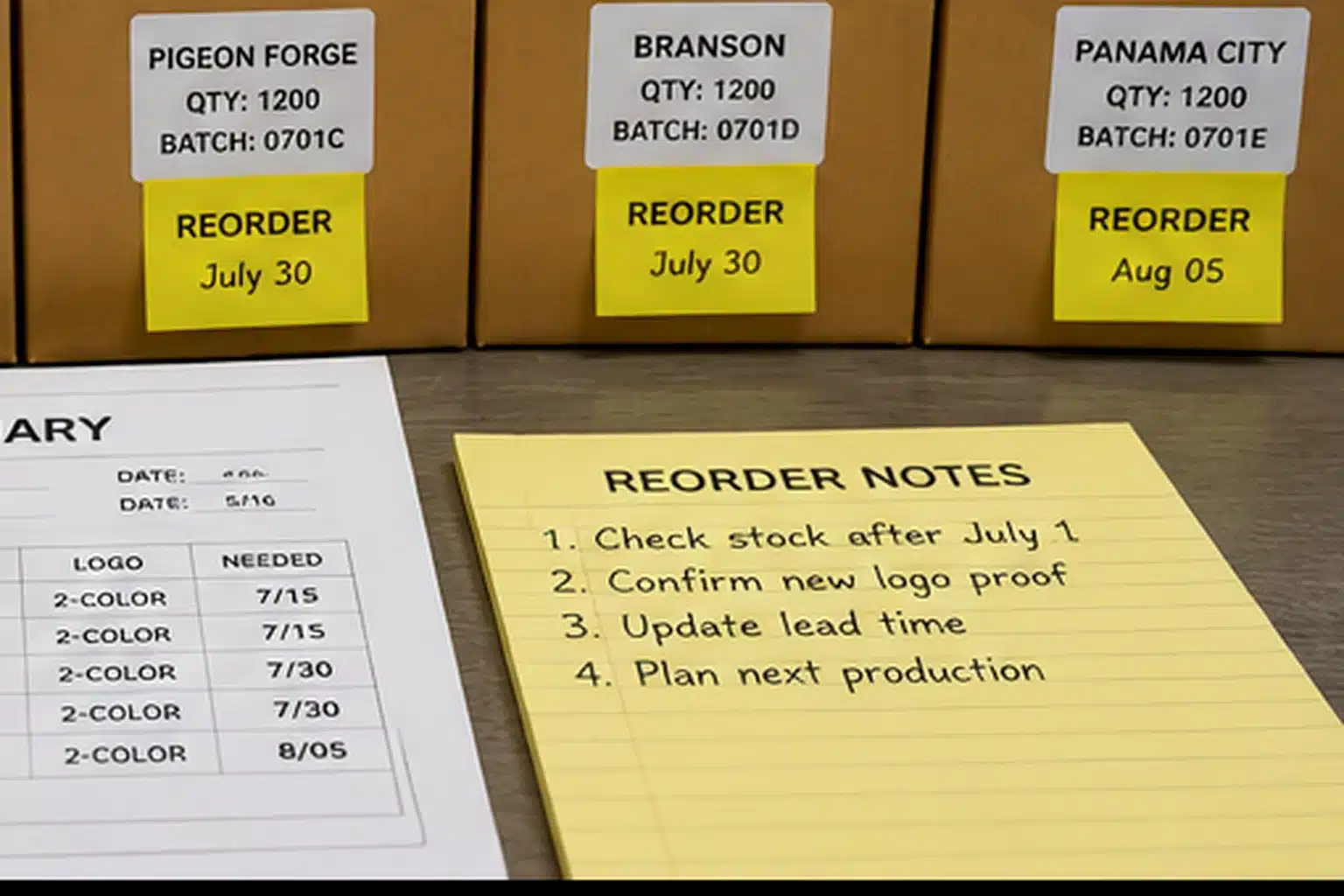
For Golfara’s current custom body-color production route, a custom color such as blue, yellow, or red requires a minimum quantity of 12,000 balls per color.
This is a Golfara-specific current production condition, not an industry standard.
Custom body colors require production changeover, including line cleaning, resetting, and material adjustment, which creates additional preparation and material loss compared with the standard white-ball route.
For startups and first-time buyers, the key question is not whether custom color is possible.
It is whether expected demand justifies committing to the full production quantity.
A full custom-color production run does not mean your team must receive all inventory at once.
For a custom-color order produced at the full 12,000-ball-per-color MOQ, Golfara can release the inventory in two or three shipments according to the agreed delivery plan. The remaining inventory can be stored at Golfara free of charge for up to 12 months after production completion under that phased-release arrangement.
This reduces immediate receiving and warehouse pressure while leaving the production quantity unchanged.
Under the agreed phased-release arrangement, Golfara can provide up to 12 months of free storage for the remaining inventory after production completion.
That arrangement can reduce immediate warehouse pressure for a smaller chain or growing concept while leaving the production requirement unchanged.
Phased shipment reduces receiving pressure, but it does not reduce production commitment or inventory responsibility.
Before approving a custom-color program, your team should confirm that venue demand, sales channels, expansion plans, and replenishment needs can reasonably absorb the full production quantity within the planned period.
This decision table keeps customization tied to commercial readiness:
| Buyer Situation | Recommended Approach |
|---|---|
| First venue or market test | Standard white ball + custom logo |
| Small chain expansion | Validate demand before custom color |
| Proven demand across venues | Custom body-color program |
| Custom color required but inventory release is gradual | Full MOQ + phased shipments + planned storage period |
For the manufacturing choices behind molded, coated, or printed color routes, use the custom-colored golf ball MOQ guide rather than turning a chain-sourcing decision into a color-engineering lesson.
A repeat order does not automatically inherit the previous minimum.
A new body color, artwork revision, packing configuration, or production route may reset the applicable MOQ. A one-color replenishment can also behave differently from the original multi-color order.
One quoted MOQ with no explanation of whether it applies per color, artwork, production run, or destination is a failure signal.
Before approving a reorder, request an MOQ Scope Declaration tied to the exact version being produced.
What Proof Should Your Supplier Provide?
“Same quality,” “tested,” and “durable” sound useful until nobody can explain which sample, method, or batch produced the claim.
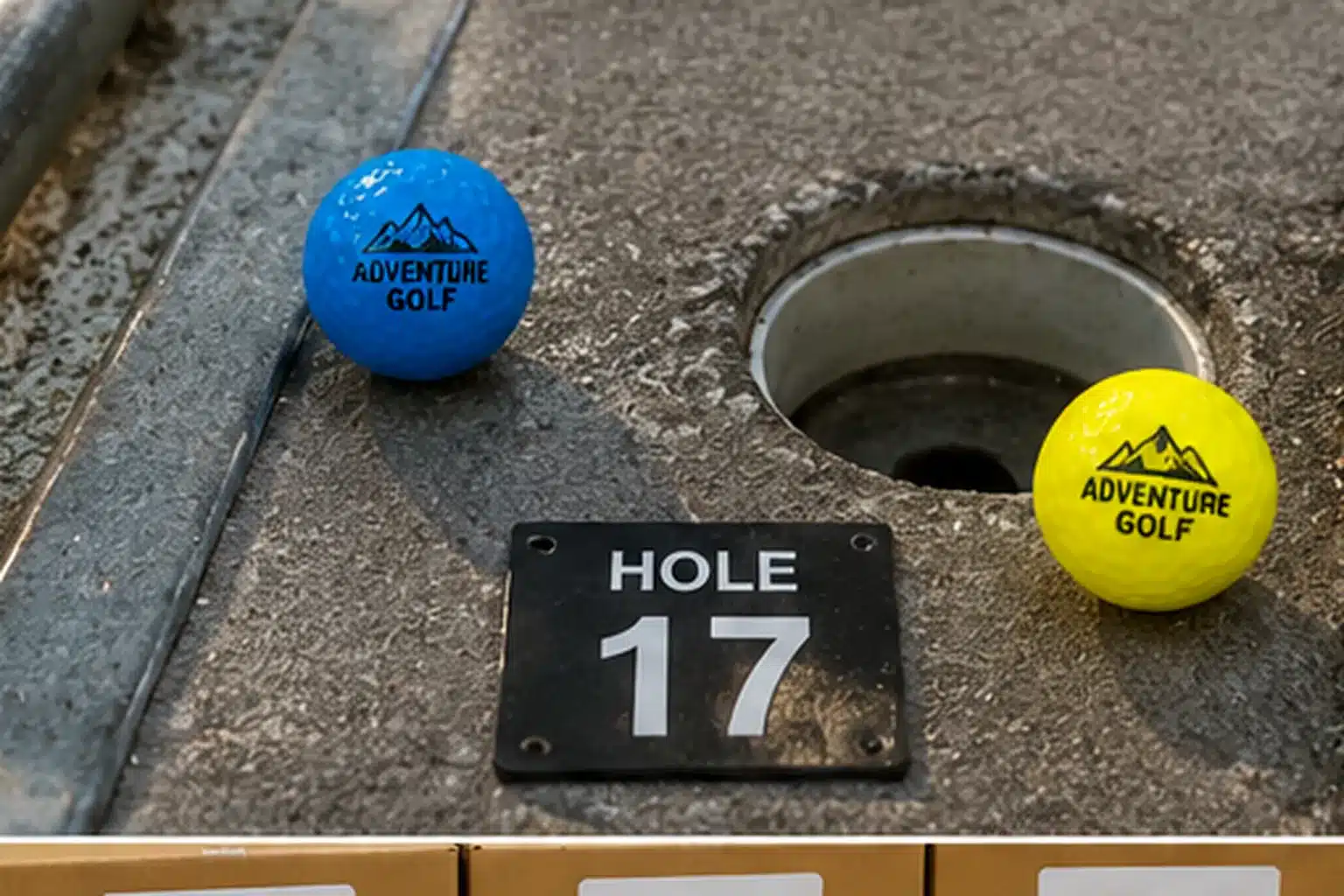
Supplier proof should help your team understand why the current shipment should be accepted and why the next shipment should match it. Keep the evidence practical: approved sample reference, retained sample, production batch ID, relevant method, and the acceptance rule used for the claim.
A useful reorder proof package can include:
-
approved sample reference;
-
retained decorated sample;
-
current batch ID;
-
artwork or print version;
-
relevant production reference;
-
test method where a performance claim is used;
-
acceptance or failure definition.
Quality evidence should support purchasing decisions, not simply create additional paperwork.
How Do You Compare Supplier Claims?
Suppose one supplier says:
“200+ cycles.”
The number alone does not tell you whether it is comparable with another supplier’s claim.
Ask:
-
What sample was tested?
-
Was it the final decorated SKU?
-
What exposure was used?
-
What counted as failure?
-
Which production batch did the sample represent?
For coating abrasion, ASTM D4060-25 provides a recognized controlled reference using a Taber Abraser on coatings applied to a plane, rigid surface.
That scope is useful precisely because it is defined.
It does not make ASTM D4060 a universal mini golf ball impact test or venue-life certification. If a supplier adapts a coating or abrasion method to a decorated ball, the actual specimen, fixture or adaptation, exposure, and failure rule still need to be disclosed.
A durability-cycle number with no conditions, sample identity, failure endpoint, or batch link is a failure signal.
✔ True — Comparable durability evidence needs defined test conditions
A useful result identifies the tested sample, exposure, failure rule, and production batch behind the claim.
✘ False — “A higher cycle count automatically proves better mini golf durability”
A cycle number without method conditions, sample identity, failure criteria, and batch linkage is not a comparable durability result.
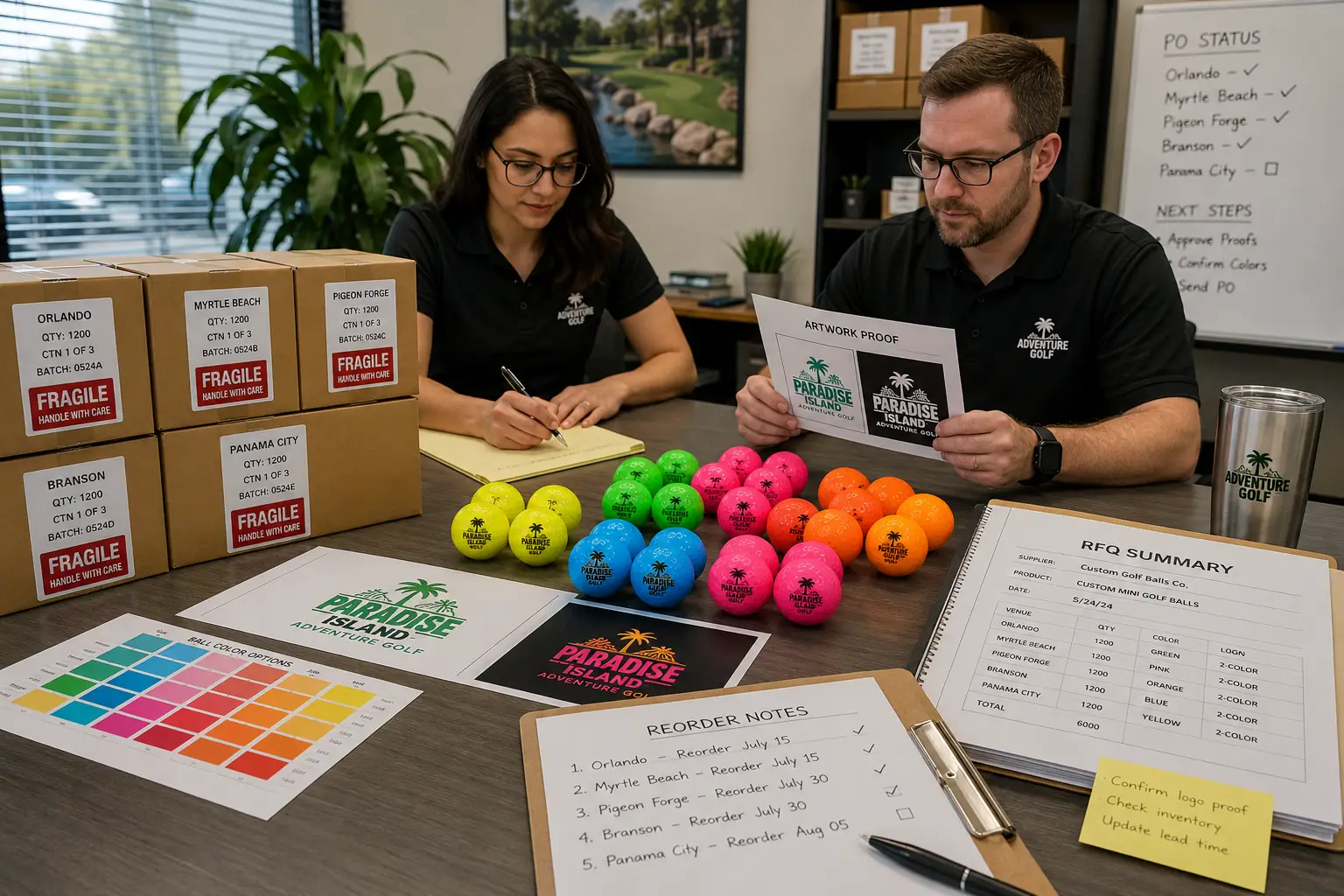
For an RFQ or PO, combine reorder traceability and change control in one clause.
Supplier shall link each reorder to the approved ball platform, color route, color reference, artwork version, print method, coating or finish, packing version, previous approved sample reference, and current production batch ID. Any change to these controlled variables shall be disclosed before production and re-approved where required. Where test or durability evidence supports acceptance, the record shall identify the method, sample ID, batch ID, and applicable acceptance or failure rule.
Your deliverable is a batch-linked reorder proof package that lets procurement connect the approved version to the batch being released.
How Should Bulk Orders Reach Multiple Locations?
Headquarters may own the purchase order while six venues need different quantities on different dates. Sending everything through one warehouse is only one possible solution.
Use a central warehouse, direct-to-venue allocation, or a hybrid model according to your operation. Whatever inventory path you choose, every shipment should reference the same Chain Master Spec, relevant Venue Addendum, product version, batch identity, and approved allocation record.
A central warehouse can provide the strongest physical control but adds internal receiving, storage, sorting, and redistribution.
Direct-to-venue shipping can reduce handling but requires better supplier allocation accuracy.
A hybrid system can route selected inventory through headquarters while releasing routine replenishment directly to individual venues.
The operating principle becomes:
Centralize spec governance. Localize inventory flow where it makes operational sense.
How Should Suppliers Allocate Venue Shipments?
Before shipment, require a Venue Allocation Packing List that connects:
-
venue code;
-
destination;
-
quantity;
-
approved product version;
-
color allocation where applicable;
-
batch ID;
-
carton count;
-
packing version.
The supplier should prepare cartons against that approved record rather than deciding allocation informally during packing.
Your receiving criterion is simple:
The shipment must match the approved venue allocation before release.
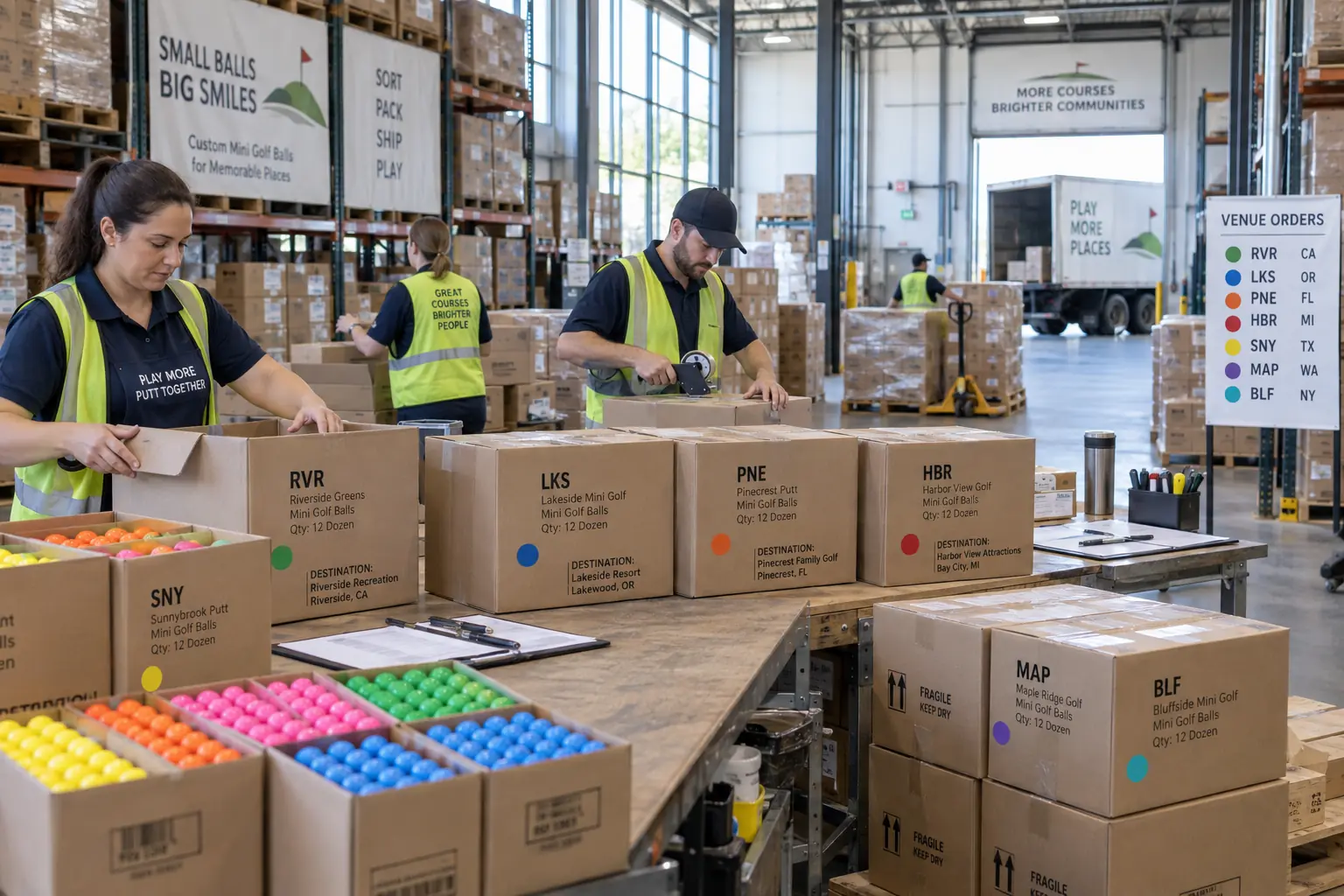
This is the point where a bulk order becomes a multi-location supply system. Headquarters controls the standard. The supplier controls production and allocation. Each venue receives against an identifiable version and allocation record.
FAQ
How many custom mini golf balls should a new venue order?
There is no universal starting quantity. Your first order should reflect venue traffic, replacement demand, rollout stage, inventory space, and whether the location is a pilot or a proven operating model.
A new site should avoid treating its opening estimate as a permanent forecast. Track how quickly inventory is issued, lost, rejected, and replenished, then use that data for the next order.
Can franchise locations order separately from headquarters?
Yes, provided headquarters still controls the Chain Master Spec and version-approval process. A venue can manage quantity, delivery timing, and receiving requirements without creating an independent ball specification.
Use a Venue Addendum for location-specific needs. If a franchise requests a product change, route it through formal approval rather than allowing the supplier to treat a local email as a new chain standard.
Can I reorder only one color of custom mini golf balls?
Possibly, but the answer depends on the color route, applicable MOQ, and current production condition. A one-color reorder should not be assumed to follow the same commercial minimum as the original order.
Ask whether the color is a standard production option or a custom body-color route, whether the previous MOQ applied to the full order or each color, and whether reopening that color requires another dedicated production run.
What happens if one venue wants a different specification?
Treat the request as a new controlled version. Do not let one venue silently overwrite the Chain Master Spec for every other location.
Document what changes, approve the revision, give it a version reference, identify which venue may use it, and keep the original version available for the rest of the chain. The same principle applies to logo, color, packing, or ball-platform changes.
Can smaller chains use phased shipments for custom golf balls?
Yes, when the supplier and buyer agree to a phased-release arrangement—but the full production MOQ still applies. Shipment timing can reduce immediate receiving and storage pressure without changing the underlying production commitment.
For qualified Golfara custom-color programs, inventory can be released in agreed phases after production, with up to 12 months of storage during the agreed phased-release arrangement. Your team should still confirm that expected demand can absorb the entire production quantity within the planned period.
Do Mini Golf Chains Need USGA Approval?
Not automatically. The relevant approval depends on how the balls will actually be used, so a recreational mini golf chain should not assume that USGA conformity is a universal purchasing requirement.
The USGA List of Conforming Golf Balls belongs to the Rules of Golf framework and is relevant where the applicable competition rules require a conforming ball.
Sanctioned minigolf can follow a different governing system. The World Minigolf Sport Federation Approved Balls database covers balls approved within the WMF minigolf system.
For a normal commercial or FEC mini golf program, confirm the requirements of your actual venue and event format first. If sanctioned competition is involved, check the rules of the governing body that applies rather than assuming one approval system covers every form of mini golf.
Conclusion
Buying custom mini golf balls in bulk is only the first transaction.
A scalable chain program works differently:
Define the approved product standard.
Control every reorder version.
Manage customization and inventory commitment.
Verify each production batch.
Allocate each shipment to the correct venue.
The supplier you choose should help your team preserve that system as the chain grows—not force every location to solve the same sourcing problem again.
The strongest sourcing relationship is not built around one large purchase. It is built around repeatability, controlled customization, and inventory decisions that match your growth plan.
You might also like — China Golf Ball OEM Lead Time: What Controls the Schedule?